

Small Habits to Beat Anxiety
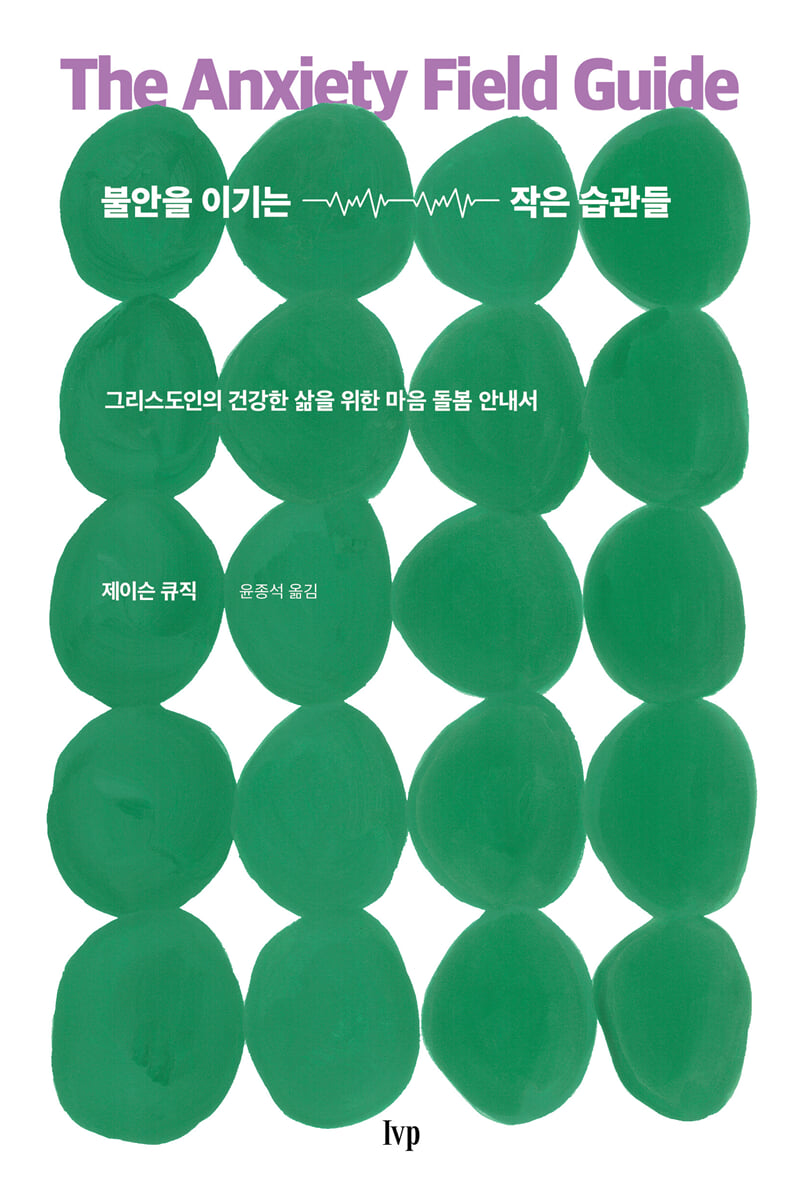 |
Description
Book Introduction
Humanity has been wandering in the forest of anxiety without rest.
We too naturally live with anxiety.
This book understands the reality that anxiety is natural, yet often handled unhealthily, and suggests healthy ways to live with anxiety rather than simply eliminate it.
Many Christians feel guilty about their anxiety.
The author addresses the psychological and spiritual aspects of anxiety, offering clinical experience and pastoral wisdom gained from examining his own and others' lives as a pastor.
The author's experience of experiencing anxiety as a Christian, and the process of dealing with it through the Word and various practical guidelines, will provide comfort and practical help to those who have spent countless nights in anxiety.
We too naturally live with anxiety.
This book understands the reality that anxiety is natural, yet often handled unhealthily, and suggests healthy ways to live with anxiety rather than simply eliminate it.
Many Christians feel guilty about their anxiety.
The author addresses the psychological and spiritual aspects of anxiety, offering clinical experience and pastoral wisdom gained from examining his own and others' lives as a pastor.
The author's experience of experiencing anxiety as a Christian, and the process of dealing with it through the Word and various practical guidelines, will provide comfort and practical help to those who have spent countless nights in anxiety.
- You can preview some of the book's contents.
Preview
index
preface
1.
Don't worry, it's just a brain problem.
2.
Embrace uncertainty
3.
Observe before you own
4.
Stop occasionally
5.
You are not alone
6.
Pray like Jesus
7.
Take care of yourself
8.
See worry as a gift
9.
Know your triggers
10.
Don't avoid, hit it
11.
Focus on the front
12.
Put a time limit on your worries
13.
Speak kindly to yourself
14.
Find rest
15.
Seek progress, not perfection
16.
Understand the compulsion
17.
Start exposing
18.
Find a way to ground yourself
19.
Be brave and show weakness
20.
Prepare for exposure fatigue
21.
Choose joy
22.
Examine core beliefs and distortions
23.
Separate thoughts from actions
24.
Find a protective umbrella
25.
Reduce self-medication
26.
Open new neural pathways
27.
Adapt to change as a leader
28.
You can do it!
29.
I will aim for the perseverance award
30.
Believe the good news
Conclusion
Acknowledgements
Recommended books
Find practical tools
1.
Don't worry, it's just a brain problem.
2.
Embrace uncertainty
3.
Observe before you own
4.
Stop occasionally
5.
You are not alone
6.
Pray like Jesus
7.
Take care of yourself
8.
See worry as a gift
9.
Know your triggers
10.
Don't avoid, hit it
11.
Focus on the front
12.
Put a time limit on your worries
13.
Speak kindly to yourself
14.
Find rest
15.
Seek progress, not perfection
16.
Understand the compulsion
17.
Start exposing
18.
Find a way to ground yourself
19.
Be brave and show weakness
20.
Prepare for exposure fatigue
21.
Choose joy
22.
Examine core beliefs and distortions
23.
Separate thoughts from actions
24.
Find a protective umbrella
25.
Reduce self-medication
26.
Open new neural pathways
27.
Adapt to change as a leader
28.
You can do it!
29.
I will aim for the perseverance award
30.
Believe the good news
Conclusion
Acknowledgements
Recommended books
Find practical tools
Detailed image

Into the book
On the surface, I was doing well.
But inside, I was sinking.
As anxiety set in, panic attacks and insomnia set in.
I also gained 9 kilograms.
Since I had to preach on Sunday, I chose to bite my tongue whenever I could.
It was late at night while I was preparing a sermon that all of this reached a critical point.
I just wrote, erased, and rewrote the words that didn't seem right for 16 hours straight.
I called a close friend this morning and told him that I felt like I made a mistake in accepting this position.
I thought that not only was I not helping anyone, I might actually be hurting people.
Eventually, this kind of talk came out.
“Maybe the church and my family would be better off without me.”
--- From the "Preface"
We are all anxious.
Anxiety is an automatic response that occurs when a threat is felt.
Let's say you're on a first date, have a big assignment at work or school, are walking alone in the dark at night, or have someone around you who has a contagious disease.
At times like these, our brain sends signals to our body to be tense, cautious, and prepared.
It's ordering anxiety!
Anxiety can be mental (giving you messages you need to believe), emotional (causing you feelings), or physiological (causing changes in your body).
Anxiety isn't always a bad thing.
Anxiety is a good gift from God to keep us safe, and it's something we absolutely need! But what if we feel anxious even when there's no real threat? What if we remain anxious even after the threat is gone? In such cases, anxiety is bad.
Our anxieties are often misdirected! We live in a culture that constantly stimulates them.
24-hour news, a fast-paced life and faith, and countless self-deceptions keep us from the trust, peace, and healthy adventure God wants us to live.
--- From the "Preface"
Anxiety is lonely.
In moments of extreme anxiety, panic, nervousness, fear, and worry, it can feel like there's no one to help us.
Like my daughter in that dark and quiet moment, our anxious hearts also ask:
"Is there anyone there? Is there anyone who understands what I'm feeling? Am I alone?"
You are not alone.
You may feel alone, but you are not.
Anxiety can be embarrassing.
It's a very normal feeling.
Sometimes people hide because they feel that no one understands their struggles.
That feels safer.
We cannot feel safe in the unknown, so we go to places we can control.
Because we cannot control the reactions of others, we tend to block them out and remain alone.
Negative experiences may also have taught us to hide.
When I first opened up about my anxiety in church, a well-meaning woman said she thought I had a "spirit of fear" and asked if she could pray for me to "cast it out permanently."
This just made me go into hiding.
I had to keep reminding myself that I didn't need to isolate myself.
Personality also influences anxiety.
I am an introvert and have many thoughts and dreams.
I spend a lot of time exploring ideas in my head.
Thanks to this, I am strategic, creative, and empathetic towards people.
I believe that God created me that way.
But there are also negative aspects.
I tend to ruminate a lot, so if I just let things go, I can get caught up in excessive worry and become more anxious.
So, you have to be careful not to worry alone.
--- From "Chapter 5_You Are Not Alone"
Anxiety is a bad guy in your head.
You can definitely beat anxiety.
But to do that, we must first let go of the power of anxiety.
Let anxiety hit you like George Foreman's barrage of punches that drove Muhammad Ali into the ropes.
Rather than fighting it, let it come closer.
Feel anxious and endure it.
Let your energy drain away.
Don't panic, experience the anxiety.
“I can bear this for a while.
Tell yourself, “I’m pushed back by the rope right now, but I have a plan.”
In the meantime, protect yourself.
Remember that you are not alone.
Take a deep breath and count to ten.
Speak kindly to yourself.
Seek progress instead of perfection.
You must not surrender to the anxiety.
See if you can tolerate anxious thoughts and feelings for 10 more seconds.
That's progress!
--- From "Chapter 16: Understanding Obsession"
Use more 'I' statements when communicating.
Acknowledge your thoughts and feelings by using the word "I" instead of "you."
Especially when expressing hurt and disappointment.
For example, instead of saying, “You hurt me,” say, “I was hurt.”
Instead of saying, “You rejected me,” say, “I am lonely.”
This will help you take responsibility for your own feelings.
It's also a good idea to expand your 'emotional vocabulary' to better communicate your emotions.
For example, instead of saying “I’m sad,” try being more specific, such as “I’m depressed,” “I’m guilty,” “I’m bored,” “I’m tired,” “I’m ashamed,” or “I’m lonely.”
--- From "Chapter 19_Be Bold and Show Weakness"
The writings of the 16th-century Catholic spiritual theologian Francis de Sales describe the miserable living conditions in nearby towns.
Because of the dense population and poor sanitation, walking around the city was literally a foul odor.
It was a terrible stench.
Because population density and waste management can't be fixed, citizens have developed their own ways to deal with the stench.
It is a nosegay.
They would gather a few fragrant flowers and carry them under their noses as they went about their daily tasks, which allowed them to go about their daily lives in a pleasant smell.
François de Sales says that we all need a “spiritual bouquet” every day.
Here are some positive thoughts, spiritual quotes, and God's promises to help you navigate the stench and odor of the world.
Thanks to the spiritual flower bouquet, we can always focus on the positive, even as we struggle with our own anxieties and the injustice, oppression, and selfishness around us.
--- From "Chapter 21: Choose Joy"
Anxiety is very similar to a strong wave.
Jesus sometimes miraculously calms the waves, but most of the time he invites us to walk on them.
Having faith does not make discomfort, problems, or subjective threats disappear.
But because of faith, we can remain focused on Jesus even when our thoughts and emotions become overwhelming.
The more we focus on anxiety, the more likely it is that it will pull us underwater.
--- From "Chapter 28_You Can Do It"
The word grit comes from an Old Saxon word meaning stone or pebble.
It is also a metaphor for a strong person who knows how to endure.
A resilient person knows that comfort is a hindrance to growth.
So we always move forward with new ideas.
They are pioneers who never settle and see hardship as the path to lasting success.
The important thing in perseverance is firm will.
It is a determination to keep going even if the end is not in sight.
The process of running itself is as enjoyable as crossing the finish line.
A strong spirit that is not shaken by emotions and the vague messages of past failures.
It is an eye that knows how to see that there is more change through defeat than through victory.
When it comes to managing anxiety, I'm going for the ultimate prize.
--- From "Chapter 29_Aiming for the Perseverance Award"
Fear, anxiety, and uncertainty all have a place in God's plan for our lives.
It's just not the middle seat.
The healthy habits we've looked at so far aren't self-help tips or quick answers to banish unwanted thoughts or feelings, but rather invitations to continue following Jesus.
Like the path to a waterfall, long-term healing from anxiety is a path that others have discovered before, but it is also a path that we must find for ourselves.
You will make mistakes, you will learn, you will try new things.
When the path is unclear, I want to encourage you to keep listening.
Then, bold yet restrained invitations filled with grace and love will continue to ring out.
Soon, it is an invitation to bloom leisurely amidst uncertainty.
But inside, I was sinking.
As anxiety set in, panic attacks and insomnia set in.
I also gained 9 kilograms.
Since I had to preach on Sunday, I chose to bite my tongue whenever I could.
It was late at night while I was preparing a sermon that all of this reached a critical point.
I just wrote, erased, and rewrote the words that didn't seem right for 16 hours straight.
I called a close friend this morning and told him that I felt like I made a mistake in accepting this position.
I thought that not only was I not helping anyone, I might actually be hurting people.
Eventually, this kind of talk came out.
“Maybe the church and my family would be better off without me.”
--- From the "Preface"
We are all anxious.
Anxiety is an automatic response that occurs when a threat is felt.
Let's say you're on a first date, have a big assignment at work or school, are walking alone in the dark at night, or have someone around you who has a contagious disease.
At times like these, our brain sends signals to our body to be tense, cautious, and prepared.
It's ordering anxiety!
Anxiety can be mental (giving you messages you need to believe), emotional (causing you feelings), or physiological (causing changes in your body).
Anxiety isn't always a bad thing.
Anxiety is a good gift from God to keep us safe, and it's something we absolutely need! But what if we feel anxious even when there's no real threat? What if we remain anxious even after the threat is gone? In such cases, anxiety is bad.
Our anxieties are often misdirected! We live in a culture that constantly stimulates them.
24-hour news, a fast-paced life and faith, and countless self-deceptions keep us from the trust, peace, and healthy adventure God wants us to live.
--- From the "Preface"
Anxiety is lonely.
In moments of extreme anxiety, panic, nervousness, fear, and worry, it can feel like there's no one to help us.
Like my daughter in that dark and quiet moment, our anxious hearts also ask:
"Is there anyone there? Is there anyone who understands what I'm feeling? Am I alone?"
You are not alone.
You may feel alone, but you are not.
Anxiety can be embarrassing.
It's a very normal feeling.
Sometimes people hide because they feel that no one understands their struggles.
That feels safer.
We cannot feel safe in the unknown, so we go to places we can control.
Because we cannot control the reactions of others, we tend to block them out and remain alone.
Negative experiences may also have taught us to hide.
When I first opened up about my anxiety in church, a well-meaning woman said she thought I had a "spirit of fear" and asked if she could pray for me to "cast it out permanently."
This just made me go into hiding.
I had to keep reminding myself that I didn't need to isolate myself.
Personality also influences anxiety.
I am an introvert and have many thoughts and dreams.
I spend a lot of time exploring ideas in my head.
Thanks to this, I am strategic, creative, and empathetic towards people.
I believe that God created me that way.
But there are also negative aspects.
I tend to ruminate a lot, so if I just let things go, I can get caught up in excessive worry and become more anxious.
So, you have to be careful not to worry alone.
--- From "Chapter 5_You Are Not Alone"
Anxiety is a bad guy in your head.
You can definitely beat anxiety.
But to do that, we must first let go of the power of anxiety.
Let anxiety hit you like George Foreman's barrage of punches that drove Muhammad Ali into the ropes.
Rather than fighting it, let it come closer.
Feel anxious and endure it.
Let your energy drain away.
Don't panic, experience the anxiety.
“I can bear this for a while.
Tell yourself, “I’m pushed back by the rope right now, but I have a plan.”
In the meantime, protect yourself.
Remember that you are not alone.
Take a deep breath and count to ten.
Speak kindly to yourself.
Seek progress instead of perfection.
You must not surrender to the anxiety.
See if you can tolerate anxious thoughts and feelings for 10 more seconds.
That's progress!
--- From "Chapter 16: Understanding Obsession"
Use more 'I' statements when communicating.
Acknowledge your thoughts and feelings by using the word "I" instead of "you."
Especially when expressing hurt and disappointment.
For example, instead of saying, “You hurt me,” say, “I was hurt.”
Instead of saying, “You rejected me,” say, “I am lonely.”
This will help you take responsibility for your own feelings.
It's also a good idea to expand your 'emotional vocabulary' to better communicate your emotions.
For example, instead of saying “I’m sad,” try being more specific, such as “I’m depressed,” “I’m guilty,” “I’m bored,” “I’m tired,” “I’m ashamed,” or “I’m lonely.”
--- From "Chapter 19_Be Bold and Show Weakness"
The writings of the 16th-century Catholic spiritual theologian Francis de Sales describe the miserable living conditions in nearby towns.
Because of the dense population and poor sanitation, walking around the city was literally a foul odor.
It was a terrible stench.
Because population density and waste management can't be fixed, citizens have developed their own ways to deal with the stench.
It is a nosegay.
They would gather a few fragrant flowers and carry them under their noses as they went about their daily tasks, which allowed them to go about their daily lives in a pleasant smell.
François de Sales says that we all need a “spiritual bouquet” every day.
Here are some positive thoughts, spiritual quotes, and God's promises to help you navigate the stench and odor of the world.
Thanks to the spiritual flower bouquet, we can always focus on the positive, even as we struggle with our own anxieties and the injustice, oppression, and selfishness around us.
--- From "Chapter 21: Choose Joy"
Anxiety is very similar to a strong wave.
Jesus sometimes miraculously calms the waves, but most of the time he invites us to walk on them.
Having faith does not make discomfort, problems, or subjective threats disappear.
But because of faith, we can remain focused on Jesus even when our thoughts and emotions become overwhelming.
The more we focus on anxiety, the more likely it is that it will pull us underwater.
--- From "Chapter 28_You Can Do It"
The word grit comes from an Old Saxon word meaning stone or pebble.
It is also a metaphor for a strong person who knows how to endure.
A resilient person knows that comfort is a hindrance to growth.
So we always move forward with new ideas.
They are pioneers who never settle and see hardship as the path to lasting success.
The important thing in perseverance is firm will.
It is a determination to keep going even if the end is not in sight.
The process of running itself is as enjoyable as crossing the finish line.
A strong spirit that is not shaken by emotions and the vague messages of past failures.
It is an eye that knows how to see that there is more change through defeat than through victory.
When it comes to managing anxiety, I'm going for the ultimate prize.
--- From "Chapter 29_Aiming for the Perseverance Award"
Fear, anxiety, and uncertainty all have a place in God's plan for our lives.
It's just not the middle seat.
The healthy habits we've looked at so far aren't self-help tips or quick answers to banish unwanted thoughts or feelings, but rather invitations to continue following Jesus.
Like the path to a waterfall, long-term healing from anxiety is a path that others have discovered before, but it is also a path that we must find for ourselves.
You will make mistakes, you will learn, you will try new things.
When the path is unclear, I want to encourage you to keep listening.
Then, bold yet restrained invitations filled with grace and love will continue to ring out.
Soon, it is an invitation to bloom leisurely amidst uncertainty.
--- From the "Conclusion"
Publisher's Review
Anxiety, one of the most pressing mental health issues,
Can I live my life like this with this mindset?
The number of people suffering from anxiety disorders has been steadily increasing in recent years.
The various situations that individuals face as they grow up, coupled with the stressful aspects of modern society—rapid change, fierce competition, and complex human relationships—strengthen our inner anxiety.
However, many people suffer from anxiety, obsessions, panic attacks, etc., but they do not properly recognize or deal with them, and thus do not receive appropriate help.
People with mental health problems stemming from anxiety may be plagued by unwanted thoughts or feelings, or intense fears about certain situations or objects.
Past experiences can influence the present, leading to behaviors that are difficult even for the individual to understand.
People who suffer from anxiety may engage in compulsive behaviors to reduce their anxiety, but sometimes they become so obsessed with those behaviors that they become consumed by further anxiety, disrupting their daily lives.
If this sounds familiar, you're not alone.
In "Small Habits to Overcome Anxiety," we all live with anxiety, but we can live rich and meaningful lives without being swayed by it, offering a guide to coping with anxiety.
As someone who has dealt with anxiety his entire life, author Jason Cusick offers hopeful news that anxiety can be effectively addressed with the right tools.
Small but sure practices that steadily restore me
Addressing invisible pain and offering a path to recovery
Anxiety doesn't go away.
Many people have tried to get rid of anxiety, but have experienced that no matter how hard they tried, it never completely disappeared.
The author emphasizes that rather, moderate anxiety can be a good stimulus or serve as a warning of danger.
This anxiety is necessary, and how we manage it can make our daily lives much healthier, he says.
The author offers insights based on personal, pastoral, and academic experience, offering tips for wisely coexisting with anxiety.
The 30 chapters, written in a concise style, end with step-by-step instructions and practical exercises to help readers quickly address their current uncertainties while developing long-term healthy habits.
The author's suggestions, which always seek solutions that apply academic knowledge empirically, can be tried without burden by anyone experiencing anxiety.
Many Christians feel guilty about their anxiety.
The author addresses the psychological and spiritual aspects of anxiety, offering clinical experience and pastoral wisdom gained from examining his own and others' lives as a pastor.
The author's experience of experiencing anxiety as a Christian, and the process of dealing with it through the Word and various practical guidelines, will provide comfort and practical help to those who have spent countless nights in anxiety.
Main Readers
ㆎ People whose daily lives are shaken by anxiety and who need emergency treatment
ㆎ A believer who feels guilty and wonders if having an anxious mind is a sin
ㆎ Believers who seek to gain control of their lives by applying psychology and faith.
Can I live my life like this with this mindset?
The number of people suffering from anxiety disorders has been steadily increasing in recent years.
The various situations that individuals face as they grow up, coupled with the stressful aspects of modern society—rapid change, fierce competition, and complex human relationships—strengthen our inner anxiety.
However, many people suffer from anxiety, obsessions, panic attacks, etc., but they do not properly recognize or deal with them, and thus do not receive appropriate help.
People with mental health problems stemming from anxiety may be plagued by unwanted thoughts or feelings, or intense fears about certain situations or objects.
Past experiences can influence the present, leading to behaviors that are difficult even for the individual to understand.
People who suffer from anxiety may engage in compulsive behaviors to reduce their anxiety, but sometimes they become so obsessed with those behaviors that they become consumed by further anxiety, disrupting their daily lives.
If this sounds familiar, you're not alone.
In "Small Habits to Overcome Anxiety," we all live with anxiety, but we can live rich and meaningful lives without being swayed by it, offering a guide to coping with anxiety.
As someone who has dealt with anxiety his entire life, author Jason Cusick offers hopeful news that anxiety can be effectively addressed with the right tools.
Small but sure practices that steadily restore me
Addressing invisible pain and offering a path to recovery
Anxiety doesn't go away.
Many people have tried to get rid of anxiety, but have experienced that no matter how hard they tried, it never completely disappeared.
The author emphasizes that rather, moderate anxiety can be a good stimulus or serve as a warning of danger.
This anxiety is necessary, and how we manage it can make our daily lives much healthier, he says.
The author offers insights based on personal, pastoral, and academic experience, offering tips for wisely coexisting with anxiety.
The 30 chapters, written in a concise style, end with step-by-step instructions and practical exercises to help readers quickly address their current uncertainties while developing long-term healthy habits.
The author's suggestions, which always seek solutions that apply academic knowledge empirically, can be tried without burden by anyone experiencing anxiety.
Many Christians feel guilty about their anxiety.
The author addresses the psychological and spiritual aspects of anxiety, offering clinical experience and pastoral wisdom gained from examining his own and others' lives as a pastor.
The author's experience of experiencing anxiety as a Christian, and the process of dealing with it through the Word and various practical guidelines, will provide comfort and practical help to those who have spent countless nights in anxiety.
Main Readers
ㆎ People whose daily lives are shaken by anxiety and who need emergency treatment
ㆎ A believer who feels guilty and wonders if having an anxious mind is a sin
ㆎ Believers who seek to gain control of their lives by applying psychology and faith.
GOODS SPECIFICS
- Date of issue: August 28, 2025
- Page count, weight, size: 276 pages | 140*210*20mm
- ISBN13: 9788932823669
- ISBN10: 8932823669
You may also like
카테고리
korean


korean

![ELLE 엘르 스페셜 에디션 A형 : 12월 [2025]](http://librairie.coreenne.fr/cdn/shop/files/b8e27a3de6c9538896439686c6b0e8fb.jpg?v=1766436872&width=3840)


