

First events in the Korean church
 |
Description
Book Introduction
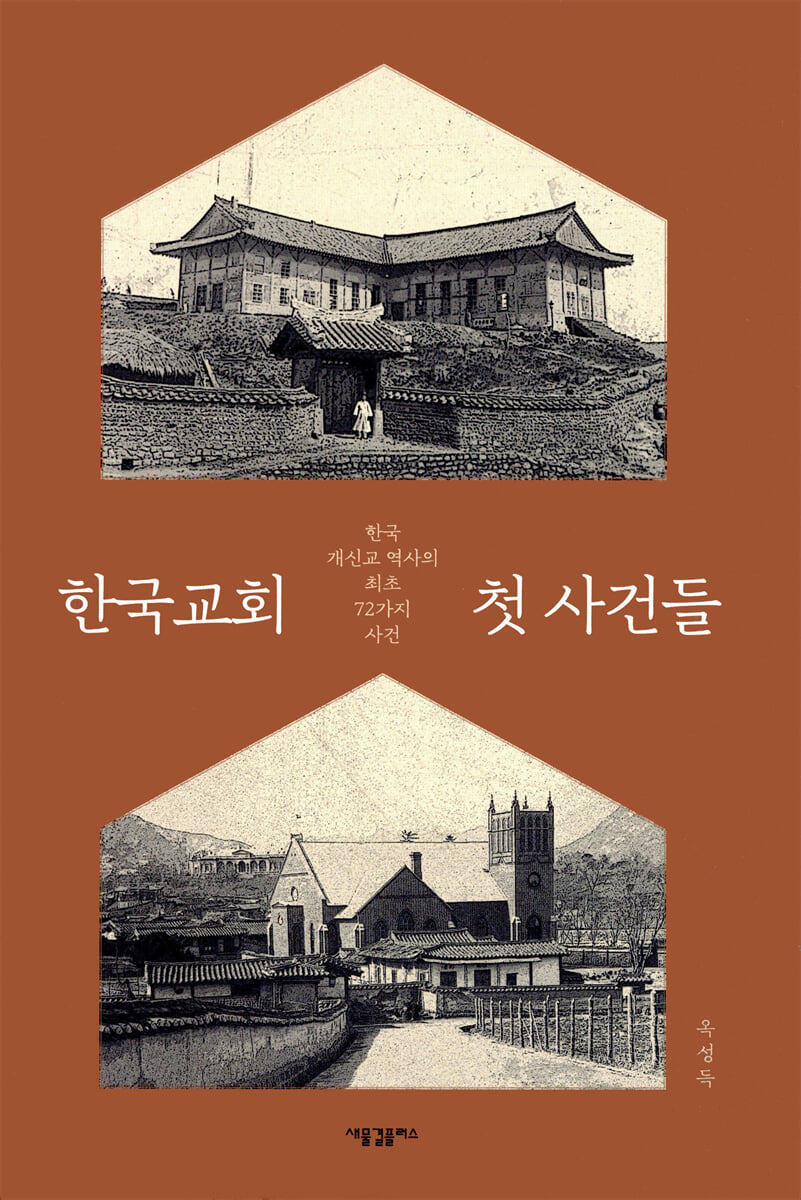
“First Events in the Korean Church” was published to mark the 140th anniversary of Christianity in Korea.
This book covers the first 72 events that occurred between the beginning of Korean Protestantism and 1910.
What is the path forward for the Korean church, which has experienced steep decline over the past 30 years and suffered deep internal trauma from the recent civil war? Looking back on its first 30 years of history, we must find a justification for its existence in Korean society and heal the disease of a lack of historical awareness.
The way for the Korean church, which is like a whitewashed tomb, to survive the era of 'fermentation of suffering' and be reborn is to go back to the first generation and recall the event that created something from nothing, thereby restoring the first faith, first hope, and first love.
It is time to go against the current that is flowing into a sea of illegality, falsehood, and arrogance and go upstream.
As we continue our pilgrimage past the midpoint of the origin of the Korean church, we encounter the resurrected Jesus of 2,000 years ago, grilling fish on the shore of the Sea of Galilee.
When we face the first event of a forgotten past, we can experience the mystical experience of breaking free from our two-dimensional routines and entering a three-dimensional, three-dimensional space where God's time is added. Let us imagine a wonderful future as we walk with the Lord, who was there yesterday, is there today, and is doing new things.
When we encounter the first events of the rich and diverse past, which are unfamiliar, the present empty and dull religious church is shaken and broken.
It is a time of floods overflowing with muddy water.
It is time to go down into the deep strata of history, draw up fresh waters, drink, clear our minds, and regain our sanity.
Through this book, readers will not only delve deeper into the stories of the pioneers who dedicated their lives to the Korean church when it was just beginning to take its first steps, but also understand the great grace of God's providence for the Korean church. Furthermore, they will have the opportunity to correct historical knowledge that has been incorrect or misunderstood.
You will also gain a variety of general knowledge about the history of the early Korean church.
This is a must-read for anyone who wants to learn lessons from the first incidents of the Korean church.
This book covers the first 72 events that occurred between the beginning of Korean Protestantism and 1910.
What is the path forward for the Korean church, which has experienced steep decline over the past 30 years and suffered deep internal trauma from the recent civil war? Looking back on its first 30 years of history, we must find a justification for its existence in Korean society and heal the disease of a lack of historical awareness.
The way for the Korean church, which is like a whitewashed tomb, to survive the era of 'fermentation of suffering' and be reborn is to go back to the first generation and recall the event that created something from nothing, thereby restoring the first faith, first hope, and first love.
It is time to go against the current that is flowing into a sea of illegality, falsehood, and arrogance and go upstream.
As we continue our pilgrimage past the midpoint of the origin of the Korean church, we encounter the resurrected Jesus of 2,000 years ago, grilling fish on the shore of the Sea of Galilee.
When we face the first event of a forgotten past, we can experience the mystical experience of breaking free from our two-dimensional routines and entering a three-dimensional, three-dimensional space where God's time is added. Let us imagine a wonderful future as we walk with the Lord, who was there yesterday, is there today, and is doing new things.
When we encounter the first events of the rich and diverse past, which are unfamiliar, the present empty and dull religious church is shaken and broken.
It is a time of floods overflowing with muddy water.
It is time to go down into the deep strata of history, draw up fresh waters, drink, clear our minds, and regain our sanity.
Through this book, readers will not only delve deeper into the stories of the pioneers who dedicated their lives to the Korean church when it was just beginning to take its first steps, but also understand the great grace of God's providence for the Korean church. Furthermore, they will have the opportunity to correct historical knowledge that has been incorrect or misunderstood.
You will also gain a variety of general knowledge about the history of the early Korean church.
This is a must-read for anyone who wants to learn lessons from the first incidents of the Korean church.
index
Preface to the First Edition 5
Preface to the Expanded Edition 12
Part 1: From Abroad to Korea
Part 1: From Abroad to Korea
1.
The first visiting missionary, Gutzlaff (Jakarta, 1832) 18
2.
Thomas (Jipu, 1866), the first missionary to visit Pyongyang, 30
3.
The first visiting American missionaries, Corbett and Matier (Jifu, 1868) 48
4.
The first Korean textbook, Ross's Corean Primer (Shanghai, 1877) 58
5.
The first baptized believers: Kim Jin-gi, Baek Hong-jun, Lee Eung-chan, and Lee Seong-ha (New York, 1879) 64
6.
The first Korean Christian documents, 『The Doctrine of the Faith of Jesus』 and 『The Doctrine of the Faith of Jesus』 (Shenyang, 1881) 70
7.
The first Korean gospel, 『The Gospel of Jesus Christ』 (Shenyang, 1882) 78
8.
The First Missionary and the First Book: Kim Cheong-song and Seo Sang-ryun (Shenyang, 1882) 86
9.
First Missionary Letter: The Call of the Macedonians by Lee Su-jeong (Yokohama, 1883) 96
10.
The Lord's Prayer in Korean, translated by Lee Su-jeong (Yokohama, 1883) 102
11.
The first Protestant missionary to visit the port and Seoul, Doughthwaite (Jifu, November 1883) 110
12.
Confession of Faith by Yun Chi-ho, the first member of the Southern Methodist Episcopal Church (Shanghai, 1887) 124
13.
The first Korean missionary magazine, The Morning Calm (London, 1890), 130
14.
The first Korean American woman to be baptized, Mrs. Bae Seon (Salem, July 1892) 138
15.
The First International Marriage: Yun Chi-ho and Ma Su-jin (Shanghai, 1894) 154
16.
The first Baptist missionary, Pastor Pauling, arrived in Korea (Boston, 1894) 166
Part 2 In Seoul
17.
Maclay's Visit to Seoul (June 1884) 174
18.
Allen, the first missionary to Korea: Lessons from his life (September 1884) 184
19.
The Life of the First Missionary, Underwood, "Broad Wings" and "Fire Circle" (April 1885) 192
20.
A New Beginning in a Wonderful Old Age Scranton, Webb, Gifford, Grierson (1885–1901) 206
21.
The first Protestant church, Seoul Union Church (1885-1886) 212
22.
First New Year's Eve Prayer Meeting, Janggam United Songgu Youngshin Service (December 31, 1885) 220
23.
Baejae School, the first modern missionary international school (1886) 226
24.
No Chun-kyung, the first Korean baptized (July 18, 1886) 236
25.
The first Presbyterian church, Jeongdong Presbyterian Church (Saemunan Church), was established (September 27, 1887) 248
26.
The First Church Organization: Ross's Visit to Seoul and the Jeongdong Presbyterian Church (September 27, 1887) 260
27.
The first Methodist church, Bethel Church (Jeongdong First Church, October 6, 1887) 272
28.
The problem of the founding date of the local church (1887) 284
29.
The first women's hospital, Bogunyeo-gwan (November 1887) 300
30.
First Christmas First Communion (December 1887) 308
31.
The First Anti-Christian Movement: The Infant Riots (June 1888) 316
32.
The First Missionary Death: Dr. Heron and the Yangwhajin Foreigners' Cemetery (July 1890) 324
33.
Olinger's first Korean sermon, "On the Affinity of Leprosy and Sin" (1890), 336
34.
Koreans' First Christian Wedding Ceremony (1890-1894) 342
35.
The first official nurse, Heathcote, Church of England (1891) 348
36.
Johnson and Davis, the first missionaries of the Southern Presbyterian Church (Seoul, October 1892) 352
37.
The first Anglican church altar and altarpiece (1893) 368
38.
The first hymn sheet music, Underwood's "Hymns" (1894), 376
39.
The Nevius-Ross method was replaced by the Underwood-Moffett method (1895-1904) 396
40.
Construction of the first infectious disease quarantine facility, Eulmi Cholera and Blood Hospital, and Saemunan Chapel (1895) 400
41.
The first Korean spacing experimenter was Ross, the introducer was Yun Chi-ho, and the implementer was the Independent Newspaper (1896) 410.
42.
The first Christian newspapers, the Joseon Christian Bulletin and the Christian Newspaper (1897) 416
43.
Appenzeller's translation (1897), published in the "Joseon Christian Bulletin," the first translation of the Old Testament, 422
44.
Dedication of the first foreign-style chapel, Jeongdong First Church (December 1897) 432
45.
The first national anthem, the Rose of Sharon song (1899) 442
46.
Syngman Rhee's Conversion in Prison and His First Christmas in Prison (1899) 448
47.
The first summer retreat at a Buddhist temple, the YMCA retreat at Jin Gwan Sa (1910) 462
Part 3: To the Northwest Region
48.
Appenzeller and Underwood's First Missionary Trip to North Korea (1887) 468
49.
The First Baptism of Sorae Church Members and the Life of Seo Gyeong-jo (1887-1906) 478
50.
Presbyterian Church First Survey Baek Hong-jun, Seo Sang-ryun, Choi Myeong-o (1890) 494
51.
The First Missionary Journey Across North Korea and Manchuria: Ma Pet and Gale's Journey (1891) 506
52.
Pyongyang's First Baptism: Mafet and Seven Koreans (January 7, 1894) 516
53.
Kim Chang-sik's Confession of Faith: The First Christian Persecution in Pyongyang (May 1894) 530
54.
The first self-supporting indigenous church, Sorae Church (July 1895), with its cross, cross-staff, and ring offerings, 548
55.
Hamheung's First Church, Shinchang-ri Church, and Missionary Swallen's Report (1896) 564
56.
Building Jangdaehyeon Church with Baekdu Mountain Pine Trees (1900) 570
57.
The First Revival, Wonsan Revival, and the Great Revival (1903) 576
58.
The Beginning of the Revival of the "Zion of Korea" (1906) 594
Part 4 From Seoul to the Nation
59.
Baird and the First Baptism of the Northern Presbyterian Church in Busan (1892-1894) 616
60.
The Jeonju Mission of Dr. Drew, the First Medical Missionary of the Southern Presbyterian Church (1894) 622
61.
Korea's first soccer team, the Anglican Church of Korea Ganghwa School Soccer Club (1899) 628
62.
The First Piano in Daegu (1900) 634
63.
Esther Park, the first Korean female missionary doctor (1900) 638
64.
The Russian Orthodox Church's Mission to Korea and the Jeong Gil-dang Incident (1900-1901) 644
65.
Ordination Ceremony of the First Deacon Pastors of the Northern Methodist Church, Kim Chang-sik and Kim Ki-beom (1901) 652
66.
Kim Yun-su, the first Christian in Gwangju (1904) 658
67.
First United Prayer Meeting for the Nation (1905) 664
68.
The first ordained pastor of the Presbyterian Church, the first graduation and ordination of seven students from the Pyongyang Theological Seminary (1907) 676
69.
Jeju Island's first believer, Kim Jae-won, and its first missionary, Lee Ki-pung (1908) 696
70.
The first comparative religious novel, Choi Byeong-heon's "Seongsan Myeonggyeong" (1909), 706
71.
Removal of the curtain separating the men's and women's sections in the sanctuary (1908) 714
72.
The first Korean Bible translation was completed (April 1910) 724
Preface to the Expanded Edition 12
Part 1: From Abroad to Korea
Part 1: From Abroad to Korea
1.
The first visiting missionary, Gutzlaff (Jakarta, 1832) 18
2.
Thomas (Jipu, 1866), the first missionary to visit Pyongyang, 30
3.
The first visiting American missionaries, Corbett and Matier (Jifu, 1868) 48
4.
The first Korean textbook, Ross's Corean Primer (Shanghai, 1877) 58
5.
The first baptized believers: Kim Jin-gi, Baek Hong-jun, Lee Eung-chan, and Lee Seong-ha (New York, 1879) 64
6.
The first Korean Christian documents, 『The Doctrine of the Faith of Jesus』 and 『The Doctrine of the Faith of Jesus』 (Shenyang, 1881) 70
7.
The first Korean gospel, 『The Gospel of Jesus Christ』 (Shenyang, 1882) 78
8.
The First Missionary and the First Book: Kim Cheong-song and Seo Sang-ryun (Shenyang, 1882) 86
9.
First Missionary Letter: The Call of the Macedonians by Lee Su-jeong (Yokohama, 1883) 96
10.
The Lord's Prayer in Korean, translated by Lee Su-jeong (Yokohama, 1883) 102
11.
The first Protestant missionary to visit the port and Seoul, Doughthwaite (Jifu, November 1883) 110
12.
Confession of Faith by Yun Chi-ho, the first member of the Southern Methodist Episcopal Church (Shanghai, 1887) 124
13.
The first Korean missionary magazine, The Morning Calm (London, 1890), 130
14.
The first Korean American woman to be baptized, Mrs. Bae Seon (Salem, July 1892) 138
15.
The First International Marriage: Yun Chi-ho and Ma Su-jin (Shanghai, 1894) 154
16.
The first Baptist missionary, Pastor Pauling, arrived in Korea (Boston, 1894) 166
Part 2 In Seoul
17.
Maclay's Visit to Seoul (June 1884) 174
18.
Allen, the first missionary to Korea: Lessons from his life (September 1884) 184
19.
The Life of the First Missionary, Underwood, "Broad Wings" and "Fire Circle" (April 1885) 192
20.
A New Beginning in a Wonderful Old Age Scranton, Webb, Gifford, Grierson (1885–1901) 206
21.
The first Protestant church, Seoul Union Church (1885-1886) 212
22.
First New Year's Eve Prayer Meeting, Janggam United Songgu Youngshin Service (December 31, 1885) 220
23.
Baejae School, the first modern missionary international school (1886) 226
24.
No Chun-kyung, the first Korean baptized (July 18, 1886) 236
25.
The first Presbyterian church, Jeongdong Presbyterian Church (Saemunan Church), was established (September 27, 1887) 248
26.
The First Church Organization: Ross's Visit to Seoul and the Jeongdong Presbyterian Church (September 27, 1887) 260
27.
The first Methodist church, Bethel Church (Jeongdong First Church, October 6, 1887) 272
28.
The problem of the founding date of the local church (1887) 284
29.
The first women's hospital, Bogunyeo-gwan (November 1887) 300
30.
First Christmas First Communion (December 1887) 308
31.
The First Anti-Christian Movement: The Infant Riots (June 1888) 316
32.
The First Missionary Death: Dr. Heron and the Yangwhajin Foreigners' Cemetery (July 1890) 324
33.
Olinger's first Korean sermon, "On the Affinity of Leprosy and Sin" (1890), 336
34.
Koreans' First Christian Wedding Ceremony (1890-1894) 342
35.
The first official nurse, Heathcote, Church of England (1891) 348
36.
Johnson and Davis, the first missionaries of the Southern Presbyterian Church (Seoul, October 1892) 352
37.
The first Anglican church altar and altarpiece (1893) 368
38.
The first hymn sheet music, Underwood's "Hymns" (1894), 376
39.
The Nevius-Ross method was replaced by the Underwood-Moffett method (1895-1904) 396
40.
Construction of the first infectious disease quarantine facility, Eulmi Cholera and Blood Hospital, and Saemunan Chapel (1895) 400
41.
The first Korean spacing experimenter was Ross, the introducer was Yun Chi-ho, and the implementer was the Independent Newspaper (1896) 410.
42.
The first Christian newspapers, the Joseon Christian Bulletin and the Christian Newspaper (1897) 416
43.
Appenzeller's translation (1897), published in the "Joseon Christian Bulletin," the first translation of the Old Testament, 422
44.
Dedication of the first foreign-style chapel, Jeongdong First Church (December 1897) 432
45.
The first national anthem, the Rose of Sharon song (1899) 442
46.
Syngman Rhee's Conversion in Prison and His First Christmas in Prison (1899) 448
47.
The first summer retreat at a Buddhist temple, the YMCA retreat at Jin Gwan Sa (1910) 462
Part 3: To the Northwest Region
48.
Appenzeller and Underwood's First Missionary Trip to North Korea (1887) 468
49.
The First Baptism of Sorae Church Members and the Life of Seo Gyeong-jo (1887-1906) 478
50.
Presbyterian Church First Survey Baek Hong-jun, Seo Sang-ryun, Choi Myeong-o (1890) 494
51.
The First Missionary Journey Across North Korea and Manchuria: Ma Pet and Gale's Journey (1891) 506
52.
Pyongyang's First Baptism: Mafet and Seven Koreans (January 7, 1894) 516
53.
Kim Chang-sik's Confession of Faith: The First Christian Persecution in Pyongyang (May 1894) 530
54.
The first self-supporting indigenous church, Sorae Church (July 1895), with its cross, cross-staff, and ring offerings, 548
55.
Hamheung's First Church, Shinchang-ri Church, and Missionary Swallen's Report (1896) 564
56.
Building Jangdaehyeon Church with Baekdu Mountain Pine Trees (1900) 570
57.
The First Revival, Wonsan Revival, and the Great Revival (1903) 576
58.
The Beginning of the Revival of the "Zion of Korea" (1906) 594
Part 4 From Seoul to the Nation
59.
Baird and the First Baptism of the Northern Presbyterian Church in Busan (1892-1894) 616
60.
The Jeonju Mission of Dr. Drew, the First Medical Missionary of the Southern Presbyterian Church (1894) 622
61.
Korea's first soccer team, the Anglican Church of Korea Ganghwa School Soccer Club (1899) 628
62.
The First Piano in Daegu (1900) 634
63.
Esther Park, the first Korean female missionary doctor (1900) 638
64.
The Russian Orthodox Church's Mission to Korea and the Jeong Gil-dang Incident (1900-1901) 644
65.
Ordination Ceremony of the First Deacon Pastors of the Northern Methodist Church, Kim Chang-sik and Kim Ki-beom (1901) 652
66.
Kim Yun-su, the first Christian in Gwangju (1904) 658
67.
First United Prayer Meeting for the Nation (1905) 664
68.
The first ordained pastor of the Presbyterian Church, the first graduation and ordination of seven students from the Pyongyang Theological Seminary (1907) 676
69.
Jeju Island's first believer, Kim Jae-won, and its first missionary, Lee Ki-pung (1908) 696
70.
The first comparative religious novel, Choi Byeong-heon's "Seongsan Myeonggyeong" (1909), 706
71.
Removal of the curtain separating the men's and women's sections in the sanctuary (1908) 714
72.
The first Korean Bible translation was completed (April 1910) 724
Into the book
Gutzlaff's pioneering spirit was echoed by Burns (W.
Burns) inspired him to pioneer missionary work in Manchuria.
Gutzlaff-Burns' indigenous and pioneering missionary spirit influenced Hudson Taylor to create the China Inland Mission.
In this respect, Gutzlaff had spiritual successors in Burns and Taylor in his mission to China, and in Robert Thomas and John Ross in his mission to Korea.
Those who sow in tears will reap in joy.
If it is not achieved in this generation, it will be achieved in the next generation.
--- 「Part 1 1.
From "The First Missionary Visit: Gutzlaff (Jakarta, 1832)"
Lee Su-jeong translated the Bible into Korean to spread the gospel, preached to international students, organized the Tokyo Korean Church, and sent letters requesting missionaries to American churches.
This is because he believed that Korea could become a modern, independent nation only by renewing the spirit and spirituality of the Korean people through Christianity directly accepted from the United States, rather than through Japanese Christianity that had passed through Japanese hands.
After reading this letter, the American Northern Presbyterian Mission sent Underwood to Korea as its first missionary.
One letter can change history.
We live on this earth as ‘a letter from Christ’ (2 Corinthians 3:3).
It is no exaggeration to say that church history is the history of letters.
In an age overflowing with discarded emails, annoying spam, and harassing malicious comments, what kind of letters should I write to survive?
--- 「Part 1, 9.
From "The First Missionary Letter: The Call of the Macedonians by Lee Su-jeong (Yokohama, 1883)"
During his 32 years as a missionary, Underwood endured constant illness, misunderstanding, jealousy, and criticism, and so he submitted his resignation to the mission headquarters several times and even requested to be transferred to Tibet.
However, he overcame all these adversities with his mission and love for the 'Buldongari'.
Like a soaring eagle, he soared high on “broad wings,” anticipated the coming of Christ, and overcame difficulties while accurately looking forward to the future of the Korean church.
He was Underwood, the one who walked with the king and wiped away the tears of orphans, the one who held his head high even when everyone around him lost confidence and criticized him, the one who believed in himself even when everyone doubted him, the one who did not grow weary of waiting, the one who dreamed but did not make his dreams into an unchanging guide, the one who stayed even after all others had grown weary and left, and who poured his heart into the work the Lord had given him.
--- 「Part 2 19.
From "The First Missionary, Underwood: A Life of 'Broad Wings' and 'Fire Circles' (April 1885)"
Christianity is a religion that walks slowly, a religion on the road.
Jesus trained his disciples by walking for three years, and Paul spent his entire life on foot, except for a few ship trips.
A person's soul matures at the speed of walking, and a disciple changes as the time passes by in conversation.
The first step in missionary work is to keep pace with your companions and listen to and learn their words.
The first generation of missionaries were able to establish an indigenous Korean church because they evangelized on the streets, eating and sleeping together with Korean evangelists.
Wall Street and Main Street are not the only streets.
The road is not smooth and the shortcut is not the only way.
On the narrow road, the country road, the narrow path, the dirt road, the alley, the road to Jericho that the Good Samaritan went down, there are people, there are those who have been robbed, and there is truth.
Let us go out to meet Jesus, who came in the flesh to become like us along that path, the resurrected Jesus who broke bread while walking with the two disciples on the road to Emmaus in despair, and Seo Sang-ryun, Maphet, and Gale who have set out along that road carrying the burden of the gospel.
--- 「Part 3 51.
From "The First Missionary Journey Across North Korea and Manchuria: The Journey of Mafet and Gale (1891)"
The elevation of the language of the people to the level of the language of the Bible brought about the intellectual development of the people, which became the foundation for economic independence and liberation from social status.
In other words, when spoken and written language became consistent, people who had been oppressed by Chinese characters and the yangban class began to dream of a world where they could live like human beings, a world where truth sets them free.
At the time, more than 90% of the population could not read, but when the reading of the Gospel was included in the baptismal rules, tens of thousands of Baekjeong and Cheonmin, hundreds of thousands of servants and farmhands, and millions of poor tenant farmers, peasants, and women learned Hangul, ushering in an era of unified Korean and Chinese.
The abolition of slavery, prohibition of early marriage, prohibition of concubine system, opposition to the public prostitution system, support for women's education, and support for gender equality, all of which were spearheaded by the church, brought about an improvement in the status of women.
Christian students of the 1910s, who could be considered the first generation to have grown up reading the Bible—students from Seoncheon Middle School arrested during the 105 Incident in 1912, and students who participated in the March 1st Movement in 1919—had a strong sense of democracy, nationalism, and independence.
Mackenzie (Frederick A.
As reporter McKenzie said, when a generation that reads the Bible encounters an unjust regime or tyranny, that generation either ends or the injustice and tyranny ends.
Burns) inspired him to pioneer missionary work in Manchuria.
Gutzlaff-Burns' indigenous and pioneering missionary spirit influenced Hudson Taylor to create the China Inland Mission.
In this respect, Gutzlaff had spiritual successors in Burns and Taylor in his mission to China, and in Robert Thomas and John Ross in his mission to Korea.
Those who sow in tears will reap in joy.
If it is not achieved in this generation, it will be achieved in the next generation.
--- 「Part 1 1.
From "The First Missionary Visit: Gutzlaff (Jakarta, 1832)"
Lee Su-jeong translated the Bible into Korean to spread the gospel, preached to international students, organized the Tokyo Korean Church, and sent letters requesting missionaries to American churches.
This is because he believed that Korea could become a modern, independent nation only by renewing the spirit and spirituality of the Korean people through Christianity directly accepted from the United States, rather than through Japanese Christianity that had passed through Japanese hands.
After reading this letter, the American Northern Presbyterian Mission sent Underwood to Korea as its first missionary.
One letter can change history.
We live on this earth as ‘a letter from Christ’ (2 Corinthians 3:3).
It is no exaggeration to say that church history is the history of letters.
In an age overflowing with discarded emails, annoying spam, and harassing malicious comments, what kind of letters should I write to survive?
--- 「Part 1, 9.
From "The First Missionary Letter: The Call of the Macedonians by Lee Su-jeong (Yokohama, 1883)"
During his 32 years as a missionary, Underwood endured constant illness, misunderstanding, jealousy, and criticism, and so he submitted his resignation to the mission headquarters several times and even requested to be transferred to Tibet.
However, he overcame all these adversities with his mission and love for the 'Buldongari'.
Like a soaring eagle, he soared high on “broad wings,” anticipated the coming of Christ, and overcame difficulties while accurately looking forward to the future of the Korean church.
He was Underwood, the one who walked with the king and wiped away the tears of orphans, the one who held his head high even when everyone around him lost confidence and criticized him, the one who believed in himself even when everyone doubted him, the one who did not grow weary of waiting, the one who dreamed but did not make his dreams into an unchanging guide, the one who stayed even after all others had grown weary and left, and who poured his heart into the work the Lord had given him.
--- 「Part 2 19.
From "The First Missionary, Underwood: A Life of 'Broad Wings' and 'Fire Circles' (April 1885)"
Christianity is a religion that walks slowly, a religion on the road.
Jesus trained his disciples by walking for three years, and Paul spent his entire life on foot, except for a few ship trips.
A person's soul matures at the speed of walking, and a disciple changes as the time passes by in conversation.
The first step in missionary work is to keep pace with your companions and listen to and learn their words.
The first generation of missionaries were able to establish an indigenous Korean church because they evangelized on the streets, eating and sleeping together with Korean evangelists.
Wall Street and Main Street are not the only streets.
The road is not smooth and the shortcut is not the only way.
On the narrow road, the country road, the narrow path, the dirt road, the alley, the road to Jericho that the Good Samaritan went down, there are people, there are those who have been robbed, and there is truth.
Let us go out to meet Jesus, who came in the flesh to become like us along that path, the resurrected Jesus who broke bread while walking with the two disciples on the road to Emmaus in despair, and Seo Sang-ryun, Maphet, and Gale who have set out along that road carrying the burden of the gospel.
--- 「Part 3 51.
From "The First Missionary Journey Across North Korea and Manchuria: The Journey of Mafet and Gale (1891)"
The elevation of the language of the people to the level of the language of the Bible brought about the intellectual development of the people, which became the foundation for economic independence and liberation from social status.
In other words, when spoken and written language became consistent, people who had been oppressed by Chinese characters and the yangban class began to dream of a world where they could live like human beings, a world where truth sets them free.
At the time, more than 90% of the population could not read, but when the reading of the Gospel was included in the baptismal rules, tens of thousands of Baekjeong and Cheonmin, hundreds of thousands of servants and farmhands, and millions of poor tenant farmers, peasants, and women learned Hangul, ushering in an era of unified Korean and Chinese.
The abolition of slavery, prohibition of early marriage, prohibition of concubine system, opposition to the public prostitution system, support for women's education, and support for gender equality, all of which were spearheaded by the church, brought about an improvement in the status of women.
Christian students of the 1910s, who could be considered the first generation to have grown up reading the Bible—students from Seoncheon Middle School arrested during the 105 Incident in 1912, and students who participated in the March 1st Movement in 1919—had a strong sense of democracy, nationalism, and independence.
Mackenzie (Frederick A.
As reporter McKenzie said, when a generation that reads the Bible encounters an unjust regime or tyranny, that generation either ends or the injustice and tyranny ends.
--- 「Part 4 72.
From "The First Korean Bible: Translation Completed (April 1910)"
From "The First Korean Bible: Translation Completed (April 1910)"
GOODS SPECIFICS
- Date of issue: April 21, 2025
- Format: Hardcover book binding method guide
- Page count, weight, size: 744 pages | 152*225*40mm
- ISBN13: 9791161292991
- ISBN10: 1161292993
You may also like
카테고리
korean


korean

![GQ KOREA Mark (Monthly): December [2025]](http://librairie.coreenne.fr/cdn/shop/files/8ef265dbbfbf186523ed75ba7319009d.jpg?v=1765340328&width=3840)


