

Doctor and Saint
 |
Description
Book Introduction
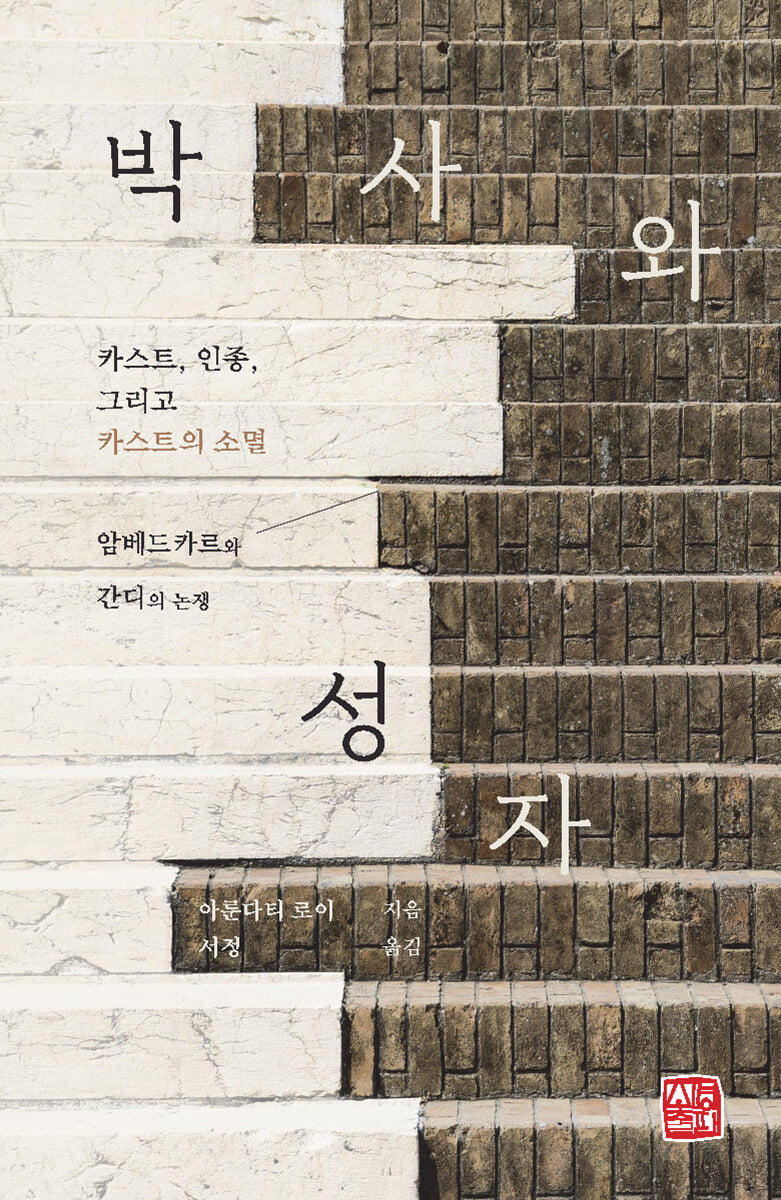
A spotlight on the persecuted, Arundhati Roy reveals uncomfortable and controversial truths about the political ideology and career of one of India's most famous and revered figures.
At the same time, he makes it clear that what millions of Indians need is not formal democracy, but liberation from the oppression, shame, and poverty caused by India's archaic caste system.
This book makes a compelling case for the need to revive the revolutionary intellectual achievements of Ambedkar, an Indian social reformer and politician from an Untouchable background, not only in India but also around the world.
At the same time, he makes it clear that what millions of Indians need is not formal democracy, but liberation from the oppression, shame, and poverty caused by India's archaic caste system.
This book makes a compelling case for the need to revive the revolutionary intellectual achievements of Ambedkar, an Indian social reformer and politician from an Untouchable background, not only in India but also around the world.
- You can preview some of the book's contents.
Preview
index
preface
Translator's Note
Doctor and Saint
Shining Path
cactus forest
opposition
annotation
References
Search
Translator's Note
Doctor and Saint
Shining Path
cactus forest
opposition
annotation
References
Search
Publisher's Review
The caste system, the problem of the untouchables, a downtrodden and broken existence
Arundhati Roy is an Indian author who wrote the novel The God of Small Things.
Set in Kerala, in the western part of the Indian peninsula in the 1960s, it depicts events that unfold in Amu's family.
The story of the Iranian twins Estha and Rachel's coming-of-age is marked by the accidental death of their British cousin. While the sensual love story unfolding in the strangely mystical nature is captivating, the tragic unfolding that reaches the twins' boatman friend, Velutha, an untouchable, is excruciatingly painful.
In an interview, Arundhati Roy said, “For me, fiction and non-fiction are the same literary activities,” and dispelled public doubts about her 20 years of writing only non-fiction since winning the Booker Prize in 1997 until The Saint of the Beatitudes was published.
Arundhati Roy, who focuses on the persecuted, took on the role of interpreter and willingly stood on their side by writing “The Doctor and the Saint”, which was none other than Ambedkar.
Ambedkar was an Indian social reformer and politician, while Castro was from an untouchable caste.
After graduating from college in Bombay (now Mumbai), he studied abroad in the United States and England, and devoted himself to the movement to abolish untouchability, forming social reform groups and political parties and leading mass movements.
Ambedkar planned to deliver a speech in Lahore in 1936 to an audience of privileged caste Hindus, preaching the absurdity of the caste system.
Although the invitation was sent by a reform group that was not without awareness of the irrationality of the caste system, they were uncomfortable with the intellectual attack on the foundations of Hinduism and suddenly withdrew the invitation.
The prepared speech circulated among the congregation as a pamphlet called “The Annihilation of Caste” and was not officially published until 2014, successively in India, the UK, and the US. However, to address the 78-year gap, the burden of having to understand the text as it was meant to be conveyed verbally, and the concern that it would be understood differently outside India, Arundhati Roy wrote a grand, epic introduction to this text, which is “The Doctor and the Saint.”
The debate between Ambedkar and Gandhi
While Gandhi, wary of the evils of the modern city, idealized the blind, mythical village by glorifying the characteristics of traditional society, for his counterpart Ambedkar, Gandhi's ideal village was a den of prejudice and exclusive communalism.
In response to the urgency of breaking away from traditional values, Ambedkar instead focused on urbanization and industrialization.
Arundhati Roy soberly assesses that the destructive dangers of Western modernity were underestimated, and Gandhi gained a reputation as a prophet who sounded the alarm about the development model of modern society.
Ambedkar, who was exceptionally good at graduating from a touchless school and had the opportunity to study in the United States, returned to India with a doctorate and a lawyer's license, but realized that he had not been able to move even one step beyond his status as an 'untouchable.'
In "The Abolition of Caste," Ambedkar repeatedly emphasizes the need to abolish not only the discrimination against untouchability but also the caste system itself.
The Hindu lower classes have been completely disempowered to the point where they cannot take direct action because of this miserable caste system and because of their religious nature.
The occupation in which the untouchables are overwhelmingly distributed is cleaners.
And most of them are traditional toilet cleaners who carry a bucket on their head and go into the sewage tank naked, scooping up human excrement with their whole body.
Yet Gandhi preached to them how to love and hold on to their heritage, how to aspire never to anything beyond the joy of their hereditary profession, and he wrote extensively about the importance of cleaning as a religious duty.
Arundhati Roy criticizes Gandhi's praise of the 'work' of cleaners:
“It didn’t seem to matter that other people in the world were taking care of their own affairs without making such a fuss.”
The conflict between 'doctor' and 'saint'
And then the 'Doctor' and the 'Saint' meet each other.
In "Confrontation".
They clash at the Second Round Table Conference, which drafts a new constitution for independent India, transitioning it from a British Empire-administered state to a nation-state.
“Suddenly, people of enormous diversity of races, castes, tribes and religions had to be transformed into modern citizens of a modern nation.” Ambedkar, as law minister and chairman of the Constitution Committee, drafted the Constitution in 1947.
Some protections for the Untouchables were in place, but the opinions of the privileged caste members prevailed.
In 1948, Gandhi was assassinated by Hindu radicals, and in 1956, Ambedkar converted to Buddhism.
Today, statues of Gandhi and Ambedkar stand like ideologies all over India.
The Gandhi statue holds the Bhagavad Gita, and the Ambedkar statue holds the Indian Constitution.
The conflict between the pre-modern and modern, traditional and anti-traditional, positions on what to regard as the essential elements that form the foundation of independent India reached a peak of discord when intertwined with Hinduism, the state religion. The fate of Gandhi, which ended in assassination, and the journey of Ambedkar, who converted to Buddhism, clearly show how great a delusion it was to achieve reform of the caste system without resolving the issue of untouchability, and how radical a decision it was to address it in earnest.
Arundhati Roy is an Indian author who wrote the novel The God of Small Things.
Set in Kerala, in the western part of the Indian peninsula in the 1960s, it depicts events that unfold in Amu's family.
The story of the Iranian twins Estha and Rachel's coming-of-age is marked by the accidental death of their British cousin. While the sensual love story unfolding in the strangely mystical nature is captivating, the tragic unfolding that reaches the twins' boatman friend, Velutha, an untouchable, is excruciatingly painful.
In an interview, Arundhati Roy said, “For me, fiction and non-fiction are the same literary activities,” and dispelled public doubts about her 20 years of writing only non-fiction since winning the Booker Prize in 1997 until The Saint of the Beatitudes was published.
Arundhati Roy, who focuses on the persecuted, took on the role of interpreter and willingly stood on their side by writing “The Doctor and the Saint”, which was none other than Ambedkar.
Ambedkar was an Indian social reformer and politician, while Castro was from an untouchable caste.
After graduating from college in Bombay (now Mumbai), he studied abroad in the United States and England, and devoted himself to the movement to abolish untouchability, forming social reform groups and political parties and leading mass movements.
Ambedkar planned to deliver a speech in Lahore in 1936 to an audience of privileged caste Hindus, preaching the absurdity of the caste system.
Although the invitation was sent by a reform group that was not without awareness of the irrationality of the caste system, they were uncomfortable with the intellectual attack on the foundations of Hinduism and suddenly withdrew the invitation.
The prepared speech circulated among the congregation as a pamphlet called “The Annihilation of Caste” and was not officially published until 2014, successively in India, the UK, and the US. However, to address the 78-year gap, the burden of having to understand the text as it was meant to be conveyed verbally, and the concern that it would be understood differently outside India, Arundhati Roy wrote a grand, epic introduction to this text, which is “The Doctor and the Saint.”
The debate between Ambedkar and Gandhi
While Gandhi, wary of the evils of the modern city, idealized the blind, mythical village by glorifying the characteristics of traditional society, for his counterpart Ambedkar, Gandhi's ideal village was a den of prejudice and exclusive communalism.
In response to the urgency of breaking away from traditional values, Ambedkar instead focused on urbanization and industrialization.
Arundhati Roy soberly assesses that the destructive dangers of Western modernity were underestimated, and Gandhi gained a reputation as a prophet who sounded the alarm about the development model of modern society.
Ambedkar, who was exceptionally good at graduating from a touchless school and had the opportunity to study in the United States, returned to India with a doctorate and a lawyer's license, but realized that he had not been able to move even one step beyond his status as an 'untouchable.'
In "The Abolition of Caste," Ambedkar repeatedly emphasizes the need to abolish not only the discrimination against untouchability but also the caste system itself.
The Hindu lower classes have been completely disempowered to the point where they cannot take direct action because of this miserable caste system and because of their religious nature.
The occupation in which the untouchables are overwhelmingly distributed is cleaners.
And most of them are traditional toilet cleaners who carry a bucket on their head and go into the sewage tank naked, scooping up human excrement with their whole body.
Yet Gandhi preached to them how to love and hold on to their heritage, how to aspire never to anything beyond the joy of their hereditary profession, and he wrote extensively about the importance of cleaning as a religious duty.
Arundhati Roy criticizes Gandhi's praise of the 'work' of cleaners:
“It didn’t seem to matter that other people in the world were taking care of their own affairs without making such a fuss.”
The conflict between 'doctor' and 'saint'
And then the 'Doctor' and the 'Saint' meet each other.
In "Confrontation".
They clash at the Second Round Table Conference, which drafts a new constitution for independent India, transitioning it from a British Empire-administered state to a nation-state.
“Suddenly, people of enormous diversity of races, castes, tribes and religions had to be transformed into modern citizens of a modern nation.” Ambedkar, as law minister and chairman of the Constitution Committee, drafted the Constitution in 1947.
Some protections for the Untouchables were in place, but the opinions of the privileged caste members prevailed.
In 1948, Gandhi was assassinated by Hindu radicals, and in 1956, Ambedkar converted to Buddhism.
Today, statues of Gandhi and Ambedkar stand like ideologies all over India.
The Gandhi statue holds the Bhagavad Gita, and the Ambedkar statue holds the Indian Constitution.
The conflict between the pre-modern and modern, traditional and anti-traditional, positions on what to regard as the essential elements that form the foundation of independent India reached a peak of discord when intertwined with Hinduism, the state religion. The fate of Gandhi, which ended in assassination, and the journey of Ambedkar, who converted to Buddhism, clearly show how great a delusion it was to achieve reform of the caste system without resolving the issue of untouchability, and how radical a decision it was to address it in earnest.
GOODS SPECIFICS
- Date of issue: January 15, 2025
- Format: Paperback book binding method guide
- Page count, weight, size: 230 pages | 130*200*16mm
- ISBN13: 9791159059995
You may also like
카테고리
korean


korean

![GQ KOREA Mark (Monthly): December [2025]](http://librairie.coreenne.fr/cdn/shop/files/8ef265dbbfbf186523ed75ba7319009d.jpg?v=1765340328&width=3840)


