

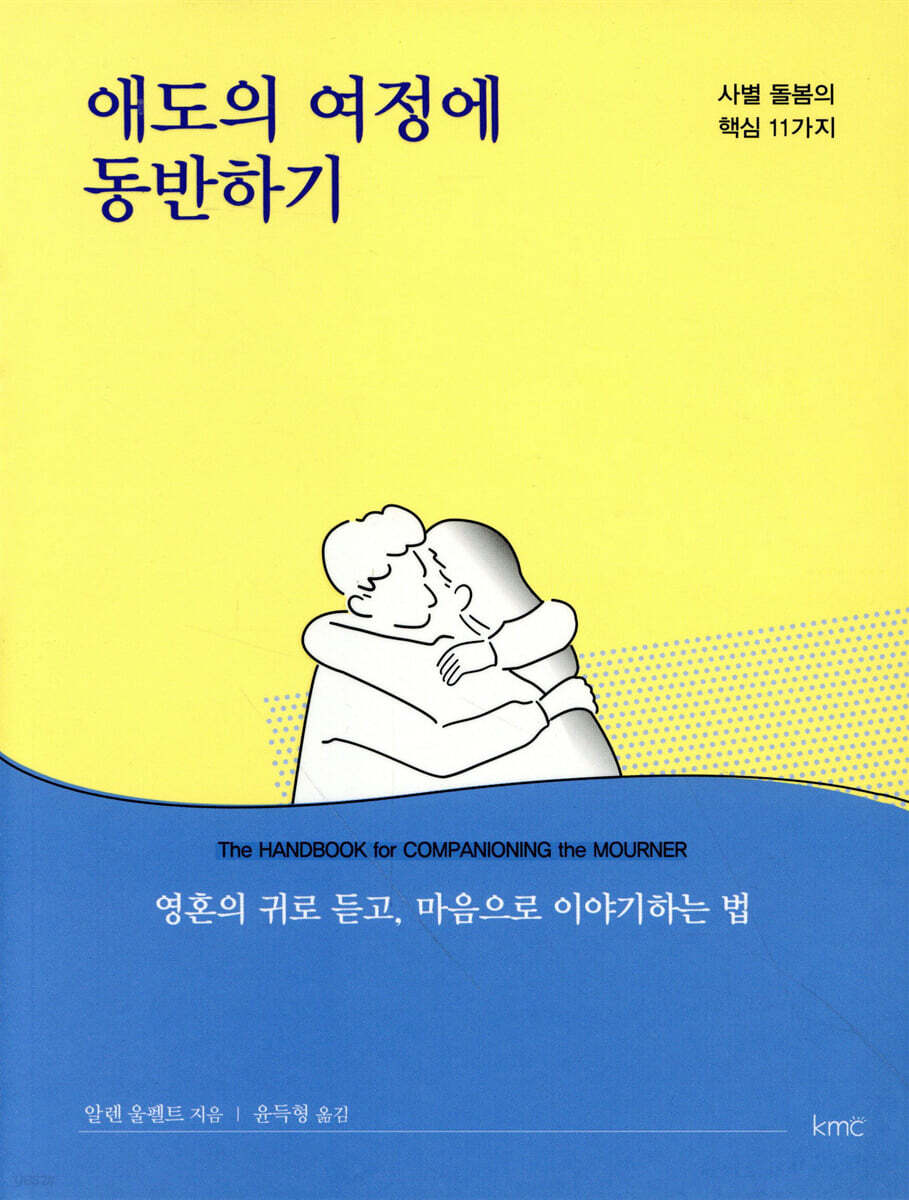
Accompanying you on your journey of grief
 |
Description
Book Introduction
True mourning is a journey to heal a broken heart.
Even without offering hasty comfort or advice, we can each love and care for those who are suffering in our own way.
Through 11 core principles, it provides an understanding of the value of grief that sustains mourners and suggests ways to become a witness to the grief journey.
Even without offering hasty comfort or advice, we can each love and care for those who are suffering in our own way.
Through 11 core principles, it provides an understanding of the value of grief that sustains mourners and suggests ways to become a witness to the grief journey.
- You can preview some of the book's contents.
Preview
index
Translator's Note
Recommendation
Introduction
11 Principles to Guide You on Your Journey of Grief
01 Empathize with the suffering of others
02 Dwell together in the wilderness of the soul
03 Respect the spiritual aspect
04 Listen with your heart
05 Be a witness to other people's difficult journeys.
06 Walk side by side
07 Discover the Gift of Holy Silence
08 Keep calm
09 Respect the chaos and confusion
10 Learn from others
11 Curiosity
Going out words
Recommendation
Introduction
11 Principles to Guide You on Your Journey of Grief
01 Empathize with the suffering of others
02 Dwell together in the wilderness of the soul
03 Respect the spiritual aspect
04 Listen with your heart
05 Be a witness to other people's difficult journeys.
06 Walk side by side
07 Discover the Gift of Holy Silence
08 Keep calm
09 Respect the chaos and confusion
10 Learn from others
11 Curiosity
Going out words
Into the book
The grief experienced after a loss leads the mourner into the wilderness.
Staying there allows you to reflect on your relationships with loved ones, reflect on your life, and spend some quiet time slowly coming into contact with your emotions.
But people want to avoid that time.
Accompanying, as Allen Wolfelt puts it, means staying with the mourner in these moments of wilderness, without judgment, with genuine empathy, with the heart rather than the head.
A companion must be able to walk quietly alongside the person on the long journey of mourning.
---From the Translator's Note
As we open our hearts to the painful realities of others, challenging thoughts may creep up.
Can I really help this person? Could the pain of their loss be influencing my own? What would happen to me if I actually offered help? Our ability to recognize discomfort when facing hardship helps us avoid being overwhelmed by their pain, denying or underestimating their reality.
---From “01 Empathize with the suffering of others”
We hear things like, “Keep busy,” “Hang in there,” and “Find someone to meet.”
By following these stories that encourage mourning avoidance, mourners often travel back in time and space to find their old selves.
But the old self is gone forever.
Now, temporary wandering in the wilderness of sorrow is rather a familiar place.
Slowly, repeatedly, and with kind companions, the mourner can find new meaning and discover a new self.
---From “02 Dwell Together in the Wilderness of the Soul”
Confusion and confusion are times of waiting, times of paralysis, times when the world is not understood in the way it was before death.
Mourners may experience anxiety, excitement, restlessness, and persistent confusion.
Sometimes you have trouble getting things done.
Mourners often experience forgetfulness and may lose the pleasures of everyday life.
Staying there allows you to reflect on your relationships with loved ones, reflect on your life, and spend some quiet time slowly coming into contact with your emotions.
But people want to avoid that time.
Accompanying, as Allen Wolfelt puts it, means staying with the mourner in these moments of wilderness, without judgment, with genuine empathy, with the heart rather than the head.
A companion must be able to walk quietly alongside the person on the long journey of mourning.
---From the Translator's Note
As we open our hearts to the painful realities of others, challenging thoughts may creep up.
Can I really help this person? Could the pain of their loss be influencing my own? What would happen to me if I actually offered help? Our ability to recognize discomfort when facing hardship helps us avoid being overwhelmed by their pain, denying or underestimating their reality.
---From “01 Empathize with the suffering of others”
We hear things like, “Keep busy,” “Hang in there,” and “Find someone to meet.”
By following these stories that encourage mourning avoidance, mourners often travel back in time and space to find their old selves.
But the old self is gone forever.
Now, temporary wandering in the wilderness of sorrow is rather a familiar place.
Slowly, repeatedly, and with kind companions, the mourner can find new meaning and discover a new self.
---From “02 Dwell Together in the Wilderness of the Soul”
Confusion and confusion are times of waiting, times of paralysis, times when the world is not understood in the way it was before death.
Mourners may experience anxiety, excitement, restlessness, and persistent confusion.
Sometimes you have trouble getting things done.
Mourners often experience forgetfulness and may lose the pleasures of everyday life.
---From "09 Respect Confusion and Chaos"
Publisher's Review
The death of a loved one is close to life.
After death, the family left behind experiences the greatest sorrow and pain in life.
They appear depressed, anxious, and confused, and have difficulty in their daily lives because they cannot let go of the dead person.
It's heartbreaking to see them like that, so I try to console them and give them advice, but the mourners don't accept it.
Have you ever felt helpless, unsure of how to comfort someone? If you have the courage to face your painful emotions, you can love and care for the bereaved in your own way, without being quick to worry or offer advice.
How to face the pain of loss
What takes priority over any special treatment technique or know-how is ‘accepting pain as it is with a compassionate heart.’
This book helps those who care for grieving people first understand the role and value of grief and pain.
It also presents 11 principles for accepting suffering as it is, from 'empathizing with the suffering of others, dwelling together in the wilderness of the soul, respecting the spiritual side, and listening with the heart' to 'learning from others, and always approaching with a new mind.'
Phrases that help heal the mind
The author shares pure insights by quoting the writings of spiritual masters, full of fresh and unique wisdom.
It also informs us of incorrect judgments made toward those in mourning and the correct way to compensate for them.
It also provides refreshing answers to questions that caregivers might have had.
So if you want to help someone who is grieving, become their companion!
After death, the family left behind experiences the greatest sorrow and pain in life.
They appear depressed, anxious, and confused, and have difficulty in their daily lives because they cannot let go of the dead person.
It's heartbreaking to see them like that, so I try to console them and give them advice, but the mourners don't accept it.
Have you ever felt helpless, unsure of how to comfort someone? If you have the courage to face your painful emotions, you can love and care for the bereaved in your own way, without being quick to worry or offer advice.
How to face the pain of loss
What takes priority over any special treatment technique or know-how is ‘accepting pain as it is with a compassionate heart.’
This book helps those who care for grieving people first understand the role and value of grief and pain.
It also presents 11 principles for accepting suffering as it is, from 'empathizing with the suffering of others, dwelling together in the wilderness of the soul, respecting the spiritual side, and listening with the heart' to 'learning from others, and always approaching with a new mind.'
Phrases that help heal the mind
The author shares pure insights by quoting the writings of spiritual masters, full of fresh and unique wisdom.
It also informs us of incorrect judgments made toward those in mourning and the correct way to compensate for them.
It also provides refreshing answers to questions that caregivers might have had.
So if you want to help someone who is grieving, become their companion!
GOODS SPECIFICS
- Publication date: December 10, 2021
- Page count, weight, size: 136 pages | 150*197*20mm
- ISBN13: 9788984308671
- ISBN10: 8984308676
You may also like
카테고리
korean


korean

![ELLE 엘르 스페셜 에디션 A형 : 12월 [2025]](http://librairie.coreenne.fr/cdn/shop/files/b8e27a3de6c9538896439686c6b0e8fb.jpg?v=1766436872&width=3840)


