

Introduction to Buddhism
 |
Description
Book Introduction
A must-read for anyone new to Buddhism, containing only the essential information they need to know.
There are so many sutras that you wouldn't be able to read them all even if you read one a day for the rest of your life, and there are so many difficult to understand and misunderstand terms and symbols of countless temples contained within them that you've never heard of before...
Buddhism, which has developed broadly and deeply over a long period of 2,600 years, is a religion with as much to learn as its history.
So, it may feel difficult for those who are just starting to study.
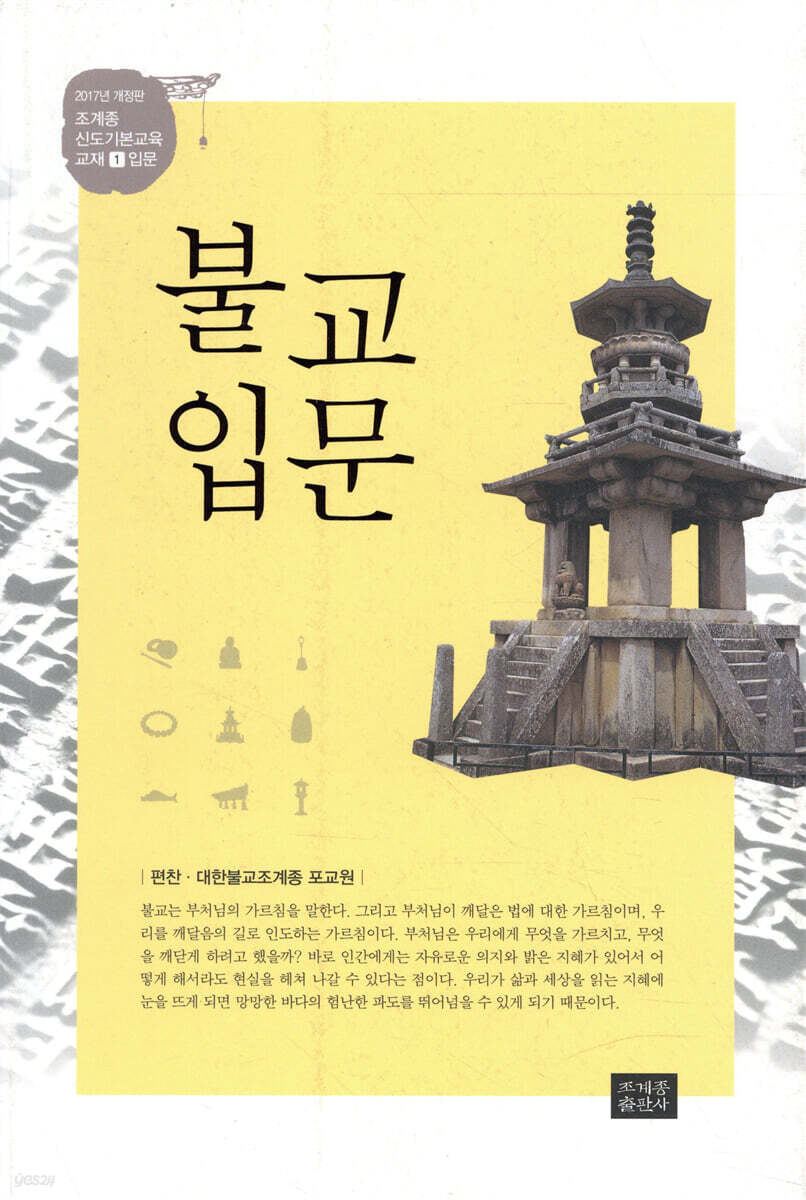
"Introduction to Buddhism" is a book that explains "What is Buddhism?" to those who are new to Buddhism.
This book covers a wide range of topics, including the characteristics of Buddhism among the many religions in the world, the existence of the Buddha, Bodhisattvas, and deities that Buddhism believes in and relies on, what kind of life the Buddha lived and what teachings he gave us, how Buddhists should live and practice, and a correct understanding of Buddhism and religious life, as well as an introduction to Buddhist culture such as temple buildings and statues of Buddhas and Bodhisattvas, and the history of the Jogye Order, the representative Buddhist order in Korea.
However, although it covers a variety of topics, it only introduces the essential information, and describes each topic concisely and easily.
So, even if you read it alone, you can understand the core of Buddhism without any difficulty.
Therefore, it will serve as a friendly guide not only for those who are new to Buddhism but also for those who are interested in Buddhism.
There are so many sutras that you wouldn't be able to read them all even if you read one a day for the rest of your life, and there are so many difficult to understand and misunderstand terms and symbols of countless temples contained within them that you've never heard of before...
Buddhism, which has developed broadly and deeply over a long period of 2,600 years, is a religion with as much to learn as its history.
So, it may feel difficult for those who are just starting to study.
"Introduction to Buddhism" is a book that explains "What is Buddhism?" to those who are new to Buddhism.
This book covers a wide range of topics, including the characteristics of Buddhism among the many religions in the world, the existence of the Buddha, Bodhisattvas, and deities that Buddhism believes in and relies on, what kind of life the Buddha lived and what teachings he gave us, how Buddhists should live and practice, and a correct understanding of Buddhism and religious life, as well as an introduction to Buddhist culture such as temple buildings and statues of Buddhas and Bodhisattvas, and the history of the Jogye Order, the representative Buddhist order in Korea.
However, although it covers a variety of topics, it only introduces the essential information, and describes each topic concisely and easily.
So, even if you read it alone, you can understand the core of Buddhism without any difficulty.
Therefore, it will serve as a friendly guide not only for those who are new to Buddhism but also for those who are interested in Buddhism.
- You can preview some of the book's contents.
Preview
index
Publisher
Chapter 1.
Why Should We Have Religion? (The Meaning of Religion and the Characteristics of Buddhism)
1.
The meaning of life and religion
2.
Religion in Modern Society
1) The meaning and value of religion
2) People who are deluded by religion
3) Buddha's teachings on the three types of religion
3.
Reasons for believing in Buddhism
1) Characteristics of Buddhism
2) Why do I seek Buddhism?
Chapter 2.
What to Believe and Achieve in Buddhism (The Importance of Faith and the Buddhas and Bodhisattvas)
1.
The most fundamental thing is faith
2.
What is faith and what should we believe?
3.
Who is Buddha?
1) Buddha, who is fully endowed with wisdom and compassion
2) A Bodhisattva dedicated to saving sentient beings
3) A god who bestows benefits
Chapter 3.
Who was Sakyamuni Buddha and how did he live? (The Buddha's life and teachings)
1.
The life of Buddha
1) The comfortable days of a prince
2) Face life's problems
3) Leave home
4) Go forth in search of a teacher
5) Practice under the Bodhi tree
6) Realize
7) Go out into the world
8) Enter complete nirvana
2.
Buddha's disciples
Chapter 4.
What can we learn from the Buddha's teachings? (The Buddha's teachings and the direction of life)
1.
The meaning contained in the law
2.
The Buddha's teachings we must know and practice
1) The three properties of the world (the three dharma seals)
2) Four Noble Truths (Four Noble Truths and Eightfold Path)
3) Who gives happiness and unhappiness (karma and cause and effect)
4) The world exists by relying on each other (acting technique)
5) A life that does not go to extremes (the middle way)
6) A life without obstacles (public and private)
Chapter 5.
What are the precepts and ethics that Buddhists must observe? (Buddhist precepts and ethics)
1.
The Three Refuges: A Pledge to Live as a Buddhist
2.
The Five Precepts, the five rules that Buddhists must observe
3.
Seven Buddhas: Stop doing evil and do good.
4.
Repent, wash away your karma, and live a new life.
5.
Buddhist ethics and morals
Chapter 6.
How to Practice for Peace in Life (Types and Methods of Practice)
1.
Shinhaeng, faith and practice together
2.
Precepts? Selection? A practice that combines wisdom
1) The central content of the practice is the three studies of precepts, meditation, and wisdom.
2) Type of performance
3.
Prayer, the protection of the Buddha, strengthens your practice.
4.
Prayer? The mindset and method of practice
5.
New life at home
Chapter 7.
What Buddhists Must Practice to Live Happily (The Path to Living as a Beautiful Person, a Bodhisattva)
1.
The life of a bodhisattva
2.
Six Paramitas
1) The Perfection of Giving
2) The Perfection of Precepts
3) The Paramita of Patience
4) The Perfection of Diligence
5) Selection Paramita
6) Prajna Paramita
3.
How to embrace people
1) The method of private acquisition
2) Office conscience
4.
The Ten Vows of a Bodhisattva
5.
Sahongseowon, four large and spacious seowons
Chapter 8.
Why should we worship and attend Buddhist services? (The meaning and value of worship and services)
1.
Think of the Buddha every day and do your best
1) Worship, worship the Buddha and Bodhisattva
2) Offering food to the Buddha and Bodhisattva
2.
Seeking wisdom and protection through the Dharma Assembly
1) A Dharma Assembly, a place with the Three Jewels: Buddha, Dharma, and Sangha
2) Various Buddhist ceremonies and holidays
Chapter 9.
What kind of place is a temple where practice, teachings, and culture are alive? (The functions and roles of temples)
1.
A temple located in a good place for practicing and spreading the dharma
2.
The fragrance of truth contained throughout the temple
1) The majestic temples you encounter across the Geukrakgyo Bridge
2) The temple gate leading to the world of Buddha
3) The Dharma Hall, a place filled with the Buddha's wisdom and blessings
4) The Three Immortal Jewels that Continue Without Words
5) Yosa, the living space of a temple where practice is alive
3.
Dharma tools with Buddha's teachings
1) Buddhist relics for saving sentient beings
2) Major Dharma tools in the life of a monk
Chapter 10.
What do Buddha and Bodhisattva look like and what roles do they play? (The mind of Buddha statues and their symbols)
1.
Attitude toward Buddhist statues
1) Enshrine the Buddha statue with respect and longing for him.
2) Worship and make offerings to the Buddha to attain the highest path.
2.
The joy of meeting the Buddha
1) Get to know the Buddha
2) The temple and the Buddha and Bodhisattva
Chapter 11.
What Buddhists of the Jogye Order of Korean Buddhism Should Know and Practice (The Values and Aims of the Jogye Order of Korean Buddhism)
1.
The meaning of the name Jogye Order of Korean Buddhism
1) What is the Jogye Order of Korean Buddhism?
2) Origin of the name Jogye Order
3) The Jogye Order's tenets and sutras
2.
The Jogye Order of Korean Buddhism, which shares the history of Korean Buddhism
1) The patriarch and the national teacher of Do
2) The Central Heavenly King, the Assistant Jinul National Teacher
3) The revival period, Taego Bou National Teacher
4) Modern and contemporary Jogye Order
3.
The structure and role of the Jogye Order of Korean Buddhism
1) Central organization
2) Local organizations
3) Subordinate organizations and educational institutions
4.
The religious practices of the Jogye Order
1) Buddhists and believers
2) To create a new religious practice culture in Korean Buddhism
supplement
Buddhist posture and etiquette | Korean Buddhist rites and rituals | Korean Heart Sutra | Buddhist practice rules/community rules
Chapter 1.
Why Should We Have Religion? (The Meaning of Religion and the Characteristics of Buddhism)
1.
The meaning of life and religion
2.
Religion in Modern Society
1) The meaning and value of religion
2) People who are deluded by religion
3) Buddha's teachings on the three types of religion
3.
Reasons for believing in Buddhism
1) Characteristics of Buddhism
2) Why do I seek Buddhism?
Chapter 2.
What to Believe and Achieve in Buddhism (The Importance of Faith and the Buddhas and Bodhisattvas)
1.
The most fundamental thing is faith
2.
What is faith and what should we believe?
3.
Who is Buddha?
1) Buddha, who is fully endowed with wisdom and compassion
2) A Bodhisattva dedicated to saving sentient beings
3) A god who bestows benefits
Chapter 3.
Who was Sakyamuni Buddha and how did he live? (The Buddha's life and teachings)
1.
The life of Buddha
1) The comfortable days of a prince
2) Face life's problems
3) Leave home
4) Go forth in search of a teacher
5) Practice under the Bodhi tree
6) Realize
7) Go out into the world
8) Enter complete nirvana
2.
Buddha's disciples
Chapter 4.
What can we learn from the Buddha's teachings? (The Buddha's teachings and the direction of life)
1.
The meaning contained in the law
2.
The Buddha's teachings we must know and practice
1) The three properties of the world (the three dharma seals)
2) Four Noble Truths (Four Noble Truths and Eightfold Path)
3) Who gives happiness and unhappiness (karma and cause and effect)
4) The world exists by relying on each other (acting technique)
5) A life that does not go to extremes (the middle way)
6) A life without obstacles (public and private)
Chapter 5.
What are the precepts and ethics that Buddhists must observe? (Buddhist precepts and ethics)
1.
The Three Refuges: A Pledge to Live as a Buddhist
2.
The Five Precepts, the five rules that Buddhists must observe
3.
Seven Buddhas: Stop doing evil and do good.
4.
Repent, wash away your karma, and live a new life.
5.
Buddhist ethics and morals
Chapter 6.
How to Practice for Peace in Life (Types and Methods of Practice)
1.
Shinhaeng, faith and practice together
2.
Precepts? Selection? A practice that combines wisdom
1) The central content of the practice is the three studies of precepts, meditation, and wisdom.
2) Type of performance
3.
Prayer, the protection of the Buddha, strengthens your practice.
4.
Prayer? The mindset and method of practice
5.
New life at home
Chapter 7.
What Buddhists Must Practice to Live Happily (The Path to Living as a Beautiful Person, a Bodhisattva)
1.
The life of a bodhisattva
2.
Six Paramitas
1) The Perfection of Giving
2) The Perfection of Precepts
3) The Paramita of Patience
4) The Perfection of Diligence
5) Selection Paramita
6) Prajna Paramita
3.
How to embrace people
1) The method of private acquisition
2) Office conscience
4.
The Ten Vows of a Bodhisattva
5.
Sahongseowon, four large and spacious seowons
Chapter 8.
Why should we worship and attend Buddhist services? (The meaning and value of worship and services)
1.
Think of the Buddha every day and do your best
1) Worship, worship the Buddha and Bodhisattva
2) Offering food to the Buddha and Bodhisattva
2.
Seeking wisdom and protection through the Dharma Assembly
1) A Dharma Assembly, a place with the Three Jewels: Buddha, Dharma, and Sangha
2) Various Buddhist ceremonies and holidays
Chapter 9.
What kind of place is a temple where practice, teachings, and culture are alive? (The functions and roles of temples)
1.
A temple located in a good place for practicing and spreading the dharma
2.
The fragrance of truth contained throughout the temple
1) The majestic temples you encounter across the Geukrakgyo Bridge
2) The temple gate leading to the world of Buddha
3) The Dharma Hall, a place filled with the Buddha's wisdom and blessings
4) The Three Immortal Jewels that Continue Without Words
5) Yosa, the living space of a temple where practice is alive
3.
Dharma tools with Buddha's teachings
1) Buddhist relics for saving sentient beings
2) Major Dharma tools in the life of a monk
Chapter 10.
What do Buddha and Bodhisattva look like and what roles do they play? (The mind of Buddha statues and their symbols)
1.
Attitude toward Buddhist statues
1) Enshrine the Buddha statue with respect and longing for him.
2) Worship and make offerings to the Buddha to attain the highest path.
2.
The joy of meeting the Buddha
1) Get to know the Buddha
2) The temple and the Buddha and Bodhisattva
Chapter 11.
What Buddhists of the Jogye Order of Korean Buddhism Should Know and Practice (The Values and Aims of the Jogye Order of Korean Buddhism)
1.
The meaning of the name Jogye Order of Korean Buddhism
1) What is the Jogye Order of Korean Buddhism?
2) Origin of the name Jogye Order
3) The Jogye Order's tenets and sutras
2.
The Jogye Order of Korean Buddhism, which shares the history of Korean Buddhism
1) The patriarch and the national teacher of Do
2) The Central Heavenly King, the Assistant Jinul National Teacher
3) The revival period, Taego Bou National Teacher
4) Modern and contemporary Jogye Order
3.
The structure and role of the Jogye Order of Korean Buddhism
1) Central organization
2) Local organizations
3) Subordinate organizations and educational institutions
4.
The religious practices of the Jogye Order
1) Buddhists and believers
2) To create a new religious practice culture in Korean Buddhism
supplement
Buddhist posture and etiquette | Korean Buddhist rites and rituals | Korean Heart Sutra | Buddhist practice rules/community rules
Into the book
Among religions, there are those that use God as a medium and those that do not.
Buddhism does not completely deny the existence of God, but it does not believe that relying on God will solve the ultimate and fundamental problems of life.
When we perceive the truth and live in accordance with it, we are liberated from suffering.
The protagonist of salvation is oneself who has realized the truth.
So, what role do the Buddhas and Bodhisattvas, the objects of faith in Buddhism, play? With the hand of wisdom and compassion, the Buddha opens our eyes, shows us the path to freedom from suffering, guides us along that path, helps us follow it, and dispels our fears.
Bodhisattvas also help and guide us in our respective areas, giving us strength and peace.
--- p.21
The birth of Buddha into the world has a very great significance.
This is because it serves as a compass for those who, no matter how hard they live, do not become happy, and no matter how hard they try to live well, their suffering only grows, and they always live with a vague sense of anxiety, transcending the mundane world and advancing to a clear and pure realm.
So, living beings must rely on the Buddha and set out on a path to attain the state that the Buddha attained.
So, is there only one Buddha? No.
The word Buddha refers to Shakyamuni Buddha, but it also means 'the enlightened one'.
So anyone can have the name Buddha.
Even we who are now suffering from afflictions and committing evil deeds can attain the name of Buddha if we come to our senses, diligently practice, and live like the Buddha.
--- p.44~45
The law of cause and effect is that one receives the result of one's own karma.
It goes without saying that if you want to have pleasant results for yourself, you must do good deeds.
However, as we live in this world, we see cases where good people who have done good deeds are in trouble or evil people live well.
About this, the Buddha says:
“Even the wicked are blessed before the fruit of their wickedness comes to fruition.
But when the fruit of evil is ripe, the wicked will suffer disaster.
Even good people sometimes encounter trouble before their good deeds bear fruit.
But when the fruit of goodness ripens, the good man is blessed.”
- 『Dhammapada』 119, 120
--- p.103~104
After the Iljumun Gate, there is usually the Four Heavenly Kings Gate, but in some cases, there is a Geumgang Gate with a Vajra-shaped history between the Iljumun Gate and the Four Heavenly Kings Gate.
In cases where there is no Vajra Gate, the Vajra History is sometimes painted on the wall or door of the Four Heavenly Kings Gate.
When looking towards the main temple, the left is the Narayeon Geumgang and the right is the Miljeok Geumgang.
Narayeon Geumgang has the strength of 100 elephants and is called Agumgang Yeoksa because it opens its mouth and says 'Ah'.
Miljeok Geumgang is called Miljeok (密迹) because he made a wish to hear the secret deeds of the Buddha. He is also called Hum Geumgang Yeoksa because he keeps his mouth shut.
The 'Ah' in A-Geumgang-Yeok-Sa is the first sound of the universe, the sound of the universe opening, and the 'Hum' in Hum-Geumgang-Yeok-Sa is the last sound of the universe, the sound of the universe closing.
--- p.236~237
Prostration is the most reverent way of paying respect to Buddha.
It is commonly called a deep bow, and is a gesture of showing the utmost respect to the other person by prostrating oneself to the ground.
In India, prostration is called the "jeopjokrye" (接足禮), and it is said that one would bow with one's whole body and hold up the feet of the person one was respecting with both hands.
(…)
First, from a standing position, put your hands together in a half-bow, then bow your head naturally, kneel down, and sit with your buttocks touching your heels.
When touching the floor with both hands, bend your fingertips inward at about 15 degrees.
The perfect posture for Ochetuji is to place your forehead, both elbows, and both knees on the floor, and your buttocks on your heels.
Then, turn your palms over with both elbows placed on the outside of your knees.
At this time, the fingertips should not go outside the head, and both hands should be spread out neatly so that the palms are facing upward and raised horizontally to below the ears.
Buddhism does not completely deny the existence of God, but it does not believe that relying on God will solve the ultimate and fundamental problems of life.
When we perceive the truth and live in accordance with it, we are liberated from suffering.
The protagonist of salvation is oneself who has realized the truth.
So, what role do the Buddhas and Bodhisattvas, the objects of faith in Buddhism, play? With the hand of wisdom and compassion, the Buddha opens our eyes, shows us the path to freedom from suffering, guides us along that path, helps us follow it, and dispels our fears.
Bodhisattvas also help and guide us in our respective areas, giving us strength and peace.
--- p.21
The birth of Buddha into the world has a very great significance.
This is because it serves as a compass for those who, no matter how hard they live, do not become happy, and no matter how hard they try to live well, their suffering only grows, and they always live with a vague sense of anxiety, transcending the mundane world and advancing to a clear and pure realm.
So, living beings must rely on the Buddha and set out on a path to attain the state that the Buddha attained.
So, is there only one Buddha? No.
The word Buddha refers to Shakyamuni Buddha, but it also means 'the enlightened one'.
So anyone can have the name Buddha.
Even we who are now suffering from afflictions and committing evil deeds can attain the name of Buddha if we come to our senses, diligently practice, and live like the Buddha.
--- p.44~45
The law of cause and effect is that one receives the result of one's own karma.
It goes without saying that if you want to have pleasant results for yourself, you must do good deeds.
However, as we live in this world, we see cases where good people who have done good deeds are in trouble or evil people live well.
About this, the Buddha says:
“Even the wicked are blessed before the fruit of their wickedness comes to fruition.
But when the fruit of evil is ripe, the wicked will suffer disaster.
Even good people sometimes encounter trouble before their good deeds bear fruit.
But when the fruit of goodness ripens, the good man is blessed.”
- 『Dhammapada』 119, 120
--- p.103~104
After the Iljumun Gate, there is usually the Four Heavenly Kings Gate, but in some cases, there is a Geumgang Gate with a Vajra-shaped history between the Iljumun Gate and the Four Heavenly Kings Gate.
In cases where there is no Vajra Gate, the Vajra History is sometimes painted on the wall or door of the Four Heavenly Kings Gate.
When looking towards the main temple, the left is the Narayeon Geumgang and the right is the Miljeok Geumgang.
Narayeon Geumgang has the strength of 100 elephants and is called Agumgang Yeoksa because it opens its mouth and says 'Ah'.
Miljeok Geumgang is called Miljeok (密迹) because he made a wish to hear the secret deeds of the Buddha. He is also called Hum Geumgang Yeoksa because he keeps his mouth shut.
The 'Ah' in A-Geumgang-Yeok-Sa is the first sound of the universe, the sound of the universe opening, and the 'Hum' in Hum-Geumgang-Yeok-Sa is the last sound of the universe, the sound of the universe closing.
--- p.236~237
Prostration is the most reverent way of paying respect to Buddha.
It is commonly called a deep bow, and is a gesture of showing the utmost respect to the other person by prostrating oneself to the ground.
In India, prostration is called the "jeopjokrye" (接足禮), and it is said that one would bow with one's whole body and hold up the feet of the person one was respecting with both hands.
(…)
First, from a standing position, put your hands together in a half-bow, then bow your head naturally, kneel down, and sit with your buttocks touching your heels.
When touching the floor with both hands, bend your fingertips inward at about 15 degrees.
The perfect posture for Ochetuji is to place your forehead, both elbows, and both knees on the floor, and your buttocks on your heels.
Then, turn your palms over with both elbows placed on the outside of your knees.
At this time, the fingertips should not go outside the head, and both hands should be spread out neatly so that the palms are facing upward and raised horizontally to below the ears.
--- p.317~318
Publisher's Review
A Buddhist bestseller reborn with more detailed explanations and vibrant color images.
『Introduction to Buddhism』, first published in September 1996, has been revised and expanded several times since then and has been a bestseller and steady seller in the Buddhist world, introducing Buddhism to many readers for a long time.
Five years after the publication of the revised edition of 『Introduction to Buddhism』 in 2012, this new 『Introduction to Buddhism』 maintains readability with the same format and font size as the 2012 revised edition of 『Introduction to Buddhism』, while covering each topic in more detail.
For example, if we look at the section on the life of the Buddha, the previous 『Introduction to Buddhism』 briefly explained it on about one page, but in the 2017 revised edition of 『Introduction to Buddhism』, it was divided into eight sections and described in more detail over eighteen pages.
In this way, the shortcomings and regrettable points of the previous 『Introduction to Buddhism』 were corrected and supplemented.
Additionally, reading material such as 'summary of key points' was included in the text to help understand the text.
To help you understand the concepts more clearly, we have provided more detailed explanations of the terms described in the text, such as the meaning of the various words used to refer to temples, and the relationship between the three studies, the three poisons, and the eightfold path.
In addition, we have introduced concepts that are not included in the text but are worth knowing for reference.
Another advantage of this book is that it includes image data in color.
If the 2012 revised edition of 『Introduction to Buddhism』 left readers with some regrets because the illustrations were in black and white, the 2017 revised edition of 『Introduction to Buddhism』 included various illustrations, such as statues of Buddha and Bodhisattva, temples, and Buddhist paintings, in color to give it a more vivid feel.
A guide to Buddhist practice, compiled by the Buddhist Textbook Compilation Committee and written by expert writers.
In response to the changing times and the widespread public opinion that the contents of this book should be significantly revised, the Propagation Center of the Jogye Order of Korean Buddhism formed a committee to compile a religious textbook.
The Shinto Textbook Compilation Committee, comprised of both monks and laypeople, held more than ten compilation meetings to establish the direction of writing and the table of contents for this book, and reviewed it several times.
And, following this writing direction and table of contents, a professional writing committee well-versed in Buddhism wrote the article to guide readers on the right path of religious practice.
The biggest difference between this book and the numerous other introductory books that introduce Buddhism is that it goes beyond simply introducing Buddhist doctrines and focuses on applying and practicing them in reality.
Because Buddhism is a religion that emphasizes individual practice and practice, practice is as important as understanding Buddhist doctrine.
This is precisely why the text is not filled with mere explanations of doctrine, but also presents practical content that can be put into practice in daily life, and why practical tasks are presented at the end of each chapter for discussion and reflection.
『Introduction to Buddhism』, first published in September 1996, has been revised and expanded several times since then and has been a bestseller and steady seller in the Buddhist world, introducing Buddhism to many readers for a long time.
Five years after the publication of the revised edition of 『Introduction to Buddhism』 in 2012, this new 『Introduction to Buddhism』 maintains readability with the same format and font size as the 2012 revised edition of 『Introduction to Buddhism』, while covering each topic in more detail.
For example, if we look at the section on the life of the Buddha, the previous 『Introduction to Buddhism』 briefly explained it on about one page, but in the 2017 revised edition of 『Introduction to Buddhism』, it was divided into eight sections and described in more detail over eighteen pages.
In this way, the shortcomings and regrettable points of the previous 『Introduction to Buddhism』 were corrected and supplemented.
Additionally, reading material such as 'summary of key points' was included in the text to help understand the text.
To help you understand the concepts more clearly, we have provided more detailed explanations of the terms described in the text, such as the meaning of the various words used to refer to temples, and the relationship between the three studies, the three poisons, and the eightfold path.
In addition, we have introduced concepts that are not included in the text but are worth knowing for reference.
Another advantage of this book is that it includes image data in color.
If the 2012 revised edition of 『Introduction to Buddhism』 left readers with some regrets because the illustrations were in black and white, the 2017 revised edition of 『Introduction to Buddhism』 included various illustrations, such as statues of Buddha and Bodhisattva, temples, and Buddhist paintings, in color to give it a more vivid feel.
A guide to Buddhist practice, compiled by the Buddhist Textbook Compilation Committee and written by expert writers.
In response to the changing times and the widespread public opinion that the contents of this book should be significantly revised, the Propagation Center of the Jogye Order of Korean Buddhism formed a committee to compile a religious textbook.
The Shinto Textbook Compilation Committee, comprised of both monks and laypeople, held more than ten compilation meetings to establish the direction of writing and the table of contents for this book, and reviewed it several times.
And, following this writing direction and table of contents, a professional writing committee well-versed in Buddhism wrote the article to guide readers on the right path of religious practice.
The biggest difference between this book and the numerous other introductory books that introduce Buddhism is that it goes beyond simply introducing Buddhist doctrines and focuses on applying and practicing them in reality.
Because Buddhism is a religion that emphasizes individual practice and practice, practice is as important as understanding Buddhist doctrine.
This is precisely why the text is not filled with mere explanations of doctrine, but also presents practical content that can be put into practice in daily life, and why practical tasks are presented at the end of each chapter for discussion and reflection.
GOODS SPECIFICS
- Date of publication: May 26, 2017
- Page count, weight, size: 336 pages | 610g | 152*225*30mm
- ISBN13: 9791155800874
- ISBN10: 1155800877
You may also like
카테고리
korean


korean

![ELLE 엘르 스페셜 에디션 A형 : 12월 [2025]](http://librairie.coreenne.fr/cdn/shop/files/b8e27a3de6c9538896439686c6b0e8fb.jpg?v=1766436872&width=3840)


