

Other Study Methods for Christian Youth
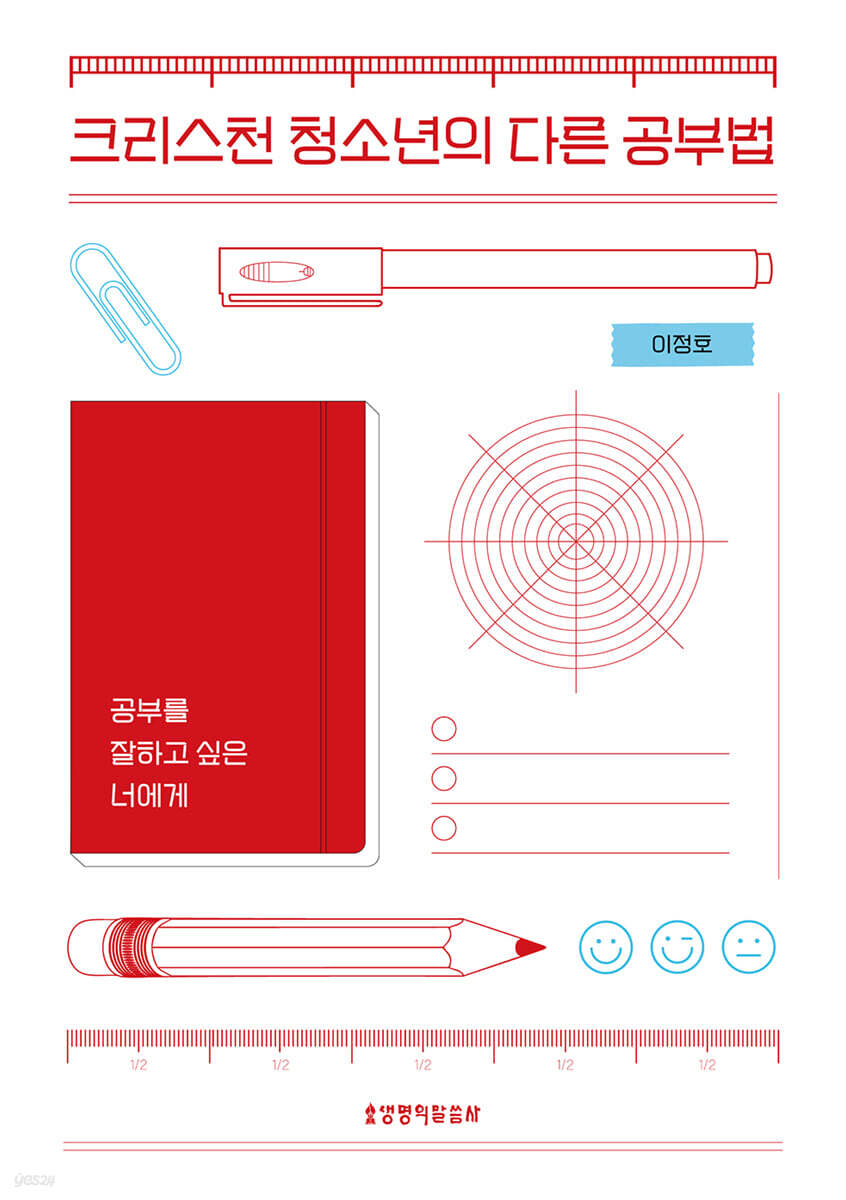 |
Description
Book Introduction
Studying is 'ruling'!
From sleep and exercise, time and space management, to previewing and reviewing, workbook tips, and even life planning! A book offering "different" study methods for Christian youth has been published: "Different Study Methods for Christian Youth."
This book redefines study not as a technique for academic competition but as a training in "governance" to responsibly care for the world God has entrusted to us. It presents an integrated roadmap for practice that connects faith, life, and learning.
The author, Jeong-ho Lee, teaches at Eagle Christian School, a Christian alternative school, and is an educator who has researched biblical learning and career paths in schools and churches for over 20 years.
While the previous book, "Christian Teenagers' Career Journey," helped teenagers discover their God-given dreams and calling, this book covers the study principles and techniques to make those dreams a reality.
The world focuses on methods and techniques for studying, but the first question this book asks is, “Why do we study?”
The author emphasizes that “studying is just one of many areas that young people must master, and what God has commanded us is not study itself, but ‘mastery.’”
Studying is not a means to get good grades or enter college, but rather a training course for stewardship, where we understand the world God created and are responsibly served in our assigned positions and with our neighbors.
This book says that when we reframe the purpose of study as “a process of preparing to properly care for the world God created,” we can study with a clear direction and standards.
From sleep and exercise, time and space management, to previewing and reviewing, workbook tips, and even life planning! A book offering "different" study methods for Christian youth has been published: "Different Study Methods for Christian Youth."
This book redefines study not as a technique for academic competition but as a training in "governance" to responsibly care for the world God has entrusted to us. It presents an integrated roadmap for practice that connects faith, life, and learning.
The author, Jeong-ho Lee, teaches at Eagle Christian School, a Christian alternative school, and is an educator who has researched biblical learning and career paths in schools and churches for over 20 years.
While the previous book, "Christian Teenagers' Career Journey," helped teenagers discover their God-given dreams and calling, this book covers the study principles and techniques to make those dreams a reality.
The world focuses on methods and techniques for studying, but the first question this book asks is, “Why do we study?”
The author emphasizes that “studying is just one of many areas that young people must master, and what God has commanded us is not study itself, but ‘mastery.’”
Studying is not a means to get good grades or enter college, but rather a training course for stewardship, where we understand the world God created and are responsibly served in our assigned positions and with our neighbors.
This book says that when we reframe the purpose of study as “a process of preparing to properly care for the world God created,” we can study with a clear direction and standards.
- You can preview some of the book's contents.
Preview
index
Part 1: Studying is Governing
Beyond success, study to care for the world entrusted to us by God.
Chapter 1.
Studying: Why Should We? 23
The Power to Care for the World God Created: Study | The Source of Study: Self-Centered vs. God-Centered | The Purpose of Study: Becoming God's Steward
Chapter 2.
33 Things More Important Than Studying
Four Ways to Help Self-Directed Learning | Life Standards Are More Important Than Studying | When the Word Becomes the Standard of My Life
Part 2: The Rule of Faith
The fear of Jehovah is the beginning of study!
Chapter 1.
Begin with a Word 45
The Root of Wisdom and Knowledge | The Blessing of Reading the Word | How Can We Develop Self-Reflection? | The Power of Meditating on the Word
◇ Parenting Lessons - The Path You Should Take Before Studying
Chapter 2.
Continue with Prayer 55
The Power of Prayer According to the Bible | The Power of Prayer According to Science | How Should We Pray? | Developing a Prayer Habit: Time and Place
Chapter 3.
Walking with God 65
Another Name for Awe: Companionship | A Life Attitude That Changes the Purpose of Study | What Should I Choose?
Part 3: Governing Life
Four Lifestyle Habits That Help You Study
Chapter 1.
A Gift to Your Beloved, Proverbs 75
The Myth of Sadang Orak | Sleep and Study | What Happens When You're Sleep Deprived | Finding Your Ideal Sleep Time | Three Sleep Keywords to Boost Study Efficiency
Chapter 2.
Beneficial Physical Training, Exercise 89
Studying also comes from physical strength | Build mental strength through exercise | Three exercise keywords that increase study efficiency
Chapter 3.
Time Management 101: Saving Time with Wisdom
Masters of Time vs. Stewards of Time | The Wisdom of Time Management | Use Prioritization
Chapter 4.
Order governing the created world, space management 111
Space Management: Organization and Decluttering | The Power of Space | Creating Order in Space | Space Management Principles: Separate, Fill, and Manage
Part 4: Governing Learning
Principles and techniques of learning to achieve God-given dreams
Chapter 1.
Homework 123
What is homework? | Improving homework completion | Too much homework is bad | Using a planner
Chapter 2.
Preview and Review 137
Effective Preview Keywords: Starting with What You Like, Reading Textbooks in 3 Steps
Effective Review Keywords: Review Method, Review Time, Giving Meaning to Writing Tools, Example/Review Notes
Chapter 3.
Personal Study I Exam Preparation 153
What to Study? | How to Study? | Two Methods for Exam Preparation: Prioritizing and Using Review
Chapter 4.
Personal Study II Problem Book Solutions 167
Study Order | Two Methods for Solving Workbook Problems: Odd-Even, Upper-Middle-Lower | Links and Single-Volume Problem Solving Tips
◇ To Youth - "I Can Do It Too!" The Power of Change Created Together
◇ Parenting Classes - Relationships with parents enhance academic performance.
Part 5: Planning to Govern Your Life
Training to master core habits in the areas of faith, life, and study
Chapter 1.
Study Planning? Biblical Planning! 187
Planning Beyond a Planner | The Four Steps to Planning | Declare | Record
Chapter 2.
Monthly Planning 197
Step 1: Prioritize
Step 2: Record your schedule by reflecting on it | Academic calendar, personal schedule, and study schedule
Chapter 3.
Weekly Planning 205
Using the Time Log | Level 1: Sleep Rhythm | Level 2: Learning Rhythm | Level 3: Time Management | Using the Time Log Results
Chapter 4.
Daily Planning 221
Level 1 - Core Life Area Training: Faith Area | Life Area | Learning Area
Level 2 - Core Life Attitude Training: Gratitude | Level 3 Gratitude Training
Level 3 - Life's Most Important Training: Companionship | Managing Core Habits with a Planner
Chapter 5.
Feedback 237
The Effects and Methods of Feedback | Concluding Feedback: Prayer
Chapter 6.
Final Level, Steward of Life 245
The Beginning and End of Planning: Meditation on the Word, Prayer, and Companionship | Stewards of Life | Three Final Requests | A Tree Planted by the Stream
Outgoing Letter | 250 for Youth Seeking Dreams
Week 252
Beyond success, study to care for the world entrusted to us by God.
Chapter 1.
Studying: Why Should We? 23
The Power to Care for the World God Created: Study | The Source of Study: Self-Centered vs. God-Centered | The Purpose of Study: Becoming God's Steward
Chapter 2.
33 Things More Important Than Studying
Four Ways to Help Self-Directed Learning | Life Standards Are More Important Than Studying | When the Word Becomes the Standard of My Life
Part 2: The Rule of Faith
The fear of Jehovah is the beginning of study!
Chapter 1.
Begin with a Word 45
The Root of Wisdom and Knowledge | The Blessing of Reading the Word | How Can We Develop Self-Reflection? | The Power of Meditating on the Word
◇ Parenting Lessons - The Path You Should Take Before Studying
Chapter 2.
Continue with Prayer 55
The Power of Prayer According to the Bible | The Power of Prayer According to Science | How Should We Pray? | Developing a Prayer Habit: Time and Place
Chapter 3.
Walking with God 65
Another Name for Awe: Companionship | A Life Attitude That Changes the Purpose of Study | What Should I Choose?
Part 3: Governing Life
Four Lifestyle Habits That Help You Study
Chapter 1.
A Gift to Your Beloved, Proverbs 75
The Myth of Sadang Orak | Sleep and Study | What Happens When You're Sleep Deprived | Finding Your Ideal Sleep Time | Three Sleep Keywords to Boost Study Efficiency
Chapter 2.
Beneficial Physical Training, Exercise 89
Studying also comes from physical strength | Build mental strength through exercise | Three exercise keywords that increase study efficiency
Chapter 3.
Time Management 101: Saving Time with Wisdom
Masters of Time vs. Stewards of Time | The Wisdom of Time Management | Use Prioritization
Chapter 4.
Order governing the created world, space management 111
Space Management: Organization and Decluttering | The Power of Space | Creating Order in Space | Space Management Principles: Separate, Fill, and Manage
Part 4: Governing Learning
Principles and techniques of learning to achieve God-given dreams
Chapter 1.
Homework 123
What is homework? | Improving homework completion | Too much homework is bad | Using a planner
Chapter 2.
Preview and Review 137
Effective Preview Keywords: Starting with What You Like, Reading Textbooks in 3 Steps
Effective Review Keywords: Review Method, Review Time, Giving Meaning to Writing Tools, Example/Review Notes
Chapter 3.
Personal Study I Exam Preparation 153
What to Study? | How to Study? | Two Methods for Exam Preparation: Prioritizing and Using Review
Chapter 4.
Personal Study II Problem Book Solutions 167
Study Order | Two Methods for Solving Workbook Problems: Odd-Even, Upper-Middle-Lower | Links and Single-Volume Problem Solving Tips
◇ To Youth - "I Can Do It Too!" The Power of Change Created Together
◇ Parenting Classes - Relationships with parents enhance academic performance.
Part 5: Planning to Govern Your Life
Training to master core habits in the areas of faith, life, and study
Chapter 1.
Study Planning? Biblical Planning! 187
Planning Beyond a Planner | The Four Steps to Planning | Declare | Record
Chapter 2.
Monthly Planning 197
Step 1: Prioritize
Step 2: Record your schedule by reflecting on it | Academic calendar, personal schedule, and study schedule
Chapter 3.
Weekly Planning 205
Using the Time Log | Level 1: Sleep Rhythm | Level 2: Learning Rhythm | Level 3: Time Management | Using the Time Log Results
Chapter 4.
Daily Planning 221
Level 1 - Core Life Area Training: Faith Area | Life Area | Learning Area
Level 2 - Core Life Attitude Training: Gratitude | Level 3 Gratitude Training
Level 3 - Life's Most Important Training: Companionship | Managing Core Habits with a Planner
Chapter 5.
Feedback 237
The Effects and Methods of Feedback | Concluding Feedback: Prayer
Chapter 6.
Final Level, Steward of Life 245
The Beginning and End of Planning: Meditation on the Word, Prayer, and Companionship | Stewards of Life | Three Final Requests | A Tree Planted by the Stream
Outgoing Letter | 250 for Youth Seeking Dreams
Week 252
Detailed image

Into the book
Studying is a process of preparing ourselves to be able to take good care of this world that God created.
Some people say that studying is everything to a student, but studying is just one of many areas that a teenager must master.
Studying is connected to life.
Therefore, governing life comes first, not studying.
What God has commanded us is not to study, but to ‘rule.’
Study is a tool for governing, and governing is like a wave.
For office workers, it flows into the management of work, and for students, it flows into the management of learning.
--- p.29-30 From “Part 1: Studying is Governing”
If you read books about habits, the concept of a 'keystone habit' always appears.
Core habits are the most important habits that have a major impact on our lives and other habits.
So, what are the core habits that have the greatest impact on our lives of faith? They are meditation on the Word and prayer.
And the essential thing to create this core habit is ‘time and place.’
--- p.61 "Part 2: The Governance of Faith"
How do you use time and space? We can rule over time and space like kings, or we can manage them like stewards.
If you observe teenagers, you will find that teenagers with bad attitudes generally spend their time as if they were kings.
Even when they have homework, they do what they want to do first, and when the deadline approaches, they rush through the assignments.
This attitude is evident not only in time but also in space.
The student's study room will probably be strewn with clothes and belongings, with study and relaxation areas mixed together.
It's hard to concentrate even when I sit at my desk because the books I need for studying and other unnecessary items are all cluttered up.
Ultimately, even if you study for a long time, your learning efficiency is bound to be low.
--- p.101 From “Part 3: Governing Life”
Just as the Bible says, whatever you do, do it with all your heart, as if you were working for the Lord, put your heart into your studies.
The time you spend at your desk can become an offering of worship to God.
Studying is not simply about getting good grades or getting into college; it is about training ourselves as stewards to properly fulfill the life and calling God has entrusted to us.
When you do so, your studies will become a valuable tool for establishing God's kingdom on earth.
God will remember your hard work, reward you, and praise you.
--- p.175 From “Part 4: Governing Learning”
Some students use planners as simple 'reminders' like elementary school students, some use them as 'study planners' to help with studying, and some teenagers use them as 'tools to manage their lives'.
The planning described in this book begins with the ‘governance’ that God has commanded us to do.
Ordinary planning aims to improve grades, but our planning aims to live a life that follows the Word.
Because when the Word rules us, we can know the true purpose of life and study.
So, this planning is called ROM (Rule Over Me) Planning, which means ‘rule over me.’
Some people say that studying is everything to a student, but studying is just one of many areas that a teenager must master.
Studying is connected to life.
Therefore, governing life comes first, not studying.
What God has commanded us is not to study, but to ‘rule.’
Study is a tool for governing, and governing is like a wave.
For office workers, it flows into the management of work, and for students, it flows into the management of learning.
--- p.29-30 From “Part 1: Studying is Governing”
If you read books about habits, the concept of a 'keystone habit' always appears.
Core habits are the most important habits that have a major impact on our lives and other habits.
So, what are the core habits that have the greatest impact on our lives of faith? They are meditation on the Word and prayer.
And the essential thing to create this core habit is ‘time and place.’
--- p.61 "Part 2: The Governance of Faith"
How do you use time and space? We can rule over time and space like kings, or we can manage them like stewards.
If you observe teenagers, you will find that teenagers with bad attitudes generally spend their time as if they were kings.
Even when they have homework, they do what they want to do first, and when the deadline approaches, they rush through the assignments.
This attitude is evident not only in time but also in space.
The student's study room will probably be strewn with clothes and belongings, with study and relaxation areas mixed together.
It's hard to concentrate even when I sit at my desk because the books I need for studying and other unnecessary items are all cluttered up.
Ultimately, even if you study for a long time, your learning efficiency is bound to be low.
--- p.101 From “Part 3: Governing Life”
Just as the Bible says, whatever you do, do it with all your heart, as if you were working for the Lord, put your heart into your studies.
The time you spend at your desk can become an offering of worship to God.
Studying is not simply about getting good grades or getting into college; it is about training ourselves as stewards to properly fulfill the life and calling God has entrusted to us.
When you do so, your studies will become a valuable tool for establishing God's kingdom on earth.
God will remember your hard work, reward you, and praise you.
--- p.175 From “Part 4: Governing Learning”
Some students use planners as simple 'reminders' like elementary school students, some use them as 'study planners' to help with studying, and some teenagers use them as 'tools to manage their lives'.
The planning described in this book begins with the ‘governance’ that God has commanded us to do.
Ordinary planning aims to improve grades, but our planning aims to live a life that follows the Word.
Because when the Word rules us, we can know the true purpose of life and study.
So, this planning is called ROM (Rule Over Me) Planning, which means ‘rule over me.’
--- p.188 From “Part 5: Planning to Govern Life”
Publisher's Review
A study method that governs faith, governs life, and governs learning
"Different Study Methods for Christian Youth" divides the lives of youth into three areas: faith, life, and learning. However, it treats them not as separate areas, but as a structure that is connected as one body.
Part 2, "The Rule of Faith," teaches us to regard the fear of Jehovah as the foundation of wisdom, and helps us establish self-reflection and unwavering standards for living through meditation on the Word and prayer.
Part 3, “Managing Life,” addresses four lifestyle habits head-on: sleep, exercise, time management, and space management.
It shatters the myth that you have to sacrifice sleep to study, and presents specific life principles that support study, linked to biblical values, such as finding the right amount of sleep for each person, strengthening body and mind through exercise, managing time using priorities, and organizing and tidying up space to establish order.
Part 4, "Mastering Studying," reorganizes study techniques that can be applied directly in actual study settings from the perspective of "mastering," including how to improve the completion of homework, key points of previewing and reviewing, test preparation strategies using priorities, and tips for solving workbooks.
ROM Planning: Training to Govern Core Habits of Faith, Life, and Study
In particular, Part 5 introduces ROM (Rule Over Me) planning and connects the content learned so far to training for applying it to real life.
This planning is not a simple schedule, but a biblical plan that contains an attitude of surrendering oneself to God to govern one's life while simultaneously responsibly governing the area entrusted to one.
Through monthly, weekly, and daily planning, youth can review core habits in areas such as faith, life, and study, and record gratitude and companionship training. This helps youth transform the small acts of obedience and sincerity on their desks into acts of worship.
The author shares examples and tips from ROM planning shared with actual students, stating that the essence of biblical planning is responsibly managing each area of life entrusted to us by God.
This book offers concrete, faith-based alternatives to teenagers who want to study while holding on to God despite their worries about grades and college entrance exams, parents and teachers who are at a loss as to how to help beyond telling them to "study hard," and pastors who want to guide students through the practical struggles of studying in their Sunday school and youth groups within their faith.
The declaration, “Our study methods are different!” conveyed in “Different Study Methods for Christian Youth” goes beyond mere differences in study methods; it clearly reveals differences in perspectives on life and directions toward the kingdom of God.
"Different Study Methods for Christian Youth" divides the lives of youth into three areas: faith, life, and learning. However, it treats them not as separate areas, but as a structure that is connected as one body.
Part 2, "The Rule of Faith," teaches us to regard the fear of Jehovah as the foundation of wisdom, and helps us establish self-reflection and unwavering standards for living through meditation on the Word and prayer.
Part 3, “Managing Life,” addresses four lifestyle habits head-on: sleep, exercise, time management, and space management.
It shatters the myth that you have to sacrifice sleep to study, and presents specific life principles that support study, linked to biblical values, such as finding the right amount of sleep for each person, strengthening body and mind through exercise, managing time using priorities, and organizing and tidying up space to establish order.
Part 4, "Mastering Studying," reorganizes study techniques that can be applied directly in actual study settings from the perspective of "mastering," including how to improve the completion of homework, key points of previewing and reviewing, test preparation strategies using priorities, and tips for solving workbooks.
ROM Planning: Training to Govern Core Habits of Faith, Life, and Study
In particular, Part 5 introduces ROM (Rule Over Me) planning and connects the content learned so far to training for applying it to real life.
This planning is not a simple schedule, but a biblical plan that contains an attitude of surrendering oneself to God to govern one's life while simultaneously responsibly governing the area entrusted to one.
Through monthly, weekly, and daily planning, youth can review core habits in areas such as faith, life, and study, and record gratitude and companionship training. This helps youth transform the small acts of obedience and sincerity on their desks into acts of worship.
The author shares examples and tips from ROM planning shared with actual students, stating that the essence of biblical planning is responsibly managing each area of life entrusted to us by God.
This book offers concrete, faith-based alternatives to teenagers who want to study while holding on to God despite their worries about grades and college entrance exams, parents and teachers who are at a loss as to how to help beyond telling them to "study hard," and pastors who want to guide students through the practical struggles of studying in their Sunday school and youth groups within their faith.
The declaration, “Our study methods are different!” conveyed in “Different Study Methods for Christian Youth” goes beyond mere differences in study methods; it clearly reveals differences in perspectives on life and directions toward the kingdom of God.
GOODS SPECIFICS
- Date of issue: November 26, 2025
- Page count, weight, size: 264 pages | 148*210*20mm
- ISBN13: 9788904230341
- ISBN10: 8904230349
You may also like
카테고리
korean


korean

![ELLE 엘르 스페셜 에디션 A형 : 12월 [2025]](http://librairie.coreenne.fr/cdn/shop/files/b8e27a3de6c9538896439686c6b0e8fb.jpg?v=1766436872&width=3840)


