

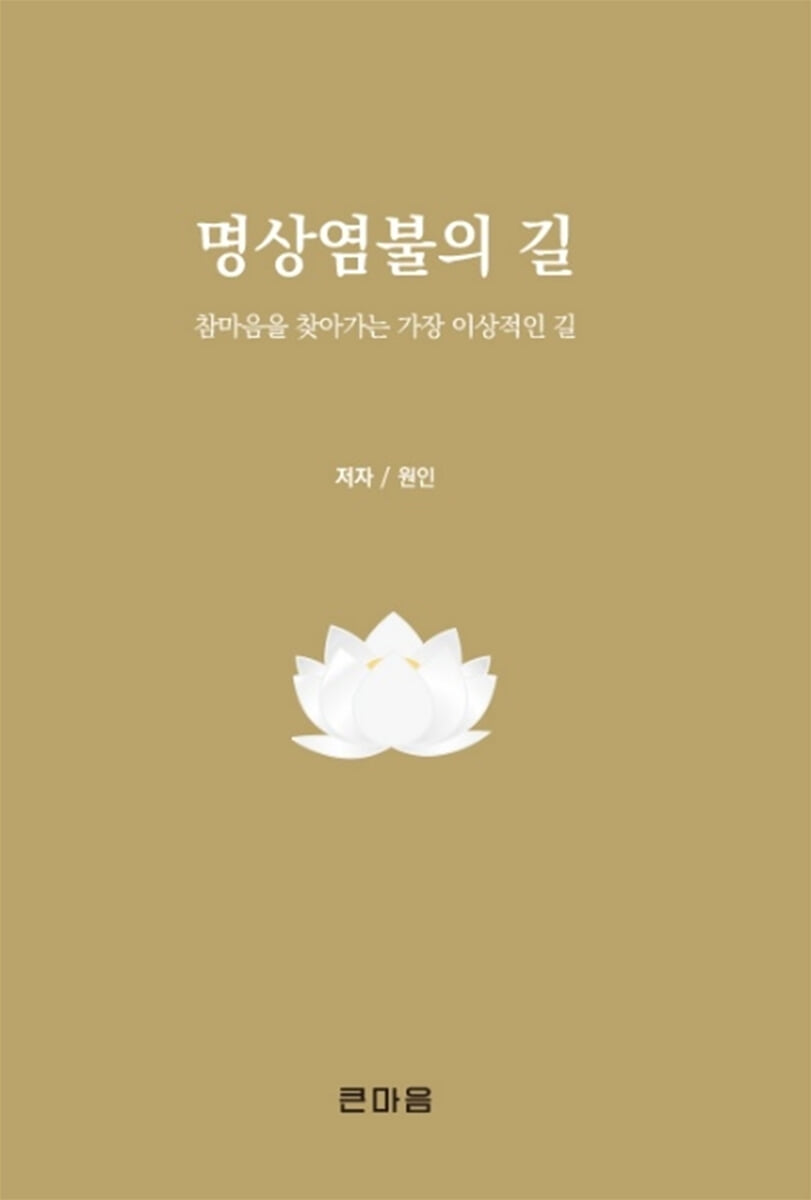
The Path of Meditation and Chanting
 |
Description
Book Introduction
Today, everyone is losing the value of spiritual culture in the midst of material culture.
Accordingly, this book presents a meditation practice method based on the representative Korean Buddhist practice of chanting the Buddha's name, chanting Zen, as a practice to find one's lost true heart.
Among the many practices, meditation and chanting are the most complete and ideal practices that anyone, regardless of age or gender, can easily achieve.
Accordingly, this book presents a meditation practice method based on the representative Korean Buddhist practice of chanting the Buddha's name, chanting Zen, as a practice to find one's lost true heart.
Among the many practices, meditation and chanting are the most complete and ideal practices that anyone, regardless of age or gender, can easily achieve.
index
index
Chapter 1: The Basics of Recitation
1 History of Buddhist Chanting 10
2 The Basics of Recitation Practice 13
3. Three Types of Recitation Practice 19
4 What is Meditation Chanting? 27
5. The Path to Obtaining the Samadhi of Recitation of the Buddha's Name 32
6. Chanting the Buddha's name is in accordance with one's foundation. 37
7 Why is it called 'Namu Amitabha Buddha'? 39
8 Definition of Pure Land 41
9 The Importance of Rebirth in the Pure Land 48
10 The Principle of Rebirth in the Pure Land 51
11. The meaning of extinguishing karma through chanting 56
12 There are no men or women in the Pure Land 59
13. Can humans be reincarnated in the Pure Land? 61
14 Rebirth in the Pure Land and the Bodhisattva Path 63
15 The Fundamentals of Zen and Recitation 66
16 Hwadu Seon and Yeombul Seon 78
17 The Fundamentals of Chanting and Meditation 85
18 How to Recite the Buddha's Mantra 95
19 The meaning of the mind is Buddha 97
20 The meaning of the mind is the Pure Land 100
21 The Essentials of Chanting the Buddha's Name 115
The Meaning of One Thought and Ten Thoughts 120
23 Rebirth in the Pure Land and the Bodhisattva Spirit 126
24 Teachings of Rebirth in the Pure Land 132
25 Pure Land 10 Kinds of Merit 139
26. 10 types of Buddhist practice: 142 merits
27. 16 types of merit from the practice of chanting the Buddha's name: 146
28. 30 types of Buddhist practice: 149 merits
29 The Monk Who Went to the Pure Land and Returned 152
30 Merits and Miracles of Rebirth in the Pure Land 155
Chapter 2: Teachings of the Practice of Reciting the Buddha's Name
31. The Buddha's Recitation Method in the Avatamsaka Sutra, 163
32 Key Contents of the Manjushri Prajnaparamita Sutra 165
33 Important Contents of the Banjusammae Sutra 167
34 Key Contents of the Amitabha Sutra 175
35 Key Contents of the Infinite Life Sutra 179
36 Important Contents of the Guanwu Liangzhu Sutra 184
37 Praise and Worship Sutra Key Contents 189
38 Important Contents of the Bodhisattva Samadhi Theory 191
39 Yongsu Bodhisattva Recitation of the Buddha's Name, 198
40. The Buddha's Recitation of the Buddha's Name, 201
41. The Sixth Patriarch's Buddhist Chanting Dharma Talk 202
42 Cheontaejija's Buddhist Chanting Dharma Talk 204
43 Hyewon Daesa's Buddhist Chanting Dharma Talk 206
44 Wonhyo Daesa's Buddhist Chanting Dharma Talk 208
45. Master Yeongmyeong's Buddhist Chanting Dharma Talk 211
46 Assistant National Preceptor's Buddhist Chanting Dharma Talk 213
47. Taego Seonsa's Buddhist Chanting Dharma Talk 215
48 Seosan Daesa's Buddhist Chanting Dharma Talk 216
49 Stele Statue Buddhist Chanting Dharma Talk 219
50 Right-wing Ambassador's Buddhist Chanting Dharma Talk 221
51. Monk Deokcheong's Buddhist Chanting Dharma Talk 225
52 Cheol-o Seonsa's Buddhist Chanting Dharma Talk 228
53 Seongam Daesa's Buddhist Chanting Dharma Talk 232
54. Master Ingwang's Buddhist Chanting Dharma Talk 234
55. Monk Gwanjeong's Buddhist Chanting Dharma Talk 237
56 Wang Yongseo's Buddhist Chanting Dharma Talk 239
57. Buddhist Monk Gwangheum's Buddhist Chanting Dharma Talk 241
58 Cheonghwa Seonsa's Buddhist Chanting Dharma Talk 243
59 Monk Wolin's Buddhist Chanting Dharma Talk 245
60 Pure Land King Song 252
61 Song of Rebirth in the Pure Land 261
Chapter 3: The Buddhist Prayer Meeting
62 Purpose of the Yeombuljeongjinhoe 265
63 The Basics of the Buddhist Chant 267
64 The Mindset of the Buddhist Chanting Association 270
65 Advice on Diligent Recitation 272
Chapter 1: The Basics of Recitation
1 History of Buddhist Chanting 10
2 The Basics of Recitation Practice 13
3. Three Types of Recitation Practice 19
4 What is Meditation Chanting? 27
5. The Path to Obtaining the Samadhi of Recitation of the Buddha's Name 32
6. Chanting the Buddha's name is in accordance with one's foundation. 37
7 Why is it called 'Namu Amitabha Buddha'? 39
8 Definition of Pure Land 41
9 The Importance of Rebirth in the Pure Land 48
10 The Principle of Rebirth in the Pure Land 51
11. The meaning of extinguishing karma through chanting 56
12 There are no men or women in the Pure Land 59
13. Can humans be reincarnated in the Pure Land? 61
14 Rebirth in the Pure Land and the Bodhisattva Path 63
15 The Fundamentals of Zen and Recitation 66
16 Hwadu Seon and Yeombul Seon 78
17 The Fundamentals of Chanting and Meditation 85
18 How to Recite the Buddha's Mantra 95
19 The meaning of the mind is Buddha 97
20 The meaning of the mind is the Pure Land 100
21 The Essentials of Chanting the Buddha's Name 115
The Meaning of One Thought and Ten Thoughts 120
23 Rebirth in the Pure Land and the Bodhisattva Spirit 126
24 Teachings of Rebirth in the Pure Land 132
25 Pure Land 10 Kinds of Merit 139
26. 10 types of Buddhist practice: 142 merits
27. 16 types of merit from the practice of chanting the Buddha's name: 146
28. 30 types of Buddhist practice: 149 merits
29 The Monk Who Went to the Pure Land and Returned 152
30 Merits and Miracles of Rebirth in the Pure Land 155
Chapter 2: Teachings of the Practice of Reciting the Buddha's Name
31. The Buddha's Recitation Method in the Avatamsaka Sutra, 163
32 Key Contents of the Manjushri Prajnaparamita Sutra 165
33 Important Contents of the Banjusammae Sutra 167
34 Key Contents of the Amitabha Sutra 175
35 Key Contents of the Infinite Life Sutra 179
36 Important Contents of the Guanwu Liangzhu Sutra 184
37 Praise and Worship Sutra Key Contents 189
38 Important Contents of the Bodhisattva Samadhi Theory 191
39 Yongsu Bodhisattva Recitation of the Buddha's Name, 198
40. The Buddha's Recitation of the Buddha's Name, 201
41. The Sixth Patriarch's Buddhist Chanting Dharma Talk 202
42 Cheontaejija's Buddhist Chanting Dharma Talk 204
43 Hyewon Daesa's Buddhist Chanting Dharma Talk 206
44 Wonhyo Daesa's Buddhist Chanting Dharma Talk 208
45. Master Yeongmyeong's Buddhist Chanting Dharma Talk 211
46 Assistant National Preceptor's Buddhist Chanting Dharma Talk 213
47. Taego Seonsa's Buddhist Chanting Dharma Talk 215
48 Seosan Daesa's Buddhist Chanting Dharma Talk 216
49 Stele Statue Buddhist Chanting Dharma Talk 219
50 Right-wing Ambassador's Buddhist Chanting Dharma Talk 221
51. Monk Deokcheong's Buddhist Chanting Dharma Talk 225
52 Cheol-o Seonsa's Buddhist Chanting Dharma Talk 228
53 Seongam Daesa's Buddhist Chanting Dharma Talk 232
54. Master Ingwang's Buddhist Chanting Dharma Talk 234
55. Monk Gwanjeong's Buddhist Chanting Dharma Talk 237
56 Wang Yongseo's Buddhist Chanting Dharma Talk 239
57. Buddhist Monk Gwangheum's Buddhist Chanting Dharma Talk 241
58 Cheonghwa Seonsa's Buddhist Chanting Dharma Talk 243
59 Monk Wolin's Buddhist Chanting Dharma Talk 245
60 Pure Land King Song 252
61 Song of Rebirth in the Pure Land 261
Chapter 3: The Buddhist Prayer Meeting
62 Purpose of the Yeombuljeongjinhoe 265
63 The Basics of the Buddhist Chant 267
64 The Mindset of the Buddhist Chanting Association 270
65 Advice on Diligent Recitation 272
Publisher's Review
The biggest obstacles to our good practice of chanting Buddha's name are attachment and illusion.
If you cannot control your attachment to ego, no matter how much you recite the Buddha's name, it will be like a house of cards. Once the wind of karma blows, it will immediately become a great obstacle. Therefore, a practitioner must be indifferent to worldly things and have no ego toward oneself. This is the basis for diligent practice.
Therefore, a person who chants must always be mindful and not discriminate between right and wrong in any situation before his eyes.
If you get caught up in the boundaries of good and bad, various problems will arise and you will be unable to practice, so you must concentrate on chanting Buddha's name so that you will not be shaken in your diligence even in realistic situations.
If you are obsessed with reality, this is a major issue.
If this had to be analyzed in detail and decided, it would just continue on endlessly, causing emotions to build and ending in a heated argument, which would be of no help to anyone.
This is why the Buddha said in his practice that when a dispute arises, one can overcome the evil and ultimately attain the Way by being indifferent to the phenomenon, just as one covers the grass with dirt.
If we truly came here for the Tao, we should no longer be indifferent to trivial phenomena and should ignore anyone who comes to trouble us.
When the Venerable Ananda asked the Buddha how to deal with the rude behavior of the six evil monks, the Buddha said to just leave them alone.
If we are truly practicing, we must know how to be silent and reject others.
The old man said,
“The problem of birth and death is very important.
Time flies by and I grow old before I know it.
No way to go
So we should not waste even a single moment.
We need to find a way out of here quickly.
“Go and see”
Now, we must no longer waste our lives on worldly delusions of right and wrong. We must cut off all interest except for the most important practice of chanting the Buddha's name, and recite the Buddha's name with single-minded devotion.
People think that they are very unhappy in the world because they have lost money, failed in business, and had a difficult family life.
However, this is a small loss and can be recovered at any time, and in some cases, it can be a blessing in disguise.
But the greatest loss is to spend your life being deceived by lies and not relying on your true heart.
Now, we must not be obsessed with small worldly losses, but achieve great gains through chanting.
The recitation of the Buddha's name is the highest truth of all, and one must attain peace of mind and enlightenment within this truth.
In this world, we have lived countless eons of life and death, and have gained nothing from the futile cycle of life and death, but have only accumulated karma.
So, no matter how good the laws of the world are, there is no need to be attached to them, and there is no need to feel wronged if you lose them.
Because nothing is originally mine.
Therefore, we now consider this encounter with the Dharma, ‘Namu Amitabha Buddha,’ as fortunate and encourage you to diligently recite it.
There are many cases of rebirth in the Pure Land recorded in the Records of Rebirth in India, China, Korea, and Japan.
Among the first patriarchs to teach chanting, there is India's Nagarjuna Mahāyāvatara, and in China, there are Hyewon, Cheontae, Musang, Yeongmyeong, Gamsan, Unru, and Cheolwu.
In Korea, thanks to the chanting associations of many great monks, including Won Gwang, Ja Jang, Won Hyo, Uisang, Bal Jing, Yo Yeon, Bo Jo, Naong, Ham Heo, Seo San, Samyeong, and more recently, In Gok, Ja Un, Susan, Beop Gyeong, Cheong Hwa, and Wolin, Korea is once again experiencing a golden age of chanting.
The Pure Land is my Pure Land that I must go to someday.
Because it is the home of my heart, there is no longer any reason to cling to the vain and painful cycle of reincarnation, and there is no reason to hesitate any longer about the most precious and valuable practice of reciting the Buddha's name to find my heart.
As mountain monks are also diligently practicing the practice of reciting the Buddha's name, which is the only means of saving all living beings in the last days, I pray that all Buddhists will be reborn in the Pure Land of Paradise and be free from the cycle of reincarnation that lasts for countless eons.
If you cannot control your attachment to ego, no matter how much you recite the Buddha's name, it will be like a house of cards. Once the wind of karma blows, it will immediately become a great obstacle. Therefore, a practitioner must be indifferent to worldly things and have no ego toward oneself. This is the basis for diligent practice.
Therefore, a person who chants must always be mindful and not discriminate between right and wrong in any situation before his eyes.
If you get caught up in the boundaries of good and bad, various problems will arise and you will be unable to practice, so you must concentrate on chanting Buddha's name so that you will not be shaken in your diligence even in realistic situations.
If you are obsessed with reality, this is a major issue.
If this had to be analyzed in detail and decided, it would just continue on endlessly, causing emotions to build and ending in a heated argument, which would be of no help to anyone.
This is why the Buddha said in his practice that when a dispute arises, one can overcome the evil and ultimately attain the Way by being indifferent to the phenomenon, just as one covers the grass with dirt.
If we truly came here for the Tao, we should no longer be indifferent to trivial phenomena and should ignore anyone who comes to trouble us.
When the Venerable Ananda asked the Buddha how to deal with the rude behavior of the six evil monks, the Buddha said to just leave them alone.
If we are truly practicing, we must know how to be silent and reject others.
The old man said,
“The problem of birth and death is very important.
Time flies by and I grow old before I know it.
No way to go
So we should not waste even a single moment.
We need to find a way out of here quickly.
“Go and see”
Now, we must no longer waste our lives on worldly delusions of right and wrong. We must cut off all interest except for the most important practice of chanting the Buddha's name, and recite the Buddha's name with single-minded devotion.
People think that they are very unhappy in the world because they have lost money, failed in business, and had a difficult family life.
However, this is a small loss and can be recovered at any time, and in some cases, it can be a blessing in disguise.
But the greatest loss is to spend your life being deceived by lies and not relying on your true heart.
Now, we must not be obsessed with small worldly losses, but achieve great gains through chanting.
The recitation of the Buddha's name is the highest truth of all, and one must attain peace of mind and enlightenment within this truth.
In this world, we have lived countless eons of life and death, and have gained nothing from the futile cycle of life and death, but have only accumulated karma.
So, no matter how good the laws of the world are, there is no need to be attached to them, and there is no need to feel wronged if you lose them.
Because nothing is originally mine.
Therefore, we now consider this encounter with the Dharma, ‘Namu Amitabha Buddha,’ as fortunate and encourage you to diligently recite it.
There are many cases of rebirth in the Pure Land recorded in the Records of Rebirth in India, China, Korea, and Japan.
Among the first patriarchs to teach chanting, there is India's Nagarjuna Mahāyāvatara, and in China, there are Hyewon, Cheontae, Musang, Yeongmyeong, Gamsan, Unru, and Cheolwu.
In Korea, thanks to the chanting associations of many great monks, including Won Gwang, Ja Jang, Won Hyo, Uisang, Bal Jing, Yo Yeon, Bo Jo, Naong, Ham Heo, Seo San, Samyeong, and more recently, In Gok, Ja Un, Susan, Beop Gyeong, Cheong Hwa, and Wolin, Korea is once again experiencing a golden age of chanting.
The Pure Land is my Pure Land that I must go to someday.
Because it is the home of my heart, there is no longer any reason to cling to the vain and painful cycle of reincarnation, and there is no reason to hesitate any longer about the most precious and valuable practice of reciting the Buddha's name to find my heart.
As mountain monks are also diligently practicing the practice of reciting the Buddha's name, which is the only means of saving all living beings in the last days, I pray that all Buddhists will be reborn in the Pure Land of Paradise and be free from the cycle of reincarnation that lasts for countless eons.
GOODS SPECIFICS
- Date of issue: November 16, 2025
- Page count, weight, size: 278 pages | 120*190*20mm
- ISBN13: 9788996779544
- ISBN10: 8996779547
You may also like
카테고리
korean


korean

![ELLE 엘르 스페셜 에디션 A형 : 12월 [2025]](http://librairie.coreenne.fr/cdn/shop/files/b8e27a3de6c9538896439686c6b0e8fb.jpg?v=1766436872&width=3840)


