

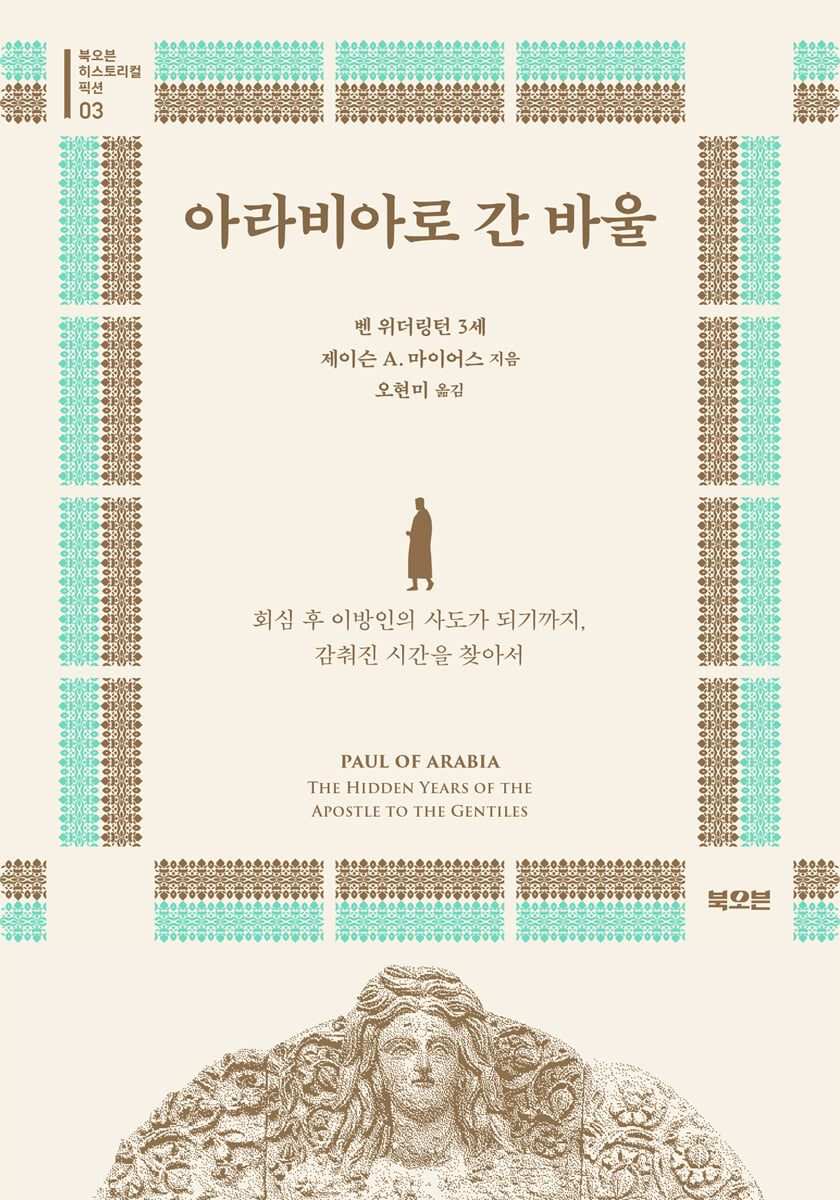
Paul went to Arabia
 |
Description
Book Introduction
Even in the life of a Christian, there is a long, dark tunnel that cannot be avoided.
How should we accept this time?
How did Paul overcome the failures and waiting that blocked his path?
Paul experienced a dramatic conversion on the road to Damascus.
But what awaited him was not a brilliant ministry,
It was 14 years of doubt, rejection, failure, and silence!
Paul met Jesus on the road to Damascus and was called to be a Christian and an apostle to the Gentiles.
However, there was a gap of about 14 years before he was recognized by the other apostles and sent by the church in Antioch to begin his full-fledged ministry.
Where was Paul and what was he doing during that time, and what did that period mean to him?
The two authors, both New Testament scholars and Pauline theologians, reconstruct this "hidden time" based on a wealth of biblical knowledge, archaeological data, and social history.
Told in narrative form with keen insight and divine imagination, this book sheds new light on a slice of Paul's life.
Additionally, with the addition of 41 photographs taken by the author himself while walking the land and a "closer look" into the social history of the first century, readers can follow Paul's journey with greater vividness and depth.
How should we accept this time?
How did Paul overcome the failures and waiting that blocked his path?
Paul experienced a dramatic conversion on the road to Damascus.
But what awaited him was not a brilliant ministry,
It was 14 years of doubt, rejection, failure, and silence!
Paul met Jesus on the road to Damascus and was called to be a Christian and an apostle to the Gentiles.
However, there was a gap of about 14 years before he was recognized by the other apostles and sent by the church in Antioch to begin his full-fledged ministry.
Where was Paul and what was he doing during that time, and what did that period mean to him?
The two authors, both New Testament scholars and Pauline theologians, reconstruct this "hidden time" based on a wealth of biblical knowledge, archaeological data, and social history.
Told in narrative form with keen insight and divine imagination, this book sheds new light on a slice of Paul's life.
Additionally, with the addition of 41 photographs taken by the author himself while walking the land and a "closer look" into the social history of the first century, readers can follow Paul's journey with greater vividness and depth.
- You can preview some of the book's contents.
Preview
index
Take a closer look at the list
At the beginning of the book
Acknowledgements
Abbreviation table
1.
Desert Storm
2.
Nabataeans, a nomadic people
3.
Allies with foreigners, slaves and bandits
4.
Arriving at the Rose City
5.
Saul the Lonely One
6.
Love work
7.
News from Judea
8.
The suffering of the Zion believers
9.
God's Feast Day
10.
Jewels of Petra
11.
The King's Speech
12.
awakening
13.
On the way to Aella
14.
spy
15.
shave off your beard on your wedding day
16.
The Joy of Marriage
17.
Make plans to go to Jebel Musa
18.
Wafi gives directions
19.
sail south
20.
A long day's journey into the night
21.
Mount of Moses
22.
Return to the sea
23.
Can we have a happy family?
24.
A fearful day
25.
Winter of disease and discontent
26.
Back to Damascus
27.
“Banseok” meets a man from the rock city
28.
Return to Cilicia
29.
Synagogue sermon
30.
Antioch on the Orontes River
31.
Return to Zion for the Second Time
32.
secret meeting
33.
The Apostle Paul and the Apostle Barnabas, from Antioch
34.
Return to Antioch
Reviews
main
References
At the beginning of the book
Acknowledgements
Abbreviation table
1.
Desert Storm
2.
Nabataeans, a nomadic people
3.
Allies with foreigners, slaves and bandits
4.
Arriving at the Rose City
5.
Saul the Lonely One
6.
Love work
7.
News from Judea
8.
The suffering of the Zion believers
9.
God's Feast Day
10.
Jewels of Petra
11.
The King's Speech
12.
awakening
13.
On the way to Aella
14.
spy
15.
shave off your beard on your wedding day
16.
The Joy of Marriage
17.
Make plans to go to Jebel Musa
18.
Wafi gives directions
19.
sail south
20.
A long day's journey into the night
21.
Mount of Moses
22.
Return to the sea
23.
Can we have a happy family?
24.
A fearful day
25.
Winter of disease and discontent
26.
Back to Damascus
27.
“Banseok” meets a man from the rock city
28.
Return to Cilicia
29.
Synagogue sermon
30.
Antioch on the Orontes River
31.
Return to Zion for the Second Time
32.
secret meeting
33.
The Apostle Paul and the Apostle Barnabas, from Antioch
34.
Return to Antioch
Reviews
main
References
Into the book
The investigators would question Saul as to why he had not taken the Christ-followers captive and brought them to Jerusalem as he had promised when he left Mount Zion.
Saul was a fugitive.
Besides, there was no one around him.
The Sanhedrin was desperate to capture Saul, and the followers of Christ in Judea were terrified of him to death.
Many see this prophecy as a key to unlocking the future of God's people.
Did you know that while God reveals the future abundantly through prophecy, giving us hope, he doesn't reveal so much that we don't need to live by faith each day?
--- From "Desert Storm"
After the funeral, Saul returned home, packed his bags, and decided to set out north as soon as the next morning came.
During my little over two years in Petra, I began to wonder what exactly I had accomplished.
It was clear that Jesus had not yet become the “apostle to the Gentiles” as he had intended.
Now I had to dedicate my whole life to that task.
--- From "Winter of Disease and Discontent"
Things took such an unexpected turn that Saul returned to the land of his birth.
But Saul did not know until the moment he left Jerusalem.
That it would be another ten years before I could see Barnabas' smiling face again.
--- From “Banseok” Meets a Man from the Rock City
The citizens of Antioch noticed the growth of our sect and gave us the name "Christianoi."
I mean, a fervent supporter (partisan) of Christ.
I like that name.
--- From "Synagogue Sermon"
The Latin word for a dining room in a typical home is 'triclinium', which provides a clue to the structure of ancient people's dining spaces.
Initially, the term 'triclinium' referred to three long armchairs arranged in an upside-down U shape.
--- From "Meals and Food"
Once two people decide to get married (this is called affectio martilias), they must obtain the consent of the bride's father (paterfamilia).
After the wedding, the bride becomes under the authority of the groom.
As a Roman, to have a legal marriage, one had to have the right to enter into a valid marriage contract (ius conubii).
Saul was a fugitive.
Besides, there was no one around him.
The Sanhedrin was desperate to capture Saul, and the followers of Christ in Judea were terrified of him to death.
Many see this prophecy as a key to unlocking the future of God's people.
Did you know that while God reveals the future abundantly through prophecy, giving us hope, he doesn't reveal so much that we don't need to live by faith each day?
--- From "Desert Storm"
After the funeral, Saul returned home, packed his bags, and decided to set out north as soon as the next morning came.
During my little over two years in Petra, I began to wonder what exactly I had accomplished.
It was clear that Jesus had not yet become the “apostle to the Gentiles” as he had intended.
Now I had to dedicate my whole life to that task.
--- From "Winter of Disease and Discontent"
Things took such an unexpected turn that Saul returned to the land of his birth.
But Saul did not know until the moment he left Jerusalem.
That it would be another ten years before I could see Barnabas' smiling face again.
--- From “Banseok” Meets a Man from the Rock City
The citizens of Antioch noticed the growth of our sect and gave us the name "Christianoi."
I mean, a fervent supporter (partisan) of Christ.
I like that name.
--- From "Synagogue Sermon"
The Latin word for a dining room in a typical home is 'triclinium', which provides a clue to the structure of ancient people's dining spaces.
Initially, the term 'triclinium' referred to three long armchairs arranged in an upside-down U shape.
--- From "Meals and Food"
Once two people decide to get married (this is called affectio martilias), they must obtain the consent of the bride's father (paterfamilia).
After the wedding, the bride becomes under the authority of the groom.
As a Roman, to have a legal marriage, one had to have the right to enter into a valid marriage contract (ius conubii).
--- From "Marriage"
Publisher's Review
Features of this book
- The author, a New Testament scholar and Pauline theologian, vividly reconstructs Paul's "hidden time" based on biblical, early church history, archaeological, and social history data.
- We take an in-depth look at the historical background of the early church by examining the politics, society, geography, and culture of 1st century Judea, Arabia, and Rome.
- It realistically unfolds the lines between the Acts of the Apostles and the Pauline Epistles through the format of historical fiction.
- It illuminates Paul's failures and frustrations, providing insight into how Christians today should respond to the hardships and trials of life.
- The author, a New Testament scholar and Pauline theologian, vividly reconstructs Paul's "hidden time" based on biblical, early church history, archaeological, and social history data.
- We take an in-depth look at the historical background of the early church by examining the politics, society, geography, and culture of 1st century Judea, Arabia, and Rome.
- It realistically unfolds the lines between the Acts of the Apostles and the Pauline Epistles through the format of historical fiction.
- It illuminates Paul's failures and frustrations, providing insight into how Christians today should respond to the hardships and trials of life.
GOODS SPECIFICS
- Date of issue: March 17, 2025
- Page count, weight, size: 304 pages | 376g | 140*200*20mm
- ISBN13: 9791193766019
- ISBN10: 119376601X
You may also like
카테고리
korean


korean

![GQ KOREA Mark (Monthly): December [2025]](http://librairie.coreenne.fr/cdn/shop/files/8ef265dbbfbf186523ed75ba7319009d.jpg?v=1765340328&width=3840)


