

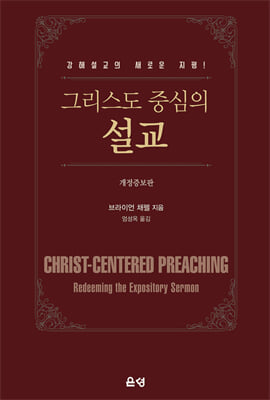
Christ-centered preaching
 |
Description
Book Introduction
Christian preaching must be centered on the spirit of Christ as thoroughly recorded in the Gospel.
This book lays out the foundations of Christian homiletics for sound preaching.
This book lays out the foundations of Christian homiletics for sound preaching.
index
Preface to the Revised and Expanded Edition 9
Preface to the First Edition 15
Acknowledgements 19
Part 1: Principles of Expository Preaching
Chapter 1: Words and Testimony - 23
Chapter 2: The Duty of Preaching - 51
Chapter 3: Selecting Sermon Texts - 75
Chapter 4: Components of a Lecture - 111
Part 2: Preparing for a Sermon
Chapter 5: The Process of Explanation - 139
Chapter 6: Outlining and Structure - 179
Chapter 7: The Form of Parables - 249
Chapter 8: Application in Practice - 299
Chapter 9: Introduction, Conclusion, and Transition - 341
Part 3: Theology of the Christ-Centered Message
Chapter 10: The Redemptive Preaching Method - 391
Chapter 11: The Development of the Redemptive Sermon - 435
Reference 483
Index 492
Preface to the First Edition 15
Acknowledgements 19
Part 1: Principles of Expository Preaching
Chapter 1: Words and Testimony - 23
Chapter 2: The Duty of Preaching - 51
Chapter 3: Selecting Sermon Texts - 75
Chapter 4: Components of a Lecture - 111
Part 2: Preparing for a Sermon
Chapter 5: The Process of Explanation - 139
Chapter 6: Outlining and Structure - 179
Chapter 7: The Form of Parables - 249
Chapter 8: Application in Practice - 299
Chapter 9: Introduction, Conclusion, and Transition - 341
Part 3: Theology of the Christ-Centered Message
Chapter 10: The Redemptive Preaching Method - 391
Chapter 11: The Development of the Redemptive Sermon - 435
Reference 483
Index 492
Into the book
1.
The nobility of preaching
“And since the day we heard it, we have not ceased praying for you, asking that you may be filled with the knowledge of his will in all spiritual wisdom and understanding, so that you may walk in a manner worthy of the Lord, fully pleasing him, bearing fruit in every good work and increasing in the knowledge of God” (Col 1:9-10).
The prayers of preachers who love God's Word and God's people echo this prayer offered by the Apostle Paul for the church in Colossae:
We pray that God will use our preaching to produce knowledge of God's will so that people may please Him, bear spiritual fruit, and grow in their knowledge of Him.
This points out that the goal of preaching is not simply to impart information, but to provide God's sovereignly ordained means of change that will impact the lives and destinies of the souls entrusted to the preacher's spiritual care.
The British pastor Ian Tait mocked those who study the Bible only for knowledge, believing that their minds will expand when their heads are filled with knowledge.
But knowledge for the sake of knowledge alone only makes people “arrogant” (1 Corinthians 8:1).
The treasure of God's word cannot be privately owned; its noble purpose can only be achieved when its abundance is shared.
Whether you study in a seminary or Bible school or study on your own, your study will be more rewarding when you realize that each of these elements prepares you to preach with authority and accuracy, helping others grow in grace.
The purpose of Bible study is not only to grow oneself through it, but also to expand the realm of the gospel by bearing witness to its words.
Robert G. Rayburn
This is why Professor Rayburn taught his seminary students for over 25 years, “There is only one king of the disciplines you study: Christ, and homiletics is its queen.”
When students who are engrossed in Bible study realize how noble the sermon is, they cannot help but feel fear.
No sincere preacher will dispute that this noble task is more important than the servant who stands in the pulpit.
Moreover, when we see people with immortal souls placed between heaven and hell, we are not only struck by the nobility of preaching, but also by our own unfitness for it (cf. 1 Cor. 2:3).
We come to realize that we are not capable of doing the important work of leading souls to heaven or hell.
Also, our hearts are not pure enough to make others holy.
That is, when we honestly evaluate our own abilities, we conclude that we do not have the wisdom or persuasive power to lead people from death to eternal life.
This is why young preachers hesitate from the moment they start preaching, and why seasoned pastors despair on the pulpit.
2.
The power of words
In an age when we face the limitations of our abilities as preachers and growing doubts about the effectiveness of preaching, preachers must remember God's plan for spiritual transformation.
This plan of God is accomplished through preaching.
Ultimately, the spiritual purpose of preaching is accomplished not because of the preacher's skill or wisdom, but because of the power of Scripture (1 Cor. 2:4-5).
Preachers minister more confidently and freely when they realize that God has removed the spiritual hindrance from them.
God's purpose is not accomplished by our skills or character (2 Corinthians 3:5).
God can use eloquence and desires a life that is worthy of the holiness of the subject we are dealing with, but the Spirit of God uses the Word itself to accomplish His saving and sanctifying purposes.
The human efforts of the greatest preachers are so weak and sinful that they cannot be responsible for the eternal destiny of men.
For this reason, God infuses His words with spiritual power.
It is the power of the truth in God's message that changes people's hearts, not the virtue of the person delivering the message.
The nobility of preaching
“And since the day we heard it, we have not ceased praying for you, asking that you may be filled with the knowledge of his will in all spiritual wisdom and understanding, so that you may walk in a manner worthy of the Lord, fully pleasing him, bearing fruit in every good work and increasing in the knowledge of God” (Col 1:9-10).
The prayers of preachers who love God's Word and God's people echo this prayer offered by the Apostle Paul for the church in Colossae:
We pray that God will use our preaching to produce knowledge of God's will so that people may please Him, bear spiritual fruit, and grow in their knowledge of Him.
This points out that the goal of preaching is not simply to impart information, but to provide God's sovereignly ordained means of change that will impact the lives and destinies of the souls entrusted to the preacher's spiritual care.
The British pastor Ian Tait mocked those who study the Bible only for knowledge, believing that their minds will expand when their heads are filled with knowledge.
But knowledge for the sake of knowledge alone only makes people “arrogant” (1 Corinthians 8:1).
The treasure of God's word cannot be privately owned; its noble purpose can only be achieved when its abundance is shared.
Whether you study in a seminary or Bible school or study on your own, your study will be more rewarding when you realize that each of these elements prepares you to preach with authority and accuracy, helping others grow in grace.
The purpose of Bible study is not only to grow oneself through it, but also to expand the realm of the gospel by bearing witness to its words.
Robert G. Rayburn
This is why Professor Rayburn taught his seminary students for over 25 years, “There is only one king of the disciplines you study: Christ, and homiletics is its queen.”
When students who are engrossed in Bible study realize how noble the sermon is, they cannot help but feel fear.
No sincere preacher will dispute that this noble task is more important than the servant who stands in the pulpit.
Moreover, when we see people with immortal souls placed between heaven and hell, we are not only struck by the nobility of preaching, but also by our own unfitness for it (cf. 1 Cor. 2:3).
We come to realize that we are not capable of doing the important work of leading souls to heaven or hell.
Also, our hearts are not pure enough to make others holy.
That is, when we honestly evaluate our own abilities, we conclude that we do not have the wisdom or persuasive power to lead people from death to eternal life.
This is why young preachers hesitate from the moment they start preaching, and why seasoned pastors despair on the pulpit.
2.
The power of words
In an age when we face the limitations of our abilities as preachers and growing doubts about the effectiveness of preaching, preachers must remember God's plan for spiritual transformation.
This plan of God is accomplished through preaching.
Ultimately, the spiritual purpose of preaching is accomplished not because of the preacher's skill or wisdom, but because of the power of Scripture (1 Cor. 2:4-5).
Preachers minister more confidently and freely when they realize that God has removed the spiritual hindrance from them.
God's purpose is not accomplished by our skills or character (2 Corinthians 3:5).
God can use eloquence and desires a life that is worthy of the holiness of the subject we are dealing with, but the Spirit of God uses the Word itself to accomplish His saving and sanctifying purposes.
The human efforts of the greatest preachers are so weak and sinful that they cannot be responsible for the eternal destiny of men.
For this reason, God infuses His words with spiritual power.
It is the power of the truth in God's message that changes people's hearts, not the virtue of the person delivering the message.
--- From “Chapter 1 Words and Testimony”
Publisher's Review
Preaching today requires redemptive purpose and biblical focus.
This book combines principles related to preaching theory, expository preaching, and biblical theology to discuss the importance of Christ-centered preaching.
The author emphasizes expository preaching because he believes that only biblical exposition provides authority and binding power.
He teaches the fundamentals of preparation, organization, and delivery, and provides assistance for preaching in special situations.
A defining characteristic of this book is the concept of Focus on the Fallen Context (FCF), which the author believes preachers should always keep in mind when preaching.
It applies the truth of the Bible to the vivid needs of fallen human beings living in a hurting world.
This book combines principles related to preaching theory, expository preaching, and biblical theology to discuss the importance of Christ-centered preaching.
The author emphasizes expository preaching because he believes that only biblical exposition provides authority and binding power.
He teaches the fundamentals of preparation, organization, and delivery, and provides assistance for preaching in special situations.
A defining characteristic of this book is the concept of Focus on the Fallen Context (FCF), which the author believes preachers should always keep in mind when preaching.
It applies the truth of the Bible to the vivid needs of fallen human beings living in a hurting world.
GOODS SPECIFICS
- Date of issue: March 10, 2025
- Page count, weight, size: 496 pages | 152*225*35mm
- ISBN13: 9791192914527
You may also like
카테고리
korean


korean

![GQ KOREA Mark (Monthly): December [2025]](http://librairie.coreenne.fr/cdn/shop/files/8ef265dbbfbf186523ed75ba7319009d.jpg?v=1765340328&width=3840)


