

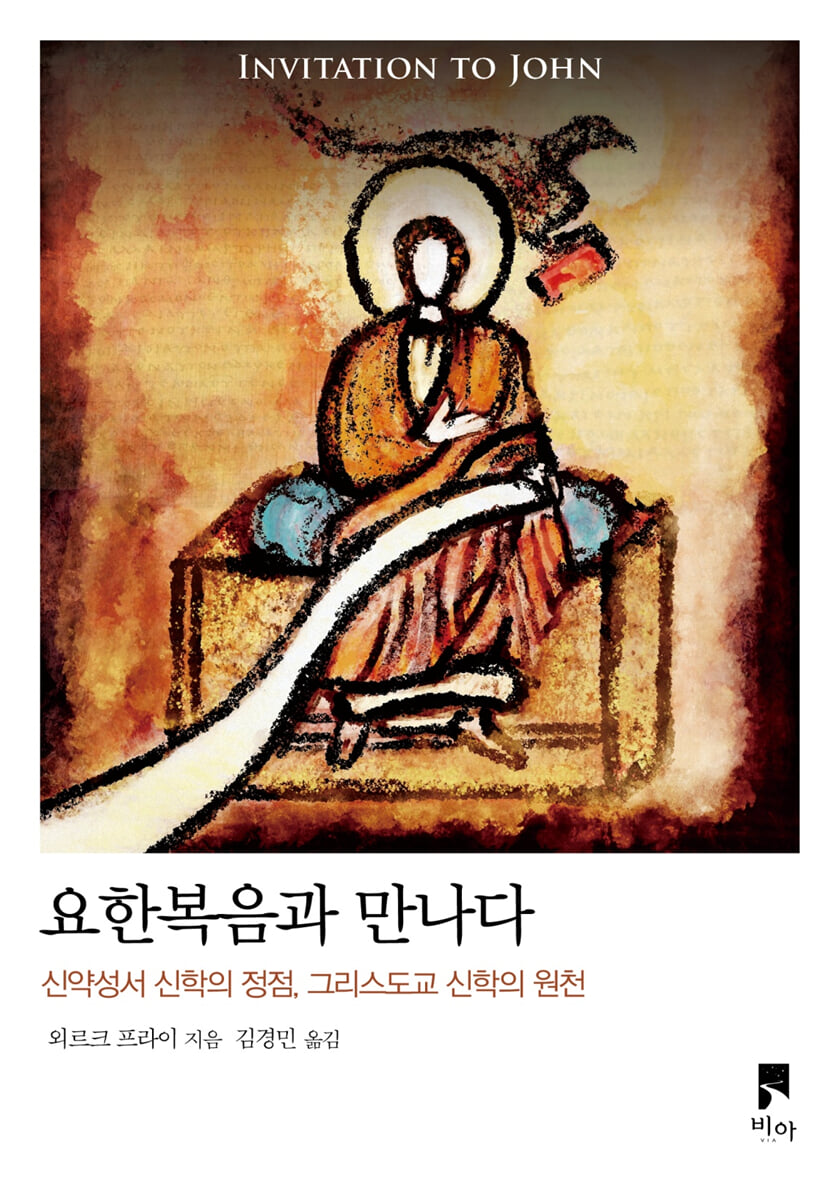
Encounter the Gospel of John
 |
Description
Book Introduction
An excellent introduction to the Gospel of John, the fourth gospel, the Gospel of signs, and a central source of Christian theology. A Guide to the Gospel of John by a Leading Scholar in Modern Gospel Studies “The revelation and the theology of the Gospel of John set the standard for all subsequent Christian theology.” - From the text An introductory book on the Gospel of John written by Jörg Frey, one of the leading scholars of modern John studies. This book is the first of its kind to be published in Korea and will be published in multiple languages in the future. In this book, Fry examines the content and the theology contained in the Gospel of John, the fourth of the four Gospels, which is quite different from the other three, and which is theologically profound and often the subject of various controversies. According to author Fry, the Gospel of John is the pinnacle of New Testament theology. This does not simply mean that the Gospel of John is a document containing a 'higher' level of theological development. This gospel occupies a unique and important position among the diverse theological traditions that flow within the literature that makes up the New Testament, and in some ways, it can be said to be the pinnacle of New Testament theology in that it had a decisive influence on later theological discussions and the formation of Christian doctrine. In this three-part book, he addresses fundamental yet crucial issues that must be kept in mind when reading the Gospel of John seriously, such as its structure, content, style, authorship, and the circumstances of its creation. He also provides a brief history of how 19th- and 20th-century scholars have studied the Gospel of John, along with an introduction to recent research trends. Through this, readers can understand the characteristics of the Gospel of John and at the same time consider how this gospel is understood in modern academia. As a disciple of Martin Hengel and a scholar who received strict training in historical criticism, he displays a sharp side when it comes to issues related to historicity, but he also shows an open attitude toward new methodologies, and as a scholar leading the modern study of the Gospel of John, he shows a delicate eye when explaining the meaning contained in the text or examining its significance. As a bonus, you'll learn how to utilize key methodologies as you read the text. Although written in an easy-to-understand style, this book is not simply a commentary on the Gospel of John. Rather, it is a book written by an expert who has studied the Gospel of John for over 30 years, drawing on his extensive knowledge to illuminate the Gospel of John from various angles. The author's extensive knowledge and insight are evident throughout, encompassing the entire New Testament, the Dead Sea Scrolls, early Jewish literature, Patristic literature, Gnostic literature, and early Christian literature, including the Apocrypha. Through this book, readers will discover the rich meaning of the Gospel of John and understand its profound influence on the Christian faith and human culture. |
- You can preview some of the book's contents.
Preview
index
Entering
1.
Introduction to the Gospel of John
start
The Reception of the Gospel of John in World Literature and the Church
Characteristics of the Gospel of John
Questions about the author and materials
Date and place of creation
The intellectual and religious environment of the Gospel of John
The Purpose of the Gospels
2.
Various Aspects of Johannine Theology
John the Theologian: The Challenge of Christ's Deity and Incarnation
The Death of Jesus
Resurrection events and resurrection faith
Who Is Jesus Really? - John's Christology
What kind of person is God?
Faith and Unbelief
Ethics of Love
3.
Reading the Gospel of John for Modern People
Problems raised by 19th- and 20th-century scholarship
Recent Perspectives on the Gospel of John
How should we read the Gospel of John?
Reading the Gospel of John in Three Dimensions
Translator's Note
Further Reading
Search
1.
Introduction to the Gospel of John
start
The Reception of the Gospel of John in World Literature and the Church
Characteristics of the Gospel of John
Questions about the author and materials
Date and place of creation
The intellectual and religious environment of the Gospel of John
The Purpose of the Gospels
2.
Various Aspects of Johannine Theology
John the Theologian: The Challenge of Christ's Deity and Incarnation
The Death of Jesus
Resurrection events and resurrection faith
Who Is Jesus Really? - John's Christology
What kind of person is God?
Faith and Unbelief
Ethics of Love
3.
Reading the Gospel of John for Modern People
Problems raised by 19th- and 20th-century scholarship
Recent Perspectives on the Gospel of John
How should we read the Gospel of John?
Reading the Gospel of John in Three Dimensions
Translator's Note
Further Reading
Search
Into the book
Dear Korean readers, I invite you to a book that has been my favorite for a long time.
This is the Gospel of John (hereinafter referred to as the Gospel of John).
I have known and loved this book since I was a child, and it was while studying theology at the University of Tübingen in the 1980s that I discovered its theological depth and power.
Although I have wrestled with this book for over 30 years, the Gospel of John remains the most fascinating book to me.
To borrow a famous phrase from Martin Luther in his preface to the New Testament, I consider this Gospel to be “a true and gentle Gospel,” and “one to be read more often and treasured more than the other three.”
This book aims to explain the literary and theological nature of the Gospel of John.
In the first chapter, we will examine the characteristics of the Gospel of John.
How does the Gospel of John differ from the other Gospels? Why is it different? What, and how much, can we know about its background and origins? In this second chapter, we will focus on the theology of this "fourth gospel."
What does the Gospel of John say about Christ and the Incarnation? What does it say about God, the world, and faith? In the third chapter, we will look back at how we have read the Gospel of John over the centuries and briefly examine the various critical questions and approaches raised by modern biblical scholarship.
Then, I will suggest what inspiration we can draw from this gospel story today, and what historical facts and interesting theology we can discover.
--- p.7.~8.
The Jesus of the Gospel of John speaks clearly differently from the Jesus described in the Synoptic Gospels.
In the Synoptic Gospels, Jesus often delivers short sayings or parables in conversations or situations of conflict.
In contrast, in the Gospel of John, Jesus delivers long discourses with a repetitive structure and a spiral thought pattern.
And he uses longer parables, as we can see in the discourses on “the bread of life” (chapter 6), “the good shepherd” (chapter 10), and “the true vine” (chapter 15), rather than short ones.
In the Synoptic Gospels, traces of the original Aramaic can be found in some of Jesus' words, but in the Gospel of John, there are hardly any traces of Aramaic in what Jesus says.
In this Gospel, Jesus speaks simple but precise Greek, using gentle, original expressions rather than translated Greek.
This is markedly different from the style of all other New Testament literature.
The most important fact is that in the Gospel of John, not only Jesus but also other figures, such as John the Baptist, use this language.
The speaker of the Gospel speaks in the same way, and the First Letter of John (1 John) uses similar language.
This allows us to conclude that the language Jesus speaks in the Gospel of John is the language of the author and those around him, that is, the language of the author and the community to which he belonged, and not the language Jesus spoke while on earth.
Through the other gospel traditions, we can partially reconstruct what Jesus actually said.
What he actually said went through a process of translation, but also a deeper transformation.
The words of Jesus in the Gospel of John, which went through such a process, are difficult to classify as words that Jesus actually spoke on earth.
Instead, Jesus' words in the Gospel of John are structured in a coherent form, reflecting on Jesus' life after the resurrection, and are written in the language of the author or the community to which he belonged.
The Jesus of John speaks of the disciples' grief over his absence after the resurrection, the conflict with the synagogues in the Diaspora, and the later developments in Christology.
Some of these may be derived from earlier traditions.
However, it is appropriate to view most of Jesus' words and discourses in the Gospel of John as the words and discourses of the Gospel author.
--- p.39~40
Han's interest lies in the post-resurrection reality in which Jesus was actually exalted and glorified.
Here, Jesus' exaltation does not simply mean being lifted up onto the wooden stake of the cross, but also means going to God, being exalted, and receiving God's glory.
Likewise, Jesus' glorification is not limited to his resurrection from the dead.
His death is the foundation of salvation, and after his death and resurrection, he will have many more followers than before.
Through the Bible, specifically the expressions in Isaiah, John saw the crucifixion of Jesus in a new light, and he believed that its true meaning was revealed to him, and he saw how Jesus' disciples received the testimony of the Holy Spirit and the Scriptures after the resurrection, and through them they were able to better remember and understand Jesus' destiny.
And through this, we can discover how John came to have a unique perspective on Jesus' death and where he drew the terms he used to express that perspective.
--- p.121~122
Thomas, who was not present at the first encounter with the resurrected Jesus, did not believe (like the other disciples) after hearing only the testimony of others.
But when Jesus treated him specially, spoke to him, showed that he knew his heart, and even gave him the opportunity to touch his hands and side, Thomas came to the same faith as the other disciples.
Nowhere in the Gospel of John does it say that Thomas actually touched the wounds.
Perhaps when Jesus spoke to him, Thomas felt no need to touch the wound.
So Thomas is a believer rather than a doubter.
He came to have faith in Jesus on the same level as the beloved disciple, Mary Magdalene, and the other disciples, and finally made the supreme confession, calling Jesus his “God.”
The story of Thomas is mentioned only in the Gospel of John, and is deliberately separated from the encounters experienced by the other disciples.
Through this, John shows special concern for those who will no longer be able to see Jesus with their own eyes and will only believe in him through the testimony of others (or through books).
Therefore, Jesus' last words were not a rebuke to Thomas or the other "doubters," but a praise and promise to those who would believe in future generations, including the readers of the Gospel of John.
This is the Gospel of John (hereinafter referred to as the Gospel of John).
I have known and loved this book since I was a child, and it was while studying theology at the University of Tübingen in the 1980s that I discovered its theological depth and power.
Although I have wrestled with this book for over 30 years, the Gospel of John remains the most fascinating book to me.
To borrow a famous phrase from Martin Luther in his preface to the New Testament, I consider this Gospel to be “a true and gentle Gospel,” and “one to be read more often and treasured more than the other three.”
This book aims to explain the literary and theological nature of the Gospel of John.
In the first chapter, we will examine the characteristics of the Gospel of John.
How does the Gospel of John differ from the other Gospels? Why is it different? What, and how much, can we know about its background and origins? In this second chapter, we will focus on the theology of this "fourth gospel."
What does the Gospel of John say about Christ and the Incarnation? What does it say about God, the world, and faith? In the third chapter, we will look back at how we have read the Gospel of John over the centuries and briefly examine the various critical questions and approaches raised by modern biblical scholarship.
Then, I will suggest what inspiration we can draw from this gospel story today, and what historical facts and interesting theology we can discover.
--- p.7.~8.
The Jesus of the Gospel of John speaks clearly differently from the Jesus described in the Synoptic Gospels.
In the Synoptic Gospels, Jesus often delivers short sayings or parables in conversations or situations of conflict.
In contrast, in the Gospel of John, Jesus delivers long discourses with a repetitive structure and a spiral thought pattern.
And he uses longer parables, as we can see in the discourses on “the bread of life” (chapter 6), “the good shepherd” (chapter 10), and “the true vine” (chapter 15), rather than short ones.
In the Synoptic Gospels, traces of the original Aramaic can be found in some of Jesus' words, but in the Gospel of John, there are hardly any traces of Aramaic in what Jesus says.
In this Gospel, Jesus speaks simple but precise Greek, using gentle, original expressions rather than translated Greek.
This is markedly different from the style of all other New Testament literature.
The most important fact is that in the Gospel of John, not only Jesus but also other figures, such as John the Baptist, use this language.
The speaker of the Gospel speaks in the same way, and the First Letter of John (1 John) uses similar language.
This allows us to conclude that the language Jesus speaks in the Gospel of John is the language of the author and those around him, that is, the language of the author and the community to which he belonged, and not the language Jesus spoke while on earth.
Through the other gospel traditions, we can partially reconstruct what Jesus actually said.
What he actually said went through a process of translation, but also a deeper transformation.
The words of Jesus in the Gospel of John, which went through such a process, are difficult to classify as words that Jesus actually spoke on earth.
Instead, Jesus' words in the Gospel of John are structured in a coherent form, reflecting on Jesus' life after the resurrection, and are written in the language of the author or the community to which he belonged.
The Jesus of John speaks of the disciples' grief over his absence after the resurrection, the conflict with the synagogues in the Diaspora, and the later developments in Christology.
Some of these may be derived from earlier traditions.
However, it is appropriate to view most of Jesus' words and discourses in the Gospel of John as the words and discourses of the Gospel author.
--- p.39~40
Han's interest lies in the post-resurrection reality in which Jesus was actually exalted and glorified.
Here, Jesus' exaltation does not simply mean being lifted up onto the wooden stake of the cross, but also means going to God, being exalted, and receiving God's glory.
Likewise, Jesus' glorification is not limited to his resurrection from the dead.
His death is the foundation of salvation, and after his death and resurrection, he will have many more followers than before.
Through the Bible, specifically the expressions in Isaiah, John saw the crucifixion of Jesus in a new light, and he believed that its true meaning was revealed to him, and he saw how Jesus' disciples received the testimony of the Holy Spirit and the Scriptures after the resurrection, and through them they were able to better remember and understand Jesus' destiny.
And through this, we can discover how John came to have a unique perspective on Jesus' death and where he drew the terms he used to express that perspective.
--- p.121~122
Thomas, who was not present at the first encounter with the resurrected Jesus, did not believe (like the other disciples) after hearing only the testimony of others.
But when Jesus treated him specially, spoke to him, showed that he knew his heart, and even gave him the opportunity to touch his hands and side, Thomas came to the same faith as the other disciples.
Nowhere in the Gospel of John does it say that Thomas actually touched the wounds.
Perhaps when Jesus spoke to him, Thomas felt no need to touch the wound.
So Thomas is a believer rather than a doubter.
He came to have faith in Jesus on the same level as the beloved disciple, Mary Magdalene, and the other disciples, and finally made the supreme confession, calling Jesus his “God.”
The story of Thomas is mentioned only in the Gospel of John, and is deliberately separated from the encounters experienced by the other disciples.
Through this, John shows special concern for those who will no longer be able to see Jesus with their own eyes and will only believe in him through the testimony of others (or through books).
Therefore, Jesus' last words were not a rebuke to Thomas or the other "doubters," but a praise and promise to those who would believe in future generations, including the readers of the Gospel of John.
--- p.154~155
Publisher's Review
An excellent introduction to the Gospel of John, the fourth gospel, the Gospel of signs, and a central source of Christian theology.
A Guide to the Gospel of John by a Leading Scholar in Modern Gospel Studies
“The revelation and the theology of the Gospel of John set the standard for all subsequent Christian theology.” - From the text
An introductory book on the Gospel of John written by Jörg Frey, one of the leading scholars of modern John studies.
This book is the first of its kind to be published in Korea and will be published in multiple languages in the future.
In this book, Fry examines the content and the theology contained in the Gospel of John, the fourth of the four Gospels, which is quite different from the other three, and which is theologically profound and often the subject of various controversies.
According to author Fry, the Gospel of John is the pinnacle of New Testament theology.
This does not simply mean that the Gospel of John is a document containing a 'higher' level of theological development.
This gospel occupies a unique and important position among the diverse theological traditions that flow within the literature that makes up the New Testament, and in some ways, it can be said to be the pinnacle of New Testament theology in that it had a decisive influence on later theological discussions and the formation of Christian doctrine.
In this three-part book, he addresses fundamental yet crucial issues that must be kept in mind when reading the Gospel of John seriously, such as its structure, content, style, authorship, and the circumstances of its creation. He also provides a brief history of how 19th- and 20th-century scholars have studied the Gospel of John, along with an introduction to recent research trends.
Through this, readers can understand the characteristics of the Gospel of John and at the same time consider how this gospel is understood in modern academia.
As a disciple of Martin Hengel and a scholar who received strict training in historical criticism, he displays a sharp side when it comes to issues related to historicity, but he also shows an open attitude toward new methodologies, and as a scholar leading the modern study of the Gospel of John, he shows a delicate eye when explaining the meaning contained in the text or examining its significance.
As a bonus, you'll learn how to utilize key methodologies as you read the text.
Although written in an easy-to-understand style, this book is not simply a commentary on the Gospel of John. Rather, it is a book written by an expert who has studied the Gospel of John for over 30 years, drawing on his extensive knowledge to illuminate the Gospel of John from various angles.
The author's extensive knowledge and insight are evident throughout, encompassing the entire New Testament, the Dead Sea Scrolls, early Jewish literature, Patristic literature, Gnostic literature, and early Christian literature, including the Apocrypha.
Through this book, readers will discover the rich meaning of the Gospel of John and understand its profound influence on the Christian faith and human culture.
A Guide to the Gospel of John by a Leading Scholar in Modern Gospel Studies
“The revelation and the theology of the Gospel of John set the standard for all subsequent Christian theology.” - From the text
An introductory book on the Gospel of John written by Jörg Frey, one of the leading scholars of modern John studies.
This book is the first of its kind to be published in Korea and will be published in multiple languages in the future.
In this book, Fry examines the content and the theology contained in the Gospel of John, the fourth of the four Gospels, which is quite different from the other three, and which is theologically profound and often the subject of various controversies.
According to author Fry, the Gospel of John is the pinnacle of New Testament theology.
This does not simply mean that the Gospel of John is a document containing a 'higher' level of theological development.
This gospel occupies a unique and important position among the diverse theological traditions that flow within the literature that makes up the New Testament, and in some ways, it can be said to be the pinnacle of New Testament theology in that it had a decisive influence on later theological discussions and the formation of Christian doctrine.
In this three-part book, he addresses fundamental yet crucial issues that must be kept in mind when reading the Gospel of John seriously, such as its structure, content, style, authorship, and the circumstances of its creation. He also provides a brief history of how 19th- and 20th-century scholars have studied the Gospel of John, along with an introduction to recent research trends.
Through this, readers can understand the characteristics of the Gospel of John and at the same time consider how this gospel is understood in modern academia.
As a disciple of Martin Hengel and a scholar who received strict training in historical criticism, he displays a sharp side when it comes to issues related to historicity, but he also shows an open attitude toward new methodologies, and as a scholar leading the modern study of the Gospel of John, he shows a delicate eye when explaining the meaning contained in the text or examining its significance.
As a bonus, you'll learn how to utilize key methodologies as you read the text.
Although written in an easy-to-understand style, this book is not simply a commentary on the Gospel of John. Rather, it is a book written by an expert who has studied the Gospel of John for over 30 years, drawing on his extensive knowledge to illuminate the Gospel of John from various angles.
The author's extensive knowledge and insight are evident throughout, encompassing the entire New Testament, the Dead Sea Scrolls, early Jewish literature, Patristic literature, Gnostic literature, and early Christian literature, including the Apocrypha.
Through this book, readers will discover the rich meaning of the Gospel of John and understand its profound influence on the Christian faith and human culture.
GOODS SPECIFICS
- Date of issue: October 8, 2024
- Page count, weight, size: 272 pages | 140*200*17mm
- ISBN13: 9791198927217
- ISBN10: 1198927216
You may also like
카테고리
korean


korean

![GQ KOREA Mark (Monthly): December [2025]](http://librairie.coreenne.fr/cdn/shop/files/8ef265dbbfbf186523ed75ba7319009d.jpg?v=1765340328&width=3840)


