

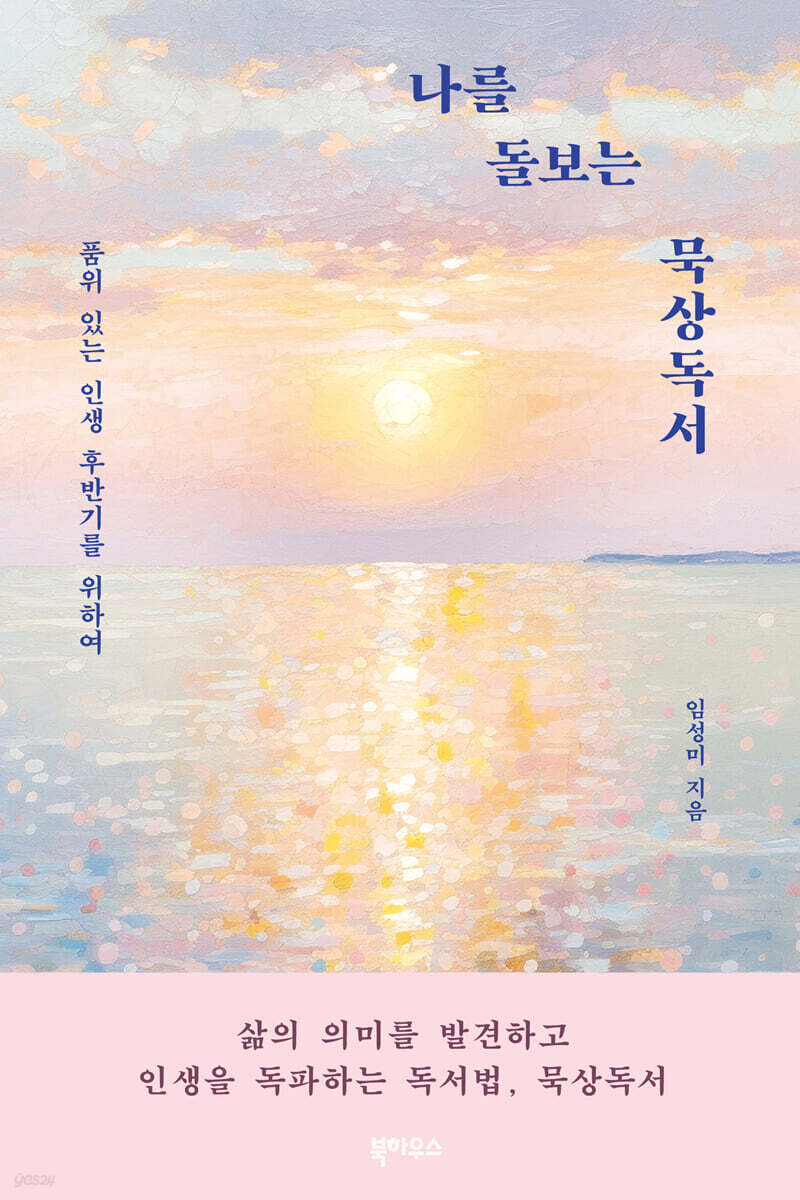
Meditation Reading to Care for Me
 |
Description
Book Introduction
To start the second half of life again
Written with the heart of a humble monk
Thirty-eight readings, seventy books
A reading essay that proves the adage, "There is a path in the book."
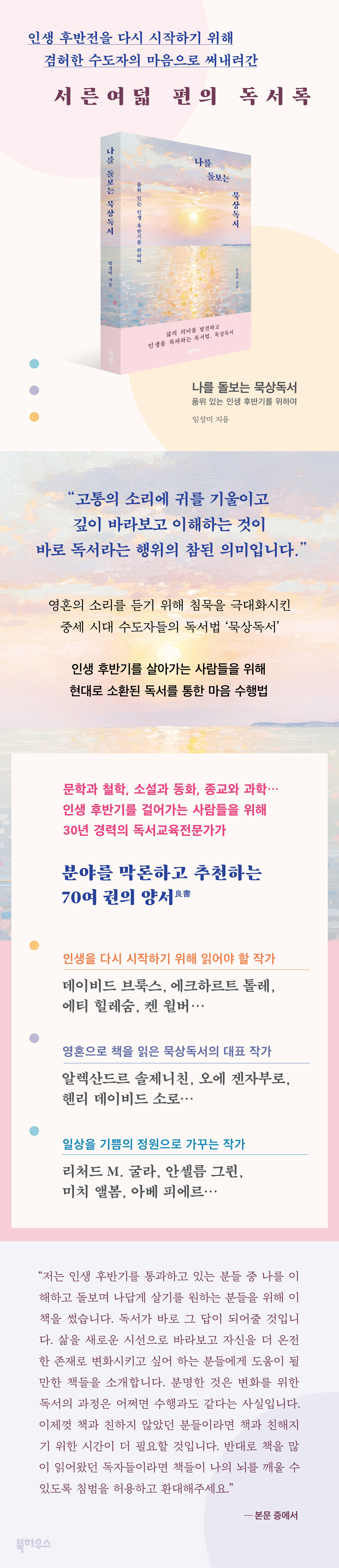
The author, a reading education expert with 30 years of experience, introduces 70 books that will become your lifeblood during the second half of life, a time when you need a new mindset.
'Meditative reading,' a method of reading used by monks in medieval monasteries, provides readers who live in a time when reflection on life is more necessary than ever before with a direction on how to read the story of life.
"Meditative Reading that Takes Care of Me" proves that reading can become a new name for reflection by combining "meditative reading," a concept that has become unfamiliar in modern times, with reading.
This book, which the author has carefully selected from among the hundreds of books he has read since entering the latter half of his life, only those that have left a deep resonance in his soul, contains excellent books that you should definitely read at least once if you have ever pondered, "How should I live the rest of my life?"
"Meditative Reading for Self-Care," which covers a total of seventy books, including David Brooks' "The Second Mountain," Eckhart Tolle's "Live in the Now," and Ken Wilber's "Boundless" will be an invaluable guide for readers who want to pick up books they have put aside for a while as they face a turning point in their lives.
Written with the heart of a humble monk
Thirty-eight readings, seventy books
A reading essay that proves the adage, "There is a path in the book."
The author, a reading education expert with 30 years of experience, introduces 70 books that will become your lifeblood during the second half of life, a time when you need a new mindset.
'Meditative reading,' a method of reading used by monks in medieval monasteries, provides readers who live in a time when reflection on life is more necessary than ever before with a direction on how to read the story of life.
"Meditative Reading that Takes Care of Me" proves that reading can become a new name for reflection by combining "meditative reading," a concept that has become unfamiliar in modern times, with reading.
This book, which the author has carefully selected from among the hundreds of books he has read since entering the latter half of his life, only those that have left a deep resonance in his soul, contains excellent books that you should definitely read at least once if you have ever pondered, "How should I live the rest of my life?"
"Meditative Reading for Self-Care," which covers a total of seventy books, including David Brooks' "The Second Mountain," Eckhart Tolle's "Live in the Now," and Ken Wilber's "Boundless" will be an invaluable guide for readers who want to pick up books they have put aside for a while as they face a turning point in their lives.
- You can preview some of the book's contents.
Preview
index
Chapter 1: The Second Half of Life: Starting Over 9
1 The Second Half of Life: Time to Write a New Story 17
2 Rejoice in Existence 25
3 Seeing Differently, Into the World of Transcendence 32
4 Beyond Dichotomy 39
5 Breaking Away from Your Superior Ego 48
6 Who knows? 55
7 Don't Let Your Inner Storyteller Play You Off 61
8 Magic Spells to Bring Peace of Mind 68
Chapter 2: Time to Meet Your True Self 73
1 Something is rising within me 79
2 How to Recover a Lost Soul 85
3 People in Search of Their 'True Self' 90
4 Anger is not mine 98
5 When I feel myself in this moment 108
6 Physicists Talking About the Soul 114
7. Facing Suffering Without Fear 122
8 What Guides Our Souls 129
9 The Power to Drive Change 136
Chapter 3: Meditation Readings for Caring for Myself 145
1 The Courage to Endure Life 153
2 Monastery of One's Own 159
3 Yet my soul remembers 166
4 Correct reading is reading with a true soul 171
5 Your Own Mantra 179
6 Prayer, Work, and Meditation 187
7 The Power of Facing Pain 194
8. Expressing My Pain in a Language Others Can Understand 199
Chapter 4: Making Everyday Life a Garden of Joy 207
1 Stop, be silent, and listen 215
2 Monastery Stay in Everyday Life 221
3 Meditation, the Beginning of Self-Care 229
4 The Power to Endure Pain and Misfortune 234
5 Freeing Yourself from the Metaphor of Illness 239
Chapter 5: Living in Care and Love 245
1 Look Deeply, and Love 253
2 If we fail to consider others' perspectives 259
3 The soul can feel when it loves 266
4 We desperately need to reinvent love 272
5 What is a calling? 278
6 Why do we read other people's stories? 287
7. To Live as a Tourist or a Pilgrim? 292
8 What kind of angels will we become? 301
1 The Second Half of Life: Time to Write a New Story 17
2 Rejoice in Existence 25
3 Seeing Differently, Into the World of Transcendence 32
4 Beyond Dichotomy 39
5 Breaking Away from Your Superior Ego 48
6 Who knows? 55
7 Don't Let Your Inner Storyteller Play You Off 61
8 Magic Spells to Bring Peace of Mind 68
Chapter 2: Time to Meet Your True Self 73
1 Something is rising within me 79
2 How to Recover a Lost Soul 85
3 People in Search of Their 'True Self' 90
4 Anger is not mine 98
5 When I feel myself in this moment 108
6 Physicists Talking About the Soul 114
7. Facing Suffering Without Fear 122
8 What Guides Our Souls 129
9 The Power to Drive Change 136
Chapter 3: Meditation Readings for Caring for Myself 145
1 The Courage to Endure Life 153
2 Monastery of One's Own 159
3 Yet my soul remembers 166
4 Correct reading is reading with a true soul 171
5 Your Own Mantra 179
6 Prayer, Work, and Meditation 187
7 The Power of Facing Pain 194
8. Expressing My Pain in a Language Others Can Understand 199
Chapter 4: Making Everyday Life a Garden of Joy 207
1 Stop, be silent, and listen 215
2 Monastery Stay in Everyday Life 221
3 Meditation, the Beginning of Self-Care 229
4 The Power to Endure Pain and Misfortune 234
5 Freeing Yourself from the Metaphor of Illness 239
Chapter 5: Living in Care and Love 245
1 Look Deeply, and Love 253
2 If we fail to consider others' perspectives 259
3 The soul can feel when it loves 266
4 We desperately need to reinvent love 272
5 What is a calling? 278
6 Why do we read other people's stories? 287
7. To Live as a Tourist or a Pilgrim? 292
8 What kind of angels will we become? 301
Detailed image
Into the book
I think the journey of finding 'myself' in the second half of life is, in a word, an adventure for 'change.'
--- p.13
I wrote this book for those of you who are in the second half of your life and want to understand and care for yourself and live your life true to yourself.
Reading will be the answer.
The purpose of this book is to introduce books that will be helpful to those who want to look at life with a new perspective and transform themselves into more complete beings.
What is clear is that the process of reading for change is perhaps akin to a practice.
If you have never been familiar with books, you may need more time to become familiar with them.
On the other hand, if you are a reader who has read a lot of books, I ask you to welcome and allow the books to invade my brain and awaken it.
--- p.15~16
In the second half of life, you must become a reader who knows how to interpret and look at the book of life in a new way.
Ultimately, the process of listening to a story, reading it, interpreting it, applying it, and gaining insight into it can be said to be like alchemy, transforming oneself.
--- p.24
Why can't we realize that by reliving our lives as tragic narratives, we're actually exhausting and alienating our loved ones? Why do we spend the latter half of our lives struggling to be loved rather than giving it? It seems to me that countless people in the latter half of their lives are still struggling with a mentality of self-aggrandizement or overcompensation for what they didn't achieve in their younger years.
--- p.34~35
Of course, past experiences are also resources from which we can gain wisdom.
If we can utilize our experience properly, we could have a truly wonderful second half.
Unfortunately, most of us easily become immersed in the familiar, repetitive experiences of the past, the habits we have practiced professionally, and the comfort of the status and power we have acquired and enjoyed at work.
We tend to thickly wrap ourselves with them.
Even though they no longer have that status, they are unable to let it go and are afraid of losing it.
We must realize that the status, fame, power, and wealth we once possessed can actually hinder us from encountering our true selves and deprive us of the opportunity to be loved by others for who we are.
--- p.50~51
Therefore, what we need to do is to accept and enjoy life in the present rather than spending each day worrying about whether it is good or bad.
It's about living while accepting the changes that are coming to me.
It is about continuing to live in the face of aging, declining physical abilities, cognitive decline, poverty, loss, and isolation.
Because in our lives, there is always a loss and a gain, a good and a bad, and a pain and a joy.
--- p.60
Going with the flow of life is like surrendering to the natural flow of a stream, as if it were meant to be.
And like the sparkling lights in a flowing stream, life holds a wonderful and mysterious story.
--- p.82
Some psychotherapists even refer to housework as a “path to meditation.”
What we do every day affects not only our personality but also the quality of our entire lives.
The daily chores we have to do around the house, from cooking to sweeping and cleaning the room to washing clothes, give life to our souls.
I'm not saying that housework should be unconditionally praised.
What I want to say is that every corner of our homes and every object we use have a significant impact on our mental image.
Looking at a crucifix hanging on the wall or a painting by an artist is itself a form of meditation.
Even as we hang and fold our laundry, we can think of our families and pray for them.
--- p.88
Benedictine Father Heo Seong-jun, who has studied the reading of monks for a long time, says that the Latin word 'meditari' originally comes from the Greek word 'meletao', which means "to accept the word of God inwardly," and that going back further, it comes from the Hebrew word meaning "to mutter something half-loud." He says that the reading of monks is like the rumination of cows or camels, who store food and slowly chew the cud until it seeps into their flesh and bones.
--- p.150
Alberto Manguel, author of “A History of Reading,” said, “Reading is as essential a function as breathing. We read to examine who we are and where we stand, and to read the world that surrounds us.”
It is also said that meditation is seeing God within yourself, love is seeing God within the person next to you, and spirituality is seeing God everywhere.
It is a time when we need to read to become aware of and not forget the spirituality that is the source of our existence.
--- p.13
I wrote this book for those of you who are in the second half of your life and want to understand and care for yourself and live your life true to yourself.
Reading will be the answer.
The purpose of this book is to introduce books that will be helpful to those who want to look at life with a new perspective and transform themselves into more complete beings.
What is clear is that the process of reading for change is perhaps akin to a practice.
If you have never been familiar with books, you may need more time to become familiar with them.
On the other hand, if you are a reader who has read a lot of books, I ask you to welcome and allow the books to invade my brain and awaken it.
--- p.15~16
In the second half of life, you must become a reader who knows how to interpret and look at the book of life in a new way.
Ultimately, the process of listening to a story, reading it, interpreting it, applying it, and gaining insight into it can be said to be like alchemy, transforming oneself.
--- p.24
Why can't we realize that by reliving our lives as tragic narratives, we're actually exhausting and alienating our loved ones? Why do we spend the latter half of our lives struggling to be loved rather than giving it? It seems to me that countless people in the latter half of their lives are still struggling with a mentality of self-aggrandizement or overcompensation for what they didn't achieve in their younger years.
--- p.34~35
Of course, past experiences are also resources from which we can gain wisdom.
If we can utilize our experience properly, we could have a truly wonderful second half.
Unfortunately, most of us easily become immersed in the familiar, repetitive experiences of the past, the habits we have practiced professionally, and the comfort of the status and power we have acquired and enjoyed at work.
We tend to thickly wrap ourselves with them.
Even though they no longer have that status, they are unable to let it go and are afraid of losing it.
We must realize that the status, fame, power, and wealth we once possessed can actually hinder us from encountering our true selves and deprive us of the opportunity to be loved by others for who we are.
--- p.50~51
Therefore, what we need to do is to accept and enjoy life in the present rather than spending each day worrying about whether it is good or bad.
It's about living while accepting the changes that are coming to me.
It is about continuing to live in the face of aging, declining physical abilities, cognitive decline, poverty, loss, and isolation.
Because in our lives, there is always a loss and a gain, a good and a bad, and a pain and a joy.
--- p.60
Going with the flow of life is like surrendering to the natural flow of a stream, as if it were meant to be.
And like the sparkling lights in a flowing stream, life holds a wonderful and mysterious story.
--- p.82
Some psychotherapists even refer to housework as a “path to meditation.”
What we do every day affects not only our personality but also the quality of our entire lives.
The daily chores we have to do around the house, from cooking to sweeping and cleaning the room to washing clothes, give life to our souls.
I'm not saying that housework should be unconditionally praised.
What I want to say is that every corner of our homes and every object we use have a significant impact on our mental image.
Looking at a crucifix hanging on the wall or a painting by an artist is itself a form of meditation.
Even as we hang and fold our laundry, we can think of our families and pray for them.
--- p.88
Benedictine Father Heo Seong-jun, who has studied the reading of monks for a long time, says that the Latin word 'meditari' originally comes from the Greek word 'meletao', which means "to accept the word of God inwardly," and that going back further, it comes from the Hebrew word meaning "to mutter something half-loud." He says that the reading of monks is like the rumination of cows or camels, who store food and slowly chew the cud until it seeps into their flesh and bones.
--- p.150
Alberto Manguel, author of “A History of Reading,” said, “Reading is as essential a function as breathing. We read to examine who we are and where we stand, and to read the world that surrounds us.”
It is also said that meditation is seeing God within yourself, love is seeing God within the person next to you, and spirituality is seeing God everywhere.
It is a time when we need to read to become aware of and not forget the spirituality that is the source of our existence.
--- p.158
Publisher's Review
“In the second half of life, I read the book called life.
Knowing how to interpret and look at things in a new way
“You have to become a reader.”
Reading method to understand life,
A new name for thought,
Meditation Reading
'Why is it so hard for me to live like this?' They say that everything becomes familiar as time passes, but no matter how old you get, there are still things that are difficult.
This is our life.
I've left behind my fiercely lived youth and entered the second half of my life at a turning point, but life is still burdensome and difficult.
Where can we find this answer?
Lim Seong-mi, who has been active as a writer and reading education expert in various fields of society for 30 years, says that the answer can be found through 'reading that meets the soul.'
The silence that comes with reading a book takes us away from the noise of everyday life, allowing us to hear the inner voice that we have been unable to listen to.
The conversation with myself that comes from this silence helps me understand what wounds I have suffered and what pain I have experienced throughout my life.
The reading method that is optimized for listening to this inner voice is ‘meditative reading.’
Meditative reading is a method of reading that was actually practiced among monks in medieval monasteries to care for their souls.
For them, reading was not a text, but a meditation to take care of life by reading life.
What they sought was insight, not knowledge, and this was achieved by incorporating the act of 'contemplation' into reading.
Author Lim Seong-mi has brought back the modern era of meditative reading for those in the latter half of their lives and preparing for a wonderful old age.
It talks about the mindset you should have before reading a book, what kind of books you should read, and what disturbs your inner peace, and opens your heart's ears to hear the inner voice you have been ignoring.
Anyone can become a reader with the help of author Lim Seong-mi, even if the word "meditation" feels unfamiliar because it is not something we see often in our daily lives.
“The second half of life is not a time to dance to survive,
It is time to dance for the joy of existence itself.”
Seventy books that will make your soul dance,
Thirty-eight essays filled with the joy of existence itself.
In "Meditative Reading to Care for Myself," author Lim Seong-mi introduces over 70 books that made her soul dance among the hundreds she has read over the past 10 years.
From humanities and philosophy, novels and fairy tales, religion and science, the carefully selected books offer a glimpse into the library of author Lim Seong-mi, who is considered a reading expert.
Not only do we introduce books that warm the soul of already world-famous authors like Kenzaburo Oe and Henry David Thoreau, but also spiritual masters like David Brooks and Eckhart Tolle, many of whose works are already available in domestic bookstores, but also books by authors who are yet to be discovered but show deep and warm reflections, such as Etty Hillesum, a name unfamiliar to Korean readers, are also covered.
If you read books that appropriately introduce the issues that anyone living in the second half of their life would have pondered at least once, you can feel the lump in your chest slowly melting away.
There are many books introducing good books, but books that specifically recommend them to people living in the second half of life are rare and precious.
The message that only writers of the same generation, who have lived in the same era and gone through similar life journeys, can convey goes beyond empathy and carries the power to become the North Star of life.
Just as ancient travelers looked to the constellations in the night sky to find their way forward, you can find the direction you want to lead in life through the seventy books introduced by author Lim Seong-mi.
Knowing how to interpret and look at things in a new way
“You have to become a reader.”
Reading method to understand life,
A new name for thought,
Meditation Reading
'Why is it so hard for me to live like this?' They say that everything becomes familiar as time passes, but no matter how old you get, there are still things that are difficult.
This is our life.
I've left behind my fiercely lived youth and entered the second half of my life at a turning point, but life is still burdensome and difficult.
Where can we find this answer?
Lim Seong-mi, who has been active as a writer and reading education expert in various fields of society for 30 years, says that the answer can be found through 'reading that meets the soul.'
The silence that comes with reading a book takes us away from the noise of everyday life, allowing us to hear the inner voice that we have been unable to listen to.
The conversation with myself that comes from this silence helps me understand what wounds I have suffered and what pain I have experienced throughout my life.
The reading method that is optimized for listening to this inner voice is ‘meditative reading.’
Meditative reading is a method of reading that was actually practiced among monks in medieval monasteries to care for their souls.
For them, reading was not a text, but a meditation to take care of life by reading life.
What they sought was insight, not knowledge, and this was achieved by incorporating the act of 'contemplation' into reading.
Author Lim Seong-mi has brought back the modern era of meditative reading for those in the latter half of their lives and preparing for a wonderful old age.
It talks about the mindset you should have before reading a book, what kind of books you should read, and what disturbs your inner peace, and opens your heart's ears to hear the inner voice you have been ignoring.
Anyone can become a reader with the help of author Lim Seong-mi, even if the word "meditation" feels unfamiliar because it is not something we see often in our daily lives.
“The second half of life is not a time to dance to survive,
It is time to dance for the joy of existence itself.”
Seventy books that will make your soul dance,
Thirty-eight essays filled with the joy of existence itself.
In "Meditative Reading to Care for Myself," author Lim Seong-mi introduces over 70 books that made her soul dance among the hundreds she has read over the past 10 years.
From humanities and philosophy, novels and fairy tales, religion and science, the carefully selected books offer a glimpse into the library of author Lim Seong-mi, who is considered a reading expert.
Not only do we introduce books that warm the soul of already world-famous authors like Kenzaburo Oe and Henry David Thoreau, but also spiritual masters like David Brooks and Eckhart Tolle, many of whose works are already available in domestic bookstores, but also books by authors who are yet to be discovered but show deep and warm reflections, such as Etty Hillesum, a name unfamiliar to Korean readers, are also covered.
If you read books that appropriately introduce the issues that anyone living in the second half of their life would have pondered at least once, you can feel the lump in your chest slowly melting away.
There are many books introducing good books, but books that specifically recommend them to people living in the second half of life are rare and precious.
The message that only writers of the same generation, who have lived in the same era and gone through similar life journeys, can convey goes beyond empathy and carries the power to become the North Star of life.
Just as ancient travelers looked to the constellations in the night sky to find their way forward, you can find the direction you want to lead in life through the seventy books introduced by author Lim Seong-mi.
GOODS SPECIFICS
- Date of issue: December 5, 2023
- Page count, weight, size: 312 pages | 405g | 140*210*18mm
- ISBN13: 9791164052264
- ISBN10: 1164052268
You may also like
카테고리
korean


korean

![GQ KOREA Mark (Monthly): December [2025]](http://librairie.coreenne.fr/cdn/shop/files/8ef265dbbfbf186523ed75ba7319009d.jpg?v=1765340328&width=3840)


