

The Key of the Rose
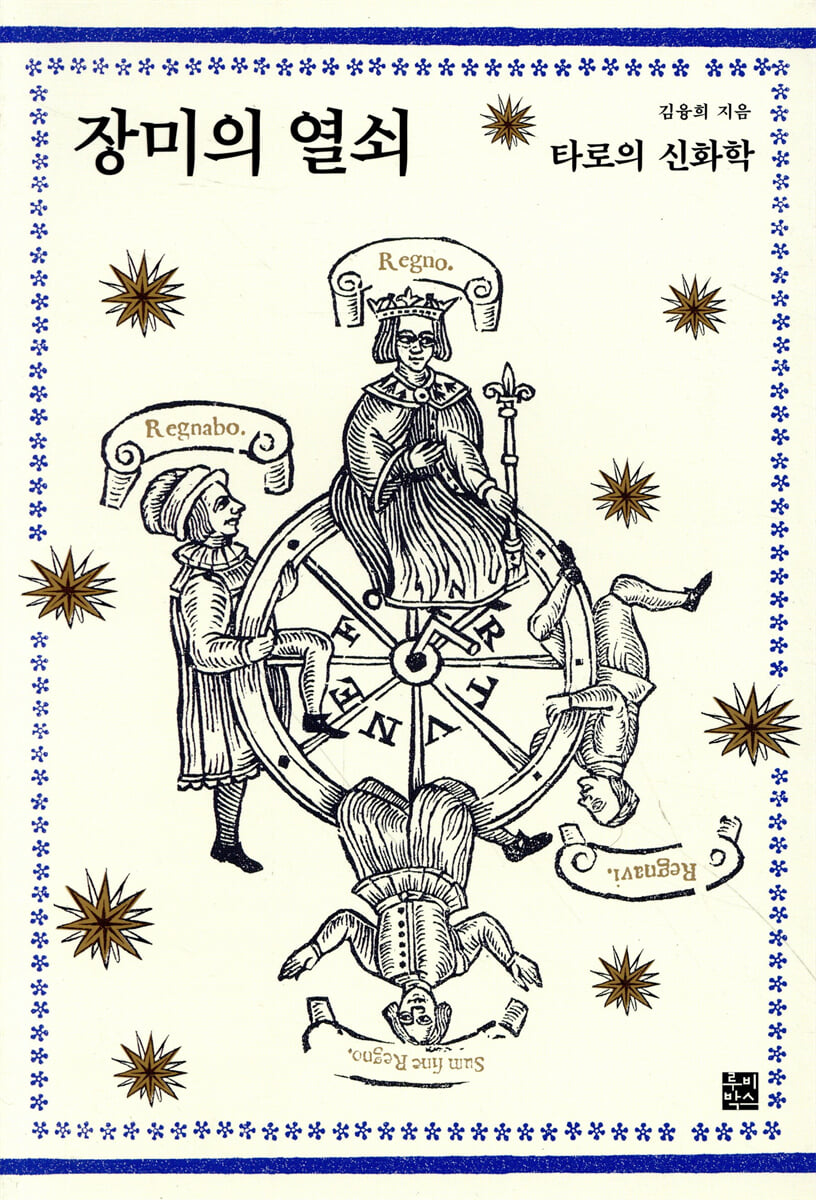 |
Description
Book Introduction
A humanities book on the Tarot, trapped between mystery and superstition.
Kim Yong-hee, author of 『Art, Magical Communication with the World』, 『The Secret Language of My Heart Told Through Fairy Tales』, and 『Myths Encountered at the Crossroads of Life』, has published an introductory book on the mythology, philosophy, and psychology of tarot.
A guide to 'The Way to Master Destiny and the Mind'.
This book is not a book that provides interpretations for tarot readers.
It discusses Western mythology, psychology, philosophy, and art contained in the Tarot from a humanistic perspective.
These days, you can easily find a tarot consulting center near a university or in a crowded place.
Even if you don't believe in fatalism, if you've ever sat down in front of a tarot card, the symbols and meanings of each of the 22 tarot cards will be new to you.
The author, who first encountered the Tarot while studying the connection between art and magic, was captivated by its depth, mystery, and symbolism.
This book is written by an author who has studied and encountered the Tarot in such a way that it is easy for anyone to understand.
Above all, it is a humanities book that talks about the tarot across Western mythology, psychology, philosophy, and art.
As befitting an author skilled at interpreting Western mythology and thought from a humanistic perspective, the author has given a new lease on life to the tarot, once dismissed as superstition or merely a tool for fortune telling, as a map that can guide us through our lives.
The author covers the background of the Tarot, the hidden meanings in each image, the author's creative intentions, and psychological aspects based on his many years of research into the Tarot.
You might think that a humanities book would be stiff and boring, but the book is easy and friendly.
As you read, you may even get the feeling that it is comforting the reader's heart.
The author viewed the Tarot as a book of myths illustrated with pictures.
In other words, the tarot images are images that depict the 'path to finding oneself' as mentioned by mythologist Joseph Campbell.
Tarot was also seen as a picture that conveyed the secrets and mysteries of existence.
Tarot stories, like the protagonists of myths, depict a journey of encountering difficulties, seeing the world through different eyes, and finding one's true self.
That process is called initiation, and it forms the backbone of this book.
The 'fool', an empty being, sets out on a journey.
She becomes the 'Empress', the mother of Phoenix, and then the 'Pope' who knows the multi-layered truth, and then falls from the 'Wheel of Destiny' to stop and look again.
Also, those who come to know the 'power' to tame the inner animal, become a 'hanging person' and see the world upside down, see the 'sun' that seeks the gold of the mind, and face the soul of the 'world' and are initiated are transformed and become different beings from before.
As the reader follows the story of this journey of self-discovery, he or she also embarks on his or her own journey, seeking out his or her own self and reflecting on his or her life.
In this process, we can gain psychological comfort because the story contained in the Tarot is completely different from our existing knowledge or way of viewing the world.
At the same time, readers acquire the wisdom of Western occultism/mystery, such as alchemy and astrology, along with various humanistic knowledge such as symbolism and philosophy.
This book helps you understand and navigate all of these processes through tarot.
So, after reading the book, you will gain perhaps the deepest insight into the Tarot, which, similar to myths and works of art, conveys the mysteries and secrets of existence through the language of metaphor and symbolism.
'Rather than asking the tarot for answers, listen to the questions it asks.'
Kim Yong-hee, author of 『Art, Magical Communication with the World』, 『The Secret Language of My Heart Told Through Fairy Tales』, and 『Myths Encountered at the Crossroads of Life』, has published an introductory book on the mythology, philosophy, and psychology of tarot.
A guide to 'The Way to Master Destiny and the Mind'.
This book is not a book that provides interpretations for tarot readers.
It discusses Western mythology, psychology, philosophy, and art contained in the Tarot from a humanistic perspective.
These days, you can easily find a tarot consulting center near a university or in a crowded place.
Even if you don't believe in fatalism, if you've ever sat down in front of a tarot card, the symbols and meanings of each of the 22 tarot cards will be new to you.
The author, who first encountered the Tarot while studying the connection between art and magic, was captivated by its depth, mystery, and symbolism.
This book is written by an author who has studied and encountered the Tarot in such a way that it is easy for anyone to understand.
Above all, it is a humanities book that talks about the tarot across Western mythology, psychology, philosophy, and art.
As befitting an author skilled at interpreting Western mythology and thought from a humanistic perspective, the author has given a new lease on life to the tarot, once dismissed as superstition or merely a tool for fortune telling, as a map that can guide us through our lives.
The author covers the background of the Tarot, the hidden meanings in each image, the author's creative intentions, and psychological aspects based on his many years of research into the Tarot.
You might think that a humanities book would be stiff and boring, but the book is easy and friendly.
As you read, you may even get the feeling that it is comforting the reader's heart.
The author viewed the Tarot as a book of myths illustrated with pictures.
In other words, the tarot images are images that depict the 'path to finding oneself' as mentioned by mythologist Joseph Campbell.
Tarot was also seen as a picture that conveyed the secrets and mysteries of existence.
Tarot stories, like the protagonists of myths, depict a journey of encountering difficulties, seeing the world through different eyes, and finding one's true self.
That process is called initiation, and it forms the backbone of this book.
The 'fool', an empty being, sets out on a journey.
She becomes the 'Empress', the mother of Phoenix, and then the 'Pope' who knows the multi-layered truth, and then falls from the 'Wheel of Destiny' to stop and look again.
Also, those who come to know the 'power' to tame the inner animal, become a 'hanging person' and see the world upside down, see the 'sun' that seeks the gold of the mind, and face the soul of the 'world' and are initiated are transformed and become different beings from before.
As the reader follows the story of this journey of self-discovery, he or she also embarks on his or her own journey, seeking out his or her own self and reflecting on his or her life.
In this process, we can gain psychological comfort because the story contained in the Tarot is completely different from our existing knowledge or way of viewing the world.
At the same time, readers acquire the wisdom of Western occultism/mystery, such as alchemy and astrology, along with various humanistic knowledge such as symbolism and philosophy.
This book helps you understand and navigate all of these processes through tarot.
So, after reading the book, you will gain perhaps the deepest insight into the Tarot, which, similar to myths and works of art, conveys the mysteries and secrets of existence through the language of metaphor and symbolism.
'Rather than asking the tarot for answers, listen to the questions it asks.'
- You can preview some of the book's contents.
Preview
index
Introduction
0.
Clown: Everyone and Nobody - A crazy person/clown or fool/empty being
1.
The Magician: Seeing Differently - Magic or Illusion/Hermes Trismegistus/Seeing the World with Different Eyes/A New Beginning
2.
The Pope: Standing at the Secret Door - The Pope Gives Birth/The Secret Teachings/Gnosticism/Sophia/The Door of Wisdom
3.
The Empress: Meet Mother Nature - Iconoclasm/Mother of the Phoenix/Magic of Nature
4.
The Emperor: Meeting the Father of Matter - The Law of the Square/The Descending Eagle/The Tetragrammaton
5.
The Pope: Learning About Other Dimensions - Multilayered Truth/Speaking Spirituality/The First Pope/Esotericism/Catharism/The Birth of Ideas
6.
Lovers: Love or Death - Love Triangle/Love Potion/Anima's Temptation/Sweet and Bitter
7.
Chariot: Forward - The King and Self-Consciousness/Libido/The Four Functions of the Body/Who is the Master of Life?
8.
Definition: Understanding Karma - The Weight of a Feather / The Scales of Karma / Suspension of Judgment
9.
The Hermit: Shining the Light Within - Meeting the Number Nine / The Wise Old Man / The Lantern and the Cane / Listening to the Breath of Nature
10.
The Wheel of Fortune: Completing a Cycle - Turning and Turning / Moving to the Center of the Wheel / Stopping and Looking / Moving to the Next Dimension
11.
Power: Mastering Your Inner Animal - Beauty and the Beast/The Inner Animal/The Green Lion Who Eats the Sun/How to Tame a Lion
12.
The Hanged Man: Looking Upside Down - A Helpless Situation / We Are Born Upside Down / The Wisdom of Trees
13.
The Nameless One: Passing Through the Darkness - Remember Death/Saturn's Scythe/Alchemical Darkness/The Thirteenth Secret
14.
Temperance: Stepping Back and Observing - Angel's Aquarius/Spirit/Not Trying
15.
Devil: Meet the Shadow - The Cursed/Love or Desire/Shadow/The Dweller on the Threshold
16.
House of God: Out of Prison - Tower of Babel/The Prison of Language/Free at Last
17.
Star: Following the Soul's Guide - The Soul's Guide/Two Streams/Alone Under the Starlight/Tears, Sweat, Blood
18.
Moon: Through the Gates of Illusion - The Time of Dog and Wolf/The Gates of Illusion/The Magic of the Moon
19.
The Sun: In Search of the Gold of the Mind - The Gold of Alchemy/The Eternal Child/Tears of the Sun
20.
Judgement: Awakening from Sleep - Coming Out of the Grave/Hearing a Sound/Inner Conflict Disappears/Two Goddesses
21.
World: Encountering the Spirits - Water, Fire, Earth, and Air/World Spirits/Dance of the Goddess/Scallops and the Sea Goddess/Nature's Wisdom
Conclusion
Books referenced
0.
Clown: Everyone and Nobody - A crazy person/clown or fool/empty being
1.
The Magician: Seeing Differently - Magic or Illusion/Hermes Trismegistus/Seeing the World with Different Eyes/A New Beginning
2.
The Pope: Standing at the Secret Door - The Pope Gives Birth/The Secret Teachings/Gnosticism/Sophia/The Door of Wisdom
3.
The Empress: Meet Mother Nature - Iconoclasm/Mother of the Phoenix/Magic of Nature
4.
The Emperor: Meeting the Father of Matter - The Law of the Square/The Descending Eagle/The Tetragrammaton
5.
The Pope: Learning About Other Dimensions - Multilayered Truth/Speaking Spirituality/The First Pope/Esotericism/Catharism/The Birth of Ideas
6.
Lovers: Love or Death - Love Triangle/Love Potion/Anima's Temptation/Sweet and Bitter
7.
Chariot: Forward - The King and Self-Consciousness/Libido/The Four Functions of the Body/Who is the Master of Life?
8.
Definition: Understanding Karma - The Weight of a Feather / The Scales of Karma / Suspension of Judgment
9.
The Hermit: Shining the Light Within - Meeting the Number Nine / The Wise Old Man / The Lantern and the Cane / Listening to the Breath of Nature
10.
The Wheel of Fortune: Completing a Cycle - Turning and Turning / Moving to the Center of the Wheel / Stopping and Looking / Moving to the Next Dimension
11.
Power: Mastering Your Inner Animal - Beauty and the Beast/The Inner Animal/The Green Lion Who Eats the Sun/How to Tame a Lion
12.
The Hanged Man: Looking Upside Down - A Helpless Situation / We Are Born Upside Down / The Wisdom of Trees
13.
The Nameless One: Passing Through the Darkness - Remember Death/Saturn's Scythe/Alchemical Darkness/The Thirteenth Secret
14.
Temperance: Stepping Back and Observing - Angel's Aquarius/Spirit/Not Trying
15.
Devil: Meet the Shadow - The Cursed/Love or Desire/Shadow/The Dweller on the Threshold
16.
House of God: Out of Prison - Tower of Babel/The Prison of Language/Free at Last
17.
Star: Following the Soul's Guide - The Soul's Guide/Two Streams/Alone Under the Starlight/Tears, Sweat, Blood
18.
Moon: Through the Gates of Illusion - The Time of Dog and Wolf/The Gates of Illusion/The Magic of the Moon
19.
The Sun: In Search of the Gold of the Mind - The Gold of Alchemy/The Eternal Child/Tears of the Sun
20.
Judgement: Awakening from Sleep - Coming Out of the Grave/Hearing a Sound/Inner Conflict Disappears/Two Goddesses
21.
World: Encountering the Spirits - Water, Fire, Earth, and Air/World Spirits/Dance of the Goddess/Scallops and the Sea Goddess/Nature's Wisdom
Conclusion
Books referenced
Detailed image
.jpg)
Into the book
Court jesters were considered an outcast.
He was a man who belonged neither to the king nor against him, and who had no need to strive to gain or lose power.
So he took on the role of providing laughter and respite to those tired of the invisible political tension and war of nerves that took place in the palace.
The court jester was treated as a lowly person, but that doesn't mean he was stupid.
......
I don't remember the real face of Charlie Chaplin, the modern-day clown.
The only face we remember of him is that of a clumsy, foolish, and stupid, sad-eyed figure.
But in reality, he was neither clumsy nor foolish.
Rather, he was more forward-thinking than the audience of his time, who laughed and held their stomachs when they saw him.
......
What truth does the clown reveal when he pretends to be a fool and makes himself a laughing stock?
Wasn't it the foolishness of those who were laughing?
In an age when everyone believed that if they didn't become smart, they would be in trouble, his clumsy behavior and ridiculousness would have been a reflection of those who believed otherwise.
--- 「0.
From "Fool or Clown"
The prevailing view was that the objects of faith were only books written in letters or words delivered by the mouths of priests, and that paintings and statues were neither trustworthy nor suitable tools for expressing the truth.
The convention that text is considered more reliable and authoritative than pictures is in line with this argument.
At first glance, it may seem like a matter of religious debate, but this issue transcends religion and continues to cause conflict at the root of our consciousness.
Do you trust text or pictures? Or which do you think is superior? Neurosurgeon Leonard Schlein compared picture-centered and text-centered thinking, stating that picture-centered thinking is right-brained and allows for comprehensive judgments.
He says that whenever left-brained and text-centric thinking dominated human history, there was always a suppression of images.
According to him, text-centrism manifests itself not simply as a suppression of images, but also as a suppression of women, mystery, and ambiguity.
--- 「3.
From "The Empress"
She has a different vibe from Hercules.
She neither killed a lion nor wore a lion skin.
Just pet the lion and hold its mouth.
How do you develop this kind of relationship with a lion? This picture somehow reminds me of the story of "Beauty and the Beast."
It is a story about a prince who was turned into a beast by magic and returned to being human thanks to the pure love of a beautiful woman.
Like other classic fairy tales, this one has been transformed into a Hollywood romantic drama about a pretty girl marrying a prince and living happily ever after, but a closer look reveals that it contains much more than that.
One thing we can take from this story is the communication with the beast.
The reason Beauty was able to love the scary beast was because she talked to the beast.
......
Did the protagonist also talk to a lion? How would he converse with one? ......
She seems to know what sounds and gestures make lions docile.
This card asks:
What would you do if you were with a lion? How could you be with a lion without killing or imprisoning it? Knowing how to do this will unlock the secret of power this card conveys.
......
The lion also appears frequently in alchemical symbolism.
Alchemists used various pictorial symbols to describe the process of creating gold.
The gold in alchemy is spiritual gold.
The process of creating gold is the process of us being reborn as beings who emit a warm light like gold.
The alchemical lion symbolizes the nature within us that can be transformed into gold.
--- 「11.
From "Strength"
The story related to 13 would be the story of the 13th witch who appears in “The Thorn Princess.”
The witch who cast a curse on the newborn princess's first birthday.
Do you remember the content of that curse?
'When the princess turns fifteen, she will prick her finger on a spinning wheel and die!' As expected, the number 13 seems like a story that invites death.
But let's put aside hasty judgments and look a little further.
......
The 13th witch put this curse on herself because she was not invited.
The king did not invite a single person because there were only twelve sets of gold utensils in the palace.
The king's short-sighted decision is the cause of this situation.
......
Jungian analyst von Franz interprets this story as a story that arose from the conflict between the 12-centered and 13-centered values.
12 is a number that is divisible by 2, 3, 4, and 6.
But 13 is not divisible by any number.
What this means is that 13 is a number that is difficult to grasp with our rational thinking.
The concept of number in the past was spatial and temporal, unlike today.
Because numbers were not only a tool for counting quantities, but also a tool for understanding the world.
The number 12 was primarily used to measure time and direction.
If you determine the four cardinal directions of east, west, south, and north with me as the center and give a three-beat rhythm to these four directions, it becomes 12.
12 is a number suitable for giving spatiotemporal order to the world.
When you divide time or space into 12 parts and understand it, you feel like you know it well and it feels refreshing somehow.
But 13 is not like that.
If a watch face is divided into 13 pieces or there are 13 cardinal directions, it might feel a bit strange and unfamiliar.
Because our reason feels uncomfortable with the number 13.
13 is a difficult number to grasp and understand.
--- 「13.
From "The Nameless Person"
Mary's nickname, 'Stella Maris, Star of the Sea', originally referred to Isis.
Isis was sometimes identified with Venus, the goddess of love.
The planet of the same name, Venus, sometimes rises in the eastern sky before the sun and sometimes appears alongside it as the sun sets in the western sky.
Venus is always next to the Sun, indicating its rising and setting.
Therefore, when Venus rises in the night sky, it means that dawn will soon break and morning will come.
Just as Sirius announces the resurrection of life, Venus announces the resurrection of the Sun.
Therefore, it can be said that Venus represented the same symbolic meaning in Europe as Sirius did in Egypt.
One of Venus' nicknames is 'Lucifer'.
Christians equate Lucifer with Satan, but its original meaning is 'bringer of light.'
Because when Venus appears, the sun will rise shortly thereafter.
Of course, the sun here is not only the actual sun, but also the sun of the soul.
The Renaissance painter Botticelli, who knew the mystical meaning of Venus, painted two pictures of Venus.
Primavera and The Birth of Venus.
In Primavera, Venus appears wearing the clothes of the Virgin Mary.
However, in “The Birth of Venus,” she is depicted naked, like the protagonist of the star card.
She can therefore be seen as Venus, the star rising from the sea, and Isis.
In medieval iconographic traditions, Venus is often depicted as a woman with stars on her head and pouring water from a jug.
He was a man who belonged neither to the king nor against him, and who had no need to strive to gain or lose power.
So he took on the role of providing laughter and respite to those tired of the invisible political tension and war of nerves that took place in the palace.
The court jester was treated as a lowly person, but that doesn't mean he was stupid.
......
I don't remember the real face of Charlie Chaplin, the modern-day clown.
The only face we remember of him is that of a clumsy, foolish, and stupid, sad-eyed figure.
But in reality, he was neither clumsy nor foolish.
Rather, he was more forward-thinking than the audience of his time, who laughed and held their stomachs when they saw him.
......
What truth does the clown reveal when he pretends to be a fool and makes himself a laughing stock?
Wasn't it the foolishness of those who were laughing?
In an age when everyone believed that if they didn't become smart, they would be in trouble, his clumsy behavior and ridiculousness would have been a reflection of those who believed otherwise.
--- 「0.
From "Fool or Clown"
The prevailing view was that the objects of faith were only books written in letters or words delivered by the mouths of priests, and that paintings and statues were neither trustworthy nor suitable tools for expressing the truth.
The convention that text is considered more reliable and authoritative than pictures is in line with this argument.
At first glance, it may seem like a matter of religious debate, but this issue transcends religion and continues to cause conflict at the root of our consciousness.
Do you trust text or pictures? Or which do you think is superior? Neurosurgeon Leonard Schlein compared picture-centered and text-centered thinking, stating that picture-centered thinking is right-brained and allows for comprehensive judgments.
He says that whenever left-brained and text-centric thinking dominated human history, there was always a suppression of images.
According to him, text-centrism manifests itself not simply as a suppression of images, but also as a suppression of women, mystery, and ambiguity.
--- 「3.
From "The Empress"
She has a different vibe from Hercules.
She neither killed a lion nor wore a lion skin.
Just pet the lion and hold its mouth.
How do you develop this kind of relationship with a lion? This picture somehow reminds me of the story of "Beauty and the Beast."
It is a story about a prince who was turned into a beast by magic and returned to being human thanks to the pure love of a beautiful woman.
Like other classic fairy tales, this one has been transformed into a Hollywood romantic drama about a pretty girl marrying a prince and living happily ever after, but a closer look reveals that it contains much more than that.
One thing we can take from this story is the communication with the beast.
The reason Beauty was able to love the scary beast was because she talked to the beast.
......
Did the protagonist also talk to a lion? How would he converse with one? ......
She seems to know what sounds and gestures make lions docile.
This card asks:
What would you do if you were with a lion? How could you be with a lion without killing or imprisoning it? Knowing how to do this will unlock the secret of power this card conveys.
......
The lion also appears frequently in alchemical symbolism.
Alchemists used various pictorial symbols to describe the process of creating gold.
The gold in alchemy is spiritual gold.
The process of creating gold is the process of us being reborn as beings who emit a warm light like gold.
The alchemical lion symbolizes the nature within us that can be transformed into gold.
--- 「11.
From "Strength"
The story related to 13 would be the story of the 13th witch who appears in “The Thorn Princess.”
The witch who cast a curse on the newborn princess's first birthday.
Do you remember the content of that curse?
'When the princess turns fifteen, she will prick her finger on a spinning wheel and die!' As expected, the number 13 seems like a story that invites death.
But let's put aside hasty judgments and look a little further.
......
The 13th witch put this curse on herself because she was not invited.
The king did not invite a single person because there were only twelve sets of gold utensils in the palace.
The king's short-sighted decision is the cause of this situation.
......
Jungian analyst von Franz interprets this story as a story that arose from the conflict between the 12-centered and 13-centered values.
12 is a number that is divisible by 2, 3, 4, and 6.
But 13 is not divisible by any number.
What this means is that 13 is a number that is difficult to grasp with our rational thinking.
The concept of number in the past was spatial and temporal, unlike today.
Because numbers were not only a tool for counting quantities, but also a tool for understanding the world.
The number 12 was primarily used to measure time and direction.
If you determine the four cardinal directions of east, west, south, and north with me as the center and give a three-beat rhythm to these four directions, it becomes 12.
12 is a number suitable for giving spatiotemporal order to the world.
When you divide time or space into 12 parts and understand it, you feel like you know it well and it feels refreshing somehow.
But 13 is not like that.
If a watch face is divided into 13 pieces or there are 13 cardinal directions, it might feel a bit strange and unfamiliar.
Because our reason feels uncomfortable with the number 13.
13 is a difficult number to grasp and understand.
--- 「13.
From "The Nameless Person"
Mary's nickname, 'Stella Maris, Star of the Sea', originally referred to Isis.
Isis was sometimes identified with Venus, the goddess of love.
The planet of the same name, Venus, sometimes rises in the eastern sky before the sun and sometimes appears alongside it as the sun sets in the western sky.
Venus is always next to the Sun, indicating its rising and setting.
Therefore, when Venus rises in the night sky, it means that dawn will soon break and morning will come.
Just as Sirius announces the resurrection of life, Venus announces the resurrection of the Sun.
Therefore, it can be said that Venus represented the same symbolic meaning in Europe as Sirius did in Egypt.
One of Venus' nicknames is 'Lucifer'.
Christians equate Lucifer with Satan, but its original meaning is 'bringer of light.'
Because when Venus appears, the sun will rise shortly thereafter.
Of course, the sun here is not only the actual sun, but also the sun of the soul.
The Renaissance painter Botticelli, who knew the mystical meaning of Venus, painted two pictures of Venus.
Primavera and The Birth of Venus.
In Primavera, Venus appears wearing the clothes of the Virgin Mary.
However, in “The Birth of Venus,” she is depicted naked, like the protagonist of the star card.
She can therefore be seen as Venus, the star rising from the sea, and Isis.
In medieval iconographic traditions, Venus is often depicted as a woman with stars on her head and pouring water from a jug.
--- 「 17.
Among the "stars"
Among the "stars"
GOODS SPECIFICS
- Date of issue: September 1, 2023
- Page count, weight, size: 384 pages | 578g | 153*225*20mm
- ISBN13: 9788997023660
- ISBN10: 8997023667
You may also like
카테고리
korean


korean

![GQ KOREA Mark (Monthly): December [2025]](http://librairie.coreenne.fr/cdn/shop/files/8ef265dbbfbf186523ed75ba7319009d.jpg?v=1765340328&width=3840)


