

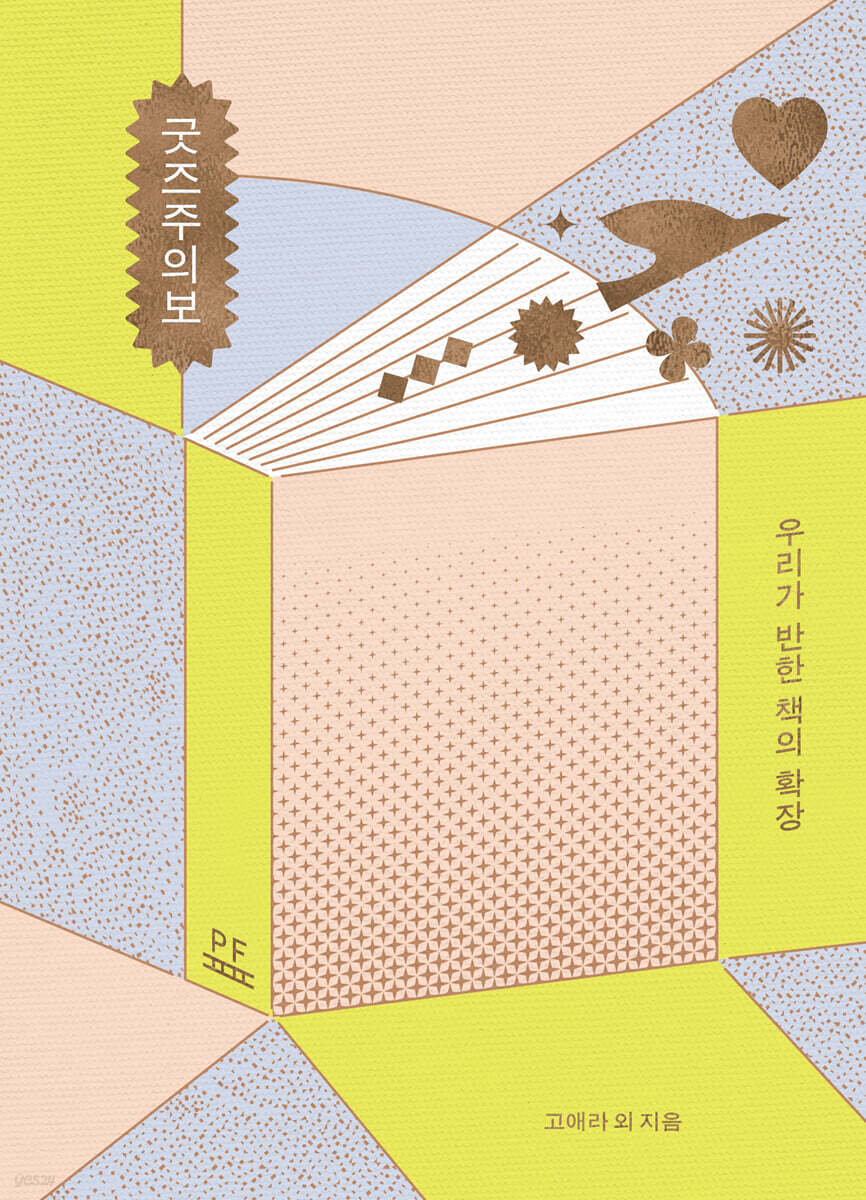
Goods Alert – An Expansion of the Book We Loved
 |
Description
Book Introduction
"Goods Alert - Expansion of the Books We Love" is the first full-fledged report and reference book exploring the "next stage of publishing" beyond books.
The relationship between books and goods is not simply a gift or promotional tool, but rather an extension of the reading experience and a strategic asset for publishing brands.
We explore the past, present, and future possibilities of publishing goods.
We analyze the trends, fandoms, and creative examples of Korean publishing goods that expand the experience and value of books beyond simple gifts.
Through interviews with those who are passionate about goods and the actual production process of goods from 50 domestic publishers, we share their concerns and practical know-how.
Based on this, we can examine how bookstores and publishers can build brand identity and relationships through merchandise.
Furthermore, it includes examples of trends in Japanese and English-speaking publishing goods, as well as essays that emotionally capture the meaning they hold in readers' daily lives.
『Goods Alert』 is not just a simple trend book.
This book, which compiles the past, present, and future of publishing goods, is a practical insight book that publishers, editors, marketers, and designers can use in the field, and a new reference for those contemplating the future of books.
The relationship between books and goods is not simply a gift or promotional tool, but rather an extension of the reading experience and a strategic asset for publishing brands.
We explore the past, present, and future possibilities of publishing goods.
We analyze the trends, fandoms, and creative examples of Korean publishing goods that expand the experience and value of books beyond simple gifts.
Through interviews with those who are passionate about goods and the actual production process of goods from 50 domestic publishers, we share their concerns and practical know-how.
Based on this, we can examine how bookstores and publishers can build brand identity and relationships through merchandise.
Furthermore, it includes examples of trends in Japanese and English-speaking publishing goods, as well as essays that emotionally capture the meaning they hold in readers' daily lives.
『Goods Alert』 is not just a simple trend book.
This book, which compiles the past, present, and future of publishing goods, is a practical insight book that publishers, editors, marketers, and designers can use in the field, and a new reference for those contemplating the future of books.
- You can preview some of the book's contents.
Preview
index
INTRO
Another way to get to goods and books
OVERVIEW
A new way to own books, Goods
50 GOODS WE LOVED
01.
『One Room Assistant』 Heart Acrylic Shaker ◆ Turtle Books
02.
Ghosts are only visible to the brave. T-shirt ◆ Ghostbooks
03.
It was like true love T-shirt ◆ Publisher's decision
04.
Daughter-in-law Soy Candle ◆ Tangerine Press
05.
『Happiness comes from very small things』 Fabric tea coaster ◆ Picture book workshop x Rob
06.
Elephant Trunk Nebula Picnic Mat & Andromeda Galaxy Crystal Paperweight ◆ Hanging Jar
07.
Kim Young-sa Reading Meme Keychain ◆ Kim Young-sa
08.
Absurd Story Series Sticker Book ◆ Black Book
09.
Green Ray Glass Doormat ◆ Green Ray
10.
Introvert/Extrovert Debt ◆ East Asia
11.
Picture book "It's Strange Anyway" fabric poster ◆ Tteundol
12.
Andongpo hemp bookmark ◆ Manus
13.
A 3-Year Diary with Famous Quotes Every Day ◆ A Walk in the Mind
14.
Savings Account for Taste ◆ Sentences and Scenes
15.
Literature Village & Yeonrok String Marker ◆ Literature Village
16.
"What Happens When the Second Lead Goes on Strike" by Demi Doll ◆ Literature Notebook
17.
『Japdongsan-i』 ◆ Minumsa
18.
'Forever' Stamp ◆ Booksphere
19.
Das Capital Book Pouch ◆ Book 21
20.
Wabul Wrist Cushion ◆ Bulkwang Publishing
21.
Summer Peach Keychain ◆ Big Fish
22.
Darwin Young's Origin of Evil ◆ Sageseoul Publishing
23.
A Strange Towel on the Orbit ◆ Seohaemunjip
24.
"No, please leave that out" Multilingual Card ◆ Semicolon
25.
Sentence Bird Mobile ◆ Sososa
26.
Flipbook Series Sign Magnet ◆ Small Citizens' Walk
27.
Book spine calculation keychain ◆ Construction company
28.
I'm Light Note ◆ Ardium
29.
2025 Calendar Bookmark 'Saiwa Galpi' ◆ Morning Moon
30.
Cassette Tape Book of "What Will Be Written" ◆ Anon Books
31.
"Stolen Concentration" Fake Book Cover ◆ Across
32.
Seed Kit ◆ MD Lab Press
33.
『Appropriate Comedy Techniques』 Mini Book Keychain ◆ May's Spring
34.
Peanut Keychain ◆ Yuyu
35.
《Axt》 10th Anniversary Tarpaulin Bag ◆ Ginkgo Tree
36.
Crazy Reader T-shirt ◆ Storyteller
37.
Companion stone ◆ It was
38.
Frequently used shortcut keys for artists L Holder ◆ Ink Jam
39.
The Benefits of Reading T-shirt ◆ Consonants and Vowels
40.
Electric Eel Philosophical Calendar: Second Half of 2025 ◆ Electric Eel
41.
Calendar of Death ◆ Side Press
42.
『Cat Problem Solver Kkamnyang』 Plush Doll ◆ Changbi
43.
『Into the Storm』 Stamp Cut Tape ◆ Book Reading Bear
44.
Deadline Artist Hat ◆ Blue Forest
45.
Musical notes blooming from rose petals (mug + plate set) ◆ Pungwoldang
46.
Special Letter Set from "To My Yves Saint Laurent" ◆ Franz
47.
Bookworm Tibutibu Seal & Bookworm Doll Keychain ◆ Hankyoreh Publishing
48.
Sailing Book Kit ◆ Hyundai Intelligence
49.
Hyeonam Doll Keychain ◆ Hyeonamsa Temple
50.
Seed Planet ◆ Flow Publishing
INTERVIEW
To create goods that readers absolutely need, ◆ Park Ha-young, Head of Aladdin Book Business Division
The Progenitor of the Bookmark ◆ Iro, CEO of Your Mind
Breaking Down the Boundaries Between Books and Goods ◆ Shin So-hyun, CEO of Oimyu
GLOBAL TRENDS
Japan, a country that loves Osamu Dazai
English-language goods redefine the reading experience.
ESSAY
Why is being pretty bad?
ETC
50 GOODS WE LOVED Participating Publishers
Another way to get to goods and books
OVERVIEW
A new way to own books, Goods
50 GOODS WE LOVED
01.
『One Room Assistant』 Heart Acrylic Shaker ◆ Turtle Books
02.
Ghosts are only visible to the brave. T-shirt ◆ Ghostbooks
03.
It was like true love T-shirt ◆ Publisher's decision
04.
Daughter-in-law Soy Candle ◆ Tangerine Press
05.
『Happiness comes from very small things』 Fabric tea coaster ◆ Picture book workshop x Rob
06.
Elephant Trunk Nebula Picnic Mat & Andromeda Galaxy Crystal Paperweight ◆ Hanging Jar
07.
Kim Young-sa Reading Meme Keychain ◆ Kim Young-sa
08.
Absurd Story Series Sticker Book ◆ Black Book
09.
Green Ray Glass Doormat ◆ Green Ray
10.
Introvert/Extrovert Debt ◆ East Asia
11.
Picture book "It's Strange Anyway" fabric poster ◆ Tteundol
12.
Andongpo hemp bookmark ◆ Manus
13.
A 3-Year Diary with Famous Quotes Every Day ◆ A Walk in the Mind
14.
Savings Account for Taste ◆ Sentences and Scenes
15.
Literature Village & Yeonrok String Marker ◆ Literature Village
16.
"What Happens When the Second Lead Goes on Strike" by Demi Doll ◆ Literature Notebook
17.
『Japdongsan-i』 ◆ Minumsa
18.
'Forever' Stamp ◆ Booksphere
19.
Das Capital Book Pouch ◆ Book 21
20.
Wabul Wrist Cushion ◆ Bulkwang Publishing
21.
Summer Peach Keychain ◆ Big Fish
22.
Darwin Young's Origin of Evil ◆ Sageseoul Publishing
23.
A Strange Towel on the Orbit ◆ Seohaemunjip
24.
"No, please leave that out" Multilingual Card ◆ Semicolon
25.
Sentence Bird Mobile ◆ Sososa
26.
Flipbook Series Sign Magnet ◆ Small Citizens' Walk
27.
Book spine calculation keychain ◆ Construction company
28.
I'm Light Note ◆ Ardium
29.
2025 Calendar Bookmark 'Saiwa Galpi' ◆ Morning Moon
30.
Cassette Tape Book of "What Will Be Written" ◆ Anon Books
31.
"Stolen Concentration" Fake Book Cover ◆ Across
32.
Seed Kit ◆ MD Lab Press
33.
『Appropriate Comedy Techniques』 Mini Book Keychain ◆ May's Spring
34.
Peanut Keychain ◆ Yuyu
35.
《Axt》 10th Anniversary Tarpaulin Bag ◆ Ginkgo Tree
36.
Crazy Reader T-shirt ◆ Storyteller
37.
Companion stone ◆ It was
38.
Frequently used shortcut keys for artists L Holder ◆ Ink Jam
39.
The Benefits of Reading T-shirt ◆ Consonants and Vowels
40.
Electric Eel Philosophical Calendar: Second Half of 2025 ◆ Electric Eel
41.
Calendar of Death ◆ Side Press
42.
『Cat Problem Solver Kkamnyang』 Plush Doll ◆ Changbi
43.
『Into the Storm』 Stamp Cut Tape ◆ Book Reading Bear
44.
Deadline Artist Hat ◆ Blue Forest
45.
Musical notes blooming from rose petals (mug + plate set) ◆ Pungwoldang
46.
Special Letter Set from "To My Yves Saint Laurent" ◆ Franz
47.
Bookworm Tibutibu Seal & Bookworm Doll Keychain ◆ Hankyoreh Publishing
48.
Sailing Book Kit ◆ Hyundai Intelligence
49.
Hyeonam Doll Keychain ◆ Hyeonamsa Temple
50.
Seed Planet ◆ Flow Publishing
INTERVIEW
To create goods that readers absolutely need, ◆ Park Ha-young, Head of Aladdin Book Business Division
The Progenitor of the Bookmark ◆ Iro, CEO of Your Mind
Breaking Down the Boundaries Between Books and Goods ◆ Shin So-hyun, CEO of Oimyu
GLOBAL TRENDS
Japan, a country that loves Osamu Dazai
English-language goods redefine the reading experience.
ESSAY
Why is being pretty bad?
ETC
50 GOODS WE LOVED Participating Publishers
Into the book
The desire to possess intangible intellectual heritage in tangible form is a primal desire that grew up with books.
However, it feels somehow awkward to interpret the recent publishing goods craze as a phenomenon created by such feelings.
The phenomenon of adding one more book to the cart to get your hands on a good item and going on a pilgrimage to a book fair to get a rare item can sometimes seem closer to 'thinking for the sake of owning' rather than 'owning for the sake of owning.'
--- p.13
There were two turning points before publishing goods took their present form.
For convenience, we will call this the 'Publishing Goods 1.0·2.0·3.0 Era' (Each era is not divided into clear sections.
(some overlap and some continue).
The Publishing Goods 1.0 era was the establishment of online bookstores in the mid-2000s.
Aladdin, which has operated an online bookstore since 1999, and Yes24, which launched its service in 1998, have aggressively pursued marketing strategies to shift readers' book purchasing patterns from offline to online and to secure market share.
One of those methods was ‘publishing goods.’
If you purchase over a certain amount (usually 50,000 won), you will receive goods, but these goods were not ordinary items.
Not only are there wonderful products inspired by classic works like A Room of One's Own (Virginia Woolf) and Snow Country (Yasunari Kawabata), but there are also a series of delightful goods such as pot holders modeled after book covers and pillows shaped like books.
--- p.14
The cuteness that actual published goods evoke is “a feeling that serves as a prelude to starting a lasting relationship.”
In her book, “I Live Because It’s Cute,” Kang Seung-hye said, “As low growth becomes chronic, the strategy chosen by companies that need to gain ‘preferences that don’t care about inventory’ from consumers is fandom building,” and “the emotion that is easiest to build a fandom is cuteness.”
This is a passage that gives us a glimpse into why publishers are rushing to produce cute keychains.
--- p.22
“Japan, with its developed stationery industry, has a lot of goods, but they are different from us in that they are all sold with price tags,” he said.
He then pointed out that “the development of goods in the form of gifts in the adult market is a unique Korean culture.”
Center Director Choi Jin-young said, “A Canadian publishing official who came to see the publishing goods exhibition held at Platform P was amazed and said, ‘We have things like this in Korea too, but most of them are ugly. In Korea, no matter what they make, it’s pretty.’”
--- p.24
Yozoh, a musician and writer who meets countless readers at his bookstore Musa and at various book talks, interpreted the book goods craze as a sign of fear.
He said, “When I look at people coming to the bookstore, those who are familiar with books and are not afraid of books go straight to the bookshelf, while those who are not familiar with books go to the corner with the goods.
“Because goods are closer to an introduction or postscript than the main body of a product, readers’ feelings toward goods can sometimes seem like a wave of consumption created by fear of books in a narrow sense, or fear of the world in a broad sense,” he said.
--- p.27
I've been skeptical about goods for a while now and have focused on editing, design, and binding as much as possible.
Even if you use special color ink on imported paper, if you can afford it, you can pay more royalties to the author.
But now I've changed my mind.
Rather than making goods to sell books, we will put as much effort into making goods that will make readers happy by choosing our books.
--- p.49
Of course, it was not an easy choice.
As a small publisher, we couldn't mass-produce or make it cheaply.
However, I thought that even if the immediate profit was small, it would be very meaningful if it could demonstrate the values pursued by the publisher.
Rather, that is an advantage that small publishers can enjoy.
Just as I've always said that I would create books that are "true stories gleaned from the realities of life," I believed that if goods could also capture the same context, that would be enough.
--- p.76
In the stamp set made by Booksphere, the word ‘Forever’ is printed in small Korean letters on each stamp.
What this means is that the price of the stamp is '0 won'.
It is said that it was officially issued by the Korean Post Office and marked as 'Yeongwon (0 won)' to mean that it can be used at any time regardless of rate increases.
I still find it a bit fascinating that individuals or organizations like publishers can order and produce stamps that can actually be used.
--- p.101
I often feel dizzy when I hear the word 'goods'.
Creating non-commercial goods for gifting is more difficult than you might think.
This is because most of the goods (stickers, bookmarks, pencils, eco-bags, postcards) we often receive at various events and bookstores end up forgotten in the depths of drawers or end up in the trash when cleaning.
The world of goods production, which makes the word 'GOODS' seem meaningless, is actually full of 'bad' practices, and may be the result of mutually encouraging competition that seems unfair.
Anyone who has ever received a good item with the thought, "It's free, so what?" but ended up throwing it away because they never actually used it will surely know that strange and uncomfortable feeling.
(Page 156) Aladdin's goods strategy is two-pronged.
The first is practicality.
It starts with the question, 'Is this product necessary for readers' lives?'
As books are the focus, reading-related items such as bookmarks, reading stands, and book covers are representative.
Furthermore, it has expanded to devices closely related to reading, such as cell phones and tablets, and stands, auxiliary batteries, and griptoks are also receiving positive responses.
--- p.241
A bookmark is a commodity, but at the same time, it is one of the few objects that directly intervene in reading.
In fact, from the beginning, we didn't plan to make bookmarks our flagship product.
The "Bookmark Special" project began as a self-help measure during the COVID-19 pandemic, but the enthusiastic response from writers and guests has led to its current scale.
In fact, bookmarks were everywhere, but what set Your Mind apart was that it set aside time to 'specially highlight bookmarks for sale.'
Through this process, bookmarks have now become our flagship product line.
--- p.259
When producing goods at Oimyu, we often plan the book first, and then expand on that context to create the products.
For example, the color name literature included in 『Color Name 352』 was expanded into a bookmark embroidered on fabric of the corresponding color, the past eraser design included in 『Eraser 453』 was expanded into a new eraser and stationery, and 『The Effects of Plants』 was expanded into a plant collection bookmark that allows you to collect plants yourself and put them in packaging.
In this way, the content of the book is naturally connected to the product, and although the book and the goods are different media, they expand Oimyu's identity together.
--- p.274
A representative hit product is the swan-shaped bookmark 'Swan Touch'.
It is designed so that if you put it on the last page and hang the beak on the first page, the beak will follow you as you turn the page.
So, it is an idea product that has a bookmark on the page you are always reading without having to put the bookmark in and take it out, and it has been consistently popular for over 10 years.
(Page 292) HarperCollins' young adult literature brand 'Epic Reads' periodically releases official mobile phone background images, turning readers' screens into small reading exhibition halls.
Forge, the historical fiction and thriller imprint of Tor Books, is offering an additional digital short story exclusively to readers who pre-order.
Penguin Random House runs a fan-focused Zoom background campaign to naturally expand the book's presence in the virtual space.
These are lightweight virtual goods that expand brand touchpoints through IP specificity and displayability.
(Page 304) Books are cultural products that cannot be discussed without a certain degree of vanity.
If in the past, that vanity was about pretending to know something or talking long-winded after reading, now it has been replaced by various goods that are good for recording the reading process in photos.
But because I read, I can take pictures.
You need goods to read.
In particular, I tend to ignore grumblings about 'young readers' and such.
The reason is simple.
You don't care about books, but you go to a book fair and buy books because you like the merchandise? That's like dismissing a fan who tells you a certain athlete is handsome, but you don't know anything about sports, and you just like them based on their looks.
No, if you were to like someone just by looking at their face, how many good-looking celebrities would there be in the world?
Did you think before you spoke?
However, it feels somehow awkward to interpret the recent publishing goods craze as a phenomenon created by such feelings.
The phenomenon of adding one more book to the cart to get your hands on a good item and going on a pilgrimage to a book fair to get a rare item can sometimes seem closer to 'thinking for the sake of owning' rather than 'owning for the sake of owning.'
--- p.13
There were two turning points before publishing goods took their present form.
For convenience, we will call this the 'Publishing Goods 1.0·2.0·3.0 Era' (Each era is not divided into clear sections.
(some overlap and some continue).
The Publishing Goods 1.0 era was the establishment of online bookstores in the mid-2000s.
Aladdin, which has operated an online bookstore since 1999, and Yes24, which launched its service in 1998, have aggressively pursued marketing strategies to shift readers' book purchasing patterns from offline to online and to secure market share.
One of those methods was ‘publishing goods.’
If you purchase over a certain amount (usually 50,000 won), you will receive goods, but these goods were not ordinary items.
Not only are there wonderful products inspired by classic works like A Room of One's Own (Virginia Woolf) and Snow Country (Yasunari Kawabata), but there are also a series of delightful goods such as pot holders modeled after book covers and pillows shaped like books.
--- p.14
The cuteness that actual published goods evoke is “a feeling that serves as a prelude to starting a lasting relationship.”
In her book, “I Live Because It’s Cute,” Kang Seung-hye said, “As low growth becomes chronic, the strategy chosen by companies that need to gain ‘preferences that don’t care about inventory’ from consumers is fandom building,” and “the emotion that is easiest to build a fandom is cuteness.”
This is a passage that gives us a glimpse into why publishers are rushing to produce cute keychains.
--- p.22
“Japan, with its developed stationery industry, has a lot of goods, but they are different from us in that they are all sold with price tags,” he said.
He then pointed out that “the development of goods in the form of gifts in the adult market is a unique Korean culture.”
Center Director Choi Jin-young said, “A Canadian publishing official who came to see the publishing goods exhibition held at Platform P was amazed and said, ‘We have things like this in Korea too, but most of them are ugly. In Korea, no matter what they make, it’s pretty.’”
--- p.24
Yozoh, a musician and writer who meets countless readers at his bookstore Musa and at various book talks, interpreted the book goods craze as a sign of fear.
He said, “When I look at people coming to the bookstore, those who are familiar with books and are not afraid of books go straight to the bookshelf, while those who are not familiar with books go to the corner with the goods.
“Because goods are closer to an introduction or postscript than the main body of a product, readers’ feelings toward goods can sometimes seem like a wave of consumption created by fear of books in a narrow sense, or fear of the world in a broad sense,” he said.
--- p.27
I've been skeptical about goods for a while now and have focused on editing, design, and binding as much as possible.
Even if you use special color ink on imported paper, if you can afford it, you can pay more royalties to the author.
But now I've changed my mind.
Rather than making goods to sell books, we will put as much effort into making goods that will make readers happy by choosing our books.
--- p.49
Of course, it was not an easy choice.
As a small publisher, we couldn't mass-produce or make it cheaply.
However, I thought that even if the immediate profit was small, it would be very meaningful if it could demonstrate the values pursued by the publisher.
Rather, that is an advantage that small publishers can enjoy.
Just as I've always said that I would create books that are "true stories gleaned from the realities of life," I believed that if goods could also capture the same context, that would be enough.
--- p.76
In the stamp set made by Booksphere, the word ‘Forever’ is printed in small Korean letters on each stamp.
What this means is that the price of the stamp is '0 won'.
It is said that it was officially issued by the Korean Post Office and marked as 'Yeongwon (0 won)' to mean that it can be used at any time regardless of rate increases.
I still find it a bit fascinating that individuals or organizations like publishers can order and produce stamps that can actually be used.
--- p.101
I often feel dizzy when I hear the word 'goods'.
Creating non-commercial goods for gifting is more difficult than you might think.
This is because most of the goods (stickers, bookmarks, pencils, eco-bags, postcards) we often receive at various events and bookstores end up forgotten in the depths of drawers or end up in the trash when cleaning.
The world of goods production, which makes the word 'GOODS' seem meaningless, is actually full of 'bad' practices, and may be the result of mutually encouraging competition that seems unfair.
Anyone who has ever received a good item with the thought, "It's free, so what?" but ended up throwing it away because they never actually used it will surely know that strange and uncomfortable feeling.
(Page 156) Aladdin's goods strategy is two-pronged.
The first is practicality.
It starts with the question, 'Is this product necessary for readers' lives?'
As books are the focus, reading-related items such as bookmarks, reading stands, and book covers are representative.
Furthermore, it has expanded to devices closely related to reading, such as cell phones and tablets, and stands, auxiliary batteries, and griptoks are also receiving positive responses.
--- p.241
A bookmark is a commodity, but at the same time, it is one of the few objects that directly intervene in reading.
In fact, from the beginning, we didn't plan to make bookmarks our flagship product.
The "Bookmark Special" project began as a self-help measure during the COVID-19 pandemic, but the enthusiastic response from writers and guests has led to its current scale.
In fact, bookmarks were everywhere, but what set Your Mind apart was that it set aside time to 'specially highlight bookmarks for sale.'
Through this process, bookmarks have now become our flagship product line.
--- p.259
When producing goods at Oimyu, we often plan the book first, and then expand on that context to create the products.
For example, the color name literature included in 『Color Name 352』 was expanded into a bookmark embroidered on fabric of the corresponding color, the past eraser design included in 『Eraser 453』 was expanded into a new eraser and stationery, and 『The Effects of Plants』 was expanded into a plant collection bookmark that allows you to collect plants yourself and put them in packaging.
In this way, the content of the book is naturally connected to the product, and although the book and the goods are different media, they expand Oimyu's identity together.
--- p.274
A representative hit product is the swan-shaped bookmark 'Swan Touch'.
It is designed so that if you put it on the last page and hang the beak on the first page, the beak will follow you as you turn the page.
So, it is an idea product that has a bookmark on the page you are always reading without having to put the bookmark in and take it out, and it has been consistently popular for over 10 years.
(Page 292) HarperCollins' young adult literature brand 'Epic Reads' periodically releases official mobile phone background images, turning readers' screens into small reading exhibition halls.
Forge, the historical fiction and thriller imprint of Tor Books, is offering an additional digital short story exclusively to readers who pre-order.
Penguin Random House runs a fan-focused Zoom background campaign to naturally expand the book's presence in the virtual space.
These are lightweight virtual goods that expand brand touchpoints through IP specificity and displayability.
(Page 304) Books are cultural products that cannot be discussed without a certain degree of vanity.
If in the past, that vanity was about pretending to know something or talking long-winded after reading, now it has been replaced by various goods that are good for recording the reading process in photos.
But because I read, I can take pictures.
You need goods to read.
In particular, I tend to ignore grumblings about 'young readers' and such.
The reason is simple.
You don't care about books, but you go to a book fair and buy books because you like the merchandise? That's like dismissing a fan who tells you a certain athlete is handsome, but you don't know anything about sports, and you just like them based on their looks.
No, if you were to like someone just by looking at their face, how many good-looking celebrities would there be in the world?
Did you think before you spoke?
--- p.313
Publisher's Review
The days when reading was all about choosing a book, opening it, and closing it are over.
Now is the time when we hope that the story will remain even after the book has left the reader's hands.
What makes that stay possible is ‘goods.’
As the sentence printed on the paper book sits in the reader's mind, the sentence extends as it becomes a limited edition note, a key ring, and a bookmark.
In this era where text is becoming hip, a new word, 'text-hip', has even been created.
Readers now want to own, share, and boast about the sentences and emotions they get from books.
Such desires are manifesting themselves in the form of book goods.
Goods are no longer an accessory to books.
It is a device that transfers the experiences that the book was intended to leave behind into everyday life.
『Goods Alert』 points to the center of that flow.
Now is the time when we hope that the story will remain even after the book has left the reader's hands.
What makes that stay possible is ‘goods.’
As the sentence printed on the paper book sits in the reader's mind, the sentence extends as it becomes a limited edition note, a key ring, and a bookmark.
In this era where text is becoming hip, a new word, 'text-hip', has even been created.
Readers now want to own, share, and boast about the sentences and emotions they get from books.
Such desires are manifesting themselves in the form of book goods.
Goods are no longer an accessory to books.
It is a device that transfers the experiences that the book was intended to leave behind into everyday life.
『Goods Alert』 points to the center of that flow.
GOODS SPECIFICS
- Date of issue: October 24, 2025
- Page count, weight, size: 328 pages | 125*173*30mm
- ISBN13: 9788996882619
- ISBN10: 8996882615
You may also like
카테고리
korean


korean

![GQ KOREA Mark (Monthly): December [2025]](http://librairie.coreenne.fr/cdn/shop/files/8ef265dbbfbf186523ed75ba7319009d.jpg?v=1765340328&width=3840)


