

Habsburg History Through Famous Paintings
 |
Description
Book Introduction
*The Museum of History Series has sold a total of 350,000 copies in Japan!*
Marie Antoinette, who became the dew of the guillotine, the handsome King Philip, and the tragic Empress Elisabeth…
If you know the Habsburgs, you can see European history!
Kyoko Nakano, author of "Scary Pictures," tells the history of European dynasties through famous paintings.
The first book in the "Art Museum Where History Flows" series
Publication of "Habsburg History Through Famous Paintings"
Learning through masterpieces representing the times
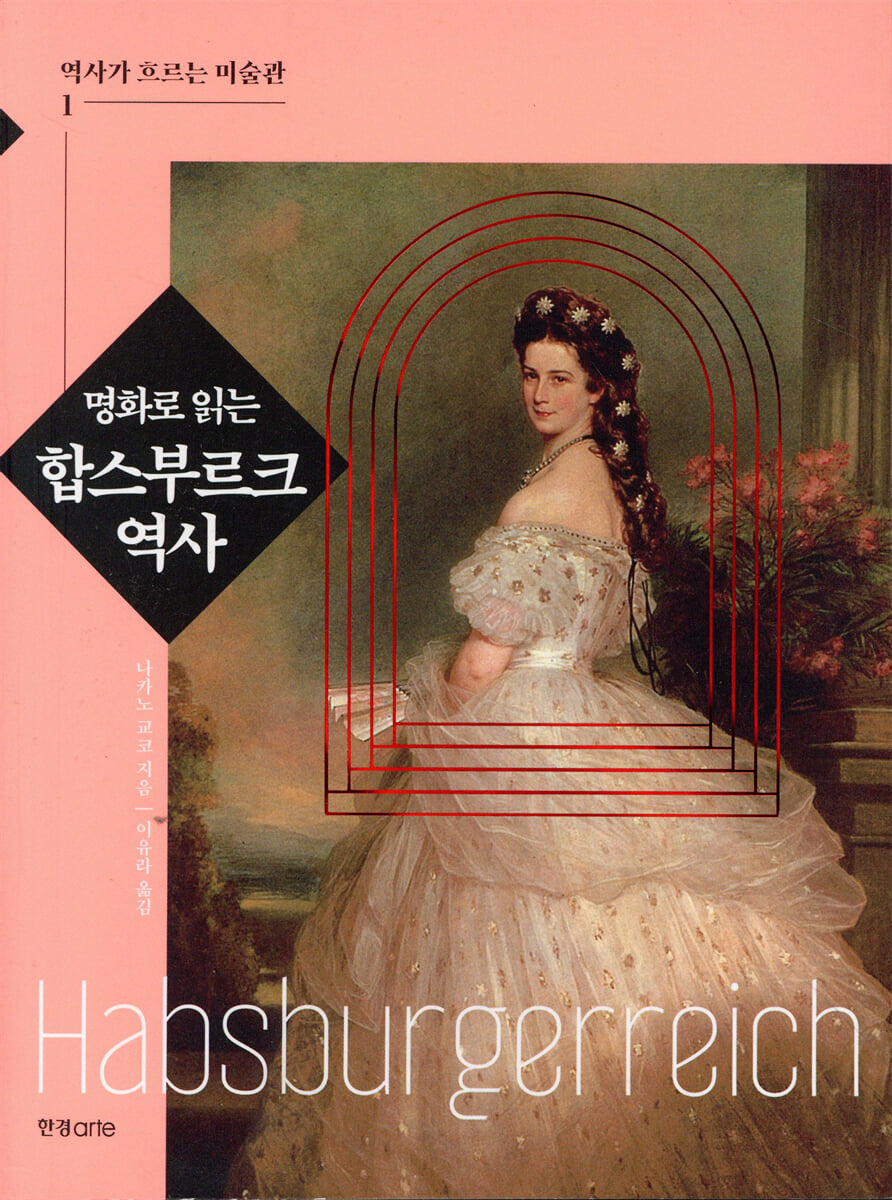
A splendid and bloody world woven by history and humanity
The 650-year history of the Habsburgs who ruled Europe
Kyoko Nakano, famous for the "Scary Pictures" series, has returned with the "Art Museum Where History Flows" series.
The History Flowing Art Museum series, which will introduce the history of European dynasties through famous paintings, will consist of a total of five volumes: 『Reading the History of the Habsburgs through Famous Paintings』, 『Reading the History of the Bourbons through Famous Paintings』, 『Reading the History of the Romanovs through Famous Paintings』, 『Reading the History of England through Famous Paintings』, and 『Reading the History of Prussia through Famous Paintings』, and the first book among them is 『Reading the History of the Habsburgs through Famous Paintings』.
The Habsburg family, which rose from a humble Swiss aristocracy to make Europe the center of world history, maintained a long dynasty for approximately 650 years, starting with the throne of the Holy Roman Empire, which came to them by chance due to the balance of power among the great powers.
It is no exaggeration to say that the Habsburg dynasty, which monopolized the throne of the Holy Roman Empire for a long time, established itself in the center of Europe, and actively formed marriage relations with surrounding countries, expanding its territory in a net-like manner, formed the core and foundation of European history.
Therefore, if you know the history of the Habsburgs, you can naturally understand the flow of European history.
Also, as the Habsburg family has a long history, there are many fascinating figures within it.
An emperor obsessed with bloody war, a queen who only cared about love, a king obsessed with alchemy and uninterested in politics, a hero's son abandoned by his mother, a queen who became the dew of the guillotine in a foreign land...
The stories of the main characters who faced harsh fate and quietly disappeared according to fate pique people's curiosity.
In this book, Kyoko Nakano selects and introduces famous paintings depicting figures representing the Habsburg family, and explains the events and historical backgrounds surrounding the figures in the paintings, appropriately interweaving them to tell the story of the painter.
And, by including a genealogy and chronology of the Habsburgs, it helps readers understand, and presents a fun and friendly storytelling that makes it accessible even to readers who find Western history difficult.
As you read, you will naturally gain information about the history of the Habsburgs and their famous paintings.
Marie Antoinette, who became the dew of the guillotine, the handsome King Philip, and the tragic Empress Elisabeth…
If you know the Habsburgs, you can see European history!
Kyoko Nakano, author of "Scary Pictures," tells the history of European dynasties through famous paintings.
The first book in the "Art Museum Where History Flows" series
Publication of "Habsburg History Through Famous Paintings"
Learning through masterpieces representing the times
A splendid and bloody world woven by history and humanity
The 650-year history of the Habsburgs who ruled Europe
Kyoko Nakano, famous for the "Scary Pictures" series, has returned with the "Art Museum Where History Flows" series.
The History Flowing Art Museum series, which will introduce the history of European dynasties through famous paintings, will consist of a total of five volumes: 『Reading the History of the Habsburgs through Famous Paintings』, 『Reading the History of the Bourbons through Famous Paintings』, 『Reading the History of the Romanovs through Famous Paintings』, 『Reading the History of England through Famous Paintings』, and 『Reading the History of Prussia through Famous Paintings』, and the first book among them is 『Reading the History of the Habsburgs through Famous Paintings』.
The Habsburg family, which rose from a humble Swiss aristocracy to make Europe the center of world history, maintained a long dynasty for approximately 650 years, starting with the throne of the Holy Roman Empire, which came to them by chance due to the balance of power among the great powers.
It is no exaggeration to say that the Habsburg dynasty, which monopolized the throne of the Holy Roman Empire for a long time, established itself in the center of Europe, and actively formed marriage relations with surrounding countries, expanding its territory in a net-like manner, formed the core and foundation of European history.
Therefore, if you know the history of the Habsburgs, you can naturally understand the flow of European history.
Also, as the Habsburg family has a long history, there are many fascinating figures within it.
An emperor obsessed with bloody war, a queen who only cared about love, a king obsessed with alchemy and uninterested in politics, a hero's son abandoned by his mother, a queen who became the dew of the guillotine in a foreign land...
The stories of the main characters who faced harsh fate and quietly disappeared according to fate pique people's curiosity.
In this book, Kyoko Nakano selects and introduces famous paintings depicting figures representing the Habsburg family, and explains the events and historical backgrounds surrounding the figures in the paintings, appropriately interweaving them to tell the story of the painter.
And, by including a genealogy and chronology of the Habsburgs, it helps readers understand, and presents a fun and friendly storytelling that makes it accessible even to readers who find Western history difficult.
As you read, you will naturally gain information about the history of the Habsburgs and their famous paintings.
- You can preview some of the book's contents.
Preview
index
Entering
Habsburg family tree
Habsburg, chosen by God
Chapter 1 Albrecht Dürer, Maximilian I
Chapter 2 Francisco Pradilla, "Juana the Madwoman"
Chapter 3: Vecellio Titian, Equestrian Statue of Emperor Charles V
Chapter 4: Titian Vecellio, Crown Prince Philip in Military Uniform
Chapter 5 El Greco, The Burial of the Count of Orgaz
Chapter 6: Diego Velázquez, "Las Meninas"
Chapter 7: Giuseppe Arcimboldo, Rudolf II in the Form of Vertumnus
Chapter 8: Adolf von Menzel, "Friedrich the Great's Flute Concert"
Chapter 9: Élisabeth Vigée-Lebrun, Marie Antoinette and Children
Chapter 10: Thomas Lawrence, The King of the Romans (Duke of Reichstadt)
Chapter 11 Franz Xaver Winterhalter, Empress Elisabeth
Chapter 12: The Execution of Maximilian, Édouard Manet
In conclusion
Key References
Image source
Chronology
Painters covered in this book
Habsburg family tree
Habsburg, chosen by God
Chapter 1 Albrecht Dürer, Maximilian I
Chapter 2 Francisco Pradilla, "Juana the Madwoman"
Chapter 3: Vecellio Titian, Equestrian Statue of Emperor Charles V
Chapter 4: Titian Vecellio, Crown Prince Philip in Military Uniform
Chapter 5 El Greco, The Burial of the Count of Orgaz
Chapter 6: Diego Velázquez, "Las Meninas"
Chapter 7: Giuseppe Arcimboldo, Rudolf II in the Form of Vertumnus
Chapter 8: Adolf von Menzel, "Friedrich the Great's Flute Concert"
Chapter 9: Élisabeth Vigée-Lebrun, Marie Antoinette and Children
Chapter 10: Thomas Lawrence, The King of the Romans (Duke of Reichstadt)
Chapter 11 Franz Xaver Winterhalter, Empress Elisabeth
Chapter 12: The Execution of Maximilian, Édouard Manet
In conclusion
Key References
Image source
Chronology
Painters covered in this book
Detailed image

Into the book
The Habsburgs were also the first monarchs to hold the most titles in European history, with Charles V holding over 70 titles.
Maria Theresa's official title is also 'Archduchess of Austria, Duke of Styria, Duke of Carinthia, Countess of Tyrol, Queen of Bohemia, Queen of Hungary, ...', with the word 'and' appearing over 40 times.
Even in the mid-19th century, when Franz Joseph was crowned, at the end of the Empire, the area of the estate was the largest in Europe outside of Russia.
---From "The Habsburgs, Chosen by God"
The day is dawning dimly over the desolate winter fields.
Old trees, with their bare branches still standing, hang low, and the wind whips through the gravelly wasteland.
Looking at the exhausted appearance of the people, one can tell that this long procession carrying the cross has been walking nonstop all night and is finally taking a break.
But why not go a little further up the hill to the monastery? There, you could relax without having to warm yourself by the campfire.
Doesn't it seem strange, no matter how you look at it, that in the middle of such a wide-open wilderness, they light a few candles (which look like they could be blown out at any moment by the wind) and have a priest (wearing white robes and a beard) celebrate Mass? It's a truly bizarre situation.
---From Chapter 2, Francisco Pradilla, “Juana the Madwoman”
The period when Philip II reigned was Spain's golden age.
However, the gold was steeped in blood, having been plundered from the Inca Empire or accumulated through Dutch oppression.
And the endless conspiracies, rebellions, religious wars, inquisitions, the Black Death… … .
This absolute monarch's life (despite the fact that he spent most of his time buried in paperwork in the palace rather than on the battlefields like his father, earning him the nickname "Paper King") could almost be described as a life stained with blood.
For some reason, even marriages were always accompanied by images of bloodshed.
Felipe had four marriages, each with wives from Portugal, England, France, and Austria, all of whom died before his time.
And that's not all.
Massacre of Protestants, accidental death, murder of son… … .
Let's take a look at them one by one.
---From Chapter 4, Titian Vecellio, “Crown Prince Philip in Military Uniform”
As it was the Age of Exploration, the kings and nobles of that time were busy collecting items brought from the New World or strange and rare items, and creating Wunderkammers (a space where rare items were collected that was popular in Europe in the 16th and 17th centuries - translator's note).
But in terms of the size and variety of his collection, no one could match Rudolph.
He collected all sorts of objects, including works of art, exotic flora and fauna, insect specimens, jewels, ancient artifacts, foreign currency, automata, animal entrails, living, heteromorphic humans (the atmosphere of which is well expressed in “Las Meninas”), and even skeletal specimens.
---From Chapter 7, Giuseppe Arcimboldo, Rudolf II in the Form of Vertumnus
In a carefully arranged meeting, Franz Josef quickly fell in love.
To Helen? No.
The other person was her 15-year-old younger sister, Sisi, who had followed her on the blind date out of curiosity.
Elizabeth, the lovely Sissi, who still retained her childlike qualities, was free, lively, and carefree, and to the staid, inflexible Franz Joseph, who was bound by duty and unable to move, she must have seemed like a cheerful little bird soaring in the sky.
He was not attracted to Helen, who had a similar temperament to himself, and wanted a wife of the opposite type.
No matter how much my mother opposed it, it was no use.
The young emperor, who was 23 years old, pushed forward with his will, saying that he would give up everything but this one thing, and an engagement was formed that was like something out of a fairy tale.
Maria Theresa's official title is also 'Archduchess of Austria, Duke of Styria, Duke of Carinthia, Countess of Tyrol, Queen of Bohemia, Queen of Hungary, ...', with the word 'and' appearing over 40 times.
Even in the mid-19th century, when Franz Joseph was crowned, at the end of the Empire, the area of the estate was the largest in Europe outside of Russia.
---From "The Habsburgs, Chosen by God"
The day is dawning dimly over the desolate winter fields.
Old trees, with their bare branches still standing, hang low, and the wind whips through the gravelly wasteland.
Looking at the exhausted appearance of the people, one can tell that this long procession carrying the cross has been walking nonstop all night and is finally taking a break.
But why not go a little further up the hill to the monastery? There, you could relax without having to warm yourself by the campfire.
Doesn't it seem strange, no matter how you look at it, that in the middle of such a wide-open wilderness, they light a few candles (which look like they could be blown out at any moment by the wind) and have a priest (wearing white robes and a beard) celebrate Mass? It's a truly bizarre situation.
---From Chapter 2, Francisco Pradilla, “Juana the Madwoman”
The period when Philip II reigned was Spain's golden age.
However, the gold was steeped in blood, having been plundered from the Inca Empire or accumulated through Dutch oppression.
And the endless conspiracies, rebellions, religious wars, inquisitions, the Black Death… … .
This absolute monarch's life (despite the fact that he spent most of his time buried in paperwork in the palace rather than on the battlefields like his father, earning him the nickname "Paper King") could almost be described as a life stained with blood.
For some reason, even marriages were always accompanied by images of bloodshed.
Felipe had four marriages, each with wives from Portugal, England, France, and Austria, all of whom died before his time.
And that's not all.
Massacre of Protestants, accidental death, murder of son… … .
Let's take a look at them one by one.
---From Chapter 4, Titian Vecellio, “Crown Prince Philip in Military Uniform”
As it was the Age of Exploration, the kings and nobles of that time were busy collecting items brought from the New World or strange and rare items, and creating Wunderkammers (a space where rare items were collected that was popular in Europe in the 16th and 17th centuries - translator's note).
But in terms of the size and variety of his collection, no one could match Rudolph.
He collected all sorts of objects, including works of art, exotic flora and fauna, insect specimens, jewels, ancient artifacts, foreign currency, automata, animal entrails, living, heteromorphic humans (the atmosphere of which is well expressed in “Las Meninas”), and even skeletal specimens.
---From Chapter 7, Giuseppe Arcimboldo, Rudolf II in the Form of Vertumnus
In a carefully arranged meeting, Franz Josef quickly fell in love.
To Helen? No.
The other person was her 15-year-old younger sister, Sisi, who had followed her on the blind date out of curiosity.
Elizabeth, the lovely Sissi, who still retained her childlike qualities, was free, lively, and carefree, and to the staid, inflexible Franz Joseph, who was bound by duty and unable to move, she must have seemed like a cheerful little bird soaring in the sky.
He was not attracted to Helen, who had a similar temperament to himself, and wanted a wife of the opposite type.
No matter how much my mother opposed it, it was no use.
The young emperor, who was 23 years old, pushed forward with his will, saying that he would give up everything but this one thing, and an engagement was formed that was like something out of a fairy tale.
---From Chapter 11, Franz Xaver Winterhalter, “Empress Elisabeth”
Publisher's Review
From Rudolf I in the 13th century to Franz Joseph in the 20th century
The Rise and Fall of the Habsburgs as Seen Through Famous Paintings
The Habsburgs were proud of their noble blue blood, of being chosen by God and special, and this was supported by their confidence that they had ruled over five religions and twelve peoples for centuries and held the throne of the Holy Roman Emperors as their sole sovereign.
The Habsburgs' rule extended to what is now Austria, Germany, Spain, Italy, Belgium, the Netherlands, the Czech Republic, Poland, Hungary, Romania, Portugal, Brazil, Mexico, California, and Indonesia.
The Habsburgs were also the first monarchs to hold the most titles in European history, with Charles V holding a staggering 70 titles.
The origins of this very powerful clan are surprisingly not from Austria or Germany, but from a small noble family that emerged in a rural corner of northeastern Switzerland around the end of the 10th century.
And the foundation stone was laid by Rudolf I in the 13th century.
At that time, a great opportunity that could be called a turning point in the fate of Count Rudolf of Habsburg, who was still a poor rural nobleman, came: the throne of the Holy Roman Emperor.
This position was chosen by other princes with the intention of making him their puppet, but Rudolf I started a war five years after his coronation.
After winning this war, he took Bohemia into his hands and soon after made Austria his own territory, moving his base from the Swiss mountains to Austria.
After that, Rudolf I's primary goal was to expand and protect the Habsburg dynasty.
Later, at the end of the 15th century, Maximilian I, a hero from the Habsburg family, appeared.
He earned the title of 'the last knight of the Middle Ages', always fighting on the front lines, expanding the territory to Burgundy, Spain, and Hungary, and changing the country's name to 'Holy Roman Empire of the German People'. Rather than rebuilding the ancient Roman Empire, he focused on strengthening the Habsburg dynasty in the German-speaking world, and in fact, raised it to one of the most prestigious families in Europe.
Maximilian I also placed importance on marriage diplomacy, which led to his statement, “Leave war to others.”
It is said that the famous family motto was born: “You happy Austria, get married!”
This book introduces Albrecht Dürer's work, Maximilian I, against this historical background.
This oil portrait, commissioned by the Emperor himself, depicts Maximilian I, wearing a large black velvet hat and standing against a dark green background, with a pensive expression.
He wears a rather luxurious red coat lined with fur, and in his left hand he holds a pomegranate, which is considered a symbol of 'abundance' because its flesh is densely packed with seeds, but also symbolizes the solidarity of those who serve the monarch, as the countless seeds are enclosed in a sturdy shell.
It can be said to be a symbol befitting the Holy Roman Emperor who rules over many countries.
If you saw this painting without any prior knowledge, you might have just passed it by and thought it was just some European nobleman.
But if you look at the painting knowing the fierce life of Maximilian I, you will see his heavy-eyed appearance differently.
Author Kyoko Nakano introduces the history of the Habsburgs through famous paintings, from Rudolf I in the 13th century to Franz Joseph in the 20th century.
By learning the historical knowledge and hidden information in famous paintings introduced by the author and looking at the paintings, your understanding of history and the works will naturally deepen.
“I never knew history and art could be this fun!”
A storytelling masterpiece class that draws you in without you realizing it as you read.
Nakano Kyoko, who first gained recognition for her unique introductions to famous paintings, has captivated countless fans with her unique art appreciation method, her perspective encompassing all aspects of culture, and her eloquent storytelling.
The author's extensive background knowledge on history, culture, and art, including the historical facts behind the backgrounds of famous paintings, the personal history of the painters, and the stories intertwined with the characters in the paintings, has been well-received by general readers, and the "Scary Pictures" series in particular has been praised for opening a new chapter in the art book field with its attractive concept, and has also become a sensation in Korea.
Afterwards, Kyoko Nakano challenged herself with the field of fusion of art and history through the ‘Art Museum Where History Flows’ series.
The author explains why the Habsburg dynasty came to the forefront of attention, saying that the Habsburg dynasty was the backdrop for masterpieces such as Verdi's opera [Carlos], Stefan Zweig's biography [Marie Antoinette], and Sylvester Levay's musical [Elisabeth], and that it also had many fascinating figures that inspired geniuses such as Albrecht Dürer, Vecellio Titian, Diego Velázquez, and El Greco to take up their brushes in painting.
This is because their history sometimes evokes boundless romance, sometimes brings hair-raising horror, and even overlaps with modern-day European integration.
So why did the author challenge the fusion of art and history?
The reason is that many people find history and art difficult.
The titles and names of kings and nobles are often difficult to pronounce and even difficult to understand, especially in the case of Charles V.
It is conceivable that the etymology of Charles and Carlos would be the same, but many people say that they started to dislike Western history upon hearing that Charles V and Charles I were the same person.
Art is also often considered boring and difficult because we have only seen paintings through memorization based on rigid knowledge such as art history and painting styles.
In this book, Kyoko Nakano presents an easy way to learn history and art simultaneously.
The author introduces twelve famous paintings related to the figures representing the Habsburgs, along with numerous other famous paintings related to them, and vividly conveys the lives of the figures in the famous paintings and their impact on history through the historical background and anecdotes.
In particular, Nakano Kyoko's vivid descriptions have the power to immerse you in the story in an instant, as if you were watching a scene from a novel or a movie, making reading even more enjoyable.
In addition, the famous paintings introduced in this book are beneficial in that they allow one to encounter a variety of works, including not only familiar masters like Manet and Velazquez, but also Albrecht Dürer, the German national painter beloved by Europe, Francisco Pradilla, famous for his historical paintings, and Giuseppe Arcimboldo, the first surrealist painter.
Even if you've hesitated to approach history and art because you thought they might be difficult, following the author's clear and engaging narrative will naturally help you learn the flow of European history and eliminate any preconceived notions you may have had about art.
The Rise and Fall of the Habsburgs as Seen Through Famous Paintings
The Habsburgs were proud of their noble blue blood, of being chosen by God and special, and this was supported by their confidence that they had ruled over five religions and twelve peoples for centuries and held the throne of the Holy Roman Emperors as their sole sovereign.
The Habsburgs' rule extended to what is now Austria, Germany, Spain, Italy, Belgium, the Netherlands, the Czech Republic, Poland, Hungary, Romania, Portugal, Brazil, Mexico, California, and Indonesia.
The Habsburgs were also the first monarchs to hold the most titles in European history, with Charles V holding a staggering 70 titles.
The origins of this very powerful clan are surprisingly not from Austria or Germany, but from a small noble family that emerged in a rural corner of northeastern Switzerland around the end of the 10th century.
And the foundation stone was laid by Rudolf I in the 13th century.
At that time, a great opportunity that could be called a turning point in the fate of Count Rudolf of Habsburg, who was still a poor rural nobleman, came: the throne of the Holy Roman Emperor.
This position was chosen by other princes with the intention of making him their puppet, but Rudolf I started a war five years after his coronation.
After winning this war, he took Bohemia into his hands and soon after made Austria his own territory, moving his base from the Swiss mountains to Austria.
After that, Rudolf I's primary goal was to expand and protect the Habsburg dynasty.
Later, at the end of the 15th century, Maximilian I, a hero from the Habsburg family, appeared.
He earned the title of 'the last knight of the Middle Ages', always fighting on the front lines, expanding the territory to Burgundy, Spain, and Hungary, and changing the country's name to 'Holy Roman Empire of the German People'. Rather than rebuilding the ancient Roman Empire, he focused on strengthening the Habsburg dynasty in the German-speaking world, and in fact, raised it to one of the most prestigious families in Europe.
Maximilian I also placed importance on marriage diplomacy, which led to his statement, “Leave war to others.”
It is said that the famous family motto was born: “You happy Austria, get married!”
This book introduces Albrecht Dürer's work, Maximilian I, against this historical background.
This oil portrait, commissioned by the Emperor himself, depicts Maximilian I, wearing a large black velvet hat and standing against a dark green background, with a pensive expression.
He wears a rather luxurious red coat lined with fur, and in his left hand he holds a pomegranate, which is considered a symbol of 'abundance' because its flesh is densely packed with seeds, but also symbolizes the solidarity of those who serve the monarch, as the countless seeds are enclosed in a sturdy shell.
It can be said to be a symbol befitting the Holy Roman Emperor who rules over many countries.
If you saw this painting without any prior knowledge, you might have just passed it by and thought it was just some European nobleman.
But if you look at the painting knowing the fierce life of Maximilian I, you will see his heavy-eyed appearance differently.
Author Kyoko Nakano introduces the history of the Habsburgs through famous paintings, from Rudolf I in the 13th century to Franz Joseph in the 20th century.
By learning the historical knowledge and hidden information in famous paintings introduced by the author and looking at the paintings, your understanding of history and the works will naturally deepen.
“I never knew history and art could be this fun!”
A storytelling masterpiece class that draws you in without you realizing it as you read.
Nakano Kyoko, who first gained recognition for her unique introductions to famous paintings, has captivated countless fans with her unique art appreciation method, her perspective encompassing all aspects of culture, and her eloquent storytelling.
The author's extensive background knowledge on history, culture, and art, including the historical facts behind the backgrounds of famous paintings, the personal history of the painters, and the stories intertwined with the characters in the paintings, has been well-received by general readers, and the "Scary Pictures" series in particular has been praised for opening a new chapter in the art book field with its attractive concept, and has also become a sensation in Korea.
Afterwards, Kyoko Nakano challenged herself with the field of fusion of art and history through the ‘Art Museum Where History Flows’ series.
The author explains why the Habsburg dynasty came to the forefront of attention, saying that the Habsburg dynasty was the backdrop for masterpieces such as Verdi's opera [Carlos], Stefan Zweig's biography [Marie Antoinette], and Sylvester Levay's musical [Elisabeth], and that it also had many fascinating figures that inspired geniuses such as Albrecht Dürer, Vecellio Titian, Diego Velázquez, and El Greco to take up their brushes in painting.
This is because their history sometimes evokes boundless romance, sometimes brings hair-raising horror, and even overlaps with modern-day European integration.
So why did the author challenge the fusion of art and history?
The reason is that many people find history and art difficult.
The titles and names of kings and nobles are often difficult to pronounce and even difficult to understand, especially in the case of Charles V.
It is conceivable that the etymology of Charles and Carlos would be the same, but many people say that they started to dislike Western history upon hearing that Charles V and Charles I were the same person.
Art is also often considered boring and difficult because we have only seen paintings through memorization based on rigid knowledge such as art history and painting styles.
In this book, Kyoko Nakano presents an easy way to learn history and art simultaneously.
The author introduces twelve famous paintings related to the figures representing the Habsburgs, along with numerous other famous paintings related to them, and vividly conveys the lives of the figures in the famous paintings and their impact on history through the historical background and anecdotes.
In particular, Nakano Kyoko's vivid descriptions have the power to immerse you in the story in an instant, as if you were watching a scene from a novel or a movie, making reading even more enjoyable.
In addition, the famous paintings introduced in this book are beneficial in that they allow one to encounter a variety of works, including not only familiar masters like Manet and Velazquez, but also Albrecht Dürer, the German national painter beloved by Europe, Francisco Pradilla, famous for his historical paintings, and Giuseppe Arcimboldo, the first surrealist painter.
Even if you've hesitated to approach history and art because you thought they might be difficult, following the author's clear and engaging narrative will naturally help you learn the flow of European history and eliminate any preconceived notions you may have had about art.
GOODS SPECIFICS
- Publication date: October 20, 2022
- Page count, weight, size: 240 pages | 478g | 150*200*18mm
- ISBN13: 9788947548472
- ISBN10: 8947548472
You may also like
카테고리
korean


korean

![GQ KOREA Mark (Monthly): December [2025]](http://librairie.coreenne.fr/cdn/shop/files/8ef265dbbfbf186523ed75ba7319009d.jpg?v=1765340328&width=3840)


