

Yoo Hong-jun's Korean Art History Lecture 3
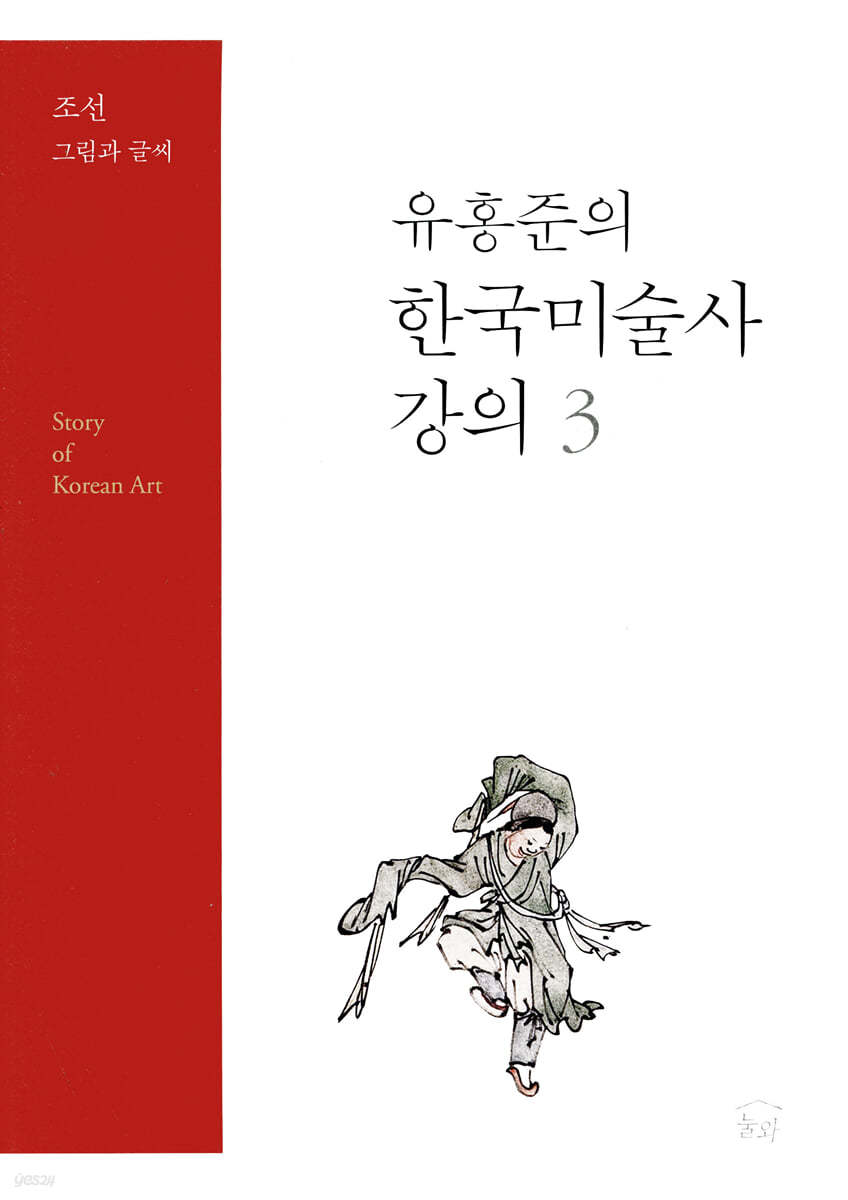 |
Description
Book Introduction
The third volume of "Yoo Hong-jun's Lectures on Korean Art History"
Covering Joseon paintings and calligraphy, the flower of Korean art history.
An introductory book to Korean art history by Yoo Hong-jun.
For those who wish to understand Korean art history with culture and common sense, the flow and characteristics of Korean art are captured in the story.
Volume 3, 'Joseon: Pictures and Writings', begins with Chapter 29, following Volume 1, Prehistory, the Three Kingdoms, and Balhae, and Volume 2, Unified Silla and Goryeo.
We will examine Joseon Dynasty paintings and calligraphy by dividing them into the early period (1392-1550, until the reign of King Jungjong), the middle period (1550-1700, until the reign of King Sukjong), the late period (1700-1830, until the reign of King Sunjo), and the late period (1830-1910, until the reign of the Korean Empire).
In particular, it focused on court art and portraits, which have been somewhat inadequately covered in existing art history.
Although the artist's name is not revealed and the artist's individuality is not revealed, it highlights the artistic significance of this unique genre of the Joseon Dynasty, created by outstanding painters of the time.
In addition, Joseon Dynasty calligraphy and painting, which can be said to be the flower of Korean art history, were also covered with significant weight, and as the history of Joseon Dynasty painting is the author's field of expertise, he used his specialized knowledge and abundant experience to easily explain the accumulated research results of painting history at a popular level.
The book meticulously covers not only the representative artists of the Joseon Dynasty, such as the genius painter Kim Hong-do and Jeong Seon, who created true-view landscapes, but also the achievements of lesser-known painters such as Im Deuk-myeong, Lee Yu-sin, Nam Gye-u, and Jeong Hak-yo. It also introduces as many recently discovered masterpieces from private collections as possible, such as Jeong Seon's 『Yeon-gang-im-sul-cheop』, which was made public in its original form, to enrich the content of the history of painting.
In addition, by comparing the landscape painting styles of Kim Hong-do and Yi In-mun and the secular paintings of Kim Hong-do and Shin Yun-bok, the respective painting styles are clearly revealed.
All the figures mentioned in the text have been included as much as possible to ensure easy understanding of the text, and the harmony of the illustrations included on the spread pages has been considered to ensure a pleasing viewing experience.
Covering Joseon paintings and calligraphy, the flower of Korean art history.
An introductory book to Korean art history by Yoo Hong-jun.
For those who wish to understand Korean art history with culture and common sense, the flow and characteristics of Korean art are captured in the story.
Volume 3, 'Joseon: Pictures and Writings', begins with Chapter 29, following Volume 1, Prehistory, the Three Kingdoms, and Balhae, and Volume 2, Unified Silla and Goryeo.
We will examine Joseon Dynasty paintings and calligraphy by dividing them into the early period (1392-1550, until the reign of King Jungjong), the middle period (1550-1700, until the reign of King Sukjong), the late period (1700-1830, until the reign of King Sunjo), and the late period (1830-1910, until the reign of the Korean Empire).
In particular, it focused on court art and portraits, which have been somewhat inadequately covered in existing art history.
Although the artist's name is not revealed and the artist's individuality is not revealed, it highlights the artistic significance of this unique genre of the Joseon Dynasty, created by outstanding painters of the time.
In addition, Joseon Dynasty calligraphy and painting, which can be said to be the flower of Korean art history, were also covered with significant weight, and as the history of Joseon Dynasty painting is the author's field of expertise, he used his specialized knowledge and abundant experience to easily explain the accumulated research results of painting history at a popular level.
The book meticulously covers not only the representative artists of the Joseon Dynasty, such as the genius painter Kim Hong-do and Jeong Seon, who created true-view landscapes, but also the achievements of lesser-known painters such as Im Deuk-myeong, Lee Yu-sin, Nam Gye-u, and Jeong Hak-yo. It also introduces as many recently discovered masterpieces from private collections as possible, such as Jeong Seon's 『Yeon-gang-im-sul-cheop』, which was made public in its original form, to enrich the content of the history of painting.
In addition, by comparing the landscape painting styles of Kim Hong-do and Yi In-mun and the secular paintings of Kim Hong-do and Shin Yun-bok, the respective painting styles are clearly revealed.
All the figures mentioned in the text have been included as much as possible to ensure easy understanding of the text, and the harmony of the illustrations included on the spread pages has been considered to ensure a pleasing viewing experience.
- You can preview some of the book's contents.
Preview
index
Publishing the third volume of 'Korean Art History Lectures'
Chapter 29: Joseon Dynasty Art History from a Cultural Perspective
Historical background and flow of art history
Chapter 30: The Establishment of the Dohwaseo and Court Painting
The Establishment of the Hwawon System and the World of Court Decorative Painting
Chapter 31 Portrait
A world beyond the superficial
Chapter 32 Early Painting: From the Beginning of the Joseon Dynasty to the Middle Ages
Establishment of An Gyeon's painting style and the tradition of sentimental painting
Chapter 33: Mid-Period Painting: From Myeongjong to Sukjong
The style of Jeolpa painting and the daily routines of literati
Chapter 34: Later Conversations (Part 1): King Sukjong and King Yeongjo
The era of Gongjae, Gyeomjae, Gwan-a-jae, and literati painters
Chapter 35: Later Conversation (Middle): King Jeongjo's Years
King Jeongjo, Pyoam Kang Se-hwang, and Danwon Kim Hong-do
Chapter 36: Later Conversations (Part 2): The Years of King Jeongjo and King Sunjo
The golden age of Dohwaseo painters
Chapter 37: Late Conversation (Part 1): The Years of King Sunjo, King Heonjong, and King Cheoljong
Chusa Kim Jeong-hui and the new literary style
Chapter 38: Late Conversation (Part 2): The Years of King Gojong and King Sunjong
New Sensation and the Late Flower Garden
Chapter 39 Calligraphy
The flow and evolution of fonts
supplement
The flow of Chinese painting history
The flow of Chinese calligraphy history
References
List of plates
Chapter 29: Joseon Dynasty Art History from a Cultural Perspective
Historical background and flow of art history
Chapter 30: The Establishment of the Dohwaseo and Court Painting
The Establishment of the Hwawon System and the World of Court Decorative Painting
Chapter 31 Portrait
A world beyond the superficial
Chapter 32 Early Painting: From the Beginning of the Joseon Dynasty to the Middle Ages
Establishment of An Gyeon's painting style and the tradition of sentimental painting
Chapter 33: Mid-Period Painting: From Myeongjong to Sukjong
The style of Jeolpa painting and the daily routines of literati
Chapter 34: Later Conversations (Part 1): King Sukjong and King Yeongjo
The era of Gongjae, Gyeomjae, Gwan-a-jae, and literati painters
Chapter 35: Later Conversation (Middle): King Jeongjo's Years
King Jeongjo, Pyoam Kang Se-hwang, and Danwon Kim Hong-do
Chapter 36: Later Conversations (Part 2): The Years of King Jeongjo and King Sunjo
The golden age of Dohwaseo painters
Chapter 37: Late Conversation (Part 1): The Years of King Sunjo, King Heonjong, and King Cheoljong
Chusa Kim Jeong-hui and the new literary style
Chapter 38: Late Conversation (Part 2): The Years of King Gojong and King Sunjong
New Sensation and the Late Flower Garden
Chapter 39 Calligraphy
The flow and evolution of fonts
supplement
The flow of Chinese painting history
The flow of Chinese calligraphy history
References
List of plates
Detailed image

Publisher's Review
The third volume of "Yoo Hong-jun's Lectures on Korean Art History"
Joseon paintings and calligraphy,
Covering the Flower of Korean Art History
'Story' of Korean Art
This is an introductory book to Korean art history for the general public and art history students who want to understand Korean art history through general knowledge and common sense.
In English, it is not 'History' of Korean Art, but 'Story' of Korean Art.
It is not a chronology of art history, but rather a description that allows readers to understand the flow and characteristics of Korean art.
In other words, this book was written so that you can read it comfortably while leaning back on the sofa, rather than studying while sitting at a desk and underlining.
Third lecture on Korean art history: Joseon Dynasty paintings and calligraphy
『Yoo Hong-jun's Lectures on Korean Art History』 Volume 3, 'Joseon: Paintings and Calligraphy', begins with Chapter 29, following Volume 1, Prehistory, the Three Kingdoms, and Balhae, and Volume 2, Unified Silla and Goryeo.
The painting and calligraphy of the Joseon Dynasty are examined by dividing them into the early period (1392-1550, until the reign of King Jungjong), the middle period (1550-1700, until the reign of King Sukjong), the late period (1700-1830, until the reign of King Sunjo), and the late period (1830-1910, until the reign of the Korean Empire), and a lot of weight is given to court art and portraits, which have been somewhat inadequately covered in existing art histories.
Although the artist's name is not revealed and the artist's individuality is not revealed, it highlights the artistic significance of this unique genre of the Joseon Dynasty, created by outstanding painters of the time.
Joseon Dynasty calligraphy and painting, especially paintings, are not only authentic works of art that actively express beauty, but also clearly embody the artist's artistic consciousness, making them the flower of Korean art history, and therefore, they are treated with more weight than other genres.
Furthermore, as the history of Joseon Dynasty painting is the author's specialty, he has written the accumulated research results of painting history in an easily understandable way based on his specialized knowledge and abundant experience.
As an appendix, the historical flow and basic knowledge of Chinese painting and calligraphy, which had a great influence on the development of Korean calligraphy and painting, are explained.
Although this is a short article that only touches on the core issues, it will be of great help in understanding the technical terminology and basic flow of trends in calligraphy and painting.
A comprehensive history of Joseon Dynasty painting, including hidden masterpieces.
By incorporating all the research results to date, it faithfully and richly conveys the image of the history of Joseon Dynasty painting.
The book meticulously covers not only the representative artists of the Joseon Dynasty, such as the genius painter Kim Hong-do and Jeong Seon, who created true-view landscapes, but also the achievements of lesser-known painters such as Im Deuk-myeong, Lee Yu-sin, Nam Gye-u, and Jeong Hak-yo. It also introduces as many recently discovered masterpieces from private collections as possible, such as Jeong Seon's 『Yeon-gang-im-sul-cheop』, which was made public in its original form, to enrich the content of the history of painting.
In addition, by comparing the landscape painting styles of Kim Hong-do and Yi In-mun and the secular paintings of Kim Hong-do and Shin Yun-bok, the respective painting styles are clearly revealed.
As the author's major is the history of Joseon Dynasty painting within Korean art history, the accumulated research results on painting history are faithfully reflected, and the book is enriched with the contents of painting history anthologies such as 『Pyoam Yugo』, 『Gwana Jaego』, and 『Cheongjuk Hwasa』 that have been studied so far.
Works by the best painters of the Joseon Dynasty, encompassing court art and portraits.
Court art such as the Ilwol Obongdo, the Ten Longevity Symbols, and the Hwaseongneunghaengdo has not been properly highlighted because the artists' names were not disclosed and the artists' individuality was not revealed.
However, the best painters of the time demonstrated their abilities, and not only were the pictorial composition, coloring, and brushwork skillful and detailed, but they also well portrayed the unique palace atmosphere of the Joseon Dynasty, so they were given weighty explanations.
In addition, the portraits of Joseon, which capture not only the external realism of the characters but also their inner spiritual world, were meticulously covered by dividing them into the early, middle, late, and late periods.
If the history of Joseon Dynasty painting has been centered on sentimental paintings, this book can be said to have fully depicted the entire history of Joseon Dynasty painting, encompassing both sentimental and practical paintings.
A closer look at the lives and art of calligraphers and painters
Although art history is described according to a historical system, anecdotes that reveal the circumstances of the time or the artist's personality often become important keywords for understanding the work.
Lee Jeong's "Orchid Painting," which was restored from a poem by Jo Gwang-jo that was lost during the Imjin War and decorated as a folding screen, clearly shows one aspect of the scholar-official culture of the time. Through the gathering of Lee In-sang and his friends, we can catch a glimpse of the atmosphere of literati painting during the Yeongjo era. The orchid painting that must have been a comfort to Lee Ha-eung during his turbulent life at the end of the Joseon Dynasty is also seen in a new light.
Korean art history that can be understood just by looking at the photos
Good illustrations are a great help in feeling and appreciating the beauty of Joseon Dynasty paintings and calligraphy, so we have made every effort to include vivid illustrations that make good use of delicate brushwork.
In cases where existing illustrations, such as Sim Sa-jeong's "Noando," were not of good quality, a professional photographer took new photos with the consent of the owner. Previously unreleased illustrations, such as Lee Gyeong-yun's "Sahowigido" and Kim Hong-do's "Seowon Ajipdo" eight-part folding screen, were made public for the first time using illustrations taken by professional photographers.
The collection of these high-quality plates was possible thanks to the cooperation of many private collectors and art galleries and museums.
In addition, we have included as many pictures as possible in the text to ensure that the text is easy to understand, and we have also considered the harmony of the illustrations included on the spread pages to ensure that the reader's eyes are pleased.
Thus, the 540 or so illustrations included in this book constitute the history of Korean art in itself, and you can understand the characteristics and flow of Korean art at a glance just by looking at the photos without reading the content.
Joseon paintings and calligraphy,
Covering the Flower of Korean Art History
'Story' of Korean Art
This is an introductory book to Korean art history for the general public and art history students who want to understand Korean art history through general knowledge and common sense.
In English, it is not 'History' of Korean Art, but 'Story' of Korean Art.
It is not a chronology of art history, but rather a description that allows readers to understand the flow and characteristics of Korean art.
In other words, this book was written so that you can read it comfortably while leaning back on the sofa, rather than studying while sitting at a desk and underlining.
Third lecture on Korean art history: Joseon Dynasty paintings and calligraphy
『Yoo Hong-jun's Lectures on Korean Art History』 Volume 3, 'Joseon: Paintings and Calligraphy', begins with Chapter 29, following Volume 1, Prehistory, the Three Kingdoms, and Balhae, and Volume 2, Unified Silla and Goryeo.
The painting and calligraphy of the Joseon Dynasty are examined by dividing them into the early period (1392-1550, until the reign of King Jungjong), the middle period (1550-1700, until the reign of King Sukjong), the late period (1700-1830, until the reign of King Sunjo), and the late period (1830-1910, until the reign of the Korean Empire), and a lot of weight is given to court art and portraits, which have been somewhat inadequately covered in existing art histories.
Although the artist's name is not revealed and the artist's individuality is not revealed, it highlights the artistic significance of this unique genre of the Joseon Dynasty, created by outstanding painters of the time.
Joseon Dynasty calligraphy and painting, especially paintings, are not only authentic works of art that actively express beauty, but also clearly embody the artist's artistic consciousness, making them the flower of Korean art history, and therefore, they are treated with more weight than other genres.
Furthermore, as the history of Joseon Dynasty painting is the author's specialty, he has written the accumulated research results of painting history in an easily understandable way based on his specialized knowledge and abundant experience.
As an appendix, the historical flow and basic knowledge of Chinese painting and calligraphy, which had a great influence on the development of Korean calligraphy and painting, are explained.
Although this is a short article that only touches on the core issues, it will be of great help in understanding the technical terminology and basic flow of trends in calligraphy and painting.
A comprehensive history of Joseon Dynasty painting, including hidden masterpieces.
By incorporating all the research results to date, it faithfully and richly conveys the image of the history of Joseon Dynasty painting.
The book meticulously covers not only the representative artists of the Joseon Dynasty, such as the genius painter Kim Hong-do and Jeong Seon, who created true-view landscapes, but also the achievements of lesser-known painters such as Im Deuk-myeong, Lee Yu-sin, Nam Gye-u, and Jeong Hak-yo. It also introduces as many recently discovered masterpieces from private collections as possible, such as Jeong Seon's 『Yeon-gang-im-sul-cheop』, which was made public in its original form, to enrich the content of the history of painting.
In addition, by comparing the landscape painting styles of Kim Hong-do and Yi In-mun and the secular paintings of Kim Hong-do and Shin Yun-bok, the respective painting styles are clearly revealed.
As the author's major is the history of Joseon Dynasty painting within Korean art history, the accumulated research results on painting history are faithfully reflected, and the book is enriched with the contents of painting history anthologies such as 『Pyoam Yugo』, 『Gwana Jaego』, and 『Cheongjuk Hwasa』 that have been studied so far.
Works by the best painters of the Joseon Dynasty, encompassing court art and portraits.
Court art such as the Ilwol Obongdo, the Ten Longevity Symbols, and the Hwaseongneunghaengdo has not been properly highlighted because the artists' names were not disclosed and the artists' individuality was not revealed.
However, the best painters of the time demonstrated their abilities, and not only were the pictorial composition, coloring, and brushwork skillful and detailed, but they also well portrayed the unique palace atmosphere of the Joseon Dynasty, so they were given weighty explanations.
In addition, the portraits of Joseon, which capture not only the external realism of the characters but also their inner spiritual world, were meticulously covered by dividing them into the early, middle, late, and late periods.
If the history of Joseon Dynasty painting has been centered on sentimental paintings, this book can be said to have fully depicted the entire history of Joseon Dynasty painting, encompassing both sentimental and practical paintings.
A closer look at the lives and art of calligraphers and painters
Although art history is described according to a historical system, anecdotes that reveal the circumstances of the time or the artist's personality often become important keywords for understanding the work.
Lee Jeong's "Orchid Painting," which was restored from a poem by Jo Gwang-jo that was lost during the Imjin War and decorated as a folding screen, clearly shows one aspect of the scholar-official culture of the time. Through the gathering of Lee In-sang and his friends, we can catch a glimpse of the atmosphere of literati painting during the Yeongjo era. The orchid painting that must have been a comfort to Lee Ha-eung during his turbulent life at the end of the Joseon Dynasty is also seen in a new light.
Korean art history that can be understood just by looking at the photos
Good illustrations are a great help in feeling and appreciating the beauty of Joseon Dynasty paintings and calligraphy, so we have made every effort to include vivid illustrations that make good use of delicate brushwork.
In cases where existing illustrations, such as Sim Sa-jeong's "Noando," were not of good quality, a professional photographer took new photos with the consent of the owner. Previously unreleased illustrations, such as Lee Gyeong-yun's "Sahowigido" and Kim Hong-do's "Seowon Ajipdo" eight-part folding screen, were made public for the first time using illustrations taken by professional photographers.
The collection of these high-quality plates was possible thanks to the cooperation of many private collectors and art galleries and museums.
In addition, we have included as many pictures as possible in the text to ensure that the text is easy to understand, and we have also considered the harmony of the illustrations included on the spread pages to ensure that the reader's eyes are pleased.
Thus, the 540 or so illustrations included in this book constitute the history of Korean art in itself, and you can understand the characteristics and flow of Korean art at a glance just by looking at the photos without reading the content.
GOODS SPECIFICS
- Date of publication: November 30, 2013
- Page count, weight, size: 516 pages | 1,172g | 174*247*35mm
- ISBN13: 9788990620682
- ISBN10: 8990620686
You may also like
카테고리
korean


korean

![GQ KOREA Mark (Monthly): December [2025]](http://librairie.coreenne.fr/cdn/shop/files/8ef265dbbfbf186523ed75ba7319009d.jpg?v=1765340328&width=3840)


