

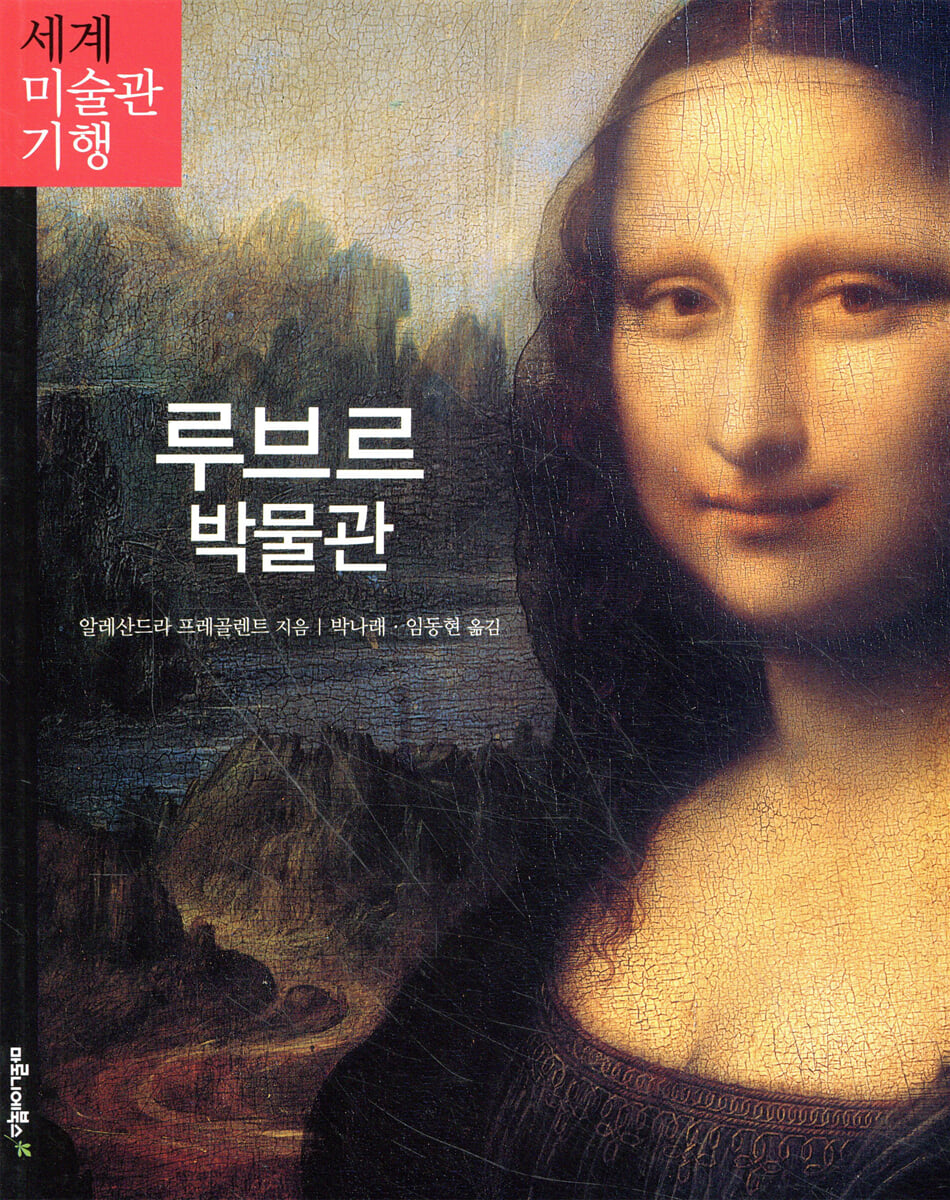
Louvre Museum
 |
Description
Book Introduction
A series introducing famous art museums and exhibitions around the world with abundant illustrations.
Opened in 1793, the Louvre was one of the first art museums to open in Europe, along with the Ashmolean Museum of Antiquities in Oxford, the Dresden Kunsthalle, and the Vatican Museums.
Remaining vibrant throughout the centuries, the Louvre has been a symbol of France's artistic heritage and a building bound to its destiny, from the reigns of François I to Napoleon and Mitterrand, and from the legendary Cour Carré to the future-forward glass pyramid of Léo Ming Pei.
In other words, the history of the Louvre is no different from the history of France.
Moreover, today the Louvre Museum has become an institution that plays a most important role in the cultural life not only of the French but also of people around the world.
Opened in 1793, the Louvre was one of the first art museums to open in Europe, along with the Ashmolean Museum of Antiquities in Oxford, the Dresden Kunsthalle, and the Vatican Museums.
Remaining vibrant throughout the centuries, the Louvre has been a symbol of France's artistic heritage and a building bound to its destiny, from the reigns of François I to Napoleon and Mitterrand, and from the legendary Cour Carré to the future-forward glass pyramid of Léo Ming Pei.
In other words, the history of the Louvre is no different from the history of France.
Moreover, today the Louvre Museum has become an institution that plays a most important role in the cultural life not only of the French but also of people around the world.
- You can preview some of the book's contents.
Preview
Into the book
To add more value to the landscape depicting the submerged stairs, Lorrain composed the screen with great care to blend natural and architectural elements.
In this painting, Lorrain fully demonstrates his extraordinary ability in expressing atmosphere and light.… Having moved to Rome at a very young age, Lorrain became fascinated by the Roman countryside and developed a special interest in it. From then on, he spent entire days outdoors studying and expressing the unstable changes of light according to the seasons and time of day.
In this painting, Lorrain fully demonstrates his extraordinary ability in expressing atmosphere and light.… Having moved to Rome at a very young age, Lorrain became fascinated by the Roman countryside and developed a special interest in it. From then on, he spent entire days outdoors studying and expressing the unstable changes of light according to the seasons and time of day.
--- p.100
We are looking at the festivities of the "Three Glorious Days" in July 1830, when Parisians overthrew Charles X and established the constitutional monarchy of Louis Philippe.
The provocative atmosphere, excited gestures, the arrangement of the characters, and above all, the corpses of the dead that occupy the entire lower part of the screen, add a considerable theatrical element to the work.… This work denounces the contemporary Romantic movement that had abandoned the demand for participation in reality, and in this respect, it can be said to be the first modern painting to contain a political element.
We are looking at the festivities of the "Three Glorious Days" in July 1830, when Parisians overthrew Charles X and established the constitutional monarchy of Louis Philippe.
The provocative atmosphere, excited gestures, the arrangement of the characters, and above all, the corpses of the dead that occupy the entire lower part of the screen, add a considerable theatrical element to the work.… This work denounces the contemporary Romantic movement that had abandoned the demand for participation in reality, and in this respect, it can be said to be the first modern painting to contain a political element.
The provocative atmosphere, excited gestures, the arrangement of the characters, and above all, the corpses of the dead that occupy the entire lower part of the screen, add a considerable theatrical element to the work.… This work denounces the contemporary Romantic movement that had abandoned the demand for participation in reality, and in this respect, it can be said to be the first modern painting to contain a political element.
We are looking at the festivities of the "Three Glorious Days" in July 1830, when Parisians overthrew Charles X and established the constitutional monarchy of Louis Philippe.
The provocative atmosphere, excited gestures, the arrangement of the characters, and above all, the corpses of the dead that occupy the entire lower part of the screen, add a considerable theatrical element to the work.… This work denounces the contemporary Romantic movement that had abandoned the demand for participation in reality, and in this respect, it can be said to be the first modern painting to contain a political element.
--- p.129
Publisher's Review
A book about an art museum told by a friendly docent
World Art Museum Tour Series
The series falls into the same category as existing art museum guides in that it travels to the world's leading art museums.
However, this series excludes personal impressions or travelogues, focusing on introducing one work of art on each page and its explanation, allowing readers to enter the exhibition hall of the museum right away.
However, this does not mean that I am giving a professional or stiff explanation like a critic.
It tells simple yet essential stories about the painting, the artist's life, the style of the time, and his relationships with other artists.
But more important than the text is the actual work.
Each volume of the series contains images of works from the museum's collection, with a level of importance that rivals that of an illustrated guide.
In other words, this is an art museum in one volume.
The person who is walking around the art museum with me while I am looking at this book is, so to speak, a 'docent'.
A storyteller who is well versed in the art museum and its artwork.
He leads me to a masterpiece that catches my eye and lets me admire it, then begins to calmly share valuable information that will help me understand and remember the painting.
World Art Museum Tour Series
The series falls into the same category as existing art museum guides in that it travels to the world's leading art museums.
However, this series excludes personal impressions or travelogues, focusing on introducing one work of art on each page and its explanation, allowing readers to enter the exhibition hall of the museum right away.
However, this does not mean that I am giving a professional or stiff explanation like a critic.
It tells simple yet essential stories about the painting, the artist's life, the style of the time, and his relationships with other artists.
But more important than the text is the actual work.
Each volume of the series contains images of works from the museum's collection, with a level of importance that rivals that of an illustrated guide.
In other words, this is an art museum in one volume.
The person who is walking around the art museum with me while I am looking at this book is, so to speak, a 'docent'.
A storyteller who is well versed in the art museum and its artwork.
He leads me to a masterpiece that catches my eye and lets me admire it, then begins to calmly share valuable information that will help me understand and remember the painting.
GOODS SPECIFICS
- Date of publication: May 28, 2007
- Page count, weight, size: 160 pages | 446g | 178*225*20mm
- ISBN13: 9788960530331
- ISBN10: 8960530336
You may also like
카테고리
korean


korean

![GQ KOREA Mark (Monthly): December [2025]](http://librairie.coreenne.fr/cdn/shop/files/8ef265dbbfbf186523ed75ba7319009d.jpg?v=1765340328&width=3840)


