

Metropolitan Museum of Art
 |
Description
Book Introduction
A series introducing famous art museums and exhibitions around the world with abundant illustrations.
The Metropolitan Museum of Art is also renowned for its policy of collecting art with a long-term perspective and careful consideration, guided by the opinions of art experts. The paintings collected through this rigorous process range from medieval works to Impressionist and avant-garde periods.
Over the centuries, various collections of ancient paintings, medieval paintings, American paintings, and 20th-century paintings were established, and later developed into specialized departments.
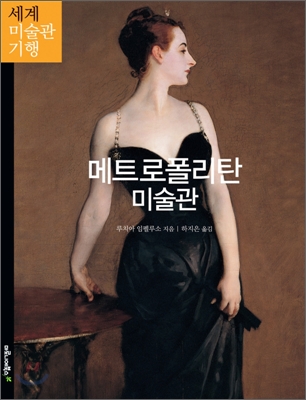
This book presents works from the Metropolitan Museum of Art's collection, with full-page illustrations, enlarged versions that allow you to feel the brushstrokes, and even three-dimensional analyses of the pieces.
The Metropolitan Museum of Art is also renowned for its policy of collecting art with a long-term perspective and careful consideration, guided by the opinions of art experts. The paintings collected through this rigorous process range from medieval works to Impressionist and avant-garde periods.
Over the centuries, various collections of ancient paintings, medieval paintings, American paintings, and 20th-century paintings were established, and later developed into specialized departments.
This book presents works from the Metropolitan Museum of Art's collection, with full-page illustrations, enlarged versions that allow you to feel the brushstrokes, and even three-dimensional analyses of the pieces.
- You can preview some of the book's contents.
Preview
index
introduction
Metropolitan Museum of Art, New York
works
Museum Guide
Artist and Work Index
Metropolitan Museum of Art, New York
works
Museum Guide
Artist and Work Index
Into the book
The genius painter Goya was active during the crucial period of transition from the 18th to the 19th century.
He moved through a truly diverse range of subjects, from portraits of 'grotesque' royal families to realistic depictions of human life, passing the last station of the Rococo style and arriving at the beginning of realism.
The subject of the painting is a portrait of the young Osorio, born in 1784, and his elegant red clothing stands out against the monochrome background.
Other animals appearing in this painting have symbolic meanings.
The thin line the boy holds separates the boy's innocent world from the evil forces that threaten him.
He moved through a truly diverse range of subjects, from portraits of 'grotesque' royal families to realistic depictions of human life, passing the last station of the Rococo style and arriving at the beginning of realism.
The subject of the painting is a portrait of the young Osorio, born in 1784, and his elegant red clothing stands out against the monochrome background.
Other animals appearing in this painting have symbolic meanings.
The thin line the boy holds separates the boy's innocent world from the evil forces that threaten him.
--- p.108
According to a symbolic tradition popular in 17th-century Holland, the theme of 'washing' is associated with the concepts of purity and innocence.
Although it is unclear what the exact interpretation of this painting is, it is striking in its sense that it is a meditation on a simple slice of domestic life.
Vermeer's paintings go beyond simple depictions of aspects of everyday life to contain elaborate allegories.
For example, the teapot in this painting can be interpreted in various ways: on the one hand, it can be seen as a tool of physical and moral purification or a symbol of temperance, and on the other hand, it can be interpreted with a sexual meaning.
According to a symbolic tradition popular in 17th-century Holland, the theme of 'washing' is associated with the concepts of purity and innocence.
Although it is unclear what the exact interpretation of this painting is, it is striking in its sense that it is a meditation on a simple slice of domestic life.
Vermeer's paintings go beyond simple depictions of aspects of everyday life to contain elaborate allegories.
For example, the teapot in this painting can be interpreted in various ways: on the one hand, it can be seen as a tool of physical and moral purification or a symbol of temperance, and on the other hand, it can be interpreted with a sexual meaning.
Although it is unclear what the exact interpretation of this painting is, it is striking in its sense that it is a meditation on a simple slice of domestic life.
Vermeer's paintings go beyond simple depictions of aspects of everyday life to contain elaborate allegories.
For example, the teapot in this painting can be interpreted in various ways: on the one hand, it can be seen as a tool of physical and moral purification or a symbol of temperance, and on the other hand, it can be interpreted with a sexual meaning.
According to a symbolic tradition popular in 17th-century Holland, the theme of 'washing' is associated with the concepts of purity and innocence.
Although it is unclear what the exact interpretation of this painting is, it is striking in its sense that it is a meditation on a simple slice of domestic life.
Vermeer's paintings go beyond simple depictions of aspects of everyday life to contain elaborate allegories.
For example, the teapot in this painting can be interpreted in various ways: on the one hand, it can be seen as a tool of physical and moral purification or a symbol of temperance, and on the other hand, it can be interpreted with a sexual meaning.
--- p.89
Publisher's Review
The Greatest Collection on Earth, by the People, for the People
Metropolitan Museum of Art
The idea of building a museum filled with masterpieces from the history of art from the beginning to the present gave birth to the Metropolitan Museum of Art, which boasts a rich collection and has established it as one of the world's most prestigious cultural institutions.
The museum is also renowned for its policy of collecting art with a long-term perspective and careful consideration, guided by the opinions of art experts. The collection of paintings, rigorously collected through this method, is extremely diverse, spanning medieval works and the Impressionist and avant-garde periods.
Additionally, over the course of about a century, various collections of ancient paintings, medieval paintings, American paintings, and 20th-century paintings were established, which later developed into specialized departments.
In particular, magnificent structures such as the Temple of Dendur and the Cloisters from ancient Egypt, which were relocated to the northernmost part of Manhattan, are recognized as special collections of the Metropolitan Museum of Art.
In addition to housing a vast number of works of art crafted with exceptional skill, the Metropolitan Museum of Art, while focusing on the exhibition and conservation of its permanent collection, also focuses on special exhibitions. With 200,000 square meters of exhibition space, it has become a kind of encyclopedia showcasing art from all cultures and eras.
A book about an art museum told by a friendly docent
World Art Museum Tour Series
The series falls into the same category as existing art museum guides in that it travels to the world's leading art museums.
However, this series excludes personal impressions or travelogues, focusing on introducing one work of art on each page and its explanation, allowing readers to enter the exhibition hall of the museum right away.
However, this does not mean that I am giving a professional or stiff explanation like a critic.
It tells simple yet essential stories about the painting, the artist's life, the style of the time, and his relationships with other artists.
But more important than the text is the actual work.
Each volume of the series contains images of works from the museum's collection, with a level of importance that rivals that of an illustrated guide.
In other words, this is an art museum in one volume.
The person who is walking around the art museum with me while I am looking at this book is, so to speak, a 'docent'.
A storyteller who is well versed in the art museum and its artwork.
He leads me to a masterpiece that catches my eye and lets me admire it, then begins to calmly share valuable information that will help me understand and remember the painting.
A docent is a person who provides theoretical knowledge to visitors at an exhibition hall to help them appreciate artwork.
It provides detailed explanations of the exhibited works and helps visitors understand the exhibition.
Metropolitan Museum of Art
The idea of building a museum filled with masterpieces from the history of art from the beginning to the present gave birth to the Metropolitan Museum of Art, which boasts a rich collection and has established it as one of the world's most prestigious cultural institutions.
The museum is also renowned for its policy of collecting art with a long-term perspective and careful consideration, guided by the opinions of art experts. The collection of paintings, rigorously collected through this method, is extremely diverse, spanning medieval works and the Impressionist and avant-garde periods.
Additionally, over the course of about a century, various collections of ancient paintings, medieval paintings, American paintings, and 20th-century paintings were established, which later developed into specialized departments.
In particular, magnificent structures such as the Temple of Dendur and the Cloisters from ancient Egypt, which were relocated to the northernmost part of Manhattan, are recognized as special collections of the Metropolitan Museum of Art.
In addition to housing a vast number of works of art crafted with exceptional skill, the Metropolitan Museum of Art, while focusing on the exhibition and conservation of its permanent collection, also focuses on special exhibitions. With 200,000 square meters of exhibition space, it has become a kind of encyclopedia showcasing art from all cultures and eras.
A book about an art museum told by a friendly docent
World Art Museum Tour Series
The series falls into the same category as existing art museum guides in that it travels to the world's leading art museums.
However, this series excludes personal impressions or travelogues, focusing on introducing one work of art on each page and its explanation, allowing readers to enter the exhibition hall of the museum right away.
However, this does not mean that I am giving a professional or stiff explanation like a critic.
It tells simple yet essential stories about the painting, the artist's life, the style of the time, and his relationships with other artists.
But more important than the text is the actual work.
Each volume of the series contains images of works from the museum's collection, with a level of importance that rivals that of an illustrated guide.
In other words, this is an art museum in one volume.
The person who is walking around the art museum with me while I am looking at this book is, so to speak, a 'docent'.
A storyteller who is well versed in the art museum and its artwork.
He leads me to a masterpiece that catches my eye and lets me admire it, then begins to calmly share valuable information that will help me understand and remember the painting.
A docent is a person who provides theoretical knowledge to visitors at an exhibition hall to help them appreciate artwork.
It provides detailed explanations of the exhibited works and helps visitors understand the exhibition.
GOODS SPECIFICS
- Date of issue: April 10, 2007
- Page count, weight, size: 159 pages | 454g | 178*225*20mm
- ISBN13: 9788960530324
- ISBN10: 8960530328
You may also like
카테고리
korean


korean

![GQ KOREA Mark (Monthly): December [2025]](http://librairie.coreenne.fr/cdn/shop/files/8ef265dbbfbf186523ed75ba7319009d.jpg?v=1765340328&width=3840)


