

The philosophy of musical production
 |
Description
Book Introduction
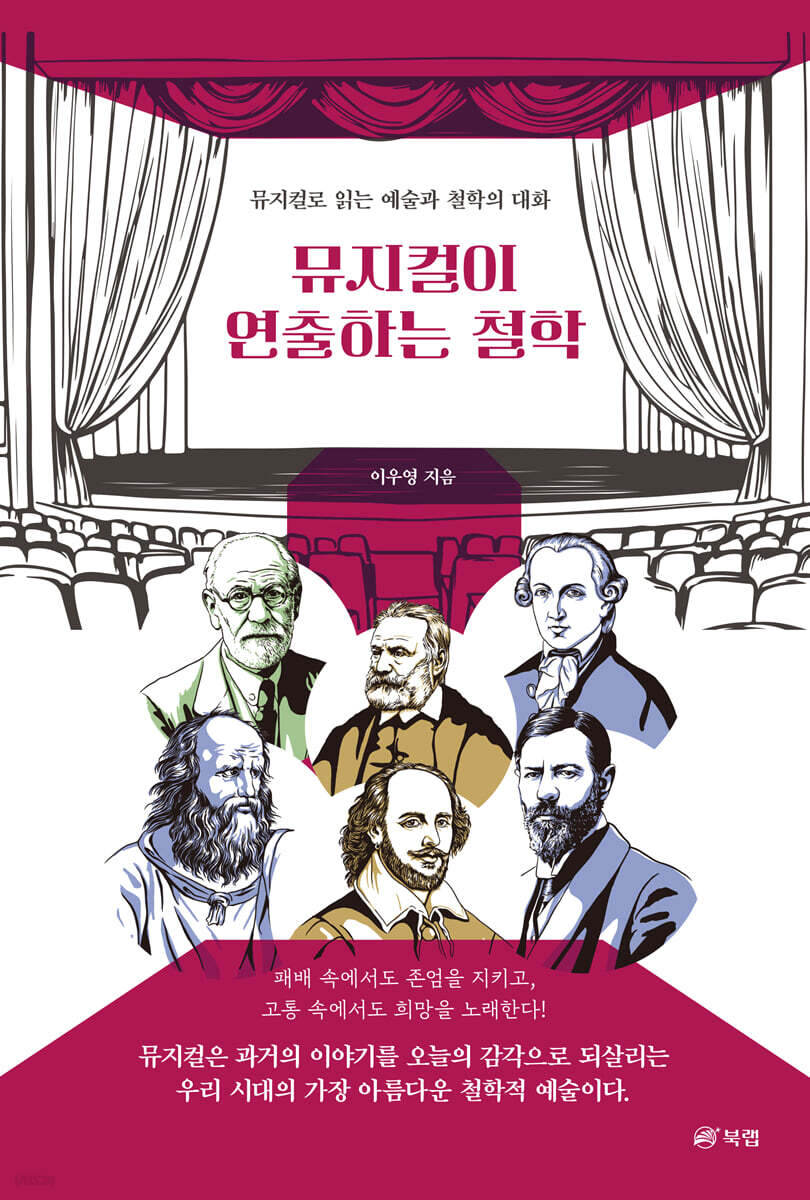
Maintaining dignity even in defeat,
Singing hope even in pain!
Musicals bring stories from the past to life with today's sensibilities.
It is the most beautiful philosophical art of our time.
On the stage, humans ask!
What is justice? Are freedom and equality possible?
How does art reflect society?
Exploring the meaning of humanity and art across philosophy and art
Professor Lee Woo-young's Musical Aesthetics
The author of this book analyzes the 14 musicals he selected as philosophical self-portraits of modern society.
A musical is not just a stage for singing and dancing.
The musical stage is a stage for thought where the philosophical concerns of the era are revived through acting and music.
The audience laughs and cries amidst the dazzling lights and melodies, but hidden beneath those emotions are philosophical questions about social conflict and the nature of humanity.
Justice and salvation in Les Misérables, identity and freedom in Hedwig, media power in Chicago, equality and solidarity in Hairspray.
All these works sing of the times we live in through the language of philosophy.
This book reads musicals as philosophical art, not as flashy shows.
Musicals have always been a mirror of social conflict and a stage for diversity and coexistence.
On a stage where jazz, rock, opera, and hip-hop blend together, different voices transform into a single chorus.
The chorus is a confession of the oppressed and a universal resonance that all humans can empathize with.
On stage, people transcend differences and connect, loneliness becomes a chorus, and individual cries become a communal song.
This book is a journey of philosophical thought that examines the concerns of our time through musicals, and is a humanistic stage that records the encounter between art and philosophy in our time.
As a new liberal arts book that connects philosophy, art, and society, it provides interesting insights not only to performing arts enthusiasts but also to readers interested in the humanities, philosophy, and cultural studies.
Singing hope even in pain!
Musicals bring stories from the past to life with today's sensibilities.
It is the most beautiful philosophical art of our time.
On the stage, humans ask!
What is justice? Are freedom and equality possible?
How does art reflect society?
Exploring the meaning of humanity and art across philosophy and art
Professor Lee Woo-young's Musical Aesthetics
The author of this book analyzes the 14 musicals he selected as philosophical self-portraits of modern society.
A musical is not just a stage for singing and dancing.
The musical stage is a stage for thought where the philosophical concerns of the era are revived through acting and music.
The audience laughs and cries amidst the dazzling lights and melodies, but hidden beneath those emotions are philosophical questions about social conflict and the nature of humanity.
Justice and salvation in Les Misérables, identity and freedom in Hedwig, media power in Chicago, equality and solidarity in Hairspray.
All these works sing of the times we live in through the language of philosophy.
This book reads musicals as philosophical art, not as flashy shows.
Musicals have always been a mirror of social conflict and a stage for diversity and coexistence.
On a stage where jazz, rock, opera, and hip-hop blend together, different voices transform into a single chorus.
The chorus is a confession of the oppressed and a universal resonance that all humans can empathize with.
On stage, people transcend differences and connect, loneliness becomes a chorus, and individual cries become a communal song.
This book is a journey of philosophical thought that examines the concerns of our time through musicals, and is a humanistic stage that records the encounter between art and philosophy in our time.
As a new liberal arts book that connects philosophy, art, and society, it provides interesting insights not only to performing arts enthusiasts but also to readers interested in the humanities, philosophy, and cultural studies.
- You can preview some of the book's contents.
Preview
index
prolog
Chapter 1: Racial Conflict and the Dream of Equality in Hairspray
1.
The context of American society and racial issues in the 1960s
2.
Character identity and subversive narrative
3.
Baudrillard: Simulation, Consumer Society, and the Power of Images
4.
John Rawls: A Theory of Justice
5.
Rousseau's social contract and the general will
6.
Nancy Fraser's 'The Politics of Recognition'
7.
The musical flow of Hairspray
Chapter 2: Songs of Revolution and Justice 《Les Misérables》
1.
The context of 19th-century French society and revolution
2.
Jean Valjean: Sin, Redemption, and the Search for Justice
3.
Rousseau and Kant's Problems of Freedom and Enlightenment
4.
Hegel: Master-Slave Dialectics
5.
Marx and the Class Struggle
6.
Fantine: Industrial Capitalism and Alienation
7.
The Aesthetics and Hope of "Les Misérables"
Chapter 3: The Loss of Youth (Les Parapluies de Cherbourg)
1.
The New Wave that broke the boundaries of cinema
2.
The Algerian War and Collective Memory
3.
Memories and Spaces of Cherbourg
4.
The Temporality of Music and the Musicality of Time: The Aesthetics of Song-Through Musicals
Chapter 4: Immigrant Conflict and Understanding the Other: West Side Story
1.
American society and immigration conflicts in the 1950s
2.
Jets and Sharks: Conflicts and Struggles Over Identity and Dignity
3.
Levinas: The Other and the Ethical Response
4.
Derrida: Borders and Deconstruction
5.
Rhythm and Harmony: The Clash and Coexistence of Cultural Codes
6.
Eurocentric style and Broadway idiom
Chapter 5: The Producers: The Other Side of Satire and Comedy
1.
Roland Barthes: The Death of the Author
2.
Adorno: The Bare Face of the Culture Industry
Chapter 6: The Crack of Repression and Taboo: Spring Awakening
1.
19th-century German society and the oppression of youth
2.
Sartre: Existence and Anxiety
3.
Foucault and Durkheim: Discipline and Punish
4.
Musical Hyperrealism: Rock Sound and the Inner Explosion
5.
The intersection of events and philosophy: authority, gender, and freedom
Chapter 7: The Mechanisms of Power and Corruption (Chicago)
1.
Baudrillard: Simulacra, Gorgeous Stage, Dark Reality
2.
Bordieu: Symbolic Capital
3.
Hans Kelsen: The Separation of Law and Justice
4.
Adorno and Horkheimer: Popular Culture and Industry
5.
Zizek: Fantasy and Ideology
Chapter 8: The Human Jesus and Historicity (Jesus Christ Superstar)
1.
The Bible Reborn as a Rock Opera
2.
Bultmann: The Historical Jesus Who Dispelled Myth
3.
Schweitzer: The Tragic Humanity of the Historical Jesus
4.
Dostoevsky: The Human Jesus Who Transcended the Framework of Institutions and Power
5.
Mary Magdalene: Evidence of the Incarnation Revealing the Human Jesus
6.
Nietzsche: The Death of God and the Suffering of Man
7.
The human Jesus and us today
Chapter 9: Songs of Boundaries and Identity: Hedwig and the Angry Inch
1.
The Cold War Wall, the Cracks in Identity
2.
An Autobiography Written Through Walls, Body, and Music
3.
Plato's Symposium and the Tale of Aristophanes
4.
The Aesthetics of Boundaries and Performativity: Gender, Identity, and the Staging of Absentmindedness in Hedwig
5.
The politics of bodies and institutions, the existence of wounds and freedom
Chapter 10: The Light and Darkness of Black Music: Dreamgirls
1.
The Black Music Industry and Motown
2.
Industrial Success and Marginalized Identity
3.
A Philosophical Interpretation of the Entertainment Industry
4.
Black Music and Musical Movement: Narratives Driven by Sound
5.
Bloch: Hope and the Future of Dreamgirls
Chapter 11: The Stage of Fantasy and Social Inclusion in The Greatest Showman
1.
The birth of show business in 19th-century America
2.
Thoughts on individuality and diversity
3.
What is a Show?
4. The Greatest Showman's De-Authorization: Pop Sound and Hyperrealistic Aesthetics
5.
emotional presence
6.
From individual narratives to universal discourse
7.
Boundary hybridity
8.
Theme recursion and inner narrative
Chapter 12: Shadows of Power and Truth (Wicked)
1.
Frames and Truth
2.
Arendt and Derrida: Philosophical Interpretations of Magic
3.
The value of solidarity beyond differences
4.
The Shadow of Nationalism
5.
Gramsci: Witch Hunts and Hegemony
Chapter 13: Eternity and Longing (Dracula)
1.
Shadow between the Middle Ages and the Modern Age
2.
Side: The Darkness of the Other in Orientalism
3.
Christian metaphors: humans and Dracula
4.
Salvationism created through musicals
Chapter 14: Love, Its Tragic Inevitability: Romeo and Juliet
1.
The two men and women who became legends
2.
Tragedy by Love: A Question of Fate
3.
Freud: Eros and Thanatos
4.
The Medieval Marriage System and the Breakthrough of Free Love
5.
Kierkegaard: Love Beyond Death
Epilogue: Musical: A Self-Portrait of Modern Thought
Chapter 1: Racial Conflict and the Dream of Equality in Hairspray
1.
The context of American society and racial issues in the 1960s
2.
Character identity and subversive narrative
3.
Baudrillard: Simulation, Consumer Society, and the Power of Images
4.
John Rawls: A Theory of Justice
5.
Rousseau's social contract and the general will
6.
Nancy Fraser's 'The Politics of Recognition'
7.
The musical flow of Hairspray
Chapter 2: Songs of Revolution and Justice 《Les Misérables》
1.
The context of 19th-century French society and revolution
2.
Jean Valjean: Sin, Redemption, and the Search for Justice
3.
Rousseau and Kant's Problems of Freedom and Enlightenment
4.
Hegel: Master-Slave Dialectics
5.
Marx and the Class Struggle
6.
Fantine: Industrial Capitalism and Alienation
7.
The Aesthetics and Hope of "Les Misérables"
Chapter 3: The Loss of Youth (Les Parapluies de Cherbourg)
1.
The New Wave that broke the boundaries of cinema
2.
The Algerian War and Collective Memory
3.
Memories and Spaces of Cherbourg
4.
The Temporality of Music and the Musicality of Time: The Aesthetics of Song-Through Musicals
Chapter 4: Immigrant Conflict and Understanding the Other: West Side Story
1.
American society and immigration conflicts in the 1950s
2.
Jets and Sharks: Conflicts and Struggles Over Identity and Dignity
3.
Levinas: The Other and the Ethical Response
4.
Derrida: Borders and Deconstruction
5.
Rhythm and Harmony: The Clash and Coexistence of Cultural Codes
6.
Eurocentric style and Broadway idiom
Chapter 5: The Producers: The Other Side of Satire and Comedy
1.
Roland Barthes: The Death of the Author
2.
Adorno: The Bare Face of the Culture Industry
Chapter 6: The Crack of Repression and Taboo: Spring Awakening
1.
19th-century German society and the oppression of youth
2.
Sartre: Existence and Anxiety
3.
Foucault and Durkheim: Discipline and Punish
4.
Musical Hyperrealism: Rock Sound and the Inner Explosion
5.
The intersection of events and philosophy: authority, gender, and freedom
Chapter 7: The Mechanisms of Power and Corruption (Chicago)
1.
Baudrillard: Simulacra, Gorgeous Stage, Dark Reality
2.
Bordieu: Symbolic Capital
3.
Hans Kelsen: The Separation of Law and Justice
4.
Adorno and Horkheimer: Popular Culture and Industry
5.
Zizek: Fantasy and Ideology
Chapter 8: The Human Jesus and Historicity (Jesus Christ Superstar)
1.
The Bible Reborn as a Rock Opera
2.
Bultmann: The Historical Jesus Who Dispelled Myth
3.
Schweitzer: The Tragic Humanity of the Historical Jesus
4.
Dostoevsky: The Human Jesus Who Transcended the Framework of Institutions and Power
5.
Mary Magdalene: Evidence of the Incarnation Revealing the Human Jesus
6.
Nietzsche: The Death of God and the Suffering of Man
7.
The human Jesus and us today
Chapter 9: Songs of Boundaries and Identity: Hedwig and the Angry Inch
1.
The Cold War Wall, the Cracks in Identity
2.
An Autobiography Written Through Walls, Body, and Music
3.
Plato's Symposium and the Tale of Aristophanes
4.
The Aesthetics of Boundaries and Performativity: Gender, Identity, and the Staging of Absentmindedness in Hedwig
5.
The politics of bodies and institutions, the existence of wounds and freedom
Chapter 10: The Light and Darkness of Black Music: Dreamgirls
1.
The Black Music Industry and Motown
2.
Industrial Success and Marginalized Identity
3.
A Philosophical Interpretation of the Entertainment Industry
4.
Black Music and Musical Movement: Narratives Driven by Sound
5.
Bloch: Hope and the Future of Dreamgirls
Chapter 11: The Stage of Fantasy and Social Inclusion in The Greatest Showman
1.
The birth of show business in 19th-century America
2.
Thoughts on individuality and diversity
3.
What is a Show?
4. The Greatest Showman's De-Authorization: Pop Sound and Hyperrealistic Aesthetics
5.
emotional presence
6.
From individual narratives to universal discourse
7.
Boundary hybridity
8.
Theme recursion and inner narrative
Chapter 12: Shadows of Power and Truth (Wicked)
1.
Frames and Truth
2.
Arendt and Derrida: Philosophical Interpretations of Magic
3.
The value of solidarity beyond differences
4.
The Shadow of Nationalism
5.
Gramsci: Witch Hunts and Hegemony
Chapter 13: Eternity and Longing (Dracula)
1.
Shadow between the Middle Ages and the Modern Age
2.
Side: The Darkness of the Other in Orientalism
3.
Christian metaphors: humans and Dracula
4.
Salvationism created through musicals
Chapter 14: Love, Its Tragic Inevitability: Romeo and Juliet
1.
The two men and women who became legends
2.
Tragedy by Love: A Question of Fate
3.
Freud: Eros and Thanatos
4.
The Medieval Marriage System and the Breakthrough of Free Love
5.
Kierkegaard: Love Beyond Death
Epilogue: Musical: A Self-Portrait of Modern Thought
Into the book
Interestingly, musicals are a representative case that contains the experiences and in-depth traces of many creators who have thoroughly examined these questions and answers.
"Chicago" shows how media and power influence people's judgments, while "The Umbrellas of Cherbourg" explores how nations and war affect individual lives and loves, and how this is reflected in the beauty of film.
Meanwhile, Wicked explores how power and ideology work.
In this way, musicals can be said to be the most vivid and sensuous philosophical venue, solving philosophical questions through song and dance.
--- p.6
《Hairspray》 tackles a heavy subject in a popular way through the musical genre's characteristically flashy music, dance, and humor.
This is a good example of the social function of musicals.
The dancing and singing on stage go beyond simple entertainment and function as a device that allows the audience to intuitively understand the unequal structure of contemporary society.
--- p.31
Les Misérables is not simply a stage production of a failed revolution.
It is a narrative of humanity never giving up hope even in the face of defeat and suffering, and a declaration of the human spirit that strives to maintain dignity even in the face of oppression.
The final chorus, "Do You Hear the People Sing? (Reprise)", functions as both the voices of the dead and a promise to future generations.
This scene is not simply a tragic ending, but it imprints on the audience the belief that justice does not always end in failure, but remains an open possibility for the future.
--- p.56
《Chicago》 borrows the format of a flashy show musical to sharply criticize social corruption and the mechanisms of power.
Crime becomes a show, law is reduced to a performance, and the media produces spectacles that satisfy the public's desires rather than the truth.
This work asks us:
Is justice truly possible, or is it merely an illusion created by the media and those in power?
--- p.137
Dreamgirls is not just a show business drama.
This work shows the paradox of black music losing its identity and becoming a tool of industry while achieving global success through the flow of music itself.
In other words, the music in this musical is not just a simple song, but it functions as a subject that drives the structure of the play and changes the psychology and social position of the characters.
If existing Broadway musicals focused on the narrative and used music as a supporting device, the music in Dreamgirls is both the cause and the effect of the story.
That is, music triggers the character's actions, and the change in the style of the music symbolizes the character's social movement.
"Chicago" shows how media and power influence people's judgments, while "The Umbrellas of Cherbourg" explores how nations and war affect individual lives and loves, and how this is reflected in the beauty of film.
Meanwhile, Wicked explores how power and ideology work.
In this way, musicals can be said to be the most vivid and sensuous philosophical venue, solving philosophical questions through song and dance.
--- p.6
《Hairspray》 tackles a heavy subject in a popular way through the musical genre's characteristically flashy music, dance, and humor.
This is a good example of the social function of musicals.
The dancing and singing on stage go beyond simple entertainment and function as a device that allows the audience to intuitively understand the unequal structure of contemporary society.
--- p.31
Les Misérables is not simply a stage production of a failed revolution.
It is a narrative of humanity never giving up hope even in the face of defeat and suffering, and a declaration of the human spirit that strives to maintain dignity even in the face of oppression.
The final chorus, "Do You Hear the People Sing? (Reprise)", functions as both the voices of the dead and a promise to future generations.
This scene is not simply a tragic ending, but it imprints on the audience the belief that justice does not always end in failure, but remains an open possibility for the future.
--- p.56
《Chicago》 borrows the format of a flashy show musical to sharply criticize social corruption and the mechanisms of power.
Crime becomes a show, law is reduced to a performance, and the media produces spectacles that satisfy the public's desires rather than the truth.
This work asks us:
Is justice truly possible, or is it merely an illusion created by the media and those in power?
--- p.137
Dreamgirls is not just a show business drama.
This work shows the paradox of black music losing its identity and becoming a tool of industry while achieving global success through the flow of music itself.
In other words, the music in this musical is not just a simple song, but it functions as a subject that drives the structure of the play and changes the psychology and social position of the characters.
If existing Broadway musicals focused on the narrative and used music as a supporting device, the music in Dreamgirls is both the cause and the effect of the story.
That is, music triggers the character's actions, and the change in the style of the music symbolizes the character's social movement.
--- p.186
GOODS SPECIFICS
- Date of issue: November 13, 2025
- Page count, weight, size: 278 pages | 475g | 152*225*16mm
- ISBN13: 9791172249779
- ISBN10: 1172249776
You may also like
카테고리
korean


korean

![GQ KOREA Mark (Monthly): December [2025]](http://librairie.coreenne.fr/cdn/shop/files/8ef265dbbfbf186523ed75ba7319009d.jpg?v=1765340328&width=3840)


