

Conquering Aging
 |
Description
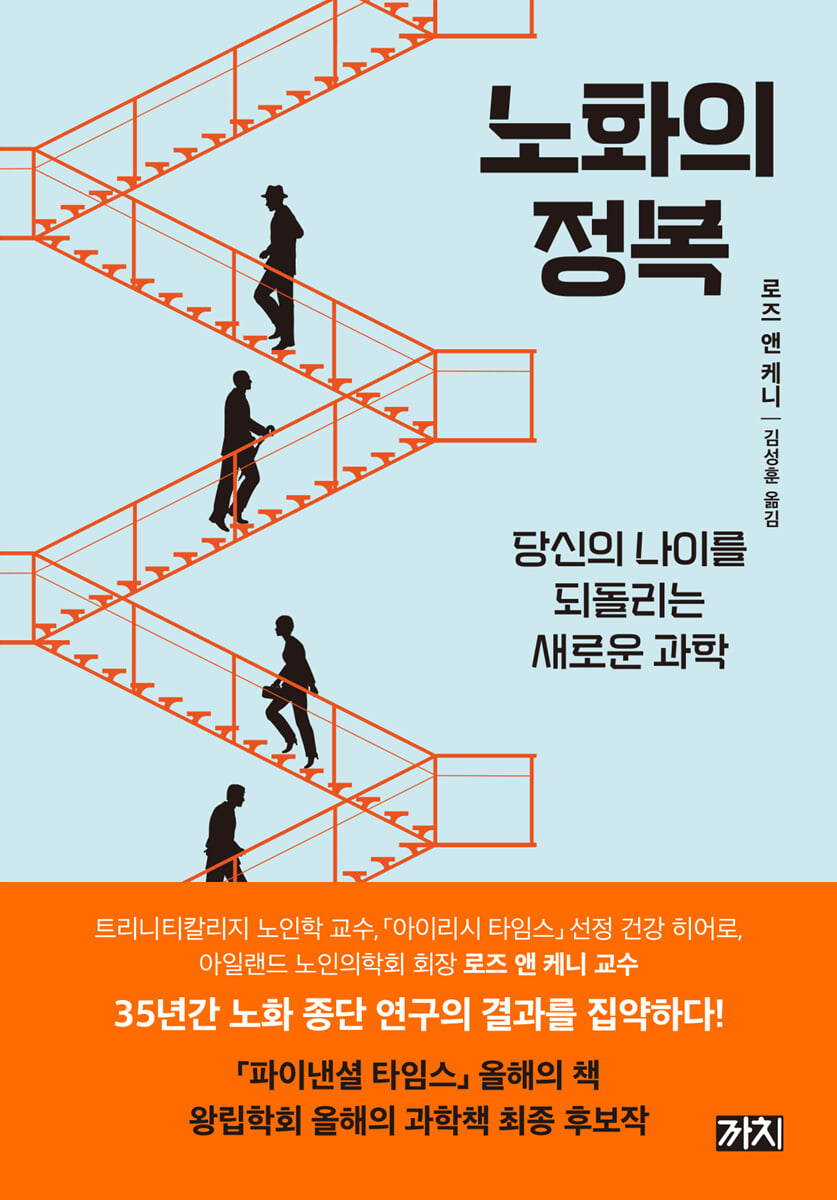
Book Introduction
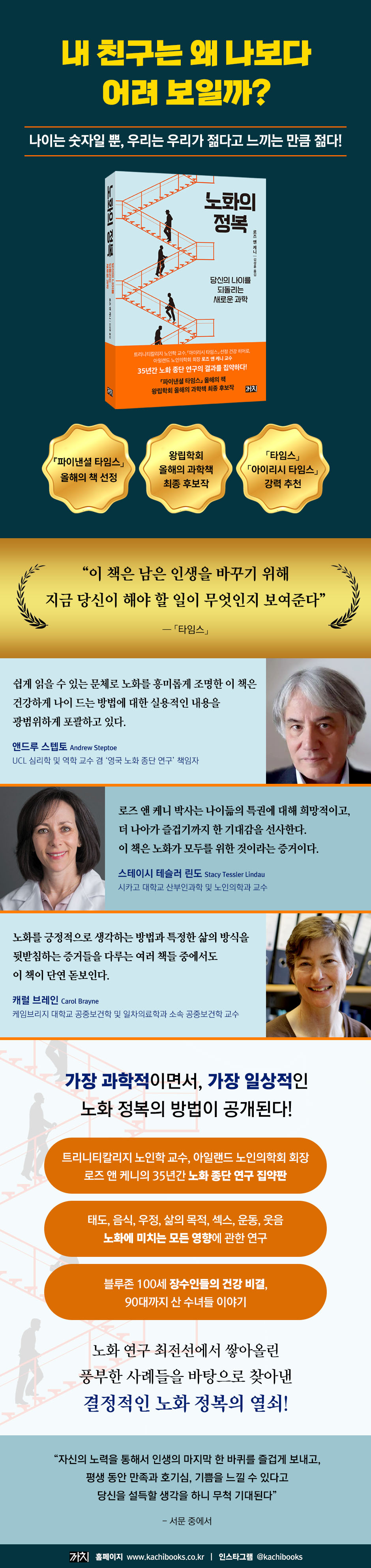
Why does my friend look younger than me?
Financial Times Book of the Year, Royal Society Science Book of the Year Finalist
A compilation of the latest research findings that go beyond your everyday age and turn back your true biological age.
Rose Ann Kenny, professor of gerontology at Trinity College, has led the Irish Longitudinal Study of Ageing for 35 years.
This book is a compilation of the author's case studies and longitudinal research findings from numerous patients he has encountered.
One study found that even among adults as young as 38, the biological aging clock showed a difference of as much as 20 years, while the author observed an 80-year-old woman caring for a neighbor in her 70s.
These cases prove that youth and old age cannot be measured by numbers.
The key here is biological change, and we can adjust and improve about 80 percent of the factors that alter our body clock.
Drawing on compelling scientific evidence, the author confidently convinces readers that people are only as young as they feel, and that through effort, they can enjoy their later years and find contentment, curiosity, and joy throughout their lives.
Financial Times Book of the Year, Royal Society Science Book of the Year Finalist
A compilation of the latest research findings that go beyond your everyday age and turn back your true biological age.
Rose Ann Kenny, professor of gerontology at Trinity College, has led the Irish Longitudinal Study of Ageing for 35 years.
This book is a compilation of the author's case studies and longitudinal research findings from numerous patients he has encountered.
One study found that even among adults as young as 38, the biological aging clock showed a difference of as much as 20 years, while the author observed an 80-year-old woman caring for a neighbor in her 70s.
These cases prove that youth and old age cannot be measured by numbers.
The key here is biological change, and we can adjust and improve about 80 percent of the factors that alter our body clock.
Drawing on compelling scientific evidence, the author confidently convinces readers that people are only as young as they feel, and that through effort, they can enjoy their later years and find contentment, curiosity, and joy throughout their lives.
- You can preview some of the book's contents.
Preview
index
introduction
1. You are as young as you feel - age is just a number
2 Why do we grow old?
3 Friendship
4. No boring moments - laughter and a sense of purpose
5 The Value of a Good Night's Sleep
6 Resting Time and the Speed of Aging
7 In Search of the Elixir of Youth
8 Cold Baths and Hormesis
9 Eat as much as you want
10 Sex and Intimacy
11 Let's love muscles for life
Self-test
Words of gratitude
main
Biographical Index
1. You are as young as you feel - age is just a number
2 Why do we grow old?
3 Friendship
4. No boring moments - laughter and a sense of purpose
5 The Value of a Good Night's Sleep
6 Resting Time and the Speed of Aging
7 In Search of the Elixir of Youth
8 Cold Baths and Hormesis
9 Eat as much as you want
10 Sex and Intimacy
11 Let's love muscles for life
Self-test
Words of gratitude
main
Biographical Index
Detailed image
Publisher's Review
Age is just a number!
Aging depends on your mindset.
The author, who has led longitudinal research on aging, presents the secrets of longevity and important keywords for preventing aging.
Chapter 1 presents some fascinating research findings from the author's research team, showing that whether you feel young or old actually affects how quickly you age.
In other words, the cellular processes that characterize aging can be controlled through attitude or cognition.
For example, people who had negative attitudes about aging walked slower, had worse memory, and performed worse on several other brain tests.
This was true even after taking into account overall health, medication, mood, living environment, and other factors.
That is, cognition independently influences the rate of physical and mental aging.
In Chapter 2, we visit Blue Zones, the world's longest-living communities, and delve into the lifestyles and behaviors common to people who live to be 100 in good health.
Not only did they live longer, but they also enjoyed better health, suffering from fewer illnesses in their old age than people in other regions! This chapter also discusses how society can better support its aging population and create a more just world.
Chapter 3 explores the important role friendship plays in preventing aging.
Friendship has a common evolutionary basis not only in humans but across a wide range of social species, and has been linked to longer lifespans in many sociable species, such as baboons, dolphins, and rats.
Several experiments have shown that the intensity of human social contact and interaction helps alleviate stress, heart disease, and inflammation.
It is also known that friendship is instinctive and innate and plays a direct role in protecting our mental and physical health.
Friendship stimulates the brain, improving cognitive function and reducing the risk of dementia by reducing vascular disease.
Laughter also plays an important role in anti-aging.
Chapter 4 introduces the surprising effects of laughter.
Most of our laughter has more to do with social bonding than humor.
We use laughter and humor to manage situations, express our willingness to participate, and show those present that we are on the same page.
Laughter plays a central role in important social interactions and solving social problems.
The interactive role that laughter plays in forming bonds with others is crucial because these bonds are essential for survival and also play a significant physiological and psychological role, including in aging.
In this way, laughter can be said to be the key to longevity and health.
Chapter 5 preaches the value of good sleep.
The optimal amount of sleep for adults, regardless of age, is 7-9 hours.
The Irish Longitudinal Study of Aging found that those who slept less than seven hours or more than nine hours per night after age 50 experienced later problems with mental health, such as memory, concentration, and learning ability.
During sleep, the spaces between brain cells fill with cerebrospinal fluid, which washes away toxins that have accumulated during the day.
These include components such as beta-amyloid and tau proteins, which appear to be linked to dementia.
It is very important to regularly flush out these toxins and waste products with cerebrospinal fluid.
So, insomnia in middle age is a problem that should be treated as seriously as high blood pressure or diabetes.
Chapter 6 covers the most important stress coping skills for living a healthy life.
The pace of our lives has accelerated dramatically over the past 30 years, making us busier and more stressed.
To slow down the aging process, you need to relieve stress in a healthy way.
What the longest-living people in the Blue Zones have, but most of us don't, is a daily habit that can help us shake off stress so it doesn't become chronic.
The author recommends taking time to turn off your phone and other internet communications once or more each day as a way to relax, de-stress, and unwind.
'Eating together' with family and friends of multiple generations is also a standard practice in all Blue Zones and is cited as one of the secrets to healthy longevity among centenarians.
Given the evidence that eating alone or while working increases the risk of obesity and malnutrition, and negatively impacts intergenerational relationships, it's recommended to establish regular mealtimes with family and friends.
Chapter 7 examines the secrets of longevity that have been discovered to date.
Among all animals, a select few species appear to be immune to aging and disease.
In most animals, cellular damage accumulates gradually until almost all cells die, but in a few animals, this process is so slow that it can practically be said to have stopped, extending lifespan and youth.
This is called 'negligible senescence'.
It is difficult to expect a slight increase in life expectancy during our lifetime.
Rather, a more realistic goal would be to moderately slow the rate of aging and delay all age-related diseases by about seven years.
If this goal is achieved, the health and disease risk profile of a 50-year-old would be that of a 43-year-old, and that of a 60-year-old would be that of a 53-year-old.
There is another equally important part.
Once this is achieved, the seven-year delay will have the same health and longevity benefits for all subsequent generations.
The author believes that this is an achievable goal, and that many of the factors discussed in this book—friendships, stress relief, laughter, a sense of purpose, sleep, food, physical activity, and a positive attitude—can have just such an effect: delaying age-related diseases, disabilities, and death by seven years or more.
Chapter 8 introduces cold baths as another way to prevent aging.
Immersing yourself in cold water stimulates the physiological systems involved in hormesis.
Hormesis refers to the phenomenon in which administering a small amount of something harmful or painful is actually beneficial to health.
Research into this counterintuitive phenomenon—that moderate stressors like cold water exposure, radiation, toxic chemicals, and starvation can actually be beneficial rather than harmful—is attracting the attention of gerontologists.
Cold baths or showers are incredibly effective at sending large-scale stimulation to the body, increasing important chemical and nerve signals.
One such chemical is norepinephrine.
This neurotransmitter plays a key role in the fight-or-flight response, and its levels increase fourfold when exposed to cold water.
Norepinephrine enhances cellular performance in both the brain and body and regulates a range of functions, including heart rate, blood pressure, blood flow to muscles, skeletal muscle contractility, and energy release.
Cold water exposure also releases norepinephrine in key brain regions that regulate emotion, focus, and memory, affecting our alertness, memory, interest in objects, mood, and how our bodies respond to pain.
As we age, our responsiveness to norepinephrine also diminishes, so any stimulus that enhances its activity is considered important in the physiology of 'aging'.
Additionally, the more often you are visually exposed to the ocean, the more positively it affects your mood and well-being.
Whether you take a cold shower, take a cold swim, or simply spend time gazing at the ocean, it's well known that these activities are all beneficial to your health and well-being.
Chapter 9 is about finding a healthy diet.
Research is revealing evidence suggesting that our bodies have switches that influence the rate at which we age.
Because this switch is not fixed but adjustable, it has the potential to extend the vibrant years of youth while also postponing the troublesome diseases that come later in life.
Diet and weight hold the keys to many switches, acting as important factors in turning elements of cellular aging on or off.
“Food is medicine, and medicine is food.” This oft-quoted 2,000-year-old Hippocratic maxim remains valid today.
This is because there is a growing consensus that diet is important for maintaining a healthy body and brain.
This chapter presents the diet of centenarians in the Blue Zones as a starting point, and introduces the reasons why fasting is good and how to fast effectively.
In addition, it presents research findings that suggest that dietary supplements such as omega-3 fatty acids, antioxidant foods, vitamin D, and the microbiome can be beneficial for health and help slow down aging.
Chapter 10 discusses the importance of sexuality in older age.
Couples who have regular and satisfying sex lives have higher overall life satisfaction and positive attitudes toward aging.
Data on sexual activity and life enjoyment consistently show that sexually active people have a higher quality of life, better relationships, are happier, have a lower risk of depression, and in some studies, live longer.
Sexually active men and women also have better memory and concentration.
Higher sexual satisfaction and frequency of sexual activity lead to better communication between couples, and better sexual desire and timing of sexual activity.
Chapter 11 looks at muscles.
The author, who emphasizes the importance of muscle through the story of a retired dentist who took up bodybuilding at the age of 87, says that regular physical activity improves mental health and well-being, prevents or alleviates depression, and promotes vitality and optimism.
When you start exercising, your brain perceives it as a moment of stress and thinks you are fighting or running away from an enemy.
In response, proteins secreted from the brain act to protect us from stress.
After exercising, I feel more relaxed and happier, and this may partially explain why problems come into focus more clearly.
Since muscle mass decreases every year after the age of 50, you should do strength training in addition to aerobic exercise.
Exercise and diet are the most important factors that can change the course of biological aging, and as readers will now understand, there are many exercise and healthy diet options available.
As we get older, everything tends to slow down every year.
The author suggests instead setting a goal of increasing your exercise a little more each year.
Professor Rose Ann Kenny, author of "The Science of Aging," has appeared on numerous television programs in Ireland on health, longevity, and aging, sharing proven research findings in an engaging way. In this book, she also presents the latest science on aging in a fun and engaging way.
As you read this book, you will realize that aging is not something that can be stopped.
The author suggests to readers not only keywords and methods to prevent aging, but also lifestyle habits and mindset.
Aging depends on your mindset.
The author, who has led longitudinal research on aging, presents the secrets of longevity and important keywords for preventing aging.
Chapter 1 presents some fascinating research findings from the author's research team, showing that whether you feel young or old actually affects how quickly you age.
In other words, the cellular processes that characterize aging can be controlled through attitude or cognition.
For example, people who had negative attitudes about aging walked slower, had worse memory, and performed worse on several other brain tests.
This was true even after taking into account overall health, medication, mood, living environment, and other factors.
That is, cognition independently influences the rate of physical and mental aging.
In Chapter 2, we visit Blue Zones, the world's longest-living communities, and delve into the lifestyles and behaviors common to people who live to be 100 in good health.
Not only did they live longer, but they also enjoyed better health, suffering from fewer illnesses in their old age than people in other regions! This chapter also discusses how society can better support its aging population and create a more just world.
Chapter 3 explores the important role friendship plays in preventing aging.
Friendship has a common evolutionary basis not only in humans but across a wide range of social species, and has been linked to longer lifespans in many sociable species, such as baboons, dolphins, and rats.
Several experiments have shown that the intensity of human social contact and interaction helps alleviate stress, heart disease, and inflammation.
It is also known that friendship is instinctive and innate and plays a direct role in protecting our mental and physical health.
Friendship stimulates the brain, improving cognitive function and reducing the risk of dementia by reducing vascular disease.
Laughter also plays an important role in anti-aging.
Chapter 4 introduces the surprising effects of laughter.
Most of our laughter has more to do with social bonding than humor.
We use laughter and humor to manage situations, express our willingness to participate, and show those present that we are on the same page.
Laughter plays a central role in important social interactions and solving social problems.
The interactive role that laughter plays in forming bonds with others is crucial because these bonds are essential for survival and also play a significant physiological and psychological role, including in aging.
In this way, laughter can be said to be the key to longevity and health.
Chapter 5 preaches the value of good sleep.
The optimal amount of sleep for adults, regardless of age, is 7-9 hours.
The Irish Longitudinal Study of Aging found that those who slept less than seven hours or more than nine hours per night after age 50 experienced later problems with mental health, such as memory, concentration, and learning ability.
During sleep, the spaces between brain cells fill with cerebrospinal fluid, which washes away toxins that have accumulated during the day.
These include components such as beta-amyloid and tau proteins, which appear to be linked to dementia.
It is very important to regularly flush out these toxins and waste products with cerebrospinal fluid.
So, insomnia in middle age is a problem that should be treated as seriously as high blood pressure or diabetes.
Chapter 6 covers the most important stress coping skills for living a healthy life.
The pace of our lives has accelerated dramatically over the past 30 years, making us busier and more stressed.
To slow down the aging process, you need to relieve stress in a healthy way.
What the longest-living people in the Blue Zones have, but most of us don't, is a daily habit that can help us shake off stress so it doesn't become chronic.
The author recommends taking time to turn off your phone and other internet communications once or more each day as a way to relax, de-stress, and unwind.
'Eating together' with family and friends of multiple generations is also a standard practice in all Blue Zones and is cited as one of the secrets to healthy longevity among centenarians.
Given the evidence that eating alone or while working increases the risk of obesity and malnutrition, and negatively impacts intergenerational relationships, it's recommended to establish regular mealtimes with family and friends.
Chapter 7 examines the secrets of longevity that have been discovered to date.
Among all animals, a select few species appear to be immune to aging and disease.
In most animals, cellular damage accumulates gradually until almost all cells die, but in a few animals, this process is so slow that it can practically be said to have stopped, extending lifespan and youth.
This is called 'negligible senescence'.
It is difficult to expect a slight increase in life expectancy during our lifetime.
Rather, a more realistic goal would be to moderately slow the rate of aging and delay all age-related diseases by about seven years.
If this goal is achieved, the health and disease risk profile of a 50-year-old would be that of a 43-year-old, and that of a 60-year-old would be that of a 53-year-old.
There is another equally important part.
Once this is achieved, the seven-year delay will have the same health and longevity benefits for all subsequent generations.
The author believes that this is an achievable goal, and that many of the factors discussed in this book—friendships, stress relief, laughter, a sense of purpose, sleep, food, physical activity, and a positive attitude—can have just such an effect: delaying age-related diseases, disabilities, and death by seven years or more.
Chapter 8 introduces cold baths as another way to prevent aging.
Immersing yourself in cold water stimulates the physiological systems involved in hormesis.
Hormesis refers to the phenomenon in which administering a small amount of something harmful or painful is actually beneficial to health.
Research into this counterintuitive phenomenon—that moderate stressors like cold water exposure, radiation, toxic chemicals, and starvation can actually be beneficial rather than harmful—is attracting the attention of gerontologists.
Cold baths or showers are incredibly effective at sending large-scale stimulation to the body, increasing important chemical and nerve signals.
One such chemical is norepinephrine.
This neurotransmitter plays a key role in the fight-or-flight response, and its levels increase fourfold when exposed to cold water.
Norepinephrine enhances cellular performance in both the brain and body and regulates a range of functions, including heart rate, blood pressure, blood flow to muscles, skeletal muscle contractility, and energy release.
Cold water exposure also releases norepinephrine in key brain regions that regulate emotion, focus, and memory, affecting our alertness, memory, interest in objects, mood, and how our bodies respond to pain.
As we age, our responsiveness to norepinephrine also diminishes, so any stimulus that enhances its activity is considered important in the physiology of 'aging'.
Additionally, the more often you are visually exposed to the ocean, the more positively it affects your mood and well-being.
Whether you take a cold shower, take a cold swim, or simply spend time gazing at the ocean, it's well known that these activities are all beneficial to your health and well-being.
Chapter 9 is about finding a healthy diet.
Research is revealing evidence suggesting that our bodies have switches that influence the rate at which we age.
Because this switch is not fixed but adjustable, it has the potential to extend the vibrant years of youth while also postponing the troublesome diseases that come later in life.
Diet and weight hold the keys to many switches, acting as important factors in turning elements of cellular aging on or off.
“Food is medicine, and medicine is food.” This oft-quoted 2,000-year-old Hippocratic maxim remains valid today.
This is because there is a growing consensus that diet is important for maintaining a healthy body and brain.
This chapter presents the diet of centenarians in the Blue Zones as a starting point, and introduces the reasons why fasting is good and how to fast effectively.
In addition, it presents research findings that suggest that dietary supplements such as omega-3 fatty acids, antioxidant foods, vitamin D, and the microbiome can be beneficial for health and help slow down aging.
Chapter 10 discusses the importance of sexuality in older age.
Couples who have regular and satisfying sex lives have higher overall life satisfaction and positive attitudes toward aging.
Data on sexual activity and life enjoyment consistently show that sexually active people have a higher quality of life, better relationships, are happier, have a lower risk of depression, and in some studies, live longer.
Sexually active men and women also have better memory and concentration.
Higher sexual satisfaction and frequency of sexual activity lead to better communication between couples, and better sexual desire and timing of sexual activity.
Chapter 11 looks at muscles.
The author, who emphasizes the importance of muscle through the story of a retired dentist who took up bodybuilding at the age of 87, says that regular physical activity improves mental health and well-being, prevents or alleviates depression, and promotes vitality and optimism.
When you start exercising, your brain perceives it as a moment of stress and thinks you are fighting or running away from an enemy.
In response, proteins secreted from the brain act to protect us from stress.
After exercising, I feel more relaxed and happier, and this may partially explain why problems come into focus more clearly.
Since muscle mass decreases every year after the age of 50, you should do strength training in addition to aerobic exercise.
Exercise and diet are the most important factors that can change the course of biological aging, and as readers will now understand, there are many exercise and healthy diet options available.
As we get older, everything tends to slow down every year.
The author suggests instead setting a goal of increasing your exercise a little more each year.
Professor Rose Ann Kenny, author of "The Science of Aging," has appeared on numerous television programs in Ireland on health, longevity, and aging, sharing proven research findings in an engaging way. In this book, she also presents the latest science on aging in a fun and engaging way.
As you read this book, you will realize that aging is not something that can be stopped.
The author suggests to readers not only keywords and methods to prevent aging, but also lifestyle habits and mindset.
GOODS SPECIFICS
- Date of issue: August 30, 2023
- Page count, weight, size: 384 pages | 574g | 150*215*25mm
- ISBN13: 9788972918042
- ISBN10: 8972918040
You may also like
카테고리
korean


korean

![ELLE 엘르 스페셜 에디션 A형 : 12월 [2025]](http://librairie.coreenne.fr/cdn/shop/files/b8e27a3de6c9538896439686c6b0e8fb.jpg?v=1766436872&width=3840)


