

Complete human body
 |
Description
Book Introduction
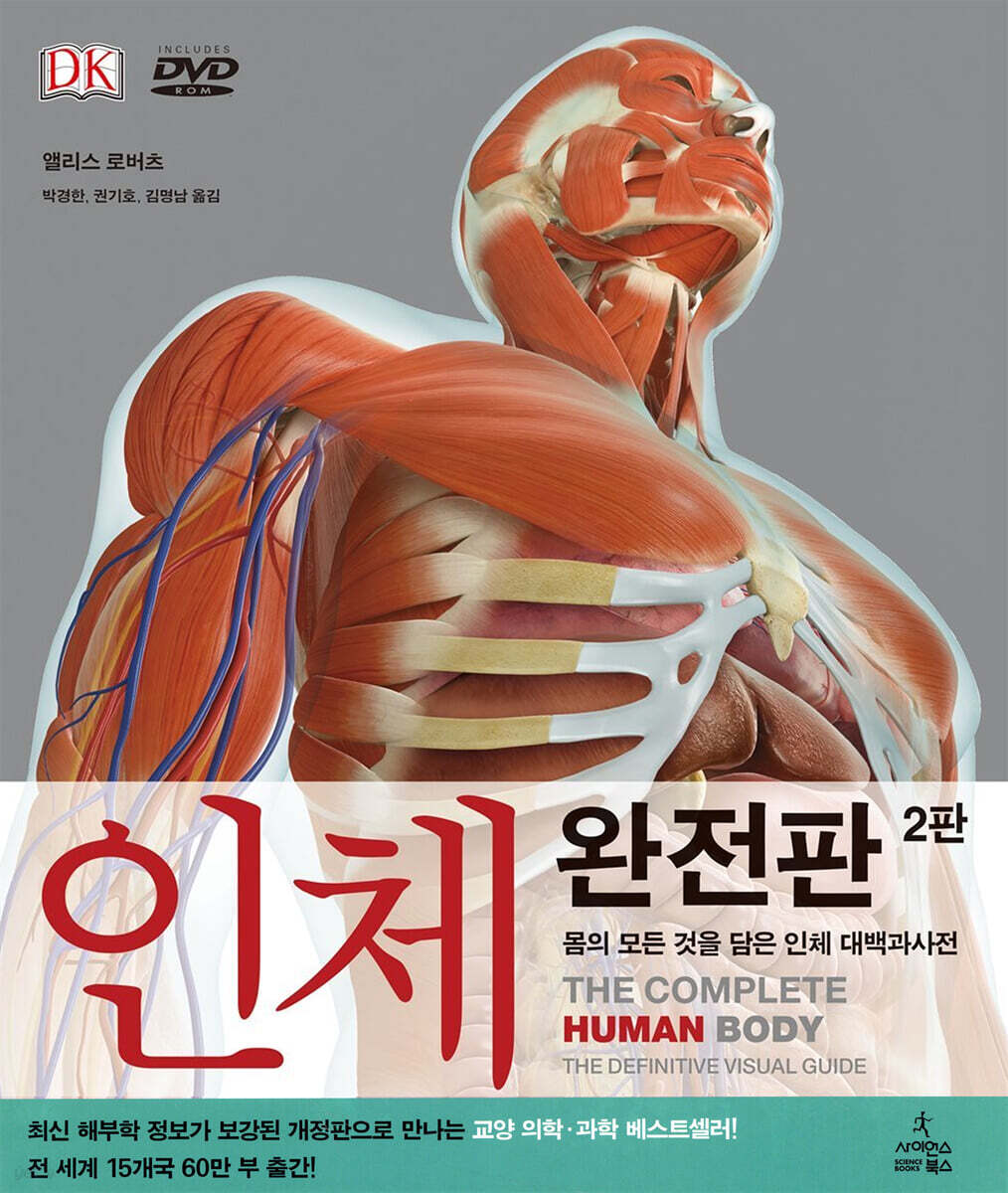
The second edition of the complete, more detailed human body book has been released.
The Human Body: The Discovery of a Great Microcosm
『Complete Human Body』(2nd edition) published by Science Books Co., Ltd. is a true 'complete human body' with supplemented contents from the DK Encyclopedia series 『Complete Human Body』, which was first translated and introduced in Korea in 2012.
This expanded edition not only includes updated information on the latest medical information, but also increases the original text (512 pages) by a total of 16 pages.
The newly added pages on surface anatomy, including those on finger bones and knee joints, are particularly noteworthy.
This book, created through the hands of domestic and international experts, delivers accurate, comprehensive, and up-to-date information in an intuitive manner.
This book, consisting of five parts, provides a glimpse into the great exploration of the human body, starting from the development of cells and the origins of mankind. It also includes a DVD-Rom that carefully selects illustrations of the human body, which are rich in colorful information, to help readers gradually understand the contents of the book.
As a general textbook on human anatomy and medicine, it contains literally every piece of information about the human body, from anatomy to psychology, development to disease, and birth to death, all contained within thousands of 3-D illustrations and scientific photographs.
State-of-the-art medical imaging, powered by X-rays, computed tomography (CT), magnetic resonance imaging (MRI), and electron microscopes, will take readers into the microcosm of the perfectly harmonious human body.
The Human Body: The Discovery of a Great Microcosm
『Complete Human Body』(2nd edition) published by Science Books Co., Ltd. is a true 'complete human body' with supplemented contents from the DK Encyclopedia series 『Complete Human Body』, which was first translated and introduced in Korea in 2012.
This expanded edition not only includes updated information on the latest medical information, but also increases the original text (512 pages) by a total of 16 pages.
The newly added pages on surface anatomy, including those on finger bones and knee joints, are particularly noteworthy.
This book, created through the hands of domestic and international experts, delivers accurate, comprehensive, and up-to-date information in an intuitive manner.
This book, consisting of five parts, provides a glimpse into the great exploration of the human body, starting from the development of cells and the origins of mankind. It also includes a DVD-Rom that carefully selects illustrations of the human body, which are rich in colorful information, to help readers gradually understand the contents of the book.
As a general textbook on human anatomy and medicine, it contains literally every piece of information about the human body, from anatomy to psychology, development to disease, and birth to death, all contained within thousands of 3-D illustrations and scientific photographs.
State-of-the-art medical imaging, powered by X-rays, computed tomography (CT), magnetic resonance imaging (MRI), and electron microscopes, will take readers into the microcosm of the perfectly harmonious human body.
index
integrated body
012 Human Evolution
014 Human Ancestors
016 The Laws of Human Genetics
020 cells
022 Cells and Tissues
024 Composition of the human body
026 Human Body Systems
Anatomy
030 Anatomical Terminology
036 Human Body Systems
038 Skin, hair, and nails
040 Skeletal system
050 Muscular system
060 Nervous system
066 Respiratory system
068 Cardiovascular System
074 Lymphatic and Immune Systems
078 Digestive System
080 Urinary system
082 Reproductive System
084 Endocrine System
086 Surface Anatomy
088 Anatomy Walk
090 Head and Neck
138 chest
170 times and pelvis
200 Shoulder and Upper Arm
228 Forearm and Hand
244 Hips and thighs
272 Calves and Feet
How the human body works
290 Skin, hair, and nails
296 Musculoskeletal System
298 Moving Skeleton
300 bones
302 joints
304 How Muscles Work
306 Muscle Mechanics
308 Nervous System
310 The structure of the human body's communication network
312 neurons
314 Command Transmission
316 Brain and Spinal Cord
318 Function of the central nervous system
320 Memory and Emotion
322 Movement Principle
324 The Principle of Sense
326 hours
330 Hearing and Balance
332 Taste and Smell
334 Tactile
336 Respiratory system
338 Inhalation and exhalation
340 Exchange of oxygen and carbon dioxide
342 The Principle of Breathing
344 Involuntary breathing
346 Cardiovascular System
348 blood
350 heartbeats
352 Heart Control
354 blood vessels
356 Lymphatic and Immune Systems
358 Lymphatic System
360 Innate Immunity
362 Acquired immunity
364 Digestive System
366 Mouth and throat
368th place
370 Small intestine
372 liver
374 Large Intestine
376 Nutrition and Metabolism
378 Urinary System
380 Kidney Function
382 Bladder Control
384 Reproductive System
386 Male reproductive system
388 Female Reproductive System
390 Creation of Life
392 Pregnant woman's body
394 Labor and Delivery
396 Endocrine System
398 Hormone Action
400 Pituitary Gland
402 Hormone Production
life cycle
408 The Journey of Life
410 Genetics
412 Embryonic Development
414 Fetal Development
418 newborns
420 Childhood
422 Adolescence and Puberty
424 Adulthood and Old Age
426 End of Life
Diseases and Disabilities
430 genetic diseases
432 cancer
434 Infectious Diseases
436 Skin, hair, and nail diseases
440 Bone and Joint Diseases
444 Muscle, Tendon, and Ligament Diseases
446 Back, neck, and shoulder problems
448 Limb joint diseases
450 Cerebrovascular Disease
452 Brain and Spinal Cord Diseases
454 General nervous system diseases
455 Nervous system infections
456 Mental Health Disorders
458 Ear Diseases
460 Eye Diseases
462 Respiratory diseases
466 Cardiovascular disease
470 Peripheral vascular disease
472 Blood Diseases
474 Allergies and Autoimmune Diseases
476 Upper digestive tract diseases
478 Lower digestive tract diseases
480 Diseases of the liver, gallbladder, and pancreas
482 Kidney and Urinary Diseases
484 Female reproductive system diseases
486 Male reproductive system diseases
488 Sexually Transmitted Infections
490 Infertility
492 Pregnancy and Childbirth Diseases
494 Endocrine Diseases
498 Glossary of Terms
506 Search
527 Copyright
528 Translator's Note
012 Human Evolution
014 Human Ancestors
016 The Laws of Human Genetics
020 cells
022 Cells and Tissues
024 Composition of the human body
026 Human Body Systems
Anatomy
030 Anatomical Terminology
036 Human Body Systems
038 Skin, hair, and nails
040 Skeletal system
050 Muscular system
060 Nervous system
066 Respiratory system
068 Cardiovascular System
074 Lymphatic and Immune Systems
078 Digestive System
080 Urinary system
082 Reproductive System
084 Endocrine System
086 Surface Anatomy
088 Anatomy Walk
090 Head and Neck
138 chest
170 times and pelvis
200 Shoulder and Upper Arm
228 Forearm and Hand
244 Hips and thighs
272 Calves and Feet
How the human body works
290 Skin, hair, and nails
296 Musculoskeletal System
298 Moving Skeleton
300 bones
302 joints
304 How Muscles Work
306 Muscle Mechanics
308 Nervous System
310 The structure of the human body's communication network
312 neurons
314 Command Transmission
316 Brain and Spinal Cord
318 Function of the central nervous system
320 Memory and Emotion
322 Movement Principle
324 The Principle of Sense
326 hours
330 Hearing and Balance
332 Taste and Smell
334 Tactile
336 Respiratory system
338 Inhalation and exhalation
340 Exchange of oxygen and carbon dioxide
342 The Principle of Breathing
344 Involuntary breathing
346 Cardiovascular System
348 blood
350 heartbeats
352 Heart Control
354 blood vessels
356 Lymphatic and Immune Systems
358 Lymphatic System
360 Innate Immunity
362 Acquired immunity
364 Digestive System
366 Mouth and throat
368th place
370 Small intestine
372 liver
374 Large Intestine
376 Nutrition and Metabolism
378 Urinary System
380 Kidney Function
382 Bladder Control
384 Reproductive System
386 Male reproductive system
388 Female Reproductive System
390 Creation of Life
392 Pregnant woman's body
394 Labor and Delivery
396 Endocrine System
398 Hormone Action
400 Pituitary Gland
402 Hormone Production
life cycle
408 The Journey of Life
410 Genetics
412 Embryonic Development
414 Fetal Development
418 newborns
420 Childhood
422 Adolescence and Puberty
424 Adulthood and Old Age
426 End of Life
Diseases and Disabilities
430 genetic diseases
432 cancer
434 Infectious Diseases
436 Skin, hair, and nail diseases
440 Bone and Joint Diseases
444 Muscle, Tendon, and Ligament Diseases
446 Back, neck, and shoulder problems
448 Limb joint diseases
450 Cerebrovascular Disease
452 Brain and Spinal Cord Diseases
454 General nervous system diseases
455 Nervous system infections
456 Mental Health Disorders
458 Ear Diseases
460 Eye Diseases
462 Respiratory diseases
466 Cardiovascular disease
470 Peripheral vascular disease
472 Blood Diseases
474 Allergies and Autoimmune Diseases
476 Upper digestive tract diseases
478 Lower digestive tract diseases
480 Diseases of the liver, gallbladder, and pancreas
482 Kidney and Urinary Diseases
484 Female reproductive system diseases
486 Male reproductive system diseases
488 Sexually Transmitted Infections
490 Infertility
492 Pregnancy and Childbirth Diseases
494 Endocrine Diseases
498 Glossary of Terms
506 Search
527 Copyright
528 Translator's Note
Detailed image
Publisher's Review
75 trillion cells, 200 bones, over 600 muscles,
Exploring the wondrous human body, with its 150,000 kilometers of blood vessels.
The history of human research is indeed long.
The Edwin Smith Papyrus, created around 1600 BC, is the oldest medical text.
This old text serves as a kind of surgical textbook, listing various types of pain and their treatments.
Although not a recommended treatment today, this papyrus tells us that the ancient Egyptians had some knowledge of the internal structure of the human body.
They knew about the brain, heart, liver, and kidneys.
Of course, I didn't know how these organs functioned.
Historically, the acquisition of knowledge about the structure of the human body has been related to anatomy.
The term 'anatomy' literally means 'to cut up'.
In any case, when we try to figure out how a machine works, it doesn't help much to just look at its exterior or imagine what's inside it.
I remember doing a physics lab when I was in school.
Then we had to figure out how the toaster worked.
We took it apart and figured it out.
But I have to admit that putting it back together was a real pain. (So it's a good thing I ended up becoming an anatomist and not a surgeon.) Most medical schools still have dissection rooms, where medical students can learn about the structure of the human body in a practical, hands-on way.
Being able to learn in this way is a tremendous privilege, and is entirely thanks to the generosity of those who have donated their bodies to medicine.
In addition to dissection labs, new technologies such as X-rays, computed tomography (CT), magnetic resonance imaging (MRI), and electron microscopy now allow us to examine the human body's structures in incredible detail.
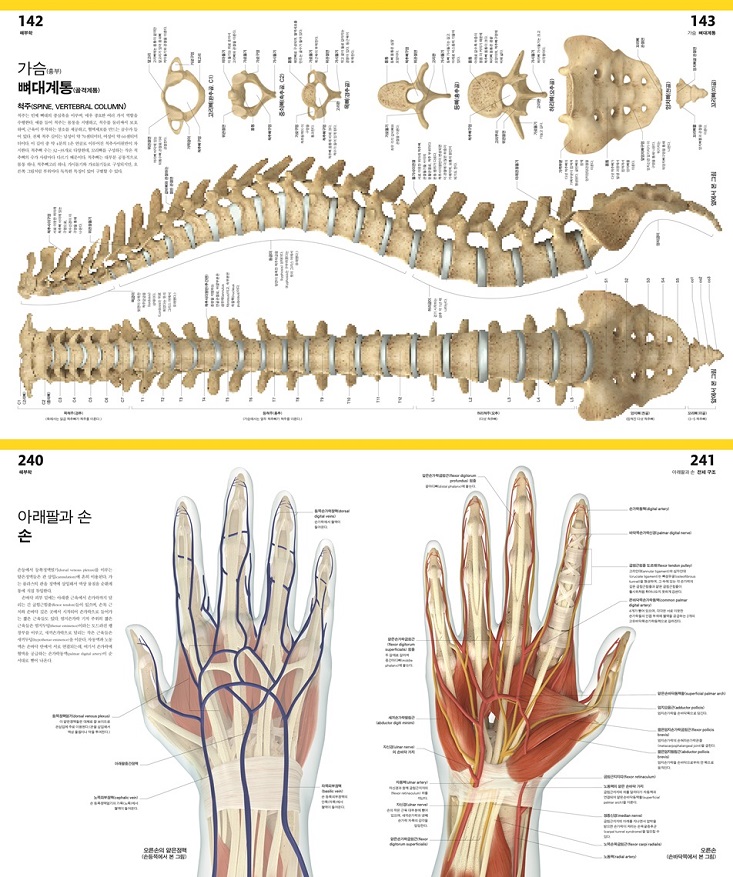
The first part of this book is an illustrated guide to human anatomy.
The human body is like a very complex jigsaw puzzle, with organs tightly packed into their respective places.
Nerves and blood vessels intertwine with each other, branching into organs or penetrating muscles.
It can be very difficult to understand how all these elements are organized.
But great anatomical illustrators can distill it down to its essentials and show structures you'll never see in a physical anatomy lab: bones, muscles, blood vessels, nerves, and organs.
Of course, this is not a lifeless statue, but a working device.
The function of the human body is the main topic of the second part of this book.
Focusing on physiology, we explain how the human body is structured, how it works, and when and what problems arise.
In the final part, we look at some of the problems that can interfere with the smooth functioning of our bodies.
This book, which is somewhat like an 'instruction manual', will be of interest to anyone, regardless of age or gender, who 'inhabits' the human body.
Professor Alice Roberts
A perfect microcosm, showing the harmony of the human body
The full-scale exploration of the human body, which began on a grand journey back to the ancestors of mankind, fully reveals the uniqueness of the 'human body'.
A Beautiful and Wonderful Introduction to Anatomy
The structure of the human body, which is like a complex puzzle, was dissected in detail.
Discover the most comprehensive anatomy dictionary, offering a vivid look into every nook and cranny of our bodies, with colorful visual aids that perfectly illustrate bone, muscle, and nerve structures.
A masterpiece that fundamentally explores the workings of the human body
Focus on physiology, examining how the human body is structured and functions.
It helps us explore the functions of our body, including eating, breathing, thinking, and moving, by examining each system that makes up the human body in detail.
A look into the human body's development from birth to death.
It allows us to examine each stage of life in detail, from the moment of birth to childhood, adolescence, adulthood, old age, and death.
Why do humans get sick?
We encounter the human body as a complex structure vulnerable to disease.
It introduces and explains about 200 major diseases and disorders, including when, how, and what problems arise in our bodies.
Exploring the wondrous human body, with its 150,000 kilometers of blood vessels.
The history of human research is indeed long.
The Edwin Smith Papyrus, created around 1600 BC, is the oldest medical text.
This old text serves as a kind of surgical textbook, listing various types of pain and their treatments.
Although not a recommended treatment today, this papyrus tells us that the ancient Egyptians had some knowledge of the internal structure of the human body.
They knew about the brain, heart, liver, and kidneys.
Of course, I didn't know how these organs functioned.
Historically, the acquisition of knowledge about the structure of the human body has been related to anatomy.
The term 'anatomy' literally means 'to cut up'.
In any case, when we try to figure out how a machine works, it doesn't help much to just look at its exterior or imagine what's inside it.
I remember doing a physics lab when I was in school.
Then we had to figure out how the toaster worked.
We took it apart and figured it out.
But I have to admit that putting it back together was a real pain. (So it's a good thing I ended up becoming an anatomist and not a surgeon.) Most medical schools still have dissection rooms, where medical students can learn about the structure of the human body in a practical, hands-on way.
Being able to learn in this way is a tremendous privilege, and is entirely thanks to the generosity of those who have donated their bodies to medicine.
In addition to dissection labs, new technologies such as X-rays, computed tomography (CT), magnetic resonance imaging (MRI), and electron microscopy now allow us to examine the human body's structures in incredible detail.
The first part of this book is an illustrated guide to human anatomy.
The human body is like a very complex jigsaw puzzle, with organs tightly packed into their respective places.
Nerves and blood vessels intertwine with each other, branching into organs or penetrating muscles.
It can be very difficult to understand how all these elements are organized.
But great anatomical illustrators can distill it down to its essentials and show structures you'll never see in a physical anatomy lab: bones, muscles, blood vessels, nerves, and organs.
Of course, this is not a lifeless statue, but a working device.
The function of the human body is the main topic of the second part of this book.
Focusing on physiology, we explain how the human body is structured, how it works, and when and what problems arise.
In the final part, we look at some of the problems that can interfere with the smooth functioning of our bodies.
This book, which is somewhat like an 'instruction manual', will be of interest to anyone, regardless of age or gender, who 'inhabits' the human body.
Professor Alice Roberts
A perfect microcosm, showing the harmony of the human body
The full-scale exploration of the human body, which began on a grand journey back to the ancestors of mankind, fully reveals the uniqueness of the 'human body'.
A Beautiful and Wonderful Introduction to Anatomy
The structure of the human body, which is like a complex puzzle, was dissected in detail.
Discover the most comprehensive anatomy dictionary, offering a vivid look into every nook and cranny of our bodies, with colorful visual aids that perfectly illustrate bone, muscle, and nerve structures.
A masterpiece that fundamentally explores the workings of the human body
Focus on physiology, examining how the human body is structured and functions.
It helps us explore the functions of our body, including eating, breathing, thinking, and moving, by examining each system that makes up the human body in detail.
A look into the human body's development from birth to death.
It allows us to examine each stage of life in detail, from the moment of birth to childhood, adolescence, adulthood, old age, and death.
Why do humans get sick?
We encounter the human body as a complex structure vulnerable to disease.
It introduces and explains about 200 major diseases and disorders, including when, how, and what problems arise in our bodies.
GOODS SPECIFICS
- Date of issue: July 31, 2017
- Page count, weight, size: 528 pages | 150*300*35mm
- ISBN13: 9788983718365
- ISBN10: 8983718366
You may also like
카테고리
korean


korean

![ELLE 엘르 스페셜 에디션 A형 : 12월 [2025]](http://librairie.coreenne.fr/cdn/shop/files/b8e27a3de6c9538896439686c6b0e8fb.jpg?v=1766436872&width=3840)


