

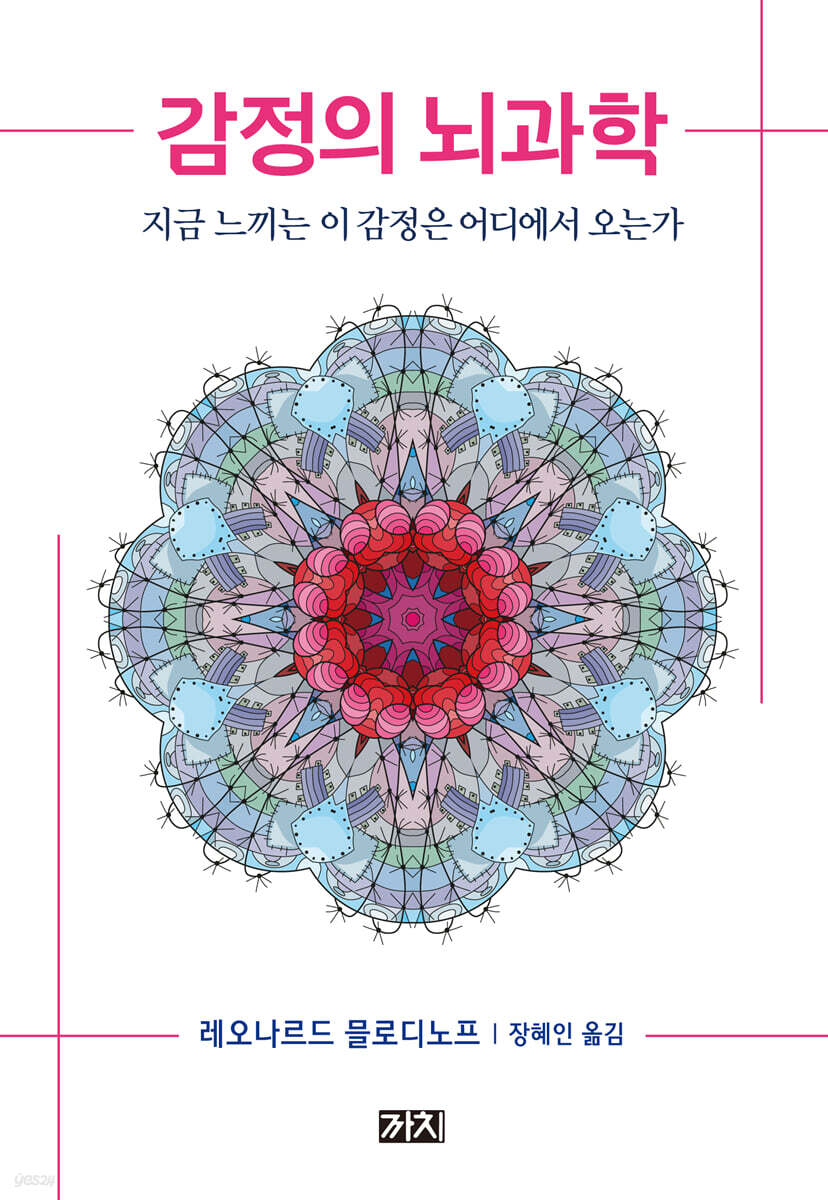
The Neuroscience of Emotion
 |
Description
Book Introduction
- A word from MD
- We have been taught that rational thinking is more important than emotions when making decisions, and that emotions are left out.
Emotions are not a hindrance to reason.
The author, a science writer, explores emotions through psychology and neuroscience, and argues that harnessing them can be the most helpful tool for making the best decisions.
- Hyunjae Ahn, PD of Natural Sciences
The only book you must read to understand the nature of emotions.
The Secret of Emotions from Bestselling Author Mlodinow
Most of us think there are five or six “basic” types of emotions.
Fear, anger, sadness, disgust, happiness, and surprise are these, and it has been thought that emotions are the result of two forces of the mind, the “cold” force and the “intense” force, competing with each other.
But just as Newton's laws of motion were replaced by quantum theory, so too is the theory of emotions.
As the ways of understanding the brain have evolved, a new field of psychology called “affective neuroscience” has emerged.
Today, scientists are focusing on dozens of emotions, including embarrassment, pride, other emotions, and even those previously considered impulses.
For example, the surprising finding was that depression is not a disease of a single emotion called “depression,” but a symptom composed of four different sub-emotions.
Only by properly understanding emotions like this can we make better judgments and decisions.
With a solid background as a scientist and impressive skills as a science writer, author Mlodinow brings the latest research on emotions to help you understand their nature and learn how to maximize their benefits.
As you follow the author's witty and lucid explanation of how emotions work, you'll gain surprising insights into them and ideas for how to make the most of them.
The Secret of Emotions from Bestselling Author Mlodinow
Most of us think there are five or six “basic” types of emotions.
Fear, anger, sadness, disgust, happiness, and surprise are these, and it has been thought that emotions are the result of two forces of the mind, the “cold” force and the “intense” force, competing with each other.
But just as Newton's laws of motion were replaced by quantum theory, so too is the theory of emotions.
As the ways of understanding the brain have evolved, a new field of psychology called “affective neuroscience” has emerged.
Today, scientists are focusing on dozens of emotions, including embarrassment, pride, other emotions, and even those previously considered impulses.
For example, the surprising finding was that depression is not a disease of a single emotion called “depression,” but a symptom composed of four different sub-emotions.
Only by properly understanding emotions like this can we make better judgments and decisions.
With a solid background as a scientist and impressive skills as a science writer, author Mlodinow brings the latest research on emotions to help you understand their nature and learn how to maximize their benefits.
As you follow the author's witty and lucid explanation of how emotions work, you'll gain surprising insights into them and ideas for how to make the most of them.
- You can preview some of the book's contents.
Preview
index
introduction
Part 1: What Are Emotions?
1.
Thoughts vs. Feelings
2.
The purpose of emotions
3.
The relationship between body and mind
Part 2: Pleasure, Motivation, Inspiration, and Determination
4.
How Emotions Drive Thought
5.
Where do feelings come from?
6.
Motivation: Wanting and liking
7.
decision
Part 3: Emotional Tendencies and Emotion Regulation
8.
emotional type
9.
Emotion Management
Epilogue
Acknowledgements
main
Translator's Note
Biographical Index
Part 1: What Are Emotions?
1.
Thoughts vs. Feelings
2.
The purpose of emotions
3.
The relationship between body and mind
Part 2: Pleasure, Motivation, Inspiration, and Determination
4.
How Emotions Drive Thought
5.
Where do feelings come from?
6.
Motivation: Wanting and liking
7.
decision
Part 3: Emotional Tendencies and Emotion Regulation
8.
emotional type
9.
Emotion Management
Epilogue
Acknowledgements
main
Translator's Note
Biographical Index
Detailed image
.jpg)
Publisher's Review
Identify and control the emotions that arise within me
How to Make Better Decisions
Until now, we have been taught that we should set aside emotions and use rational thinking when making decisions, and we have placed more importance on the thought processes that occur in the brain.
However, for better decisions and judgments, emotions are just as important as thought processes.
When faced with a situation that cannot be judged solely by rational thinking, the most important factor is emotion.
Especially in situations where decisions are complex, ambiguous, or require quick action, emotions are our guides, guiding us in the right direction.
But we know very little about the nature of emotions and how they work.
What exactly are emotions? Why do we have them? How do emotions arise in the brain? How do emotions influence our thoughts, judgments, motivations, and decisions? And how can we control them? This book addresses these very questions.
Armed with the latest scientific research, author Mlodinow presents new findings on emotions and presents compelling case studies to help readers maximize the benefits of emotions.
Emotions influence every decision, big or small, every moment, from what to wear before going out to how to invest for retirement.
Without emotions we would be lost.
This book will serve as a useful guide to help you leverage your emotions to make the best decisions.
Key Contents
Part 1: What Are Emotions? explores how and why emotions evolved.
Understanding how emotions play a role in our basic survival plan can help us understand how we react to situations, why we react with anxiety or anger, love or hate, happiness or sadness, and why we sometimes act inappropriately or lose control of our emotions.
We also look at the concept of “core emotions.”
A core emotion that influences all emotions without us even realizing it is a state of mind and body that affects not only how we feel in a specific situation, but also how we react to the situation and make decisions.
Core emotions are one of the reasons why significantly different emotional responses occur in the same situation.
Part 2, Pleasure, Motivation, Inspiration, and Decision-Making, examines the central role emotions play in human pleasure, motivation, inspiration, and decision-making.
Why, among two tasks of similar interest, difficulty, and importance, does one seem difficult to accomplish while the other seems easy? What influences our desire to achieve a goal? Why do some people exert tremendous effort in similar situations while others quickly give up? Why do some people push ahead with a task while others quit midway? By asking these questions, we can concretely examine how emotions influence us.
Emotions help us respond flexibly to our physical state and environment, and motivate our behavior through wants, likes, and reward systems.
Emotions help us connect and collaborate with one another, expanding our horizons and pushing us to new heights.
Reason and emotion work together to shape most of our thoughts.
Part 3, Emotional Tendencies and Emotion Regulation, examines emotional types and emotion regulation.
We are good at expressing some emotions, but reluctant to reveal others.
Scientists have developed a questionnaire that allows people to rate themselves on several key emotions.
Chapter 8 introduces some of these to help you identify your own emotional type.
Chapter 9 explores the rapidly growing field of "emotion regulation," a long-proven emotion management strategy that has recently been validated by rigorous scientific research.
Once you understand where your feelings come from, you can examine how to deal with them and why some people have more difficulty regulating their emotions than others.
Emotions are one of the psychological tools of humans, but they vary from person to person.
Some people feel a lot of fear, while others feel less fear.
The same goes for happiness and other emotions.
Emotions arise for a reason and are usually beneficial, but in our modern society, they can sometimes be counterproductive.
The theme of this book is to recognize and value your emotions and to know your own unique emotional type.
Once you become aware of your emotions, you can manage them and direct them in a way that benefits you.
How to Make Better Decisions
Until now, we have been taught that we should set aside emotions and use rational thinking when making decisions, and we have placed more importance on the thought processes that occur in the brain.
However, for better decisions and judgments, emotions are just as important as thought processes.
When faced with a situation that cannot be judged solely by rational thinking, the most important factor is emotion.
Especially in situations where decisions are complex, ambiguous, or require quick action, emotions are our guides, guiding us in the right direction.
But we know very little about the nature of emotions and how they work.
What exactly are emotions? Why do we have them? How do emotions arise in the brain? How do emotions influence our thoughts, judgments, motivations, and decisions? And how can we control them? This book addresses these very questions.
Armed with the latest scientific research, author Mlodinow presents new findings on emotions and presents compelling case studies to help readers maximize the benefits of emotions.
Emotions influence every decision, big or small, every moment, from what to wear before going out to how to invest for retirement.
Without emotions we would be lost.
This book will serve as a useful guide to help you leverage your emotions to make the best decisions.
Key Contents
Part 1: What Are Emotions? explores how and why emotions evolved.
Understanding how emotions play a role in our basic survival plan can help us understand how we react to situations, why we react with anxiety or anger, love or hate, happiness or sadness, and why we sometimes act inappropriately or lose control of our emotions.
We also look at the concept of “core emotions.”
A core emotion that influences all emotions without us even realizing it is a state of mind and body that affects not only how we feel in a specific situation, but also how we react to the situation and make decisions.
Core emotions are one of the reasons why significantly different emotional responses occur in the same situation.
Part 2, Pleasure, Motivation, Inspiration, and Decision-Making, examines the central role emotions play in human pleasure, motivation, inspiration, and decision-making.
Why, among two tasks of similar interest, difficulty, and importance, does one seem difficult to accomplish while the other seems easy? What influences our desire to achieve a goal? Why do some people exert tremendous effort in similar situations while others quickly give up? Why do some people push ahead with a task while others quit midway? By asking these questions, we can concretely examine how emotions influence us.
Emotions help us respond flexibly to our physical state and environment, and motivate our behavior through wants, likes, and reward systems.
Emotions help us connect and collaborate with one another, expanding our horizons and pushing us to new heights.
Reason and emotion work together to shape most of our thoughts.
Part 3, Emotional Tendencies and Emotion Regulation, examines emotional types and emotion regulation.
We are good at expressing some emotions, but reluctant to reveal others.
Scientists have developed a questionnaire that allows people to rate themselves on several key emotions.
Chapter 8 introduces some of these to help you identify your own emotional type.
Chapter 9 explores the rapidly growing field of "emotion regulation," a long-proven emotion management strategy that has recently been validated by rigorous scientific research.
Once you understand where your feelings come from, you can examine how to deal with them and why some people have more difficulty regulating their emotions than others.
Emotions are one of the psychological tools of humans, but they vary from person to person.
Some people feel a lot of fear, while others feel less fear.
The same goes for happiness and other emotions.
Emotions arise for a reason and are usually beneficial, but in our modern society, they can sometimes be counterproductive.
The theme of this book is to recognize and value your emotions and to know your own unique emotional type.
Once you become aware of your emotions, you can manage them and direct them in a way that benefits you.
GOODS SPECIFICS
- Publication date: October 14, 2022
- Page count, weight, size: 312 pages | 432g | 145*210*20mm
- ISBN13: 9788972917823
- ISBN10: 8972917826
You may also like
카테고리
korean


korean

![ELLE 엘르 스페셜 에디션 A형 : 12월 [2025]](http://librairie.coreenne.fr/cdn/shop/files/b8e27a3de6c9538896439686c6b0e8fb.jpg?v=1766436872&width=3840)


