

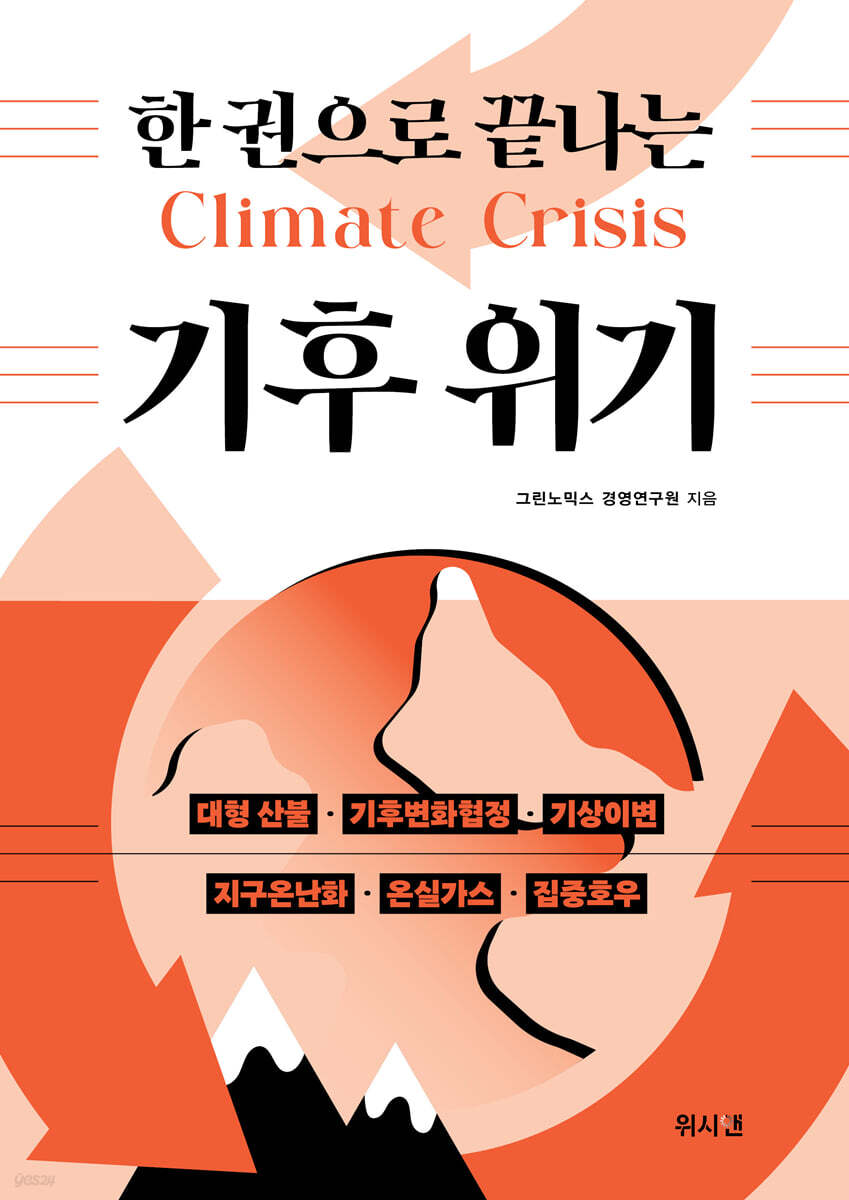
Climate Crisis in One Volume
 |
Description
Book Introduction
The first story in the environmental education series, a one-volume guide to understanding the climate crisis.
Currently, the entire world, including our country, is entering an era of global tropicalization beyond global warming.
If we don't stop using fossil fuels, we won't be able to overcome the climate crisis, making survival difficult. However, fossil fuels are so deeply ingrained in our lives that even daily life would be impossible without them.
So, is there no way to save the Earth, wrecked by the climate crisis? This book provides a comprehensive and systematic overview of the climate crisis, from the causes and effects of extreme weather events to measures to overcome the crisis, including the Climate Change Convention.
Currently, the entire world, including our country, is entering an era of global tropicalization beyond global warming.
If we don't stop using fossil fuels, we won't be able to overcome the climate crisis, making survival difficult. However, fossil fuels are so deeply ingrained in our lives that even daily life would be impossible without them.
So, is there no way to save the Earth, wrecked by the climate crisis? This book provides a comprehensive and systematic overview of the climate crisis, from the causes and effects of extreme weather events to measures to overcome the crisis, including the Climate Change Convention.
- You can preview some of the book's contents.
Preview
index
Recommendation
preface
Chapter 1: Climate Change-induced Abnormal Weather
Section 1.
Rapidly changing global environment
1.
A newly created world map
2.
Entering an era of global tropicalization, not global warming
3.
Climate change is a struggle for Earth's survival.
4.
Causes of abnormal weather
5.
Developing solutions to global environmental problems
6.
Davos Forum's Global Crisis Report
7.
8 Reasons Why the Global Economy Is Drowning in Uncertainty
Section 2.
extreme weather events
1.
Extreme weather events are becoming more common in Australia.
2.
Large forest fires occur
3.
Large-scale forest fires in our country
4.
severe drought and wildfires
5.
Measures against large-scale forest fires
6.
Yellow dust winds and sandstorms
7.
Marine ecosystems facing crises due to marine heatwaves and marine pollution
Section 3.
Increasingly severe weather disasters
1.
earthquake causing many casualties
2.
Typhoons getting stronger
3.
The Korean Peninsula is experiencing torrential downpours
4.
Global warming in the Arctic and Antarctic Circles
5.
global warming in equatorial regions
6.
Global warming of Pacific low-lying islands
Section 4.
Changes in living environment due to climate change
1.
The devastating weather disasters that hit Africans
2.
Climate change transforming agricultural and fishery products
3.
Light and shadow due to rising sea levels
4.
Concerns about the lives of vulnerable populations and climate refugees
5.
Concerns about environmental crisis originating in China
6.
The rise of a new economic power in the Blue Arctic
7.
The anticipated new agricultural revolution of the 21st century
Let's think about the legend of Prometheus in Greek mythology.
Chapter 2 Global Warming
Section 1.
Excessive use of fossil fuels
1.
Fossil fuels, the main culprit of environmental destruction
2.
Energy slaves, humans addicted to energy
3.
Fossil fuel use is humanity's original sin.
4.
The Inconvenient Truth About Global Warming
6.
Earth Crisis Clock
7.
Prayer for Earth Hour
Section 2.
greenhouse gas emissions
1.
Greenhouse gas emissions trends
2.
What are greenhouse gases?
3.
Types of greenhouse gases
4.
Greenhouse gas emissions in our country
5.
The impact of solar energy on global warming
6.
Why we need to address global warming urgently
7.
Carbon is an element that makes up the Earth.
8.
The dawn of the 21st century carbon era
Section 3.
Causes and Countermeasures of Global Warming
1. Establishing measures to curb carbon emissions at COP 28
2.
Discussion on the Water, Energy, Food Nexus (NEXUS)
3.
Water resource management measures for Korea, a water-scarce country
4.
The severe food crisis in the Horn of Africa
5.
Incidents caused by blind trust in science and technology
6.
The Environmental Science Institute, which diagnoses the global environment
7.
The serious state of Earth's health
Let's consider the dangers of blind faith in science and technology.
Chapter 3: Climate Change Convention: Overcoming the Climate Crisis
Section 1.
Climate change agreement with participation from all countries around the world
1.
The start of the climate change agreement
2.
Stockholm Declaration on the Human Environment
3.
Climate change agreement launched by the Rio Declaration in Brazil
4.
Adoption of the UN Framework Convention on Climate Change
5.
The Kyoto Protocol, which laid the foundation for reducing greenhouse gases
6.
Discussion of the 'post-2012' system
7.
The start of a new climate change regime
8.
Developing a plan to implement the UN's greenhouse gas reduction goals
Section 2.
IPCC report that led to the climate change agreement
1.
Establishment of the Intergovernmental Panel on Climate Change (IPCC)
2.
The Third Assessment Report Reveals the Link Between Climate Change and Human Health
3.
Introducing a carbon budget system to address the tipping point.
4.
Climate change report raises concerns about tipping points
5.
Special Report on Global Warming of 1.5°C
6.
Developing measures to address climate change
Section 3.
Current challenges facing the Climate Change Convention
1.
Chicken Game on Climate Justice
2. EU way or American way?
3.
Discussion on the paradox of coronavirus
4.
Glasgow Conference of the Parties (COP26) proposed an international methane pledge.
5.
Our country's methane reduction plan
6.
Regulation of freon gases that destroy the ozone layer
7.
10 Ways to Tackle Climate Change
Section 4.
Adaptation strategies for climate change
1. Climate change adaptation strategies of EU countries
2.
Strengthening Korea's Climate Crisis Adaptation Measures
3.
Climate litigation that changes the world
4.
Environmental maps that determine environmental policy
5.
Blue Economy: A Protecting the Marine Environment
6.
When the cultured meat market opens in 2025
Let's think about the miracle of Apollo 13.
preface
Chapter 1: Climate Change-induced Abnormal Weather
Section 1.
Rapidly changing global environment
1.
A newly created world map
2.
Entering an era of global tropicalization, not global warming
3.
Climate change is a struggle for Earth's survival.
4.
Causes of abnormal weather
5.
Developing solutions to global environmental problems
6.
Davos Forum's Global Crisis Report
7.
8 Reasons Why the Global Economy Is Drowning in Uncertainty
Section 2.
extreme weather events
1.
Extreme weather events are becoming more common in Australia.
2.
Large forest fires occur
3.
Large-scale forest fires in our country
4.
severe drought and wildfires
5.
Measures against large-scale forest fires
6.
Yellow dust winds and sandstorms
7.
Marine ecosystems facing crises due to marine heatwaves and marine pollution
Section 3.
Increasingly severe weather disasters
1.
earthquake causing many casualties
2.
Typhoons getting stronger
3.
The Korean Peninsula is experiencing torrential downpours
4.
Global warming in the Arctic and Antarctic Circles
5.
global warming in equatorial regions
6.
Global warming of Pacific low-lying islands
Section 4.
Changes in living environment due to climate change
1.
The devastating weather disasters that hit Africans
2.
Climate change transforming agricultural and fishery products
3.
Light and shadow due to rising sea levels
4.
Concerns about the lives of vulnerable populations and climate refugees
5.
Concerns about environmental crisis originating in China
6.
The rise of a new economic power in the Blue Arctic
7.
The anticipated new agricultural revolution of the 21st century
Let's think about the legend of Prometheus in Greek mythology.
Chapter 2 Global Warming
Section 1.
Excessive use of fossil fuels
1.
Fossil fuels, the main culprit of environmental destruction
2.
Energy slaves, humans addicted to energy
3.
Fossil fuel use is humanity's original sin.
4.
The Inconvenient Truth About Global Warming
6.
Earth Crisis Clock
7.
Prayer for Earth Hour
Section 2.
greenhouse gas emissions
1.
Greenhouse gas emissions trends
2.
What are greenhouse gases?
3.
Types of greenhouse gases
4.
Greenhouse gas emissions in our country
5.
The impact of solar energy on global warming
6.
Why we need to address global warming urgently
7.
Carbon is an element that makes up the Earth.
8.
The dawn of the 21st century carbon era
Section 3.
Causes and Countermeasures of Global Warming
1. Establishing measures to curb carbon emissions at COP 28
2.
Discussion on the Water, Energy, Food Nexus (NEXUS)
3.
Water resource management measures for Korea, a water-scarce country
4.
The severe food crisis in the Horn of Africa
5.
Incidents caused by blind trust in science and technology
6.
The Environmental Science Institute, which diagnoses the global environment
7.
The serious state of Earth's health
Let's consider the dangers of blind faith in science and technology.
Chapter 3: Climate Change Convention: Overcoming the Climate Crisis
Section 1.
Climate change agreement with participation from all countries around the world
1.
The start of the climate change agreement
2.
Stockholm Declaration on the Human Environment
3.
Climate change agreement launched by the Rio Declaration in Brazil
4.
Adoption of the UN Framework Convention on Climate Change
5.
The Kyoto Protocol, which laid the foundation for reducing greenhouse gases
6.
Discussion of the 'post-2012' system
7.
The start of a new climate change regime
8.
Developing a plan to implement the UN's greenhouse gas reduction goals
Section 2.
IPCC report that led to the climate change agreement
1.
Establishment of the Intergovernmental Panel on Climate Change (IPCC)
2.
The Third Assessment Report Reveals the Link Between Climate Change and Human Health
3.
Introducing a carbon budget system to address the tipping point.
4.
Climate change report raises concerns about tipping points
5.
Special Report on Global Warming of 1.5°C
6.
Developing measures to address climate change
Section 3.
Current challenges facing the Climate Change Convention
1.
Chicken Game on Climate Justice
2. EU way or American way?
3.
Discussion on the paradox of coronavirus
4.
Glasgow Conference of the Parties (COP26) proposed an international methane pledge.
5.
Our country's methane reduction plan
6.
Regulation of freon gases that destroy the ozone layer
7.
10 Ways to Tackle Climate Change
Section 4.
Adaptation strategies for climate change
1. Climate change adaptation strategies of EU countries
2.
Strengthening Korea's Climate Crisis Adaptation Measures
3.
Climate litigation that changes the world
4.
Environmental maps that determine environmental policy
5.
Blue Economy: A Protecting the Marine Environment
6.
When the cultured meat market opens in 2025
Let's think about the miracle of Apollo 13.
Into the book
Until recently, academics believed that only volcanoes or nuclear explosions could push smoke into the stratosphere high enough to disrupt the cooling process.
However, when large-scale wildfires meet the right weather conditions, they can create massive thunderstorms mixed with dust, raising concerns about flood damage.
Thunderstorms darken the sky, produce erratic winds and tornadoes, and send huge plumes of wildfire smoke 8 to 14 kilometers above the ground.
The 'fire cumulonimbus' that occurs at this time is called a thunderstorm, and these thunderstorms release fine particles that can travel thousands of miles, so the damage from weather is bound to be great.
This kind of global warming is causing extreme weather events, threatening the lives of people all over the world, as if the butterfly's flapping of its wings is having a butterfly effect on climate change and causing a huge aftershock.
We can no longer just watch the Earth's environment as it descends into tropicalization.
Global warming is caused by human activity using fossil fuels, so shouldn't humanity take responsibility for this and restore the Earth's environment so that we can pass on a peaceful life to our descendants?
--- p.56~57
At the 26th UN Climate Change Conference of the Parties (COP26) Extraordinary Summit held in the UK in November 2021, former British Prime Minister Boris Johnson, who was the president of the Parties, emphasized that “humanity is running out of time to respond to climate change too quickly. The Doomsday Clock is at one minute to midnight, and we must act now.”
And to combat the climate crisis, world leaders discussed specific implementation methods to limit the increase in the Earth's average temperature to 1.5 degrees Celsius compared to pre-industrial levels and pledged to successfully pursue 'carbon neutrality by 2050.'
… 1.5 degrees of global warming represents the Maginot Line that we must adhere to to prevent climate disaster, and this is regularly updated annually based on various data from the Intergovernmental Panel on Climate Change (IPCC).
In Korea, a climate crisis clock was installed on the rooftop of Herald Square in Yongsan-gu, Seoul, becoming the third in the world, following Berlin, Germany in 2019 and New York, USA in 2020.
The Climate Crisis Clock currently stands at 6 years and 205 days, running 365 days a year, reminding citizens that the climate crisis is not a distant future issue, but a present one that we face right now.
In other words, the climate crisis clock has a time frame of about six years, and maximum measures must be taken to keep global warming below the threshold before the end of 2028 to ensure the sustainability of the Earth's ecosystem.
--- p.171~172
In fact, it is impossible to prevent climate change from its source, so strategies to mitigate its impacts are required.
In the case of global warming, since carbon emissions are the cause, it is not a problem of just one country, but a global problem.
Additionally, the impacts of climate change can spread endlessly like a butterfly effect, raising the question of including all indirect impacts.
Therefore, the measures should be divided into national and regional measures and prepared accordingly.
Such climate change mitigation strategies must seek ways to minimize post-event damage whenever possible.
Addressing the impacts of climate change caused by greenhouse gases already emitted requires a global effort.
At the individual country level, risk management must encompass both the primary impacts of climate change and its associated weather changes, natural disasters, and sea-level rise, as well as the secondary impacts that arise as a result.
In 2010, our country established its first national adaptation plan, the ‘National Climate Crisis Adaptation Plan.’
In 2020, the 3rd National Climate Change Adaptation Plan (2021-2025) was established, and in March 2022, the Framework Act on Carbon Neutrality and Green Growth to respond to the climate crisis was implemented.
However, when large-scale wildfires meet the right weather conditions, they can create massive thunderstorms mixed with dust, raising concerns about flood damage.
Thunderstorms darken the sky, produce erratic winds and tornadoes, and send huge plumes of wildfire smoke 8 to 14 kilometers above the ground.
The 'fire cumulonimbus' that occurs at this time is called a thunderstorm, and these thunderstorms release fine particles that can travel thousands of miles, so the damage from weather is bound to be great.
This kind of global warming is causing extreme weather events, threatening the lives of people all over the world, as if the butterfly's flapping of its wings is having a butterfly effect on climate change and causing a huge aftershock.
We can no longer just watch the Earth's environment as it descends into tropicalization.
Global warming is caused by human activity using fossil fuels, so shouldn't humanity take responsibility for this and restore the Earth's environment so that we can pass on a peaceful life to our descendants?
--- p.56~57
At the 26th UN Climate Change Conference of the Parties (COP26) Extraordinary Summit held in the UK in November 2021, former British Prime Minister Boris Johnson, who was the president of the Parties, emphasized that “humanity is running out of time to respond to climate change too quickly. The Doomsday Clock is at one minute to midnight, and we must act now.”
And to combat the climate crisis, world leaders discussed specific implementation methods to limit the increase in the Earth's average temperature to 1.5 degrees Celsius compared to pre-industrial levels and pledged to successfully pursue 'carbon neutrality by 2050.'
… 1.5 degrees of global warming represents the Maginot Line that we must adhere to to prevent climate disaster, and this is regularly updated annually based on various data from the Intergovernmental Panel on Climate Change (IPCC).
In Korea, a climate crisis clock was installed on the rooftop of Herald Square in Yongsan-gu, Seoul, becoming the third in the world, following Berlin, Germany in 2019 and New York, USA in 2020.
The Climate Crisis Clock currently stands at 6 years and 205 days, running 365 days a year, reminding citizens that the climate crisis is not a distant future issue, but a present one that we face right now.
In other words, the climate crisis clock has a time frame of about six years, and maximum measures must be taken to keep global warming below the threshold before the end of 2028 to ensure the sustainability of the Earth's ecosystem.
--- p.171~172
In fact, it is impossible to prevent climate change from its source, so strategies to mitigate its impacts are required.
In the case of global warming, since carbon emissions are the cause, it is not a problem of just one country, but a global problem.
Additionally, the impacts of climate change can spread endlessly like a butterfly effect, raising the question of including all indirect impacts.
Therefore, the measures should be divided into national and regional measures and prepared accordingly.
Such climate change mitigation strategies must seek ways to minimize post-event damage whenever possible.
Addressing the impacts of climate change caused by greenhouse gases already emitted requires a global effort.
At the individual country level, risk management must encompass both the primary impacts of climate change and its associated weather changes, natural disasters, and sea-level rise, as well as the secondary impacts that arise as a result.
In 2010, our country established its first national adaptation plan, the ‘National Climate Crisis Adaptation Plan.’
In 2020, the 3rd National Climate Change Adaptation Plan (2021-2025) was established, and in March 2022, the Framework Act on Carbon Neutrality and Green Growth to respond to the climate crisis was implemented.
--- p.324~325
Publisher's Review
“The first story in the environmental education series, completed in one volume.”
An environmental guide that explains the climate crisis in an easy-to-understand way.
Our country is experiencing the climate crisis firsthand, with torrential downpours, droughts, and frequent wildfires.
It's not just our country.
Extreme weather events in Australia are becoming more common, global warming in the Arctic and Antarctic, and catastrophic weather disasters in Africa are creating climate refugees.
Meanwhile, global carbon emissions in 2022 reached a record high of 36.8 billion tons, up 0.9% from the previous year.
Although countries around the world have set carbon reduction targets and resolved to achieve them starting in 2020, they are still unable to escape the upward trend.
As we move beyond global warming and into the era of global tropicalization, is there no way to save the Earth from the wreckage of the climate crisis?
This book is a joint work of Dr. Wan-gyu Cho, former president of the Korean Society of Biological Sciences and the Korean Bioindustry Association, and Director Jong-seo Kim of the Greennomics Management Research Institute, which conducts environmental education. It is an environmental guidebook that organizes the 'climate crisis' in an easy-to-understand manner, from the causes and effects of climate change and other abnormal weather to measures to overcome the climate crisis, such as the Climate Change Convention.
Accuracy and objectivity are enhanced by including various materials such as tables, graphs, and photos, and the "Let's Think About It" corner at the end of each chapter provides a place to read interesting stories and think more deeply and reflect.
The term 'Anthropocene' refers to a geological change caused by human activities, meaning that such human activities as have been conducted up to now can no longer be tolerated.
As we approach the transition to the Anthropocene, this book will serve as the first step toward saving the Earth through carbon neutrality and ecological neutrality.
An environmental guide that explains the climate crisis in an easy-to-understand way.
Our country is experiencing the climate crisis firsthand, with torrential downpours, droughts, and frequent wildfires.
It's not just our country.
Extreme weather events in Australia are becoming more common, global warming in the Arctic and Antarctic, and catastrophic weather disasters in Africa are creating climate refugees.
Meanwhile, global carbon emissions in 2022 reached a record high of 36.8 billion tons, up 0.9% from the previous year.
Although countries around the world have set carbon reduction targets and resolved to achieve them starting in 2020, they are still unable to escape the upward trend.
As we move beyond global warming and into the era of global tropicalization, is there no way to save the Earth from the wreckage of the climate crisis?
This book is a joint work of Dr. Wan-gyu Cho, former president of the Korean Society of Biological Sciences and the Korean Bioindustry Association, and Director Jong-seo Kim of the Greennomics Management Research Institute, which conducts environmental education. It is an environmental guidebook that organizes the 'climate crisis' in an easy-to-understand manner, from the causes and effects of climate change and other abnormal weather to measures to overcome the climate crisis, such as the Climate Change Convention.
Accuracy and objectivity are enhanced by including various materials such as tables, graphs, and photos, and the "Let's Think About It" corner at the end of each chapter provides a place to read interesting stories and think more deeply and reflect.
The term 'Anthropocene' refers to a geological change caused by human activities, meaning that such human activities as have been conducted up to now can no longer be tolerated.
As we approach the transition to the Anthropocene, this book will serve as the first step toward saving the Earth through carbon neutrality and ecological neutrality.
GOODS SPECIFICS
- Date of issue: April 10, 2025
- Page count, weight, size: 356 pages | 170*240*30mm
- ISBN13: 9791196695699
- ISBN10: 1196695695
You may also like
카테고리
korean


korean

![GQ KOREA Mark (Monthly): December [2025]](http://librairie.coreenne.fr/cdn/shop/files/8ef265dbbfbf186523ed75ba7319009d.jpg?v=1765340328&width=3840)


