

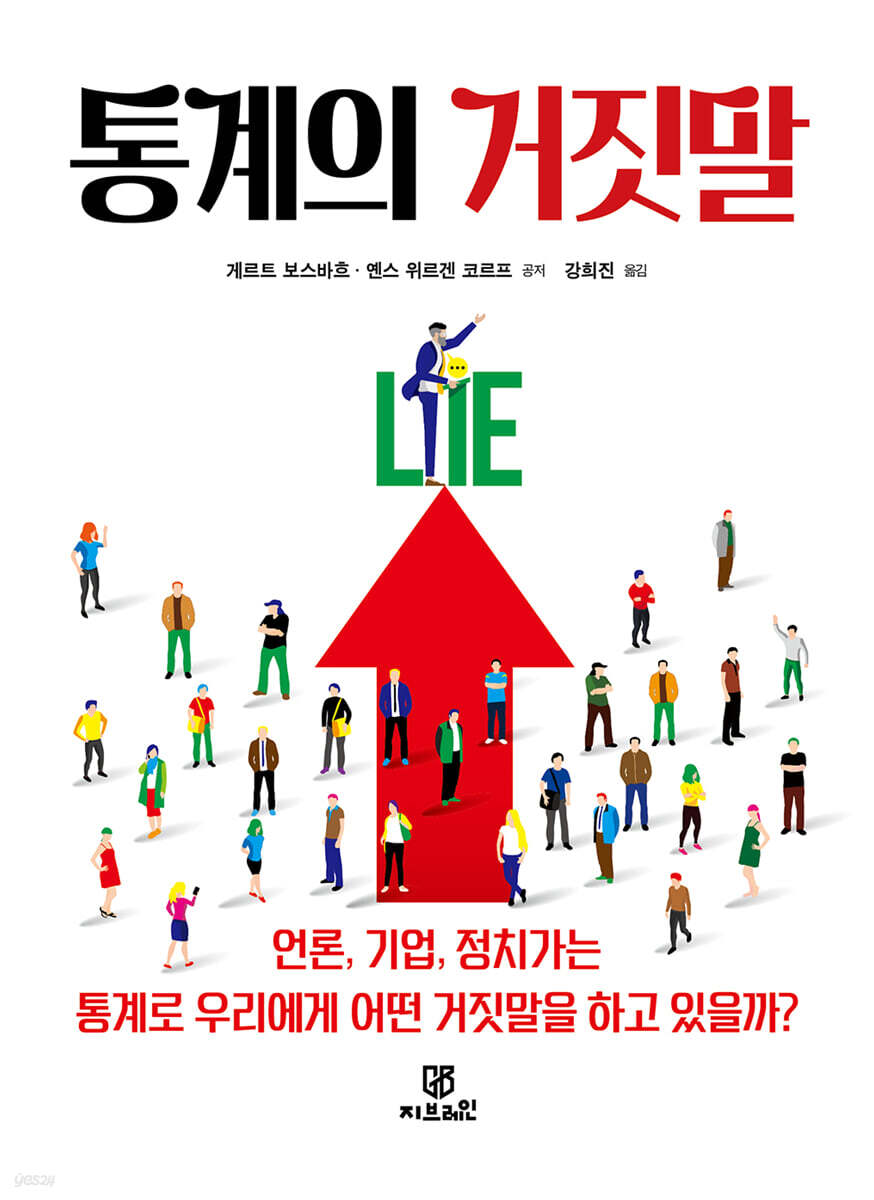
The Lie of Statistics
 |
Description
Book Introduction
The percentage of omnipotent power,
Pictures that lie more than numbers
Shown in graphics and graphs
Why do we blindly believe the lies of statistics?
Statistics, the symbol of objectivity and expertise in modern society! Graphs, numbers, and percentages are magical images that silence all logic.
But what if changing just one criterion could change the story entirely? What are some of the statistical lies that lead us to believe selfish lies? Let's examine the various statistical tricks used by the government, corporations, and media, including old-age pensions, national pensions, and corporate statistics!
Pictures that lie more than numbers
Shown in graphics and graphs
Why do we blindly believe the lies of statistics?
Statistics, the symbol of objectivity and expertise in modern society! Graphs, numbers, and percentages are magical images that silence all logic.
But what if changing just one criterion could change the story entirely? What are some of the statistical lies that lead us to believe selfish lies? Let's examine the various statistical tricks used by the government, corporations, and media, including old-age pensions, national pensions, and corporate statistics!
- You can preview some of the book's contents.
Preview
index
Prologue · 8
1 Theory of Yin and Yang and the Two Sides of the Coin · 16
The Other Side of the Vanished Coin · 17
2 Pictures that tell more lies than numbers · 33
The Lie of Graphics · 34
3 Causality Traps · 55
Cause and Effect · 56
4 Absolute and Relative Numbers · 74
Lies of Relative Numbers · 74
The Lie of Absolute Numbers · 80
The Omnipotent Power of 5 Percentages · 90
Percentage varies depending on criteria · 91
6 Errors due to sampling methods · 101
Statistics that vary across sample groups · 102
7 The Truth About Election Predictions · 116
The Process of Predicting Election Results · 118
8 The Limits of Miracle Prediction · 132
Correlation between Prediction Hit Rate and Prediction Period · 132
9 Miracles of Statistics · 148
The Will Rogers Phenomenon and Simpson's Paradox · 149
10 Other Techniques · 164
Nine Number Games in Brief · 164
11 Truths About Health Insurance · 186
Medical Expenditure Status · 187
The Correlation Between Healthcare Finance and an Aging Society · 195
12 Truths About Pension Insurance · 200
Results of the Stiftung Barentest Private Pension Insurance Evaluation · 201
13 The Truth About Unemployment Benefits · 210
Our society attacks unemployment benefit recipients · 211
Resting Place · 220
Why do we blindly trust numbers?
14 Victims and Perpetrators · 240
Various Manipulative Motives Examined Through 15 Case Studies · 242
15 No Giving Up! · 271
15 Basic Principles of Statistics · 273
16 Practice Makes a Master! · 289
12 Practice Problems and Solutions · 290
Epilogue · 311 Acknowledgments · 313 References · 315 Notes, Citations, and Sources · 316
Quotes and Image Sources · 329 Search · 330
1 Theory of Yin and Yang and the Two Sides of the Coin · 16
The Other Side of the Vanished Coin · 17
2 Pictures that tell more lies than numbers · 33
The Lie of Graphics · 34
3 Causality Traps · 55
Cause and Effect · 56
4 Absolute and Relative Numbers · 74
Lies of Relative Numbers · 74
The Lie of Absolute Numbers · 80
The Omnipotent Power of 5 Percentages · 90
Percentage varies depending on criteria · 91
6 Errors due to sampling methods · 101
Statistics that vary across sample groups · 102
7 The Truth About Election Predictions · 116
The Process of Predicting Election Results · 118
8 The Limits of Miracle Prediction · 132
Correlation between Prediction Hit Rate and Prediction Period · 132
9 Miracles of Statistics · 148
The Will Rogers Phenomenon and Simpson's Paradox · 149
10 Other Techniques · 164
Nine Number Games in Brief · 164
11 Truths About Health Insurance · 186
Medical Expenditure Status · 187
The Correlation Between Healthcare Finance and an Aging Society · 195
12 Truths About Pension Insurance · 200
Results of the Stiftung Barentest Private Pension Insurance Evaluation · 201
13 The Truth About Unemployment Benefits · 210
Our society attacks unemployment benefit recipients · 211
Resting Place · 220
Why do we blindly trust numbers?
14 Victims and Perpetrators · 240
Various Manipulative Motives Examined Through 15 Case Studies · 242
15 No Giving Up! · 271
15 Basic Principles of Statistics · 273
16 Practice Makes a Master! · 289
12 Practice Problems and Solutions · 290
Epilogue · 311 Acknowledgments · 313 References · 315 Notes, Citations, and Sources · 316
Quotes and Image Sources · 329 Search · 330
Detailed image

Publisher's Review
·Is it true that the statistics that say that as the elderly population increases, medical finances become more impoverished?
·The magic of numbers that change their meaning just by changing the standard!
Why emphasize corporate flexibility instead of the truth that increasing low-wage jobs will make the rich richer?
There are times when we suffer losses because of the government.
The so-called experts have analyzed that if the social welfare budget is not reorganized now, national competitiveness will hit rock bottom by 2030, which is why the welfare benefits I receive are decreasing.
The point is that I am at a loss because of all those factors, and by 'all those factors' I mean nothing other than the traps of numbers and statistics!
The statement that “by 2050, one in three people in our country will be over 65 years old” is not enough to instill confidence.
However, many people agree with the statement that “by 2050, people aged 65 and older will account for 32.5% of the total population.”
Both statements may ultimately be the same, but the latter wins out in that it gives a greater sense of accuracy.
But if you think about it for a moment, you can see that presenting such figures makes no sense.
Who can accurately predict how many people will live 40 years from now, or what proportion of the population will be elderly or young?
Meteorologists, environmentalists, marine biologists, and water resources experts have long emphasized the severity of global warming.
We have been warning that global warming will lead to various disasters such as floods and droughts, causing large-scale damage and causing countless deaths.
But the countries that should be held responsible for it have only shown a lukewarm response.
Then, a British economist announced specific figures.
“If we don’t take action now to address global warming, it will cost 5% of global GDP by 2050.
But if we take effective action now, it would cost only 1% of global GDP.”
After this announcement, global warming was included on the agenda of international summits.
Why does everything have to be presented in numbers to resonate with people? Where does the belief in the validity of these numbers come from? Why do so many people worship numbers as if they were a religion?
Voltaire, the 18th-century philosopher of the Enlightenment, said, “Even a foolish act, if repeated often enough, seems more and more intelligent.”
At that time, there weren't many tools to present foolish actions as smart ones.
But as charts, graphs, and various variables were developed, Voltaire's satire became closer to reality.
Yes, that's right.
Depending on how they are used, statistics can be used to embellish phenomena, exaggerate, mislead the public, and manipulate reality.
These manipulated figures, disguised as so-called "expert information," can mislead important decisions.
You might think, 'Idiots like me and the smart people above would never fall for such tricks,' but the reality is different.
Of course, this doesn't mean that all statistics and figures are wrong.
An attitude of distrusting all statistics and figures is no different from burning down a house to catch a flea.
The attitude of excluding numbers altogether is as foolish as being overly reliant on numbers.
So rather than denying the numbers themselves, we should think about how to use numbers correctly.
So, in The Lies of Statistics, we introduce a way to look at statistics well.
Instead of relying on statistics from insurance companies, banks, politicians, and businesspeople, you'll discover ways to find the information you need.
Chapters 1 through 9 introduce various tricks related to statistics.
Each chapter begins with a real-life example, and then introduces each trick based on that example so that it can be easily understood.
Chapters 11 through 13 examine who manipulates statistics on social issues such as health insurance, pension insurance, and unemployment benefits, and why and how.
Chapters 15 and 16 contain 15 basic principles of statistics and practice problems to help readers uncover statistical errors and numerical illusions on their own.
I sincerely hope that you will discover many new facts as you read this book, and that you will be able to look at statistics properly, rather than blindly believing in numbers or blindly believing in expert knowledge!
·The magic of numbers that change their meaning just by changing the standard!
Why emphasize corporate flexibility instead of the truth that increasing low-wage jobs will make the rich richer?
There are times when we suffer losses because of the government.
The so-called experts have analyzed that if the social welfare budget is not reorganized now, national competitiveness will hit rock bottom by 2030, which is why the welfare benefits I receive are decreasing.
The point is that I am at a loss because of all those factors, and by 'all those factors' I mean nothing other than the traps of numbers and statistics!
The statement that “by 2050, one in three people in our country will be over 65 years old” is not enough to instill confidence.
However, many people agree with the statement that “by 2050, people aged 65 and older will account for 32.5% of the total population.”
Both statements may ultimately be the same, but the latter wins out in that it gives a greater sense of accuracy.
But if you think about it for a moment, you can see that presenting such figures makes no sense.
Who can accurately predict how many people will live 40 years from now, or what proportion of the population will be elderly or young?
Meteorologists, environmentalists, marine biologists, and water resources experts have long emphasized the severity of global warming.
We have been warning that global warming will lead to various disasters such as floods and droughts, causing large-scale damage and causing countless deaths.
But the countries that should be held responsible for it have only shown a lukewarm response.
Then, a British economist announced specific figures.
“If we don’t take action now to address global warming, it will cost 5% of global GDP by 2050.
But if we take effective action now, it would cost only 1% of global GDP.”
After this announcement, global warming was included on the agenda of international summits.
Why does everything have to be presented in numbers to resonate with people? Where does the belief in the validity of these numbers come from? Why do so many people worship numbers as if they were a religion?
Voltaire, the 18th-century philosopher of the Enlightenment, said, “Even a foolish act, if repeated often enough, seems more and more intelligent.”
At that time, there weren't many tools to present foolish actions as smart ones.
But as charts, graphs, and various variables were developed, Voltaire's satire became closer to reality.
Yes, that's right.
Depending on how they are used, statistics can be used to embellish phenomena, exaggerate, mislead the public, and manipulate reality.
These manipulated figures, disguised as so-called "expert information," can mislead important decisions.
You might think, 'Idiots like me and the smart people above would never fall for such tricks,' but the reality is different.
Of course, this doesn't mean that all statistics and figures are wrong.
An attitude of distrusting all statistics and figures is no different from burning down a house to catch a flea.
The attitude of excluding numbers altogether is as foolish as being overly reliant on numbers.
So rather than denying the numbers themselves, we should think about how to use numbers correctly.
So, in The Lies of Statistics, we introduce a way to look at statistics well.
Instead of relying on statistics from insurance companies, banks, politicians, and businesspeople, you'll discover ways to find the information you need.
Chapters 1 through 9 introduce various tricks related to statistics.
Each chapter begins with a real-life example, and then introduces each trick based on that example so that it can be easily understood.
Chapters 11 through 13 examine who manipulates statistics on social issues such as health insurance, pension insurance, and unemployment benefits, and why and how.
Chapters 15 and 16 contain 15 basic principles of statistics and practice problems to help readers uncover statistical errors and numerical illusions on their own.
I sincerely hope that you will discover many new facts as you read this book, and that you will be able to look at statistics properly, rather than blindly believing in numbers or blindly believing in expert knowledge!
GOODS SPECIFICS
- Date of issue: April 24, 2023
- Page count, weight, size: 336 pages | 460g | 153*210*17mm
- ISBN13: 9788959797776
- ISBN10: 8959797774
You may also like
카테고리
korean


korean

![ELLE 엘르 스페셜 에디션 A형 : 12월 [2025]](http://librairie.coreenne.fr/cdn/shop/files/b8e27a3de6c9538896439686c6b0e8fb.jpg?v=1766436872&width=3840)


