

Origin of Humanity
 |
Description
Book Introduction
Tracing the origins of our humanity
Time travel together!
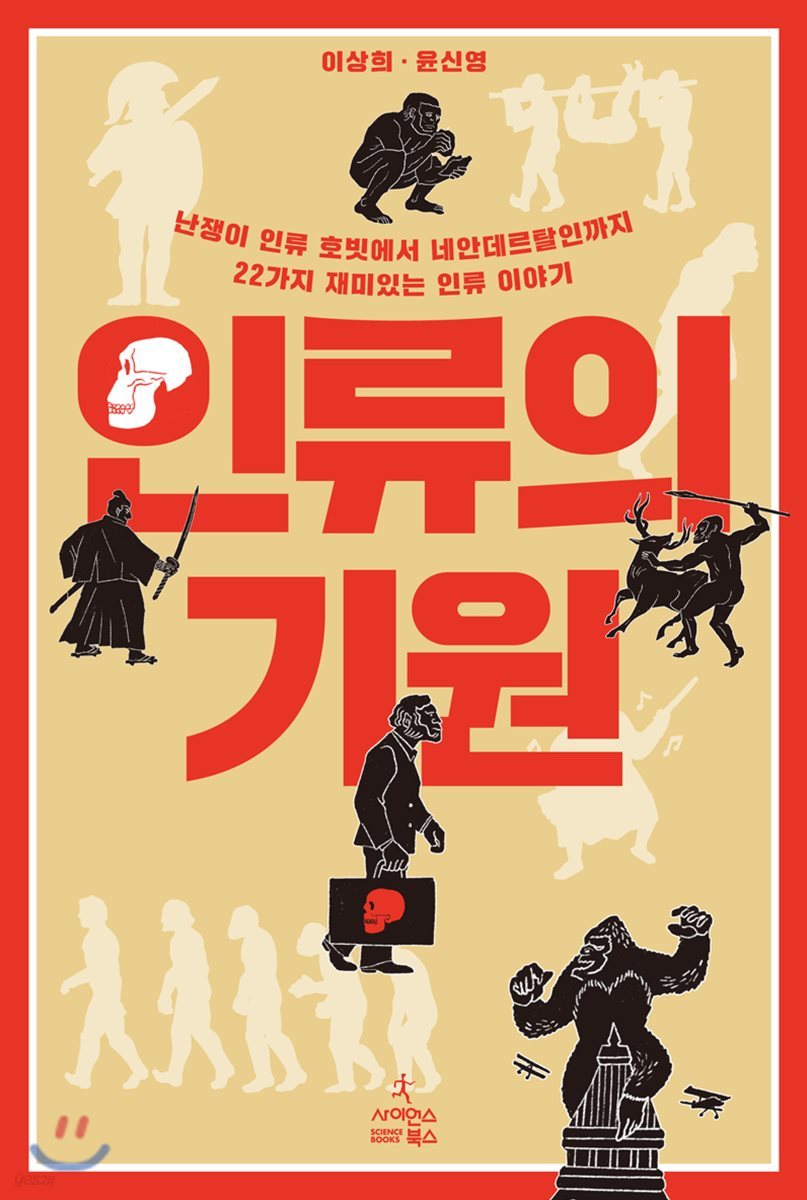
When and where did the first humans with "human-like faces" so similar to ours appear? Did humans originate in Africa and spread across the globe, or did they also appear in Europe and Asia? Do we have Neanderthal blood flowing through us? Are the hobbit-like dwarf fossils unearthed in Indonesia our own human relatives? Which came first: a larger brain or upright walking? Did agriculture and civilization enrich humanity? When did humans lose their fur and acquire snow-white skin?
Science Books invites readers on an exciting journey through the birth and evolution of humanity, guided by the latest paleoanthropology.
Lee Sang-hee (Professor of Anthropology, University of California), an expert in human evolution and paleoanthropologist, and Yoon Shin-young (Editor-in-Chief of Science Dong-A), a leading science journalist, met to select 22 major stories that became milestones in human history.
『Origins of Humanity: 22 Fascinating Stories of Humanity from Hobbits to Neanderthals』 tells a new history of humanity that has never been heard before, based on a variety of human fossils unearthed around the world over the past century, and ancient DNA data extracted and analyzed from ancient fossil bones using modern life science technologies including genetics.
From the birth of humans on Earth to their evolution into our present form, let's explore the long and fascinating journey of humanity as revealed by the latest paleoanthropology, as well as the hotly debated issues surrounding the origins of humanity.
“The 22 stories in this book are a collection of thoughts that have occurred to me while teaching anthropology to students, as well as situations I have directly and indirectly experienced, written in a more accessible and interesting way by connecting them to the evolution of humanity.
In many cases, I started writing to answer someone's specific question, but more often than not, I wrote because I overheard someone say something and wanted to think about it and find an answer.
“I hope you all enjoy this long and fascinating journey tracing the origins of our species with me.” —Lee Sang-hee | Professor of Anthropology, University of California
“I thought it would be nice to cover a topic like paleoanthropology in a way that wasn’t usually done in a chronological order.
So, I proposed to Professor Lee Sang-hee a unique format of writing that would explore evolution using everyday materials as the theme.
The lovingly written series is now available in book form.
It's time to reach out to another reader.
I hope this professor's inspiring writing will inspire many more people." - Yoon Shin-young | Editor-in-Chief of Science Dong-A
Time travel together!
When and where did the first humans with "human-like faces" so similar to ours appear? Did humans originate in Africa and spread across the globe, or did they also appear in Europe and Asia? Do we have Neanderthal blood flowing through us? Are the hobbit-like dwarf fossils unearthed in Indonesia our own human relatives? Which came first: a larger brain or upright walking? Did agriculture and civilization enrich humanity? When did humans lose their fur and acquire snow-white skin?
Science Books invites readers on an exciting journey through the birth and evolution of humanity, guided by the latest paleoanthropology.
Lee Sang-hee (Professor of Anthropology, University of California), an expert in human evolution and paleoanthropologist, and Yoon Shin-young (Editor-in-Chief of Science Dong-A), a leading science journalist, met to select 22 major stories that became milestones in human history.
『Origins of Humanity: 22 Fascinating Stories of Humanity from Hobbits to Neanderthals』 tells a new history of humanity that has never been heard before, based on a variety of human fossils unearthed around the world over the past century, and ancient DNA data extracted and analyzed from ancient fossil bones using modern life science technologies including genetics.
From the birth of humans on Earth to their evolution into our present form, let's explore the long and fascinating journey of humanity as revealed by the latest paleoanthropology, as well as the hotly debated issues surrounding the origins of humanity.
“The 22 stories in this book are a collection of thoughts that have occurred to me while teaching anthropology to students, as well as situations I have directly and indirectly experienced, written in a more accessible and interesting way by connecting them to the evolution of humanity.
In many cases, I started writing to answer someone's specific question, but more often than not, I wrote because I overheard someone say something and wanted to think about it and find an answer.
“I hope you all enjoy this long and fascinating journey tracing the origins of our species with me.” —Lee Sang-hee | Professor of Anthropology, University of California
“I thought it would be nice to cover a topic like paleoanthropology in a way that wasn’t usually done in a chronological order.
So, I proposed to Professor Lee Sang-hee a unique format of writing that would explore evolution using everyday materials as the theme.
The lovingly written series is now available in book form.
It's time to reach out to another reader.
I hope this professor's inspiring writing will inspire many more people." - Yoon Shin-young | Editor-in-Chief of Science Dong-A
- You can preview some of the book's contents.
Preview
index
Preface: Let's Travel Together - Lee Sang-hee, p. 5
Chapter 1: Were Primitive Man Cannibals? Page 21
Chapter 2: The 'Father' Born from Mating, p. 37
Chapter 3: Who Were the First Humans? Page 51
Chapter 4: Big-Headed Baby, Mom's Trouble, Page 63
Chapter 5 I Love Meat, page 73
Chapter 6: The Milk Drinker is an "Adult Child" (page 85)
Chapter 7: Can We Find Snow White's Genes? Page 95
Chapter 8 Grandmother is an Artist, page 105
Chapter 9: Did Agriculture Make Humanity Wealthy? Page 119
Chapter 10: Memories of Beijingers and the Yakuza, p. 129
Chapter 11: Asia's Humanity Challenging Africa's Stronghold, p. 139
Chapter 12: The Bond Between You and Me: Cooperation, p. 151
Chapter 13: If King Kong Were Alive (Page 165)
Chapter 14: Civilization: Humanity's Backs Are Bending? Page 175
Chapter 15: Half a Century in Search of the Most "Human" Face, Page 187
Chapter 16: "Your head is stiff" is a blatant lie! Page 197
Chapter 17: You're a Neanderthal! Page 209
Chapter 18: The Mitochondrial Clock Shakes, p. 221
Chapter 19: Denisovans, the Third Human Race Revealing Asian Roots, p. 233
Chapter 20: Dwarf Humans, In Search of the "Hobbit" (page 243)
Chapter 21: Are 7 Billion People Really One Family? Page 255
Chapter 22: Humanity is Still Evolving, p. 267
Conclusion Ⅰ: A Precious Image of Humanity, Obtained at Great Cost - Lee Sang-hee, p. 279
Conclusion II: An Invitation to the Unfamiliar World of Paleoanthropology - Yoon Shin-young, p. 283
Appendix I: Some Questions About Evolution (page 287)
Appendix II: The Genealogy of Human Evolution, p. 297
References p. 307
See page 333
Photo copyright page 349
Detailed image
Publisher's Review
What we need now
A New Textbook for Humanity
In 2008, a bone the size of a bean was discovered in a cave near the Altai Mountains, on the border between Russia and Mongolia.
It looked like a human little finger bone, but since no human fossils had ever been unearthed in this area, I thought it might be a bear or other animal bone.
Then, in 2010, a research team used ancient genetic technology to extract and analyze DNA from the bone, and it was revealed that the owner of the fossil bone was a young girl, around 6 or 7 years old, whose growth plates had not yet closed.
What's even more surprising is that this child's DNA was slightly different from that of modern humans.
However, it is not as if they were Neanderthals who lived nearby at a similar time.
Later, genetic analysis results extracted from adult molars discovered in this cave were added, and it was eventually concluded that they were a third type of human that was neither modern humans nor Neanderthals, and they were called Denisovans after the Denisova Cave where they were discovered.
The fever for excavating human fossils, which began in Africa and Europe, spread throughout the world by the end of the last century.
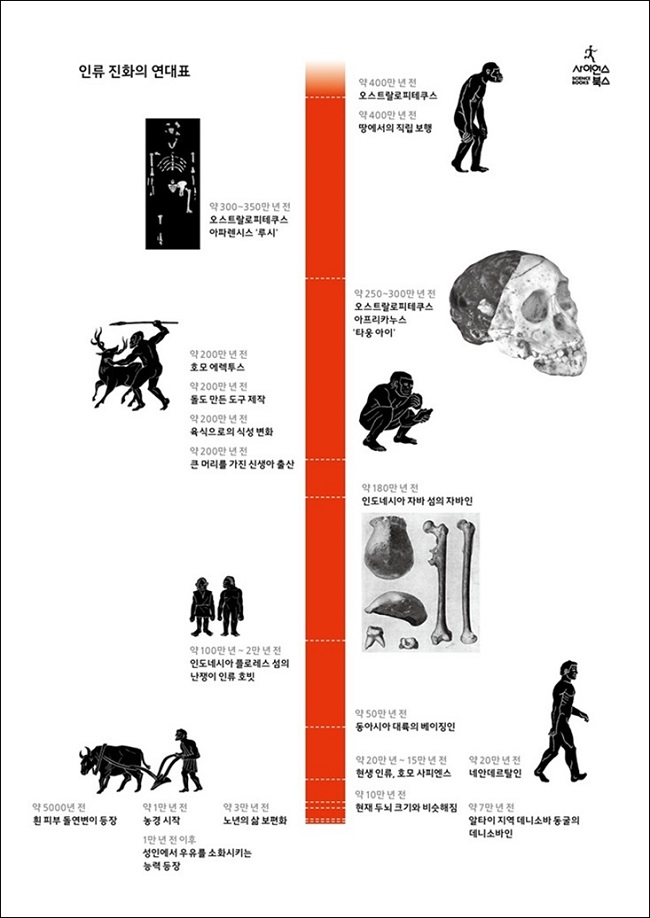
In addition to the previously discovered Javanese people from Java Island in Indonesia and the Beijing people from China, a number of interesting fossils have emerged in the 2000s, particularly in Asia, that shed new light on the origins of humans.
Homo floresiensis, a legendary hobbit-like creature discovered on the Indonesian island of Flores, and the Denisovans of the Altai region were quickly reported by the media, drawing widespread attention not only from academia but also from the general public.
In addition, with the rapid development of genetics and biotechnology in the latter half of the 20th century, research into the origins and evolution of mankind entered a new era.
Due to the difficulty in finding complete human fossils, until then, we had to trace back the past of mankind based on hunting tools and ornaments, sometimes without even a single bone fragment. Our history reconstructed in this way was bound to be incomplete.
Archaeological DNA analysis techniques are yielding ever more controversial and revolutionary stories about human origins and evolution, including extracting DNA from fossils of which only a small fraction remains and comparing it with modern humans, or tracing the genomes of modern humans back to the earliest humans.
『Origins of Humankind』 is a popular textbook written by a paleoanthropologist who studies human fossils by visiting excavation sites and a science journalist who put their heads together to select 22 topics that are very important and also of interest to the general public among the latest paleoanthropological achievements and explain them in a friendly manner.
Because our scholars are few and far between, specializing in paleoanthropology and working globally while simultaneously conducting theoretical and practical research, this book, which addresses recent issues surrounding human origins, is a contemporary guide to anthropology and the most up-to-date textbook.
Surrounding the birth and evolution of mankind
22 Latest Paleoanthropological Stories
Dr. Lee Sang-hee, author of “The Origin of Humankind,” excavates and studies human fossils in Central Asia, including Azerbaijan and Mongolia, while also teaching anthropology to students at the University of California, Riverside.
Professor Lee Sang-hee's class, which keeps pace with the latest trends in paleoanthropology, where the debate surrounding human origins is more intense than ever due to new discoveries and the introduction of genetic techniques every year, has become a popular subject with a waiting list.
Paleoanthropology is a leading integrated discipline in the 21st century, requiring not only a biological understanding of the human body but also an understanding of human history and the vast history of the Earth's environment.
Dr. Lee Sang-hee, who has taught students for many years and passionately communicated with the general public through media and social media on topics related to humanity, readily agreed to reporter Yoon Shin-young's request to vividly convey the newly written history of humanity to Korean readers.
And in order to better highlight the issues of modern anthropology and allow readers to approach the major milestones in the history of human evolution with greater interest, we broke away from the traditional chronological structure from the birth of Homo sapiens to select 22 major stories and wrote them together.
The 22 stories are filled with answers to questions we usually wonder about ourselves, such as, “Did primitive humans have cannibalistic habits of eating their own kind?”, “When did the hair that covered their entire body disappear and we got white skin?”, “Why is it that humans have a longer old age than other animals?”, “Is it true that agriculture and civilization have enriched human life?”, and “What are the advantages and disadvantages of humans having a large brain and walking upright?”, covering the history of mankind from its birth to the present day.
In particular, the discovery of fossilized humans, such as the dwarf hobbit and Denisovan, and the 'monster' ape Gigantopithecus, comparable to King Kong, from the time of excavation to the restoration of their actual appearance using all modern science, is so exciting that it is reminiscent of a detective story.
The central theme of this journey, which traces the milestones of human evolution, is the question of what makes us human today, and ultimately, the question of humanity's origins.
Recent research on ancient humans, who are continuously being discovered both inside and outside Africa, and on Neanderthals, the closest living relatives of modern humans, is shifting the weight away from the existing theory of human origins (out-of-Africa theory, complete replacement theory) that the first humans were born in Africa and spread around the world, and toward the multi-regional theory of origins (multi-regional linkage theory) that modern humans evolved simultaneously in various regions.
If the multiregional origin theory wins in this still hotly debated issue, the evolutionary history of humans, which was depicted step by step from Australopithecus to Homo erectus to Homo sapiens, will have to be reconstructed, and textbooks explaining human origins will also have to be completely rewritten.
21st century integrated academic
An Invitation to the World of Paleoanthropology
How well do we know ourselves? From the birth of the human species on Earth to its current form, humanity has evolved through countless internal and external events.
We have sometimes encountered and interacted with many of our now-extinct relatives, some of whom have left traces of their DNA in our bodies.
From bone fragments unearthed from deep layers of rock, or from physical features like the brain or pelvis of modern humans, paleoanthropology infers when and where our first ancestors emerged and reconstructs the paths their descendants took.
As we enter the 21st century, the human genome has been deciphered and genetic information has accumulated to the point where genes can be compared, leading to a flood of new and more colorful stories about the origins of humanity.
Since the dawn of civilization and the emergence of cultural beings, humans, who were thought to have transcended their biological bodies, are still evolving, and there is even surprising news that the pace of evolution has accelerated as civilization has developed.
Perhaps sooner or later, the definition of the genus Homo, to which humans belong, will have to be redefined.
Discover the long and fascinating history of humanity in 『Origins of Humankind』, a 21st-century interdisciplinary study where modern genetics, medicine, biology, and the humanities meet and blend. Discover our own new story revealed by cutting-edge paleoanthropology.
A New Textbook for Humanity
In 2008, a bone the size of a bean was discovered in a cave near the Altai Mountains, on the border between Russia and Mongolia.
It looked like a human little finger bone, but since no human fossils had ever been unearthed in this area, I thought it might be a bear or other animal bone.
Then, in 2010, a research team used ancient genetic technology to extract and analyze DNA from the bone, and it was revealed that the owner of the fossil bone was a young girl, around 6 or 7 years old, whose growth plates had not yet closed.
What's even more surprising is that this child's DNA was slightly different from that of modern humans.
However, it is not as if they were Neanderthals who lived nearby at a similar time.
Later, genetic analysis results extracted from adult molars discovered in this cave were added, and it was eventually concluded that they were a third type of human that was neither modern humans nor Neanderthals, and they were called Denisovans after the Denisova Cave where they were discovered.
The fever for excavating human fossils, which began in Africa and Europe, spread throughout the world by the end of the last century.
In addition to the previously discovered Javanese people from Java Island in Indonesia and the Beijing people from China, a number of interesting fossils have emerged in the 2000s, particularly in Asia, that shed new light on the origins of humans.
Homo floresiensis, a legendary hobbit-like creature discovered on the Indonesian island of Flores, and the Denisovans of the Altai region were quickly reported by the media, drawing widespread attention not only from academia but also from the general public.
In addition, with the rapid development of genetics and biotechnology in the latter half of the 20th century, research into the origins and evolution of mankind entered a new era.
Due to the difficulty in finding complete human fossils, until then, we had to trace back the past of mankind based on hunting tools and ornaments, sometimes without even a single bone fragment. Our history reconstructed in this way was bound to be incomplete.
Archaeological DNA analysis techniques are yielding ever more controversial and revolutionary stories about human origins and evolution, including extracting DNA from fossils of which only a small fraction remains and comparing it with modern humans, or tracing the genomes of modern humans back to the earliest humans.
『Origins of Humankind』 is a popular textbook written by a paleoanthropologist who studies human fossils by visiting excavation sites and a science journalist who put their heads together to select 22 topics that are very important and also of interest to the general public among the latest paleoanthropological achievements and explain them in a friendly manner.
Because our scholars are few and far between, specializing in paleoanthropology and working globally while simultaneously conducting theoretical and practical research, this book, which addresses recent issues surrounding human origins, is a contemporary guide to anthropology and the most up-to-date textbook.
Surrounding the birth and evolution of mankind
22 Latest Paleoanthropological Stories
Dr. Lee Sang-hee, author of “The Origin of Humankind,” excavates and studies human fossils in Central Asia, including Azerbaijan and Mongolia, while also teaching anthropology to students at the University of California, Riverside.
Professor Lee Sang-hee's class, which keeps pace with the latest trends in paleoanthropology, where the debate surrounding human origins is more intense than ever due to new discoveries and the introduction of genetic techniques every year, has become a popular subject with a waiting list.
Paleoanthropology is a leading integrated discipline in the 21st century, requiring not only a biological understanding of the human body but also an understanding of human history and the vast history of the Earth's environment.
Dr. Lee Sang-hee, who has taught students for many years and passionately communicated with the general public through media and social media on topics related to humanity, readily agreed to reporter Yoon Shin-young's request to vividly convey the newly written history of humanity to Korean readers.
And in order to better highlight the issues of modern anthropology and allow readers to approach the major milestones in the history of human evolution with greater interest, we broke away from the traditional chronological structure from the birth of Homo sapiens to select 22 major stories and wrote them together.
The 22 stories are filled with answers to questions we usually wonder about ourselves, such as, “Did primitive humans have cannibalistic habits of eating their own kind?”, “When did the hair that covered their entire body disappear and we got white skin?”, “Why is it that humans have a longer old age than other animals?”, “Is it true that agriculture and civilization have enriched human life?”, and “What are the advantages and disadvantages of humans having a large brain and walking upright?”, covering the history of mankind from its birth to the present day.
In particular, the discovery of fossilized humans, such as the dwarf hobbit and Denisovan, and the 'monster' ape Gigantopithecus, comparable to King Kong, from the time of excavation to the restoration of their actual appearance using all modern science, is so exciting that it is reminiscent of a detective story.
The central theme of this journey, which traces the milestones of human evolution, is the question of what makes us human today, and ultimately, the question of humanity's origins.
Recent research on ancient humans, who are continuously being discovered both inside and outside Africa, and on Neanderthals, the closest living relatives of modern humans, is shifting the weight away from the existing theory of human origins (out-of-Africa theory, complete replacement theory) that the first humans were born in Africa and spread around the world, and toward the multi-regional theory of origins (multi-regional linkage theory) that modern humans evolved simultaneously in various regions.
If the multiregional origin theory wins in this still hotly debated issue, the evolutionary history of humans, which was depicted step by step from Australopithecus to Homo erectus to Homo sapiens, will have to be reconstructed, and textbooks explaining human origins will also have to be completely rewritten.
21st century integrated academic
An Invitation to the World of Paleoanthropology
How well do we know ourselves? From the birth of the human species on Earth to its current form, humanity has evolved through countless internal and external events.
We have sometimes encountered and interacted with many of our now-extinct relatives, some of whom have left traces of their DNA in our bodies.
From bone fragments unearthed from deep layers of rock, or from physical features like the brain or pelvis of modern humans, paleoanthropology infers when and where our first ancestors emerged and reconstructs the paths their descendants took.
As we enter the 21st century, the human genome has been deciphered and genetic information has accumulated to the point where genes can be compared, leading to a flood of new and more colorful stories about the origins of humanity.
Since the dawn of civilization and the emergence of cultural beings, humans, who were thought to have transcended their biological bodies, are still evolving, and there is even surprising news that the pace of evolution has accelerated as civilization has developed.
Perhaps sooner or later, the definition of the genus Homo, to which humans belong, will have to be redefined.
Discover the long and fascinating history of humanity in 『Origins of Humankind』, a 21st-century interdisciplinary study where modern genetics, medicine, biology, and the humanities meet and blend. Discover our own new story revealed by cutting-edge paleoanthropology.
GOODS SPECIFICS
- Date of publication: September 18, 2015
- Page count, weight, size: 352 pages | 615g | 148*220*24mm
- ISBN13: 9788983717542
- ISBN10: 8983717548
You may also like
카테고리
korean


korean

![GQ KOREA Mark (Monthly): December [2025]](http://librairie.coreenne.fr/cdn/shop/files/8ef265dbbfbf186523ed75ba7319009d.jpg?v=1765340328&width=3840)


