

Pattern Language
 |
Description
Book Introduction
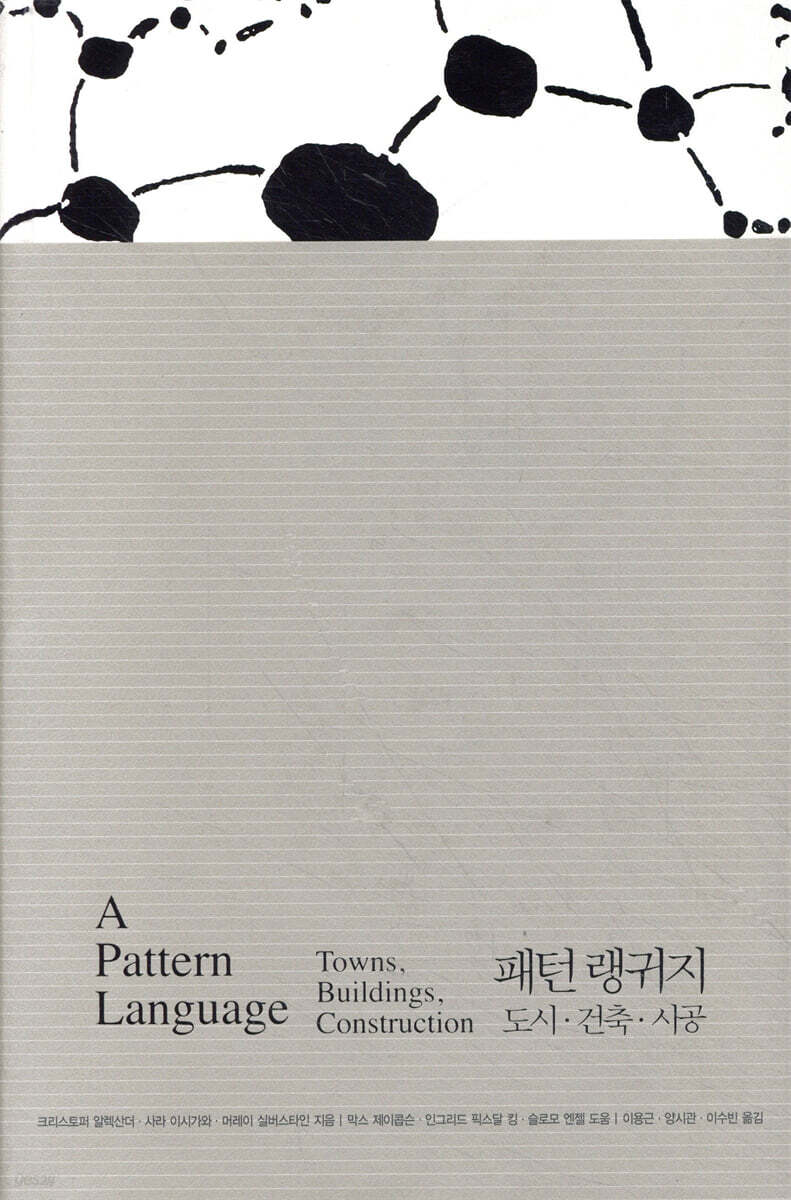
"A Pattern Language" presented a new paradigm for urban and architectural design, and had a profound influence on design patterns and the XP movement in computer engineering. "A Pattern Language" is the second of three books that describe architecture and planning from a completely new perspective.
The purpose of this book is to replace current concepts of architecture, construction, and planning, to provide a fully applicable alternative, and to develop it progressively.
The central idea of this book is that people should design their own homes, streets, and communities.
It may sound radical, but research suggests that all the beautiful places in the world were created not by architects, but by the people who live there.
And the core idea of this book is that humans always need a certain 'language' to design their environment.
This book teaches you this kind of language.
Using this 'language', almost any environment or building design can be done.
The purpose of this book is to replace current concepts of architecture, construction, and planning, to provide a fully applicable alternative, and to develop it progressively.
The central idea of this book is that people should design their own homes, streets, and communities.
It may sound radical, but research suggests that all the beautiful places in the world were created not by architects, but by the people who live there.
And the core idea of this book is that humans always need a certain 'language' to design their environment.
This book teaches you this kind of language.
Using this 'language', almost any environment or building design can be done.
- You can preview some of the book's contents.
Preview
index
Translator's Preface
How to use this book
Pattern Language
Summary of the language
Choosing a language for your project
A poem called pattern language
city
How to use the language
Patterns (1-94)
building
How to use the language
Pattern (95-204)
Construction
How to use the language
Pattern (205-253)
Acknowledgements
Acknowledgements for providing photos
References
Glossary
-------
Pattern name
1.
self-sufficient area
2.
Distribution of the city
3.
Finger-shaped cities and countryside
4.
Agricultural Valley
5.
Race-shaped power road
6.
rural village
7.
everyone
8.
A mosaic of subcultures
9.
distributed workplace
10.
The charm of the city
11.
Earth Transportation Zone
12.
Community of 7,000 people
13.
The boundaries of subculture
14.
recognizable neighborhood
15.
Neighborhood boundaries
16.
public transportation network
17.
Ring Road
18.
Learning Network
19.
Store network
20.
minibus
21.
4th floor limit
22.
9 percent of parking spaces
23.
parallel road
24.
Holy Land
25.
Access to water space
26.
cycle of life
27.
Men and women
28.
Off-center nucleus
29.
Circle of density
30.
Node of activity
31.
walking trail
32.
shopping district
33.
night activities
34.
Transfer point
35.
Mix of generations
36.
degree of publicness
37.
Housing cluster
38.
townhouses
39.
terraced houses
40.
Old people are everywhere
41.
Workplace Community
42.
belt-shaped industrial zone
43.
A university like a market
44.
Earth Office
45.
Community activities in the form of necklaces
46.
multi-store market
47.
Health Center
48.
Houses in between
49.
Loop-shaped earth road
50.
T-shaped intersection
51.
Green space road
52.
Network of walkways and roads
53.
Main gate
54.
Crosswalk
55.
Raised coverage
56.
Bike paths and storage areas
57.
Children of the City
58.
festivities
59.
quiet rear
60.
accessible green space
61.
small public square
62.
high places
63.
dancing in the street
64.
ponds and streams
65.
Place of birth
66.
sanctuary
67.
common
68.
Connected Playground
69.
public outdoor room
70.
cemetery
71.
calm waters
72.
Earth Sports
73.
Exploration Playground
74.
animal
75.
family
76.
Housing for small families
77.
House for couples
78.
Housing for single people
79.
home
80.
Self-managed workshops and offices
81.
Informal, small-scale service
82.
Office Connection
83.
Master and apprentice
84.
Teenage society
85.
Learning center in front of the store
86.
daycare center
87.
privately owned stores
88.
Street cafe
89.
The corner store
90.
bar
91.
hotel
92.
bus stop
93.
food stall
94.
Sleeping in public spaces
95.
complex building
96.
Number of floors
97.
Covered parking lot
98.
Area of movement
99.
Main building
100.
pedestrian walkway
101.
passageways within buildings
102.
similarly shaped entrances
103.
small parking lot
104.
Land preparation
105.
South-facing outdoor space
106.
positive external space
107.
mining
108.
Connected buildings
109.
long house
110.
Main entrance
111.
Half-hidden garden
112.
Transition of entrance
113.
Connecting with your car
114.
Hierarchy of open spaces
115.
Lively courtyard
116.
cascade roof
117.
Wrapping roof
118.
rooftop garden
119.
arcade
120.
Pedestrian paths and destinations
121.
Type of walkway
122.
facade of the building
123.
Pedestrian density
124.
Activity Pocket
125.
stair chair
126.
Something in the center
127.
Changes in intimacy
128.
Indoor lighting
129.
Public space in the center
130.
entrance room
131.
flow through the room
132.
short hallway
133.
Stairs as a stage
134.
Sun view
135.
Tapestry of Light and Shadow
136.
Couple's area
137.
Children's Area
138.
East-facing bedroom
139.
farmhouse kitchen
140.
Private terrace facing the street
141.
own room
142.
Sequence of the rest area
143.
Bedroom cluster
144.
bathroom
145.
storage
146.
Flexible office space
147.
Meals together
148.
small workgroup
149.
Comfortable reception area
150.
Waiting area
151.
small meeting room
152.
semi-private office
154.
10-unit detached house
155.
Senior Citizen's Annex
156.
stable job
157.
home workshop
158.
Outdoor stairs
159.
Two sides of each room are lit
160.
edge of the building
161.
sunny place
162.
North face
163.
Outdoor room
164.
street window
165.
Opening to the streets
166.
outer wall
167.
6-foot balcony
168.
Connection with the ground
169.
Stepped slopes
170.
fruit tree
171.
A place with trees
172.
Wild Garden
173.
garden fence
174.
trellis walkway
175.
greenhouse
176.
garden chair
177.
vegetable garden
178.
compost
179.
alcove
180.
window
181.
fire
182.
Dining atmosphere
183.
Enclosed workspace
184.
Kitchen layout
185.
circular seating arrangement
186.
shared bedroom
187.
Master bed
188.
Bed alcove
189.
Dressing room
190.
Various ceiling heights
191.
Shape of indoor space
192.
A window overlooking life
193.
half-open wall
194.
interior window
195.
The volume of the stairs
196.
corner door
197.
thick walls
198.
Closet between rooms
199.
sunny kitchen counter
200.
open shelves
201.
Waist-height shelves
202.
built-in chair
203.
Children's Cave
204.
secret space
205.
Structure that follows social space
206.
efficient structure
207.
Good material
208.
Stepwise reinforcement
209.
Roof layout
210.
Floor and ceiling layout
211.
Thickness of the outer wall
212.
corner pillars
213.
Final column placement
214.
Foundation like roots
215.
1st floor slab
216.
box-shaped columns
217.
Border guard
218.
structural wall
219.
Floor/ceiling bolts
220.
roof bolts
221.
Natural doors and windows
222.
low windowsill
223.
deep window sill
224.
low entrance
225.
thick frame
226.
A place with pillars
227.
Column joints
228.
stair bolts
229.
duct space
230.
radiant heating
231.
protruding roof windows
232.
decoration on the top of the roof
233.
floor
234.
Overlap joint exterior wall
235.
smooth inner walls
236.
wide open window
237.
A sturdy door with a window
238.
filtered light
239.
small windowpane
240.
half-inch border
241.
A place with chairs
242.
Bench in front of the entrance
243.
a wall to sit on
244.
canvas roof
245.
raised flower beds
246.
vines
247.
gapped paving stones
248.
soft tiles and bricks
249.
decoration
250.
warm colors
251.
Various chairs
252.
Concentration of light
253.
own stuff
How to use this book
Pattern Language
Summary of the language
Choosing a language for your project
A poem called pattern language
city
How to use the language
Patterns (1-94)
building
How to use the language
Pattern (95-204)
Construction
How to use the language
Pattern (205-253)
Acknowledgements
Acknowledgements for providing photos
References
Glossary
-------
Pattern name
1.
self-sufficient area
2.
Distribution of the city
3.
Finger-shaped cities and countryside
4.
Agricultural Valley
5.
Race-shaped power road
6.
rural village
7.
everyone
8.
A mosaic of subcultures
9.
distributed workplace
10.
The charm of the city
11.
Earth Transportation Zone
12.
Community of 7,000 people
13.
The boundaries of subculture
14.
recognizable neighborhood
15.
Neighborhood boundaries
16.
public transportation network
17.
Ring Road
18.
Learning Network
19.
Store network
20.
minibus
21.
4th floor limit
22.
9 percent of parking spaces
23.
parallel road
24.
Holy Land
25.
Access to water space
26.
cycle of life
27.
Men and women
28.
Off-center nucleus
29.
Circle of density
30.
Node of activity
31.
walking trail
32.
shopping district
33.
night activities
34.
Transfer point
35.
Mix of generations
36.
degree of publicness
37.
Housing cluster
38.
townhouses
39.
terraced houses
40.
Old people are everywhere
41.
Workplace Community
42.
belt-shaped industrial zone
43.
A university like a market
44.
Earth Office
45.
Community activities in the form of necklaces
46.
multi-store market
47.
Health Center
48.
Houses in between
49.
Loop-shaped earth road
50.
T-shaped intersection
51.
Green space road
52.
Network of walkways and roads
53.
Main gate
54.
Crosswalk
55.
Raised coverage
56.
Bike paths and storage areas
57.
Children of the City
58.
festivities
59.
quiet rear
60.
accessible green space
61.
small public square
62.
high places
63.
dancing in the street
64.
ponds and streams
65.
Place of birth
66.
sanctuary
67.
common
68.
Connected Playground
69.
public outdoor room
70.
cemetery
71.
calm waters
72.
Earth Sports
73.
Exploration Playground
74.
animal
75.
family
76.
Housing for small families
77.
House for couples
78.
Housing for single people
79.
home
80.
Self-managed workshops and offices
81.
Informal, small-scale service
82.
Office Connection
83.
Master and apprentice
84.
Teenage society
85.
Learning center in front of the store
86.
daycare center
87.
privately owned stores
88.
Street cafe
89.
The corner store
90.
bar
91.
hotel
92.
bus stop
93.
food stall
94.
Sleeping in public spaces
95.
complex building
96.
Number of floors
97.
Covered parking lot
98.
Area of movement
99.
Main building
100.
pedestrian walkway
101.
passageways within buildings
102.
similarly shaped entrances
103.
small parking lot
104.
Land preparation
105.
South-facing outdoor space
106.
positive external space
107.
mining
108.
Connected buildings
109.
long house
110.
Main entrance
111.
Half-hidden garden
112.
Transition of entrance
113.
Connecting with your car
114.
Hierarchy of open spaces
115.
Lively courtyard
116.
cascade roof
117.
Wrapping roof
118.
rooftop garden
119.
arcade
120.
Pedestrian paths and destinations
121.
Type of walkway
122.
facade of the building
123.
Pedestrian density
124.
Activity Pocket
125.
stair chair
126.
Something in the center
127.
Changes in intimacy
128.
Indoor lighting
129.
Public space in the center
130.
entrance room
131.
flow through the room
132.
short hallway
133.
Stairs as a stage
134.
Sun view
135.
Tapestry of Light and Shadow
136.
Couple's area
137.
Children's Area
138.
East-facing bedroom
139.
farmhouse kitchen
140.
Private terrace facing the street
141.
own room
142.
Sequence of the rest area
143.
Bedroom cluster
144.
bathroom
145.
storage
146.
Flexible office space
147.
Meals together
148.
small workgroup
149.
Comfortable reception area
150.
Waiting area
151.
small meeting room
152.
semi-private office
154.
10-unit detached house
155.
Senior Citizen's Annex
156.
stable job
157.
home workshop
158.
Outdoor stairs
159.
Two sides of each room are lit
160.
edge of the building
161.
sunny place
162.
North face
163.
Outdoor room
164.
street window
165.
Opening to the streets
166.
outer wall
167.
6-foot balcony
168.
Connection with the ground
169.
Stepped slopes
170.
fruit tree
171.
A place with trees
172.
Wild Garden
173.
garden fence
174.
trellis walkway
175.
greenhouse
176.
garden chair
177.
vegetable garden
178.
compost
179.
alcove
180.
window
181.
fire
182.
Dining atmosphere
183.
Enclosed workspace
184.
Kitchen layout
185.
circular seating arrangement
186.
shared bedroom
187.
Master bed
188.
Bed alcove
189.
Dressing room
190.
Various ceiling heights
191.
Shape of indoor space
192.
A window overlooking life
193.
half-open wall
194.
interior window
195.
The volume of the stairs
196.
corner door
197.
thick walls
198.
Closet between rooms
199.
sunny kitchen counter
200.
open shelves
201.
Waist-height shelves
202.
built-in chair
203.
Children's Cave
204.
secret space
205.
Structure that follows social space
206.
efficient structure
207.
Good material
208.
Stepwise reinforcement
209.
Roof layout
210.
Floor and ceiling layout
211.
Thickness of the outer wall
212.
corner pillars
213.
Final column placement
214.
Foundation like roots
215.
1st floor slab
216.
box-shaped columns
217.
Border guard
218.
structural wall
219.
Floor/ceiling bolts
220.
roof bolts
221.
Natural doors and windows
222.
low windowsill
223.
deep window sill
224.
low entrance
225.
thick frame
226.
A place with pillars
227.
Column joints
228.
stair bolts
229.
duct space
230.
radiant heating
231.
protruding roof windows
232.
decoration on the top of the roof
233.
floor
234.
Overlap joint exterior wall
235.
smooth inner walls
236.
wide open window
237.
A sturdy door with a window
238.
filtered light
239.
small windowpane
240.
half-inch border
241.
A place with chairs
242.
Bench in front of the entrance
243.
a wall to sit on
244.
canvas roof
245.
raised flower beds
246.
vines
247.
gapped paving stones
248.
soft tiles and bricks
249.
decoration
250.
warm colors
251.
Various chairs
252.
Concentration of light
253.
own stuff
Publisher's Review
Ironically, this book, which has had a greater influence on the field of computer science than on the field of architecture, was originally a collection of materials for Christopher Alexander's book on the theory of thought, "The Timeless Path of Construction."
In this book, we can clearly understand Alexander's basic ideas and theories on architecture. His idea that 'we must build a natural city, not an artificial city' is entirely reminiscent of Lao Tzu's theory of inaction.
His alternative methodology, 'pattern language', requires actual users to participate by allowing them to express and communicate various architectural designs within a certain formal grammar called 'language', just as humans communicate with each other through language.
The components of this are 'patterns', and each pattern is set in the order of problem raising, problem discussion, and problem solving.
His claim that all artificial elements should be excluded and users should design and construct things themselves was so radical that it was difficult for the architectural world to accept it, but his ideas blossomed in the field of computer engineering that introduced the metaphor of architecture, and became the basis for the 'design pattern movement' and 'XP movement' that were popular in the 1990s. Kent Beck, the godfather of the XP movement, discovered in the programming world the possibility of realizing Alexander's dream of an ideal by saying in 'Extreme Programming Explained' that "software has the opportunity to create a new social structure."
To ensure maximum convenience and aesthetics, we must combine our wisdom, and "Pattern Language" is the starting point.
Alexander's efforts to make the writing style and content easy to understand, not only for architecture majors but also for non-majors, are evident throughout the book.
I hope this book will remain a good resource for those studying architecture or computer engineering, as well as for general readers.
In this book, we can clearly understand Alexander's basic ideas and theories on architecture. His idea that 'we must build a natural city, not an artificial city' is entirely reminiscent of Lao Tzu's theory of inaction.
His alternative methodology, 'pattern language', requires actual users to participate by allowing them to express and communicate various architectural designs within a certain formal grammar called 'language', just as humans communicate with each other through language.
The components of this are 'patterns', and each pattern is set in the order of problem raising, problem discussion, and problem solving.
His claim that all artificial elements should be excluded and users should design and construct things themselves was so radical that it was difficult for the architectural world to accept it, but his ideas blossomed in the field of computer engineering that introduced the metaphor of architecture, and became the basis for the 'design pattern movement' and 'XP movement' that were popular in the 1990s. Kent Beck, the godfather of the XP movement, discovered in the programming world the possibility of realizing Alexander's dream of an ideal by saying in 'Extreme Programming Explained' that "software has the opportunity to create a new social structure."
To ensure maximum convenience and aesthetics, we must combine our wisdom, and "Pattern Language" is the starting point.
Alexander's efforts to make the writing style and content easy to understand, not only for architecture majors but also for non-majors, are evident throughout the book.
I hope this book will remain a good resource for those studying architecture or computer engineering, as well as for general readers.
GOODS SPECIFICS
- Date of issue: July 1, 2013
- Format: Hardcover book binding method guide
- Page count, weight, size: 1,158 pages | 1,480g | 145*217*60mm
- ISBN13: 9788966260812
- ISBN10: 8966260810
You may also like
카테고리
korean


korean

![ELLE 엘르 스페셜 에디션 A형 : 12월 [2025]](http://librairie.coreenne.fr/cdn/shop/files/b8e27a3de6c9538896439686c6b0e8fb.jpg?v=1766436872&width=3840)


