

polyvagal theory
 |
Description
Book Introduction
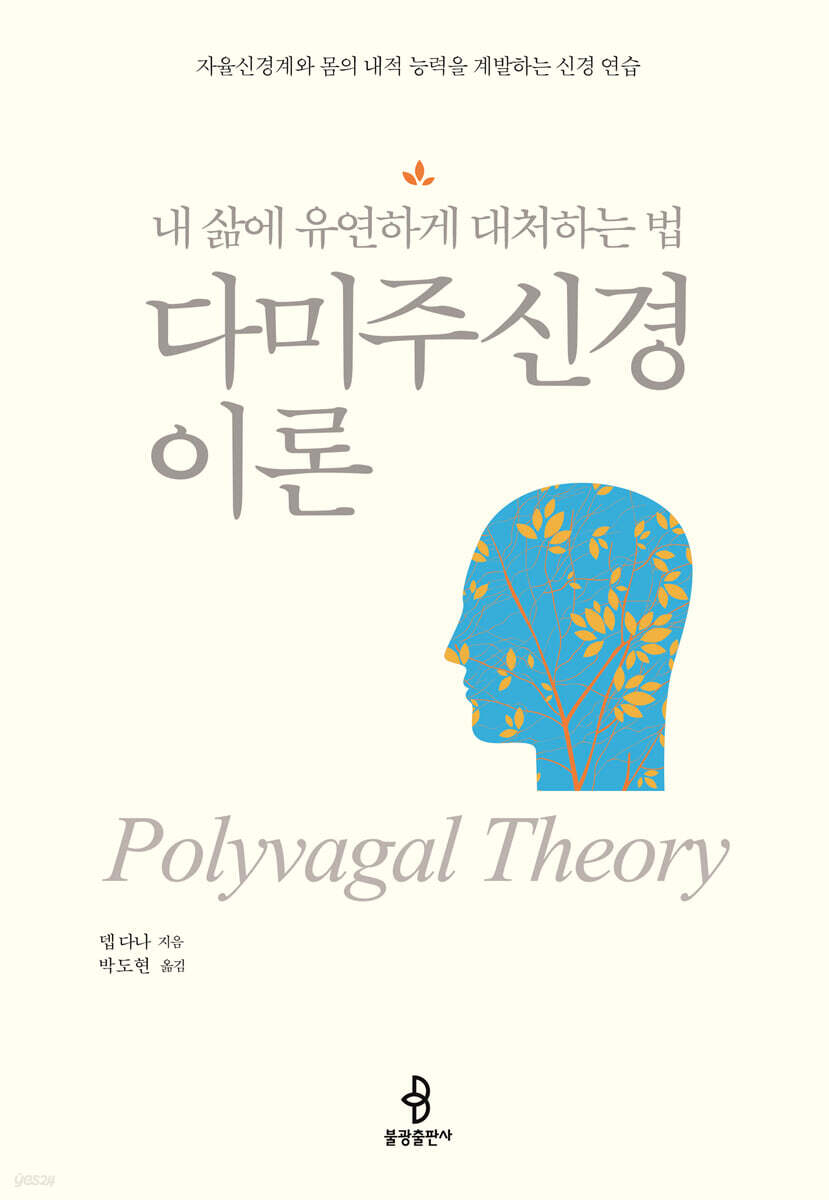
When your body changes, the world changes! Amazing neuroscience that awakens your body's potential. All About Polyvagal Theory An Amazon.com bestseller immediately after publication #1 in Neuroscience and Neuropsychology Attitude makes life. This is because even in the same situation, depending on how you feel, think, and react, your experience at that moment can change 180 degrees. People usually think that their behavior, or attitude, in a certain situation is a rational and reasonable decision made by the brain, but in reality, this is not the case. Almost all of our daily actions follow the automatic response system of our body, specifically the autonomic nervous system. This is why we need to pay attention to our bodies and be aware of their signals. Because at every moment, the body reacts before the smart brain. They say that everything is created by the mind, and that life depends on the mind. However, the state of mind is influenced by the state of the body. Let's focus on the body. Knowing what your body is like right now can help you react differently to yourself, others, and the world. When your reactions change, your experiences change, and when your experiences change, your life changes. The best neuroscience, 'polyvagal theory', which explains the body's survival strategies and operating principles, will guide you along the way. |
- You can preview some of the book's contents.
Preview
index
Recommendation
Recommendation (Dr. Stephen Porges)
Entering
Chapter 1: Understanding Polyvagal Theory
The Hierarchy of the Autonomic Nervous System: Components of Experience
Neuroscience: Internal Surveillance System
Mutual Adjustment: Building Relationships for Connection
Three elements for well-being
Chapter 2: Journeying the Autonomic Nervous System
Detecting the vagus nerve
vagus nerve brake
Practice: Using the Vagus Nerve Brake
Energy of the sympathetic nervous system
Moving through multiple neural states
Practice: Getting to Know Your Autonomic Nervous System
Hands-on: Landscape in Control Mode
Hands-on: Landscapes in Survival Mode
Chapter 3: Listening to Your Nervous System
Practice: The Language of the Nervous System
Practice: Experiencing Autonomic States—Yes, No, Maybe
Practice: Anchoring Curiosity
Practice: Listening Inside and Out
Chapter 4: Connecting with Self, Others, the World, and the Soul
social participation system
Practice: Elements of a Social Participation System
Path of connection
Practice: Four Connections
Practice: Filling Your Autonomic Nervous System's Fuel Tank
The need for social connection
The power to be alone
Practice: Distinguishing between Solitude and Loneliness
Chapter 5: Recognizing Your Nervous System
Practice: Writing Neurological Sentences
Practice: Gathering Information
Tuning your nerves
Practice: Creating Information Paths
Practice: Becoming Aware of Your Nervous System
Chapter 6: Understanding Patterns of Connection and Protection
Practice: Far from Comfort
The equation of connection and protection
Hands-on: Identifying Signals
Practice: Getting out of Survival Mode
Safely transitioning to and from the autonomic nervous system
Practice: Traveling a Controlled Path
Practice: Finding the Path to Protection
Practice: Appreciating Spaces Far from Your Comfort
Chapter 7: Anchoring in Safety
Concentric circles of the autonomic nervous system
Practice: Coloring Concentric Circles
Characteristics of the ventral vagus nerve
Practice: Continuation of the ventral vagus nerve
Shining Moments
Practice: Finding Your Shining Moment
Experience safety in everyday life
Practice: SAFE (Story, Action, Feeling, Embodied Sense)
Notice and celebrate
Savor
Practice: Attention, Gratitude, and Expansion
Savor it again while sharing
Chapter 8: Shaping the Nervous System
Stretching without stress
Practice: Stretch-Stress Continuum
Recognizing resource patterns
Sentence structures expressing nervous states
Practice: I feel like I'm going to ~ because I'm so ~
Breathing exercises for control
Practice: Focusing on your breathing rhythm
Practice: Moving with Your Breath
Practice: Take a breath
Contact the nervous system
Practice: Continuum of Contact
Chapter 9: Rewriting the Story
Practice: Listen to Three Stories
Practice: Moving with the Story
Practice: Visualizing a New Story
Practice: Changing Words
Existing between nervous system states
Practice: Jumping and Landing
A person walking with a canoe on his back
Chapter 10: The Experience of Self-Transcendence
Facing the wonder
Be grateful
Discovering the Sublime
Cultivating compassion
Practice: Just like me
Forgive
Be calm
Practice: Finding Peace
Meditation on Benevolence
Chapter 11 Caring for the Nervous System
Attention, acceptance, care
Flexibility and resilience
Practice: The Resilience Continuum
self-care
Practice: The Circle of Self-Care
Sharing the energy of regulation
Practice: Inviting to a Connection
Chapter 12: Building Community
The road to change
Hands-on: Neural Release Planning
Autonomic Neural Dialogue for Presence
Recovering from loss
Practice: Cracks and Recovery
Community of Connection 285
Hands-on: Building a Small Community
conclusion
Acknowledgements
Americas
Recommendation (Dr. Stephen Porges)
Entering
Chapter 1: Understanding Polyvagal Theory
The Hierarchy of the Autonomic Nervous System: Components of Experience
Neuroscience: Internal Surveillance System
Mutual Adjustment: Building Relationships for Connection
Three elements for well-being
Chapter 2: Journeying the Autonomic Nervous System
Detecting the vagus nerve
vagus nerve brake
Practice: Using the Vagus Nerve Brake
Energy of the sympathetic nervous system
Moving through multiple neural states
Practice: Getting to Know Your Autonomic Nervous System
Hands-on: Landscape in Control Mode
Hands-on: Landscapes in Survival Mode
Chapter 3: Listening to Your Nervous System
Practice: The Language of the Nervous System
Practice: Experiencing Autonomic States—Yes, No, Maybe
Practice: Anchoring Curiosity
Practice: Listening Inside and Out
Chapter 4: Connecting with Self, Others, the World, and the Soul
social participation system
Practice: Elements of a Social Participation System
Path of connection
Practice: Four Connections
Practice: Filling Your Autonomic Nervous System's Fuel Tank
The need for social connection
The power to be alone
Practice: Distinguishing between Solitude and Loneliness
Chapter 5: Recognizing Your Nervous System
Practice: Writing Neurological Sentences
Practice: Gathering Information
Tuning your nerves
Practice: Creating Information Paths
Practice: Becoming Aware of Your Nervous System
Chapter 6: Understanding Patterns of Connection and Protection
Practice: Far from Comfort
The equation of connection and protection
Hands-on: Identifying Signals
Practice: Getting out of Survival Mode
Safely transitioning to and from the autonomic nervous system
Practice: Traveling a Controlled Path
Practice: Finding the Path to Protection
Practice: Appreciating Spaces Far from Your Comfort
Chapter 7: Anchoring in Safety
Concentric circles of the autonomic nervous system
Practice: Coloring Concentric Circles
Characteristics of the ventral vagus nerve
Practice: Continuation of the ventral vagus nerve
Shining Moments
Practice: Finding Your Shining Moment
Experience safety in everyday life
Practice: SAFE (Story, Action, Feeling, Embodied Sense)
Notice and celebrate
Savor
Practice: Attention, Gratitude, and Expansion
Savor it again while sharing
Chapter 8: Shaping the Nervous System
Stretching without stress
Practice: Stretch-Stress Continuum
Recognizing resource patterns
Sentence structures expressing nervous states
Practice: I feel like I'm going to ~ because I'm so ~
Breathing exercises for control
Practice: Focusing on your breathing rhythm
Practice: Moving with Your Breath
Practice: Take a breath
Contact the nervous system
Practice: Continuum of Contact
Chapter 9: Rewriting the Story
Practice: Listen to Three Stories
Practice: Moving with the Story
Practice: Visualizing a New Story
Practice: Changing Words
Existing between nervous system states
Practice: Jumping and Landing
A person walking with a canoe on his back
Chapter 10: The Experience of Self-Transcendence
Facing the wonder
Be grateful
Discovering the Sublime
Cultivating compassion
Practice: Just like me
Forgive
Be calm
Practice: Finding Peace
Meditation on Benevolence
Chapter 11 Caring for the Nervous System
Attention, acceptance, care
Flexibility and resilience
Practice: The Resilience Continuum
self-care
Practice: The Circle of Self-Care
Sharing the energy of regulation
Practice: Inviting to a Connection
Chapter 12: Building Community
The road to change
Hands-on: Neural Release Planning
Autonomic Neural Dialogue for Presence
Recovering from loss
Practice: Cracks and Recovery
Community of Connection 285
Hands-on: Building a Small Community
conclusion
Acknowledgements
Americas
Into the book
The story of who we are and how we see the world begins in our bodies.
Before the brain can combine thought and language, the nervous system begins to respond to move us toward experience and connection.
It can either take us into an active protective state of fight or flight, or it can save us through cessation and disconnection.
How can we become familiar with this nervous system?
--- p.23
Information transmitted along this vagus nerve pathway travels in both directions, with 80% of the information traveling from the body to the brain and 20% traveling from the brain to the body.
When we lose connection with our bodies, we also lose the ability to listen to and receive important information transmitted from our bodies to our brains through the vagus nerve pathway.
--- p.46
This is because the autonomic nervous system literally works well without us paying attention to it.
But by listening and paying attention to what's going on in our bodies, we gain a degree of control over our nervous system and greater control over our lives.
Learning to listen gives you the ability to reflect rather than simply react.
You also begin to experience well-being as you learn to work with your nervous system.
--- p.65
Without sufficient experience of mutual adjustment, we cannot find nourishment in solitude.
An unfulfilled longing for connection either activates a desperate search for connection or triggers a breakdown into despair and disconnection.
Do you have enough experience of mutual adjustment in your daily life to be able to experience the sweetness of solitude?
--- p.99
We can think of the nervous system as the intuition of the autonomic nervous system.
Because the autonomic nervous system is a system that operates largely outside of awareness and below the level of the thinking brain, neural awareness is a very different way of knowing than cognitive understanding.
…we think we use our wise and brilliant brains to make decisions, but in reality, our autonomic nervous system takes action long before the information reaches our brain.
--- p.105
Humans create moral meaning and attach intentions, but the autonomic nervous system does not think in terms of good and evil, but simply operates for survival.
Let's say you have a friend who doesn't listen to what you say.
He still wants to be in a relationship with you, but it will be a different experience to realize that his life's activities are making it impossible for him to stay present and listen.
--- p.130
Humans have an inherent negativity bias.
We have neural circuits that make us react more intensely to negative experiences of equal intensity than to positive experiences, for survival purposes.
So we must actively seek out, pay attention to, and not miss these fleeting moments of safety and connection.
Otherwise, you can easily pass them by without even knowing it.
--- p.162
We want change to happen immediately, but our autonomic nervous system often finds ways to create new patterns, deepen existing pathways, and nourish itself through repetition of small tasks.
Marie Curie wrote in her autobiography, “I learned that the road to progress is neither quick nor easy.”
Likewise, neural shaping is not something that happens in an instant with one big action, but rather it is an accumulation of short moments.
--- p.193
When we touch someone, we share our nervous system state with them, and when others touch us, we learn about their nervous system state.
Touch can quickly connect us or activate protective pathways.
Whether it's intimate, social, or warm and friendly touch, touch is essential to well-being.
--- p.202
The word transcendent comes from the Latin word 'Scandere', meaning 'to ascend', and the prefix 'Trans', meaning 'beyond'.
Self-transcendent experiences take us beyond the ordinary and beyond boundaries.
In that moment, we move beyond our individual selves into a deep sense of interconnectedness.
I feel a sense of oneness with people and the Earth.
--- p.233
The nervous system is a hub for transmitting and receiving information that helps us navigate our daily lives safely.
It is constantly working, not only within our individual nervous systems but also in connection with the nervous systems around us.
The dialogue of the autonomic nervous system takes place within oneself, between oneself and others, between oneself and the environment, and between oneself and the soul.
Every moment we transmit and receive energy and information.
--- p.280
Seeing the world through the lens of our nervous system is a unique way to navigate our daily lives, and sometimes it's easier to do so with others.
By embracing our biological desire for connection and building communities that speak the language of our nervous system, we can cultivate the capacity to live in new ways.
Not only that, it can help others anchor themselves in safety and see the world in a new way.
Before the brain can combine thought and language, the nervous system begins to respond to move us toward experience and connection.
It can either take us into an active protective state of fight or flight, or it can save us through cessation and disconnection.
How can we become familiar with this nervous system?
--- p.23
Information transmitted along this vagus nerve pathway travels in both directions, with 80% of the information traveling from the body to the brain and 20% traveling from the brain to the body.
When we lose connection with our bodies, we also lose the ability to listen to and receive important information transmitted from our bodies to our brains through the vagus nerve pathway.
--- p.46
This is because the autonomic nervous system literally works well without us paying attention to it.
But by listening and paying attention to what's going on in our bodies, we gain a degree of control over our nervous system and greater control over our lives.
Learning to listen gives you the ability to reflect rather than simply react.
You also begin to experience well-being as you learn to work with your nervous system.
--- p.65
Without sufficient experience of mutual adjustment, we cannot find nourishment in solitude.
An unfulfilled longing for connection either activates a desperate search for connection or triggers a breakdown into despair and disconnection.
Do you have enough experience of mutual adjustment in your daily life to be able to experience the sweetness of solitude?
--- p.99
We can think of the nervous system as the intuition of the autonomic nervous system.
Because the autonomic nervous system is a system that operates largely outside of awareness and below the level of the thinking brain, neural awareness is a very different way of knowing than cognitive understanding.
…we think we use our wise and brilliant brains to make decisions, but in reality, our autonomic nervous system takes action long before the information reaches our brain.
--- p.105
Humans create moral meaning and attach intentions, but the autonomic nervous system does not think in terms of good and evil, but simply operates for survival.
Let's say you have a friend who doesn't listen to what you say.
He still wants to be in a relationship with you, but it will be a different experience to realize that his life's activities are making it impossible for him to stay present and listen.
--- p.130
Humans have an inherent negativity bias.
We have neural circuits that make us react more intensely to negative experiences of equal intensity than to positive experiences, for survival purposes.
So we must actively seek out, pay attention to, and not miss these fleeting moments of safety and connection.
Otherwise, you can easily pass them by without even knowing it.
--- p.162
We want change to happen immediately, but our autonomic nervous system often finds ways to create new patterns, deepen existing pathways, and nourish itself through repetition of small tasks.
Marie Curie wrote in her autobiography, “I learned that the road to progress is neither quick nor easy.”
Likewise, neural shaping is not something that happens in an instant with one big action, but rather it is an accumulation of short moments.
--- p.193
When we touch someone, we share our nervous system state with them, and when others touch us, we learn about their nervous system state.
Touch can quickly connect us or activate protective pathways.
Whether it's intimate, social, or warm and friendly touch, touch is essential to well-being.
--- p.202
The word transcendent comes from the Latin word 'Scandere', meaning 'to ascend', and the prefix 'Trans', meaning 'beyond'.
Self-transcendent experiences take us beyond the ordinary and beyond boundaries.
In that moment, we move beyond our individual selves into a deep sense of interconnectedness.
I feel a sense of oneness with people and the Earth.
--- p.233
The nervous system is a hub for transmitting and receiving information that helps us navigate our daily lives safely.
It is constantly working, not only within our individual nervous systems but also in connection with the nervous systems around us.
The dialogue of the autonomic nervous system takes place within oneself, between oneself and others, between oneself and the environment, and between oneself and the soul.
Every moment we transmit and receive energy and information.
--- p.280
Seeing the world through the lens of our nervous system is a unique way to navigate our daily lives, and sometimes it's easier to do so with others.
By embracing our biological desire for connection and building communities that speak the language of our nervous system, we can cultivate the capacity to live in new ways.
Not only that, it can help others anchor themselves in safety and see the world in a new way.
--- p.292
Publisher's Review
The autonomic nervous system, a product of thousands of years of evolution!
Describes and deals with the mechanisms of the autonomic nervous system
All About Polyvagal Theory
The 'Polyvagal Theory', proposed by psychiatrist Dr. Stephen Porges in the 1990s, is a neuroscience that explains how the human body (nervous system) is structured and how it maintains life activities.
It is widely used worldwide to address various mental health issues, including trauma, and is gaining recognition as a theory that provides a core basis for an integrated healing process that cares for both body and mind, beyond simple medical treatment.
This book is a practical guide that helps anyone easily understand the polyvagal theory and, based on this, how to flexibly manage their nervous system in daily life.
This is the masterpiece of author Deb Dana, a disciple and colleague of Dr. Stephen Porges, who expanded and popularized polyvagal theory into the field of body and mind therapy.
I believed that polyvagal theory would be useful in various medical specialties related to autonomic dysfunction, such as obstetrics, neonatology, pediatrics, and cardiology.
But after hearing Deb's story and learning about her application and insight, polyvagal theory took on new meaning in understanding and treating mental and physical health.
_ From the recommendation by Dr. Stephen Porges
According to the polyvagal theory, the human autonomic nervous system is largely composed of the sympathetic nervous system and the parasympathetic nervous system, and the parasympathetic nervous system has two key nerve pathways: the ventral and dorsal vagus nerves.
Through the process of evolution, the dorsal vagus nerve (break-or-give-up response), sympathetic nerve (fight-or-flight response), and ventral vagus nerve (connection-orientation response) developed in sequence, and depending on which of these three nervous systems is more active, our reactions to situations change, and our thoughts, feelings, and experiences also change.
The dorsal vagus nerve, sympathetic nerve, and ventral vagus nerve, which make up the autonomic nervous system, each have their own role as a basic survival system that maintains and preserves human life activities.
Neither one can nor should replace the other.
However, humans have an inherent negativity bias that makes them more sensitive to danger, so they tend to fall into a state of dorsal vagal and sympathetic nervous system more easily and more frequently.
Therefore, the core of polyvagal theory is that we must maintain a safe and balanced nervous state in any situation by consciously practicing paying attention to the ventral vagus nerve.
This book first introduces the developmental process, components, and operating principles of the autonomic nervous system, and explains its impact on human life activities.
It then details how to recalibrate your autonomic nervous system to be more flexible and resilient, and how to connect with yourself, others, the world, and your soul in a safe and resilient way, based on the energy of your ventral vagus nerve.
He further provides helpful advice on how to share the benefits of mindfulness practice with others.
This book is the best textbook and guide on polyvagal theory, helping readers understand and accept potentially complex and difficult scientific theories in a practical, everyday context.
Building a flexible and resilient body
46 Scientific and Practical Neuromuscular Exercises
Pain is constant.
Every day, problems big and small unfold before us.
But not all of that leaves scars.
Our bodies know how to recover from pain, and they naturally follow this process, whether we're aware of it or not.
As we go through this process of pain and healing, loss and recovery, life becomes stronger and more mature.
This is the flexibility and resilience inherent in the autonomic nervous system.
However, when an overwhelming event occurs or when we experience repeated trials over a long period of time, this autonomic nervous system mechanism does not function properly.
That's when the pain begins.
Even small things can cause extreme stress.
What we need to do at this time is to become aware of the state of our nerves and restore their normal flow.
This book uses a variety of neurological exercises to empower your body's natural healing processes to function properly even in challenging situations that may seem overwhelming.
It's not difficult to tune your nervous system.
You can practice it in your daily life.
The first thing to do is to pay attention to your current nervous state.
You need to be aware of whether the pain you are feeling now is coming from a sympathetic state or a dorsal vagal state.
You can confirm this by writing sentences that indirectly reveal your nervous state or through the sensations you feel in your body.
Then, reminding yourself that you have the power to heal within you, you can begin practicing returning to your vagus nerve, either with visualized images or simple movements.
Some of the more common exercises that can help you get back to your vagus nerve include focusing on your breathing, connecting with people, objects, and places, and encountering everyday moments of brilliance (wonder, gratitude, nobility, serenity, compassion).
Besides these, there are many other devices that each person can utilize to regulate their nerves in their lives.
Take a good look around.
Who, what, and where do you find peace and tranquility? That which allows you to breathe deeply, relax, and lower your shoulders is the best practice tool for you.
Other people are heaven, not hell!
Essential qualities for well-being and survival
Cultivating compassion, kindness, and affection
“Umuntu Ngumuntu Ngabantu.”
(A person becomes a complete person through other people)
- South African Zulu proverb
Humans are social animals.
From the moment we are born, we need the presence of others to survive, and we live our entire lives in relationships with others.
'Connection' and 'mutual regulation' are common biological imperatives endowed to all humans, in the sense that we can never survive alone.
In fact, a lack of connection and mutual regulation increases the risk of physical illnesses such as cancer, heart disease, and diabetes, as well as psychological illnesses such as loneliness, anxiety, and depression.
This is precisely why recent scientific studies, including the polyvagal theory, emphasize empathy, affection, and compassion.
These qualities, which form the basis of healthy sociality, are the foundation of well-being and essential for survival.
Compassion, kindness, and affection are key attributes of the nervous system.
Although we may become weary of the demands of life and give up actively seeking connection and mutual regulation, our nervous system never stops searching for it.
We long for connection and mutual adjustment until we die.
Just as moments of pain are common in our daily lives, moments of kindness and affection are also common.
We can feel it in the good deeds of someone we see on the news, and in the small considerations shown by people around us at home and at work.
However, by paying attention to your body, you can properly recognize them when your autonomic nervous system is properly balanced.
It's not difficult.
At any moment, I just need to remember and remind myself that my nervous system has the ability and the means to solve the problem.
If you develop the habit of paying careful attention to your body and nervous system every day, the big and small problems you face in life will no longer seem like major worries or challenges.
Describes and deals with the mechanisms of the autonomic nervous system
All About Polyvagal Theory
The 'Polyvagal Theory', proposed by psychiatrist Dr. Stephen Porges in the 1990s, is a neuroscience that explains how the human body (nervous system) is structured and how it maintains life activities.
It is widely used worldwide to address various mental health issues, including trauma, and is gaining recognition as a theory that provides a core basis for an integrated healing process that cares for both body and mind, beyond simple medical treatment.
This book is a practical guide that helps anyone easily understand the polyvagal theory and, based on this, how to flexibly manage their nervous system in daily life.
This is the masterpiece of author Deb Dana, a disciple and colleague of Dr. Stephen Porges, who expanded and popularized polyvagal theory into the field of body and mind therapy.
I believed that polyvagal theory would be useful in various medical specialties related to autonomic dysfunction, such as obstetrics, neonatology, pediatrics, and cardiology.
But after hearing Deb's story and learning about her application and insight, polyvagal theory took on new meaning in understanding and treating mental and physical health.
_ From the recommendation by Dr. Stephen Porges
According to the polyvagal theory, the human autonomic nervous system is largely composed of the sympathetic nervous system and the parasympathetic nervous system, and the parasympathetic nervous system has two key nerve pathways: the ventral and dorsal vagus nerves.
Through the process of evolution, the dorsal vagus nerve (break-or-give-up response), sympathetic nerve (fight-or-flight response), and ventral vagus nerve (connection-orientation response) developed in sequence, and depending on which of these three nervous systems is more active, our reactions to situations change, and our thoughts, feelings, and experiences also change.
The dorsal vagus nerve, sympathetic nerve, and ventral vagus nerve, which make up the autonomic nervous system, each have their own role as a basic survival system that maintains and preserves human life activities.
Neither one can nor should replace the other.
However, humans have an inherent negativity bias that makes them more sensitive to danger, so they tend to fall into a state of dorsal vagal and sympathetic nervous system more easily and more frequently.
Therefore, the core of polyvagal theory is that we must maintain a safe and balanced nervous state in any situation by consciously practicing paying attention to the ventral vagus nerve.
This book first introduces the developmental process, components, and operating principles of the autonomic nervous system, and explains its impact on human life activities.
It then details how to recalibrate your autonomic nervous system to be more flexible and resilient, and how to connect with yourself, others, the world, and your soul in a safe and resilient way, based on the energy of your ventral vagus nerve.
He further provides helpful advice on how to share the benefits of mindfulness practice with others.
This book is the best textbook and guide on polyvagal theory, helping readers understand and accept potentially complex and difficult scientific theories in a practical, everyday context.
Building a flexible and resilient body
46 Scientific and Practical Neuromuscular Exercises
Pain is constant.
Every day, problems big and small unfold before us.
But not all of that leaves scars.
Our bodies know how to recover from pain, and they naturally follow this process, whether we're aware of it or not.
As we go through this process of pain and healing, loss and recovery, life becomes stronger and more mature.
This is the flexibility and resilience inherent in the autonomic nervous system.
However, when an overwhelming event occurs or when we experience repeated trials over a long period of time, this autonomic nervous system mechanism does not function properly.
That's when the pain begins.
Even small things can cause extreme stress.
What we need to do at this time is to become aware of the state of our nerves and restore their normal flow.
This book uses a variety of neurological exercises to empower your body's natural healing processes to function properly even in challenging situations that may seem overwhelming.
It's not difficult to tune your nervous system.
You can practice it in your daily life.
The first thing to do is to pay attention to your current nervous state.
You need to be aware of whether the pain you are feeling now is coming from a sympathetic state or a dorsal vagal state.
You can confirm this by writing sentences that indirectly reveal your nervous state or through the sensations you feel in your body.
Then, reminding yourself that you have the power to heal within you, you can begin practicing returning to your vagus nerve, either with visualized images or simple movements.
Some of the more common exercises that can help you get back to your vagus nerve include focusing on your breathing, connecting with people, objects, and places, and encountering everyday moments of brilliance (wonder, gratitude, nobility, serenity, compassion).
Besides these, there are many other devices that each person can utilize to regulate their nerves in their lives.
Take a good look around.
Who, what, and where do you find peace and tranquility? That which allows you to breathe deeply, relax, and lower your shoulders is the best practice tool for you.
Other people are heaven, not hell!
Essential qualities for well-being and survival
Cultivating compassion, kindness, and affection
“Umuntu Ngumuntu Ngabantu.”
(A person becomes a complete person through other people)
- South African Zulu proverb
Humans are social animals.
From the moment we are born, we need the presence of others to survive, and we live our entire lives in relationships with others.
'Connection' and 'mutual regulation' are common biological imperatives endowed to all humans, in the sense that we can never survive alone.
In fact, a lack of connection and mutual regulation increases the risk of physical illnesses such as cancer, heart disease, and diabetes, as well as psychological illnesses such as loneliness, anxiety, and depression.
This is precisely why recent scientific studies, including the polyvagal theory, emphasize empathy, affection, and compassion.
These qualities, which form the basis of healthy sociality, are the foundation of well-being and essential for survival.
Compassion, kindness, and affection are key attributes of the nervous system.
Although we may become weary of the demands of life and give up actively seeking connection and mutual regulation, our nervous system never stops searching for it.
We long for connection and mutual adjustment until we die.
Just as moments of pain are common in our daily lives, moments of kindness and affection are also common.
We can feel it in the good deeds of someone we see on the news, and in the small considerations shown by people around us at home and at work.
However, by paying attention to your body, you can properly recognize them when your autonomic nervous system is properly balanced.
It's not difficult.
At any moment, I just need to remember and remind myself that my nervous system has the ability and the means to solve the problem.
If you develop the habit of paying careful attention to your body and nervous system every day, the big and small problems you face in life will no longer seem like major worries or challenges.
GOODS SPECIFICS
- Date of issue: August 30, 2023
- Page count, weight, size: 304 pages | 456g | 148*215*19mm
- ISBN13: 9791192997827
- ISBN10: 1192997824
You may also like
카테고리
korean


korean

![ELLE 엘르 스페셜 에디션 A형 : 12월 [2025]](http://librairie.coreenne.fr/cdn/shop/files/b8e27a3de6c9538896439686c6b0e8fb.jpg?v=1766436872&width=3840)


