

Professor Lee Il-ha's Botanical Walk
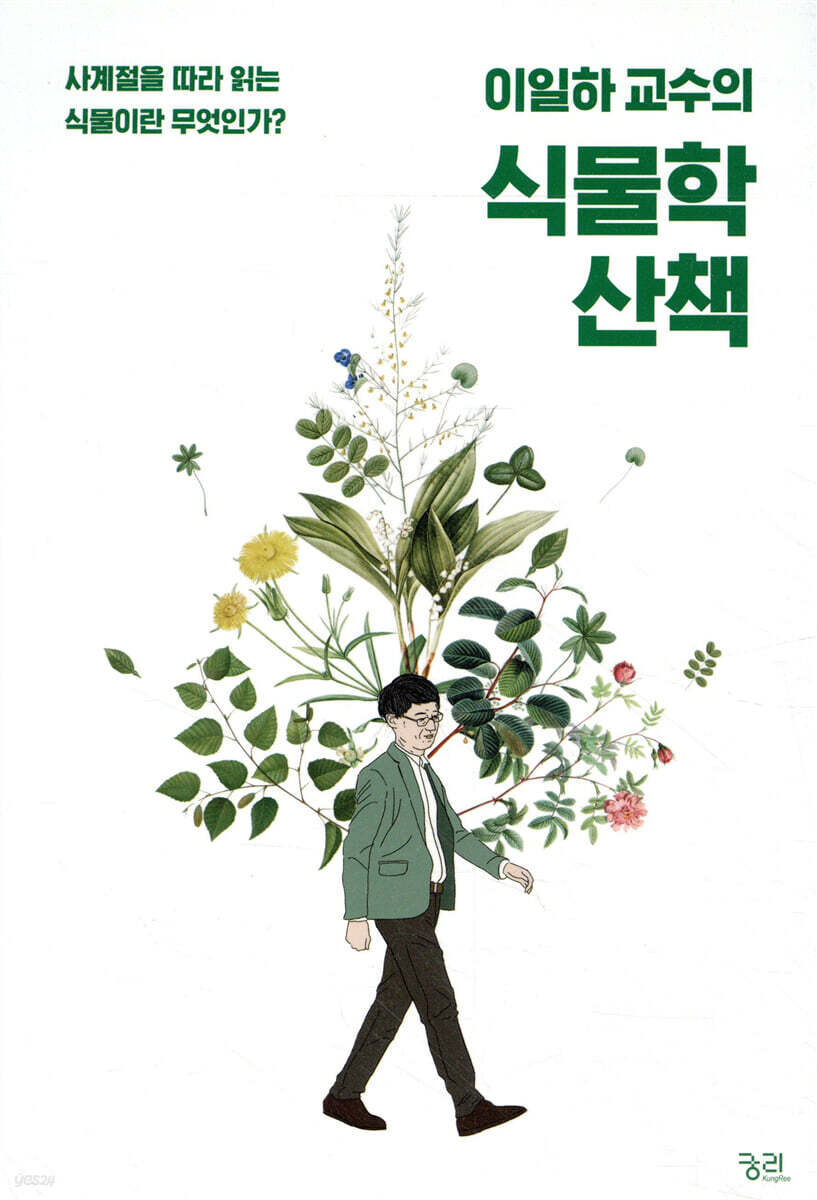 |
Description
Book Introduction
“Knowing botany will help you understand plants better!”
The growth, development, and life cycle of plants as told by Professor Lee Il-ha of Seoul National University.
If you look closely, everything about plant life is as complex and surprising as human life!
Forsythia blooms in spring, and cosmos blooms in fall.
Professor Lee Il-ha has been studying the flowering gene control mechanism that causes plants to bloom at specific times.
He is a scientist who has studied flowers for 30 years. He discovered the flowering gene luminidependence in 1993 and has been a pioneer in the field of flowering induction.
The author's extensive research and insight as a botanist, combined with his current experience as a professor in the Department of Life Sciences at Seoul National University, where he teaches biology classes for students in the humanities and social sciences, has resulted in a book that is both informative and entertaining.
In his previous work, Professor Lee Il-ha's Biology Walk, the author published a popular educational book that answered the question, "What is life rewritten in the 21st century?" This book has become a steady seller that captures the essence of "How should life sciences be taught and learned?"
The new book being presented this time is Professor Lee Il-ha's first popular botany book, written by a scientist who has studied flowers for 30 years.
How do plants determine when to flower? How do tall trees supply water to their 100-meter-tall crowns? Why can seeds awaken and germinate thousands of years later? Did you know that plants, with their simple "leaf + branch" structure, possess far more genes than animals? Why is this? Why do stems and roots grow in different directions? Why are plants and fungi connected in a dense network underground, unseen? Why do trees lose their leaves in winter? What impact do plant mutations have on humanity? ... Professor Lee Il-ha of Seoul National University's Department of Life Sciences explores the intense and magnificent world of plants through signal transmission and genes.
The growth, development, and life cycle of plants as told by Professor Lee Il-ha of Seoul National University.
If you look closely, everything about plant life is as complex and surprising as human life!
Forsythia blooms in spring, and cosmos blooms in fall.
Professor Lee Il-ha has been studying the flowering gene control mechanism that causes plants to bloom at specific times.
He is a scientist who has studied flowers for 30 years. He discovered the flowering gene luminidependence in 1993 and has been a pioneer in the field of flowering induction.
The author's extensive research and insight as a botanist, combined with his current experience as a professor in the Department of Life Sciences at Seoul National University, where he teaches biology classes for students in the humanities and social sciences, has resulted in a book that is both informative and entertaining.
In his previous work, Professor Lee Il-ha's Biology Walk, the author published a popular educational book that answered the question, "What is life rewritten in the 21st century?" This book has become a steady seller that captures the essence of "How should life sciences be taught and learned?"
The new book being presented this time is Professor Lee Il-ha's first popular botany book, written by a scientist who has studied flowers for 30 years.
How do plants determine when to flower? How do tall trees supply water to their 100-meter-tall crowns? Why can seeds awaken and germinate thousands of years later? Did you know that plants, with their simple "leaf + branch" structure, possess far more genes than animals? Why is this? Why do stems and roots grow in different directions? Why are plants and fungi connected in a dense network underground, unseen? Why do trees lose their leaves in winter? What impact do plant mutations have on humanity? ... Professor Lee Il-ha of Seoul National University's Department of Life Sciences explores the intense and magnificent world of plants through signal transmission and genes.
- You can preview some of the book's contents.
Preview
index
Recommendation
Author's Note
prolog
Part 1.
spring
1.
sprout
2.
Wake up
3.
A feast of spring flowers
4.
Rules for floral organ formation, ABC model
5.
flowering, flowers blooming
6.
dyed green
7.
The tree is a fountain that spouts water
The Five Major Plant Hormones | Auxin? Gibberellin
Part 2.
summer
1.
Producers of the ecosystem
2.
Two types of plants, C3 plants and C4 plants
3.
Perpetual embryogenesis
4.
The mathematics hidden in the arrangement of leaves: the Fibonacci sequence
5.
Spiral direction of stems of vines
6.
Exploring the Root's Surroundings
7.
Plant Chatter
The Five Major Plant Hormones: Cytokinin and Ethylene
Part 3.
autumn
1.
Grains and fruits
2.
Green Revolution
3.
Plant immune and defense systems
4.
Yeonriji, that longing
5.
Kiss of Flowers, Crystal
6.
Plant embryogenesis and seed birth
7.
Anabada of fallen leaves and plants
| The Five Major Plant Hormones | Abscisic Acid
Part 4.
winter
1.
The pine tree on top of Namsan looks like it's wearing an iron armor
2.
Annuals and perennials
3.
History of Agriculture
4.
Human Intelligence and Agriculture
5. Can I eat GMOs?
6. How are GMOs different from regular agricultural products?
7.
CRISPR, the sophisticated genetic surgery scissors
Conclusion
Search
Author's Note
prolog
Part 1.
spring
1.
sprout
2.
Wake up
3.
A feast of spring flowers
4.
Rules for floral organ formation, ABC model
5.
flowering, flowers blooming
6.
dyed green
7.
The tree is a fountain that spouts water
The Five Major Plant Hormones | Auxin? Gibberellin
Part 2.
summer
1.
Producers of the ecosystem
2.
Two types of plants, C3 plants and C4 plants
3.
Perpetual embryogenesis
4.
The mathematics hidden in the arrangement of leaves: the Fibonacci sequence
5.
Spiral direction of stems of vines
6.
Exploring the Root's Surroundings
7.
Plant Chatter
The Five Major Plant Hormones: Cytokinin and Ethylene
Part 3.
autumn
1.
Grains and fruits
2.
Green Revolution
3.
Plant immune and defense systems
4.
Yeonriji, that longing
5.
Kiss of Flowers, Crystal
6.
Plant embryogenesis and seed birth
7.
Anabada of fallen leaves and plants
| The Five Major Plant Hormones | Abscisic Acid
Part 4.
winter
1.
The pine tree on top of Namsan looks like it's wearing an iron armor
2.
Annuals and perennials
3.
History of Agriculture
4.
Human Intelligence and Agriculture
5. Can I eat GMOs?
6. How are GMOs different from regular agricultural products?
7.
CRISPR, the sophisticated genetic surgery scissors
Conclusion
Search
Detailed image

Publisher's Review
What is a plant from the perspective of plant developmental genetics?
From life science majors to general readers,
Your understanding of plants will expand even further!
Plants are important organisms that provide life to the Earth as producers of the terrestrial ecosystem.
But surprisingly, we know very little about plants.
Because of this indifference, the author has even heard from biology majors, "Do plants have signaling systems?"
The shock of that time led me to decide to write a general science book that properly explains plants, and this book can be said to be the result of that thought.
Animals and plants have different life phenomena as much as the time they have evolved apart from each other.
Plants have complex life phenomena and genetic functions that are no less complex than those of animals or humans.
Plants have only about 20 types of cells and their shapes are simple, with leaves and branches, but they have a much larger number of genes than animals.
Because plants must survive in one place where they sprout and take root, they must acquire many genes to adapt to various environments.
In addition, unlike higher animals, plants do not have acquired antibody formation genes, but instead have hundreds or even thousands of innate immune genes.
Caffeine in coffee, capsaicin in peppers, and salicylic acid from willow trees, the source of aspirin, are secondary metabolites produced by plants to protect themselves from external pathogens or stress.
Among the secondary metabolites produced by plants, there are tens of thousands of substances that humans use as medicines.
The book takes a close look at the chemical signals and genetic networks of plants, following the flow of the four seasons from spring to winter, from seed germination to the formation of floral organs, flowering, photosynthesis, leaf arrangement, root function, fertilization and seed birth, and the formation of fallen leaves.
From the perspective of plant developmental genetics, the life cycle of plants is much more intense and complex than we might expect.
This book, "Professor Lee Il-ha's Botanical Walk," not only draws on the author's extensive experience as a plant researcher for 30 years, but also covers a wide range of domestic and international botanical research results from the past to the present, satisfying both life sciences majors and general readers who want to better understand plants "scientifically."
“This book covers the life cycle of a plant, from seed to germination, growth, differentiation, flowering, fruiting, and aging.
It also covers virtually all knowledge about plants, including physiological phenomena such as photosynthesis and signal transduction, the interplay of structure and function, agricultural applications and plant transformation, and various genetic mutations.
This book, which compiles the author's extensive experience and insight as a plant researcher, explains a wide range of plant life phenomena in an easy-to-understand manner. It is an excellent textbook that will take your understanding of plants to the next level.
-Kim Ki-jung (Professor, Department of Life Sciences, Korea University)
From life science majors to general readers,
Your understanding of plants will expand even further!
Plants are important organisms that provide life to the Earth as producers of the terrestrial ecosystem.
But surprisingly, we know very little about plants.
Because of this indifference, the author has even heard from biology majors, "Do plants have signaling systems?"
The shock of that time led me to decide to write a general science book that properly explains plants, and this book can be said to be the result of that thought.
Animals and plants have different life phenomena as much as the time they have evolved apart from each other.
Plants have complex life phenomena and genetic functions that are no less complex than those of animals or humans.
Plants have only about 20 types of cells and their shapes are simple, with leaves and branches, but they have a much larger number of genes than animals.
Because plants must survive in one place where they sprout and take root, they must acquire many genes to adapt to various environments.
In addition, unlike higher animals, plants do not have acquired antibody formation genes, but instead have hundreds or even thousands of innate immune genes.
Caffeine in coffee, capsaicin in peppers, and salicylic acid from willow trees, the source of aspirin, are secondary metabolites produced by plants to protect themselves from external pathogens or stress.
Among the secondary metabolites produced by plants, there are tens of thousands of substances that humans use as medicines.
The book takes a close look at the chemical signals and genetic networks of plants, following the flow of the four seasons from spring to winter, from seed germination to the formation of floral organs, flowering, photosynthesis, leaf arrangement, root function, fertilization and seed birth, and the formation of fallen leaves.
From the perspective of plant developmental genetics, the life cycle of plants is much more intense and complex than we might expect.
This book, "Professor Lee Il-ha's Botanical Walk," not only draws on the author's extensive experience as a plant researcher for 30 years, but also covers a wide range of domestic and international botanical research results from the past to the present, satisfying both life sciences majors and general readers who want to better understand plants "scientifically."
“This book covers the life cycle of a plant, from seed to germination, growth, differentiation, flowering, fruiting, and aging.
It also covers virtually all knowledge about plants, including physiological phenomena such as photosynthesis and signal transduction, the interplay of structure and function, agricultural applications and plant transformation, and various genetic mutations.
This book, which compiles the author's extensive experience and insight as a plant researcher, explains a wide range of plant life phenomena in an easy-to-understand manner. It is an excellent textbook that will take your understanding of plants to the next level.
-Kim Ki-jung (Professor, Department of Life Sciences, Korea University)
GOODS SPECIFICS
- Date of issue: May 16, 2022
- Page count, weight, size: 336 pages | 608g | 152*224*30mm
- ISBN13: 9788958207672
- ISBN10: 8958207671
You may also like
카테고리
korean


korean

![ELLE 엘르 스페셜 에디션 A형 : 12월 [2025]](http://librairie.coreenne.fr/cdn/shop/files/b8e27a3de6c9538896439686c6b0e8fb.jpg?v=1766436872&width=3840)


