

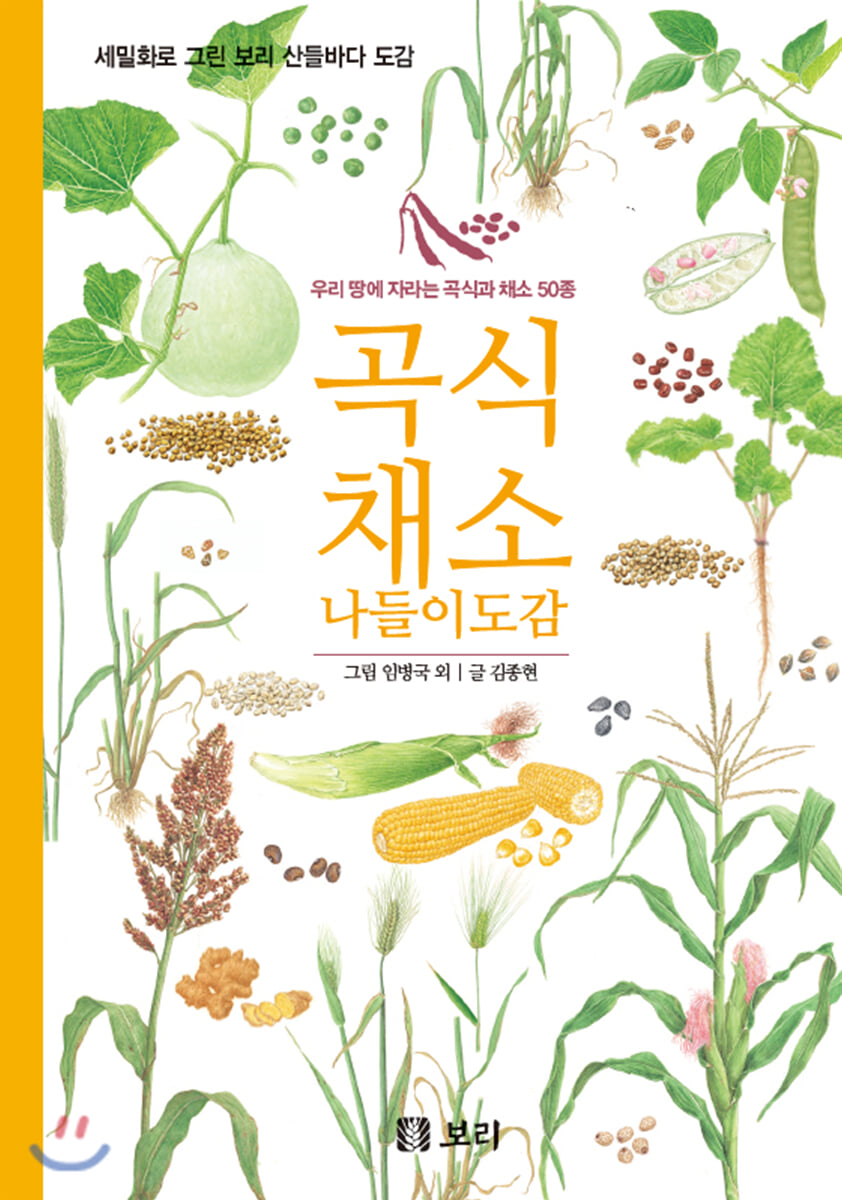
Grain and Vegetable Outing Guide
 |
Description
Book Introduction
Grain and Vegetable Gardening Guide is available for you to use and try your hand at gardening.
With the "Grain and Vegetable Garden Guide" always at hand, you can start your own garden. Farming may seem easy, but it's always a matter of figuring out when to plant and when to harvest.
I also wonder how to plant them, how much to water them, when to fertilize them, what diseases they can get, and what bugs they attract.
The "Grain and Vegetable Outing Guide" shows you at a glance when to plant, how to grow them, and when and how to harvest and prepare them.
『Grain and Vegetable Outing Guide』 contains 50 types of grains and vegetables grown in our fields.
『Grain and Vegetable Outing Guide』 is not just a book about farming methods.
You can learn about the origins, spread, and history of grains and vegetables, including when and where they were first planted and grown, how they spread widely, and when they were first planted in our country.
You can also learn about how our people farmed in the past, what native crops we have grown since ancient times, what foods we make, and how they are good for our bodies.
With the "Grain and Vegetable Garden Guide" always at hand, you can start your own garden. Farming may seem easy, but it's always a matter of figuring out when to plant and when to harvest.
I also wonder how to plant them, how much to water them, when to fertilize them, what diseases they can get, and what bugs they attract.
The "Grain and Vegetable Outing Guide" shows you at a glance when to plant, how to grow them, and when and how to harvest and prepare them.
『Grain and Vegetable Outing Guide』 contains 50 types of grains and vegetables grown in our fields.
『Grain and Vegetable Outing Guide』 is not just a book about farming methods.
You can learn about the origins, spread, and history of grains and vegetables, including when and where they were first planted and grown, how they spread widely, and when they were first planted in our country.
You can also learn about how our people farmed in the past, what native crops we have grown since ancient times, what foods we make, and how they are good for our bodies.
- You can preview some of the book's contents.
Preview
index
Note 4
Find it in pictures 8
Crop Growing Season Summary 16
Farming Work According to the Moon and Seasons 20
Grains and vegetables
Grain grain
30 oats
Length 36
Buckwheat 42
Wheat 48
rye 54
Rice 56
Barley 62
68 millet
Corn 74
80 peas
Article 86
Bean 92
98 kidney beans
100 blackcurrant beans
Mung bean 102
East 104
106 adzuki beans
Red bean 108
Fruits and vegetables
Eggplant 116
122 peppers
Peanut 128
Park 134
Cucumber 140
Melon 146
Tomato 152
Pumpkin 158
leafy vegetables
Got 166
Modern 172
Minari 178
Cabbage 184
Cabbage 190
Chives 192
lettuce 198
Spinach 204
crown daisy 210
Auk 216
Wave 222
228 green onions
Tuberous/bulbous vegetables
Potato 232
Garlic 238
Ginger 244
250 onions
Toran 256
root vegetables
Sweet potato 264
Carrot 270
No. 276
Turnip 282
Burdock 284
Oily vegetables
Perilla 292
Sesame 298
Search
Look up scientific names 306
Korean word search 308
Reference book 311
About the Author 315
Find it in pictures 8
Crop Growing Season Summary 16
Farming Work According to the Moon and Seasons 20
Grains and vegetables
Grain grain
30 oats
Length 36
Buckwheat 42
Wheat 48
rye 54
Rice 56
Barley 62
68 millet
Corn 74
80 peas
Article 86
Bean 92
98 kidney beans
100 blackcurrant beans
Mung bean 102
East 104
106 adzuki beans
Red bean 108
Fruits and vegetables
Eggplant 116
122 peppers
Peanut 128
Park 134
Cucumber 140
Melon 146
Tomato 152
Pumpkin 158
leafy vegetables
Got 166
Modern 172
Minari 178
Cabbage 184
Cabbage 190
Chives 192
lettuce 198
Spinach 204
crown daisy 210
Auk 216
Wave 222
228 green onions
Tuberous/bulbous vegetables
Potato 232
Garlic 238
Ginger 244
250 onions
Toran 256
root vegetables
Sweet potato 264
Carrot 270
No. 276
Turnip 282
Burdock 284
Oily vegetables
Perilla 292
Sesame 298
Search
Look up scientific names 306
Korean word search 308
Reference book 311
About the Author 315
Into the book
napa cabbage
history
Cabbage is the vegetable most eaten by Koreans.
Turnips grown in Yangzhou, a northern region of China, and bok choy grown in southern China naturally mixed together in Yangzhou, a northern region of China, to form cabbage.
At that time, cabbage was not as filling as it is now.
After that, as this cabbage was continuously planted and cultivated, its appearance gradually changed, and in the 16th century, a cabbage with a half-full interior was created, and in the 18th century, a cabbage with a full interior was created.
In the 『Je Min Yo Sul』 published in China in the 6th century, it was said, “The method for growing cabbage and radish is the same as that for growing water radish.”
It is said that cabbage was already planted in the south during the Southern and Northern Dynasties period in the 5th to 6th centuries, and was also grown in the northern region during the 7th to 10th centuries.
In China, it was called 'Sung(?)' meaning that it does not wither even in winter and is green like a pine tree.
Also, because the cabbage stems were white, it was called 'baichae (白菜)', and it is said that this word was changed to 'baechu (白菜)'.
Looking at Chinese records, it seems to have been cultivated in Korea since the Three Kingdoms period, but it does not appear in books or records, and the name 'Sung', meaning cabbage, first appears in 'Hyangyak Gugeupbang', published during the Goryeo Dynasty around the 13th century.
Growing and Harvesting
Cabbage is planted and eaten in the spring and also in the fall.
Koreans always make kimchi in the winter, so they plant the most cabbage in autumn.
It grows well in cool weather, so the seeds are sown in summer and pulled out in late fall or early winter during the kimchi-making season.
Harvest when the seedlings are about 80% full.
In spring and summer, the seeds are sown and harvested 30 to 40 days later.
It grows best at 18-21 degrees Celsius.
If it falls below 10 degrees, it grows slowly, and if it falls below 5 degrees, it does not grow.
Also, if the temperature rises above 23 degrees, it grows slowly and becomes more susceptible to disease.
Galmuri
Cabbage contains a lot of water, so it will rot if left alone.
If you wrap it in newspaper and store it in a cool, well-ventilated place, it will last for one or two months.
If you dig a hole in the ground where water does not collect and bury it with three or four layers of straw or newspaper, you can eat fresh cabbage even in the winter.
When burying in the ground, do not remove the outer leaves and roots.
If you leave the cabbage as is without pulling it out, it will survive the winter withered, and around April, flower stalks will rise, yellow flowers will bloom, and the pods will wither.
At this time, the seeds are received.
pests and diseases
Cabbage has soft leaves, so leaf beetles, grasshoppers, cabbage white butterfly larvae, slugs, cabbage budworms, aphids, and flea beetles eat the leaves and suck the juices.
If you plant cabbage in one field for several years, more insects will swarm you.
Cabbage plants are also prone to soft rot, which causes the soil underneath the cabbage to rot, downy mildew, which causes dark brown spots on the leaves, and root rot.
Varieties
In the old days, cabbage was a cabbage with unopened leaves and no filling inside.
Until the mid-Joseon Dynasty, there was no cabbage with a filling inside.
Cabbage that is full is called 'Kyeolgu cabbage', and cabbage that is not full is called 'Bigyeolgu cabbage'.
Before foreign varieties were introduced, there were only Gaeseong cabbage and Seoul cabbage.
The name of the variety 'Gaeseong Cabbage' first appeared in 1906, and it is said that it became Seoul Cabbage when Gaeseong Cabbage was grown in Seoul.
Both Gaeseong cabbage and Seoul cabbage are cabbages that do not have a lot of filling.
Other native cabbages include Ulsan cabbage, Uiseong cabbage, and Jeju Eotgal-i cabbage.
Starting around 1900, cabbages with a filling inside were introduced from Japan and China.
Cabbage is also grown and eaten twice a year: spring cabbage and fall cabbage.
In warm southern regions, there are also Chinese cabbages and spring onions that are planted in late fall or early winter and eaten in early spring.
old books
In 『Augmented Forest Economy』(1766), it is said, “It is good to plant in fertile and moist soil.
If you sow the seeds in early February of the lunar calendar, you can eat them in mid-March of the lunar calendar.
If you sow the seeds in early May of the lunar calendar, you can eat them in mid-June of the lunar calendar.
After sowing the seeds, cover them with compost and water them frequently.
If you want to plant in the fall, it is better to plant after Chuseok.”
He also said, “If you squeeze oil from the seeds and apply it to your hair, your hair will grow, and if you apply it to your sword, it will not rust.”
Use
Cabbage is almost always used to make kimchi.
Cabbage leaves can be used to make soup, pancakes, or as wraps.
Cabbage leaves are dried to make shiraegi.
Cabbage roots are crunchy and sweet when peeled and eaten.
Cabbage is an alkaline food and is rich in vitamin C and calcium.
It helps digestion and is also good for constipation, which is when the stool hardens and does not come out.
It also helps cure hemorrhoids and prevent colon cancer.
Cabbage has a cool aura.
People who have a cold body, poor digestion, and frequent watery stools should not eat raw fish.
At times like these, adding spicy and warm seasonings such as ginger, garlic, chili pepper, and green onion can help to soften the cold nature of the cabbage.
『Donguibogam』 states, “Its nature is neither cold nor oppressive (some say it is cool).
It tastes sweet and is non-toxic (some say it is slightly poisonous).
It helps food to be digested well, lowers energy, and promotes good circulation between the intestines and stomach.
It also removes the heat in the chest.
It relieves the thirst that occurs after drinking alcohol.
Among vegetables, cabbage is the most eaten.
However, if you eat too much, you will get a cold, so you should relieve it with ginger.”
history
Cabbage is the vegetable most eaten by Koreans.
Turnips grown in Yangzhou, a northern region of China, and bok choy grown in southern China naturally mixed together in Yangzhou, a northern region of China, to form cabbage.
At that time, cabbage was not as filling as it is now.
After that, as this cabbage was continuously planted and cultivated, its appearance gradually changed, and in the 16th century, a cabbage with a half-full interior was created, and in the 18th century, a cabbage with a full interior was created.
In the 『Je Min Yo Sul』 published in China in the 6th century, it was said, “The method for growing cabbage and radish is the same as that for growing water radish.”
It is said that cabbage was already planted in the south during the Southern and Northern Dynasties period in the 5th to 6th centuries, and was also grown in the northern region during the 7th to 10th centuries.
In China, it was called 'Sung(?)' meaning that it does not wither even in winter and is green like a pine tree.
Also, because the cabbage stems were white, it was called 'baichae (白菜)', and it is said that this word was changed to 'baechu (白菜)'.
Looking at Chinese records, it seems to have been cultivated in Korea since the Three Kingdoms period, but it does not appear in books or records, and the name 'Sung', meaning cabbage, first appears in 'Hyangyak Gugeupbang', published during the Goryeo Dynasty around the 13th century.
Growing and Harvesting
Cabbage is planted and eaten in the spring and also in the fall.
Koreans always make kimchi in the winter, so they plant the most cabbage in autumn.
It grows well in cool weather, so the seeds are sown in summer and pulled out in late fall or early winter during the kimchi-making season.
Harvest when the seedlings are about 80% full.
In spring and summer, the seeds are sown and harvested 30 to 40 days later.
It grows best at 18-21 degrees Celsius.
If it falls below 10 degrees, it grows slowly, and if it falls below 5 degrees, it does not grow.
Also, if the temperature rises above 23 degrees, it grows slowly and becomes more susceptible to disease.
Galmuri
Cabbage contains a lot of water, so it will rot if left alone.
If you wrap it in newspaper and store it in a cool, well-ventilated place, it will last for one or two months.
If you dig a hole in the ground where water does not collect and bury it with three or four layers of straw or newspaper, you can eat fresh cabbage even in the winter.
When burying in the ground, do not remove the outer leaves and roots.
If you leave the cabbage as is without pulling it out, it will survive the winter withered, and around April, flower stalks will rise, yellow flowers will bloom, and the pods will wither.
At this time, the seeds are received.
pests and diseases
Cabbage has soft leaves, so leaf beetles, grasshoppers, cabbage white butterfly larvae, slugs, cabbage budworms, aphids, and flea beetles eat the leaves and suck the juices.
If you plant cabbage in one field for several years, more insects will swarm you.
Cabbage plants are also prone to soft rot, which causes the soil underneath the cabbage to rot, downy mildew, which causes dark brown spots on the leaves, and root rot.
Varieties
In the old days, cabbage was a cabbage with unopened leaves and no filling inside.
Until the mid-Joseon Dynasty, there was no cabbage with a filling inside.
Cabbage that is full is called 'Kyeolgu cabbage', and cabbage that is not full is called 'Bigyeolgu cabbage'.
Before foreign varieties were introduced, there were only Gaeseong cabbage and Seoul cabbage.
The name of the variety 'Gaeseong Cabbage' first appeared in 1906, and it is said that it became Seoul Cabbage when Gaeseong Cabbage was grown in Seoul.
Both Gaeseong cabbage and Seoul cabbage are cabbages that do not have a lot of filling.
Other native cabbages include Ulsan cabbage, Uiseong cabbage, and Jeju Eotgal-i cabbage.
Starting around 1900, cabbages with a filling inside were introduced from Japan and China.
Cabbage is also grown and eaten twice a year: spring cabbage and fall cabbage.
In warm southern regions, there are also Chinese cabbages and spring onions that are planted in late fall or early winter and eaten in early spring.
old books
In 『Augmented Forest Economy』(1766), it is said, “It is good to plant in fertile and moist soil.
If you sow the seeds in early February of the lunar calendar, you can eat them in mid-March of the lunar calendar.
If you sow the seeds in early May of the lunar calendar, you can eat them in mid-June of the lunar calendar.
After sowing the seeds, cover them with compost and water them frequently.
If you want to plant in the fall, it is better to plant after Chuseok.”
He also said, “If you squeeze oil from the seeds and apply it to your hair, your hair will grow, and if you apply it to your sword, it will not rust.”
Use
Cabbage is almost always used to make kimchi.
Cabbage leaves can be used to make soup, pancakes, or as wraps.
Cabbage leaves are dried to make shiraegi.
Cabbage roots are crunchy and sweet when peeled and eaten.
Cabbage is an alkaline food and is rich in vitamin C and calcium.
It helps digestion and is also good for constipation, which is when the stool hardens and does not come out.
It also helps cure hemorrhoids and prevent colon cancer.
Cabbage has a cool aura.
People who have a cold body, poor digestion, and frequent watery stools should not eat raw fish.
At times like these, adding spicy and warm seasonings such as ginger, garlic, chili pepper, and green onion can help to soften the cold nature of the cabbage.
『Donguibogam』 states, “Its nature is neither cold nor oppressive (some say it is cool).
It tastes sweet and is non-toxic (some say it is slightly poisonous).
It helps food to be digested well, lowers energy, and promotes good circulation between the intestines and stomach.
It also removes the heat in the chest.
It relieves the thirst that occurs after drinking alcohol.
Among vegetables, cabbage is the most eaten.
However, if you eat too much, you will get a cold, so you should relieve it with ginger.”
--- From the text
Publisher's Review
The "Grain and Vegetable Picnic Guide" fits perfectly in your pocket.
It fits perfectly in children's hands and fits easily in a pocket.
So you can take it out to the garden and explore whatever you're curious about.
Difficult technical terms are explained or refined into simple Korean so that anyone can read them easily.
The 『Grain and Vegetable Outing Guide』 is structured as follows.
1.
The 『Grain and Vegetable Outing Guide』 is broadly divided into grains, fruit vegetables, leafy vegetables, tubers/bulb vegetables, root vegetables, and oily vegetables.
You can find the grains and vegetables you are curious about right away by searching them in pictures.
2.
In the front of the book, “Grain and Vegetable Outing Guide,” the farming work to be done according to the crop cultivation season, month, and season is separately organized.
You can see at a glance when to plant and harvest grains and vegetables.
It also details what needs to be done for each season and month.
3.
In the main text of 『Grain and Vegetable Outing Guide』, detailed descriptions of grains and vegetables and methods of planting and growing them are provided first.
After that, I wrote in detail about the history of grain, growing and harvesting, weeding, pests, varieties, old books, and uses.
It fits perfectly in children's hands and fits easily in a pocket.
So you can take it out to the garden and explore whatever you're curious about.
Difficult technical terms are explained or refined into simple Korean so that anyone can read them easily.
The 『Grain and Vegetable Outing Guide』 is structured as follows.
1.
The 『Grain and Vegetable Outing Guide』 is broadly divided into grains, fruit vegetables, leafy vegetables, tubers/bulb vegetables, root vegetables, and oily vegetables.
You can find the grains and vegetables you are curious about right away by searching them in pictures.
2.
In the front of the book, “Grain and Vegetable Outing Guide,” the farming work to be done according to the crop cultivation season, month, and season is separately organized.
You can see at a glance when to plant and harvest grains and vegetables.
It also details what needs to be done for each season and month.
3.
In the main text of 『Grain and Vegetable Outing Guide』, detailed descriptions of grains and vegetables and methods of planting and growing them are provided first.
After that, I wrote in detail about the history of grain, growing and harvesting, weeding, pests, varieties, old books, and uses.
GOODS SPECIFICS
- Publication date: October 10, 2019
- Page count, weight, size: 316 pages | 310g | 104*148*30mm
- ISBN13: 9791163140900
- ISBN10: 1163140902
- KC Certification: Certification Type: Conformity Confirmation
You may also like
카테고리
korean


korean

![ELLE 엘르 스페셜 에디션 A형 : 12월 [2025]](http://librairie.coreenne.fr/cdn/shop/files/b8e27a3de6c9538896439686c6b0e8fb.jpg?v=1766436872&width=3840)


