

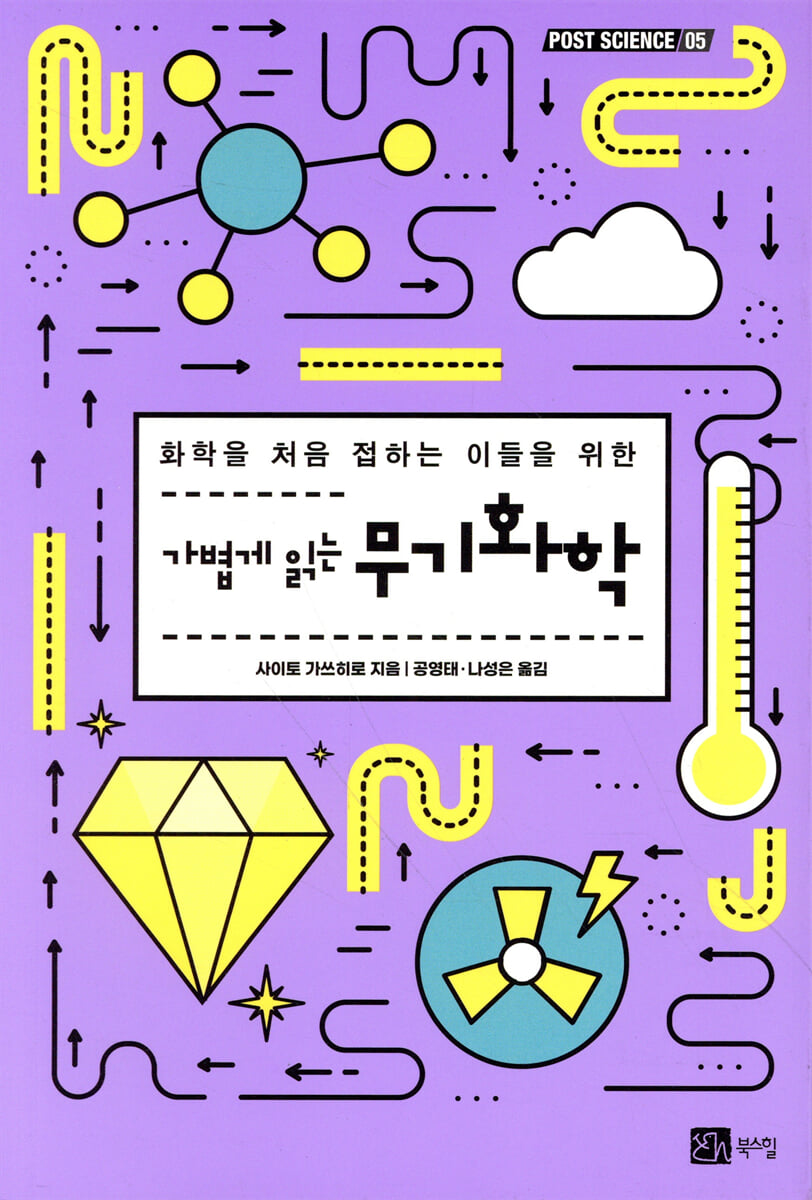
Light Reading of Inorganic Chemistry
 |
Description
Book Introduction
We live in a world full of chemicals.
The food we eat, the cosmetics we use, and the clothes we wear are all closely related to inorganic chemistry.
If we understand the concepts of inorganic chemistry and use them appropriately, we can live in a more prosperous and safer world.
Inorganic chemistry isn't a difficult discipline requiring the memorization of complex chemical formulas and difficult reaction equations. Rather, it's a fascinating discipline closely related to our daily lives. "Inorganic Chemistry Made Easy" is designed to be readable and accessible to both those who find inorganic chemistry challenging or uninterested in it, and it concisely captures useful chemical knowledge for everyday life.
This book explains key concepts and then summarizes and organizes them with illustrations to enhance the basic understanding of inorganic chemistry.
And each chapter's column covers examples of inorganic chemistry related to everyday life, such as 'The Difference Between Graphite and Diamond' and 'Why Beethoven Lost His Hearing'.
Figures and diagrams were used appropriately and the descriptions were written in concise sentences to make it easy to understand.
"Inorganic Chemistry: A Light Guide" will serve as a helpful guide not only for readers interested in inorganic chemistry, but also for those curious about how closely inorganic chemistry is related to our lives.
The food we eat, the cosmetics we use, and the clothes we wear are all closely related to inorganic chemistry.
If we understand the concepts of inorganic chemistry and use them appropriately, we can live in a more prosperous and safer world.
Inorganic chemistry isn't a difficult discipline requiring the memorization of complex chemical formulas and difficult reaction equations. Rather, it's a fascinating discipline closely related to our daily lives. "Inorganic Chemistry Made Easy" is designed to be readable and accessible to both those who find inorganic chemistry challenging or uninterested in it, and it concisely captures useful chemical knowledge for everyday life.
This book explains key concepts and then summarizes and organizes them with illustrations to enhance the basic understanding of inorganic chemistry.
And each chapter's column covers examples of inorganic chemistry related to everyday life, such as 'The Difference Between Graphite and Diamond' and 'Why Beethoven Lost His Hearing'.
Figures and diagrams were used appropriately and the descriptions were written in concise sentences to make it easy to understand.
"Inorganic Chemistry: A Light Guide" will serve as a helpful guide not only for readers interested in inorganic chemistry, but also for those curious about how closely inorganic chemistry is related to our lives.
- You can preview some of the book's contents.
Preview
index
Introduction
Chapter 1: The Simple but Difficult Structure of the Atom
1-1 What is the scope of research in inorganic chemistry?
1-2 Matter is made up of atoms.
Differences between the three particles that make up atoms 1-3
1-4 Facts about atomic number and mass number
1-5 Why atomic masses cannot be expressed as integers
1-6 moles is a unit of capacity equal to '1 dozen'.
The electron shells containing 1-7 electrons are multilayered.
Electron shells 1-8 are a collection of one or more orbitals.
1-9 There are certain rules for electronic configuration.
1-10 Valence electrons that determine the properties of atoms
Column Digital? Analog?
Chapter 2: The Periodic Table and Molecules
2-1 What is the secret hidden in the periodic table?
2-2 Special characteristics of group 3 elements
2-3 The properties of atoms change periodically.
2-4 Definition of atoms and elements
2-5 Classification of main group elements and transition elements
2-6 Unique main clan elements
Transition elements with orbital order changes from 2 to 7
2-8 Characteristics of metallic elements and metalloid elements
2-9 Various molecular notations
2-10 The difference between molecules and compounds lies in the type of components.
Column Classification of artificial elements
Chapter 3 Structure of Weapon Molecules
3-1 Chemical bonds are attractive forces that act between atoms.
3-2 Ionic bonding, in which cations and anions are combined by electrostatic attraction
3-3 Metallic bonding where metal ions combine with free electrons
3-4 Covalent bonds in which unpaired electrons are shared with each other
3-5 Single bonds and double bonds are similar to shaking hands.
3-6 Carbon creates hybrid orbitals to increase the number of unpaired electrons.
3-7 Unshared electron pairs affect the three-dimensional structure of a molecule.
3-8 Water molecules are bent due to the hybrid orbitals of oxygen.
3-9 The unshared electron pairs of polar molecules form coordinate bonds.
3-10 Water is loosely bound by hydrogen bonds.
3-11 Van der Waals forces that disappear as soon as they are created
Column Carbon isotropes
Chapter 4 Properties of the Main Group Elements
4-1 There are only four types of gaseous elements that are lighter than air.
4-2 Group 1 elements that are alkali metals
4-3 Group 2 elements containing alkaline earth metals that react violently with water
4-4 Group 12 elements, which are metallic elements that cause pollution
Elements of group 13, also called the boron group
Elements of the carbon family and group 14 that covalently bond without forming 4-6 ions
Elements of group 15, called nitrogen elements
Group 16 elements, also called oxygen group or chalcogen elements
4-9 Group 17 elements, halogen elements
4-10 Group 18 elements of the stable noble gas elements with closed shell structures
Column metalloid
Chapter 5 Properties and Reactions of Transition Elements
5-1 What are the characteristics of transition elements?
5-2 Classification of Transition Elements
5-3 Characteristics and uses of group 4 elements… … Ti, Zr, Hf
5-4 Characteristics and uses of group 5 elements… … V, Nb, Ta
5-5 Characteristics and uses of group 6 elements… … Cr, Mo, W
5-6 Characteristics and uses of group 7 elements… … Mn, Tc, Re
5-7 Characteristics and uses of group 8 elements… … Fe, Ru, Os
5-8 Characteristics and uses of group 9 elements… … Co, Rh, Ir
5-9 Characteristics and uses of group 10 elements… … Ni, Pd, Pt
5-10 Characteristics and uses of group 11 elements… … Cu, Ag, Au
Column White Gold
Chapter 6: States and Properties of Matter
6-1 What is the difference between solids, liquids, and gases?
6-2 Representative types of decisions
6-3 There are three types of crystal structures of metals.
Non-decision that does not return to 6-4 decision
Liquid crystals in which 6-5 molecules move in the same direction
6-6 Principles of LCD monitors
Superconductivity, where resistance becomes zero when the critical temperature is exceeded
6-8 A semiconductor that conducts current through shared electrons rather than free electrons
Column What is supercritical water?
Chapter 7 Properties of Solutions and Electrochemistry
7-1 What does 'melt' mean in chemistry?
7-2 Does solubility increase as temperature increases?
7-3 Definitions for dividing acids and bases
7-4 The strength of acids and bases varies depending on the charge and degree of dissociation of the ions.
7-5 Acidity and alkalinity are determined by the concentration of hydrogen ions in a solution.
7-6 Neutralization is a representative acid-base reaction.
7-7 In redox reactions, pay attention to the increase and decrease in oxidation number!
7-8 An oxidizing agent that increases the oxidation number of the other agent when reacting, and a reducing agent that reduces it
7-9 Metals oxidize when melted.
7-10 Ionization trends in the oxidation-reduction power sequence
7-11 How a Battery Generates Energy
There are many different types of 7-12 batteries.
7-13 Principles of Solar Cells
Column Acidic foods, alkaline foods
Chapter 8 Rare Metals and Radioactive Elements
8-1 Rare metals vary depending on the industrial environment of each country.
8-2 'Rare Metal' element that is difficult to obtain even if desired
8-3 Rare metal with a concentrated production area
8-4 alloy, a rare metal mainly used as a functional material for electronic components, etc.
8-5 Rare Earth's Special Features
8-6 Rare Earth is difficult to refine and contains radioactive material in its ore.
8-7 Rare earths, mainly used as luminescent materials and magnetic materials
8-8 Transuranium elements are artificial elements.
8-9 What is a nuclear reaction?
8-10 Nuclear reactions inside the Earth
8-11 The sun is a giant nuclear fusion reactor
8-12 A nuclear fission reaction that cannot be stopped once it starts
8-13 Principles of Nuclear Power Generation
8-14 How to make nuclear fuel
8-15 Reactor containment vessel requiring thorough safety measures
Column Heavy Metal Toxicity
Chapter 9 Life, Environment, and Inorganic Chemistry
9-1 Elements other than hydrogen were created through nuclear fusion.
9-2 The materials for both inorganic and organic compounds are the same.
9-3 Essential trace elements play a role in regulating the human body.
9-4 Poisonous Metals
9-5 Serious damage from acid rain
9-6 Are there any measures to reduce SOx and NOx?
9-7 Global warming threatens the Earth
9-8 Radiation is everywhere.
The 9-9 ozone hole was created by human ignorance.
There is no future for nuclear power plants that produce 9-10 plutonium.
References
Search
Chapter 1: The Simple but Difficult Structure of the Atom
1-1 What is the scope of research in inorganic chemistry?
1-2 Matter is made up of atoms.
Differences between the three particles that make up atoms 1-3
1-4 Facts about atomic number and mass number
1-5 Why atomic masses cannot be expressed as integers
1-6 moles is a unit of capacity equal to '1 dozen'.
The electron shells containing 1-7 electrons are multilayered.
Electron shells 1-8 are a collection of one or more orbitals.
1-9 There are certain rules for electronic configuration.
1-10 Valence electrons that determine the properties of atoms
Column Digital? Analog?
Chapter 2: The Periodic Table and Molecules
2-1 What is the secret hidden in the periodic table?
2-2 Special characteristics of group 3 elements
2-3 The properties of atoms change periodically.
2-4 Definition of atoms and elements
2-5 Classification of main group elements and transition elements
2-6 Unique main clan elements
Transition elements with orbital order changes from 2 to 7
2-8 Characteristics of metallic elements and metalloid elements
2-9 Various molecular notations
2-10 The difference between molecules and compounds lies in the type of components.
Column Classification of artificial elements
Chapter 3 Structure of Weapon Molecules
3-1 Chemical bonds are attractive forces that act between atoms.
3-2 Ionic bonding, in which cations and anions are combined by electrostatic attraction
3-3 Metallic bonding where metal ions combine with free electrons
3-4 Covalent bonds in which unpaired electrons are shared with each other
3-5 Single bonds and double bonds are similar to shaking hands.
3-6 Carbon creates hybrid orbitals to increase the number of unpaired electrons.
3-7 Unshared electron pairs affect the three-dimensional structure of a molecule.
3-8 Water molecules are bent due to the hybrid orbitals of oxygen.
3-9 The unshared electron pairs of polar molecules form coordinate bonds.
3-10 Water is loosely bound by hydrogen bonds.
3-11 Van der Waals forces that disappear as soon as they are created
Column Carbon isotropes
Chapter 4 Properties of the Main Group Elements
4-1 There are only four types of gaseous elements that are lighter than air.
4-2 Group 1 elements that are alkali metals
4-3 Group 2 elements containing alkaline earth metals that react violently with water
4-4 Group 12 elements, which are metallic elements that cause pollution
Elements of group 13, also called the boron group
Elements of the carbon family and group 14 that covalently bond without forming 4-6 ions
Elements of group 15, called nitrogen elements
Group 16 elements, also called oxygen group or chalcogen elements
4-9 Group 17 elements, halogen elements
4-10 Group 18 elements of the stable noble gas elements with closed shell structures
Column metalloid
Chapter 5 Properties and Reactions of Transition Elements
5-1 What are the characteristics of transition elements?
5-2 Classification of Transition Elements
5-3 Characteristics and uses of group 4 elements… … Ti, Zr, Hf
5-4 Characteristics and uses of group 5 elements… … V, Nb, Ta
5-5 Characteristics and uses of group 6 elements… … Cr, Mo, W
5-6 Characteristics and uses of group 7 elements… … Mn, Tc, Re
5-7 Characteristics and uses of group 8 elements… … Fe, Ru, Os
5-8 Characteristics and uses of group 9 elements… … Co, Rh, Ir
5-9 Characteristics and uses of group 10 elements… … Ni, Pd, Pt
5-10 Characteristics and uses of group 11 elements… … Cu, Ag, Au
Column White Gold
Chapter 6: States and Properties of Matter
6-1 What is the difference between solids, liquids, and gases?
6-2 Representative types of decisions
6-3 There are three types of crystal structures of metals.
Non-decision that does not return to 6-4 decision
Liquid crystals in which 6-5 molecules move in the same direction
6-6 Principles of LCD monitors
Superconductivity, where resistance becomes zero when the critical temperature is exceeded
6-8 A semiconductor that conducts current through shared electrons rather than free electrons
Column What is supercritical water?
Chapter 7 Properties of Solutions and Electrochemistry
7-1 What does 'melt' mean in chemistry?
7-2 Does solubility increase as temperature increases?
7-3 Definitions for dividing acids and bases
7-4 The strength of acids and bases varies depending on the charge and degree of dissociation of the ions.
7-5 Acidity and alkalinity are determined by the concentration of hydrogen ions in a solution.
7-6 Neutralization is a representative acid-base reaction.
7-7 In redox reactions, pay attention to the increase and decrease in oxidation number!
7-8 An oxidizing agent that increases the oxidation number of the other agent when reacting, and a reducing agent that reduces it
7-9 Metals oxidize when melted.
7-10 Ionization trends in the oxidation-reduction power sequence
7-11 How a Battery Generates Energy
There are many different types of 7-12 batteries.
7-13 Principles of Solar Cells
Column Acidic foods, alkaline foods
Chapter 8 Rare Metals and Radioactive Elements
8-1 Rare metals vary depending on the industrial environment of each country.
8-2 'Rare Metal' element that is difficult to obtain even if desired
8-3 Rare metal with a concentrated production area
8-4 alloy, a rare metal mainly used as a functional material for electronic components, etc.
8-5 Rare Earth's Special Features
8-6 Rare Earth is difficult to refine and contains radioactive material in its ore.
8-7 Rare earths, mainly used as luminescent materials and magnetic materials
8-8 Transuranium elements are artificial elements.
8-9 What is a nuclear reaction?
8-10 Nuclear reactions inside the Earth
8-11 The sun is a giant nuclear fusion reactor
8-12 A nuclear fission reaction that cannot be stopped once it starts
8-13 Principles of Nuclear Power Generation
8-14 How to make nuclear fuel
8-15 Reactor containment vessel requiring thorough safety measures
Column Heavy Metal Toxicity
Chapter 9 Life, Environment, and Inorganic Chemistry
9-1 Elements other than hydrogen were created through nuclear fusion.
9-2 The materials for both inorganic and organic compounds are the same.
9-3 Essential trace elements play a role in regulating the human body.
9-4 Poisonous Metals
9-5 Serious damage from acid rain
9-6 Are there any measures to reduce SOx and NOx?
9-7 Global warming threatens the Earth
9-8 Radiation is everywhere.
The 9-9 ozone hole was created by human ignorance.
There is no future for nuclear power plants that produce 9-10 plutonium.
References
Search
GOODS SPECIFICS
- Date of publication: August 15, 2019
- Page count, weight, size: 232 pages | 436g | 148*210*20mm
- ISBN13: 9791159712197
- ISBN10: 1159712190
You may also like
카테고리
korean


korean

![ELLE 엘르 스페셜 에디션 A형 : 12월 [2025]](http://librairie.coreenne.fr/cdn/shop/files/b8e27a3de6c9538896439686c6b0e8fb.jpg?v=1766436872&width=3840)


