

NEWTON HIGHLIGHT Newton Highlights 100,000 Proteins
 |
Description
Book Introduction
Protein, which makes up everything in our body
Without protein, there is no life!
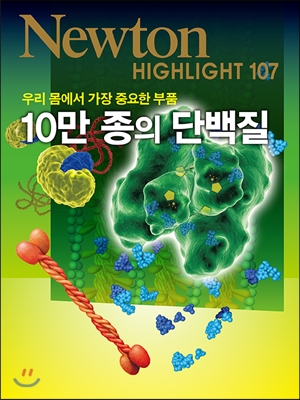
This book is an 'introductory book on proteins' that shows the invisible functions of proteins through precise color illustrations.
Before getting into the main topic, the 'Prologue' provides an overview of what proteins are.
In Chapter 1, we will learn about the process by which proteins are made.
We introduce the process by which the protein we eat is broken down into amino acids and becomes another protein through the 'blueprint' called genes.
Chapter 2 explains the proteins found in humans and other living things, including the proteins that make up our bodies and those involved in senses and memory.
Chapter 3 examines the mechanism of enzymes, which are “proteins that cause chemical reactions quickly and accurately.”
In Chapter 4, under the theme of ‘Protein shape is key’, we will examine the relationship between protein shape and its function.
Chapter 5 introduces several important research findings on proteins, focusing on themes strongly related to disease.
As this kind of research progresses, our lives will also change significantly.
Let's learn about the amazing world of proteins that work in all living things, including our bodies, plants, animals, and bacteria, through this book.
Without protein, there is no life!
This book is an 'introductory book on proteins' that shows the invisible functions of proteins through precise color illustrations.
Before getting into the main topic, the 'Prologue' provides an overview of what proteins are.
In Chapter 1, we will learn about the process by which proteins are made.
We introduce the process by which the protein we eat is broken down into amino acids and becomes another protein through the 'blueprint' called genes.
Chapter 2 explains the proteins found in humans and other living things, including the proteins that make up our bodies and those involved in senses and memory.
Chapter 3 examines the mechanism of enzymes, which are “proteins that cause chemical reactions quickly and accurately.”
In Chapter 4, under the theme of ‘Protein shape is key’, we will examine the relationship between protein shape and its function.
Chapter 5 introduces several important research findings on proteins, focusing on themes strongly related to disease.
As this kind of research progresses, our lives will also change significantly.
Let's learn about the amazing world of proteins that work in all living things, including our bodies, plants, animals, and bacteria, through this book.
- You can preview some of the book's contents.
Preview
index
What is a prologue protein?
Protein is the most important thing ①~② _ Function of protein ①~② _ Identity of protein _ Form of protein
Column Why do plants have low protein content?
Chapter 1: This is how proteins are made
From food to the body _ All 20 amino acids _ Combination of amino acids _ Central dogma _ DNA replication _ Transcription (DNA to RNA) _ RNA editing _ Translation (RNA to protein) _ Completion of proteins _ Origin of the genetic code _ Left-hand and right-hand forms of amino acids
Balanced intake of column amino acids is important
Chapter 2 Various Proteins
Proteins in skin, hair, and nails _ Proteins in bones _ Proteins that form the body _ Proteins involved in memory _ Proteins in the retina _ Proteins in the tongue _ Proteins secreted from the stomach _ Proteins outside cells _ Proteins in organisms other than humans _ Uses of proteins
Column Why are collagen foods good for the skin?
Chapter 3: Enzymes, responsible for chemical reactions in the body
What is an enzyme? _ Digests rice _ Attacks bacteria _ Breaks down alcohol _ Mechanism of enzyme production _ Controls enzyme activity _ Creates energy sources _ Replicates DNA c Selects the right amino acids _ Partners to transmit information _ Maintains the right amount of products _ Major enzymes ①~② _ Guiding metabolism _ Enzyme Q&A
Protein responsible for columnar photosynthesis
Chapter 4: Protein Shape is Key
Various shapes of proteins _ Fibers and tubes that support the body _ Molecular motors ①~② _ Oxygen carriers _ Pumps and motors that create energy _ Decompose food _ Protect the body from external factors _ Transmit information _ Protein shapes and development of medicines _ Prediction of protein shapes _ Analysis of protein structures ①~②
The ultra-precise molecular motor of column bacteria
Folding Game of Column Proteins
A very small 'ruler' that measures length within a column cell
Mass spectrometry of column proteins
* SACLA accelerates protein structure analysis
* Interview: Dr. David Goodsell
Chapter 5: Key Themes in Protein Research
Critical membrane proteins _ Cell initialization factors _ Glowing proteins _ Sugar chains _ Degradation of unnecessary proteins _ Quality control in cells in the spotlight _ Protein folding _ Protein-RNA complexes _ Tools for gene editing _ Unknown proteins _ Advances in protein research
Treating Incurable Diseases with Column RNA
Protein is the most important thing ①~② _ Function of protein ①~② _ Identity of protein _ Form of protein
Column Why do plants have low protein content?
Chapter 1: This is how proteins are made
From food to the body _ All 20 amino acids _ Combination of amino acids _ Central dogma _ DNA replication _ Transcription (DNA to RNA) _ RNA editing _ Translation (RNA to protein) _ Completion of proteins _ Origin of the genetic code _ Left-hand and right-hand forms of amino acids
Balanced intake of column amino acids is important
Chapter 2 Various Proteins
Proteins in skin, hair, and nails _ Proteins in bones _ Proteins that form the body _ Proteins involved in memory _ Proteins in the retina _ Proteins in the tongue _ Proteins secreted from the stomach _ Proteins outside cells _ Proteins in organisms other than humans _ Uses of proteins
Column Why are collagen foods good for the skin?
Chapter 3: Enzymes, responsible for chemical reactions in the body
What is an enzyme? _ Digests rice _ Attacks bacteria _ Breaks down alcohol _ Mechanism of enzyme production _ Controls enzyme activity _ Creates energy sources _ Replicates DNA c Selects the right amino acids _ Partners to transmit information _ Maintains the right amount of products _ Major enzymes ①~② _ Guiding metabolism _ Enzyme Q&A
Protein responsible for columnar photosynthesis
Chapter 4: Protein Shape is Key
Various shapes of proteins _ Fibers and tubes that support the body _ Molecular motors ①~② _ Oxygen carriers _ Pumps and motors that create energy _ Decompose food _ Protect the body from external factors _ Transmit information _ Protein shapes and development of medicines _ Prediction of protein shapes _ Analysis of protein structures ①~②
The ultra-precise molecular motor of column bacteria
Folding Game of Column Proteins
A very small 'ruler' that measures length within a column cell
Mass spectrometry of column proteins
* SACLA accelerates protein structure analysis
* Interview: Dr. David Goodsell
Chapter 5: Key Themes in Protein Research
Critical membrane proteins _ Cell initialization factors _ Glowing proteins _ Sugar chains _ Degradation of unnecessary proteins _ Quality control in cells in the spotlight _ Protein folding _ Protein-RNA complexes _ Tools for gene editing _ Unknown proteins _ Advances in protein research
Treating Incurable Diseases with Column RNA
Detailed image

Publisher's Review
Protein, which makes up everything in our body
Without protein, there is no life!
When you think of protein, what comes to mind? Some might think of it as a nutrient found abundantly in foods like egg whites, meat, and beans.
Of course, protein is one of the most important nutrients for humans.
Separately, proteins are also nanoscale universal devices that create biological capabilities that no high-performance machine can replicate.
Humans have about 50,000 to 100,000 different types of proteins.
These proteins make up our body, which is made up of various parts such as the brain, muscles, bones, and hair, and they cooperate with each other to support life activities itself.
It is thanks to proteins that we can breathe, move our bodies, and perceive objects with our eyes.
And proteins themselves are also responsible for creating and breaking down proteins.
Ultimately, the saying, "Without protein, there is no life" can be said to succinctly show the relationship between protein and life.
This book is an 'introductory book on proteins' that shows the invisible functions of proteins through precise color illustrations.
Before getting into the main topic, the 'Prologue' provides an overview of what proteins are.
In Chapter 1, we will learn about the process by which proteins are made.
We introduce the process by which the protein we eat is broken down into amino acids and becomes another protein through the 'blueprint' called genes.
Chapter 2 explains the proteins found in humans and other living things, including the proteins that make up our bodies and those involved in senses and memory.
Chapter 3 examines the mechanism of enzymes, which are “proteins that cause chemical reactions quickly and accurately.”
In Chapter 4, under the theme of ‘Protein shape is key’, we will examine the relationship between protein shape and its function.
Chapter 5 introduces several important research findings on proteins, focusing on themes strongly related to disease.
As this kind of research progresses, our lives will also change significantly.
Let's learn about the amazing world of proteins that work in all living things, including our bodies, plants, animals, and bacteria, through this book.
What is a protein? (Function, identity, and form of proteins)
Our body is made up of various proteins.
Muscles that move the body, bones that support the body, the brain that gives commands to the entire body, eyes that perceive information about the surroundings, skin that covers the body…
What are these various parts made of?
In fact, excluding water, about half of the human body is made up of protein.
Moreover, the function of each part is created by proteins.
In other words, protein is absolutely necessary for the human body to function normally.
In the prologue of the book, we first learn what protein is.
All content in the book is composed of world-class, precise illustrations and easy-to-understand, detailed explanations by experts.
The process by which proteins are made
How exactly is protein made? The raw material for protein made in the body comes from the protein we eat.
It is broken down into amino acids in the body and linked together based on a certain ‘blueprint’ to complete a new protein.
The blueprint is the genes.
Chapter 1 of the book introduces the story of how genes are used as a blueprint to create proteins: types of amino acids, the central dogma, DNA replication, transcription, RNA editing, translation, protein completion, and the genetic code.
Various proteins in our body
What specific proteins are found in the body? Chapter 2 introduces various proteins related to the human body, including those that build skin, hair, nails, and bones; those that sense taste and vision, such as the retina and tongue; and those involved in memory.
We also learn about proteins found in living things other than humans.
Enzymes responsible for chemical reactions in the body
Chemical reactions that break down molecules or join two molecules together are constantly occurring in our bodies.
Enzymes can be defined as ‘proteins that cause chemical reactions quickly and accurately.’
We are able to live thanks to countless enzymes that cause chemical reactions at high speed.
The word 'enzyme' is widely known, but it is also a word that is misunderstood.
Chapter 3 explores the mechanisms of enzymes, including their diverse functions, the process of enzyme production, key enzymes, and metabolic maps, exploring the complex chemical mechanisms created by living organisms during evolution.
For proteins, shape is key
Proteins are all composed of chains of amino acids, but why do they perform such diverse functions? The chains of amino acids that make up proteins fold into various shapes.
And these different forms are what give the protein its function.
Chapter 4 examines the diverse forms of proteins, molecular motors, food breakdown, information transfer, drug development, and protein structural analysis.
And we'll also cover how to look at microscopic proteins.
Major themes in protein research
The reason we can stay healthy is because various proteins in our bodies are functioning normally.
When you have a disease, you see abnormalities in certain proteins.
Therefore, the study of human proteins is very important in medicine.
Chapter 5 introduces various studies on proteins, focusing on themes strongly related to disease, such as membrane proteins, sugar chains, degradation of unnecessary proteins, quality control within cells, protein-RNA complexes, and tools for gene editing.
Without protein, there is no life!
When you think of protein, what comes to mind? Some might think of it as a nutrient found abundantly in foods like egg whites, meat, and beans.
Of course, protein is one of the most important nutrients for humans.
Separately, proteins are also nanoscale universal devices that create biological capabilities that no high-performance machine can replicate.
Humans have about 50,000 to 100,000 different types of proteins.
These proteins make up our body, which is made up of various parts such as the brain, muscles, bones, and hair, and they cooperate with each other to support life activities itself.
It is thanks to proteins that we can breathe, move our bodies, and perceive objects with our eyes.
And proteins themselves are also responsible for creating and breaking down proteins.
Ultimately, the saying, "Without protein, there is no life" can be said to succinctly show the relationship between protein and life.
This book is an 'introductory book on proteins' that shows the invisible functions of proteins through precise color illustrations.
Before getting into the main topic, the 'Prologue' provides an overview of what proteins are.
In Chapter 1, we will learn about the process by which proteins are made.
We introduce the process by which the protein we eat is broken down into amino acids and becomes another protein through the 'blueprint' called genes.
Chapter 2 explains the proteins found in humans and other living things, including the proteins that make up our bodies and those involved in senses and memory.
Chapter 3 examines the mechanism of enzymes, which are “proteins that cause chemical reactions quickly and accurately.”
In Chapter 4, under the theme of ‘Protein shape is key’, we will examine the relationship between protein shape and its function.
Chapter 5 introduces several important research findings on proteins, focusing on themes strongly related to disease.
As this kind of research progresses, our lives will also change significantly.
Let's learn about the amazing world of proteins that work in all living things, including our bodies, plants, animals, and bacteria, through this book.
What is a protein? (Function, identity, and form of proteins)
Our body is made up of various proteins.
Muscles that move the body, bones that support the body, the brain that gives commands to the entire body, eyes that perceive information about the surroundings, skin that covers the body…
What are these various parts made of?
In fact, excluding water, about half of the human body is made up of protein.
Moreover, the function of each part is created by proteins.
In other words, protein is absolutely necessary for the human body to function normally.
In the prologue of the book, we first learn what protein is.
All content in the book is composed of world-class, precise illustrations and easy-to-understand, detailed explanations by experts.
The process by which proteins are made
How exactly is protein made? The raw material for protein made in the body comes from the protein we eat.
It is broken down into amino acids in the body and linked together based on a certain ‘blueprint’ to complete a new protein.
The blueprint is the genes.
Chapter 1 of the book introduces the story of how genes are used as a blueprint to create proteins: types of amino acids, the central dogma, DNA replication, transcription, RNA editing, translation, protein completion, and the genetic code.
Various proteins in our body
What specific proteins are found in the body? Chapter 2 introduces various proteins related to the human body, including those that build skin, hair, nails, and bones; those that sense taste and vision, such as the retina and tongue; and those involved in memory.
We also learn about proteins found in living things other than humans.
Enzymes responsible for chemical reactions in the body
Chemical reactions that break down molecules or join two molecules together are constantly occurring in our bodies.
Enzymes can be defined as ‘proteins that cause chemical reactions quickly and accurately.’
We are able to live thanks to countless enzymes that cause chemical reactions at high speed.
The word 'enzyme' is widely known, but it is also a word that is misunderstood.
Chapter 3 explores the mechanisms of enzymes, including their diverse functions, the process of enzyme production, key enzymes, and metabolic maps, exploring the complex chemical mechanisms created by living organisms during evolution.
For proteins, shape is key
Proteins are all composed of chains of amino acids, but why do they perform such diverse functions? The chains of amino acids that make up proteins fold into various shapes.
And these different forms are what give the protein its function.
Chapter 4 examines the diverse forms of proteins, molecular motors, food breakdown, information transfer, drug development, and protein structural analysis.
And we'll also cover how to look at microscopic proteins.
Major themes in protein research
The reason we can stay healthy is because various proteins in our bodies are functioning normally.
When you have a disease, you see abnormalities in certain proteins.
Therefore, the study of human proteins is very important in medicine.
Chapter 5 introduces various studies on proteins, focusing on themes strongly related to disease, such as membrane proteins, sugar chains, degradation of unnecessary proteins, quality control within cells, protein-RNA complexes, and tools for gene editing.
GOODS SPECIFICS
- Date of issue: April 15, 2017
- Page count, weight, size: 192 pages | 629g | 210*275*8mm
- ISBN13: 9791187879039
- ISBN10: 1187879037
You may also like
카테고리
korean


korean

![GQ KOREA Mark (Monthly): December [2025]](http://librairie.coreenne.fr/cdn/shop/files/8ef265dbbfbf186523ed75ba7319009d.jpg?v=1765340328&width=3840)


