

Molecular Gastronomy: Science on the Table
 |
Description
Book Introduction
From molecular gastronomy to food pairing and 3D food printers
A fascinating and delicious world of food tech unfolds where cooking and science meet!
In September 2010, an interesting scene unfolded at Harvard University, one of the world's top universities.
The first class opened attracted 700 students, more than double the 300-seat capacity, and a lottery was held to determine who would take the class, and a spectacle ensued, with students writing essays explaining why they wanted to take the class.
The topical lecture is 'Science & Cooking' by Professor David Weitz of the Department of Applied Physics.
Professor Witz explained that the purpose of the course was to use cooking, and molecular gastronomy in particular, as a tool to teach students applied physics and engineering in a fun way.
As science and cooking have become increasingly intertwined and interest in molecular gastronomy has grown, the book "Science on the Table: Molecular Gastronomy" has been published, examining the scientific principles hidden in cooking and forecasting the evolution of cooking and its future in line with scientific advancements.
This book unfolds a fascinating story about the mechanism by which humans perceive taste, the ingredients that make up delicious dishes, the process of constantly evolving tools and techniques in pursuit of more delicious food, and the resulting new textures, flavors, and dishes.
For example, the story of how humans perceive taste and develop likes and dislikes for food, how groundbreaking foods such as drinkable cream puffs and inhaled coffee were created, and the principles of electric rice cookers that surpass cauldrons were created are explained in detail and interestingly across chemistry, physiology, and medicine.
The author, Shinichi Ishikawa, is Japan's leading molecular gastronomy researcher who majored in molecular food science, molecular gastronomy, and molecular nutrition. He said that he wrote this book after experiencing the Great East Japan Earthquake on March 11, 2011, and feeling a sense of social responsibility as a scientist.
After realizing that delicious food can be a source of comfort and hope for those in dire straits, I decided to use science to create even more delicious dishes.
In this book, the author explores the close relationship between science and cooking, and the scientific principles hidden within cooking, while also providing a glimpse into how science will contribute to and be applied in human eating habits, and the future of cooking and the potential of food technology.
A fascinating and delicious world of food tech unfolds where cooking and science meet!
In September 2010, an interesting scene unfolded at Harvard University, one of the world's top universities.
The first class opened attracted 700 students, more than double the 300-seat capacity, and a lottery was held to determine who would take the class, and a spectacle ensued, with students writing essays explaining why they wanted to take the class.
The topical lecture is 'Science & Cooking' by Professor David Weitz of the Department of Applied Physics.
Professor Witz explained that the purpose of the course was to use cooking, and molecular gastronomy in particular, as a tool to teach students applied physics and engineering in a fun way.
As science and cooking have become increasingly intertwined and interest in molecular gastronomy has grown, the book "Science on the Table: Molecular Gastronomy" has been published, examining the scientific principles hidden in cooking and forecasting the evolution of cooking and its future in line with scientific advancements.
This book unfolds a fascinating story about the mechanism by which humans perceive taste, the ingredients that make up delicious dishes, the process of constantly evolving tools and techniques in pursuit of more delicious food, and the resulting new textures, flavors, and dishes.
For example, the story of how humans perceive taste and develop likes and dislikes for food, how groundbreaking foods such as drinkable cream puffs and inhaled coffee were created, and the principles of electric rice cookers that surpass cauldrons were created are explained in detail and interestingly across chemistry, physiology, and medicine.
The author, Shinichi Ishikawa, is Japan's leading molecular gastronomy researcher who majored in molecular food science, molecular gastronomy, and molecular nutrition. He said that he wrote this book after experiencing the Great East Japan Earthquake on March 11, 2011, and feeling a sense of social responsibility as a scientist.
After realizing that delicious food can be a source of comfort and hope for those in dire straits, I decided to use science to create even more delicious dishes.
In this book, the author explores the close relationship between science and cooking, and the scientific principles hidden within cooking, while also providing a glimpse into how science will contribute to and be applied in human eating habits, and the future of cooking and the potential of food technology.
- You can preview some of the book's contents.
Preview
index
Chapter 1: A Delicious Encounter of Cooking and Science
1.
When Chef Meets Science
The Flow of 'Molecules' into the World of Cooking
What's Hidden in Elbuy's Ferran Adria's Avant-Garde Cuisine
Introduction of science and technology for developing new dishes
Column ① Three Revolutions in the Culinary World Created by Ferran Adria
2.
When Scientist Meets Cooking
Harvard's Passion 'Cooking' Class
Hervé This, the father of molecular gastronomy
The Challenge of Kyoto Cuisine? The Fusion of Agrochemistry and Gastronomy
Column ② Heston Blumenthal, a science-savvy chef
3.
The Future of Cooking and Science
Is molecular gastronomy dead?
Redefining molecular cooking from a scientific and technological perspective
What you can do with molecular cooking
Column ③ Classification of Cuisines by Cooking Style and Invention of Cuisines
Chapter 2: The Mechanism of Feeling Cooking
1.
The taste of food is felt by the brain.
Taste is not in the dish, it's in the brain.
The taste of food perceived by the brain
The culinary dilemma humans must solve
Column ④ Neurogastronomy
2.
Feel the taste and smell of the food
The mechanism for tasting food
The mechanism for sensing the smell of cooking
The Interaction of Taste and Smell
Column 5: The Molecular Mechanism that Enhances Umami Flavor and the Development of the "Umami Burger"
3.
Feel the texture and temperature of the dish
A texture that rivals flavor
The identity of the texture
Taste according to temperature
Column 6: Why Fruit Tastes Sweeter When Chilled
Chapter 3: The Scientific Principles Hidden in Cooking
1.
The four basic molecules that make up delicious dishes
Water? He who controls water molecules controls cooking?
Lipid? Sinful taste molecules
Carbohydrates and proteins? Chemically delicious small molecules, physically delicious large molecules.
Column ⑦ The Significance of Understanding Food Molecules as the "Building Materials" of Cooking
2.
The molecule that holds the key to delicious cuisine
Taste molecules? What is transmitted to the taste buds in cooking?
Fragrance molecules? The most important factor influencing likes and dislikes.
Color molecules? Taste begins with the eyes.
Column ⑧ Food Pairing Hypothesis and Molecular Sommelier
3.
Three types of reactions and substances that occur in cooking
Chemical Reactions? The Light and Shadow of the King of Cooking Reactions, the Maillard Reaction
Enzyme Reaction? Creating Flavor with the Power of Life
Three Forms of Matter? The emergence of "inhalable coffee" through phase transitions.
Column 9: Applying Transglutaminase to Molecular Cooking, Creating a Variety of Textures
Chapter 4: The Scientific Principles Hidden in the Cooking Process
1.
Before making a delicious dish
The future of cooking starts with looking at the entire flow of food.
The difference between cooking and processing
The three elements of cooking are ingredients, tools, and people.
Column ⑩ Did cooking evolve the human brain and degenerate the body?
2.
cooking utensils
The ultimate kitchen tool you'd want to take to a deserted island: a knife
Diversifying heating cooking appliances
Experimental tools as cooking utensils
Column ⑪ What is the greatest cooking utensil in human history?
3.
Cooking operation
A simple yet profound 'cut'
Apply heat, take away heat
'Additions' to design new dishes
Column ⑫ 3D Food Printer Issue 1: Why NASA is Paying Attention
Chapter 5: The Cuisine of the Future
1.
Steak and molecular gastronomy
If you pursue a delicious steak, you'll eventually end up raising your own cattle.
Molecular Gastronomy of Meat? The World of Anti-Aging
The potential of super steaks through molecular gastronomy
Column ⑬ Is the emergence of the ‘test-tube meat hamburger’ the beginning of a new era of meat consumption?
2.
Rice balls and molecular cuisine
Delicious rice definitely exists
Molecular Gastronomy of Rice? The Latest Electric Rice Cooker, Beyond Stovetop Cooking
The potential of super rice balls using molecular gastronomy
Column ⑭ 3D Food Printer Issue 2: Printing Individualized Food
3.
Omelettes and molecular cuisine
Cooking begins with eggs and ends with eggs.
The Molecular Gastronomy of Eggs? Why Eggs Are Multi-Players
The potential of super omelets through molecular gastronomy
Column ⑮ 3D Food Printer Issue 3: The Significance of Cooking When Printing Food Ingredients
1.
When Chef Meets Science
The Flow of 'Molecules' into the World of Cooking
What's Hidden in Elbuy's Ferran Adria's Avant-Garde Cuisine
Introduction of science and technology for developing new dishes
Column ① Three Revolutions in the Culinary World Created by Ferran Adria
2.
When Scientist Meets Cooking
Harvard's Passion 'Cooking' Class
Hervé This, the father of molecular gastronomy
The Challenge of Kyoto Cuisine? The Fusion of Agrochemistry and Gastronomy
Column ② Heston Blumenthal, a science-savvy chef
3.
The Future of Cooking and Science
Is molecular gastronomy dead?
Redefining molecular cooking from a scientific and technological perspective
What you can do with molecular cooking
Column ③ Classification of Cuisines by Cooking Style and Invention of Cuisines
Chapter 2: The Mechanism of Feeling Cooking
1.
The taste of food is felt by the brain.
Taste is not in the dish, it's in the brain.
The taste of food perceived by the brain
The culinary dilemma humans must solve
Column ④ Neurogastronomy
2.
Feel the taste and smell of the food
The mechanism for tasting food
The mechanism for sensing the smell of cooking
The Interaction of Taste and Smell
Column 5: The Molecular Mechanism that Enhances Umami Flavor and the Development of the "Umami Burger"
3.
Feel the texture and temperature of the dish
A texture that rivals flavor
The identity of the texture
Taste according to temperature
Column 6: Why Fruit Tastes Sweeter When Chilled
Chapter 3: The Scientific Principles Hidden in Cooking
1.
The four basic molecules that make up delicious dishes
Water? He who controls water molecules controls cooking?
Lipid? Sinful taste molecules
Carbohydrates and proteins? Chemically delicious small molecules, physically delicious large molecules.
Column ⑦ The Significance of Understanding Food Molecules as the "Building Materials" of Cooking
2.
The molecule that holds the key to delicious cuisine
Taste molecules? What is transmitted to the taste buds in cooking?
Fragrance molecules? The most important factor influencing likes and dislikes.
Color molecules? Taste begins with the eyes.
Column ⑧ Food Pairing Hypothesis and Molecular Sommelier
3.
Three types of reactions and substances that occur in cooking
Chemical Reactions? The Light and Shadow of the King of Cooking Reactions, the Maillard Reaction
Enzyme Reaction? Creating Flavor with the Power of Life
Three Forms of Matter? The emergence of "inhalable coffee" through phase transitions.
Column 9: Applying Transglutaminase to Molecular Cooking, Creating a Variety of Textures
Chapter 4: The Scientific Principles Hidden in the Cooking Process
1.
Before making a delicious dish
The future of cooking starts with looking at the entire flow of food.
The difference between cooking and processing
The three elements of cooking are ingredients, tools, and people.
Column ⑩ Did cooking evolve the human brain and degenerate the body?
2.
cooking utensils
The ultimate kitchen tool you'd want to take to a deserted island: a knife
Diversifying heating cooking appliances
Experimental tools as cooking utensils
Column ⑪ What is the greatest cooking utensil in human history?
3.
Cooking operation
A simple yet profound 'cut'
Apply heat, take away heat
'Additions' to design new dishes
Column ⑫ 3D Food Printer Issue 1: Why NASA is Paying Attention
Chapter 5: The Cuisine of the Future
1.
Steak and molecular gastronomy
If you pursue a delicious steak, you'll eventually end up raising your own cattle.
Molecular Gastronomy of Meat? The World of Anti-Aging
The potential of super steaks through molecular gastronomy
Column ⑬ Is the emergence of the ‘test-tube meat hamburger’ the beginning of a new era of meat consumption?
2.
Rice balls and molecular cuisine
Delicious rice definitely exists
Molecular Gastronomy of Rice? The Latest Electric Rice Cooker, Beyond Stovetop Cooking
The potential of super rice balls using molecular gastronomy
Column ⑭ 3D Food Printer Issue 2: Printing Individualized Food
3.
Omelettes and molecular cuisine
Cooking begins with eggs and ends with eggs.
The Molecular Gastronomy of Eggs? Why Eggs Are Multi-Players
The potential of super omelets through molecular gastronomy
Column ⑮ 3D Food Printer Issue 3: The Significance of Cooking When Printing Food Ingredients
Detailed image
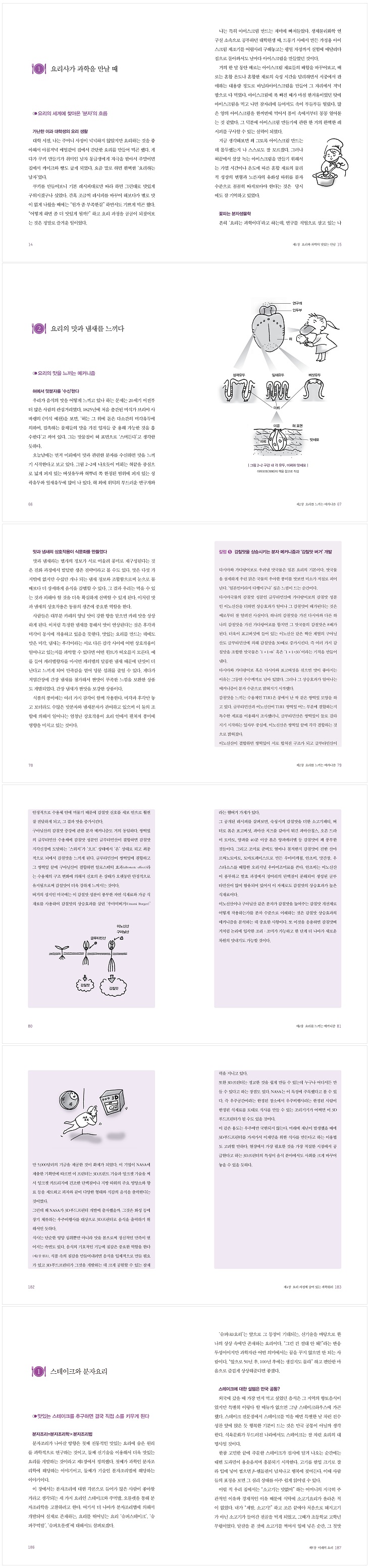
Into the book
Mioko Hatanaka, a cooking magazine editor, calls food that is "consumed" in the context of popular culture, like popular clothes, music, art, and comics, "fashion food."
This name was given to foods such as tiramisu, nata de coco, red tea mushroom, gopchang jeongol, and salted yeast that gained popularity for a short time and then quickly faded away.
The fact that food trends are like this may be due to the instincts that are hardwired into the brains of omnivorous animals.
In order to satisfy the primal desires of omnivores who say, "I get tired of eating the same thing," and "I want to eat something different," I think it is a very socially valuable thing to create and introduce new dishes that no one has ever seen before to the world through molecular gastronomy and molecular cooking to prevent the development of a fear of new foods.
---From "Humans are omnivorous animals, so molecular cooking is necessary"
A very interesting attempt was made with a product called 'Le Whif', which allows you to enjoy coffee or chocolate by 'inhaling' it like a cigarette.
Professor David Edwards, a biomedical engineering major at Harvard University, and his research team came up with the idea of inhaling flavored powder into the mouth, inspired by the way medicines and vaccines are absorbed through inhalers.
It is a method of providing food in the form of an aerosol in which solid particles are dispersed in a gas. It was developed by considering the size, quantity, and container of the particles so that they do not cause coughing.
It is a very shocking product in a way, as it changes the concept that coffee is something to drink and chocolate is something to eat.
The meals that will be presented in the future may become the standard for 'inhalation food', which adds another concept of 'inhalation' to 'drinking and eating' called 'food'.
The cuisine of the future will expand to new levels by becoming aware of the phases of gas, liquid, and solid, and even combinations of these different phases.
---From "The idea of changing the appearance of cooking"
As a vast amount of information about genes associated with specific diseases and food ingredients that prevent them accumulates into big data, functional, customized foods that best suit an individual's constitution can be developed using 3D food printers.
For example, at first glance, it may look like any other pizza, but a 3D food printer could be used to create an 'omega-3 fatty acid-enriched pizza' for your father that reduces the risk of heart disease, and an 'antioxidant-enriched pizza' for your mother that has anti-aging and beauty benefits.
This name was given to foods such as tiramisu, nata de coco, red tea mushroom, gopchang jeongol, and salted yeast that gained popularity for a short time and then quickly faded away.
The fact that food trends are like this may be due to the instincts that are hardwired into the brains of omnivorous animals.
In order to satisfy the primal desires of omnivores who say, "I get tired of eating the same thing," and "I want to eat something different," I think it is a very socially valuable thing to create and introduce new dishes that no one has ever seen before to the world through molecular gastronomy and molecular cooking to prevent the development of a fear of new foods.
---From "Humans are omnivorous animals, so molecular cooking is necessary"
A very interesting attempt was made with a product called 'Le Whif', which allows you to enjoy coffee or chocolate by 'inhaling' it like a cigarette.
Professor David Edwards, a biomedical engineering major at Harvard University, and his research team came up with the idea of inhaling flavored powder into the mouth, inspired by the way medicines and vaccines are absorbed through inhalers.
It is a method of providing food in the form of an aerosol in which solid particles are dispersed in a gas. It was developed by considering the size, quantity, and container of the particles so that they do not cause coughing.
It is a very shocking product in a way, as it changes the concept that coffee is something to drink and chocolate is something to eat.
The meals that will be presented in the future may become the standard for 'inhalation food', which adds another concept of 'inhalation' to 'drinking and eating' called 'food'.
The cuisine of the future will expand to new levels by becoming aware of the phases of gas, liquid, and solid, and even combinations of these different phases.
---From "The idea of changing the appearance of cooking"
As a vast amount of information about genes associated with specific diseases and food ingredients that prevent them accumulates into big data, functional, customized foods that best suit an individual's constitution can be developed using 3D food printers.
For example, at first glance, it may look like any other pizza, but a 3D food printer could be used to create an 'omega-3 fatty acid-enriched pizza' for your father that reduces the risk of heart disease, and an 'antioxidant-enriched pizza' for your mother that has anti-aging and beauty benefits.
---From "3D Food Printer Issue 2: Printing Individualized Food"
Publisher's Review
From molecular gastronomy to food pairing and 3D food printers
A fascinating and delicious world of food tech unfolds where cooking and science meet!
In September 2010, an interesting scene unfolded at Harvard University, one of the world's top universities.
The first class opened attracted 700 students, more than double the 300-seat capacity, and a lottery was held to determine who would take the class, and a spectacle ensued, with students writing essays explaining why they wanted to take the class.
The topical lecture is 'Science & Cooking' by Professor David Weitz of the Department of Applied Physics.
Professor Witz explained that the purpose of the course was to use cooking, and molecular gastronomy in particular, as a tool to teach students applied physics and engineering in a fun way.
As science and cooking have become increasingly intertwined and interest in molecular gastronomy has grown, the book "Science on the Table: Molecular Gastronomy" has been published, examining the scientific principles hidden in cooking and forecasting the evolution of cooking and its future in line with scientific advancements.
This book unfolds a fascinating story about the mechanism by which humans perceive taste, the ingredients that make up delicious dishes, the process of constantly evolving tools and techniques in pursuit of more delicious food, and the resulting new textures, flavors, and dishes.
For example, the story of how humans perceive taste and develop likes and dislikes for food, how groundbreaking foods such as drinkable cream puffs and inhaled coffee were created, and the principles of electric rice cookers that surpass cauldrons were created are explained in detail and interestingly across chemistry, physiology, and medicine.
The author, Shinichi Ishikawa, is Japan's leading molecular gastronomy researcher who majored in molecular food science, molecular gastronomy, and molecular nutrition. He said that he wrote this book after experiencing the Great East Japan Earthquake on March 11, 2011, and feeling a sense of social responsibility as a scientist.
After realizing that delicious food can be a source of comfort and hope for those in dire straits, I decided to use science to create even more delicious dishes.
In this book, the author explores the close relationship between science and cooking, and the scientific principles hidden within cooking, while also providing a glimpse into how science will contribute to and be applied in human eating habits, and the future of cooking and the potential of food technology.
Knowing science reveals the evolution and future of cooking!
An exciting story about new textures, tastes, and cooking that you've never experienced before.
Molecular gastronomy refers to new cuisine created by incorporating scientific knowledge from physics, chemistry, biology, and engineering into the cooking process.
Since long ago, mankind has been using science to study delicious dishes and develop new ones.
This trend began in earnest with the birth of molecular gastronomy, or molecular cuisine.
In the 1990s, European restaurants began to use equipment found only in scientific laboratories, and innovative dishes that no one had ever experienced before began to appear.
Our daily eating habits are also changing a lot.
The ingredients sold in supermarkets and the menus developed by family restaurants are also becoming more diverse.
The taste of rice cooked in a recently released electric rice cooker has already surpassed that of rice cooked in a cauldron.
Above all, even traditional dishes that have been passed down from ancient times are being 'optimized in taste' through various 'experiments'.
This book vividly illustrates the diverse attempts and results of the fusion of science and cooking, as well as the present and future of food tech.
It introduces scientific principles and information on the culinary equation, which classifies all dishes and invents new dishes; food pairing and molecular sommelier, which combine ingredients that go well together by creating a database of aromatic components; artificial additives that create a variety of textures; pressure processing technology, a new technology that preserves natural flavors by processing without using fire; and 3D food printers that realize customized eating habits.
Cooking, how much do you know and what have you tried?
Molecular gastronomy changes the way we think about food!
Some people still feel aversion to molecular gastronomy, believing it to be artificial and unnatural.
Common reactions include, "Molecular cuisine? Just hearing it makes me think it won't taste very good," and "Cooking with a 3D food printer? How can you eat something made by a machine?"
But molecular gastronomy is permeating our daily lives much faster than we might think.
A product called 'Le Whif' has already been introduced that allows you to enjoy coffee or chocolate ingredients by 'inhaling' them like a cigarette, using the scientific principle of 'phase transition'.
Now, the concept of food includes not only ‘drinking and eating’ but also ‘inhaling.’
In the future, 'sucking food' may become common sense and the standard.
Just as most households today eat processed foods like side dishes and cup ramen purchased from supermarkets or convenience stores as their "daily food," if we were to eat dishes made with a 3D food printer from birth, it would undoubtedly become the taste of home.
Molecular gastronomy is changing the common sense of food.
Until recently, babies born through in vitro fertilization were mocked and called "Frankenbabies."
However, in vitro fertilization has now become an indispensable technique for infertility treatment.
The perspective on molecular gastronomy will also change rapidly.
As science advances, human efforts to create delicious food will become more intense, and the combination of science and cooking will become more diverse.
This is why the future of cooking and the potential of food tech are receiving more attention.
A fascinating and delicious world of food tech unfolds where cooking and science meet!
In September 2010, an interesting scene unfolded at Harvard University, one of the world's top universities.
The first class opened attracted 700 students, more than double the 300-seat capacity, and a lottery was held to determine who would take the class, and a spectacle ensued, with students writing essays explaining why they wanted to take the class.
The topical lecture is 'Science & Cooking' by Professor David Weitz of the Department of Applied Physics.
Professor Witz explained that the purpose of the course was to use cooking, and molecular gastronomy in particular, as a tool to teach students applied physics and engineering in a fun way.
As science and cooking have become increasingly intertwined and interest in molecular gastronomy has grown, the book "Science on the Table: Molecular Gastronomy" has been published, examining the scientific principles hidden in cooking and forecasting the evolution of cooking and its future in line with scientific advancements.
This book unfolds a fascinating story about the mechanism by which humans perceive taste, the ingredients that make up delicious dishes, the process of constantly evolving tools and techniques in pursuit of more delicious food, and the resulting new textures, flavors, and dishes.
For example, the story of how humans perceive taste and develop likes and dislikes for food, how groundbreaking foods such as drinkable cream puffs and inhaled coffee were created, and the principles of electric rice cookers that surpass cauldrons were created are explained in detail and interestingly across chemistry, physiology, and medicine.
The author, Shinichi Ishikawa, is Japan's leading molecular gastronomy researcher who majored in molecular food science, molecular gastronomy, and molecular nutrition. He said that he wrote this book after experiencing the Great East Japan Earthquake on March 11, 2011, and feeling a sense of social responsibility as a scientist.
After realizing that delicious food can be a source of comfort and hope for those in dire straits, I decided to use science to create even more delicious dishes.
In this book, the author explores the close relationship between science and cooking, and the scientific principles hidden within cooking, while also providing a glimpse into how science will contribute to and be applied in human eating habits, and the future of cooking and the potential of food technology.
Knowing science reveals the evolution and future of cooking!
An exciting story about new textures, tastes, and cooking that you've never experienced before.
Molecular gastronomy refers to new cuisine created by incorporating scientific knowledge from physics, chemistry, biology, and engineering into the cooking process.
Since long ago, mankind has been using science to study delicious dishes and develop new ones.
This trend began in earnest with the birth of molecular gastronomy, or molecular cuisine.
In the 1990s, European restaurants began to use equipment found only in scientific laboratories, and innovative dishes that no one had ever experienced before began to appear.
Our daily eating habits are also changing a lot.
The ingredients sold in supermarkets and the menus developed by family restaurants are also becoming more diverse.
The taste of rice cooked in a recently released electric rice cooker has already surpassed that of rice cooked in a cauldron.
Above all, even traditional dishes that have been passed down from ancient times are being 'optimized in taste' through various 'experiments'.
This book vividly illustrates the diverse attempts and results of the fusion of science and cooking, as well as the present and future of food tech.
It introduces scientific principles and information on the culinary equation, which classifies all dishes and invents new dishes; food pairing and molecular sommelier, which combine ingredients that go well together by creating a database of aromatic components; artificial additives that create a variety of textures; pressure processing technology, a new technology that preserves natural flavors by processing without using fire; and 3D food printers that realize customized eating habits.
Cooking, how much do you know and what have you tried?
Molecular gastronomy changes the way we think about food!
Some people still feel aversion to molecular gastronomy, believing it to be artificial and unnatural.
Common reactions include, "Molecular cuisine? Just hearing it makes me think it won't taste very good," and "Cooking with a 3D food printer? How can you eat something made by a machine?"
But molecular gastronomy is permeating our daily lives much faster than we might think.
A product called 'Le Whif' has already been introduced that allows you to enjoy coffee or chocolate ingredients by 'inhaling' them like a cigarette, using the scientific principle of 'phase transition'.
Now, the concept of food includes not only ‘drinking and eating’ but also ‘inhaling.’
In the future, 'sucking food' may become common sense and the standard.
Just as most households today eat processed foods like side dishes and cup ramen purchased from supermarkets or convenience stores as their "daily food," if we were to eat dishes made with a 3D food printer from birth, it would undoubtedly become the taste of home.
Molecular gastronomy is changing the common sense of food.
Until recently, babies born through in vitro fertilization were mocked and called "Frankenbabies."
However, in vitro fertilization has now become an indispensable technique for infertility treatment.
The perspective on molecular gastronomy will also change rapidly.
As science advances, human efforts to create delicious food will become more intense, and the combination of science and cooking will become more diverse.
This is why the future of cooking and the potential of food tech are receiving more attention.
GOODS SPECIFICS
- Date of issue: March 25, 2016
- Page count, weight, size: 240 pages | 404g | 153*224*14mm
- ISBN13: 9788994081618
- ISBN10: 8994081615
You may also like
카테고리
korean


korean

![ELLE 엘르 스페셜 에디션 A형 : 12월 [2025]](http://librairie.coreenne.fr/cdn/shop/files/b8e27a3de6c9538896439686c6b0e8fb.jpg?v=1766436872&width=3840)


