

Medical Interview: What He Wants to Know
 |
Description
Book Introduction
Dr. Kim Seo-hyung, advisor for tvN's "Naked World History"
The easiest introduction to medical history for teenagers
Easy to read, deep to understand! Professor Kim Seo-hyung, who has shared her knowledge of medical history through various broadcasts and books, including as an advisor on tvN's "Naked World History," KBS's "Curious Sunday Jang Yeong-sil Show" and "Issue Pick, With the Teacher," and MBC Radio's "Tap-Tap-Tap History Journey," has returned with an introductory book on medical history for young people.
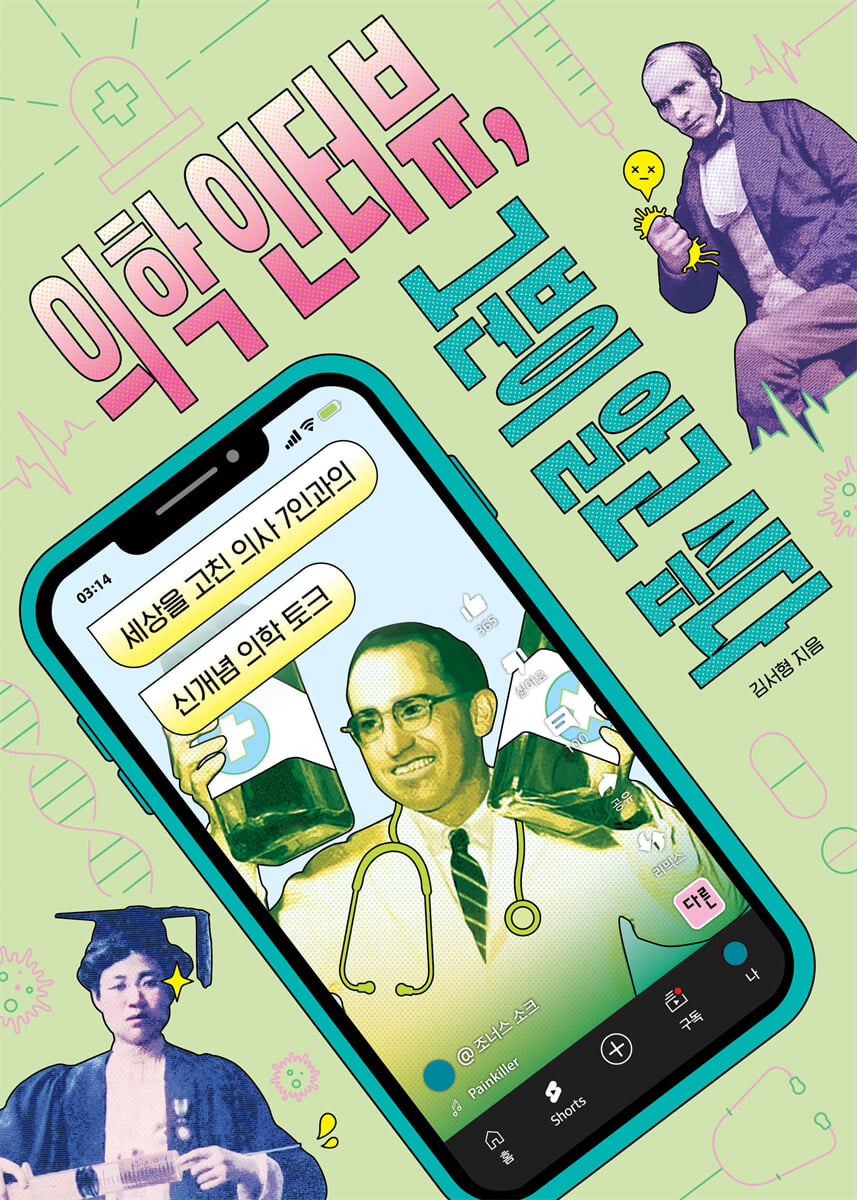
"Medical Interview, I Want to Know Him" contains virtual interviews conducted by medical YouTuber 'Meddy' with seven legendary Eastern and Western medical experts.
Beginning with Hippocrates, known as the father of medicine, Galen, who was the center of Western medicine for over 1,000 years, Nostradamus, who was both a prophet and a physician, Heo Jun, who overcame his illegitimate status to become a royal physician, John Snow, who laid the foundation for epidemiology by marking dots on maps, Jonas Salk, who developed the polio vaccine, and Esther Park, who changed the lives of Joseon women, all great doctors who transcended time and space were mobilized.
Through the format of a "virtual interview," readers can easily and enjoyably acquire knowledge of medical history, breaking free from the rigid and heavy framework of existing medical books.
The easiest introduction to medical history for teenagers
Easy to read, deep to understand! Professor Kim Seo-hyung, who has shared her knowledge of medical history through various broadcasts and books, including as an advisor on tvN's "Naked World History," KBS's "Curious Sunday Jang Yeong-sil Show" and "Issue Pick, With the Teacher," and MBC Radio's "Tap-Tap-Tap History Journey," has returned with an introductory book on medical history for young people.
"Medical Interview, I Want to Know Him" contains virtual interviews conducted by medical YouTuber 'Meddy' with seven legendary Eastern and Western medical experts.
Beginning with Hippocrates, known as the father of medicine, Galen, who was the center of Western medicine for over 1,000 years, Nostradamus, who was both a prophet and a physician, Heo Jun, who overcame his illegitimate status to become a royal physician, John Snow, who laid the foundation for epidemiology by marking dots on maps, Jonas Salk, who developed the polio vaccine, and Esther Park, who changed the lives of Joseon women, all great doctors who transcended time and space were mobilized.
Through the format of a "virtual interview," readers can easily and enjoyably acquire knowledge of medical history, breaking free from the rigid and heavy framework of existing medical books.
- You can preview some of the book's contents.
Preview
index
Getting Started: We Invite You to the World of Real Medicine
First Interview: Hippocrates : "Illness is not a punishment from God."
God's Curse or the Law of Nature | Where Philosophy and Medicine Meet | Understanding Humans Through Bodily Fluids | Records and Ethics | Where Doctors Should Focus | MC Summary
Second Interview: Galen _ "I dissected animals to learn about people."
The Doctor Who Dreamed of Being a Philosopher | Humoral Theory and Human Temperament | Unraveling the Brain's Role | Pharmacology and the Galenic Pharmacopoeia | Legacy and Limitations | A Bridge Between Medicine and Philosophy | MC Summary
Third Interview: Nostradamus : "Earth's End? Wash Your Hands."
A Doctor's Path Chosen in Pain | Love and Loss | A Pioneer in Hygiene | The Beginning and Spread of Prophecy | Caring for Humanity Beyond Illness | MC Summary
Fourth Interview: Heo Jun - "I Created a Medical Book for the People"
Born on the Boundary | Reality Beyond the Book | The King's Physician | Creating the Donguibogam | The Illegitimate Son Who Changed History | Remaining Forever by People's Side | MC Summary
Interview #5: Jon Snow : "I Made the Map That Saved the World"
The Industrial Revolution and Cholera | Is Air or Water the Culprit? | Truth on Maps | The Beginnings of Epidemiology | A Short Life, a Lasting Legacy | MC Summary
Interview Six: Jonas Salk : "Vaccines Belong to Everyone"
The Deadly Disease, Polio | The Scientist's Path, the Lab | The Doctor Who Injected the Vaccine into His Own Arm | Whose Vaccine Does It Own? | The Quiet Life of a Hero Who Saved the World | Where Medicine Should Go | MC Summary
Seventh Interview: Esther Park _ "Women Have the Right to Treatment, Too"
Jeomdongi Becomes Esther | Finding Her Dream in the Operating Room | Love and Study Abroad | Joseon's First Female Doctor | Succumbs to Tuberculosis | The Seeds of the Tuberculosis Eradication Movement | Pioneering a New Life for Women | MC Summary
In conclusion: Your mind is medicine.
First Interview: Hippocrates : "Illness is not a punishment from God."
God's Curse or the Law of Nature | Where Philosophy and Medicine Meet | Understanding Humans Through Bodily Fluids | Records and Ethics | Where Doctors Should Focus | MC Summary
Second Interview: Galen _ "I dissected animals to learn about people."
The Doctor Who Dreamed of Being a Philosopher | Humoral Theory and Human Temperament | Unraveling the Brain's Role | Pharmacology and the Galenic Pharmacopoeia | Legacy and Limitations | A Bridge Between Medicine and Philosophy | MC Summary
Third Interview: Nostradamus : "Earth's End? Wash Your Hands."
A Doctor's Path Chosen in Pain | Love and Loss | A Pioneer in Hygiene | The Beginning and Spread of Prophecy | Caring for Humanity Beyond Illness | MC Summary
Fourth Interview: Heo Jun - "I Created a Medical Book for the People"
Born on the Boundary | Reality Beyond the Book | The King's Physician | Creating the Donguibogam | The Illegitimate Son Who Changed History | Remaining Forever by People's Side | MC Summary
Interview #5: Jon Snow : "I Made the Map That Saved the World"
The Industrial Revolution and Cholera | Is Air or Water the Culprit? | Truth on Maps | The Beginnings of Epidemiology | A Short Life, a Lasting Legacy | MC Summary
Interview Six: Jonas Salk : "Vaccines Belong to Everyone"
The Deadly Disease, Polio | The Scientist's Path, the Lab | The Doctor Who Injected the Vaccine into His Own Arm | Whose Vaccine Does It Own? | The Quiet Life of a Hero Who Saved the World | Where Medicine Should Go | MC Summary
Seventh Interview: Esther Park _ "Women Have the Right to Treatment, Too"
Jeomdongi Becomes Esther | Finding Her Dream in the Operating Room | Love and Study Abroad | Joseon's First Female Doctor | Succumbs to Tuberculosis | The Seeds of the Tuberculosis Eradication Movement | Pioneering a New Life for Women | MC Summary
In conclusion: Your mind is medicine.
Into the book
A good doctor is not just a technician who cures diseases.
You must be someone who understands the patient's life, emotions, and habits, and who knows how to reflect on your own limitations and ignorance.
This is because illness is not just a physical problem, but a phenomenon connected to all elements that make up a human being.
--- p.17
The heart is just a pump that circulates blood.
So it's thumping.
Although we can reflect emotions, it is the brain that generates them.
The heart's response is simply the result of the nervous system transmitting signals to the brain.
The real center is in the brain.
--- p.43
Medicine is still a field of inquiry that requires constant renewal.
Do not blindly trust the authority of the past, humbly question new phenomena, and think with human beings at the center.
That's what matters most.
I believe that a true doctor is someone who is always willing to learn and explore on his own.
And that exploration and learning begins the moment you close the book.
--- p.52
I was a person who loved philosophy even before I became a doctor.
And even after becoming a doctor, philosophy never left my side.
To me, medicine and philosophy are not two separate fields, but rather a single mirror reflecting each other.
The two disciplines ultimately have no choice but to meet when faced with the fundamental question, “What is a human being?”
--- p.53
I have always believed that a person's worth lies not in where he or she is born, but in the life he or she lives.
Even when I was writing Donguibogam, such thoughts were deeply rooted in me.
Knowledge was not for the privileged, and questioning someone's status in front of a sick person was considered the worst kind of behavior.
--- p.99
We needed a tool that would show us at a glance when and where people were getting sick.
So we started marking the addresses of sick patients on a map.
This visualization was not simply a location marker, but a scientific tool that revealed patterns.
--- p.117
Some missionaries were amazed at my surgical skills, calling them “unprecedented techniques.”
But I didn't have any special skills.
There was just a desperate desire to give life back to women who were dying in pain.
You must be someone who understands the patient's life, emotions, and habits, and who knows how to reflect on your own limitations and ignorance.
This is because illness is not just a physical problem, but a phenomenon connected to all elements that make up a human being.
--- p.17
The heart is just a pump that circulates blood.
So it's thumping.
Although we can reflect emotions, it is the brain that generates them.
The heart's response is simply the result of the nervous system transmitting signals to the brain.
The real center is in the brain.
--- p.43
Medicine is still a field of inquiry that requires constant renewal.
Do not blindly trust the authority of the past, humbly question new phenomena, and think with human beings at the center.
That's what matters most.
I believe that a true doctor is someone who is always willing to learn and explore on his own.
And that exploration and learning begins the moment you close the book.
--- p.52
I was a person who loved philosophy even before I became a doctor.
And even after becoming a doctor, philosophy never left my side.
To me, medicine and philosophy are not two separate fields, but rather a single mirror reflecting each other.
The two disciplines ultimately have no choice but to meet when faced with the fundamental question, “What is a human being?”
--- p.53
I have always believed that a person's worth lies not in where he or she is born, but in the life he or she lives.
Even when I was writing Donguibogam, such thoughts were deeply rooted in me.
Knowledge was not for the privileged, and questioning someone's status in front of a sick person was considered the worst kind of behavior.
--- p.99
We needed a tool that would show us at a glance when and where people were getting sick.
So we started marking the addresses of sick patients on a map.
This visualization was not simply a location marker, but a scientific tool that revealed patterns.
--- p.117
Some missionaries were amazed at my surgical skills, calling them “unprecedented techniques.”
But I didn't have any special skills.
There was just a desperate desire to give life back to women who were dying in pain.
--- p.157~158
Publisher's Review
What if we met doctors who left their mark on history in this day and age?
The wondrous world of medicine they are so engrossed in
Medicine is a discipline that stands at the cutting edge of science and constantly asks questions about life.
But people misunderstand that curing diseases is the essence and the whole of medicine.
"Medical Interview: I Want to Know Him" corrects the public's prejudice against medicine by borrowing the voices of great doctors who have left their mark on history.
Jonas Salk, who invented the polio vaccine, gave up a patent worth trillions of won to save children, and Esther Park, the first female doctor in Joseon, traveled the country on a donkey to save women before passing away at the age of 35.
These great doctors, who dedicated themselves to curing lives rather than illnesses, remind readers of the nobility of life-saving medicine.
The book features both Eastern and Western doctors.
While Nostradamus was fighting the Black Death in 16th century Europe, on the other side of the globe in Joseon, Heo Jun was writing Donguibogam, a medical book for the people.
Readers can acquire balanced historical knowledge by observing the lives of doctors who transcend time and space, and furthermore, glimpse the essence of medicine that transcends all time and space.
Why do you want to become a doctor?
The power to turn vague dreams into a solid future
Korean youth dream of going to medical school, not becoming doctors.
However, going to medical school is nothing more than an empty dream, as it is only a process to become a doctor and does not guarantee any status.
The strength to endure a day that is bound to be difficult is possible when you imagine a solid future, not a vague dream.
Therefore, for Korean youth who dream of going to medical school, a deep understanding and reflection on the profession of medicine is essential.
The book contains the world of medicine and the role of doctors from various perspectives as viewed by great doctors.
Through this, readers can develop a positive perception of medicine while also experiencing the fun and excitement of pursuing their dream of becoming a doctor.
The wondrous world of medicine they are so engrossed in
Medicine is a discipline that stands at the cutting edge of science and constantly asks questions about life.
But people misunderstand that curing diseases is the essence and the whole of medicine.
"Medical Interview: I Want to Know Him" corrects the public's prejudice against medicine by borrowing the voices of great doctors who have left their mark on history.
Jonas Salk, who invented the polio vaccine, gave up a patent worth trillions of won to save children, and Esther Park, the first female doctor in Joseon, traveled the country on a donkey to save women before passing away at the age of 35.
These great doctors, who dedicated themselves to curing lives rather than illnesses, remind readers of the nobility of life-saving medicine.
The book features both Eastern and Western doctors.
While Nostradamus was fighting the Black Death in 16th century Europe, on the other side of the globe in Joseon, Heo Jun was writing Donguibogam, a medical book for the people.
Readers can acquire balanced historical knowledge by observing the lives of doctors who transcend time and space, and furthermore, glimpse the essence of medicine that transcends all time and space.
Why do you want to become a doctor?
The power to turn vague dreams into a solid future
Korean youth dream of going to medical school, not becoming doctors.
However, going to medical school is nothing more than an empty dream, as it is only a process to become a doctor and does not guarantee any status.
The strength to endure a day that is bound to be difficult is possible when you imagine a solid future, not a vague dream.
Therefore, for Korean youth who dream of going to medical school, a deep understanding and reflection on the profession of medicine is essential.
The book contains the world of medicine and the role of doctors from various perspectives as viewed by great doctors.
Through this, readers can develop a positive perception of medicine while also experiencing the fun and excitement of pursuing their dream of becoming a doctor.
GOODS SPECIFICS
- Date of issue: November 24, 2025
- Format: Paperback book binding method guide
- Page count, weight, size: 172 pages | 291g | 150*210*10mm
- ISBN13: 9791156337317
You may also like
카테고리
korean


korean

![ELLE 엘르 스페셜 에디션 A형 : 12월 [2025]](http://librairie.coreenne.fr/cdn/shop/files/b8e27a3de6c9538896439686c6b0e8fb.jpg?v=1766436872&width=3840)


