

Harris Analytical Chemistry
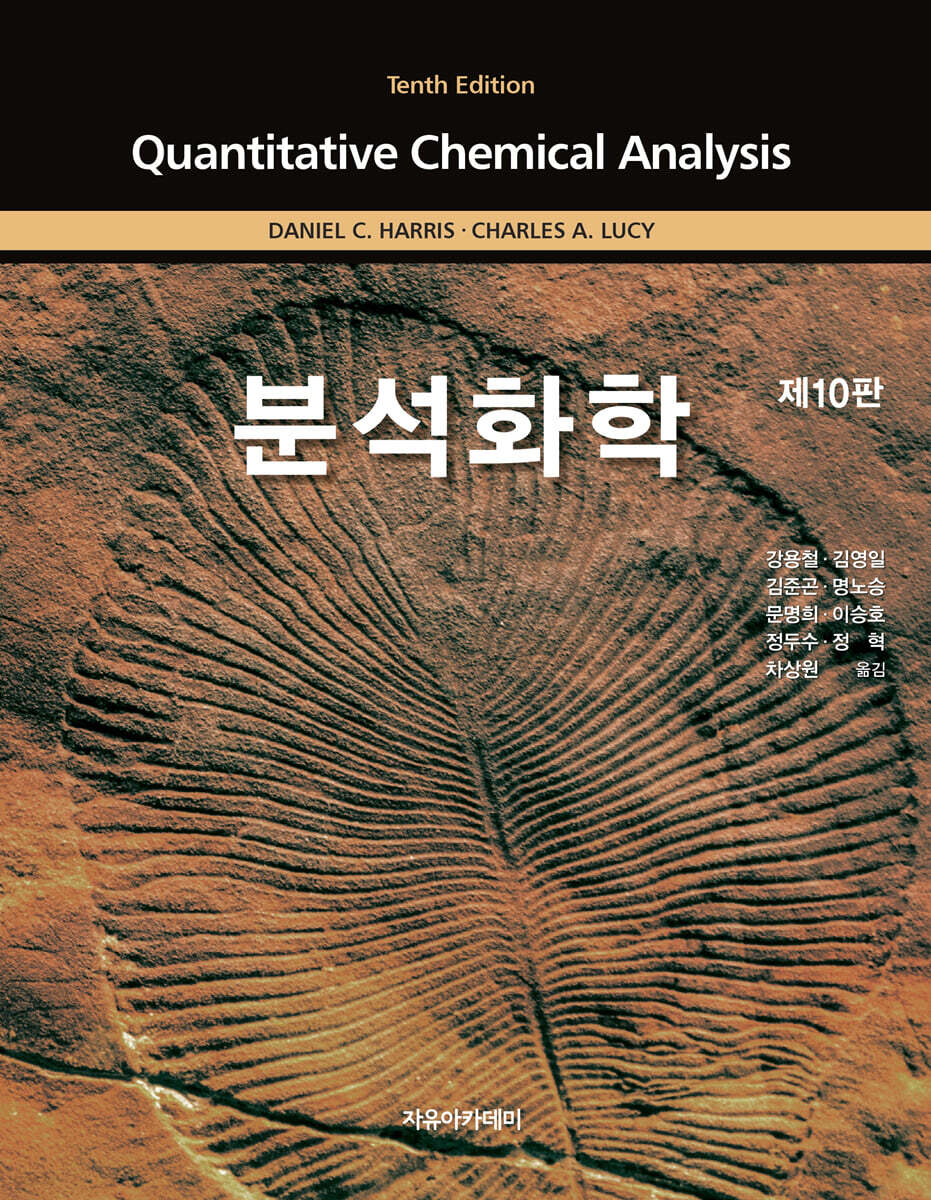 |
Description
Book Introduction
『Analytical Chemistry』 provides a deep understanding of the principles of analytical chemistry and covers a wide range of topics that can be applied to chemistry as well as a wide range of chemistry-related fields in a relatively in-depth manner.
index
0 Analysis process
Mercury contained in permafrost
1 Measurement in Chemistry
Biochemical measurements using nanoelectrodes
2 Experimental apparatus
A microbalance made of quartz crystals that can measure differences in a single base in DNA.
3 Experimental error
Errors are important
4 Statistics
Are my blood sugar levels accurate?
5 Quality Assurance and Correction Methods
Case Study: Misconduct at the Gothan Forensic Laboratory?
6 Chemical equilibrium
Environment and chemical equilibrium
7 Getting Started
titration on Mars
8 Systematic treatment of activity and balance
Hydrated ions
9. Protic acid-base equilibrium
Measurement of pH within cell organelles
10 Polygenic Acid-Base Equilibrium
carbon dioxide in the air
11 Acid-base titration
Acid-base titration of RNA
12 EDTA titration method
Chelation Therapy and Thalassemia
13 Advanced Topics in Equilibrium
acid rain
14 Fundamentals of Electrochemistry
Bounce battery
15 Electrodes and Potentiometric Method
Determining DNA sequence by proton generation
16 Redox titration
Chemical analysis of high-temperature superconductors
17 Electrical Analysis Technology
DNA sequence analysis using nanopores
18 Fundamentals of Spectrophotometry
ozone hole
19 Applications of Spectrophotometry
Forster fluorescence resonance energy transfer biosensor for living cells
20 spectrophotometer
Joint ring-down spectroscopy
21 Atomic Spectroscopy
Copper Age Life Studied with Atomic Spectroscopy
22 Mass spectrometry
Were dinosaurs warm-blooded like mammals, or cold-blooded like reptiles?
23 Introduction to Separation Analysis
Milk is good for babies
24 Gas Chromatography
Doping Banned in Sports
25 High-Performance Liquid Chromatography
Cocktail Chromatography: Creating Eco-Friendly Liquid Chromatography
26 Chromatography and capillary electrophoresis
on-chip laboratory
27 Weight analysis and combustion analysis
Geologic time and weight analysis
28 Sample Preparation
Cocaine use? Ask the river.
Mercury contained in permafrost
1 Measurement in Chemistry
Biochemical measurements using nanoelectrodes
2 Experimental apparatus
A microbalance made of quartz crystals that can measure differences in a single base in DNA.
3 Experimental error
Errors are important
4 Statistics
Are my blood sugar levels accurate?
5 Quality Assurance and Correction Methods
Case Study: Misconduct at the Gothan Forensic Laboratory?
6 Chemical equilibrium
Environment and chemical equilibrium
7 Getting Started
titration on Mars
8 Systematic treatment of activity and balance
Hydrated ions
9. Protic acid-base equilibrium
Measurement of pH within cell organelles
10 Polygenic Acid-Base Equilibrium
carbon dioxide in the air
11 Acid-base titration
Acid-base titration of RNA
12 EDTA titration method
Chelation Therapy and Thalassemia
13 Advanced Topics in Equilibrium
acid rain
14 Fundamentals of Electrochemistry
Bounce battery
15 Electrodes and Potentiometric Method
Determining DNA sequence by proton generation
16 Redox titration
Chemical analysis of high-temperature superconductors
17 Electrical Analysis Technology
DNA sequence analysis using nanopores
18 Fundamentals of Spectrophotometry
ozone hole
19 Applications of Spectrophotometry
Forster fluorescence resonance energy transfer biosensor for living cells
20 spectrophotometer
Joint ring-down spectroscopy
21 Atomic Spectroscopy
Copper Age Life Studied with Atomic Spectroscopy
22 Mass spectrometry
Were dinosaurs warm-blooded like mammals, or cold-blooded like reptiles?
23 Introduction to Separation Analysis
Milk is good for babies
24 Gas Chromatography
Doping Banned in Sports
25 High-Performance Liquid Chromatography
Cocktail Chromatography: Creating Eco-Friendly Liquid Chromatography
26 Chromatography and capillary electrophoresis
on-chip laboratory
27 Weight analysis and combustion analysis
Geologic time and weight analysis
28 Sample Preparation
Cocaine use? Ask the river.
Publisher's Review
Daniel C.
Harris's 10th Edition Quantitative Chemical Analysis provides a deep understanding of the principles of analytical chemistry and covers a wide range of topics that can be applied to chemistry and a wide range of related fields.
In many fields of natural and applied science, which aim to solve human curiosity and improve the quality of life, basic data must be provided through measurements based on analytical chemistry. Therefore, quantitative analytical chemistry is a course that must be completed not only by those majoring in analytical chemistry but also by many applied researchers who require analytical assistance.
The Quantitative Analytical Chemistry course provides a useful foundation in chemical analysis for both future scientists and engineers studying the natural sciences.
The questions that analytical chemistry seeks to answer fall broadly into two categories:
One is 'What substance is present in the sample?' (qualitative analysis), and the other is 'How much of that substance is present?' (quantitative analysis).
This quantitative analytical chemistry textbook provides an experimental approach to addressing the second question and the foundational knowledge to address both questions simultaneously.
Typically, 'Quantitative Analytical Chemistry' courses are offered to lower-level students in universities, while 'Advanced Instrumental Analysis' courses are offered to upper-level students.
Based on the translators' experience teaching quantitative analytical chemistry at universities for many years, Daniel C.
Harris's "Quantitative Chemical Analysis" provides students with a foundational understanding of the various chemical measurements they will perform in the workplace after graduation, and is written to help them acquire the research methods necessary to conduct creative research.
The introduction to each chapter introduces useful topics related to the chapter's content, and by adding Test Yourself problems following the examples, we aim to help you understand the solutions to the examples.
The most effective way to use this textbook is to (1) solve the problems provided in the textbook and (2) conduct experiments in parallel.
This textbook is full of interesting examples and problems.
Each chapter includes examples that demonstrate how to apply what you've learned, practice problems that apply important concepts, problems that review the chapter as a whole, and comprehensive problems that require comprehensive thinking across various fields.
Considering that this textbook is too long to cover in one semester, those teaching it are advised to conduct the course over one or two semesters.
The experiment was designed to be small-scale and environmentally friendly.
We took care to use non-hazardous compounds and also planned with waste disposal in mind.
Experiments are a great help in understanding the content of the text.
Therefore, we recommend that you combine lectures and experiments.
As I finish translating the 10th edition, I'm concerned that there might be some awkward or incorrect expressions.
If you are a professor using this textbook as a teaching material, I would be very grateful if you could point out any errors or suggest alternatives.
Harris's 10th Edition Quantitative Chemical Analysis provides a deep understanding of the principles of analytical chemistry and covers a wide range of topics that can be applied to chemistry and a wide range of related fields.
In many fields of natural and applied science, which aim to solve human curiosity and improve the quality of life, basic data must be provided through measurements based on analytical chemistry. Therefore, quantitative analytical chemistry is a course that must be completed not only by those majoring in analytical chemistry but also by many applied researchers who require analytical assistance.
The Quantitative Analytical Chemistry course provides a useful foundation in chemical analysis for both future scientists and engineers studying the natural sciences.
The questions that analytical chemistry seeks to answer fall broadly into two categories:
One is 'What substance is present in the sample?' (qualitative analysis), and the other is 'How much of that substance is present?' (quantitative analysis).
This quantitative analytical chemistry textbook provides an experimental approach to addressing the second question and the foundational knowledge to address both questions simultaneously.
Typically, 'Quantitative Analytical Chemistry' courses are offered to lower-level students in universities, while 'Advanced Instrumental Analysis' courses are offered to upper-level students.
Based on the translators' experience teaching quantitative analytical chemistry at universities for many years, Daniel C.
Harris's "Quantitative Chemical Analysis" provides students with a foundational understanding of the various chemical measurements they will perform in the workplace after graduation, and is written to help them acquire the research methods necessary to conduct creative research.
The introduction to each chapter introduces useful topics related to the chapter's content, and by adding Test Yourself problems following the examples, we aim to help you understand the solutions to the examples.
The most effective way to use this textbook is to (1) solve the problems provided in the textbook and (2) conduct experiments in parallel.
This textbook is full of interesting examples and problems.
Each chapter includes examples that demonstrate how to apply what you've learned, practice problems that apply important concepts, problems that review the chapter as a whole, and comprehensive problems that require comprehensive thinking across various fields.
Considering that this textbook is too long to cover in one semester, those teaching it are advised to conduct the course over one or two semesters.
The experiment was designed to be small-scale and environmentally friendly.
We took care to use non-hazardous compounds and also planned with waste disposal in mind.
Experiments are a great help in understanding the content of the text.
Therefore, we recommend that you combine lectures and experiments.
As I finish translating the 10th edition, I'm concerned that there might be some awkward or incorrect expressions.
If you are a professor using this textbook as a teaching material, I would be very grateful if you could point out any errors or suggest alternatives.
GOODS SPECIFICS
- Date of issue: February 5, 2021
- Page count, weight, size: 1,092 pages | 215*275*60mm
- ISBN13: 9791158082932
- ISBN10: 1158082932
You may also like
카테고리
korean


korean

![GQ KOREA Mark (Monthly): December [2025]](http://librairie.coreenne.fr/cdn/shop/files/8ef265dbbfbf186523ed75ba7319009d.jpg?v=1765340328&width=3840)


