

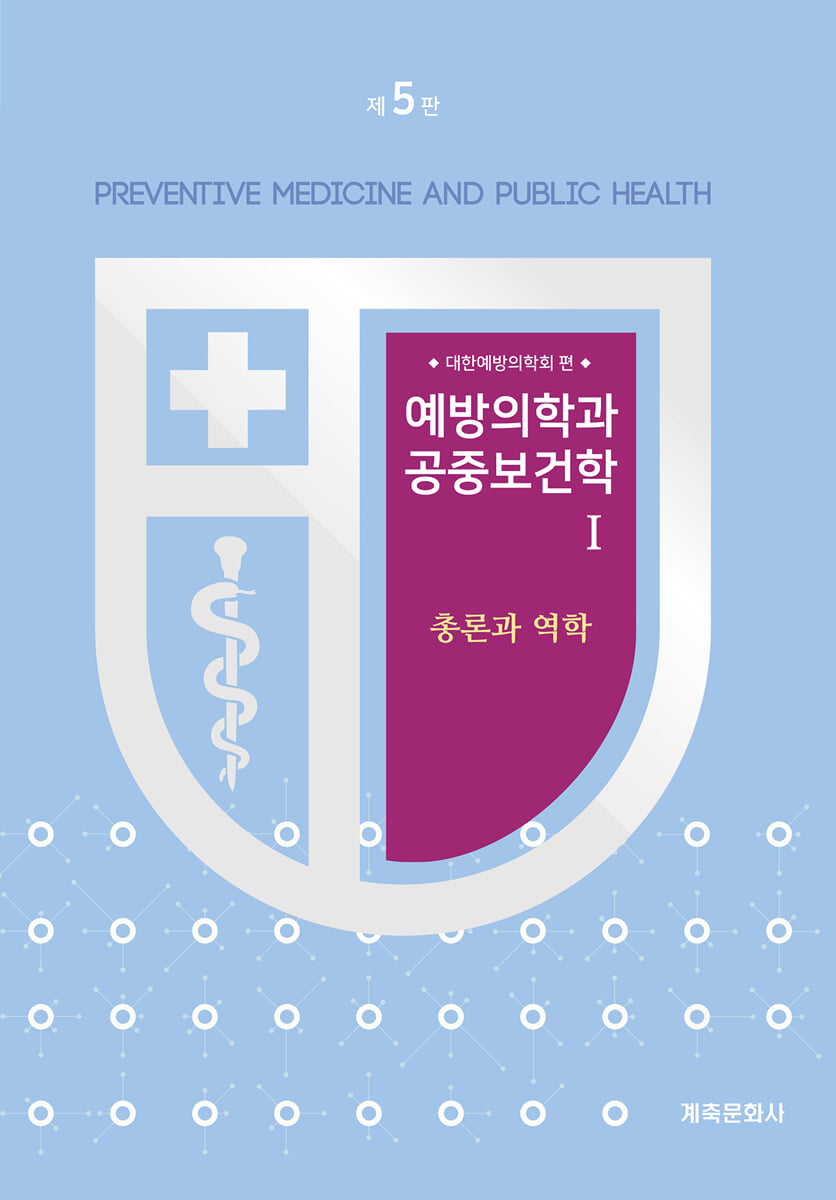
Preventive Medicine and Public Health 1
 |
Description
index
Part 1 Health and Disease
Chapter 1: Definition and Determinants of Health and Disease
1.
The concept of health and disease
2.
Health and Disease Model
3.
Determinants of Health and Disease
Chapter 2: Concepts and Applications of Preventive Medicine and Public Health
1.
Concepts of preventive medicine and public health
2.
Content and Application of Preventive Medicine and Public Health
Chapter 3: The Development and Future of Preventive Medicine and Public Health
1.
History of Western Preventive Medicine and Public Health
2.
History of Preventive Medicine and Public Health in Korea
3.
The Future of Preventive Medicine and Public Health
Part 2: Mechanics
Chapter 1: Fundamentals of Mechanics
1.
The development of epidemiology
2.
Disease outbreak models and causal associations
Chapter 2 Data from Epidemiological Studies
1.
Methods of collecting and using primary data
2.
Types and Uses of Secondary Sources
3.
Public health surveillance
4.
Classification of diseases and causes of death
Chapter 3: Disease and Death, Measurement of Health Levels
1.
Health indicators
2.
Transition indicator
3.
Death and birth indicators
4.
Subjective health indicators and disease burden indicators
Chapter 4 Health Level of Koreans
1.
Theory of Mechanical Transformation and Mechanical Transformation in Korea
2.
Population structure changes and resulting health problems
3.
Changes in health level over time
4.
Differences in health level depending on space
5.
Differences in health levels according to group characteristics
Chapter 5 Validity and Reliability
1.
Validity of the study
2.
Validity and reliability of measurement methods
3.
bias
Chapter 6: Epidemiological Research Methodology
1.
Classification of epidemiological research methods
2.
Three Key Variables in Technological Dynamics
3.
Ecological research and case/case group studies
4.
Cross-sectional study
5.
case-control study
6.
cohort study
7.
mixed design study
8.
clinical trials
9.
Preventive testing
10.
community testing
11.
Systematic literature review and meta-analysis
12.
Ethical Issues in Epidemiological Research
Chapter 7: Epidemiology Research by Field
1.
Pharmacoepidemiology
2.
Nutritional epidemiology
3.
social epidemiology
4.
molecular dynamics
5.
genetic epidemiology
6.
Precision Medicine and Epidemiology
7.
Systems dynamics and ecological dynamics
Chapter 8: The Use of Statistics in Medical Research
1.
Basic concepts for using statistics in epidemiological research
2.
Estimation of sample size
3.
Selection of appropriate statistical analysis method according to variable characteristics
4.
Strengthening causality and inference in observational studies
Chapter 9 Evidence-Based Medicine and Clinical Decision Making
1.
Concept and development background
2.
Approach and Strategy
3.
Evidence-based clinical decision-making methods
4.
Evidence-based utilization
Chapter 10: Epidemiology of Infectious Diseases
1.
Characteristics of infectious diseases
2.
The creation and spread of infectious diseases
3.
Infectious Disease Surveillance System
4.
Epidemiology and epidemic investigation of infectious diseases
5.
Infectious Disease Management and Prevention
6.
Emerging infectious diseases
Chapter 11: Epidemiology of Chronic Diseases
1.
Epidemiological characteristics of chronic diseases
2.
High-risk and vulnerable groups for chronic diseases
3.
Registration and surveillance of chronic diseases
4.
Management and prevention of chronic diseases
Chapter 1: Definition and Determinants of Health and Disease
1.
The concept of health and disease
2.
Health and Disease Model
3.
Determinants of Health and Disease
Chapter 2: Concepts and Applications of Preventive Medicine and Public Health
1.
Concepts of preventive medicine and public health
2.
Content and Application of Preventive Medicine and Public Health
Chapter 3: The Development and Future of Preventive Medicine and Public Health
1.
History of Western Preventive Medicine and Public Health
2.
History of Preventive Medicine and Public Health in Korea
3.
The Future of Preventive Medicine and Public Health
Part 2: Mechanics
Chapter 1: Fundamentals of Mechanics
1.
The development of epidemiology
2.
Disease outbreak models and causal associations
Chapter 2 Data from Epidemiological Studies
1.
Methods of collecting and using primary data
2.
Types and Uses of Secondary Sources
3.
Public health surveillance
4.
Classification of diseases and causes of death
Chapter 3: Disease and Death, Measurement of Health Levels
1.
Health indicators
2.
Transition indicator
3.
Death and birth indicators
4.
Subjective health indicators and disease burden indicators
Chapter 4 Health Level of Koreans
1.
Theory of Mechanical Transformation and Mechanical Transformation in Korea
2.
Population structure changes and resulting health problems
3.
Changes in health level over time
4.
Differences in health level depending on space
5.
Differences in health levels according to group characteristics
Chapter 5 Validity and Reliability
1.
Validity of the study
2.
Validity and reliability of measurement methods
3.
bias
Chapter 6: Epidemiological Research Methodology
1.
Classification of epidemiological research methods
2.
Three Key Variables in Technological Dynamics
3.
Ecological research and case/case group studies
4.
Cross-sectional study
5.
case-control study
6.
cohort study
7.
mixed design study
8.
clinical trials
9.
Preventive testing
10.
community testing
11.
Systematic literature review and meta-analysis
12.
Ethical Issues in Epidemiological Research
Chapter 7: Epidemiology Research by Field
1.
Pharmacoepidemiology
2.
Nutritional epidemiology
3.
social epidemiology
4.
molecular dynamics
5.
genetic epidemiology
6.
Precision Medicine and Epidemiology
7.
Systems dynamics and ecological dynamics
Chapter 8: The Use of Statistics in Medical Research
1.
Basic concepts for using statistics in epidemiological research
2.
Estimation of sample size
3.
Selection of appropriate statistical analysis method according to variable characteristics
4.
Strengthening causality and inference in observational studies
Chapter 9 Evidence-Based Medicine and Clinical Decision Making
1.
Concept and development background
2.
Approach and Strategy
3.
Evidence-based clinical decision-making methods
4.
Evidence-based utilization
Chapter 10: Epidemiology of Infectious Diseases
1.
Characteristics of infectious diseases
2.
The creation and spread of infectious diseases
3.
Infectious Disease Surveillance System
4.
Epidemiology and epidemic investigation of infectious diseases
5.
Infectious Disease Management and Prevention
6.
Emerging infectious diseases
Chapter 11: Epidemiology of Chronic Diseases
1.
Epidemiological characteristics of chronic diseases
2.
High-risk and vulnerable groups for chronic diseases
3.
Registration and surveillance of chronic diseases
4.
Management and prevention of chronic diseases
GOODS SPECIFICS
- Date of issue: March 5, 2025
- Page count, weight, size: 434 pages | 210*297*30mm
- ISBN13: 9788956298153
- ISBN10: 8956298157
You may also like
카테고리
korean


korean

![GQ KOREA Mark (Monthly): December [2025]](http://librairie.coreenne.fr/cdn/shop/files/8ef265dbbfbf186523ed75ba7319009d.jpg?v=1765340328&width=3840)


