

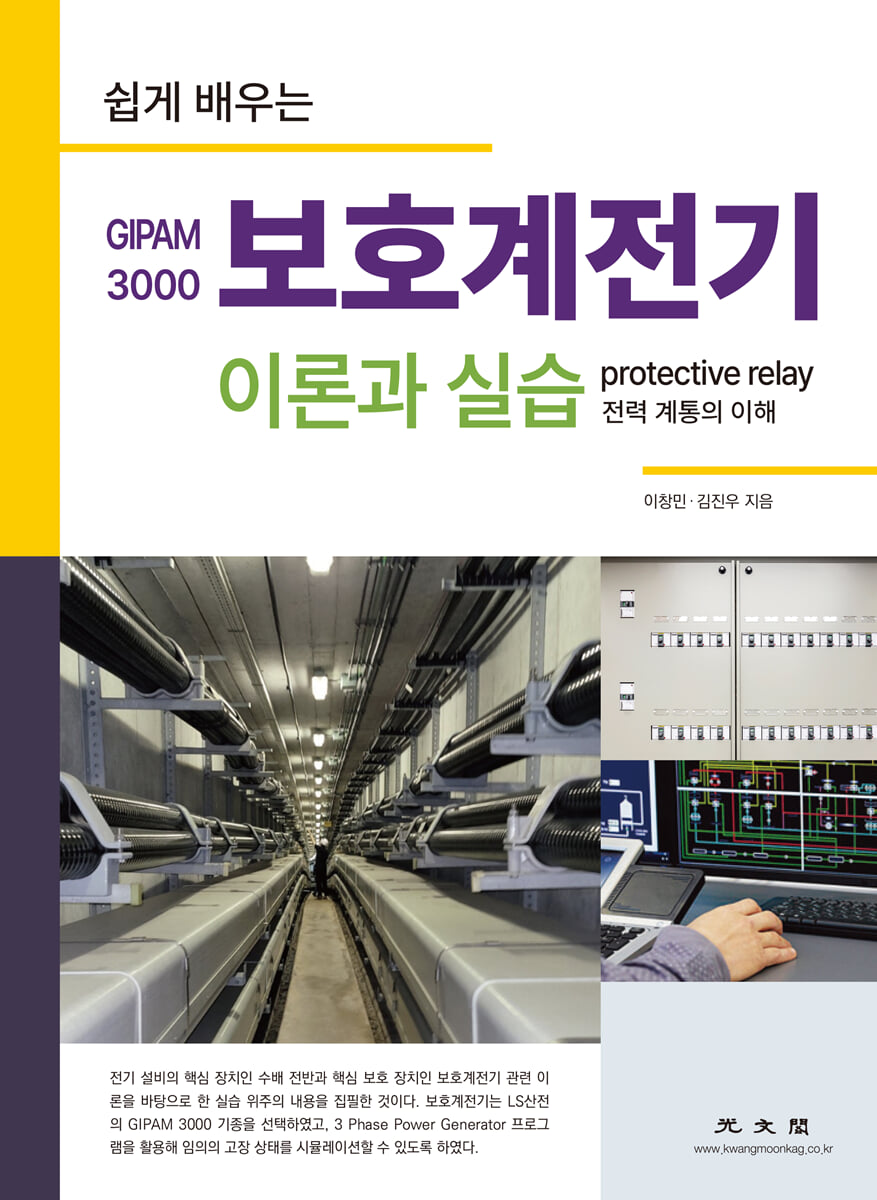
Protective Relay Theory and Practice (GIPAM 3000)
 |
Description
Book Introduction
Protective relays are key devices that help detect accidents such as overloads, short circuits, and ground faults that may occur within a system in real time and respond appropriately. Electrical engineers are well aware of the importance of system protection, so acquiring basic knowledge will be of great help in industrial settings.
This textbook is written with a focus on practical training based on the theory of the overall distribution system, which is a core device of electrical installations, and the protective relay, which is a core protection device.
This textbook is written with a focus on practical training based on the theory of the overall distribution system, which is a core device of electrical installations, and the protective relay, which is a core protection device.
index
preface
Part 1: Introduction to Theory
Chapter 1.
Understanding the Power System
1.
Power generation and transmission
2.
switchboard
3.
Basic Terminology
4.
Analysis of Y residual circuit (neutral grounding system)
5.
Ungrounded system analysis
Chapter 2.
Understanding Electrical Drawings
1.
Symbols and names used in electrical drawings
2.
Automatic control mechanism number
3.
Wiring diagram
Chapter 3.
Induction switchboard and electronic switchboard
1.
Induction switchboard
2.
Electronic distribution board
3.
Appearance comparison
4.
Comparison of power monitoring systems
5.
Drawing of electronic distribution board
Part 2: How to use and practice the test equipment
Chapter 4.
Power protection relay test device
1.
Data display device (GIPAM-3000FI)
2.
How to install Windows 10/11 program drivers
3.
How to Use the 3 Phase Power Generator Program
Chapter 5.
How to use and practice protective relays
1.
Measurement
[Practice 1] Measurement Experiment
[Practice 2] Voltage Measurement Experiment (Measurement)
[Practice 3] Current Measurement Experiment
[Practice 4] Experiment on measuring power, power quantity, power factor, and harmonics
2.
View records
[Practice 5] Event Record Analysis Experiment (Record Viewing)
[Practice 6] Accident Record Analysis Experiment (Record Review)
3.
Condition monitoring
[Practice 7] DI, DO Analysis Experiment (Condition Monitoring)
4.
System settings
[Practice 8] PT, CT ratio setting (system setting)
5.
Protective relay
[Practice 9] OVER CURRENT (50/51) Experiment_Overcurrent Relay (Protective Relay)
[Practice 10] OVER CURRENT GROUND (50N/51N) Experiment_Ground Fault Overcurrent Relay (Protective Relay)
[Practice 11] Negative Sequence Overvoltage (47N) Experiment_Negative Sequence Overvoltage Relay (Protective Relay)
[Practice 12] PHASE OPEN (47P) Experiment_Phase Failure Relay (Protective Relay)
[Practice 13] UNDER VOLTAGE (27) Experiment_Undervoltage Relay (Protective Relay)
[Practice 14] OVER VOLTAGE (59) Experiment_Overvoltage Relay (Protective Relay)
[Practice 15] OVER VOLTAGE GROUND (64) Experiment_Ground Fault Overvoltage Relay (Protective Relay)
[Practice 16] SGR (64G) Experiment_Selection Ground Fault Overcurrent Relay (Protective Relay)
[Practice 17] DGR (67N) Experiment_Directional Ground Fault Overcurrent Relay (Protective Relay)
Chapter 6.
Relay correction calculation practice
1.
Correction criteria
2.
Correction calculation
3.
Correction calculation practice
[Practice 18] Correction Practice
Part 1: Introduction to Theory
Chapter 1.
Understanding the Power System
1.
Power generation and transmission
2.
switchboard
3.
Basic Terminology
4.
Analysis of Y residual circuit (neutral grounding system)
5.
Ungrounded system analysis
Chapter 2.
Understanding Electrical Drawings
1.
Symbols and names used in electrical drawings
2.
Automatic control mechanism number
3.
Wiring diagram
Chapter 3.
Induction switchboard and electronic switchboard
1.
Induction switchboard
2.
Electronic distribution board
3.
Appearance comparison
4.
Comparison of power monitoring systems
5.
Drawing of electronic distribution board
Part 2: How to use and practice the test equipment
Chapter 4.
Power protection relay test device
1.
Data display device (GIPAM-3000FI)
2.
How to install Windows 10/11 program drivers
3.
How to Use the 3 Phase Power Generator Program
Chapter 5.
How to use and practice protective relays
1.
Measurement
[Practice 1] Measurement Experiment
[Practice 2] Voltage Measurement Experiment (Measurement)
[Practice 3] Current Measurement Experiment
[Practice 4] Experiment on measuring power, power quantity, power factor, and harmonics
2.
View records
[Practice 5] Event Record Analysis Experiment (Record Viewing)
[Practice 6] Accident Record Analysis Experiment (Record Review)
3.
Condition monitoring
[Practice 7] DI, DO Analysis Experiment (Condition Monitoring)
4.
System settings
[Practice 8] PT, CT ratio setting (system setting)
5.
Protective relay
[Practice 9] OVER CURRENT (50/51) Experiment_Overcurrent Relay (Protective Relay)
[Practice 10] OVER CURRENT GROUND (50N/51N) Experiment_Ground Fault Overcurrent Relay (Protective Relay)
[Practice 11] Negative Sequence Overvoltage (47N) Experiment_Negative Sequence Overvoltage Relay (Protective Relay)
[Practice 12] PHASE OPEN (47P) Experiment_Phase Failure Relay (Protective Relay)
[Practice 13] UNDER VOLTAGE (27) Experiment_Undervoltage Relay (Protective Relay)
[Practice 14] OVER VOLTAGE (59) Experiment_Overvoltage Relay (Protective Relay)
[Practice 15] OVER VOLTAGE GROUND (64) Experiment_Ground Fault Overvoltage Relay (Protective Relay)
[Practice 16] SGR (64G) Experiment_Selection Ground Fault Overcurrent Relay (Protective Relay)
[Practice 17] DGR (67N) Experiment_Directional Ground Fault Overcurrent Relay (Protective Relay)
Chapter 6.
Relay correction calculation practice
1.
Correction criteria
2.
Correction calculation
3.
Correction calculation practice
[Practice 18] Correction Practice
Publisher's Review
Understanding protective relay power systems
The core devices of electrical equipment, including the overall distribution system and protective relays
Composed of practice-oriented content based on theory
The power grid of modern society is becoming increasingly complex with the advancement of technology.
In the past, the power grid had a simple structure in which electricity was produced at large-scale power plants and then transmitted and distributed, but today's power grid is comprised of various types of power generation sources and various transmission and distribution networks.
In particular, with the spread of renewable energy, the complexity of the grid is increasing as various distributed power sources such as solar, wind, and ESS (energy storage systems) are connected to the grid.
This complexity has a significant impact on the stability, reliability, and efficiency of the power system, and maintaining power quality and rapid recovery in the event of an accident are emerging as important challenges.
Additionally, with the introduction of the Smart Grid, power systems are optimizing energy efficiency through real-time data collection and control. In this process, numerous sensors, communication devices, and control systems are being linked, increasing the complexity of the system.
In addition, as the proliferation of electric vehicles leads to a large-scale expansion of charging infrastructure, changes in power consumption patterns are also adding new variables to power grid operation.
In order to operate the power system stably and minimize accidents, which has become so complex, the role of protective relays is very important.
Protective relays are key devices that help detect accidents such as overloads, short circuits, and ground faults that may occur within a system in real time and respond appropriately. Electrical engineers are well aware of the importance of system protection, so acquiring basic knowledge will be of great help in industrial settings.
This textbook is written with a focus on practical training based on the theory of the overall distribution system, which is a core device of electrical installations, and the protective relay, which is a core protection device.
The content is designed to be suitable for those studying at two-year and four-year universities, professional training courses, etc.
The protective relay was selected as LS Industrial Systems' GIPAM 3000 model, and the 3 Phase Power Generator program was used to simulate any fault condition.
This textbook explains the understanding of power systems and electrical drawings and the theoretical background of distribution panels in Part 1, and is structured around practical training, with Part 2 divided into how to use protective relay training devices and their practical training.
Part 1 details Chapter 1 on understanding power systems, Chapter 2 focuses on the knowledge required to interpret electrical drawings, and Chapter 3 focuses on understanding concepts through a comparison of the characteristics and differences between inductive and electronic switchboards.
Part 2 explains the protection relay device, which is the most core component of the power protection relay training device, and provides practical training that can be applied to field control practices utilizing the device, thereby fostering the ability to handle the application field.
The core devices of electrical equipment, including the overall distribution system and protective relays
Composed of practice-oriented content based on theory
The power grid of modern society is becoming increasingly complex with the advancement of technology.
In the past, the power grid had a simple structure in which electricity was produced at large-scale power plants and then transmitted and distributed, but today's power grid is comprised of various types of power generation sources and various transmission and distribution networks.
In particular, with the spread of renewable energy, the complexity of the grid is increasing as various distributed power sources such as solar, wind, and ESS (energy storage systems) are connected to the grid.
This complexity has a significant impact on the stability, reliability, and efficiency of the power system, and maintaining power quality and rapid recovery in the event of an accident are emerging as important challenges.
Additionally, with the introduction of the Smart Grid, power systems are optimizing energy efficiency through real-time data collection and control. In this process, numerous sensors, communication devices, and control systems are being linked, increasing the complexity of the system.
In addition, as the proliferation of electric vehicles leads to a large-scale expansion of charging infrastructure, changes in power consumption patterns are also adding new variables to power grid operation.
In order to operate the power system stably and minimize accidents, which has become so complex, the role of protective relays is very important.
Protective relays are key devices that help detect accidents such as overloads, short circuits, and ground faults that may occur within a system in real time and respond appropriately. Electrical engineers are well aware of the importance of system protection, so acquiring basic knowledge will be of great help in industrial settings.
This textbook is written with a focus on practical training based on the theory of the overall distribution system, which is a core device of electrical installations, and the protective relay, which is a core protection device.
The content is designed to be suitable for those studying at two-year and four-year universities, professional training courses, etc.
The protective relay was selected as LS Industrial Systems' GIPAM 3000 model, and the 3 Phase Power Generator program was used to simulate any fault condition.
This textbook explains the understanding of power systems and electrical drawings and the theoretical background of distribution panels in Part 1, and is structured around practical training, with Part 2 divided into how to use protective relay training devices and their practical training.
Part 1 details Chapter 1 on understanding power systems, Chapter 2 focuses on the knowledge required to interpret electrical drawings, and Chapter 3 focuses on understanding concepts through a comparison of the characteristics and differences between inductive and electronic switchboards.
Part 2 explains the protection relay device, which is the most core component of the power protection relay training device, and provides practical training that can be applied to field control practices utilizing the device, thereby fostering the ability to handle the application field.
GOODS SPECIFICS
- Date of issue: August 25, 2025
- Page count, weight, size: 234 pages | 618g | 188*257*20mm
- ISBN13: 9791193965191
- ISBN10: 1193965195
You may also like
카테고리
korean


korean

![GQ KOREA Mark (Monthly): December [2025]](http://librairie.coreenne.fr/cdn/shop/files/8ef265dbbfbf186523ed75ba7319009d.jpg?v=1765340328&width=3840)


