

Women's Psychology
 |
Description
Book Introduction
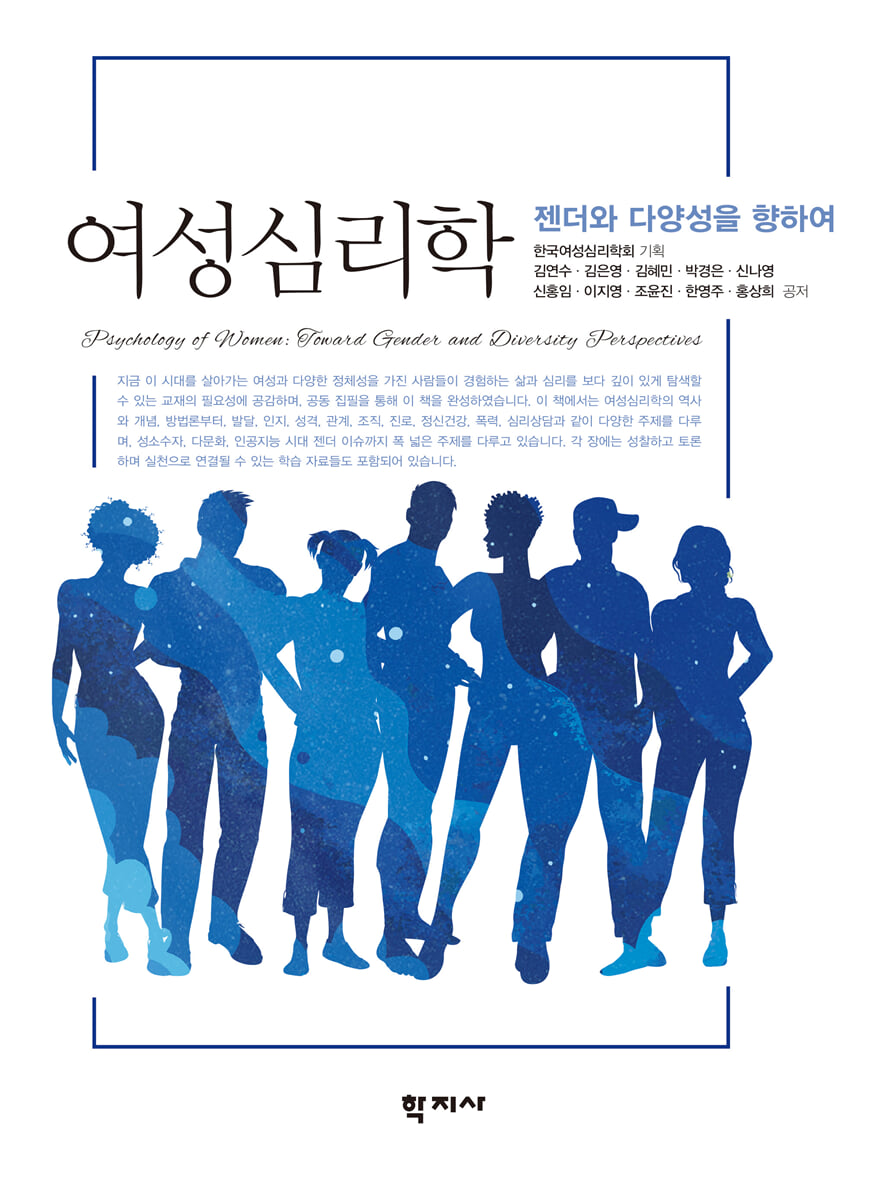
『Female Psychology』 is the successor to 『Female Psychology』, published in 2015, and is the result of a comprehensive reorganization that reflects the research achievements and educational experience accumulated over the years, incorporating new topics and perspectives suited to the changing social reality.
While maintaining the broad framework of women's psychology, we aimed to reflect today's reality in a more three-dimensional way and capture the expanded terrain of gender and diversity.
While maintaining the broad framework of women's psychology, we aimed to reflect today's reality in a more three-dimensional way and capture the expanded terrain of gender and diversity.
index
preface
Part 1 Introduction
Chapter 1: Overview of Women's Psychology
1.
Definition of female psychology
2.
Two Sources of Female Psychology
3.
History of Women's Psychology
References
Part 2: Women's Psychology and Development
Chapter 2 Infancy, Childhood, Adolescence, and Gender
1.
Theory of Gender Development
2.
Gender Development from Infancy to Adolescence
3.
Factors Influencing Gender Development
References
Chapter 3 Adulthood and Gender
1.
Love and Marriage
2.
Childbirth and childcare
References
Chapter 4: Middle Age and Gender
1.
Physical and psychological changes in middle-aged women
2.
The social implications of aging
3.
Aging as a relational change
References
Part 3: Women's Psychology, Cognition, and Personality
Chapter 5 Cognition and Gender Stereotypes
1.
The concept of gender stereotypes
2.
Gender stereotypes, gender roles, and information processing
3.
Transmission of gender stereotypes and discriminatory behavior
4.
Conclusion: Implications for Women and Men
References
Part 4: Women and Relationships
Chapter 6: Relationships with Women
1.
A human being living in a relationship
2.
Self-Understanding Test for Building Healthy Relationships
3.
How to Resolve Conflicts in Relationships
References
Part 5: Women and Work
Chapter 7 Women and Work
1.
History of Women's Work
2.
Career Development Theory for Women and Men
3.
New Directions in Modern Career Development Theory in Response to Changing Gender Roles
References
Chapter 8 Women and Organizations
1.
The Current State of Korean Women in Organizations by the Numbers
2.
Definition and Research Trends of the Glass Ceiling
3.
The reason for the glass ceiling
4.
Solutions to the Glass Ceiling
5.
Work-life balance
References
Part 6: Women and Mental Health
Chapter 9 Women and Psychological Disorders
1.
Psychological disorders and gender differences
2.
major depressive disorder
3.
bipolar disorder
4.
anxiety disorder
5.
eating disorders
6.
post-traumatic stress disorder
7.
personality disorder
References
Chapter 10: Women and Psychological Counseling
1.
Women and men in psychological counseling
2.
Gender stereotypes and traditional gender roles revealed in psychological counseling
3.
Feminist Counseling
Part 7: Women, Violence, and Crime
Chapter 11 Women and Violence
1.
The Reality and Idea of Violence Against Women
2.
History and Perspectives on Violence Against Women
3.
Understanding Women Victims of Violence
4.
Healing and recovery of the victimized women
References
Part 8: The Present and Future of Women's Psychology
Chapter 12: Sexual Minorities and Diversity
1.
Understanding sexual minorities
2.
Counseling for sexual minorities
3.
finish
References
Chapter 13: Multicultural Psychology and Gender
1.
What is multicultural psychology?
2.
Related concepts
3.
Conclusion: Multicultural Psychology and Women
References
Chapter 14 Artificial Intelligence and Gender
1.
The concept of artificial intelligence and robotics
2.
Human-robot interaction and gender stereotypes
3.
Gender Stereotypes and Robot Design
4.
Conclusion: Implications for the Coexistence of Female Robots, Male Robots, and Humans
References
Search
Part 1 Introduction
Chapter 1: Overview of Women's Psychology
1.
Definition of female psychology
2.
Two Sources of Female Psychology
3.
History of Women's Psychology
References
Part 2: Women's Psychology and Development
Chapter 2 Infancy, Childhood, Adolescence, and Gender
1.
Theory of Gender Development
2.
Gender Development from Infancy to Adolescence
3.
Factors Influencing Gender Development
References
Chapter 3 Adulthood and Gender
1.
Love and Marriage
2.
Childbirth and childcare
References
Chapter 4: Middle Age and Gender
1.
Physical and psychological changes in middle-aged women
2.
The social implications of aging
3.
Aging as a relational change
References
Part 3: Women's Psychology, Cognition, and Personality
Chapter 5 Cognition and Gender Stereotypes
1.
The concept of gender stereotypes
2.
Gender stereotypes, gender roles, and information processing
3.
Transmission of gender stereotypes and discriminatory behavior
4.
Conclusion: Implications for Women and Men
References
Part 4: Women and Relationships
Chapter 6: Relationships with Women
1.
A human being living in a relationship
2.
Self-Understanding Test for Building Healthy Relationships
3.
How to Resolve Conflicts in Relationships
References
Part 5: Women and Work
Chapter 7 Women and Work
1.
History of Women's Work
2.
Career Development Theory for Women and Men
3.
New Directions in Modern Career Development Theory in Response to Changing Gender Roles
References
Chapter 8 Women and Organizations
1.
The Current State of Korean Women in Organizations by the Numbers
2.
Definition and Research Trends of the Glass Ceiling
3.
The reason for the glass ceiling
4.
Solutions to the Glass Ceiling
5.
Work-life balance
References
Part 6: Women and Mental Health
Chapter 9 Women and Psychological Disorders
1.
Psychological disorders and gender differences
2.
major depressive disorder
3.
bipolar disorder
4.
anxiety disorder
5.
eating disorders
6.
post-traumatic stress disorder
7.
personality disorder
References
Chapter 10: Women and Psychological Counseling
1.
Women and men in psychological counseling
2.
Gender stereotypes and traditional gender roles revealed in psychological counseling
3.
Feminist Counseling
Part 7: Women, Violence, and Crime
Chapter 11 Women and Violence
1.
The Reality and Idea of Violence Against Women
2.
History and Perspectives on Violence Against Women
3.
Understanding Women Victims of Violence
4.
Healing and recovery of the victimized women
References
Part 8: The Present and Future of Women's Psychology
Chapter 12: Sexual Minorities and Diversity
1.
Understanding sexual minorities
2.
Counseling for sexual minorities
3.
finish
References
Chapter 13: Multicultural Psychology and Gender
1.
What is multicultural psychology?
2.
Related concepts
3.
Conclusion: Multicultural Psychology and Women
References
Chapter 14 Artificial Intelligence and Gender
1.
The concept of artificial intelligence and robotics
2.
Human-robot interaction and gender stereotypes
3.
Gender Stereotypes and Robot Design
4.
Conclusion: Implications for the Coexistence of Female Robots, Male Robots, and Humans
References
Search
Detailed image

Publisher's Review
Amidst social change, gender sensitivity has increased, and awareness of diverse identities is also spreading.
However, these changes are still occurring unevenly, with significant differences across regions and classes.
The issues of gender and diversity are no longer simply about the rights of a particular group; they are increasingly requiring consideration of the structure and psychological adaptation of society as a whole, making a psychological approach increasingly necessary.
Within this context, the Korean Women's Psychology Association, recognizing the need for a textbook that allows for a deeper exploration of the lives and psychology of women and people with diverse identities living in this era, has completed this book through joint authorship.
This book is the successor to 『Female Psychology』, published in 2015, and is the result of a comprehensive reorganization that reflects accumulated research achievements and educational experience, incorporating new topics and perspectives suited to the changing social realities.
While maintaining the broad framework of women's psychology, we aimed to reflect today's reality in a more three-dimensional way and capture the expanded landscape of gender and diversity.
This book consists of eight parts and fourteen chapters, and, in addition to the topics of traditional women's psychology, actively reflects emerging issues that are important in present and future society.
Part 1 presents a basic framework for the history, concepts, and methodology of women's psychology, and is structured to enable critical reflection on the limitations of existing psychology and the necessity of women's psychology.
In Parts 2 and 3, we explore women's developmental processes and cognitive and personality characteristics throughout their life cycle from a gender perspective, while Part 4 covers the psychological characteristics that appear in identity formation, intimacy, and relationship building, illuminating the gendering of interpersonal relationships.
Part 5 presents a psychological understanding of women's careers, the labor market, work-family balance, and organizational culture from the perspectives of career psychology and organizational psychology through the topics of "Women and Work" and "Women and Organizations."
Part 6 highlights the importance of gender sensitivity in mental health and therapeutic approaches, examining issues related to women's psychological challenges and counseling, including depression, anxiety, trauma, and eating disorders.
Part 7, "Women, Violence, and Crime," understands gender-based violence not simply as a social phenomenon, but as a structure that occurs and recurs within a psychological context, and delves into victim recovery, perpetrator psychology, and clinical intervention.
Finally, Part 8, "The Present and Future of Women's Psychology," explores the new terrain that psychology will have to navigate in the future through gender issues in the era of sexual minorities, multiculturalism, and artificial intelligence.
However, these changes are still occurring unevenly, with significant differences across regions and classes.
The issues of gender and diversity are no longer simply about the rights of a particular group; they are increasingly requiring consideration of the structure and psychological adaptation of society as a whole, making a psychological approach increasingly necessary.
Within this context, the Korean Women's Psychology Association, recognizing the need for a textbook that allows for a deeper exploration of the lives and psychology of women and people with diverse identities living in this era, has completed this book through joint authorship.
This book is the successor to 『Female Psychology』, published in 2015, and is the result of a comprehensive reorganization that reflects accumulated research achievements and educational experience, incorporating new topics and perspectives suited to the changing social realities.
While maintaining the broad framework of women's psychology, we aimed to reflect today's reality in a more three-dimensional way and capture the expanded landscape of gender and diversity.
This book consists of eight parts and fourteen chapters, and, in addition to the topics of traditional women's psychology, actively reflects emerging issues that are important in present and future society.
Part 1 presents a basic framework for the history, concepts, and methodology of women's psychology, and is structured to enable critical reflection on the limitations of existing psychology and the necessity of women's psychology.
In Parts 2 and 3, we explore women's developmental processes and cognitive and personality characteristics throughout their life cycle from a gender perspective, while Part 4 covers the psychological characteristics that appear in identity formation, intimacy, and relationship building, illuminating the gendering of interpersonal relationships.
Part 5 presents a psychological understanding of women's careers, the labor market, work-family balance, and organizational culture from the perspectives of career psychology and organizational psychology through the topics of "Women and Work" and "Women and Organizations."
Part 6 highlights the importance of gender sensitivity in mental health and therapeutic approaches, examining issues related to women's psychological challenges and counseling, including depression, anxiety, trauma, and eating disorders.
Part 7, "Women, Violence, and Crime," understands gender-based violence not simply as a social phenomenon, but as a structure that occurs and recurs within a psychological context, and delves into victim recovery, perpetrator psychology, and clinical intervention.
Finally, Part 8, "The Present and Future of Women's Psychology," explores the new terrain that psychology will have to navigate in the future through gender issues in the era of sexual minorities, multiculturalism, and artificial intelligence.
GOODS SPECIFICS
- Date of issue: July 20, 2025
- Format: Paperback book binding method guide
- Page count, weight, size: 512 pages | 173*235*21mm
- ISBN13: 9788999734571
You may also like
카테고리
korean


korean

![GQ KOREA Mark (Monthly): December [2025]](http://librairie.coreenne.fr/cdn/shop/files/8ef265dbbfbf186523ed75ba7319009d.jpg?v=1765340328&width=3840)


