

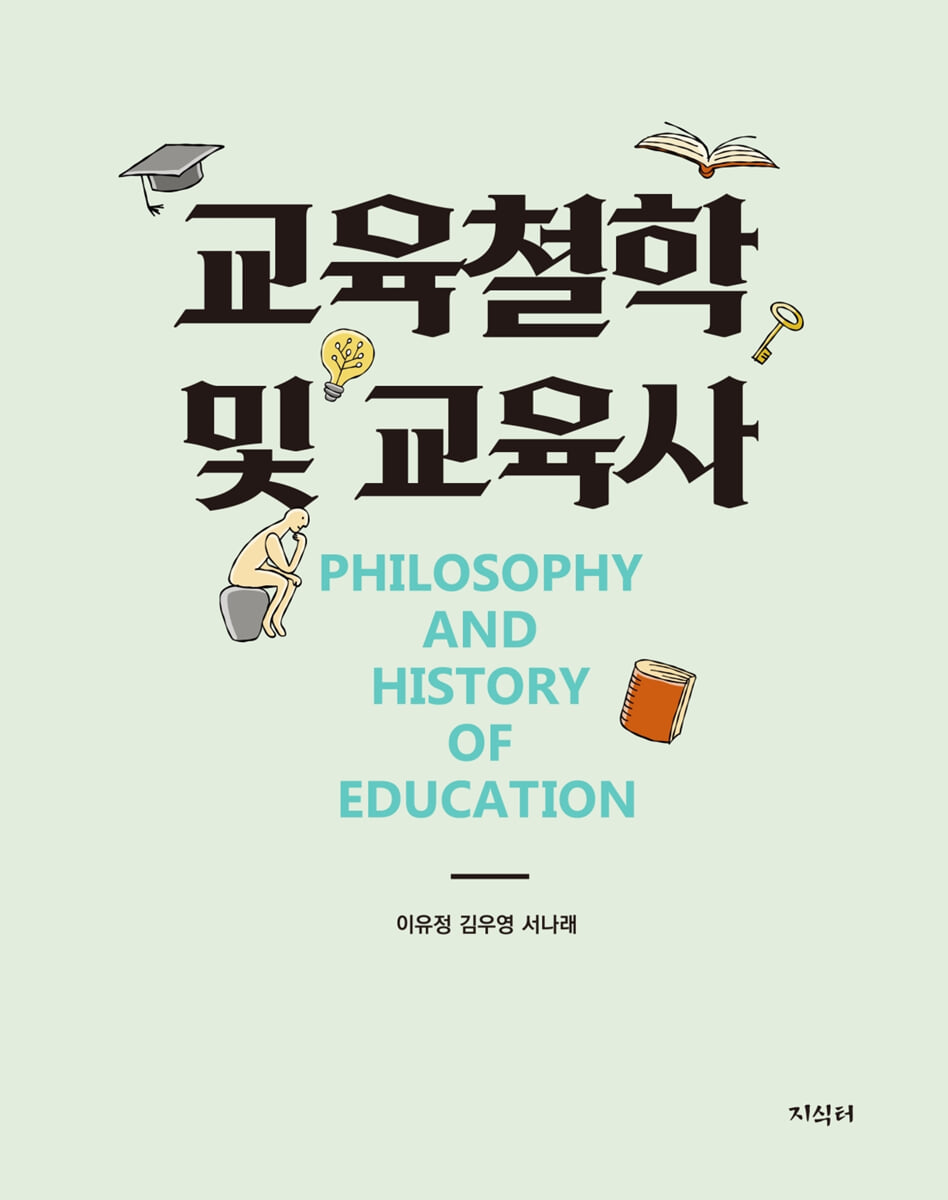
Educational Philosophy and History
 |
Description
Book Introduction
『Educational Philosophy and History』 concisely describes the core contents of 'Educational History and Philosophy', using simple terms as much as possible and clarifying the meaning of difficult words.
The major and teacher education course, 'Educational Philosophy and History,' has the task of covering the history of education in the Korean Peninsula and the West, as well as the educational philosophy of the East and the West, in one semester.
Considering the reality that a large amount of content must be contained in a single book and understood within a short period of time, we have tried to describe the core content in an easy and concise manner.
The major and teacher education course, 'Educational Philosophy and History,' has the task of covering the history of education in the Korean Peninsula and the West, as well as the educational philosophy of the East and the West, in one semester.
Considering the reality that a large amount of content must be contained in a single book and understood within a short period of time, we have tried to describe the core content in an easy and concise manner.
index
Part 1: Overview of Educational Philosophy and History
Chapter 1: What is educational history?
1.
The Meaning of History / 13
2.
The Meaning of Educational History / 14
3.
The Value and Necessity of Educational History / 15
Chapter 2 What is educational philosophy?
1.
The Meaning of Philosophy / 17
2.
The Meaning of Educational Philosophy / 18
3.
The Function and Necessity of Educational Philosophy / 19
Part 2: History of Korean Education
Chapter 3: Education in the Three Kingdoms and Northern and Southern States Periods
1.
Education in Primitive Society / 26
2.
Education in the Ancient Three Kingdoms Period / 26
3.
Education in the North-South States Period / 30
Chapter 4 Education in the Goryeo Dynasty
1.
Historical Background / 36
2.
Goryeo's School System / 36
3.
Goryeo's Civil Service Examination System / 45
Chapter 5: Education in the Early Joseon Dynasty
1.
Historical Background / 50
2.
The Confucian School System / 51
3.
The Civil Service Examination System of the Joseon Dynasty / 60
4.
The Emergence of Independent Learning Materials / 66
Chapter 6 Education in the Late Joseon Dynasty
1.
Historical Background / 70
2.
The Appearance of Seowon / 72
3.
Changes in Hyanggyo / 75
4.
The Popularization of Rural Seodang / 75
5.
Silhak School's Educational Reform Theory / 78
Chapter 7 Education in Modern and Contemporary Times
1.
The Emergence of Modern Schools during the Port Opening Period / 84
2.
The Gabo Reform and Changes in the Education System / 90
3.
Education during the Residency-General Period / 100
4.
Education in the Colonial Period / 102
5.
The Beginnings and Changes of Korean Education after Liberation / 108
Chapter 8: History of Early Childhood Education in Korea
1.
The Emergence of the Early Childhood Education System / 118
2.
Publicization of Early Childhood Education / 120
Part 3: History of Western Education
Chapter 9: Education in the Greco-Roman Era
1.
Education in Ancient Greece / 128
2.
Education in Ancient Rome / 131
Chapter 10 Education in the Western Middle Ages
1.
Characteristics of the Western Middle Ages / 140
2.
Cathedral School, Monastery School, Grammar School / 141
3.
The Rise of the Medieval University / 142
4.
Secular Education / 145
Chapter 11: Education in the Renaissance and Reformation
1.
Historical Background / 148
2.
Humanistic Education in the Renaissance / 150
3.
Renaissance Humanists / 153
4.
Education during the Reformation / 156
Chapter 12: Education during the Scientific Revolution and the Enlightenment
1.
Historical Background / 160
2.
Education in the Age of Scientific Revolution / 162
3.
Realism in the Age of Scientific Revolutions / 162
4.
Education in the Enlightenment / 167
5.
Educational Thinkers of the Enlightenment / 168
Chapter 13: Education during the Industrial Revolution
1.
Historical Background / 173
2.
Education during the Industrial Revolution / 174
3.
Imperialism and Education / 183
Part 4: Educational Philosophy
Chapter 14: Traditional Educational Philosophy
1.
Idealism / 188
2.
Realism / 193
3.
Naturalism / 199
4.
Pragmatism / 204
Chapter 15: The 20th Century Education Movement
1.
Progressivism / 212
2.
Essentialism / 217
3.
Existentialism / 222
4.
Reconstructionism / 228
Chapter 16: Modern Philosophy of Education
1.
Existentialism / 236
2.
Analytical Philosophy / 242
3.
Critical Theory / 247
4.
Postmodernism / 251
Chapter 17: Child-Centered Educational Philosophy
1.
Froebel's Philosophy of Education / 258
2.
Montessori's Philosophy of Education / 264
3.
Steiner's Waldorf School and Neil's Summerhill School / 271
Chapter 18: Eastern Philosophy of Education
1.
Confucian Educational Philosophy / 280
2.
Taoist Philosophy of Education / 291
· References / 298
· Search / 306
Chapter 1: What is educational history?
1.
The Meaning of History / 13
2.
The Meaning of Educational History / 14
3.
The Value and Necessity of Educational History / 15
Chapter 2 What is educational philosophy?
1.
The Meaning of Philosophy / 17
2.
The Meaning of Educational Philosophy / 18
3.
The Function and Necessity of Educational Philosophy / 19
Part 2: History of Korean Education
Chapter 3: Education in the Three Kingdoms and Northern and Southern States Periods
1.
Education in Primitive Society / 26
2.
Education in the Ancient Three Kingdoms Period / 26
3.
Education in the North-South States Period / 30
Chapter 4 Education in the Goryeo Dynasty
1.
Historical Background / 36
2.
Goryeo's School System / 36
3.
Goryeo's Civil Service Examination System / 45
Chapter 5: Education in the Early Joseon Dynasty
1.
Historical Background / 50
2.
The Confucian School System / 51
3.
The Civil Service Examination System of the Joseon Dynasty / 60
4.
The Emergence of Independent Learning Materials / 66
Chapter 6 Education in the Late Joseon Dynasty
1.
Historical Background / 70
2.
The Appearance of Seowon / 72
3.
Changes in Hyanggyo / 75
4.
The Popularization of Rural Seodang / 75
5.
Silhak School's Educational Reform Theory / 78
Chapter 7 Education in Modern and Contemporary Times
1.
The Emergence of Modern Schools during the Port Opening Period / 84
2.
The Gabo Reform and Changes in the Education System / 90
3.
Education during the Residency-General Period / 100
4.
Education in the Colonial Period / 102
5.
The Beginnings and Changes of Korean Education after Liberation / 108
Chapter 8: History of Early Childhood Education in Korea
1.
The Emergence of the Early Childhood Education System / 118
2.
Publicization of Early Childhood Education / 120
Part 3: History of Western Education
Chapter 9: Education in the Greco-Roman Era
1.
Education in Ancient Greece / 128
2.
Education in Ancient Rome / 131
Chapter 10 Education in the Western Middle Ages
1.
Characteristics of the Western Middle Ages / 140
2.
Cathedral School, Monastery School, Grammar School / 141
3.
The Rise of the Medieval University / 142
4.
Secular Education / 145
Chapter 11: Education in the Renaissance and Reformation
1.
Historical Background / 148
2.
Humanistic Education in the Renaissance / 150
3.
Renaissance Humanists / 153
4.
Education during the Reformation / 156
Chapter 12: Education during the Scientific Revolution and the Enlightenment
1.
Historical Background / 160
2.
Education in the Age of Scientific Revolution / 162
3.
Realism in the Age of Scientific Revolutions / 162
4.
Education in the Enlightenment / 167
5.
Educational Thinkers of the Enlightenment / 168
Chapter 13: Education during the Industrial Revolution
1.
Historical Background / 173
2.
Education during the Industrial Revolution / 174
3.
Imperialism and Education / 183
Part 4: Educational Philosophy
Chapter 14: Traditional Educational Philosophy
1.
Idealism / 188
2.
Realism / 193
3.
Naturalism / 199
4.
Pragmatism / 204
Chapter 15: The 20th Century Education Movement
1.
Progressivism / 212
2.
Essentialism / 217
3.
Existentialism / 222
4.
Reconstructionism / 228
Chapter 16: Modern Philosophy of Education
1.
Existentialism / 236
2.
Analytical Philosophy / 242
3.
Critical Theory / 247
4.
Postmodernism / 251
Chapter 17: Child-Centered Educational Philosophy
1.
Froebel's Philosophy of Education / 258
2.
Montessori's Philosophy of Education / 264
3.
Steiner's Waldorf School and Neil's Summerhill School / 271
Chapter 18: Eastern Philosophy of Education
1.
Confucian Educational Philosophy / 280
2.
Taoist Philosophy of Education / 291
· References / 298
· Search / 306
Publisher's Review
This book concisely describes the core contents of 'History of Education and Philosophy of Education,' using simple terms as much as possible and clarifying the meaning of difficult words.
The major and teacher education course, 'Educational Philosophy and History,' has the task of covering the history of education in the Korean Peninsula and the West, as well as the educational philosophy of the East and the West, in one semester.
Considering the reality that a large amount of content must be contained in a single book and understood within a short period of time, we have strived to describe the core content in an easy and concise manner.
We also provide various types of reference materials to encourage deeper thinking and enhance understanding of the topic.
In 'Reading Materials', we included the original sources mentioned in the text to convey the vividness of history and thought.
Videos related to the text are introduced using 'QR codes' to allow readers to approach each topic in an interesting way.
The "Thinking Questions" provided at the end of each chapter summarize the main points of the chapter and can be useful for discussion with other learners.
Finally, it was written to include a wider range of topics than existing textbooks, allowing learners to choose according to their interests and needs, with a particular focus on early childhood education.
In 'Part 2: History of Korean Education', 'Chapter 8: History of Early Childhood Education in Korea' is covered, detailing how early childhood education was introduced in Korea and established itself as a pillar of public education.
In 'Part 4: Educational Philosophy', 'Chapter 16: Child-Centered Educational Philosophy' introduces the educational theories of important figures in early childhood and child education, such as Froebel, Montessori, Steiner, and Neel.
In addition, we planned to add 'Eastern Educational Philosophy' to 'Part 4: Educational Philosophy' to enable a balanced understanding of Eastern and Western educational thought.
The major and teacher education course, 'Educational Philosophy and History,' has the task of covering the history of education in the Korean Peninsula and the West, as well as the educational philosophy of the East and the West, in one semester.
Considering the reality that a large amount of content must be contained in a single book and understood within a short period of time, we have strived to describe the core content in an easy and concise manner.
We also provide various types of reference materials to encourage deeper thinking and enhance understanding of the topic.
In 'Reading Materials', we included the original sources mentioned in the text to convey the vividness of history and thought.
Videos related to the text are introduced using 'QR codes' to allow readers to approach each topic in an interesting way.
The "Thinking Questions" provided at the end of each chapter summarize the main points of the chapter and can be useful for discussion with other learners.
Finally, it was written to include a wider range of topics than existing textbooks, allowing learners to choose according to their interests and needs, with a particular focus on early childhood education.
In 'Part 2: History of Korean Education', 'Chapter 8: History of Early Childhood Education in Korea' is covered, detailing how early childhood education was introduced in Korea and established itself as a pillar of public education.
In 'Part 4: Educational Philosophy', 'Chapter 16: Child-Centered Educational Philosophy' introduces the educational theories of important figures in early childhood and child education, such as Froebel, Montessori, Steiner, and Neel.
In addition, we planned to add 'Eastern Educational Philosophy' to 'Part 4: Educational Philosophy' to enable a balanced understanding of Eastern and Western educational thought.
GOODS SPECIFICS
- Date of issue: February 5, 2025
- Page count, weight, size: 316 pages | 190*240*30mm
- ISBN13: 9791193871867
- ISBN10: 1193871867
You may also like
카테고리
korean


korean

![GQ KOREA Mark (Monthly): December [2025]](http://librairie.coreenne.fr/cdn/shop/files/8ef265dbbfbf186523ed75ba7319009d.jpg?v=1765340328&width=3840)


