

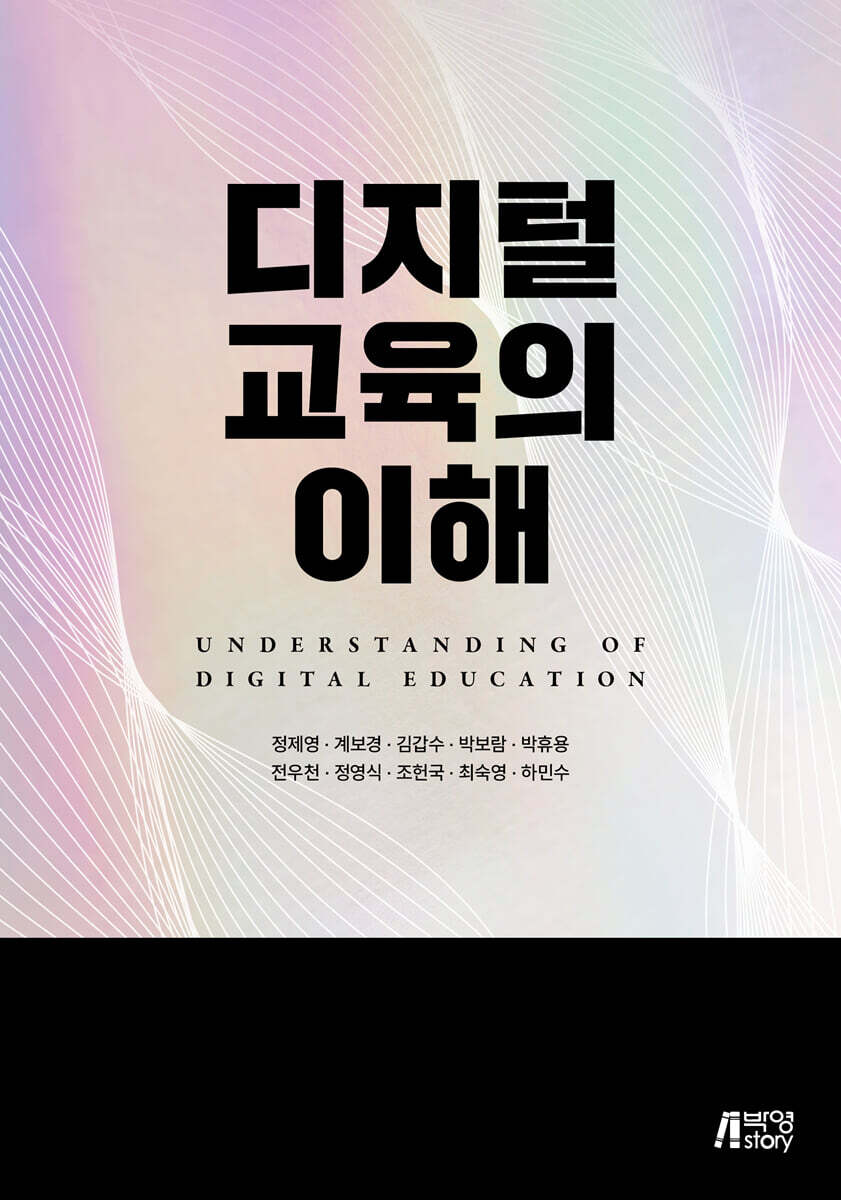
Understanding Digital Education
 |
Description
Book Introduction
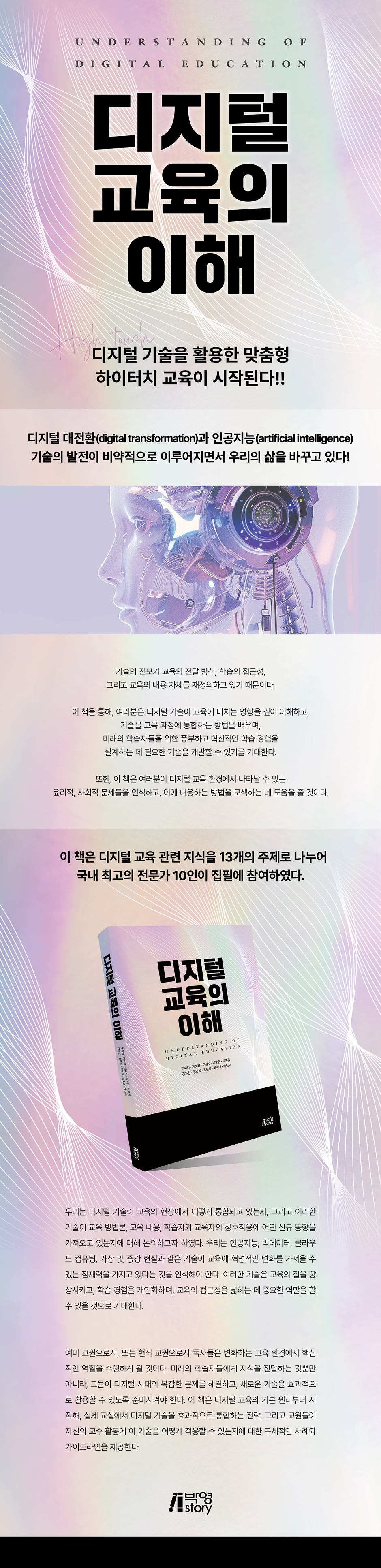
The rapid advancement of digital transformation and artificial intelligence technology is changing our lives.
A situation is unfolding where technological changes are leading social changes.
Many changes are also expected in the field of education.
The digital transformation and rapid advancements in artificial intelligence technology are bringing about fundamental changes to our daily lives and social structures.
Amidst this whirlwind of change, the field of education stands at a particularly crucial crossroads of transformation.
Because technological advancements are redefining how education is delivered, how accessible learning is, and even what education itself is.
In "Understanding Digital Education," the authors aim to introduce prospective and current teachers to the innovative changes digital technology brings to education.
This book contains the knowledge necessary to systematically understand the digital transformation of education, from the basic concepts of digital education to the application of the latest technologies.
We aim to develop the competencies necessary for educators and learners in the digital age and explore strategies for successful learning and teaching in a changing world.
This book divides knowledge related to digital education into 13 topics and was written by the country's top experts.
We sought to discuss how digital technologies are being integrated into educational settings and what new trends these technologies are bringing to teaching methodology, educational content, and interactions between learners and educators.
We must recognize that technologies such as artificial intelligence, big data, cloud computing, and virtual and augmented reality have the potential to revolutionize education.
These technologies are expected to play a significant role in improving the quality of education, personalizing the learning experience, and expanding access to education.
As prospective or current teachers, readers will play a key role in the changing educational environment.
Beyond imparting knowledge to future learners, we must prepare them to solve complex problems in the digital age and effectively utilize new technologies.
This book begins with the fundamental principles of digital education, provides strategies for effectively integrating digital technologies into real-world classrooms, and provides concrete examples and guidelines for how teachers can apply these technologies to their teaching practices.
Through this book, we hope you will gain a deeper understanding of the impact of digital technology on education, learn how to integrate technology into the curriculum, and develop the skills needed to design rich and innovative learning experiences for future learners.
Additionally, this book will help you recognize ethical and social issues that may arise in digital education environments and explore ways to respond to them.
Through "Understanding Digital Education," we hope to equip you with the knowledge and skills necessary to become an innovator in future education.
We hope this book will be a valuable resource on your educational journey and that it will help you provide effective and meaningful education for future generations.
As we explore the future of digital education together, we will rediscover the transformative power of education.
A situation is unfolding where technological changes are leading social changes.
Many changes are also expected in the field of education.
The digital transformation and rapid advancements in artificial intelligence technology are bringing about fundamental changes to our daily lives and social structures.
Amidst this whirlwind of change, the field of education stands at a particularly crucial crossroads of transformation.
Because technological advancements are redefining how education is delivered, how accessible learning is, and even what education itself is.
In "Understanding Digital Education," the authors aim to introduce prospective and current teachers to the innovative changes digital technology brings to education.
This book contains the knowledge necessary to systematically understand the digital transformation of education, from the basic concepts of digital education to the application of the latest technologies.
We aim to develop the competencies necessary for educators and learners in the digital age and explore strategies for successful learning and teaching in a changing world.
This book divides knowledge related to digital education into 13 topics and was written by the country's top experts.
We sought to discuss how digital technologies are being integrated into educational settings and what new trends these technologies are bringing to teaching methodology, educational content, and interactions between learners and educators.
We must recognize that technologies such as artificial intelligence, big data, cloud computing, and virtual and augmented reality have the potential to revolutionize education.
These technologies are expected to play a significant role in improving the quality of education, personalizing the learning experience, and expanding access to education.
As prospective or current teachers, readers will play a key role in the changing educational environment.
Beyond imparting knowledge to future learners, we must prepare them to solve complex problems in the digital age and effectively utilize new technologies.
This book begins with the fundamental principles of digital education, provides strategies for effectively integrating digital technologies into real-world classrooms, and provides concrete examples and guidelines for how teachers can apply these technologies to their teaching practices.
Through this book, we hope you will gain a deeper understanding of the impact of digital technology on education, learn how to integrate technology into the curriculum, and develop the skills needed to design rich and innovative learning experiences for future learners.
Additionally, this book will help you recognize ethical and social issues that may arise in digital education environments and explore ways to respond to them.
Through "Understanding Digital Education," we hope to equip you with the knowledge and skills necessary to become an innovator in future education.
We hope this book will be a valuable resource on your educational journey and that it will help you provide effective and meaningful education for future generations.
As we explore the future of digital education together, we will rediscover the transformative power of education.
index
Chapter 1: Future Education in the Era of AI and Digital Transformation
1. The advent of the digital transformation and artificial intelligence era
2 School Innovation for Future Education
3 Directions for Digital-Based Customized Education
Chapter 2: Understanding AI and Digital Education Policy
1 The Importance of Education in a Changing Future Society
2. Current Status of Artificial Intelligence and Digital Education at Home and Abroad
3. Concerns about the role of teachers in a changing educational environment
Chapter 3: AI and Digital Literacy for All
1 AI·Digital Literacy
2 AI and Digital Literacy Activities by Country
Chapter 4: AI Digital Literacy for Education
1. Artificial Intelligence Literacy
2 Algorithm Literacy
3 Programming Literacy
4 Data Literacy
5. AI Ethics Literacy
Chapter 5: Using AI and Digital Safely
1 Ethical Principles for AI
2 Responsibilities and Accountabilities of AI Systems
Chapter 6: AI and Digital Ethics for Education
1. Understanding AI Ethics Principles in Education
2 AI Education Ethics for Achieving SDG 4
Chapter 7: Understanding and Practice of EdTech
1 Understanding EdTech
2 EdTech in Practice
Chapter 8: Understanding and Practice of AI Education
1 AI Concepts and Principles
2 Understanding and Classifying AI Education
3 AI Education Cases
4 Considerations for Activating AI Education
Chapter 9: Generative AI and Education
1 Generative AI Concepts and Principles
2. Using Generative AI in Education
3 Issues and Considerations Arising from the Use of Generative AI
4 Generative AI and the Direction of Future Education
Chapter 10: Understanding AI Digital Textbooks
1 AI Digital Textbook for Customized Education
2 Key Features of AI Digital Textbooks
3 AI Digital Textbooks and the Changing Role of Teachers
Chapter 11: Understanding Training Data
1 Teaching, Learning, and Learning Data
2. Collection of learning data
3 Analysis and interpretation of learning data
Chapter 12: Practical Use of Learning Data
1 Analysis of summative assessment items using jamovi
2 Analysis of occupational value group types using poLCA
3. Analysis of the effectiveness of educational programs using crimCV
4 Development of an automatic assessment model using descriptive responses
Chapter 13: The Future of AI and Digital Education
1. Changes in Education in a Technology-Based Society
2 The Emergence of the Metaverse and the Transformation of Future Schools
3 Education in the Big Data Era
1. The advent of the digital transformation and artificial intelligence era
2 School Innovation for Future Education
3 Directions for Digital-Based Customized Education
Chapter 2: Understanding AI and Digital Education Policy
1 The Importance of Education in a Changing Future Society
2. Current Status of Artificial Intelligence and Digital Education at Home and Abroad
3. Concerns about the role of teachers in a changing educational environment
Chapter 3: AI and Digital Literacy for All
1 AI·Digital Literacy
2 AI and Digital Literacy Activities by Country
Chapter 4: AI Digital Literacy for Education
1. Artificial Intelligence Literacy
2 Algorithm Literacy
3 Programming Literacy
4 Data Literacy
5. AI Ethics Literacy
Chapter 5: Using AI and Digital Safely
1 Ethical Principles for AI
2 Responsibilities and Accountabilities of AI Systems
Chapter 6: AI and Digital Ethics for Education
1. Understanding AI Ethics Principles in Education
2 AI Education Ethics for Achieving SDG 4
Chapter 7: Understanding and Practice of EdTech
1 Understanding EdTech
2 EdTech in Practice
Chapter 8: Understanding and Practice of AI Education
1 AI Concepts and Principles
2 Understanding and Classifying AI Education
3 AI Education Cases
4 Considerations for Activating AI Education
Chapter 9: Generative AI and Education
1 Generative AI Concepts and Principles
2. Using Generative AI in Education
3 Issues and Considerations Arising from the Use of Generative AI
4 Generative AI and the Direction of Future Education
Chapter 10: Understanding AI Digital Textbooks
1 AI Digital Textbook for Customized Education
2 Key Features of AI Digital Textbooks
3 AI Digital Textbooks and the Changing Role of Teachers
Chapter 11: Understanding Training Data
1 Teaching, Learning, and Learning Data
2. Collection of learning data
3 Analysis and interpretation of learning data
Chapter 12: Practical Use of Learning Data
1 Analysis of summative assessment items using jamovi
2 Analysis of occupational value group types using poLCA
3. Analysis of the effectiveness of educational programs using crimCV
4 Development of an automatic assessment model using descriptive responses
Chapter 13: The Future of AI and Digital Education
1. Changes in Education in a Technology-Based Society
2 The Emergence of the Metaverse and the Transformation of Future Schools
3 Education in the Big Data Era
Detailed image
Publisher's Review
Chapter 1 (Jeong Je-young) "AI? Future Education in the Era of Digital Transformation" examines the challenges facing school education and, based on these findings, explores the transition from mass education to personalized education. It also presents a vision for how AI and digital technologies can shape the future of education.
This chapter explores how technology can personalize learning experiences and improve accessibility.
Chapter 2 (Cho Heon-guk) "Understanding AI and Digital Education Policy" examines global education policies and directions related to artificial intelligence and digital capabilities, and examines various policies and directions being pursued in Korea.
We will discuss and consider the changes in our country's education system that will emerge in line with this trend and the roles that teachers will need to play accordingly.
Chapter 3 (Kim Gap-su) “AI for All? Digital Literacy” introduces examples of AI and digital literacy for all.
Based on the digital information gap, the necessity is explained from the perspectives of the general public, the elderly, low-income families, and farmers and fishermen, and access, understanding, and utilization of AI digital literacy core competencies are briefly explained.
Here's a brief overview of the strategy for both the US and EU countries.
Chapter 4 (Jeon Woo-cheon) “AI Digital Literacy for Education” introduces AI and digital literacy in schools.
Basically, the literacy required in schools was divided into five areas: artificial intelligence literacy, algorithm literacy, programming literacy, data literacy, and artificial intelligence ethics literacy.
The core topics and contents of each literacy were introduced, and the content level was set according to grade and student level.
Chapter 5 (Park Bo-ram) “AI? Using Digital Technology Safely” emphasizes the importance of ethical use of AI and digital technologies.
First, we focus on ethical principles and explore how AI technology can positively impact ethical, social, and cultural aspects, particularly in the field of education.
Furthermore, it argues that responsibility and accountability for accidents that may arise from AI technology must be considered from technical, legal, ethical, and social perspectives, and emphasizes the importance of establishing clear solutions to these issues.
Chapter 6 (Park Bo-ram) “AI for Education? Digital Ethics” focuses on the ethical use of AI in education.
Applying AI to education in the digital age emphasizes the importance of ethical considerations such as data protection, fairness, transparency, and the public interest.
The AI ethics principles proposed by the Ministry of Education in 2022 aim to implement human-centered AI, respect human dignity, and faithfully realize educational values.
This aims to ensure that AI can have a positive impact in the field of education, serves as a self-regulatory standard that supports educators in developing and utilizing AI ethically, and promotes social discussion and academic research on the safe use of AI in education.
Chapter 7 (Jeong Young-sik) “Understanding and Practice of EdTech” provides an understanding of the concept, history, and characteristics of EdTech, which is actively being used in the education field as we enter the era of digital transformation. Furthermore, we examine EdTech operational cases in detail, categorized into four categories: educational content services, educational activity services, educational support services, and educational platform services.
Chapter 8 (Choi Sook-young) "Understanding and Practice of AI Education" introduces the concept of AI, the classification of AI education, and examples of AI education. AI education is categorized into content education, application education, and convergence education.
We will examine the key topics of AI education being implemented in elementary, middle, and high schools both domestically and internationally, the various forms in which AI supports teaching and learning, AI learning elements and activities, and the forms of AI-integrated education based on learning tools.
Additionally, we introduce real-world cases of AI education by classifying them according to their characteristics and dividing them into several types.
Chapter 9 (Sukyoung Choi) “Generative AI and Education” introduces the principles of generative AI, its use in education, and the issues surrounding its use.
We examine areas where generative AI can be utilized in education, including lesson design, educational content creation, learner-driven learning, personalized learning, tutoring and feedback, career counseling, and teacher support.
We also introduce the issues and considerations surrounding the use of generative AI and discuss the direction of generative AI and future education.
Chapter 10 (Genealogy) "Understanding AI Digital Textbooks" explores the concepts and characteristics of AI digital textbooks, which will be introduced starting in 2025 to facilitate digital transformation and personalized learning systems in schools. It also examines the development direction, key functions, and certification system for AI-based textbooks.
Additionally, we discuss the changing roles of educational entities in the new AI digital textbook system.
Chapter 11 (Ha Min-soo) “Understanding Learning Data” covers the types of learning data generated in educational settings and the process of collecting learning data through surveys, assessment activities, and classroom educational activities.
Additionally, we learn how to statistically analyze collected learning data, dividing it into basic statistics and advanced statistics.
Chapter 12 (Ha Min-soo) “Learning Data in Practice” introduces real-world examples of analyzing and utilizing learning data collected through educational evaluations, surveys, and educational activities.
Understand how learning data can be effectively utilized through practical examples of using summative assessment results to verify item validity, using career value survey data to analyze student career types, and using longitudinal data to verify student learning trajectories.
Chapter 13 (Park Hyu-yong) "AI? The Future of Digital Education" introduces the nature of future teaching and learning and the direction of change in school education in the AI era.
To this end, we discuss the changes in school education in a technology-based society, the changing nature of learning due to the emergence of the metaverse, and the changing roles of education and schools in the future.
This chapter explores how technology can personalize learning experiences and improve accessibility.
Chapter 2 (Cho Heon-guk) "Understanding AI and Digital Education Policy" examines global education policies and directions related to artificial intelligence and digital capabilities, and examines various policies and directions being pursued in Korea.
We will discuss and consider the changes in our country's education system that will emerge in line with this trend and the roles that teachers will need to play accordingly.
Chapter 3 (Kim Gap-su) “AI for All? Digital Literacy” introduces examples of AI and digital literacy for all.
Based on the digital information gap, the necessity is explained from the perspectives of the general public, the elderly, low-income families, and farmers and fishermen, and access, understanding, and utilization of AI digital literacy core competencies are briefly explained.
Here's a brief overview of the strategy for both the US and EU countries.
Chapter 4 (Jeon Woo-cheon) “AI Digital Literacy for Education” introduces AI and digital literacy in schools.
Basically, the literacy required in schools was divided into five areas: artificial intelligence literacy, algorithm literacy, programming literacy, data literacy, and artificial intelligence ethics literacy.
The core topics and contents of each literacy were introduced, and the content level was set according to grade and student level.
Chapter 5 (Park Bo-ram) “AI? Using Digital Technology Safely” emphasizes the importance of ethical use of AI and digital technologies.
First, we focus on ethical principles and explore how AI technology can positively impact ethical, social, and cultural aspects, particularly in the field of education.
Furthermore, it argues that responsibility and accountability for accidents that may arise from AI technology must be considered from technical, legal, ethical, and social perspectives, and emphasizes the importance of establishing clear solutions to these issues.
Chapter 6 (Park Bo-ram) “AI for Education? Digital Ethics” focuses on the ethical use of AI in education.
Applying AI to education in the digital age emphasizes the importance of ethical considerations such as data protection, fairness, transparency, and the public interest.
The AI ethics principles proposed by the Ministry of Education in 2022 aim to implement human-centered AI, respect human dignity, and faithfully realize educational values.
This aims to ensure that AI can have a positive impact in the field of education, serves as a self-regulatory standard that supports educators in developing and utilizing AI ethically, and promotes social discussion and academic research on the safe use of AI in education.
Chapter 7 (Jeong Young-sik) “Understanding and Practice of EdTech” provides an understanding of the concept, history, and characteristics of EdTech, which is actively being used in the education field as we enter the era of digital transformation. Furthermore, we examine EdTech operational cases in detail, categorized into four categories: educational content services, educational activity services, educational support services, and educational platform services.
Chapter 8 (Choi Sook-young) "Understanding and Practice of AI Education" introduces the concept of AI, the classification of AI education, and examples of AI education. AI education is categorized into content education, application education, and convergence education.
We will examine the key topics of AI education being implemented in elementary, middle, and high schools both domestically and internationally, the various forms in which AI supports teaching and learning, AI learning elements and activities, and the forms of AI-integrated education based on learning tools.
Additionally, we introduce real-world cases of AI education by classifying them according to their characteristics and dividing them into several types.
Chapter 9 (Sukyoung Choi) “Generative AI and Education” introduces the principles of generative AI, its use in education, and the issues surrounding its use.
We examine areas where generative AI can be utilized in education, including lesson design, educational content creation, learner-driven learning, personalized learning, tutoring and feedback, career counseling, and teacher support.
We also introduce the issues and considerations surrounding the use of generative AI and discuss the direction of generative AI and future education.
Chapter 10 (Genealogy) "Understanding AI Digital Textbooks" explores the concepts and characteristics of AI digital textbooks, which will be introduced starting in 2025 to facilitate digital transformation and personalized learning systems in schools. It also examines the development direction, key functions, and certification system for AI-based textbooks.
Additionally, we discuss the changing roles of educational entities in the new AI digital textbook system.
Chapter 11 (Ha Min-soo) “Understanding Learning Data” covers the types of learning data generated in educational settings and the process of collecting learning data through surveys, assessment activities, and classroom educational activities.
Additionally, we learn how to statistically analyze collected learning data, dividing it into basic statistics and advanced statistics.
Chapter 12 (Ha Min-soo) “Learning Data in Practice” introduces real-world examples of analyzing and utilizing learning data collected through educational evaluations, surveys, and educational activities.
Understand how learning data can be effectively utilized through practical examples of using summative assessment results to verify item validity, using career value survey data to analyze student career types, and using longitudinal data to verify student learning trajectories.
Chapter 13 (Park Hyu-yong) "AI? The Future of Digital Education" introduces the nature of future teaching and learning and the direction of change in school education in the AI era.
To this end, we discuss the changes in school education in a technology-based society, the changing nature of learning due to the emergence of the metaverse, and the changing roles of education and schools in the future.
GOODS SPECIFICS
- Date of issue: February 29, 2024
- Page count, weight, size: 320 pages | 171*244*30mm
- ISBN13: 9791165199951
- ISBN10: 1165199955
You may also like
카테고리
korean


korean

![GQ KOREA Mark (Monthly): December [2025]](http://librairie.coreenne.fr/cdn/shop/files/8ef265dbbfbf186523ed75ba7319009d.jpg?v=1765340328&width=3840)


