

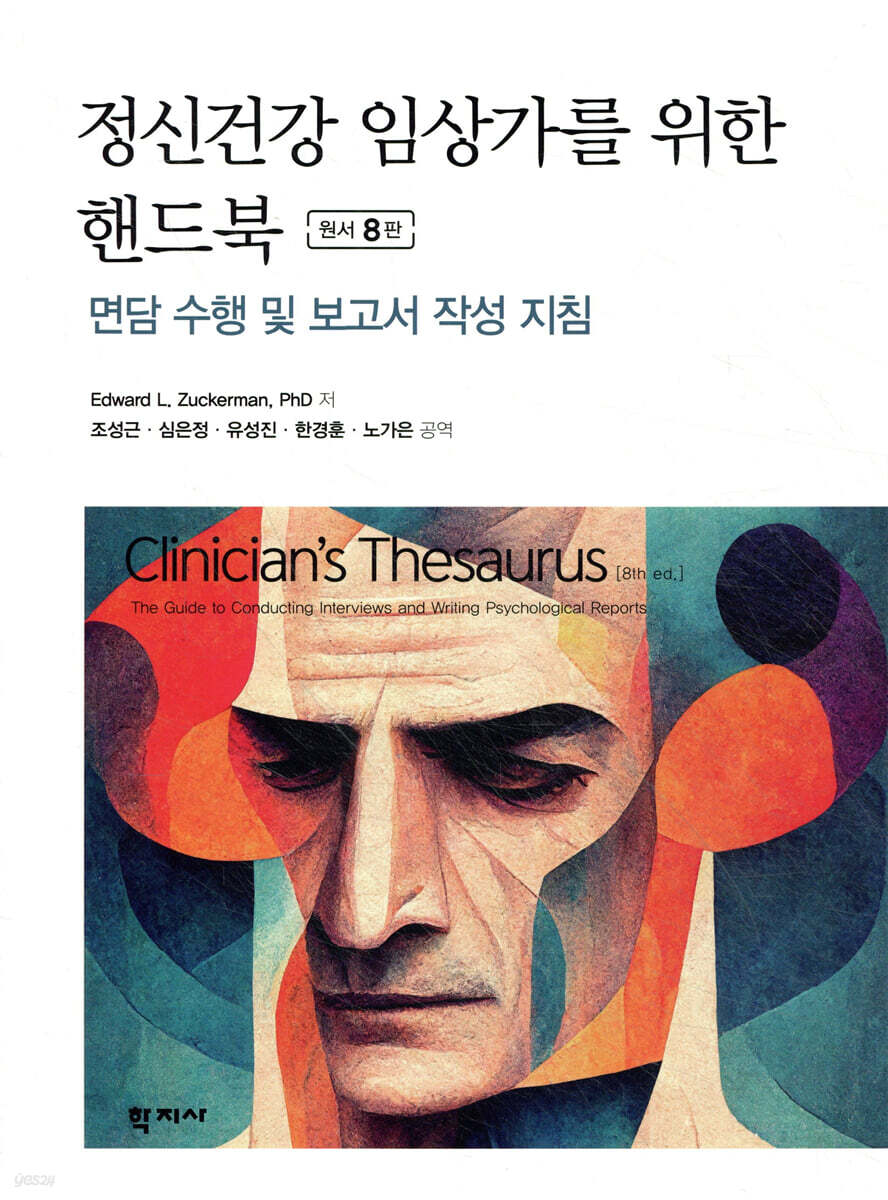
Handbook for Mental Health Clinicians
 |
Description
Book Introduction
One of the basic tasks of a mental health clinician is documentation.
When documenting, any mental health clinician has at some point felt the difficulty and thirst to accurately and appropriately record his or her observations, understandings, and conclusions about a client.
However, there were few textbooks available in Korea that could satisfy these needs, and translators who felt a strong need for such a book translated this book, a steady seller in this field.
This book, "Handbook for Mental Health Practitioners: Guidelines for Conducting Interviews and Writing Reports," is literally a treasure trove.
This book systematically compiles many relevant terms and expressions in one place, making it easier for clinicians to find more accurate and appropriate language, reducing the burden and enhancing the professionalism of their documentation.
When documenting, any mental health clinician has at some point felt the difficulty and thirst to accurately and appropriately record his or her observations, understandings, and conclusions about a client.
However, there were few textbooks available in Korea that could satisfy these needs, and translators who felt a strong need for such a book translated this book, a steady seller in this field.
This book, "Handbook for Mental Health Practitioners: Guidelines for Conducting Interviews and Writing Reports," is literally a treasure trove.
This book systematically compiles many relevant terms and expressions in one place, making it easier for clinicians to find more accurate and appropriate language, reducing the burden and enhancing the professionalism of their documentation.
index
Translator's Preface
Acknowledgements and Suggestions
How to Use the Handbook for Mental Health Practitioners
Practical Guidelines for Report Writing
Part 1 Mental Health Assessment
Chapter 1: Beginning and Ending the Interview
1.1 Beginning the Interview
1.2 Self-introduction and communication difficulties confirmation
1.3 Assessing the client's level of understanding of the interview situation
1.4 Obtaining prior consent
1.5 Other information required for all interviews
1.6 Exploring the main issue/issue/issues of appeal
1.7 Exploring the client's level of understanding of the problem
1.8 Dimensional distinction of appeal issues
1.9 Conclusion of the Interview
1.10 List of Screening and Monitoring Tools
Chapter 2 Questions/Assignments Related to Mental State Assessment
2.1 Introduction to Mental State Questions
2.2 Background information regarding mental status
2.3 Rancho Los Amigos Cognitive Function Scale
2.4 Cognitive Impairment Screening Tool
2.5 Endurance
2.6 Attention
2.7 Concentration
2.8 Language Comprehension
2.9 Hand-eye coordination/perceptual-motor integration/synthetic motor disorders/constructive abilities
2.10 Memory
2.11 Common Sense
2.12 Antonyms
2.13 Differences
2.14 Commonalities/Similarities
2.15 Contradiction
2.16 Computational Ability
2.17 Analogy/Proverb
2.18 Proverbs vs.
2.19 Practical Reasoning
2.20 Social Judgment
2.21 Decision-making
2.22 Self-image
2.23 Knowledge of Disability
2.24 Strengths and Coping
2.25 Mental State Assessment Checklist
Chapter 3 Questions about signs, symptoms, and other behavioral patterns
3.1 Introduction to Questions Related to Signs, Symptoms, and Behavioral Patterns
3.2 Non-sexual abuse/neglect of adults
3.3 Sexual Abuse of Adults
3.4 Emotion/Mood
3.5 Anxiety
3.6 Body Dysmorphic Disorder
3.7 Compliance/Noncompliance with Treatment
3.8 Compulsive Behaviors
3.9 Delusion
3.10 Depression
3.11 Harry Experience
3.12 Eating Disorders
3.13 Questions about gay, lesbian, and bisexual sexual identity
3.14 Gender Identity
3.15 Gender Identity: Transgender and Gender Nonconforming People
3.16 Hallucination
3.17 Illusion
3.18 Impulse Control
3.19 Mania
3.20 Obsessive thoughts
3.21 Temperamental symptoms/cognitive impairment
3.22 Chronic pain
3.23 Paranoia
3.24 phobia
3.25 self-harm
3.26 Sexual history
3.27 Sleep
3.28 Substance Abuse: Drugs and Alcohol
3.29 Substance Use: Tobacco and Caffeine
3.30 Suicidal and self-destructive behavior
3.31 Violence
Standard Terms and Statements for Writing Part 2 Reports
A.
Introduction to the report
Chapter 4: Getting Started with Your Report: Preliminary Information
4.1 Report Title and Date
4.2 Sources of Report Information
4.3 Client's personal information
4.4 Level of spontaneous functioning as indicated in the assessment
4.5 Explanatory Statement for Consent
4.6 Reliability/Validity Statements
4.7 Information on confidentiality
4.8 Ethical Considerations in Report Writing
Chapter 5 Reasons for Request
5.1 Statement of Reason for Request
Chapter 6 Background Information and History
6.1 Past history/current problems/disease/progression of main complaint
6.2 History and Other Exploration
6.3 Personal history, family history, social history, and current social situation
6.4 Adaptation
6.5 Social skills required for disability screening
6.6 Family Tree
B.
Characteristics of examinees during evaluation
Chapter 7: Behavioral Observation
7.1 Appearance
7.2 Clothing
7.3 Movement/Activity
7.4 Speech Behavior
7.5 Observation of other behaviors
Chapter 8 Reactions Related to Inspection
8.1 Response to the context of the test
8.2 Attention/Concentration/Effort
8.3 Response to assessment/test/questioning methods
8.4 Persistence/Motivation
8.5 Relationship with the Inspector
8.6 Responding to Success/Failure/Feedback
Chapter 9 Self-presentation
9.1 Dependency-Passion
9.2 Attitude/Style
9.3 Self-image/Self-esteem
9.4 Etiquette/Manners
9.5 Warmth-Coldness
9.6 Other self-presentation aspects
Chapter 10 Mood/Affective Symptoms and Disorders
10.1 General aspects of mood and affect
10.2 Anger
10.3 Anxiety/Fear
10.4 Bipolar I Disorder
10.5 Bipolar II Disorder
10.6 Circulatory disorders
10.7 Depression
10.8 Guilt/Shame
10.9 Mania
10.10 Panic
10.11 Seasonal Affective Disorder
10.12 Sexual Interest
10.13 Other emotional/affective responses
Chapter 11 Cognitive Function and Mental State
11.1 No Pathologic Findings: Summary Statement
11.2 Arithmetic
11.3 Attention
11.4 Concentration/Task Persistence
11.5 Level of consciousness
11.6 Decision Making
11.7 Dementia
11.8 Execution Function
11.9 Common Sense
11.10 Military meal
11.11 Intelligence and Cognition: Assessment
11.12 Intelligence Score: Classification
11.13 Memory
11.14 Moral/Social Judgment and Knowledge
11.15 Endurance
11.16 Reality Checking
11.17 Reasoning/Abstract Thinking/Concept Formation
11.18 Social Maturity
11.19 Flow of Thoughts
11.20 Judgment Test: Summary Statement
11.21 Other Summary Statements on the Cognitive Component of Mental States
Chapter 12: Signs, Symptoms, and Syndromes
12.1 Abuse
12.2 AIDS Dementia Syndrome
12.3 Attention Deficit/Hyperactivity Disorder
12.4 Autism Spectrum Disorder
12.5 Body Dysmorphic Disorder
12.6 Chronic fatigue syndrome/myalgia rheumatica
12.7 Compulsive Behaviors
12.8 Delusion
12.9 Mrs.
12.10 Depersonalization and Derealization
12.11 Dual Diagnosis
12.12 Eating Disorders
12.13 Fetal Alcohol Syndrome
12.14 Gambling
12.15 Hallucination
12.16 Collector
12.17 Hypochondria
12.18 Illusion
12.19 Impulse Control Disorder
12.20 Violence in Intimate Relationships/Domestic Violence
12.21 Malingering
12.22 Obsessive thoughts
12.23 Pain Disorder/Chronic Pain Syndrome
12.24 Paranoia
12.25 phobia
12.26 Post-concussion syndrome
12.27 Post-traumatic stress disorder
12.28 Premenstrual Dysphoric Disorder
12.29 Rape Trauma Syndrome
12:30 Schizophrenia
12.31 Self-harming behavior
12.32 Sexual impulsivity/addiction/compulsive behavior, hypersexuality
12.33 Side effects/adverse drug reactions of psychotropic drugs
12.34 Sleep Disorder
12:35 Stalking
12.36 Substance Use, Abuse, and Dependence
12.37 Suicide
12.38 Human Trafficking
12.39 Violent Acts
Chapter 13 Personality Traits
13.1 Personality Diagnostic Model
13.2 Adult children of alcoholic/addicted parents
13.3 Antisocial personality
13.4 Authoritative personality
13.5 Avoidant personality
13.6 Borderline Personality
13.7 Codependent Personality
13.8 Compulsive personality
13.9 Dependent Personality
13.10 Dissociative Identity Disorder
13.11 Theatrical character
13.12 Narcissistic personality
13.13 Normal/Healthy Personality
13.14 Obsessive personality
13.15 Editing personality
13.16 Passive-Aggressive Personality
13.17 Sadistic personality
13.18 Hyunseong Jo's personality
13.19 Hyunhyung Jo's personality
13.20 Self-destructive personality
C.
Clients in the environment
Chapter 14: Ability to perform daily life activities
14.1 rating
14.2 Level of assistance needed/independence possible
14.3 Parenting
14.4 Housework/Housekeeping/Housekeeping Skills
14.5 Cooking
14.6 Financial capacity
14.7 Risk Recognition and Response
14.8 Living environment/level of support required
14.9 Quality of Performance
14.10 Self-management skills
14.11 Shopping
14.12 Transportation
14.13 Burden of Care
14.14 Summary Statement
Chapter 15 Social/Community Functions
15.1 General Lifestyle
15.2 Participation in social/community activities
15.3 Relationship Problems/Conflicts Within the Community
Chapter 16 Couples and Family Relationships
16.1 Systematic Family Structure
16.2 Family Evaluation at the Intake Interview
16.3 Family Interview Method
16.4 Child Support/Childcare: Essential Elements
16.5 Couple Relationships: Essential Elements
Chapter 17 Vocational/Academic Abilities
17.1 Basic work skills
17.2 Work experience
17.3 Language skills: reading and writing skills
17.4 Repair skills
17.5 Special Considerations for Disability Reports
17.6 Job Skills/Recommendations
Chapter 18 Leisure Functions
18.1 Entertainment: TV/Radio/Online Programs/Music
18.2 Hobbies
18.3 Sports
18.4 Reading
18.5 Quality of Participation/Performance
Chapter 19 Other Professional Evaluations
19.1 Bariatric surgery
19.2 Coping skills/stress tolerance
19.3 Culturally-conscious conceptualization
19.4 Financial Capability/Capital Management Capability
19.5 Refugee Experience
19.6 Religious and Spiritual Issues
D.
Finalize the report
Chapter 20 Summary of Results and Conclusions
20.1 Overview
20.2 Introduction to the Summary
20.3 Summary of Previous Information
20.4 Key findings and/or conclusions
20.5 Diagnostic Statement
20.6 Advice and Further Evaluation
20.7 Treatment Summary
Chapter 21 Diagnostic Statements/Opinions
21.1 ICD and DSM
21.2 Overview of the Reference List for Mental Disorder Diagnosis
21.3 Diagnostic qualifiers
21.4 Reference List of Mental Disorders in ICD-10-CM
Chapter 22 Suggestions
22.1 Need for Treatment/Medical Necessity of Treatment
22.2 Providing effective treatment
22.3 Treatment Options/Case Handling
22.4 Types of Treatment/Services
Chapter 23 Prognostic Statement
23.1 General Prognostic Statements
23.2 Other statements
Chapter 24 Conclusion
24.1 The Value of Information
24.2 Gratitude to the Client
24.3 Sustainability of Treatment
24.4 Signatures, etc.
24.5 Disclaimer
Part 3 Useful Resources
Chapter 25: Establishing a Treatment Plan and Forms for Treatment Plans
25.1 Flow and Characteristics of Treatment Plans
25.2 Advice on developing a treatment plan
25.3 Various types of treatment plans
25.4 Treatment Plan Template for Case Conceptualization
25.5 Treatment Plan Elements for Substance Abuse Clients
25.6 Treatment Plan Elements for Crisis Intervention
25.7 Recovery Paradigms and Related Expressions
25.8 Strengths Checklist
25.9 Effectiveness Measurement/Goal Achievement
Chapter 26 Report, Evaluation, and Summary Formats
26.1 Standard Format for Evaluation Reports
26.2 Psychodynamic Assessment Form: Developmental Model
26.3 『Psychodynamic Diagnostic Manual-2』 Form
26.4 Evaluation Issues from an Existentialist Perspective
26.5 Treatment Note Format
Chapter 27 List of General Psychiatric and Psychotropic Drugs
27.1 List of Drugs by Brand and Generic Name
27.2 Names of street drugs
27.3 Outcomes of Drug Treatment: Descriptors
27.4 Drug-Related Resources for Clinicians
Chapter 28 Psychiatric Disorders of Medical Conditions
28.1 Overview
28.2 Anxiety
28.3 Sexual dysfunction
28.4 Depression
28.5 Mania
28.6 Organic Brain Syndrome/Dementia
28.7 Psychosis
28.8 Drug-induced psychiatric conditions
References to literature related to assessment, interviewing, and report writing
References
Search
Acknowledgements and Suggestions
How to Use the Handbook for Mental Health Practitioners
Practical Guidelines for Report Writing
Part 1 Mental Health Assessment
Chapter 1: Beginning and Ending the Interview
1.1 Beginning the Interview
1.2 Self-introduction and communication difficulties confirmation
1.3 Assessing the client's level of understanding of the interview situation
1.4 Obtaining prior consent
1.5 Other information required for all interviews
1.6 Exploring the main issue/issue/issues of appeal
1.7 Exploring the client's level of understanding of the problem
1.8 Dimensional distinction of appeal issues
1.9 Conclusion of the Interview
1.10 List of Screening and Monitoring Tools
Chapter 2 Questions/Assignments Related to Mental State Assessment
2.1 Introduction to Mental State Questions
2.2 Background information regarding mental status
2.3 Rancho Los Amigos Cognitive Function Scale
2.4 Cognitive Impairment Screening Tool
2.5 Endurance
2.6 Attention
2.7 Concentration
2.8 Language Comprehension
2.9 Hand-eye coordination/perceptual-motor integration/synthetic motor disorders/constructive abilities
2.10 Memory
2.11 Common Sense
2.12 Antonyms
2.13 Differences
2.14 Commonalities/Similarities
2.15 Contradiction
2.16 Computational Ability
2.17 Analogy/Proverb
2.18 Proverbs vs.
2.19 Practical Reasoning
2.20 Social Judgment
2.21 Decision-making
2.22 Self-image
2.23 Knowledge of Disability
2.24 Strengths and Coping
2.25 Mental State Assessment Checklist
Chapter 3 Questions about signs, symptoms, and other behavioral patterns
3.1 Introduction to Questions Related to Signs, Symptoms, and Behavioral Patterns
3.2 Non-sexual abuse/neglect of adults
3.3 Sexual Abuse of Adults
3.4 Emotion/Mood
3.5 Anxiety
3.6 Body Dysmorphic Disorder
3.7 Compliance/Noncompliance with Treatment
3.8 Compulsive Behaviors
3.9 Delusion
3.10 Depression
3.11 Harry Experience
3.12 Eating Disorders
3.13 Questions about gay, lesbian, and bisexual sexual identity
3.14 Gender Identity
3.15 Gender Identity: Transgender and Gender Nonconforming People
3.16 Hallucination
3.17 Illusion
3.18 Impulse Control
3.19 Mania
3.20 Obsessive thoughts
3.21 Temperamental symptoms/cognitive impairment
3.22 Chronic pain
3.23 Paranoia
3.24 phobia
3.25 self-harm
3.26 Sexual history
3.27 Sleep
3.28 Substance Abuse: Drugs and Alcohol
3.29 Substance Use: Tobacco and Caffeine
3.30 Suicidal and self-destructive behavior
3.31 Violence
Standard Terms and Statements for Writing Part 2 Reports
A.
Introduction to the report
Chapter 4: Getting Started with Your Report: Preliminary Information
4.1 Report Title and Date
4.2 Sources of Report Information
4.3 Client's personal information
4.4 Level of spontaneous functioning as indicated in the assessment
4.5 Explanatory Statement for Consent
4.6 Reliability/Validity Statements
4.7 Information on confidentiality
4.8 Ethical Considerations in Report Writing
Chapter 5 Reasons for Request
5.1 Statement of Reason for Request
Chapter 6 Background Information and History
6.1 Past history/current problems/disease/progression of main complaint
6.2 History and Other Exploration
6.3 Personal history, family history, social history, and current social situation
6.4 Adaptation
6.5 Social skills required for disability screening
6.6 Family Tree
B.
Characteristics of examinees during evaluation
Chapter 7: Behavioral Observation
7.1 Appearance
7.2 Clothing
7.3 Movement/Activity
7.4 Speech Behavior
7.5 Observation of other behaviors
Chapter 8 Reactions Related to Inspection
8.1 Response to the context of the test
8.2 Attention/Concentration/Effort
8.3 Response to assessment/test/questioning methods
8.4 Persistence/Motivation
8.5 Relationship with the Inspector
8.6 Responding to Success/Failure/Feedback
Chapter 9 Self-presentation
9.1 Dependency-Passion
9.2 Attitude/Style
9.3 Self-image/Self-esteem
9.4 Etiquette/Manners
9.5 Warmth-Coldness
9.6 Other self-presentation aspects
Chapter 10 Mood/Affective Symptoms and Disorders
10.1 General aspects of mood and affect
10.2 Anger
10.3 Anxiety/Fear
10.4 Bipolar I Disorder
10.5 Bipolar II Disorder
10.6 Circulatory disorders
10.7 Depression
10.8 Guilt/Shame
10.9 Mania
10.10 Panic
10.11 Seasonal Affective Disorder
10.12 Sexual Interest
10.13 Other emotional/affective responses
Chapter 11 Cognitive Function and Mental State
11.1 No Pathologic Findings: Summary Statement
11.2 Arithmetic
11.3 Attention
11.4 Concentration/Task Persistence
11.5 Level of consciousness
11.6 Decision Making
11.7 Dementia
11.8 Execution Function
11.9 Common Sense
11.10 Military meal
11.11 Intelligence and Cognition: Assessment
11.12 Intelligence Score: Classification
11.13 Memory
11.14 Moral/Social Judgment and Knowledge
11.15 Endurance
11.16 Reality Checking
11.17 Reasoning/Abstract Thinking/Concept Formation
11.18 Social Maturity
11.19 Flow of Thoughts
11.20 Judgment Test: Summary Statement
11.21 Other Summary Statements on the Cognitive Component of Mental States
Chapter 12: Signs, Symptoms, and Syndromes
12.1 Abuse
12.2 AIDS Dementia Syndrome
12.3 Attention Deficit/Hyperactivity Disorder
12.4 Autism Spectrum Disorder
12.5 Body Dysmorphic Disorder
12.6 Chronic fatigue syndrome/myalgia rheumatica
12.7 Compulsive Behaviors
12.8 Delusion
12.9 Mrs.
12.10 Depersonalization and Derealization
12.11 Dual Diagnosis
12.12 Eating Disorders
12.13 Fetal Alcohol Syndrome
12.14 Gambling
12.15 Hallucination
12.16 Collector
12.17 Hypochondria
12.18 Illusion
12.19 Impulse Control Disorder
12.20 Violence in Intimate Relationships/Domestic Violence
12.21 Malingering
12.22 Obsessive thoughts
12.23 Pain Disorder/Chronic Pain Syndrome
12.24 Paranoia
12.25 phobia
12.26 Post-concussion syndrome
12.27 Post-traumatic stress disorder
12.28 Premenstrual Dysphoric Disorder
12.29 Rape Trauma Syndrome
12:30 Schizophrenia
12.31 Self-harming behavior
12.32 Sexual impulsivity/addiction/compulsive behavior, hypersexuality
12.33 Side effects/adverse drug reactions of psychotropic drugs
12.34 Sleep Disorder
12:35 Stalking
12.36 Substance Use, Abuse, and Dependence
12.37 Suicide
12.38 Human Trafficking
12.39 Violent Acts
Chapter 13 Personality Traits
13.1 Personality Diagnostic Model
13.2 Adult children of alcoholic/addicted parents
13.3 Antisocial personality
13.4 Authoritative personality
13.5 Avoidant personality
13.6 Borderline Personality
13.7 Codependent Personality
13.8 Compulsive personality
13.9 Dependent Personality
13.10 Dissociative Identity Disorder
13.11 Theatrical character
13.12 Narcissistic personality
13.13 Normal/Healthy Personality
13.14 Obsessive personality
13.15 Editing personality
13.16 Passive-Aggressive Personality
13.17 Sadistic personality
13.18 Hyunseong Jo's personality
13.19 Hyunhyung Jo's personality
13.20 Self-destructive personality
C.
Clients in the environment
Chapter 14: Ability to perform daily life activities
14.1 rating
14.2 Level of assistance needed/independence possible
14.3 Parenting
14.4 Housework/Housekeeping/Housekeeping Skills
14.5 Cooking
14.6 Financial capacity
14.7 Risk Recognition and Response
14.8 Living environment/level of support required
14.9 Quality of Performance
14.10 Self-management skills
14.11 Shopping
14.12 Transportation
14.13 Burden of Care
14.14 Summary Statement
Chapter 15 Social/Community Functions
15.1 General Lifestyle
15.2 Participation in social/community activities
15.3 Relationship Problems/Conflicts Within the Community
Chapter 16 Couples and Family Relationships
16.1 Systematic Family Structure
16.2 Family Evaluation at the Intake Interview
16.3 Family Interview Method
16.4 Child Support/Childcare: Essential Elements
16.5 Couple Relationships: Essential Elements
Chapter 17 Vocational/Academic Abilities
17.1 Basic work skills
17.2 Work experience
17.3 Language skills: reading and writing skills
17.4 Repair skills
17.5 Special Considerations for Disability Reports
17.6 Job Skills/Recommendations
Chapter 18 Leisure Functions
18.1 Entertainment: TV/Radio/Online Programs/Music
18.2 Hobbies
18.3 Sports
18.4 Reading
18.5 Quality of Participation/Performance
Chapter 19 Other Professional Evaluations
19.1 Bariatric surgery
19.2 Coping skills/stress tolerance
19.3 Culturally-conscious conceptualization
19.4 Financial Capability/Capital Management Capability
19.5 Refugee Experience
19.6 Religious and Spiritual Issues
D.
Finalize the report
Chapter 20 Summary of Results and Conclusions
20.1 Overview
20.2 Introduction to the Summary
20.3 Summary of Previous Information
20.4 Key findings and/or conclusions
20.5 Diagnostic Statement
20.6 Advice and Further Evaluation
20.7 Treatment Summary
Chapter 21 Diagnostic Statements/Opinions
21.1 ICD and DSM
21.2 Overview of the Reference List for Mental Disorder Diagnosis
21.3 Diagnostic qualifiers
21.4 Reference List of Mental Disorders in ICD-10-CM
Chapter 22 Suggestions
22.1 Need for Treatment/Medical Necessity of Treatment
22.2 Providing effective treatment
22.3 Treatment Options/Case Handling
22.4 Types of Treatment/Services
Chapter 23 Prognostic Statement
23.1 General Prognostic Statements
23.2 Other statements
Chapter 24 Conclusion
24.1 The Value of Information
24.2 Gratitude to the Client
24.3 Sustainability of Treatment
24.4 Signatures, etc.
24.5 Disclaimer
Part 3 Useful Resources
Chapter 25: Establishing a Treatment Plan and Forms for Treatment Plans
25.1 Flow and Characteristics of Treatment Plans
25.2 Advice on developing a treatment plan
25.3 Various types of treatment plans
25.4 Treatment Plan Template for Case Conceptualization
25.5 Treatment Plan Elements for Substance Abuse Clients
25.6 Treatment Plan Elements for Crisis Intervention
25.7 Recovery Paradigms and Related Expressions
25.8 Strengths Checklist
25.9 Effectiveness Measurement/Goal Achievement
Chapter 26 Report, Evaluation, and Summary Formats
26.1 Standard Format for Evaluation Reports
26.2 Psychodynamic Assessment Form: Developmental Model
26.3 『Psychodynamic Diagnostic Manual-2』 Form
26.4 Evaluation Issues from an Existentialist Perspective
26.5 Treatment Note Format
Chapter 27 List of General Psychiatric and Psychotropic Drugs
27.1 List of Drugs by Brand and Generic Name
27.2 Names of street drugs
27.3 Outcomes of Drug Treatment: Descriptors
27.4 Drug-Related Resources for Clinicians
Chapter 28 Psychiatric Disorders of Medical Conditions
28.1 Overview
28.2 Anxiety
28.3 Sexual dysfunction
28.4 Depression
28.5 Mania
28.6 Organic Brain Syndrome/Dementia
28.7 Psychosis
28.8 Drug-induced psychiatric conditions
References to literature related to assessment, interviewing, and report writing
References
Search
GOODS SPECIFICS
- Date of issue: January 15, 2023
- Page count, weight, size: 550 pages | 1,093g | 188*255*35mm
- ISBN13: 9788999727849
- ISBN10: 899972784X
You may also like
카테고리
korean


korean

![GQ KOREA Mark (Monthly): December [2025]](http://librairie.coreenne.fr/cdn/shop/files/8ef265dbbfbf186523ed75ba7319009d.jpg?v=1765340328&width=3840)


