

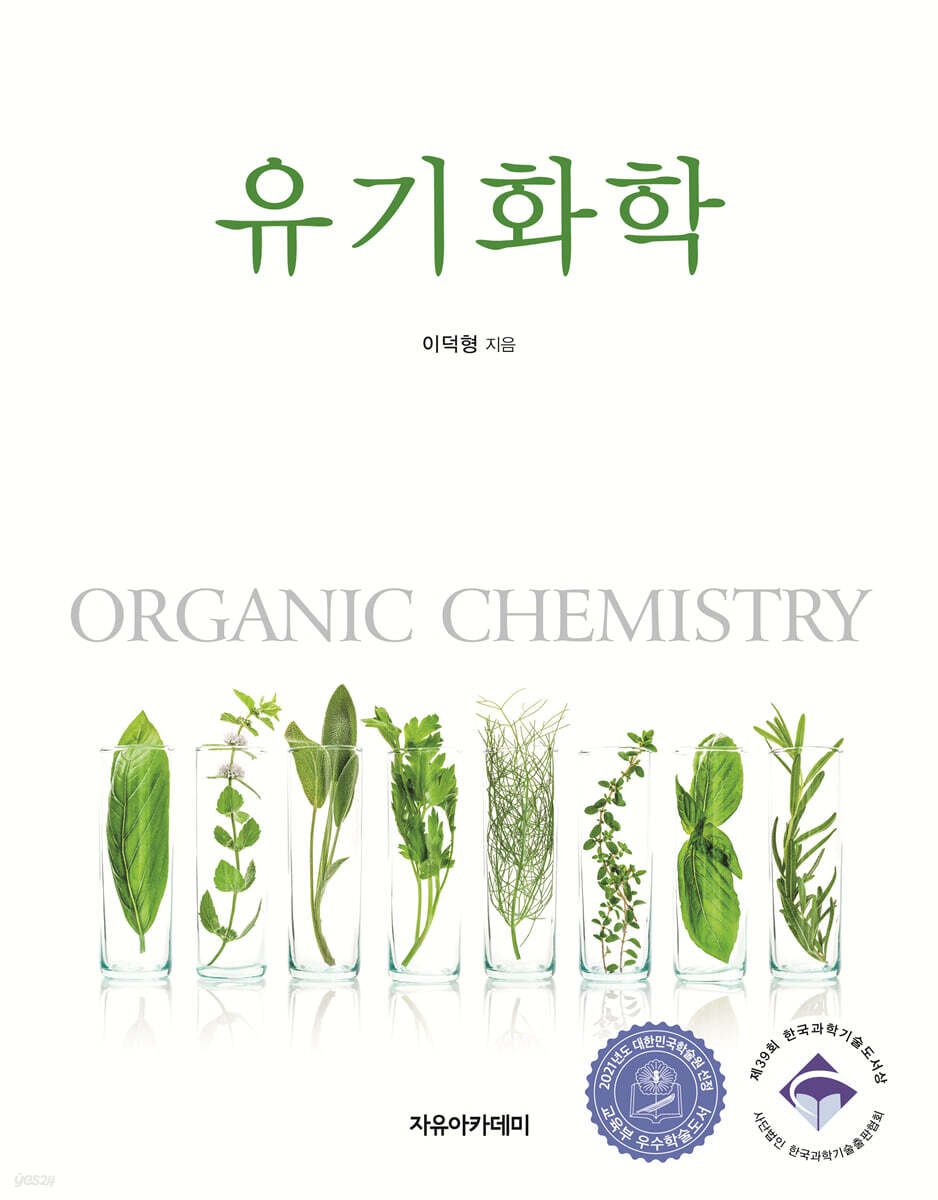
organic chemistry
 |
Description
Book Introduction
This book was written consistently so that students can learn through independent thought and recognize that organic chemistry is not a subject for memorization but a logical discipline.
To this end, the basic concepts were defined briefly and clearly.
And it was shown that the learned concepts can be comprehensively used to logically infer various reaction results, and the locations of previously learned basic concepts were marked so that they could be reviewed again, and the connections between basic concepts were consistently emphasized.
To this end, the basic concepts were defined briefly and clearly.
And it was shown that the learned concepts can be comprehensively used to logically infer various reaction results, and the locations of previously learned basic concepts were marked so that they could be reviewed again, and the connections between basic concepts were consistently emphasized.
index
Chapter 1 Structure and Chemical Bonding
Chapter 2 Basic Concepts
Chapter 3 Saturated Hydrocarbons
Chapter 4 Alkenes
Chapter 5 Alkaline
Chapter 6 Stereochemistry
Chapter 7 Alkyl Halides
Chapter 8 Alcohols and Thiols
Chapter 9 Organometallic Compounds
Chapter 10 Ethers, Oxiranes, and Sulfides
Chapter 11 Nuclear Magnetic Resonance Spectroscopy
Chapter 12: Infrared Spectroscopy, Ultraviolet-Visible Spectroscopy, and Mass Spectroscopy
Chapter 13 Conjugation System
Chapter 14 Arenes and Aromaticity
Chapter 15: Aren's Reaction
Chapter 16 Aldehydes and Ketones
Chapter 17 Carboxylic Acids
Chapter 18 Carboxylic Acid Derivatives and Nitriles
Chapter 19 Carbonyl a-Carbon Substitution Reactions and Condensation Reactions
Chapter 20 Amin
Chapter 21 Carbohydrates
Chapter 22 Amino Acids, Peptides, and Proteins
Chapter 23 Geology
Practice Problem Solutions
Search
Chapter 2 Basic Concepts
Chapter 3 Saturated Hydrocarbons
Chapter 4 Alkenes
Chapter 5 Alkaline
Chapter 6 Stereochemistry
Chapter 7 Alkyl Halides
Chapter 8 Alcohols and Thiols
Chapter 9 Organometallic Compounds
Chapter 10 Ethers, Oxiranes, and Sulfides
Chapter 11 Nuclear Magnetic Resonance Spectroscopy
Chapter 12: Infrared Spectroscopy, Ultraviolet-Visible Spectroscopy, and Mass Spectroscopy
Chapter 13 Conjugation System
Chapter 14 Arenes and Aromaticity
Chapter 15: Aren's Reaction
Chapter 16 Aldehydes and Ketones
Chapter 17 Carboxylic Acids
Chapter 18 Carboxylic Acid Derivatives and Nitriles
Chapter 19 Carbonyl a-Carbon Substitution Reactions and Condensation Reactions
Chapter 20 Amin
Chapter 21 Carbohydrates
Chapter 22 Amino Acids, Peptides, and Proteins
Chapter 23 Geology
Practice Problem Solutions
Search
Publisher's Review
Author's Preface
“If given the opportunity, I would like to write a textbook for organic chemistry majors.” I always had this thought in mind, so after returning to Korea as a professor, I spent a long time accumulating information about the authors of original books used by undergraduate students at my university, in the metropolitan area, and in local areas, the selection ratio of original books and translated versions, the usage ratio of students, the duration of the lecture (1st semester, 2nd semester, etc.), and the scope of the lecture.
Based on these experiences, I was finally able to write a two-semester [Organic Chemistry] textbook.
This textbook emphasizes basic concepts in Chapters 1 and 2, and describes the scope of biopolymers in Chapters 21 to 23 to a minimum. It also strives to provide a faithful explanation of basic concepts and, based on this, to consistently describe the development of various logics and the connections between basic concepts.
This textbook was written consistently so that students can learn through independent thought and recognize that organic chemistry is not a subject for memorization but a logical discipline.
To this end, the basic concepts were defined briefly and clearly.
And it was shown that the learned concepts can be comprehensively used to logically infer various reaction results, and the locations of previously learned basic concepts were marked so that they could be reviewed again, and the connections between basic concepts were consistently emphasized.
In some cases, it may be pointed out that the same content and concepts are being 'boringly repeated', but if necessary, I did not mind.
We hope that this textbook will help students learn organic chemistry voluntarily and efficiently, recognize that it is a logical discipline, and play a small role in increasing their knowledge and interest in organic chemistry.
Over a long period of work, we put a lot of effort into reducing errors not only in the text but also in the printing process.
Nonetheless, there will undoubtedly be errors (typos, misspellings, etc.) in the text and figures that have not been discovered, ambiguous content and expressions, and areas for improvement.
We would be most grateful if you could inform the Free Academy editorial staff (editor@freeaca.com) or the author (dhlee@sogang.ac.kr) of any details, no matter how trivial.
〈Textbook Contents〉
● This textbook consists of a total of 23 chapters.
Chapters 1 and 2 introduce the basic concepts of organic chemistry at the general chemistry level.
Chapter 1 describes atomic structure, chemical bonding, Lewis structures, valence shell electron pair repulsion theory, valence bond theory, molecular orbital function theory, and drawing three-dimensional structures.
Chapter 2 explains acid-base reactions, bond dissociation energy (BDE), types of chemical reactions, mechanisms and related terminology, Hammond hypothesis, reaction rates, etc.
Here, we added the structure, stability, and factors affecting stability of carbon cations and carbon radicals, and also explained how to calculate oxidation numbers in compounds.
● Chapters 3 to 5 describe reactions involving CH, C=C, and C≡C bonds.
Chapter 3 introduces the nomenclature, properties, group energies, isomers, and reactions of chain-like saturated hydrocarbons and cyclic hydrocarbons.
Chapter 4 explains the structure, nomenclature, properties, synthesis methods, reactions characteristic of alkenes, polymerization reactions, organic synthesis, etc. of alkenes (C=C), and Chapter 5 describes alkynes (C≡C) in the same manner as Chapter 4.
● In Chapter 6, we learned about stereochemistry.
Key concepts such as chiral carbon and chiral compounds, optical activity, enantiomers, diastereoisomers, meso compounds, racemic resolution, and chiral recognition are clearly defined, and various related topics are covered in detail.
● Chapters 7 to 10 describe alkyl halides (Chapter 7), alcohols and thiols (Chapter 8), ethers and sulfides (Chapter 10), and organometallic compounds (Chapter 9).
Chapter 7 focuses on the four types of reactions (SN2, E2, SN1, E1) in which alkyl halides participate, rather than the nomenclature, properties, and synthesis of alkyl halides.
In the following chapters 8 (Alcohols and Thiols) and 10 (Ethers, Oxiranes, and Sulfides), various reactions based on the four types of reactions learned in Chapter 7 and reactions characteristic of each functional group are additionally presented, and in Chapter 9 (Organometallic Compounds), various organometallic compounds derived from alkyl halides and their reactivity are briefly examined.
● Chapters 11 and 12 describe from a practical perspective five methods that provide information about the structure of compounds: hydrogen nuclear magnetic resonance spectroscopy (1H NMR), carbon nuclear magnetic resonance spectroscopy (13C NMR), infrared spectroscopy, ultraviolet-visible spectroscopy, and mass spectroscopy.
Chapter 11 details the fundamental principles of hydrogen nuclear magnetic resonance spectroscopy (1H NMR), chemical equivalence, chemical shift, peak integration, peak splitting, and the characteristics of high-resolution instruments.
Based on this basic information, we briefly mentioned carbon nuclear magnetic resonance spectroscopy (13C NMR), followed by a limited introduction to the interpretation of increasingly used two-dimensional NMR using examples of simple compounds.
Chapter 12 provides a relatively brief introduction to infrared (IR) spectroscopy, which is related to the vibration of bonds, ultraviolet-visible (UV-VIS) spectroscopy, which is related to electronic transitions, and mass spectroscopy, which has increasing applications in various fields.
● The 1H NMR spectra in Chapter 11 and thereafter were generated virtually using spectra from the web (http://nmr.cheminfo.org).
For more detailed information on this topic, please refer to the resources below.
(① https://doi.org/10.1002/mrc.4733 ② The C6H6 NMR repository: An integral solution to control the flow of your data from the magnet to the public.Patiny L, Zasso M, Kostro D, Bernal A, Castillo AM, Bola?os A, Asencio MA, Pellet N, Todd M, Schloerer N, Kuhn S.
Magnetic Resonance in Chemistry.
2017.
③ Andr?s M.
Castillo, Luc Patiny and Julien Wist.
Fast and Accurate Algorithm for the Simulation of NMR spectra of Large Spin Systems.
Journal of Magnetic Resonance.
2011.
④ http://www.chemcalc.org)
● The 13C NMR spectra in Chapter 11 and thereafter, and the IR spectra and mass spectra in Chapter 12 and thereafter were reconstructed using data provided by the Spectral Data Base System for Organic Compounds (SDBS), the National Metrology Institute of Japan (NMIJ), and the National Institute of Advanced Industrial Science and Technology.
● Chapters 13 to 15 comprehensively describe the contents related to aromatic compounds.
Chapter 13 introduces the concept of conjugation and uses it to introduce allyl derivatives, buta-1,3-dienes, Diels-Alder reactions, and ketenes.
Chapter 14 explains the nomenclature, structure, resonance energy, and aromaticity of benzene derivatives, focusing on benzene, and also examines conceptually identical heterocyclic aromatic compounds.
Chapter 15 is mostly devoted to the reactions of benzene.
First, the reaction mechanism, type of reaction, reactivity and selectivity dependent on substituents in the most representative electrophilic aromatic substitution reactions were logically described.
In addition, nucleophilic aromatic substitution reactions, benzyne reactions, and reactions of benzyl carbons were added.
● Chapter 16 describes the carbonyl functional groups of aldehydes and ketones.
First, the structure, nomenclature, physical properties, and synthesis methods of aldehydes and ketones were introduced, and a detailed explanation of the representative reaction, nucleophilic addition reaction, was provided.
It was emphasized that the nucleophilic addition reactions of water, alcohols, and amines conceptually share reaction pathways, although the products are different. In addition, carbanion addition reactions and oxidation-reduction reactions applicable only to aldehydes and ketones were added, and structural analysis and organic synthesis were also mentioned.
● In Chapter 17, Carboxylic Acid, the structure, nomenclature, physical properties, acidity, and synthesis of carboxylic acids are introduced, and in Chapter 18, Carboxylic Acid Derivatives, representative nucleophilic acyl substitution reactions are compared and explained in detail along with the structure, nomenclature, and physical properties.
In this case, it was also emphasized that there are commonalities in the mechanism in nucleophilic acyl substitution reactions involving various carboxylic acid derivatives and various nucleophiles, such as nucleophilic addition reactions of aldehydes and ketones.
Addition reactions, reduction reactions, and polymerization reactions of organometallic compounds specific to carboxylic acid derivatives were added, and the chemistry of nitrile compounds was also briefly described.
● Chapter 19 describes the reaction of the a-carbon in the carbonyl functional group that commonly appears in Chapters 16 to 18.
First, enol and enol anion, production mechanism, acidity, and reactivity were described, and reactions such as racemization, halogenation, and alkylation reactions using enol and enol anion as intermediates were introduced.
Representative reactions involving carbonyl a-carbon, such as aldol reaction, Claisen condensation reaction, and 1,4-addition reaction, are described in detail, and contents related to enamines and organic synthesis are added.
● Chapter 20 describes amines.
After a brief introduction to the structure, nomenclature, properties, basicity, and various synthetic methods of amines, a significant portion is devoted to the electrophilic aromatic substitution reaction of aryl amines and the introduction of various substituents using aryl nitrosonium cation intermediates.
● Chapters 21 to 23 briefly describe biopolymers such as carbohydrates, proteins, and lipids.
Chapter 21 Carbohydrates introduces the types of monosaccharides, disaccharides, and polysaccharides and their basic reactions, and Chapter 22 Proteins explains them by dividing them into amino acids, peptides, proteins, and enzymes.
In Chapter 23, lipids, only waxes, fats, phospholipids, eicosanoids, and terpenes were selected and explained among the various types of lipids.
〈Development of the Content〉
● When introducing a new functional group in each chapter, the basic structure and characteristics, nomenclature, physical properties, and synthetic methods of the functional group are maintained consistently, and the differences and similarities between various functional groups are organized so that they can be easily compared.
● When introducing new concepts, we tried to explain them clearly and sufficiently.
In cases where the same concept is repeated in the future, the definition of the concept is repeated or the part where the concept is introduced is specified to ensure a clear understanding of the new concept.
● When explaining a new reaction, the learning objective is clearly presented by first presenting basic information such as the scope of application of the reaction, reaction conditions, and reaction reagents.
Next, the reaction mechanism was introduced, and rather than simply presenting and explaining the reaction mechanism, much effort was put into describing which existing concepts were applied, why the reaction proceeds this way, and whether there are similarities with existing reaction mechanisms.
● At the end of each chapter, a ‘summary’ summarizing the contents of each chapter was added.
Here, the basic structure and characteristics of functional groups, nomenclature, physical properties, and synthetic methods are covered relatively simply.
Instead, it focuses on the types of new reactions, reaction conditions, similarities and differences with existing and new reactions, and similarities and differences with existing and new mechanisms.
And rather than simply listing this information, we constantly provided information so that we could find connections between them.
● The end of each chapter (except chapters 21-23) ends with practice problems.
In the problem of predicting products, at least one of the reactions mentioned in the text was included, and problems that can be applied based on the assumption that the content of the text is understood were presented so that the basic learning effect could be confirmed from various angles (answers to all practice problems are provided).
● In cases where supplementary explanations are needed within the text, explanations are added to the left and right spaces of the text.
● The search is organized based on Korean.
It will be helpful in systematically organizing the textbook's learning content because it includes all the basic terms, key concepts, compound names, reactions, mechanisms, etc. used in the textbook.
● English terms are based on Korean terms officially published on the Korean Chemical Society website (http://new.kcsnet.or.kr/cheminfo, as of April 18, 2020).
In cases where English terms are not available, we created terms appropriate to the content by referring to various sources, and we tried to maintain consistency in terms and vocabulary throughout the textbook.
● Compound names are written in English, both IUPAC and common names, to express the principles of nomenclature.
However, common names indicating functional groups such as alkenes, alkynes, and alcohols were written in Korean whenever possible.
● Names of people and reagents, etc. were written in English whenever possible.
〈Use of Textbooks〉
Let's assume there is a space where the concepts and terminology of organic chemistry are organized.
This space is the most important space as it contains all the basic information, where new concepts and terms can be added, modified, and in some cases removed.
Scientists have been able to explain experimental results rationally, though not perfectly, by selectively bringing in the necessary concepts and terms from this space and logically listing them.
Let's take an example.
When explaining in the textbook that “resonance hybridization is thermodynamically more stable than any other resonance structure,” the following concepts and terms were used sequentially: ‘definition of resonance hybridization, definition of resonance structure, delocalization of electrons, electron density, repulsion between electrons, and thermodynamic stability.’
And when explaining “the pKa values of aH in ketones and 1,3-diketones are 18 and 9,” the concepts and terms of ‘electron delocalization, electron density, repulsion between electrons, and thermodynamic stability’ were used in order.
In this way, the same concepts are used repeatedly to explain two seemingly unrelated phenomena, which is impossible without a clear understanding of each concept.
Organic chemistry cannot explain certain experimental phenomena to the same degree as mathematics and physics.
The main reason is that the systems dealt with in organic chemistry are very complex.
Nonetheless, organic chemists have developed and used a variety of methods to logically explain experimental facts.
The important thing is that the experimental results are facts, and while scientists have developed tools to rationally explain these facts, they are not perfect.
Therefore, it is quite natural that there are experimental facts that run counter to conventional reasoning, and it does not mean that the experimental results are wrong.
“If given the opportunity, I would like to write a textbook for organic chemistry majors.” I always had this thought in mind, so after returning to Korea as a professor, I spent a long time accumulating information about the authors of original books used by undergraduate students at my university, in the metropolitan area, and in local areas, the selection ratio of original books and translated versions, the usage ratio of students, the duration of the lecture (1st semester, 2nd semester, etc.), and the scope of the lecture.
Based on these experiences, I was finally able to write a two-semester [Organic Chemistry] textbook.
This textbook emphasizes basic concepts in Chapters 1 and 2, and describes the scope of biopolymers in Chapters 21 to 23 to a minimum. It also strives to provide a faithful explanation of basic concepts and, based on this, to consistently describe the development of various logics and the connections between basic concepts.
This textbook was written consistently so that students can learn through independent thought and recognize that organic chemistry is not a subject for memorization but a logical discipline.
To this end, the basic concepts were defined briefly and clearly.
And it was shown that the learned concepts can be comprehensively used to logically infer various reaction results, and the locations of previously learned basic concepts were marked so that they could be reviewed again, and the connections between basic concepts were consistently emphasized.
In some cases, it may be pointed out that the same content and concepts are being 'boringly repeated', but if necessary, I did not mind.
We hope that this textbook will help students learn organic chemistry voluntarily and efficiently, recognize that it is a logical discipline, and play a small role in increasing their knowledge and interest in organic chemistry.
Over a long period of work, we put a lot of effort into reducing errors not only in the text but also in the printing process.
Nonetheless, there will undoubtedly be errors (typos, misspellings, etc.) in the text and figures that have not been discovered, ambiguous content and expressions, and areas for improvement.
We would be most grateful if you could inform the Free Academy editorial staff (editor@freeaca.com) or the author (dhlee@sogang.ac.kr) of any details, no matter how trivial.
〈Textbook Contents〉
● This textbook consists of a total of 23 chapters.
Chapters 1 and 2 introduce the basic concepts of organic chemistry at the general chemistry level.
Chapter 1 describes atomic structure, chemical bonding, Lewis structures, valence shell electron pair repulsion theory, valence bond theory, molecular orbital function theory, and drawing three-dimensional structures.
Chapter 2 explains acid-base reactions, bond dissociation energy (BDE), types of chemical reactions, mechanisms and related terminology, Hammond hypothesis, reaction rates, etc.
Here, we added the structure, stability, and factors affecting stability of carbon cations and carbon radicals, and also explained how to calculate oxidation numbers in compounds.
● Chapters 3 to 5 describe reactions involving CH, C=C, and C≡C bonds.
Chapter 3 introduces the nomenclature, properties, group energies, isomers, and reactions of chain-like saturated hydrocarbons and cyclic hydrocarbons.
Chapter 4 explains the structure, nomenclature, properties, synthesis methods, reactions characteristic of alkenes, polymerization reactions, organic synthesis, etc. of alkenes (C=C), and Chapter 5 describes alkynes (C≡C) in the same manner as Chapter 4.
● In Chapter 6, we learned about stereochemistry.
Key concepts such as chiral carbon and chiral compounds, optical activity, enantiomers, diastereoisomers, meso compounds, racemic resolution, and chiral recognition are clearly defined, and various related topics are covered in detail.
● Chapters 7 to 10 describe alkyl halides (Chapter 7), alcohols and thiols (Chapter 8), ethers and sulfides (Chapter 10), and organometallic compounds (Chapter 9).
Chapter 7 focuses on the four types of reactions (SN2, E2, SN1, E1) in which alkyl halides participate, rather than the nomenclature, properties, and synthesis of alkyl halides.
In the following chapters 8 (Alcohols and Thiols) and 10 (Ethers, Oxiranes, and Sulfides), various reactions based on the four types of reactions learned in Chapter 7 and reactions characteristic of each functional group are additionally presented, and in Chapter 9 (Organometallic Compounds), various organometallic compounds derived from alkyl halides and their reactivity are briefly examined.
● Chapters 11 and 12 describe from a practical perspective five methods that provide information about the structure of compounds: hydrogen nuclear magnetic resonance spectroscopy (1H NMR), carbon nuclear magnetic resonance spectroscopy (13C NMR), infrared spectroscopy, ultraviolet-visible spectroscopy, and mass spectroscopy.
Chapter 11 details the fundamental principles of hydrogen nuclear magnetic resonance spectroscopy (1H NMR), chemical equivalence, chemical shift, peak integration, peak splitting, and the characteristics of high-resolution instruments.
Based on this basic information, we briefly mentioned carbon nuclear magnetic resonance spectroscopy (13C NMR), followed by a limited introduction to the interpretation of increasingly used two-dimensional NMR using examples of simple compounds.
Chapter 12 provides a relatively brief introduction to infrared (IR) spectroscopy, which is related to the vibration of bonds, ultraviolet-visible (UV-VIS) spectroscopy, which is related to electronic transitions, and mass spectroscopy, which has increasing applications in various fields.
● The 1H NMR spectra in Chapter 11 and thereafter were generated virtually using spectra from the web (http://nmr.cheminfo.org).
For more detailed information on this topic, please refer to the resources below.
(① https://doi.org/10.1002/mrc.4733 ② The C6H6 NMR repository: An integral solution to control the flow of your data from the magnet to the public.Patiny L, Zasso M, Kostro D, Bernal A, Castillo AM, Bola?os A, Asencio MA, Pellet N, Todd M, Schloerer N, Kuhn S.
Magnetic Resonance in Chemistry.
2017.
③ Andr?s M.
Castillo, Luc Patiny and Julien Wist.
Fast and Accurate Algorithm for the Simulation of NMR spectra of Large Spin Systems.
Journal of Magnetic Resonance.
2011.
④ http://www.chemcalc.org)
● The 13C NMR spectra in Chapter 11 and thereafter, and the IR spectra and mass spectra in Chapter 12 and thereafter were reconstructed using data provided by the Spectral Data Base System for Organic Compounds (SDBS), the National Metrology Institute of Japan (NMIJ), and the National Institute of Advanced Industrial Science and Technology.
● Chapters 13 to 15 comprehensively describe the contents related to aromatic compounds.
Chapter 13 introduces the concept of conjugation and uses it to introduce allyl derivatives, buta-1,3-dienes, Diels-Alder reactions, and ketenes.
Chapter 14 explains the nomenclature, structure, resonance energy, and aromaticity of benzene derivatives, focusing on benzene, and also examines conceptually identical heterocyclic aromatic compounds.
Chapter 15 is mostly devoted to the reactions of benzene.
First, the reaction mechanism, type of reaction, reactivity and selectivity dependent on substituents in the most representative electrophilic aromatic substitution reactions were logically described.
In addition, nucleophilic aromatic substitution reactions, benzyne reactions, and reactions of benzyl carbons were added.
● Chapter 16 describes the carbonyl functional groups of aldehydes and ketones.
First, the structure, nomenclature, physical properties, and synthesis methods of aldehydes and ketones were introduced, and a detailed explanation of the representative reaction, nucleophilic addition reaction, was provided.
It was emphasized that the nucleophilic addition reactions of water, alcohols, and amines conceptually share reaction pathways, although the products are different. In addition, carbanion addition reactions and oxidation-reduction reactions applicable only to aldehydes and ketones were added, and structural analysis and organic synthesis were also mentioned.
● In Chapter 17, Carboxylic Acid, the structure, nomenclature, physical properties, acidity, and synthesis of carboxylic acids are introduced, and in Chapter 18, Carboxylic Acid Derivatives, representative nucleophilic acyl substitution reactions are compared and explained in detail along with the structure, nomenclature, and physical properties.
In this case, it was also emphasized that there are commonalities in the mechanism in nucleophilic acyl substitution reactions involving various carboxylic acid derivatives and various nucleophiles, such as nucleophilic addition reactions of aldehydes and ketones.
Addition reactions, reduction reactions, and polymerization reactions of organometallic compounds specific to carboxylic acid derivatives were added, and the chemistry of nitrile compounds was also briefly described.
● Chapter 19 describes the reaction of the a-carbon in the carbonyl functional group that commonly appears in Chapters 16 to 18.
First, enol and enol anion, production mechanism, acidity, and reactivity were described, and reactions such as racemization, halogenation, and alkylation reactions using enol and enol anion as intermediates were introduced.
Representative reactions involving carbonyl a-carbon, such as aldol reaction, Claisen condensation reaction, and 1,4-addition reaction, are described in detail, and contents related to enamines and organic synthesis are added.
● Chapter 20 describes amines.
After a brief introduction to the structure, nomenclature, properties, basicity, and various synthetic methods of amines, a significant portion is devoted to the electrophilic aromatic substitution reaction of aryl amines and the introduction of various substituents using aryl nitrosonium cation intermediates.
● Chapters 21 to 23 briefly describe biopolymers such as carbohydrates, proteins, and lipids.
Chapter 21 Carbohydrates introduces the types of monosaccharides, disaccharides, and polysaccharides and their basic reactions, and Chapter 22 Proteins explains them by dividing them into amino acids, peptides, proteins, and enzymes.
In Chapter 23, lipids, only waxes, fats, phospholipids, eicosanoids, and terpenes were selected and explained among the various types of lipids.
〈Development of the Content〉
● When introducing a new functional group in each chapter, the basic structure and characteristics, nomenclature, physical properties, and synthetic methods of the functional group are maintained consistently, and the differences and similarities between various functional groups are organized so that they can be easily compared.
● When introducing new concepts, we tried to explain them clearly and sufficiently.
In cases where the same concept is repeated in the future, the definition of the concept is repeated or the part where the concept is introduced is specified to ensure a clear understanding of the new concept.
● When explaining a new reaction, the learning objective is clearly presented by first presenting basic information such as the scope of application of the reaction, reaction conditions, and reaction reagents.
Next, the reaction mechanism was introduced, and rather than simply presenting and explaining the reaction mechanism, much effort was put into describing which existing concepts were applied, why the reaction proceeds this way, and whether there are similarities with existing reaction mechanisms.
● At the end of each chapter, a ‘summary’ summarizing the contents of each chapter was added.
Here, the basic structure and characteristics of functional groups, nomenclature, physical properties, and synthetic methods are covered relatively simply.
Instead, it focuses on the types of new reactions, reaction conditions, similarities and differences with existing and new reactions, and similarities and differences with existing and new mechanisms.
And rather than simply listing this information, we constantly provided information so that we could find connections between them.
● The end of each chapter (except chapters 21-23) ends with practice problems.
In the problem of predicting products, at least one of the reactions mentioned in the text was included, and problems that can be applied based on the assumption that the content of the text is understood were presented so that the basic learning effect could be confirmed from various angles (answers to all practice problems are provided).
● In cases where supplementary explanations are needed within the text, explanations are added to the left and right spaces of the text.
● The search is organized based on Korean.
It will be helpful in systematically organizing the textbook's learning content because it includes all the basic terms, key concepts, compound names, reactions, mechanisms, etc. used in the textbook.
● English terms are based on Korean terms officially published on the Korean Chemical Society website (http://new.kcsnet.or.kr/cheminfo, as of April 18, 2020).
In cases where English terms are not available, we created terms appropriate to the content by referring to various sources, and we tried to maintain consistency in terms and vocabulary throughout the textbook.
● Compound names are written in English, both IUPAC and common names, to express the principles of nomenclature.
However, common names indicating functional groups such as alkenes, alkynes, and alcohols were written in Korean whenever possible.
● Names of people and reagents, etc. were written in English whenever possible.
〈Use of Textbooks〉
Let's assume there is a space where the concepts and terminology of organic chemistry are organized.
This space is the most important space as it contains all the basic information, where new concepts and terms can be added, modified, and in some cases removed.
Scientists have been able to explain experimental results rationally, though not perfectly, by selectively bringing in the necessary concepts and terms from this space and logically listing them.
Let's take an example.
When explaining in the textbook that “resonance hybridization is thermodynamically more stable than any other resonance structure,” the following concepts and terms were used sequentially: ‘definition of resonance hybridization, definition of resonance structure, delocalization of electrons, electron density, repulsion between electrons, and thermodynamic stability.’
And when explaining “the pKa values of aH in ketones and 1,3-diketones are 18 and 9,” the concepts and terms of ‘electron delocalization, electron density, repulsion between electrons, and thermodynamic stability’ were used in order.
In this way, the same concepts are used repeatedly to explain two seemingly unrelated phenomena, which is impossible without a clear understanding of each concept.
Organic chemistry cannot explain certain experimental phenomena to the same degree as mathematics and physics.
The main reason is that the systems dealt with in organic chemistry are very complex.
Nonetheless, organic chemists have developed and used a variety of methods to logically explain experimental facts.
The important thing is that the experimental results are facts, and while scientists have developed tools to rationally explain these facts, they are not perfect.
Therefore, it is quite natural that there are experimental facts that run counter to conventional reasoning, and it does not mean that the experimental results are wrong.
GOODS SPECIFICS
- Date of issue: December 5, 2020
- Page count, weight, size: 960 pages | 215*275*40mm
- ISBN13: 9791158082635
- ISBN10: 1158082630
You may also like
카테고리
korean


korean

![GQ KOREA Mark (Monthly): December [2025]](http://librairie.coreenne.fr/cdn/shop/files/8ef265dbbfbf186523ed75ba7319009d.jpg?v=1765340328&width=3840)


