

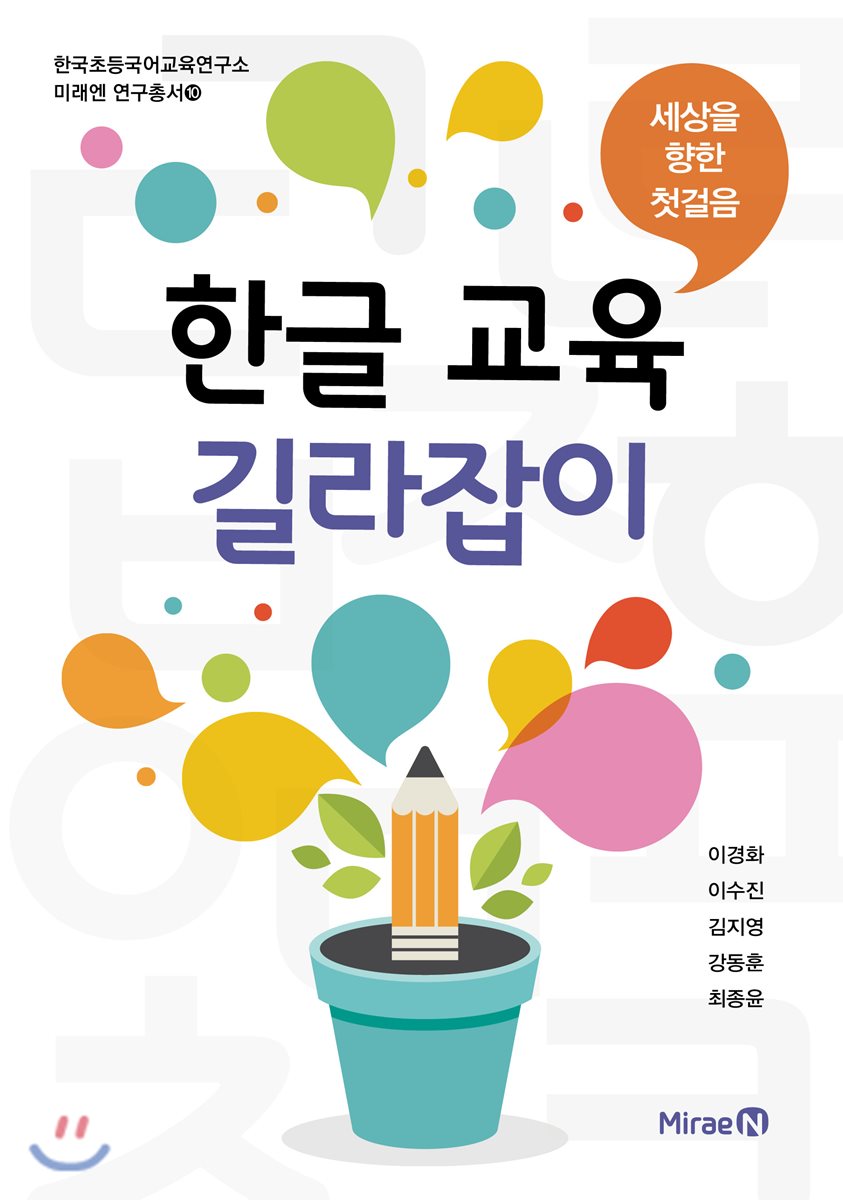
Korean Language Education Guide
 |
Description
Book Introduction
Korean literacy education is important in itself, but it is also important because it provides learners with their first sense of accomplishment related to writing.
It is no exaggeration to say that children live very different lives before and after learning Hangul.
Just as basic literacy includes not only reading and writing skills but also attitudes and values related to them, Korean literacy education should not simply aim at understanding Korean characters, but also require a philosophy on what kind of character view to cultivate in children.
The philosophy of Korean literacy education pursued in "First Steps to the World: A Guide to Korean Language Education" is to help children gain confidence in letters and what they can do with them, and to cultivate their qualities as lifelong readers and lifelong writers.
『The First Step to the World: A Guide to Korean Language Education』 is largely divided into four parts.
Part 1, 'Educational Approaches to Korean Literacy', covers Korean literacy, the development of Korean reading and writing, and the timing of education, helping to provide a comprehensive understanding of Korean literacy education.
Part 2, ‘Direction of Korean Literacy Education’, covers the content, methods, and teaching materials of Korean literacy education to help you systematically understand Korean literacy education.
Part 3, 'Diagnosis and Intervention of Korean Literacy Education', covers methods for diagnosing Korean language comprehension, identifying and teaching difficulties, dyslexia, etc.
Part 4, ‘Korean Literacy Education Guidance Activities,’ presents specific examples of guidance activities by applying the contents and methods of Korean literacy education presented in this book.
This book can be used by parents to understand and support their children's Korean literacy, or by teachers to develop their skills as Korean language education experts.
In the hope that it will be helpful to as many readers as possible, the content is structured to help general understanding rather than theoretical or specialized content.
It is the authors' humble wish to share the philosophy and importance of Korean literacy education and to contribute, even if only in part, to creating universal standards for Korean language education.
It is no exaggeration to say that children live very different lives before and after learning Hangul.
Just as basic literacy includes not only reading and writing skills but also attitudes and values related to them, Korean literacy education should not simply aim at understanding Korean characters, but also require a philosophy on what kind of character view to cultivate in children.
The philosophy of Korean literacy education pursued in "First Steps to the World: A Guide to Korean Language Education" is to help children gain confidence in letters and what they can do with them, and to cultivate their qualities as lifelong readers and lifelong writers.
『The First Step to the World: A Guide to Korean Language Education』 is largely divided into four parts.
Part 1, 'Educational Approaches to Korean Literacy', covers Korean literacy, the development of Korean reading and writing, and the timing of education, helping to provide a comprehensive understanding of Korean literacy education.
Part 2, ‘Direction of Korean Literacy Education’, covers the content, methods, and teaching materials of Korean literacy education to help you systematically understand Korean literacy education.
Part 3, 'Diagnosis and Intervention of Korean Literacy Education', covers methods for diagnosing Korean language comprehension, identifying and teaching difficulties, dyslexia, etc.
Part 4, ‘Korean Literacy Education Guidance Activities,’ presents specific examples of guidance activities by applying the contents and methods of Korean literacy education presented in this book.
This book can be used by parents to understand and support their children's Korean literacy, or by teachers to develop their skills as Korean language education experts.
In the hope that it will be helpful to as many readers as possible, the content is structured to help general understanding rather than theoretical or specialized content.
It is the authors' humble wish to share the philosophy and importance of Korean literacy education and to contribute, even if only in part, to creating universal standards for Korean language education.
index
Part 1: Educational Approaches to Korean Literacy
Chapter 1: Why is Korean Literacy Education Important?
Chapter 2 What kind of characters is Hangul?
Chapter 3: When should we teach Korean?
Chapter 4: What is the Korean literacy process like?
Chapter 5: How does reading Korean develop?
Chapter 6 Chapter 6 How will Korean writing develop?
Part 2: Direction of Korean Literacy Education
Chapter 7: How to Connect Korean Literacy Education in Kindergartens and Elementary Schools?
Chapter 8: Korean Literacy: What Should We Teach?
Chapter 9: How to Teach Korean Literacy?
Chapter 10: How have Korean literacy textbooks changed?
Part 3: Diagnosis and Intervention of Korean Literacy Education
Chapter 11: How to Diagnose Korean Language Decoding?
Chapter 12: How to help students who are struggling to understand Korean?
Chapter 13: Dyslexia: How to Support It?
Chapter 14: Korean Literacy Education and Basic Vocabulary
Part 4 Korean Literacy Instruction Activities
Chapter 1: Why is Korean Literacy Education Important?
Chapter 2 What kind of characters is Hangul?
Chapter 3: When should we teach Korean?
Chapter 4: What is the Korean literacy process like?
Chapter 5: How does reading Korean develop?
Chapter 6 Chapter 6 How will Korean writing develop?
Part 2: Direction of Korean Literacy Education
Chapter 7: How to Connect Korean Literacy Education in Kindergartens and Elementary Schools?
Chapter 8: Korean Literacy: What Should We Teach?
Chapter 9: How to Teach Korean Literacy?
Chapter 10: How have Korean literacy textbooks changed?
Part 3: Diagnosis and Intervention of Korean Literacy Education
Chapter 11: How to Diagnose Korean Language Decoding?
Chapter 12: How to help students who are struggling to understand Korean?
Chapter 13: Dyslexia: How to Support It?
Chapter 14: Korean Literacy Education and Basic Vocabulary
Part 4 Korean Literacy Instruction Activities
GOODS SPECIFICS
- Date of issue: April 3, 2018
- Page count, weight, size: 276 pages | 154*219*20mm
- ISBN13: 9791162335246
- ISBN10: 1162335246
You may also like
카테고리
korean


korean

![GQ KOREA Mark (Monthly): December [2025]](http://librairie.coreenne.fr/cdn/shop/files/8ef265dbbfbf186523ed75ba7319009d.jpg?v=1765340328&width=3840)


