

Early Childhood Ecological Art Education
 |
Description
Book Introduction
Chapter 1 of the theory section deals with the concept, necessity, characteristics, and significance of early childhood ecological art education, and Chapter 2 describes the educational value of early childhood ecological art education by dividing it into ecological education aspects, developmental aspects, and formative approaches.
Chapter 3 discusses the contents of ecological art education so that it can be treated as an activity within the subject of each life topic within the national curriculum.
Chapter 4 introduces the environment and materials for ecological art education for young children.
Chapter 5 explains the teaching and learning methods and the role of teachers in ecological art education for young children, and Chapter 6 explains the evaluation of young children and teachers for ecological art education.
The practical part was designed so that these theories can be implemented in the planning-implementation-evaluation process during actual educational activities.
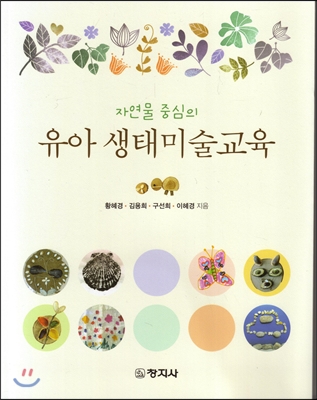
In the practical section, ecological art activities using natural materials such as plants, stones, sand, soil, paper, and various other materials were introduced.
Chapter 3 discusses the contents of ecological art education so that it can be treated as an activity within the subject of each life topic within the national curriculum.
Chapter 4 introduces the environment and materials for ecological art education for young children.
Chapter 5 explains the teaching and learning methods and the role of teachers in ecological art education for young children, and Chapter 6 explains the evaluation of young children and teachers for ecological art education.
The practical part was designed so that these theories can be implemented in the planning-implementation-evaluation process during actual educational activities.
In the practical section, ecological art activities using natural materials such as plants, stones, sand, soil, paper, and various other materials were introduced.
Publisher's Review
Nature is not just the scenery we see outside our window; it is the foundation that gives birth to life and allows it to survive.
All beings in nature, including humans, live together with their own beauty and value.
Therefore, what is beneficial to people must also be beneficial to nature.
Respecting nature means respecting the relationship between people and nature.
This is possible when we view nature not as an object of conquest or a means for human happiness, but as a symbiotic relationship in which we live together and help each other.
In particular, if we continue to develop nature with a human-centered approach as we do now, the Earth's resources will be seriously depleted in the future.
In order to preserve the Earth we live on, we need the wisdom to enable humans and nature to coexist (from the 'Nuri Curriculum Commentary').
As emphasized in the national curriculum, the importance and perception of nature are changing with the times, and to reflect these trends and demands, various ecology-related programs are being implemented in early childhood education settings.
However, in reality, although teachers in the field recognize the importance and necessity of ecological education, their educational experience in this area is limited, and they often have difficulty in finding specific application methods when applying educational activities in the field.
Ecological education should not be commercial or a one-time show, but should be able to fit the purpose of early childhood education.
Among the many types of educational activities, art is a means of self-expression for young children and is one of the activities that they find most interesting.
Therefore, ecological art education centered on natural objects can be applied to young children in a meaningful way.
Typically, early childhood teachers recognize the importance of ecological art education and actively attempt to apply it in their educational activities, such as by participating in various ecological art-related training programs. However, short-term training programs often lack practical feasibility, which can limit their practical application. Therefore, if prospective early childhood teachers were provided with ongoing education on ecological art education as part of an in-depth art education course or as part of such a course, it would be much easier to apply it in the field.
Accordingly, the co-authors planned to write this book to introduce not only the theory of ecological art education that prospective early childhood teachers at each university should know as teachers, but also practical activities, to help them apply it in the field.
This book will also be useful for teachers in the field to understand the basics of ecological art education and apply them in the field.
Many teachers recognize the need for ecological art education, but to overcome the difficulties they face in planning and implementing classes, ecological art education must be meaningfully applied in conjunction with the national curriculum.
In order to consider the practicality and practicality of field application based on the theoretical foundation to which ecological ideology can be grafted, this book is largely divided into the first part, theory, and the second part, practice.
Chapter 1 of the theory section deals with the concept, necessity, characteristics, and significance of early childhood ecological art education, and Chapter 2 describes the educational value of early childhood ecological art education by dividing it into ecological education aspects, developmental aspects, and formative approaches.
Chapter 3 discusses the contents of ecological art education so that it can be treated as an activity within the subject of each life topic within the national curriculum.
Chapter 4 introduces the environment and materials for ecological art education for young children.
Chapter 5 explains the teaching and learning methods and the role of teachers in ecological art education for young children, and Chapter 6 explains the evaluation of young children and teachers for ecological art education.
The practical part was designed so that these theories can be implemented in the planning-implementation-evaluation process during actual educational activities.
In the practical section, we introduced ecological art activities using natural materials such as plants, stones, sand, soil, paper, and various other materials.
All beings in nature, including humans, live together with their own beauty and value.
Therefore, what is beneficial to people must also be beneficial to nature.
Respecting nature means respecting the relationship between people and nature.
This is possible when we view nature not as an object of conquest or a means for human happiness, but as a symbiotic relationship in which we live together and help each other.
In particular, if we continue to develop nature with a human-centered approach as we do now, the Earth's resources will be seriously depleted in the future.
In order to preserve the Earth we live on, we need the wisdom to enable humans and nature to coexist (from the 'Nuri Curriculum Commentary').
As emphasized in the national curriculum, the importance and perception of nature are changing with the times, and to reflect these trends and demands, various ecology-related programs are being implemented in early childhood education settings.
However, in reality, although teachers in the field recognize the importance and necessity of ecological education, their educational experience in this area is limited, and they often have difficulty in finding specific application methods when applying educational activities in the field.
Ecological education should not be commercial or a one-time show, but should be able to fit the purpose of early childhood education.
Among the many types of educational activities, art is a means of self-expression for young children and is one of the activities that they find most interesting.
Therefore, ecological art education centered on natural objects can be applied to young children in a meaningful way.
Typically, early childhood teachers recognize the importance of ecological art education and actively attempt to apply it in their educational activities, such as by participating in various ecological art-related training programs. However, short-term training programs often lack practical feasibility, which can limit their practical application. Therefore, if prospective early childhood teachers were provided with ongoing education on ecological art education as part of an in-depth art education course or as part of such a course, it would be much easier to apply it in the field.
Accordingly, the co-authors planned to write this book to introduce not only the theory of ecological art education that prospective early childhood teachers at each university should know as teachers, but also practical activities, to help them apply it in the field.
This book will also be useful for teachers in the field to understand the basics of ecological art education and apply them in the field.
Many teachers recognize the need for ecological art education, but to overcome the difficulties they face in planning and implementing classes, ecological art education must be meaningfully applied in conjunction with the national curriculum.
In order to consider the practicality and practicality of field application based on the theoretical foundation to which ecological ideology can be grafted, this book is largely divided into the first part, theory, and the second part, practice.
Chapter 1 of the theory section deals with the concept, necessity, characteristics, and significance of early childhood ecological art education, and Chapter 2 describes the educational value of early childhood ecological art education by dividing it into ecological education aspects, developmental aspects, and formative approaches.
Chapter 3 discusses the contents of ecological art education so that it can be treated as an activity within the subject of each life topic within the national curriculum.
Chapter 4 introduces the environment and materials for ecological art education for young children.
Chapter 5 explains the teaching and learning methods and the role of teachers in ecological art education for young children, and Chapter 6 explains the evaluation of young children and teachers for ecological art education.
The practical part was designed so that these theories can be implemented in the planning-implementation-evaluation process during actual educational activities.
In the practical section, we introduced ecological art activities using natural materials such as plants, stones, sand, soil, paper, and various other materials.
GOODS SPECIFICS
- Date of publication: February 24, 2016
- Page count, weight, size: 311 pages | 188*254mm
- ISBN13: 9788942608690
- ISBN10: 8942608698
You may also like
카테고리
korean


korean

![GQ KOREA Mark (Monthly): December [2025]](http://librairie.coreenne.fr/cdn/shop/files/8ef265dbbfbf186523ed75ba7319009d.jpg?v=1765340328&width=3840)


