

Byeoljubujeon
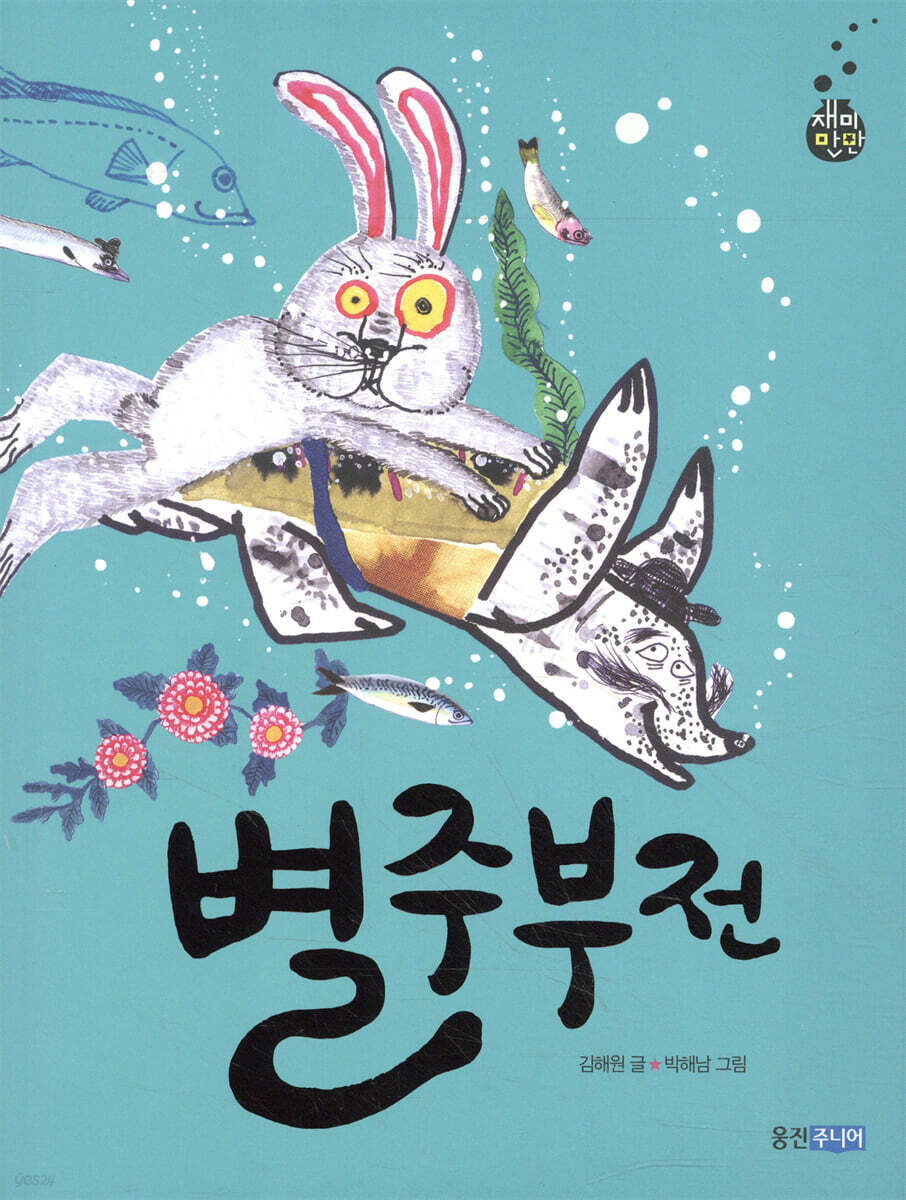 |
Description
Book Introduction
“Why should a rabbit give up its liver?”
A challenging work that still gives you something to think about today!
The story of Byeoljubujeon begins in a cruel situation where one of the two, King Gwangri or the rabbit, must die.
When the doctors were unable to cure King Gwangri of his illness, a god descended from the sky and told him that eating rabbit liver would cure him.
The moment the immortal says that rabbit liver is medicine, it becomes an undeniable truth as it is a directive from heaven, and killing rabbits becomes not something that can be done, but something that must be done.
Is this heavenly directive truly justified?
The reason why Byeoljubujeon is a meaningful work is because even today, it is not uncommon for the weak to be sacrificed for a grand cause or for the strong.
Just look at the innocent Palestinian children who lost their lives to Israeli bombing.
The Byeoljubujeon asks us whether we can force someone to make sacrifices without any compensation, how such exploitation can be justified, and whether the standards of right and wrong can ever be free from political and economic interests.
Readers who have taken it for granted that rabbits were hunted to cure King Gwangri's illness will be forced to ponder why rabbits had to give up their livers through the "Fun Korean Classic" Byeoljubujeon.
A challenging work that still gives you something to think about today!
The story of Byeoljubujeon begins in a cruel situation where one of the two, King Gwangri or the rabbit, must die.
When the doctors were unable to cure King Gwangri of his illness, a god descended from the sky and told him that eating rabbit liver would cure him.
The moment the immortal says that rabbit liver is medicine, it becomes an undeniable truth as it is a directive from heaven, and killing rabbits becomes not something that can be done, but something that must be done.
Is this heavenly directive truly justified?
The reason why Byeoljubujeon is a meaningful work is because even today, it is not uncommon for the weak to be sacrificed for a grand cause or for the strong.
Just look at the innocent Palestinian children who lost their lives to Israeli bombing.
The Byeoljubujeon asks us whether we can force someone to make sacrifices without any compensation, how such exploitation can be justified, and whether the standards of right and wrong can ever be free from political and economic interests.
Readers who have taken it for granted that rabbits were hunted to cure King Gwangri's illness will be forced to ponder why rabbits had to give up their livers through the "Fun Korean Classic" Byeoljubujeon.
- You can preview some of the book's contents.
Preview
index
Part 1: The Dragon King of the South Sea Lying Down
- The miserable state of not being able to go home
- When the squid jumps, the minnow jumps too.
Part 2: The Journey of 30,000 Leagues in Search of the Hare
- It's not a hometown, it's a village!
- A rabbit driven from the moon
Part 3: The Escape of the Tricky Rabbit
- A rabbit hanging from a pine branch
- The rabbit is loyal, and the growing one is a sinner.
- The miserable state of not being able to go home
- When the squid jumps, the minnow jumps too.
Part 2: The Journey of 30,000 Leagues in Search of the Hare
- It's not a hometown, it's a village!
- A rabbit driven from the moon
Part 3: The Escape of the Tricky Rabbit
- A rabbit hanging from a pine branch
- The rabbit is loyal, and the growing one is a sinner.
Detailed image

Into the book
Those who live on the ground often say things like this.
“The land is beautiful in all seasons and has an abundance of food. Is there a better place for living things to live?”
That's what those who were born and raised on the ground say, ignorant of the ways of the world.
After living half my life in the water, I came up to land and traveled everywhere I went, and I realized that living on land is not living.
In spring, even if flowers bloom all over the world, you will likely starve because you cannot eat them, and in summer, it is so hot that you will suffocate to death, as if you were sitting in a pot with a fire burning.
There is nothing better than autumn when the heat has subsided.
There have been more than a few times when I almost got trampled to death by those who were trying to prepare winter food.
How about winter?
The cold wind is so fierce that my internal organs are frozen and only when the spring breeze blows can they thaw.
Is life like that?
That's absolutely true.
The sea where I live is neither hot nor cold all twelve months of the year.
---From "My miserable situation of not being able to go home"
Finally, I stood in front of the blue sea with my rabbit.
How can I forget that touching moment?
But the rabbit saw the blue sea with waves crashing in and refused to go.
“Oh no, I can’t go.
How can I go when that water is rushing to swallow me?
“I hate official positions and everything.”
“Just think of the falcon or hunter rushing to catch the native.
“There is nothing to be afraid of in this water.”
“Now that I think about it, if a hunter or a hunter shows up, just go into a hole and hide.”
“Would you rather live your whole life shivering in a dark cave? Or would you rather live freely in a water palace where you have everything you want?”
Oh my, my mouth hurts.
My mouth was sore from talking all day trying to lure that rabbit out.
I suppressed my anger and tried to calm the rabbit down.
“The land is beautiful in all seasons and has an abundance of food. Is there a better place for living things to live?”
That's what those who were born and raised on the ground say, ignorant of the ways of the world.
After living half my life in the water, I came up to land and traveled everywhere I went, and I realized that living on land is not living.
In spring, even if flowers bloom all over the world, you will likely starve because you cannot eat them, and in summer, it is so hot that you will suffocate to death, as if you were sitting in a pot with a fire burning.
There is nothing better than autumn when the heat has subsided.
There have been more than a few times when I almost got trampled to death by those who were trying to prepare winter food.
How about winter?
The cold wind is so fierce that my internal organs are frozen and only when the spring breeze blows can they thaw.
Is life like that?
That's absolutely true.
The sea where I live is neither hot nor cold all twelve months of the year.
---From "My miserable situation of not being able to go home"
Finally, I stood in front of the blue sea with my rabbit.
How can I forget that touching moment?
But the rabbit saw the blue sea with waves crashing in and refused to go.
“Oh no, I can’t go.
How can I go when that water is rushing to swallow me?
“I hate official positions and everything.”
“Just think of the falcon or hunter rushing to catch the native.
“There is nothing to be afraid of in this water.”
“Now that I think about it, if a hunter or a hunter shows up, just go into a hole and hide.”
“Would you rather live your whole life shivering in a dark cave? Or would you rather live freely in a water palace where you have everything you want?”
Oh my, my mouth hurts.
My mouth was sore from talking all day trying to lure that rabbit out.
I suppressed my anger and tried to calm the rabbit down.
---From "A Rabbit's Liver Dangling from a Pine Branch"
Publisher's Review
'The Three Thousand Miles in Search of a Rabbit' told in Zara's voice
This is a well-known representative pansori novel that tells the story of King Gwangni falling ill and his subject Byeoljubu going out to find a rabbit's liver.
As pansori gained great popularity in the late Joseon Dynasty, its lyrics were recorded and turned into novels.
As it has a long history and was popular, there are many works that remain today, and the titles vary depending on the work.
Also, the ending changes depending on who you center the work around: the Dragon King, the Star Guardian, or the Rabbit.
The series 'Fun Korean Classics' featured a structure in which Zara tells her past stories to readers so that children can easily understand the content of the work and listen to the story with curiosity.
“If I tell you my amazing story, you won’t be able to listen without crying.
"You want me to tell you? My life, which had been uneventful, was turned upside down because of the King of Gwangri I served."
The story begins with the story of King Gwangri, who fell ill with lamentations, then tells the story of his wandering around the outside world to catch a rabbit, the story of his barely catching the rabbit and going to the Dragon Palace, and the story of how he fell for the rabbit's trick and lost the rabbit.
Readers say, “Rabbit, wait.
You will become like the Byeoljubu who shouts, “The Byeoljubu is going,” and you will become absorbed in the story with your eyes sparkling as if you were lying down and listening to your grandmother’s old stories.
□ “Why should a rabbit give up its liver?”
A challenging work that still gives you something to think about today!
The story begins in a cruel situation where one of the two, the King of Silver and the Rabbit, must die.
When the doctors were unable to cure King Gwangri's illness, a god descended from the sky and told him that eating rabbit liver would cure him.
The moment the immortal says that rabbit liver is medicine, it becomes an undeniable truth as it is a directive from heaven, and killing rabbits becomes not something that can be done, but something that must be done.
Is this divine mandate truly justified? This work holds significance because, even today, the sacrifice of the weak for grand causes or the powerful is not uncommon.
Just look at the innocent Palestinian children who lost their lives to Israeli bombing.
It asks us whether we can force someone to make sacrifices without any compensation, how such exploitation can be justified, and whether the standards of right and wrong can ever be free from political and economic interests.
Readers who have taken it for granted that rabbits were hunted to cure King Gwangri's illness will be forced to ponder why rabbits had to give up their livers through 'Fun Korean Classics'.
【Series Features】
□ Boldly rewrite in modern style
The fun Korean classic series breaks the mold that "a classic story has to be exactly the same as it was 100 years ago," and reconstructs the story by borrowing the format of fairy tales that are familiar to our children today.
The first part, where children open the book and begin reading, boldly skips the conventional introduction and quickly moves the story forward through dialogue.
Additionally, unnecessary sentences were omitted from long, rambling descriptions or narratives, and long conversations were changed into short exchanges between two people, thereby shortening the overall pace of the writing.
This allows children to read more easily, quickly, and enjoyably.
□ From work selection to writing, tailored to children's level
Classics full of historical facts that are difficult for young readers with limited reading experience to understand, or stories about love that are difficult to experience, were excluded from the selection.
Even though it is a classic work included in textbooks or a must-read for the college entrance exam, works such as this one, which talks about the transience of life, and this one, which is a passionate love story shared by two young people, are in fact considered must-reads among classics, but I boldly excluded them.
However, we actively discovered works with a clear narrative structure and outstanding literary quality that are worth introducing to our children, and included these works anew.
After selecting the works, children's storytellers who best understand children's perspectives and are skilled at using the format and style of fairy tales wrote the works.
They helped create classics that children can enjoy reading by interpreting the works from their own perspectives and infusing them with their own individuality.
□ Fun and knowledge-boosting!
The 'Fun Korean Classics' series is not a book for studying, but rather one that allows you to fully experience the joy of reading classics. It does not contain stiff author's comments or commentary on the works.
However, for readers who want more information, or for parents who want to convey the meaning contained in the classics to their children, we have included commentary on the classic works in the form of inserts.
The review committee members, who are members of the Korean Classical Literature Society and teach classics at universities, write their own commentaries and point out points worth further consideration, helping readers who wish to engage in in-depth post-reading activities.
It gives us an opportunity to think again about the value of classical literature and why it is necessary for children of this age.
【plot】
King Gwangni, who ruled the South Sea, built a palace called Yeongdeokjeon and, after celebrating for several days, fell ill.
The world's most renowned doctors came to cure King Gwangri's illness, but they all looked at King Gwangri's face and declared that he had a fatal illness.
At this time, a passing immortal heard King Gwangri's sorrowful cries and came down to the Dragon Palace to tell him that he could get better if he ate rabbit liver.
King Gwangri orders Byeoljubu, one of his many subjects, to go to the outside world and catch a rabbit.
The Byeoljubu, who has left for the outside world with an important mission, finds a rabbit with difficulty and lures it with the promise of a government position, taking it to the Dragon Palace.
The rabbit, who met the King of Gwangri, quickly came up with a plan and lied, saying that he had hung a liver on a pine tree on top of the mountain.
King Gwangri and his subjects tilt their heads in confusion, but little by little they begin to believe the rabbit's words...
Will the rabbit be able to escape safely to the outside world?
This is a well-known representative pansori novel that tells the story of King Gwangni falling ill and his subject Byeoljubu going out to find a rabbit's liver.
As pansori gained great popularity in the late Joseon Dynasty, its lyrics were recorded and turned into novels.
As it has a long history and was popular, there are many works that remain today, and the titles vary depending on the work.
Also, the ending changes depending on who you center the work around: the Dragon King, the Star Guardian, or the Rabbit.
The series 'Fun Korean Classics' featured a structure in which Zara tells her past stories to readers so that children can easily understand the content of the work and listen to the story with curiosity.
“If I tell you my amazing story, you won’t be able to listen without crying.
"You want me to tell you? My life, which had been uneventful, was turned upside down because of the King of Gwangri I served."
The story begins with the story of King Gwangri, who fell ill with lamentations, then tells the story of his wandering around the outside world to catch a rabbit, the story of his barely catching the rabbit and going to the Dragon Palace, and the story of how he fell for the rabbit's trick and lost the rabbit.
Readers say, “Rabbit, wait.
You will become like the Byeoljubu who shouts, “The Byeoljubu is going,” and you will become absorbed in the story with your eyes sparkling as if you were lying down and listening to your grandmother’s old stories.
□ “Why should a rabbit give up its liver?”
A challenging work that still gives you something to think about today!
The story begins in a cruel situation where one of the two, the King of Silver and the Rabbit, must die.
When the doctors were unable to cure King Gwangri's illness, a god descended from the sky and told him that eating rabbit liver would cure him.
The moment the immortal says that rabbit liver is medicine, it becomes an undeniable truth as it is a directive from heaven, and killing rabbits becomes not something that can be done, but something that must be done.
Is this divine mandate truly justified? This work holds significance because, even today, the sacrifice of the weak for grand causes or the powerful is not uncommon.
Just look at the innocent Palestinian children who lost their lives to Israeli bombing.
It asks us whether we can force someone to make sacrifices without any compensation, how such exploitation can be justified, and whether the standards of right and wrong can ever be free from political and economic interests.
Readers who have taken it for granted that rabbits were hunted to cure King Gwangri's illness will be forced to ponder why rabbits had to give up their livers through 'Fun Korean Classics'.
【Series Features】
□ Boldly rewrite in modern style
The fun Korean classic series breaks the mold that "a classic story has to be exactly the same as it was 100 years ago," and reconstructs the story by borrowing the format of fairy tales that are familiar to our children today.
The first part, where children open the book and begin reading, boldly skips the conventional introduction and quickly moves the story forward through dialogue.
Additionally, unnecessary sentences were omitted from long, rambling descriptions or narratives, and long conversations were changed into short exchanges between two people, thereby shortening the overall pace of the writing.
This allows children to read more easily, quickly, and enjoyably.
□ From work selection to writing, tailored to children's level
Classics full of historical facts that are difficult for young readers with limited reading experience to understand, or stories about love that are difficult to experience, were excluded from the selection.
Even though it is a classic work included in textbooks or a must-read for the college entrance exam, works such as this one, which talks about the transience of life, and this one, which is a passionate love story shared by two young people, are in fact considered must-reads among classics, but I boldly excluded them.
However, we actively discovered works with a clear narrative structure and outstanding literary quality that are worth introducing to our children, and included these works anew.
After selecting the works, children's storytellers who best understand children's perspectives and are skilled at using the format and style of fairy tales wrote the works.
They helped create classics that children can enjoy reading by interpreting the works from their own perspectives and infusing them with their own individuality.
□ Fun and knowledge-boosting!
The 'Fun Korean Classics' series is not a book for studying, but rather one that allows you to fully experience the joy of reading classics. It does not contain stiff author's comments or commentary on the works.
However, for readers who want more information, or for parents who want to convey the meaning contained in the classics to their children, we have included commentary on the classic works in the form of inserts.
The review committee members, who are members of the Korean Classical Literature Society and teach classics at universities, write their own commentaries and point out points worth further consideration, helping readers who wish to engage in in-depth post-reading activities.
It gives us an opportunity to think again about the value of classical literature and why it is necessary for children of this age.
【plot】
King Gwangni, who ruled the South Sea, built a palace called Yeongdeokjeon and, after celebrating for several days, fell ill.
The world's most renowned doctors came to cure King Gwangri's illness, but they all looked at King Gwangri's face and declared that he had a fatal illness.
At this time, a passing immortal heard King Gwangri's sorrowful cries and came down to the Dragon Palace to tell him that he could get better if he ate rabbit liver.
King Gwangri orders Byeoljubu, one of his many subjects, to go to the outside world and catch a rabbit.
The Byeoljubu, who has left for the outside world with an important mission, finds a rabbit with difficulty and lures it with the promise of a government position, taking it to the Dragon Palace.
The rabbit, who met the King of Gwangri, quickly came up with a plan and lied, saying that he had hung a liver on a pine tree on top of the mountain.
King Gwangri and his subjects tilt their heads in confusion, but little by little they begin to believe the rabbit's words...
Will the rabbit be able to escape safely to the outside world?
GOODS SPECIFICS
- Date of publication: September 29, 2014
- Page count, weight, size: 116 pages | 246g | 152*200*8mm
- ISBN13: 9788901166209
- ISBN10: 8901166208
You may also like
카테고리
korean


korean

![GQ KOREA Mark (Monthly): December [2025]](http://librairie.coreenne.fr/cdn/shop/files/8ef265dbbfbf186523ed75ba7319009d.jpg?v=1765340328&width=3840)


