

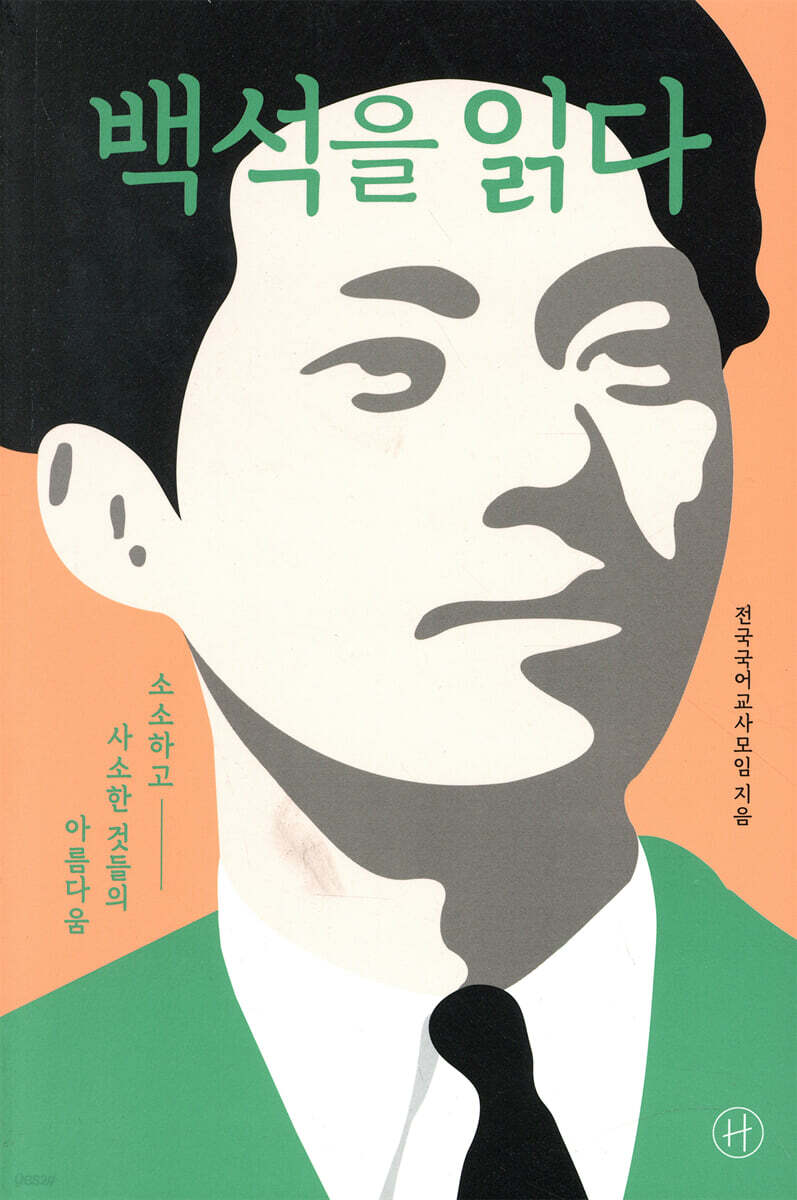
Reading Baekseok
 |
Description
Book Introduction
A book that delves into Baek Seok's life and works, and reveals the value and charm contained in his poetry.
A line from Baek Seok's poem "There is a White Wind Wall," "Poor and lonely, high and desolate," may be the expression that best expresses Baek Seok's appearance.
In the same vein, the magazine Hakpung, which published “Namshin Uiju Yoodong Park Si-bongbang,” commented on Baek Seok, “How many poets, like the stars in the night sky, could approach and surpass this noble poet?”
Baek Seok, who began his literary career in the 1930s, attracted the attention of the literary world with the publication of his poetry collection, “Deer,” and showcased a unique world of poetry.
His poetry hardly reveals any resentment or sentiment toward the reality of the Japanese colonial period, and it is also distant from the modernist tendencies seen in contemporary poets.
Based on his own experiences, Baek Seok uses people around him and small, trivial things as material to talk about the value and beauty they possess.
The poem is refined with an objective perspective that suppresses emotions, and the local Pyeongan dialect is added to make it more flavorful.
After liberation, he settled in his hometown of Jeongju and was forgotten by us as he was considered a writer who had defected to North Korea. However, research on his work began in the 1980s, and in 1988, with the lifting of the ban on writers who had defected to North Korea, he was brought back into the spotlight, and now his poetry is included in textbooks.
This book is a guide for those who have encountered Baek Seok's poetry before, to help those who are new to Baek Seok's poetry encounter Baek Seok's poetry more easily.
First, we introduce the poet's life and works, which are necessary for a complete understanding of poetry, and then we add about 20 representative poems, along with explanations and appreciation of the poems.
If you read the description and appreciation notes and then appreciate the poem again, you will be able to discover a deeper and broader meaning and charm of the poem.
A line from Baek Seok's poem "There is a White Wind Wall," "Poor and lonely, high and desolate," may be the expression that best expresses Baek Seok's appearance.
In the same vein, the magazine Hakpung, which published “Namshin Uiju Yoodong Park Si-bongbang,” commented on Baek Seok, “How many poets, like the stars in the night sky, could approach and surpass this noble poet?”
Baek Seok, who began his literary career in the 1930s, attracted the attention of the literary world with the publication of his poetry collection, “Deer,” and showcased a unique world of poetry.
His poetry hardly reveals any resentment or sentiment toward the reality of the Japanese colonial period, and it is also distant from the modernist tendencies seen in contemporary poets.
Based on his own experiences, Baek Seok uses people around him and small, trivial things as material to talk about the value and beauty they possess.
The poem is refined with an objective perspective that suppresses emotions, and the local Pyeongan dialect is added to make it more flavorful.
After liberation, he settled in his hometown of Jeongju and was forgotten by us as he was considered a writer who had defected to North Korea. However, research on his work began in the 1980s, and in 1988, with the lifting of the ban on writers who had defected to North Korea, he was brought back into the spotlight, and now his poetry is included in textbooks.
This book is a guide for those who have encountered Baek Seok's poetry before, to help those who are new to Baek Seok's poetry encounter Baek Seok's poetry more easily.
First, we introduce the poet's life and works, which are necessary for a complete understanding of poetry, and then we add about 20 representative poems, along with explanations and appreciation of the poems.
If you read the description and appreciation notes and then appreciate the poem again, you will be able to discover a deeper and broader meaning and charm of the poem.
- You can preview some of the book's contents.
Preview
index
preface
1.
Baek Seok's life and works
Baek Seok's life
Baek Seok's World of Works - Women, Travel, and Food
2.
Baek Seok's poetry read through keywords
Jeong Ju-seong
Fox Nangol Tribe
bonfire
Cornelian cherry
nuns
Sura
Tongyeong
Bukgwan - Hamju City Elementary School 1
Seonwoo Temple - Hamju City Elementary School 4
ocean
Mountain sound
Me, Natasha, and the White Donkey
hometown
despair
The sound of a swan
Dongnyobu
Buksin - Seohaengsicho 2
Palwon - Seohaengsicho 3
noodle
There is a white wind wall
Namshin Uiju Park Si Yoo Dong Bong Bang
1.
Baek Seok's life and works
Baek Seok's life
Baek Seok's World of Works - Women, Travel, and Food
2.
Baek Seok's poetry read through keywords
Jeong Ju-seong
Fox Nangol Tribe
bonfire
Cornelian cherry
nuns
Sura
Tongyeong
Bukgwan - Hamju City Elementary School 1
Seonwoo Temple - Hamju City Elementary School 4
ocean
Mountain sound
Me, Natasha, and the White Donkey
hometown
despair
The sound of a swan
Dongnyobu
Buksin - Seohaengsicho 2
Palwon - Seohaengsicho 3
noodle
There is a white wind wall
Namshin Uiju Park Si Yoo Dong Bong Bang
Publisher's Review
Meet the lives and works of Korea's leading modern poets.
Beginning with “Reading Baekseok,” we plan to compile the lives and works of Korea’s leading modern poets, as well as their major works, into books.
A book about Kim So-wol, Yun Dong-ju, Jeong Ji-yong, and Kim Su-yeong is in preparation.
Although interest in poetry has been gradually increasing recently, there is still a tendency to find it difficult to read the works of renowned poets in modern poetry or the poems included in textbooks.
This is partly due to a lack of understanding of the times and the lives of poets, and partly because it is difficult to decipher the meaning contained in symbolic and implicit poetic expressions or techniques.
This book was created 'to share a method of reading poetry with those who find poetry difficult, to help them touch their own lives by reading poetry that allows them to feel the philosophy of life, and to recommend reading poetry to everyone in this land who is reflecting on their lives.'
To fully understand poetry, one must first understand the poets' lives, the circumstances of the times, and the world of their works.
So, this book first briefly introduces Baek Seok's life, and then explains Baek Seok's world of work, focusing on 'Women, Food, and Travel,' using specific examples of his works in an easy-to-understand manner.
Next, 21 of Baek Seok's poems were selected and included, and explanations of the poems were added in two ways.
First, by providing the core content based on several keywords related to the work, we were able to discover the context of the poem and the appeal of its expression.
Then, I included a review of the poem to help readers understand the overall feeling and meaning.
If you read the keyword analysis and appreciation notes and then appreciate the poem again, you will be able to discover a deeper and broader meaning and charm of the poem.
Learn how to read poetry and fall in love with its charm.
Anything becomes easier when you know how to do it, and when it becomes easy, you become accustomed to it.
The same goes for reading poetry.
If you learned how to appreciate poetry on your own when you were learning it in school, you will be able to approach poetry and read it from time to time without difficulty as an adult.
However, in schools, poetry has usually been an object of study and memorization rather than something to be appreciated and enjoyed.
As a result, I became distant from poetry without having the opportunity to meet the poet, to converse with and empathize with the speaker in the work, to discover the value and beauty of poetry, or to reflect on myself.
This book is a guide for those who have encountered Baek Seok's poetry before, to help those who are new to Baek Seok's poetry encounter Baek Seok's poetry more easily.
Current Korean language teachers who love poetry talk about their feelings and appreciation for poetry based on its context, expressions, and poetic language.
It is easy to read and relatable, not stiff or difficult, so it not only helps you understand the poem but also makes you want to add your own impressions.
As you read each poem, you will come to understand why Baek Seok's poetry is highly regarded and what value and charm it possesses.
Beginning with “Reading Baekseok,” we plan to compile the lives and works of Korea’s leading modern poets, as well as their major works, into books.
A book about Kim So-wol, Yun Dong-ju, Jeong Ji-yong, and Kim Su-yeong is in preparation.
Although interest in poetry has been gradually increasing recently, there is still a tendency to find it difficult to read the works of renowned poets in modern poetry or the poems included in textbooks.
This is partly due to a lack of understanding of the times and the lives of poets, and partly because it is difficult to decipher the meaning contained in symbolic and implicit poetic expressions or techniques.
This book was created 'to share a method of reading poetry with those who find poetry difficult, to help them touch their own lives by reading poetry that allows them to feel the philosophy of life, and to recommend reading poetry to everyone in this land who is reflecting on their lives.'
To fully understand poetry, one must first understand the poets' lives, the circumstances of the times, and the world of their works.
So, this book first briefly introduces Baek Seok's life, and then explains Baek Seok's world of work, focusing on 'Women, Food, and Travel,' using specific examples of his works in an easy-to-understand manner.
Next, 21 of Baek Seok's poems were selected and included, and explanations of the poems were added in two ways.
First, by providing the core content based on several keywords related to the work, we were able to discover the context of the poem and the appeal of its expression.
Then, I included a review of the poem to help readers understand the overall feeling and meaning.
If you read the keyword analysis and appreciation notes and then appreciate the poem again, you will be able to discover a deeper and broader meaning and charm of the poem.
Learn how to read poetry and fall in love with its charm.
Anything becomes easier when you know how to do it, and when it becomes easy, you become accustomed to it.
The same goes for reading poetry.
If you learned how to appreciate poetry on your own when you were learning it in school, you will be able to approach poetry and read it from time to time without difficulty as an adult.
However, in schools, poetry has usually been an object of study and memorization rather than something to be appreciated and enjoyed.
As a result, I became distant from poetry without having the opportunity to meet the poet, to converse with and empathize with the speaker in the work, to discover the value and beauty of poetry, or to reflect on myself.
This book is a guide for those who have encountered Baek Seok's poetry before, to help those who are new to Baek Seok's poetry encounter Baek Seok's poetry more easily.
Current Korean language teachers who love poetry talk about their feelings and appreciation for poetry based on its context, expressions, and poetic language.
It is easy to read and relatable, not stiff or difficult, so it not only helps you understand the poem but also makes you want to add your own impressions.
As you read each poem, you will come to understand why Baek Seok's poetry is highly regarded and what value and charm it possesses.
GOODS SPECIFICS
- Date of publication: June 27, 2019
- Page count, weight, size: 176 pages | 270g | 140*210*20mm
- ISBN13: 9791160802757
- ISBN10: 1160802750
You may also like
카테고리
korean


korean

![GQ KOREA Mark (Monthly): December [2025]](http://librairie.coreenne.fr/cdn/shop/files/8ef265dbbfbf186523ed75ba7319009d.jpg?v=1765340328&width=3840)


