

K-pop Meets Philosophy
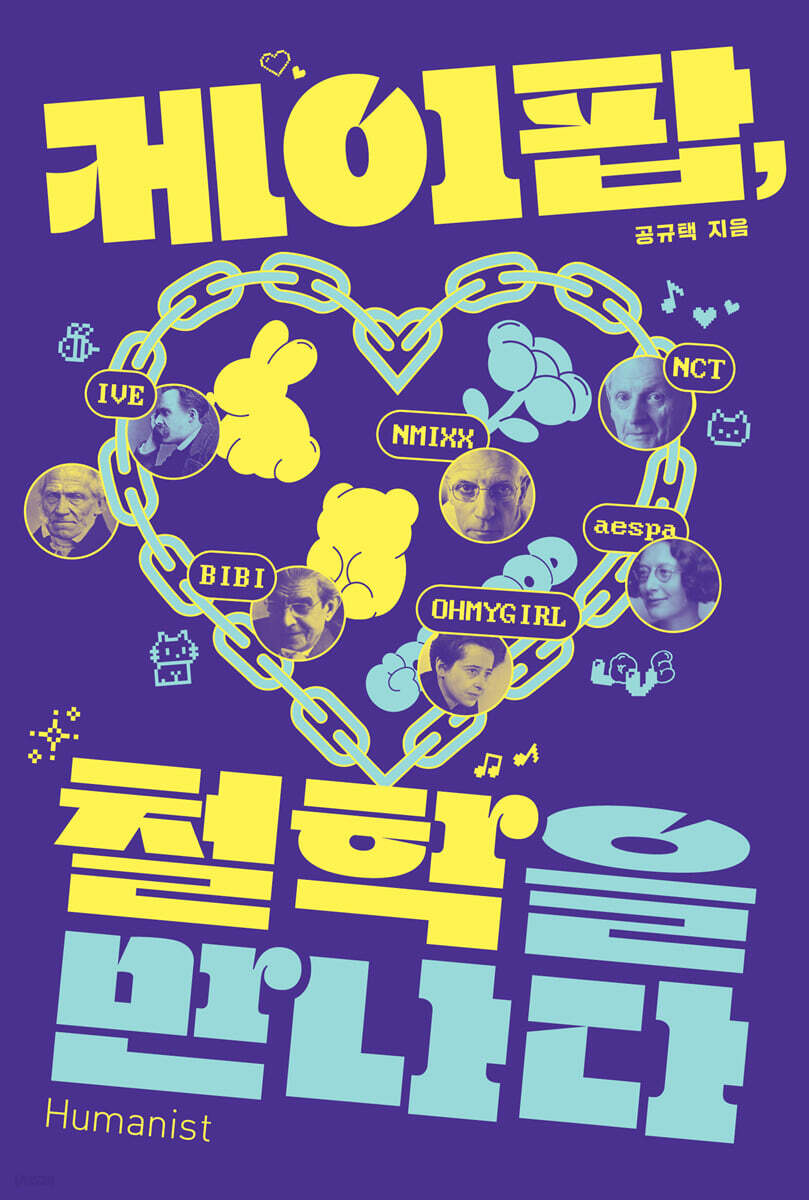 |
Description
Book Introduction
Who am I? How should I live?
Adolescence is a time of many worries, thoughts, and concerns.
The answer can be found in the philosophical thinking behind K-pop.
We live in an era where K-pop is leading the world's popular music.
After trot, ballad, dance, and hip-hop, idols are now leading K-pop.
And teenagers are the most powerful fandom that supports idols, and for them, K-pop is their daily life, a culture, and something to enjoy, share, and consume.
This book was born from the desire to find reading material that would awaken the emotions and fill the intellect of young people.
There are times when an impressive scene or phrase encountered during adolescence remains in the memory for a long time and becomes a guide for life.
If such encounters were frequent, it would be a great help to young people in living better lives.
We encounter K-pop on a daily basis, but we don't really think about the meaning behind it.
If we choose songs that young people can relate to and convey their meaning properly, they will be able to experience encounters that will empower their lives.
Also, delving into the philosophical and humanistic meaning of the lyrics can provide an opportunity to learn new facts or things you hadn't thought about before.
By doing so, your knowledge will increase and you will gain a perspective on the world.
This book reads songs by famous K-pop singers such as Ive, Espa, IU, Akdong Musician, and Jang Kiha not as mere objects of appreciation, but as philosophical texts of existence and perception.
By naturally connecting the thoughts of philosophers such as Sartre, Michel Foucault, Nietzsche, Hannah Arendt, Lacan, Deleuze, and Aristotle with the themes of K-pop, it allows young people to experience philosophy in a language they are familiar with.
Moreover, this book exquisitely combines the sensibility of K-pop with the logic of philosophy, providing a new reading experience called "appreciating thoughtful lyrics."
The journey of discovering philosophical meaning in a single line of a song will serve as a spark of humanities not only for young people but also for modern people.
Adolescence is a time of many worries, thoughts, and concerns.
The answer can be found in the philosophical thinking behind K-pop.
We live in an era where K-pop is leading the world's popular music.
After trot, ballad, dance, and hip-hop, idols are now leading K-pop.
And teenagers are the most powerful fandom that supports idols, and for them, K-pop is their daily life, a culture, and something to enjoy, share, and consume.
This book was born from the desire to find reading material that would awaken the emotions and fill the intellect of young people.
There are times when an impressive scene or phrase encountered during adolescence remains in the memory for a long time and becomes a guide for life.
If such encounters were frequent, it would be a great help to young people in living better lives.
We encounter K-pop on a daily basis, but we don't really think about the meaning behind it.
If we choose songs that young people can relate to and convey their meaning properly, they will be able to experience encounters that will empower their lives.
Also, delving into the philosophical and humanistic meaning of the lyrics can provide an opportunity to learn new facts or things you hadn't thought about before.
By doing so, your knowledge will increase and you will gain a perspective on the world.
This book reads songs by famous K-pop singers such as Ive, Espa, IU, Akdong Musician, and Jang Kiha not as mere objects of appreciation, but as philosophical texts of existence and perception.
By naturally connecting the thoughts of philosophers such as Sartre, Michel Foucault, Nietzsche, Hannah Arendt, Lacan, Deleuze, and Aristotle with the themes of K-pop, it allows young people to experience philosophy in a language they are familiar with.
Moreover, this book exquisitely combines the sensibility of K-pop with the logic of philosophy, providing a new reading experience called "appreciating thoughtful lyrics."
The journey of discovering philosophical meaning in a single line of a song will serve as a spark of humanities not only for young people but also for modern people.
- You can preview some of the book's contents.
Preview
index
Chapter 1.
Who am I?
I AM (Ive) - Belief in existence and the future (feat.
Sartre, Nietzsche)
Break The Wall (Nmix) - Beyond the Wall to Another World (feat.
Rousseau, Michel Foucault)
I am a firefly (Hwang Ga-ram) - The specialness and beauty I possess (feat.
Aristotle)
Oort Cloud (Yoon Ha) - A Journey to Meet Me Beyond the Clouds (feat.
Erich Fromm)
To My Adolescence (Bolbbalgan4) - The Me Who Wanted to Disappear, The Me Who Wanted to Meet (feat.
Eric Ericson)
Supernova (에스파) - Supernova, the light of exploding self (feat.
Nietzsche)
Octopus's Dream (Ahn Ye-eun) - Two Parables Taught by the Octopus (feat.
Plato, Zhuangzi)
Alien (Han) - Who am I? The beginning of that question (feat.
Hegel)
Secret Garden (Oh My Girl) - My Seed, My Garden (feat.
Hannah Arendt)
Chapter 2.
Love that begins with lack
Good Night, Sweet Dreams (Nerd Connection) - Breakup is not the end, it's a process of change (feat.
Deleuze)
I wish the wind would blow (Gilgu Bonggu) - A heart that remains in memory and waiting for the wind (feat.
Heidegger)
I Can't Find My Home (Mad Clown) - After a Breakup, Emotional Reconstruction (feat.
Psychogeography)
The hot summer nights are gone and what's left is nothing to see (Jannabi) - Fleeting but beautiful things (feat.
Jangja)
Don't You Know (Jojazz) - Someone Closer Even If You Can't See (feat.
Jacques Derrida)
Night Yanggaeng (Bibi) - All I Want Is One Thing (feat.
Jacques Lacan)
All Your Moments (Sung Si Kyung) - I Stay in All Your Moments (feat.
Gabriel Marcel)
Just by existing (Wonstein) - You who shine just by existing (feat.
Beauvoir)
When a Moment Becomes Eternity (Marktoop) - Momentary Memories Become Eternity (feat.
Heidegger)
Ten Fingers (Urban Zakapa) - The feeling of love and its journey (feat.
Nietzsche, Erich Fromm)
Chapter 3.
Pain, loneliness and comfort
Becoming an Adult (Kim Na-young) - Learning to Be Strong-Minded (feat.
Stoic philosophy)
Roses blooming between buildings (Highkey) - Reality blooming from possibility (feat.
Aristotle)
Sigh (Lee Hi) - A song to comfort those who cannot speak (feat.
Carl Rogers)
HAPPY (DAY6) - Harsh Reality and Uncertain Future (feat.
Bauman)
That's why (Seonwoo Jeong-a) - The language of wisdom that lets go of emotions (feat.
Buddhist thought)
It's probably not our fault (Baek Yerin) - Anxiety, Hurt, and Love (feat.
Heidegger)
On the way home (Akdong Musician) - A time to face loneliness and warmth (feat.
Camus, Simmel)
I Don't Want to Try Too Hard (Even Broccoli) - How to Protect Myself from a Worn Out Life (feat.
Schopenhauer, Lu Xun)
Stone (Ha Hyun Woo) - Stone that becomes stronger through pain (feat.
Nietzsche)
That's Okay (Jo Yong-pil) - What it Means to Trust Me (feat.
Kierkegaard, Sartre)
Chapter 4.
Eyes that see people and the world
Whale (Akdong Musician) - The way of life taught by the whale (feat.
Rousseau)
I'm Unhappy (ESPA) - The real 'me' that doesn't 'pretend' (feat.
Carl Rogers)
Bapsae (Lee Mu-jin) - Enlightenment Found at the End of Despair (feat.
Han Byeong-cheol)
I'm not jealous (Jang Ki-ha) - A society of pride and envy (feat.
Baudrillard)
Polaris (NCT DREAM) - The Star That Lights Your Path (feat.
Levinas)
Square Dream (IU) - Square Dream Trapped in Proverbs (feat.
Marcuse)
Island (Yoon Jong-shin) - Life with my own island (feat.
Levinas, Viktor Frankl)
Falling Flowers (Lucy) - Memories Engraved on Falling Flowers (feat.
Merleau-Ponty)
Eternal Snow (N.Flying) - A Heart That Never Changes (feat.
Martin Buber)
Who am I?
I AM (Ive) - Belief in existence and the future (feat.
Sartre, Nietzsche)
Break The Wall (Nmix) - Beyond the Wall to Another World (feat.
Rousseau, Michel Foucault)
I am a firefly (Hwang Ga-ram) - The specialness and beauty I possess (feat.
Aristotle)
Oort Cloud (Yoon Ha) - A Journey to Meet Me Beyond the Clouds (feat.
Erich Fromm)
To My Adolescence (Bolbbalgan4) - The Me Who Wanted to Disappear, The Me Who Wanted to Meet (feat.
Eric Ericson)
Supernova (에스파) - Supernova, the light of exploding self (feat.
Nietzsche)
Octopus's Dream (Ahn Ye-eun) - Two Parables Taught by the Octopus (feat.
Plato, Zhuangzi)
Alien (Han) - Who am I? The beginning of that question (feat.
Hegel)
Secret Garden (Oh My Girl) - My Seed, My Garden (feat.
Hannah Arendt)
Chapter 2.
Love that begins with lack
Good Night, Sweet Dreams (Nerd Connection) - Breakup is not the end, it's a process of change (feat.
Deleuze)
I wish the wind would blow (Gilgu Bonggu) - A heart that remains in memory and waiting for the wind (feat.
Heidegger)
I Can't Find My Home (Mad Clown) - After a Breakup, Emotional Reconstruction (feat.
Psychogeography)
The hot summer nights are gone and what's left is nothing to see (Jannabi) - Fleeting but beautiful things (feat.
Jangja)
Don't You Know (Jojazz) - Someone Closer Even If You Can't See (feat.
Jacques Derrida)
Night Yanggaeng (Bibi) - All I Want Is One Thing (feat.
Jacques Lacan)
All Your Moments (Sung Si Kyung) - I Stay in All Your Moments (feat.
Gabriel Marcel)
Just by existing (Wonstein) - You who shine just by existing (feat.
Beauvoir)
When a Moment Becomes Eternity (Marktoop) - Momentary Memories Become Eternity (feat.
Heidegger)
Ten Fingers (Urban Zakapa) - The feeling of love and its journey (feat.
Nietzsche, Erich Fromm)
Chapter 3.
Pain, loneliness and comfort
Becoming an Adult (Kim Na-young) - Learning to Be Strong-Minded (feat.
Stoic philosophy)
Roses blooming between buildings (Highkey) - Reality blooming from possibility (feat.
Aristotle)
Sigh (Lee Hi) - A song to comfort those who cannot speak (feat.
Carl Rogers)
HAPPY (DAY6) - Harsh Reality and Uncertain Future (feat.
Bauman)
That's why (Seonwoo Jeong-a) - The language of wisdom that lets go of emotions (feat.
Buddhist thought)
It's probably not our fault (Baek Yerin) - Anxiety, Hurt, and Love (feat.
Heidegger)
On the way home (Akdong Musician) - A time to face loneliness and warmth (feat.
Camus, Simmel)
I Don't Want to Try Too Hard (Even Broccoli) - How to Protect Myself from a Worn Out Life (feat.
Schopenhauer, Lu Xun)
Stone (Ha Hyun Woo) - Stone that becomes stronger through pain (feat.
Nietzsche)
That's Okay (Jo Yong-pil) - What it Means to Trust Me (feat.
Kierkegaard, Sartre)
Chapter 4.
Eyes that see people and the world
Whale (Akdong Musician) - The way of life taught by the whale (feat.
Rousseau)
I'm Unhappy (ESPA) - The real 'me' that doesn't 'pretend' (feat.
Carl Rogers)
Bapsae (Lee Mu-jin) - Enlightenment Found at the End of Despair (feat.
Han Byeong-cheol)
I'm not jealous (Jang Ki-ha) - A society of pride and envy (feat.
Baudrillard)
Polaris (NCT DREAM) - The Star That Lights Your Path (feat.
Levinas)
Square Dream (IU) - Square Dream Trapped in Proverbs (feat.
Marcuse)
Island (Yoon Jong-shin) - Life with my own island (feat.
Levinas, Viktor Frankl)
Falling Flowers (Lucy) - Memories Engraved on Falling Flowers (feat.
Merleau-Ponty)
Eternal Snow (N.Flying) - A Heart That Never Changes (feat.
Martin Buber)
Detailed image
.jpg)
Publisher's Review
K-Pop Through a Philosopher's Eyes
Philosophy is often perceived as a 'difficult discipline' or 'thoughts divorced from reality'.
This book selects some of the most memorable K-pop songs of recent years and explores the meaning of their lyrics from a philosophical and humanistic perspective.
K-pop, which covers a wide range of subjects and topics, from personal emotions to trivial daily life and social issues, is a means of empathy and communication, as well as a story that contains culture and history.
By reading this kind of K-pop and examining its meaning, you can develop a deeper perspective on the world and a deeper understanding of your thoughts.
This book allows young people to think about philosophy through lyrics.
Although K-pop is a form of popular culture, some songs have unique philosophical meaning.
In Ive's 『I AM』, which shouts "I'm on my way!", we can read Sartre's existential philosophy, and in Enmix's 『Break The Wall』, we can read Michel Foucault's discourse on freedom and resistance.
The language of K-pop transcends mere emotional expression; it embodies the existential concerns and epistemological reflections of modern people. This book connects this language with philosophical concepts, elevating it to a realm of thought.
Today's youth live in a world overflowing with information and stimulation, yet they lack the education that fosters their own thinking.
The author of this book fills that gap with the language of song.
Rather than forcing philosophy or thinking on young people, we guide them to discover philosophy within the K-pop they already love.
For example, Bolbbalgan4's "To My Puberty" uses Erik Erikson's concept of "identity confusion", and Han (Stray Kids)'s "Alien" uses Hegel's concept of "recognition of the other," allowing them to understand abstract philosophical concepts by connecting them to their own emotions.
K-pop lyrics contain answers to philosophical questions that we might have asked ourselves at least once during our teenage years: "Who am I?", "Why am I lonely?", and "Why does love hurt?"
In K-pop, teenagers can meet speakers who resemble them and reflect on their own emotions through those speakers.
For example, the lyrics of “I’m a Firefly”, “It’s okay, because I’m dazzling”, are read as the language of self-esteem, and “I’d rather fly.
The lyrics of 『I AM』, “Then, as you pass by, it becomes a road,” expand into a message of existential choice.
These experiences foster two strengths in young people.
The first is philosophical thinking, the ability to verbalize emotions and the world and ask oneself the question, "Why?"
The second is the sensitivity of empathy and reflection, that is, the perspective that simultaneously looks at the suffering of others and one's own inner self.
Furthermore, for teachers and educators, this book serves as an excellent resource for emotional education, humanities reading, and writing instruction.
This is because students' literacy and critical thinking skills can be expanded through activities such as analyzing lyrics, discussing philosophical concepts, and writing their own interpretations.
The author said, “K-pop is the poetry that teenagers encounter most often.
“Philosophy is the question of what poetry means,” he says.
Ultimately, this book provides an experience for young people to translate the 'language of self-emotion' into the language of philosophy.
In the process, philosophy can be established as an emotional language that understands and expresses life, rather than something difficult and abstruse.
The Meaning of Existence, Love, Loneliness, and the World in K-Pop
In this book, the author introduces K-pop by dividing it into four philosophical themes.
Chapter 1, "Who Am I?", corresponds to ontology, Chapter 2, "Love Begins from Deficiency," corresponds to relational theory, Chapter 3, "Pain, Solitude, and Consolation," corresponds to existential anthropology, and Chapter 4, "Eyes on People and the World," corresponds to epistemology.
This is an attempt to incorporate the core issues of philosophy, such as ‘I’, ‘others’, ‘pain’, and ‘the world’, into K-pop.
In Chapter 1, Ive's "I AM" is read as Sartre's existential philosophy that "existence precedes essence," and Enmix's "Break The Wall" is expanded into the discourse of Michel Foucault's "freedom and resistance."
In Hwang Garam's 'I am a Firefly', Aristotle's teleology shines, and in Espa's 'Supernova', Nietzsche's thought of 'humans giving birth to stars in chaos' shines.
The author asks the youth this question through the cries of the characters in the lyrics.
'What path are you walking on?', 'Is that the path you chose?'
At this time, K-pop becomes a text that explores one's own existence.
Chapter 2 explores human relationships, focusing on the emotions of love and lack.
Nerd Connection's "Good Night, Good Dreams" is interpreted through Deleuze's philosophy of "change and creation," and Jannabi's "The Hot Summer Night Has Gone and What Remains Is Unattractive" through Zhuangzi's philosophy of inaction, interpreting the essence of love as "change and flow" rather than "possession."
Love is a process of understanding oneself through others, and at the same time, it is a passage of awareness that grows through loss and lack.
Chapter 3 conveys the comfort that K-pop provides in the midst of emotions such as pain, loneliness, and hurt.
Lee Hi's "Sigh" can be read as a human-centered psychology of Carl Rogers, and Kim Na-young's "Becoming an Adult" can be read as a human growth theory of Stoic philosophy.
In Ha Hyun-woo's 『The Stone』, Nietzsche's 'overcoming being' appears, and in Seonwoo Jeong-ah's 『That's How It Is』, the Buddhist concept of impermanence and the wisdom of contemplation are revealed.
In this chapter, the author says, “Pain is not a force that breaks me down, but a time of philosophy that makes me strong.”
Chapter 4 shows the expansion of my perspective on myself and the world.
In Akdong Musician's "Whale," Rousseau's philosophy of nature is captured, in Jang Ki-ha's "I'm Not Envious," Baudrillard's theory of consumer society is captured, and in NCT DREAM's "North Star," Levinas's "ethics of the other" is captured.
Here, K-pop goes beyond individual emotions and speaks of human responsibility and a warm gaze as we coexist with others in the world.
《K-Pop Meets Philosophy》 is not just a simple song commentary.
While analyzing each lyric from a philosophical and humanistic perspective, the content is expressed in language appropriate to the sensibilities and level of young people.
Through this, readers learn philosophy and find themselves becoming more thoughtful.
Philosophers Discuss K-Pop
Host: Today we have prepared a rather special gathering.
We'll be sharing stories about K-pop with philosophers featured in "K-pop Meets Philosophy."
Philosophers discussing K-pop sounds strange, but interesting.
Sartre: There are these lyrics in Ive's "I AM".
“There is no need to follow.
“You go your way, I go mine.” These lyrics speak to the core of existentialism.
I've always said, 'Humans should be able to choose for themselves.'
The speaker in this song already knows the freedom of choice.
Nietzsche: I see.
But I saw a greater power in aespa's 『Supernova』.
How powerful is the cry, "I am a supernova!" Just as it's said that stars are born only in chaos, this song embodies the will to transcend suffering and recreate oneself.
Can't you feel the explosive power?
Puko: The K-pop you two introduced was good, but I was interested in Enmix's "Break The Wall."
This song can be said to be a record of resistance against taboos and rules.
I think the phrase “Come and break the wall, tear it all down” is a declaration to break down social perceptions and power structures.
The song's speaker feels like he's grown into a self-reliant being! This is a much more popular way of critiquing power than the "surveillance society" theory I mentioned.
Arendt: Foucault's words are also interesting.
But I think Oh My Girl's "Secret Garden" is more philosophical.
In the lyrics that lead to seeds, growth, and waiting, I felt the philosophy of 'natality'.
Humans are beings capable of starting something new.
The 'garden' in these lyrics is not a simple fantasy, but a metaphor for the ability to create a new world.
That is precisely the important message this book delivers to young people.
'There is still unfulfilled potential within me.'
Nietzsche: I thought about this while reading this book.
If philosophy comes down to the streets and comes alive in rhythm, wouldn't that be philosophy as true art?
Foucault: I agree.
Philosophy must no longer be the language of the pulpit.
"K-Pop Meets Philosophy" connects philosophy with the popular culture of K-Pop, introducing a new form of thinking.
I think this is the path of modern humanities.
Arendt: Instead of 'teaching' philosophy, this book 'encourages empathy and reflection.'
If K-pop lyrics help young people reflect on their own existence and re-evaluate their relationship with the world, that would be the path to putting philosophy into practice and internalizing it.
Host: Ultimately, K-pop seems to be a language that most vividly portrays the world we live in, and a text that contains philosophical meaning.
I would say that your thoughts and philosophical insights have been revived through K-pop.
Philosophy is often perceived as a 'difficult discipline' or 'thoughts divorced from reality'.
This book selects some of the most memorable K-pop songs of recent years and explores the meaning of their lyrics from a philosophical and humanistic perspective.
K-pop, which covers a wide range of subjects and topics, from personal emotions to trivial daily life and social issues, is a means of empathy and communication, as well as a story that contains culture and history.
By reading this kind of K-pop and examining its meaning, you can develop a deeper perspective on the world and a deeper understanding of your thoughts.
This book allows young people to think about philosophy through lyrics.
Although K-pop is a form of popular culture, some songs have unique philosophical meaning.
In Ive's 『I AM』, which shouts "I'm on my way!", we can read Sartre's existential philosophy, and in Enmix's 『Break The Wall』, we can read Michel Foucault's discourse on freedom and resistance.
The language of K-pop transcends mere emotional expression; it embodies the existential concerns and epistemological reflections of modern people. This book connects this language with philosophical concepts, elevating it to a realm of thought.
Today's youth live in a world overflowing with information and stimulation, yet they lack the education that fosters their own thinking.
The author of this book fills that gap with the language of song.
Rather than forcing philosophy or thinking on young people, we guide them to discover philosophy within the K-pop they already love.
For example, Bolbbalgan4's "To My Puberty" uses Erik Erikson's concept of "identity confusion", and Han (Stray Kids)'s "Alien" uses Hegel's concept of "recognition of the other," allowing them to understand abstract philosophical concepts by connecting them to their own emotions.
K-pop lyrics contain answers to philosophical questions that we might have asked ourselves at least once during our teenage years: "Who am I?", "Why am I lonely?", and "Why does love hurt?"
In K-pop, teenagers can meet speakers who resemble them and reflect on their own emotions through those speakers.
For example, the lyrics of “I’m a Firefly”, “It’s okay, because I’m dazzling”, are read as the language of self-esteem, and “I’d rather fly.
The lyrics of 『I AM』, “Then, as you pass by, it becomes a road,” expand into a message of existential choice.
These experiences foster two strengths in young people.
The first is philosophical thinking, the ability to verbalize emotions and the world and ask oneself the question, "Why?"
The second is the sensitivity of empathy and reflection, that is, the perspective that simultaneously looks at the suffering of others and one's own inner self.
Furthermore, for teachers and educators, this book serves as an excellent resource for emotional education, humanities reading, and writing instruction.
This is because students' literacy and critical thinking skills can be expanded through activities such as analyzing lyrics, discussing philosophical concepts, and writing their own interpretations.
The author said, “K-pop is the poetry that teenagers encounter most often.
“Philosophy is the question of what poetry means,” he says.
Ultimately, this book provides an experience for young people to translate the 'language of self-emotion' into the language of philosophy.
In the process, philosophy can be established as an emotional language that understands and expresses life, rather than something difficult and abstruse.
The Meaning of Existence, Love, Loneliness, and the World in K-Pop
In this book, the author introduces K-pop by dividing it into four philosophical themes.
Chapter 1, "Who Am I?", corresponds to ontology, Chapter 2, "Love Begins from Deficiency," corresponds to relational theory, Chapter 3, "Pain, Solitude, and Consolation," corresponds to existential anthropology, and Chapter 4, "Eyes on People and the World," corresponds to epistemology.
This is an attempt to incorporate the core issues of philosophy, such as ‘I’, ‘others’, ‘pain’, and ‘the world’, into K-pop.
In Chapter 1, Ive's "I AM" is read as Sartre's existential philosophy that "existence precedes essence," and Enmix's "Break The Wall" is expanded into the discourse of Michel Foucault's "freedom and resistance."
In Hwang Garam's 'I am a Firefly', Aristotle's teleology shines, and in Espa's 'Supernova', Nietzsche's thought of 'humans giving birth to stars in chaos' shines.
The author asks the youth this question through the cries of the characters in the lyrics.
'What path are you walking on?', 'Is that the path you chose?'
At this time, K-pop becomes a text that explores one's own existence.
Chapter 2 explores human relationships, focusing on the emotions of love and lack.
Nerd Connection's "Good Night, Good Dreams" is interpreted through Deleuze's philosophy of "change and creation," and Jannabi's "The Hot Summer Night Has Gone and What Remains Is Unattractive" through Zhuangzi's philosophy of inaction, interpreting the essence of love as "change and flow" rather than "possession."
Love is a process of understanding oneself through others, and at the same time, it is a passage of awareness that grows through loss and lack.
Chapter 3 conveys the comfort that K-pop provides in the midst of emotions such as pain, loneliness, and hurt.
Lee Hi's "Sigh" can be read as a human-centered psychology of Carl Rogers, and Kim Na-young's "Becoming an Adult" can be read as a human growth theory of Stoic philosophy.
In Ha Hyun-woo's 『The Stone』, Nietzsche's 'overcoming being' appears, and in Seonwoo Jeong-ah's 『That's How It Is』, the Buddhist concept of impermanence and the wisdom of contemplation are revealed.
In this chapter, the author says, “Pain is not a force that breaks me down, but a time of philosophy that makes me strong.”
Chapter 4 shows the expansion of my perspective on myself and the world.
In Akdong Musician's "Whale," Rousseau's philosophy of nature is captured, in Jang Ki-ha's "I'm Not Envious," Baudrillard's theory of consumer society is captured, and in NCT DREAM's "North Star," Levinas's "ethics of the other" is captured.
Here, K-pop goes beyond individual emotions and speaks of human responsibility and a warm gaze as we coexist with others in the world.
《K-Pop Meets Philosophy》 is not just a simple song commentary.
While analyzing each lyric from a philosophical and humanistic perspective, the content is expressed in language appropriate to the sensibilities and level of young people.
Through this, readers learn philosophy and find themselves becoming more thoughtful.
Philosophers Discuss K-Pop
Host: Today we have prepared a rather special gathering.
We'll be sharing stories about K-pop with philosophers featured in "K-pop Meets Philosophy."
Philosophers discussing K-pop sounds strange, but interesting.
Sartre: There are these lyrics in Ive's "I AM".
“There is no need to follow.
“You go your way, I go mine.” These lyrics speak to the core of existentialism.
I've always said, 'Humans should be able to choose for themselves.'
The speaker in this song already knows the freedom of choice.
Nietzsche: I see.
But I saw a greater power in aespa's 『Supernova』.
How powerful is the cry, "I am a supernova!" Just as it's said that stars are born only in chaos, this song embodies the will to transcend suffering and recreate oneself.
Can't you feel the explosive power?
Puko: The K-pop you two introduced was good, but I was interested in Enmix's "Break The Wall."
This song can be said to be a record of resistance against taboos and rules.
I think the phrase “Come and break the wall, tear it all down” is a declaration to break down social perceptions and power structures.
The song's speaker feels like he's grown into a self-reliant being! This is a much more popular way of critiquing power than the "surveillance society" theory I mentioned.
Arendt: Foucault's words are also interesting.
But I think Oh My Girl's "Secret Garden" is more philosophical.
In the lyrics that lead to seeds, growth, and waiting, I felt the philosophy of 'natality'.
Humans are beings capable of starting something new.
The 'garden' in these lyrics is not a simple fantasy, but a metaphor for the ability to create a new world.
That is precisely the important message this book delivers to young people.
'There is still unfulfilled potential within me.'
Nietzsche: I thought about this while reading this book.
If philosophy comes down to the streets and comes alive in rhythm, wouldn't that be philosophy as true art?
Foucault: I agree.
Philosophy must no longer be the language of the pulpit.
"K-Pop Meets Philosophy" connects philosophy with the popular culture of K-Pop, introducing a new form of thinking.
I think this is the path of modern humanities.
Arendt: Instead of 'teaching' philosophy, this book 'encourages empathy and reflection.'
If K-pop lyrics help young people reflect on their own existence and re-evaluate their relationship with the world, that would be the path to putting philosophy into practice and internalizing it.
Host: Ultimately, K-pop seems to be a language that most vividly portrays the world we live in, and a text that contains philosophical meaning.
I would say that your thoughts and philosophical insights have been revived through K-pop.
GOODS SPECIFICS
- Date of issue: October 27, 2025
- Page count, weight, size: 232 pages | 328g | 135*200*15mm
- ISBN13: 9791170873846
- ISBN10: 1170873847
You may also like
카테고리
korean


korean

![GQ KOREA Mark (Monthly): December [2025]](http://librairie.coreenne.fr/cdn/shop/files/8ef265dbbfbf186523ed75ba7319009d.jpg?v=1765340328&width=3840)


