

5th floor uncle
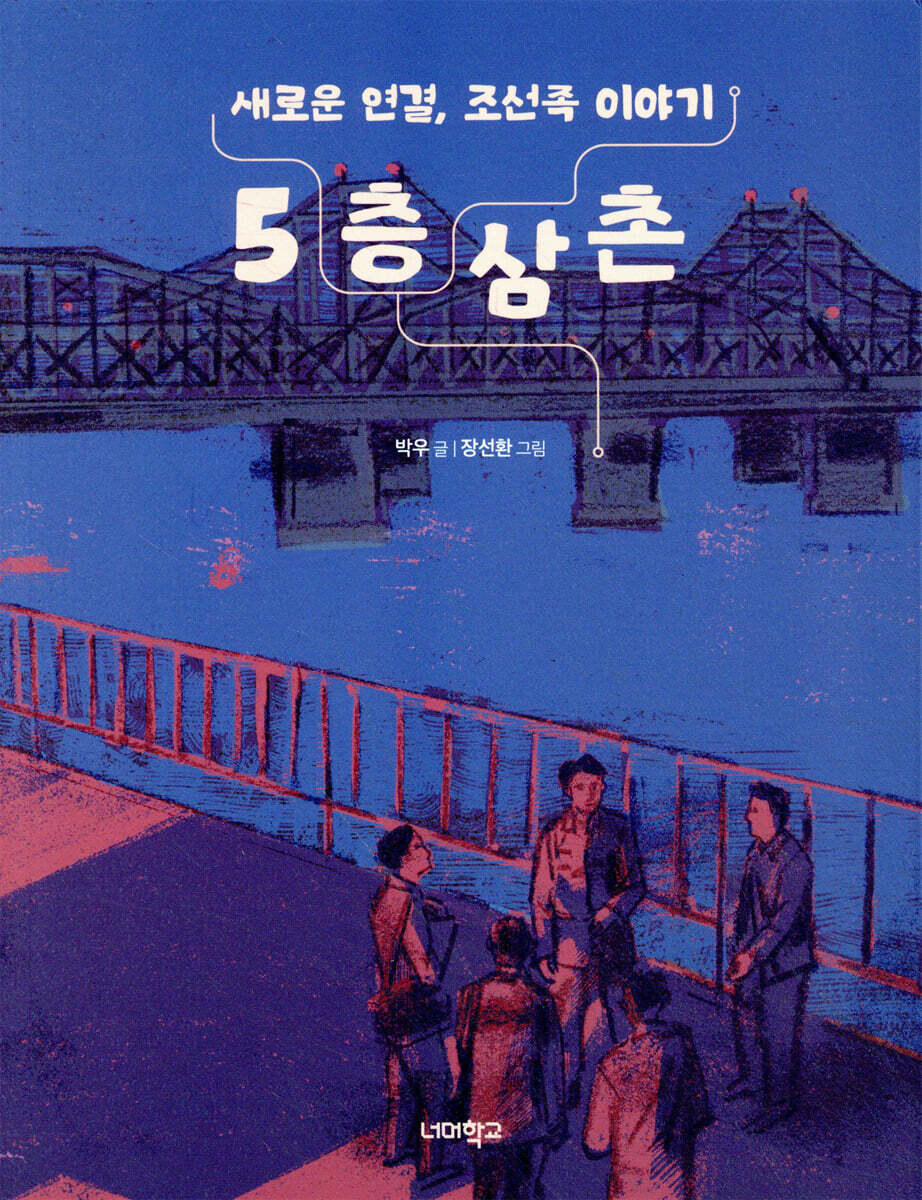 |
Description
Book Introduction
Who am I connected to now?
What kind of bridge can we be to someone?
"Uncle on the 5th Floor" is a book that combines real-life stories from Professor Park Woo and his studies of Northeast Asian society and culture.
The story, landscapes, and people are vividly depicted with a solid structure like a novel, and the dialogues, which contain the "humor unique to cold regions," will make you smile. The book is followed by a "Deep Reading of the 5th Floor Uncle," which explains the past and present of the Joseonjok people.
The journey of the book's protagonist, the 5th floor uncle, was ultimately about connection.
In our society, where people of diverse immigrant backgrounds and identities live together, the ability to connect with others and a sense of understanding and respect for the unfamiliar will become increasingly important.
It grows little by little through repeated encounters and conversations, failures and reconciliations, misunderstandings and learning.
Isn't that precisely what we can learn from the Koreans and the fifth-floor uncles? Professor Park Woo's words, that this ability and sensitivity to connect will lead us toward creating a slightly better world, resonate deeply with me.
This is the fifth book in the 'Next Generation Guide to Beyond School' series, which encourages careful consideration and discussion of important topics in our society.
What kind of bridge can we be to someone?
"Uncle on the 5th Floor" is a book that combines real-life stories from Professor Park Woo and his studies of Northeast Asian society and culture.
The story, landscapes, and people are vividly depicted with a solid structure like a novel, and the dialogues, which contain the "humor unique to cold regions," will make you smile. The book is followed by a "Deep Reading of the 5th Floor Uncle," which explains the past and present of the Joseonjok people.
The journey of the book's protagonist, the 5th floor uncle, was ultimately about connection.
In our society, where people of diverse immigrant backgrounds and identities live together, the ability to connect with others and a sense of understanding and respect for the unfamiliar will become increasingly important.
It grows little by little through repeated encounters and conversations, failures and reconciliations, misunderstandings and learning.
Isn't that precisely what we can learn from the Koreans and the fifth-floor uncles? Professor Park Woo's words, that this ability and sensitivity to connect will lead us toward creating a slightly better world, resonate deeply with me.
This is the fifth book in the 'Next Generation Guide to Beyond School' series, which encourages careful consideration and discussion of important topics in our society.
index
1. A paper box with a number on it
2 Colored view, refreshing sound, and right-hand steering wheel
3 Where should I go?
4 Warm Winter
Take the 5-ship train
6 Another World
7. Crossing Barriers Connects People
5th floor uncle deep reading
The road called the outgoing word connection
2 Colored view, refreshing sound, and right-hand steering wheel
3 Where should I go?
4 Warm Winter
Take the 5-ship train
6 Another World
7. Crossing Barriers Connects People
5th floor uncle deep reading
The road called the outgoing word connection
Into the book
In 1989, when cars were rare, it was a local spectacle to see someone loading seven boxes on the back of a car and heading to the North Korea-China border.
Rumors have already spread that the uncle on the fifth floor is going to North Korea to trade.
The elderly people in the neighborhood who didn't sleep much in the morning gathered around the car.
It was unclear whether they had come to look at the car or to observe the group making a short trip to North Korea.
The uncle on the fifth floor sat in the assistant driver's seat, and the two men and Mincheol sat in the back.
The truck, which started from the center of Yongjeong [Longjing], passed the Yongdure Well and the old Japanese Consulate General building in Gando, which is currently used as the city government building, and was able to quickly reach the suburbs.
---p.11~13
There is a reason why some wealthy Chinese compatriots had Japanese-made color TVs in the mid-to-late 1980s, even before color TVs became widespread in China.
The uncle on the fifth floor was so excited that he immediately started haggling over the price.
From the perspective of North Korean residents, the sooner these home appliances were processed, the better, so they weren't priced too high.
They also had a rough idea of how much their Chinese compatriots earned by selling goods in Hoeryong.
I quoted a price that I thought was reasonable, excluding the travel expenses [transportation costs], and the uncle on the fifth floor decided to buy it without much bargaining.
But there was no way to check if the TV was working properly.
There was a lack of electricity and the outlets didn't fit.
“Don’t worry.
We didn't even open the one from Japan.
And if you take it and it doesn’t work out, you can come and find it next time you come to Hoeryong!”
As I said before, people at that time had a deep trust in each other.
---p.31
Throughout the entire time my uncle was running his business, there was a constant stream of Korean and American missionaries visiting him.
Some came with the pretext of proposing business.
“Where should I go?”
That's what they said a lot.
I heard that among the North Koreans that the uncle on the 5th floor introduced, some successfully arrived in South Korea, while others failed along the way.
As the areas where North Koreans were hiding diversified and the number of unpleasant incidents increased, local authorities' crackdowns also intensified.
Because of this, the process of contacting them became more and more reminiscent of espionage.
---p.63
Although it was hard work and her hands were numb, the woman was happy and excited.
Chinese mothers have devoted themselves to their families more than anyone else.
He was laid off from his job of nearly 20 years due to the country's economic liberalization policy, but rather than complaining about the injustice, he was busy looking for new opportunities.
Mothers in this age group were burdened with the double burden of having to shoulder the burden of being daughters-in-law who had to support their growing children and their parents who had to visit the hospital more frequently.
My husband, who earned even a pittance in salary, was proud of just being at work.
China's economic reforms have shifted the gender division of labor within the home in a conservative direction, forcing countless mothers into the informal sector of society.
---p.73~74
“Ah, Dongdaemun.
“A person who used to live in Haerim [Haerin] went to work in Korea, and when he went to Dongdaemun, he said there were a lot of clothes and shoes. I guess that’s where it is.”
“That will be right.
“I heard there are a lot of industries like that around there.”
“The people of Wenzhou have formed a Zhejiang village in Beijing, and they are making a lot of clothes there.
The leather jackets made by those people were worn by many people in Harbin, and the people of Wenzhou imported Korean cashmere and made winter clothes.
“It sells well in Harbin, so people have good reviews about Korean fabrics.”
The five people sitting around a table were having a good conversation.
Although they hadn't yet launched a full-fledged business, they both shared a feeling that it would be a huge success.
---p.88
“You must overcome the barrier.
But not everything can be fun all the time, so in those cases, I had to create some mental joy.
So every time I meet someone, I try to find out what their strengths are.
The process is secretly fascinating.
There is a saying that when three people walk together, there is bound to be someone among them who can become my teacher.
“I can learn from that person, and I can use those who can’t as a negative example and reflect on myself.”
“Look for your strengths!” There’s a saying.
'What you see is what you know' Your uncle's philosophy is profound.
haha!"
"Was I being too serious? With that mindset, I found it easier to overcome not only physical barriers but also emotional barriers."
“People are connected when they overcome barriers!”
Rumors have already spread that the uncle on the fifth floor is going to North Korea to trade.
The elderly people in the neighborhood who didn't sleep much in the morning gathered around the car.
It was unclear whether they had come to look at the car or to observe the group making a short trip to North Korea.
The uncle on the fifth floor sat in the assistant driver's seat, and the two men and Mincheol sat in the back.
The truck, which started from the center of Yongjeong [Longjing], passed the Yongdure Well and the old Japanese Consulate General building in Gando, which is currently used as the city government building, and was able to quickly reach the suburbs.
---p.11~13
There is a reason why some wealthy Chinese compatriots had Japanese-made color TVs in the mid-to-late 1980s, even before color TVs became widespread in China.
The uncle on the fifth floor was so excited that he immediately started haggling over the price.
From the perspective of North Korean residents, the sooner these home appliances were processed, the better, so they weren't priced too high.
They also had a rough idea of how much their Chinese compatriots earned by selling goods in Hoeryong.
I quoted a price that I thought was reasonable, excluding the travel expenses [transportation costs], and the uncle on the fifth floor decided to buy it without much bargaining.
But there was no way to check if the TV was working properly.
There was a lack of electricity and the outlets didn't fit.
“Don’t worry.
We didn't even open the one from Japan.
And if you take it and it doesn’t work out, you can come and find it next time you come to Hoeryong!”
As I said before, people at that time had a deep trust in each other.
---p.31
Throughout the entire time my uncle was running his business, there was a constant stream of Korean and American missionaries visiting him.
Some came with the pretext of proposing business.
“Where should I go?”
That's what they said a lot.
I heard that among the North Koreans that the uncle on the 5th floor introduced, some successfully arrived in South Korea, while others failed along the way.
As the areas where North Koreans were hiding diversified and the number of unpleasant incidents increased, local authorities' crackdowns also intensified.
Because of this, the process of contacting them became more and more reminiscent of espionage.
---p.63
Although it was hard work and her hands were numb, the woman was happy and excited.
Chinese mothers have devoted themselves to their families more than anyone else.
He was laid off from his job of nearly 20 years due to the country's economic liberalization policy, but rather than complaining about the injustice, he was busy looking for new opportunities.
Mothers in this age group were burdened with the double burden of having to shoulder the burden of being daughters-in-law who had to support their growing children and their parents who had to visit the hospital more frequently.
My husband, who earned even a pittance in salary, was proud of just being at work.
China's economic reforms have shifted the gender division of labor within the home in a conservative direction, forcing countless mothers into the informal sector of society.
---p.73~74
“Ah, Dongdaemun.
“A person who used to live in Haerim [Haerin] went to work in Korea, and when he went to Dongdaemun, he said there were a lot of clothes and shoes. I guess that’s where it is.”
“That will be right.
“I heard there are a lot of industries like that around there.”
“The people of Wenzhou have formed a Zhejiang village in Beijing, and they are making a lot of clothes there.
The leather jackets made by those people were worn by many people in Harbin, and the people of Wenzhou imported Korean cashmere and made winter clothes.
“It sells well in Harbin, so people have good reviews about Korean fabrics.”
The five people sitting around a table were having a good conversation.
Although they hadn't yet launched a full-fledged business, they both shared a feeling that it would be a huge success.
---p.88
“You must overcome the barrier.
But not everything can be fun all the time, so in those cases, I had to create some mental joy.
So every time I meet someone, I try to find out what their strengths are.
The process is secretly fascinating.
There is a saying that when three people walk together, there is bound to be someone among them who can become my teacher.
“I can learn from that person, and I can use those who can’t as a negative example and reflect on myself.”
“Look for your strengths!” There’s a saying.
'What you see is what you know' Your uncle's philosophy is profound.
haha!"
"Was I being too serious? With that mindset, I found it easier to overcome not only physical barriers but also emotional barriers."
“People are connected when they overcome barriers!”
---p.131~132
Publisher's Review
Who am I connected to now?
What kind of bridge can we be to someone?
"Uncle on the 5th Floor" is a book that provides a new understanding of the Joseonjok people through the life story of Uncle on the 5th Floor, who started trade with North Korea and then traveled to Russia, China, and South Korea to engage in various businesses.
Beginning in the early 1990s, a thrilling story unfolds, like a drama, of importing Japanese color TVs and used cars through North Korea, distributing sportswear produced in Dongdaemun and North Korea throughout China, and producing and distributing ingredients for mala-tang and hot pot in South Korea.
As you read Jang Seon-hwan's colorful and composed paintings, maps, and photographs, you'll come to feel a deeper connection with the resilient Korean-Chinese people who have persevered through life, and you'll realize that connecting with others creates a better world.
It has been over 30 years since Koreans and Chinese compatriots came to our society.
Mr. Park Woo, author of "Uncle on the 5th Floor," immediately shatters our prejudice that ethnic Koreans of Chinese descent come to Korea to fill low-wage jobs.
The approximately 1.2 million ethnic Koreans of China are very diverse, including those who, while holding Chinese citizenship, have maintained their ethnic identity and have engaged in business connecting China, North Korea, Russia, and South Korea, like the fifth-floor uncle, while others have found opportunities in China, Japan, the United States, and Europe.
As generations change, more and more people are receiving higher education, working as professionals, and bridging different countries and cultures. They are also active in various fields, including everyday culture, literature, and popular culture.
"Uncle on the 5th Floor" is a book that combines real-life stories from Professor Park Woo and his studies of Northeast Asian society and culture.
The story, landscapes, and people are vividly depicted with a solid structure like a novel, and the dialogues, which contain the "humor unique to cold regions," will make you smile. The book is followed by a "Deep Reading of the 5th Floor Uncle," which explains the past and present of the Joseonjok people.
The journey of the book's protagonist, the 5th floor uncle, was ultimately about connection.
In our society, where people of diverse immigrant backgrounds and identities live together, the ability to connect with others and a sense of understanding and respect for the unfamiliar will become increasingly important.
It grows little by little through repeated encounters and conversations, failures and reconciliations, misunderstandings and learning.
Isn't that precisely what we can learn from the Koreans and the fifth-floor uncles? Professor Park Woo's words, that this ability and sensitivity to connect will lead us toward creating a slightly better world, resonate deeply with me.
This is the fifth book in the 'Next Generation Guide to Beyond School' series, which encourages careful consideration and discussion of important topics in our society.
The story of Uncle Fifth Floor, a master of connection who overcame barriers again and again.
“Food items such as candy, mooncakes, and cookies should be placed in box 1, and small items such as batteries, clips, rubber bands, hairpins, pins, and buttons should be placed in box 2.”
In the summer of 1989, workers were busy preparing items to be taken to North Korea in a five-story apartment in Yongjeong, Yanbian.
The uncle on the fifth floor, who had carefully packed his luggage in numbered boxes, took Mincheol and ran to the North Korea-China border the next day.
About three weeks later, the same boxes of North Korean seafood were brought in and sold like hotcakes to Chinese and ethnic Koreans.
My uncle, who was born in Gyeseo, Heilongjiang Province, to parents who were originally from Yeongcheon, Gyeongsangbuk-do and had immigrated to Manchuria, was naturally outgoing and quickly became friendly with people. He diligently traveled to North Korea to find business opportunities.
One day, they bring in Japanese home appliances, such as a color TV with the word "Hitachi" written in English and a "Panasonic" tape recorder.
It is surprising how used cars were imported across the river on passenger ships from Japan.
It is both fascinating and touching to see the local women processing frozen pollack imported from Vladivostok, Russia in their apartments to make money.
One day, my uncle's father, who lives on the 5th floor, saw a KBS broadcast about separated families and said that he thought it was my older brother and asked me to send a letter to Daegu.
After waiting half in doubt for six months, a letter arrives from my uncle.
Through Dandong, we go to Seoul and Daegu for a tearful family reunion.
This connection continues, and the 5th floor uncle does not hesitate to take on dangerous tasks, such as connecting North Korean defectors with a Korean missionary who is an acquaintance of his cousin, and also starts a business importing and brokering shoes and clothing between Dongdaemun and China...
20 years later, Mincheol, an engineer in his mid-30s who works for a Chinese company, comes to Seoul on a business trip and meets the uncle on the 5th floor.
The uncle on the fifth floor is a master of connection who observes what people need and connects them with people who create it. The two people who hit their knees realize that people are connected when they overcome barriers and talk late into the night about how to overcome the barriers in their hearts.
A fresh look at the positive and resilient history of our Korean-Chinese compatriots.
"Uncle on the 5th Floor" vividly depicts the history of the Joseonjok people, who were born to parents who immigrated to China and lived resilient and dynamic lives while preserving their ethnic cultural identity, as well as the characteristics that emerged as a result.
The origins of the Joseonjok are those who left for Manchuria and Gando in the mid-1980s to escape poverty or to participate in the independence movement.
These people, who lived in Yanbian and Heilongjiang Provinces, which were the home of numerous independence activists such as General Kim Jwa-jin, poet Yun Dong-ju, and pastor Moon Ik-hwan, were one of the 56 ethnic minorities recognized by the Chinese government in 1949 and have strived to pass down their history, writing, and traditional culture for generations.
The lives of the "Uncle on the 5th Floor" and the Korean-Chinese people are filled with unique humor, positive energy, and strength.
In the early 1990s, as China and Korea simultaneously opened up, fifth-floor uncles who had previously been involved in private economic sectors such as trade began to engage in trade and business more actively.
Most of those who immigrated to Korea in large numbers in search of new opportunities in a country with a similar language and culture worked diligently and devotedly to support their families and educate their children in their hometown of Yanbian.
As you read this amazing life journey, any negative images and prejudices you may have about the Korean-Chinese will disappear.
Another thing we didn't know was that over time, the Joseonjok society became fragmented.
Some people have become very successful by starting businesses like the fifth floor uncle.
There are also many people who have settled in the United States, Japan, and Europe.
It's surprising that most of the Chinese dishes we enjoy these days, such as mala-tang, hot pot, and lamb skewers, are brought in and directly operated by ethnic Koreans, and some, like the uncle friend on the 5th floor, are expanding their franchise businesses on a large scale.
Many people have obtained certifications in caregiving fields such as childcare, nursing, and health massage, and have gone on to work as professionals, franchise their businesses, or run their own businesses.
Their children are now receiving higher education in China, Yanbian, and South Korea, and are entering various professional fields in many countries.
Those who remember the dedication of their parents' generation and embody multiple identities will undoubtedly continue to enrich and diversify both us and the world in the future.
I expect that there will be readers of 『Uncle on the 5th Floor』 among them.
Viewing dynamic modern history with a sense of connection
Reading "Uncle on the 5th Floor" and looking at the path Uncle on the 5th Floor has taken, the flow of change in our society and world history over the past 30 years comes to life vividly and three-dimensionally, and it makes you ask how this flow of change will be passed on to the next generation.
During the 1960s and 1970s, when Korea was rapidly industrializing, many people left rural areas and moved to small and medium-sized manufacturing areas in cities such as Guro-dong and Daerim-dong to work as workers.
About 20 years later, as the Korean manufacturing and labor markets changed, these positions became vacant and ethnic Koreans of Chinese descent came to fill these positions.
This coincided with the period when China's economic opening and reform measures, which had been pursued since the 1980s, led to layoffs of people employed by public enterprises, and they began to seek opportunities in Korea.
From the mid-1990s to the 2000s, various home appliances from major Korean companies were exported to China and the world, and the Korean Wave, including dramas and songs, blew.
Made in Korea, shoes and clothing made in Dongdaemun and other areas are gaining popularity in China, and many Korean companies are entering the Chinese market in search of better conditions.
As the number of Koreans and international students increased, businesses targeting them also diversified.
This change provided another opportunity for the fifth-floor uncles and ethnic Korean businessmen to build a trade network that extended to Dandong, Shenyang, Changchun, and Harbin, including bringing sportswear produced in North Korea to China and reselling it in China and South Korea with the Made in Korea label.
In the 2000s, the world became more interconnected as the Internet, transportation, and financial systems rapidly became electronic and developed.
People's movements have become more frequent and diverse.
Such movement and connection naturally brought about a mixing and change in culture and ideas.
Foods brought in and improved by ethnic Koreans, such as mala-tang and hot pot, are gaining popularity, and K-pop and dramas are gaining global popularity, while the number of people enjoying Chinese popular culture is also increasing.
We live in a world where more and more diverse identities intermingle and intertwine, and this will continue to be the case in the future.
Nevertheless, it is concerning that there are increasingly more instances of negative feelings being expressed and expressed toward ethnic Koreans, China, and the Chinese.
How can we change the reality of growing misunderstandings and prejudices, and how can we understand and coexist with others?
Mr. Park Woo wants to learn from the Korean-Chinese and the uncle on the fifth floor how to respect and connect with others.
By continuing to have conversations and meetings, and experiencing misunderstandings and failures while reconciling and learning, we can develop a sense of connection with one another.
The question of wanting to be a bridge connecting people will lead to a better life and a better world, and the words that this feeling is more important than grades to the next generation leave a deep impression.
The fifth book in the Beyond School Next Generation Guide series
This is the fifth book in the 'Guidebook Series for the Next Generation', which considers core issues in the present and future of our society with teenagers. It includes 『Guidebook for North Korea for the Next Generation』, which deals with the changing reality of North Korea, 『Guidebook for Unification for the Next Generation』, which examines the pros and cons of unification in detail, 『Where to Live? _ Guidebook for Leaving Seoul for the Next Generation』, which discusses the issues of regional extinction and concentration in the metropolitan area in an easy and vivid manner, and 『Guidebook for Agriculture with the Power of 1%』, which is told by a farmer who has been cooperatively farming eco-friendly crops for over 30 years.
What kind of bridge can we be to someone?
"Uncle on the 5th Floor" is a book that provides a new understanding of the Joseonjok people through the life story of Uncle on the 5th Floor, who started trade with North Korea and then traveled to Russia, China, and South Korea to engage in various businesses.
Beginning in the early 1990s, a thrilling story unfolds, like a drama, of importing Japanese color TVs and used cars through North Korea, distributing sportswear produced in Dongdaemun and North Korea throughout China, and producing and distributing ingredients for mala-tang and hot pot in South Korea.
As you read Jang Seon-hwan's colorful and composed paintings, maps, and photographs, you'll come to feel a deeper connection with the resilient Korean-Chinese people who have persevered through life, and you'll realize that connecting with others creates a better world.
It has been over 30 years since Koreans and Chinese compatriots came to our society.
Mr. Park Woo, author of "Uncle on the 5th Floor," immediately shatters our prejudice that ethnic Koreans of Chinese descent come to Korea to fill low-wage jobs.
The approximately 1.2 million ethnic Koreans of China are very diverse, including those who, while holding Chinese citizenship, have maintained their ethnic identity and have engaged in business connecting China, North Korea, Russia, and South Korea, like the fifth-floor uncle, while others have found opportunities in China, Japan, the United States, and Europe.
As generations change, more and more people are receiving higher education, working as professionals, and bridging different countries and cultures. They are also active in various fields, including everyday culture, literature, and popular culture.
"Uncle on the 5th Floor" is a book that combines real-life stories from Professor Park Woo and his studies of Northeast Asian society and culture.
The story, landscapes, and people are vividly depicted with a solid structure like a novel, and the dialogues, which contain the "humor unique to cold regions," will make you smile. The book is followed by a "Deep Reading of the 5th Floor Uncle," which explains the past and present of the Joseonjok people.
The journey of the book's protagonist, the 5th floor uncle, was ultimately about connection.
In our society, where people of diverse immigrant backgrounds and identities live together, the ability to connect with others and a sense of understanding and respect for the unfamiliar will become increasingly important.
It grows little by little through repeated encounters and conversations, failures and reconciliations, misunderstandings and learning.
Isn't that precisely what we can learn from the Koreans and the fifth-floor uncles? Professor Park Woo's words, that this ability and sensitivity to connect will lead us toward creating a slightly better world, resonate deeply with me.
This is the fifth book in the 'Next Generation Guide to Beyond School' series, which encourages careful consideration and discussion of important topics in our society.
The story of Uncle Fifth Floor, a master of connection who overcame barriers again and again.
“Food items such as candy, mooncakes, and cookies should be placed in box 1, and small items such as batteries, clips, rubber bands, hairpins, pins, and buttons should be placed in box 2.”
In the summer of 1989, workers were busy preparing items to be taken to North Korea in a five-story apartment in Yongjeong, Yanbian.
The uncle on the fifth floor, who had carefully packed his luggage in numbered boxes, took Mincheol and ran to the North Korea-China border the next day.
About three weeks later, the same boxes of North Korean seafood were brought in and sold like hotcakes to Chinese and ethnic Koreans.
My uncle, who was born in Gyeseo, Heilongjiang Province, to parents who were originally from Yeongcheon, Gyeongsangbuk-do and had immigrated to Manchuria, was naturally outgoing and quickly became friendly with people. He diligently traveled to North Korea to find business opportunities.
One day, they bring in Japanese home appliances, such as a color TV with the word "Hitachi" written in English and a "Panasonic" tape recorder.
It is surprising how used cars were imported across the river on passenger ships from Japan.
It is both fascinating and touching to see the local women processing frozen pollack imported from Vladivostok, Russia in their apartments to make money.
One day, my uncle's father, who lives on the 5th floor, saw a KBS broadcast about separated families and said that he thought it was my older brother and asked me to send a letter to Daegu.
After waiting half in doubt for six months, a letter arrives from my uncle.
Through Dandong, we go to Seoul and Daegu for a tearful family reunion.
This connection continues, and the 5th floor uncle does not hesitate to take on dangerous tasks, such as connecting North Korean defectors with a Korean missionary who is an acquaintance of his cousin, and also starts a business importing and brokering shoes and clothing between Dongdaemun and China...
20 years later, Mincheol, an engineer in his mid-30s who works for a Chinese company, comes to Seoul on a business trip and meets the uncle on the 5th floor.
The uncle on the fifth floor is a master of connection who observes what people need and connects them with people who create it. The two people who hit their knees realize that people are connected when they overcome barriers and talk late into the night about how to overcome the barriers in their hearts.
A fresh look at the positive and resilient history of our Korean-Chinese compatriots.
"Uncle on the 5th Floor" vividly depicts the history of the Joseonjok people, who were born to parents who immigrated to China and lived resilient and dynamic lives while preserving their ethnic cultural identity, as well as the characteristics that emerged as a result.
The origins of the Joseonjok are those who left for Manchuria and Gando in the mid-1980s to escape poverty or to participate in the independence movement.
These people, who lived in Yanbian and Heilongjiang Provinces, which were the home of numerous independence activists such as General Kim Jwa-jin, poet Yun Dong-ju, and pastor Moon Ik-hwan, were one of the 56 ethnic minorities recognized by the Chinese government in 1949 and have strived to pass down their history, writing, and traditional culture for generations.
The lives of the "Uncle on the 5th Floor" and the Korean-Chinese people are filled with unique humor, positive energy, and strength.
In the early 1990s, as China and Korea simultaneously opened up, fifth-floor uncles who had previously been involved in private economic sectors such as trade began to engage in trade and business more actively.
Most of those who immigrated to Korea in large numbers in search of new opportunities in a country with a similar language and culture worked diligently and devotedly to support their families and educate their children in their hometown of Yanbian.
As you read this amazing life journey, any negative images and prejudices you may have about the Korean-Chinese will disappear.
Another thing we didn't know was that over time, the Joseonjok society became fragmented.
Some people have become very successful by starting businesses like the fifth floor uncle.
There are also many people who have settled in the United States, Japan, and Europe.
It's surprising that most of the Chinese dishes we enjoy these days, such as mala-tang, hot pot, and lamb skewers, are brought in and directly operated by ethnic Koreans, and some, like the uncle friend on the 5th floor, are expanding their franchise businesses on a large scale.
Many people have obtained certifications in caregiving fields such as childcare, nursing, and health massage, and have gone on to work as professionals, franchise their businesses, or run their own businesses.
Their children are now receiving higher education in China, Yanbian, and South Korea, and are entering various professional fields in many countries.
Those who remember the dedication of their parents' generation and embody multiple identities will undoubtedly continue to enrich and diversify both us and the world in the future.
I expect that there will be readers of 『Uncle on the 5th Floor』 among them.
Viewing dynamic modern history with a sense of connection
Reading "Uncle on the 5th Floor" and looking at the path Uncle on the 5th Floor has taken, the flow of change in our society and world history over the past 30 years comes to life vividly and three-dimensionally, and it makes you ask how this flow of change will be passed on to the next generation.
During the 1960s and 1970s, when Korea was rapidly industrializing, many people left rural areas and moved to small and medium-sized manufacturing areas in cities such as Guro-dong and Daerim-dong to work as workers.
About 20 years later, as the Korean manufacturing and labor markets changed, these positions became vacant and ethnic Koreans of Chinese descent came to fill these positions.
This coincided with the period when China's economic opening and reform measures, which had been pursued since the 1980s, led to layoffs of people employed by public enterprises, and they began to seek opportunities in Korea.
From the mid-1990s to the 2000s, various home appliances from major Korean companies were exported to China and the world, and the Korean Wave, including dramas and songs, blew.
Made in Korea, shoes and clothing made in Dongdaemun and other areas are gaining popularity in China, and many Korean companies are entering the Chinese market in search of better conditions.
As the number of Koreans and international students increased, businesses targeting them also diversified.
This change provided another opportunity for the fifth-floor uncles and ethnic Korean businessmen to build a trade network that extended to Dandong, Shenyang, Changchun, and Harbin, including bringing sportswear produced in North Korea to China and reselling it in China and South Korea with the Made in Korea label.
In the 2000s, the world became more interconnected as the Internet, transportation, and financial systems rapidly became electronic and developed.
People's movements have become more frequent and diverse.
Such movement and connection naturally brought about a mixing and change in culture and ideas.
Foods brought in and improved by ethnic Koreans, such as mala-tang and hot pot, are gaining popularity, and K-pop and dramas are gaining global popularity, while the number of people enjoying Chinese popular culture is also increasing.
We live in a world where more and more diverse identities intermingle and intertwine, and this will continue to be the case in the future.
Nevertheless, it is concerning that there are increasingly more instances of negative feelings being expressed and expressed toward ethnic Koreans, China, and the Chinese.
How can we change the reality of growing misunderstandings and prejudices, and how can we understand and coexist with others?
Mr. Park Woo wants to learn from the Korean-Chinese and the uncle on the fifth floor how to respect and connect with others.
By continuing to have conversations and meetings, and experiencing misunderstandings and failures while reconciling and learning, we can develop a sense of connection with one another.
The question of wanting to be a bridge connecting people will lead to a better life and a better world, and the words that this feeling is more important than grades to the next generation leave a deep impression.
The fifth book in the Beyond School Next Generation Guide series
This is the fifth book in the 'Guidebook Series for the Next Generation', which considers core issues in the present and future of our society with teenagers. It includes 『Guidebook for North Korea for the Next Generation』, which deals with the changing reality of North Korea, 『Guidebook for Unification for the Next Generation』, which examines the pros and cons of unification in detail, 『Where to Live? _ Guidebook for Leaving Seoul for the Next Generation』, which discusses the issues of regional extinction and concentration in the metropolitan area in an easy and vivid manner, and 『Guidebook for Agriculture with the Power of 1%』, which is told by a farmer who has been cooperatively farming eco-friendly crops for over 30 years.
GOODS SPECIFICS
- Date of issue: May 16, 2025
- Page count, weight, size: 160 pages | 287g | 153*200*10mm
- ISBN13: 9791192894720
- ISBN10: 1192894723
You may also like
카테고리
korean


korean

![GQ KOREA Mark (Monthly): December [2025]](http://librairie.coreenne.fr/cdn/shop/files/8ef265dbbfbf186523ed75ba7319009d.jpg?v=1765340328&width=3840)


