

Sandhill
 |
Description
Book Introduction
* The psychology of the character delicately created with images of dirt and sand
Beyond boundaries and taboos, the real world depicted by artist Ha Seo-chan.
Author Ha Seo-chan, who won the grand prize in the short story category of the 10th Woongjin Junior Literary Award and met readers with the children's story collection "Laundry is Boring," returns with a youth novel and speaks to those same readers again.
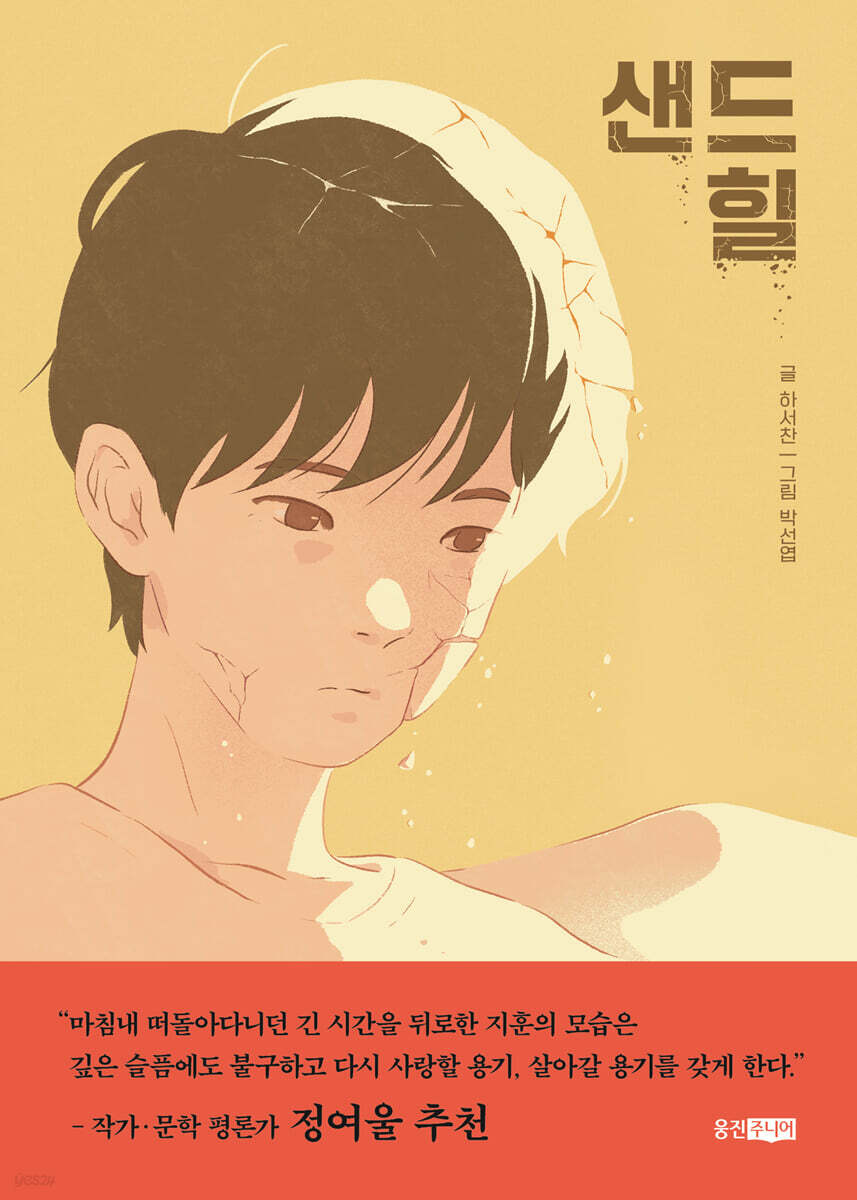
The title, 'Sandhill', contains a meaning that runs through the entire story.
Sandhill is a metaphor for 'Pungdong', a school that is the exact opposite of 'Summerhill' school in England.
Contrary to the educational philosophy of Summerhill School, which aims to be the freest and happiest school in the world, Pungdong, the school where 'Sandhill' is set, is oppressive, violent, and closed.
Author Ha Seo-chan vividly portrayed the somewhat unfamiliar subject of 'Chinese immigrant youth' based on factual research.
Even though crossing borders is no longer unfamiliar, the isolation and loneliness felt by young people has increased. Readers will be able to empathize more deeply with Ji-hoon's situation and feel solidarity and sympathy.
Beyond boundaries and taboos, the real world depicted by artist Ha Seo-chan.
Author Ha Seo-chan, who won the grand prize in the short story category of the 10th Woongjin Junior Literary Award and met readers with the children's story collection "Laundry is Boring," returns with a youth novel and speaks to those same readers again.
The title, 'Sandhill', contains a meaning that runs through the entire story.
Sandhill is a metaphor for 'Pungdong', a school that is the exact opposite of 'Summerhill' school in England.
Contrary to the educational philosophy of Summerhill School, which aims to be the freest and happiest school in the world, Pungdong, the school where 'Sandhill' is set, is oppressive, violent, and closed.
Author Ha Seo-chan vividly portrayed the somewhat unfamiliar subject of 'Chinese immigrant youth' based on factual research.
Even though crossing borders is no longer unfamiliar, the isolation and loneliness felt by young people has increased. Readers will be able to empathize more deeply with Ji-hoon's situation and feel solidarity and sympathy.
- You can preview some of the book's contents.
Preview
index
1.
Make enemies
2.
cave
3.
Rahee
4.
White snake
5.
page
6.
Red Playground
7.
Liu Wei
8.
Funeral home
9.
escape
10.
reed field
11.
To Incheon Port
12.
home
13.
letter
Author's Note
Make enemies
2.
cave
3.
Rahee
4.
White snake
5.
page
6.
Red Playground
7.
Liu Wei
8.
Funeral home
9.
escape
10.
reed field
11.
To Incheon Port
12.
home
13.
letter
Author's Note
Detailed image

Into the book
As I opened the classroom door, the old wooden door creaked and hurt my ears.
I sat down and glanced at the children's faces in the dark classroom where not a single ray of light came in.
And he took out some clay from his pocket.
Touching the dirt calmed me down a little.
He rolled the clay and made a round head.
Who should I owe today?
I examine the faces of the children in my class one by one.
Michael, who is leaving for Canada soon, Jang, whose father is a public security officer, crazy Liu Wei, and the similar-looking Yang Li and Wang Wei… … .
I looked closely at the crooked faces, the faces that were hiding something, the faces with no expression.
Let's go with Liu Wei today.
I placed a round lump of dirt on my lap and plunged the chisel into the dirt.
As the knife digs into the soil, expressions gradually emerge from within the soil.
It feels like blood is slowly flowing through my body.
If you want to meticulously sculpt each and every expression like the soldiers in the Terracotta Army, the children in the class who can observe it most closely are the best.
I imagine that the kids who bully me were my enemies in a past life.
After carving out a child like that, the hatred towards that child also fades.
---p.8~9
That was when.
A large dump truck loaded with sand appeared in front of my brother.
The dump truck came rushing towards him as if it was going to swallow him up.
The truck stopped with a sharp honk.
My brother's bike had already been swallowed.
I wonder if it would have been okay if my brother had worn bright clothes.
No, if the trucks were white, would they have been able to avoid each other?
no.
If I had been a little faster, my brother would have crossed the traffic light safely.
If only I were just a little faster.
If my brother hadn't turned around and waited for me.
Even when I was dragging my brother out, and even while he was being taken away in the ambulance, I kept mumbling those words.
The hospital was a mess.
One of the doctors yelled at me.
"What is your relationship with the patient? Student! What is your relationship with the patient?"
“Brother, younger brother.”
“Contact your guardian.
hurry!"
---p31~32
The moment I turned around with the empty trash can in my hand, I saw a girl crouching in the corner with some trash strewn about.
When I got closer, I saw that it was Rahee.
My hands were shaking.
Before I could approach and help her up, Rahee barely managed to straighten her crumpled body and get up.
Rahee fell over every time she tried to walk.
I reached out to support Rahee.
“Don’t touch!”
Rahee shook my hand away and shouted sharply.
There were other girls next to Rahee.
While I was hesitating, two girls simultaneously roughly lifted Rahee up.
Those were the 'seniors' that Rahee was talking about.
One of them put his arm around Rahee's neck.
Rahee looked back at me for a moment.
I also looked at Rahee.
Rahee said with her lips.
'go away.'
My palms were sweaty.
Rahee opened her eyes wide.
It was like a signal telling me never to come.
I wanted to get closer, but my feet wouldn't move.
---p55~56
I knelt in front of my brother and hugged his legs.
My tears fell on my brother's skinny legs.
When tears fall, a fairy tale of miracles happening comes to mind, but it is not reality.
My tears were of no use.
A faint smell of alcohol wafted from my brother's legs.
There was blood in my brother's ringer hose.
I arranged the ringer line to ensure the fluid flowed well.
After my brother's blood slowly flowed down, a clear sap began to flow.
My brother's legs were like thin tree branches.
I held my brother's leg, which seemed like it would break at any moment, and cried uselessly for a long time.
---p175~176
Rahee leaned against the cave.
I lay down with my head on Rahee's lap.
Rahee sang a lullaby to me while patting me on the back.
I feel sleepy.
I was always awake while sleeping, and awake while in a daze.
Now I'm going to really sleep.
And it will happen slowly.
I held her hand tightly, afraid that Rahee would disappear while I was sleeping.
The hands were warm.
Rahee also lay down on my back.
Rahee's hair swayed in the sunlight streaming through the cracks in the cave.
Colorful cloths poured down before my eyes.
The heavens covered Rahee and me.
I slowly closed my eyes, watching the petals fall.
I sat down and glanced at the children's faces in the dark classroom where not a single ray of light came in.
And he took out some clay from his pocket.
Touching the dirt calmed me down a little.
He rolled the clay and made a round head.
Who should I owe today?
I examine the faces of the children in my class one by one.
Michael, who is leaving for Canada soon, Jang, whose father is a public security officer, crazy Liu Wei, and the similar-looking Yang Li and Wang Wei… … .
I looked closely at the crooked faces, the faces that were hiding something, the faces with no expression.
Let's go with Liu Wei today.
I placed a round lump of dirt on my lap and plunged the chisel into the dirt.
As the knife digs into the soil, expressions gradually emerge from within the soil.
It feels like blood is slowly flowing through my body.
If you want to meticulously sculpt each and every expression like the soldiers in the Terracotta Army, the children in the class who can observe it most closely are the best.
I imagine that the kids who bully me were my enemies in a past life.
After carving out a child like that, the hatred towards that child also fades.
---p.8~9
That was when.
A large dump truck loaded with sand appeared in front of my brother.
The dump truck came rushing towards him as if it was going to swallow him up.
The truck stopped with a sharp honk.
My brother's bike had already been swallowed.
I wonder if it would have been okay if my brother had worn bright clothes.
No, if the trucks were white, would they have been able to avoid each other?
no.
If I had been a little faster, my brother would have crossed the traffic light safely.
If only I were just a little faster.
If my brother hadn't turned around and waited for me.
Even when I was dragging my brother out, and even while he was being taken away in the ambulance, I kept mumbling those words.
The hospital was a mess.
One of the doctors yelled at me.
"What is your relationship with the patient? Student! What is your relationship with the patient?"
“Brother, younger brother.”
“Contact your guardian.
hurry!"
---p31~32
The moment I turned around with the empty trash can in my hand, I saw a girl crouching in the corner with some trash strewn about.
When I got closer, I saw that it was Rahee.
My hands were shaking.
Before I could approach and help her up, Rahee barely managed to straighten her crumpled body and get up.
Rahee fell over every time she tried to walk.
I reached out to support Rahee.
“Don’t touch!”
Rahee shook my hand away and shouted sharply.
There were other girls next to Rahee.
While I was hesitating, two girls simultaneously roughly lifted Rahee up.
Those were the 'seniors' that Rahee was talking about.
One of them put his arm around Rahee's neck.
Rahee looked back at me for a moment.
I also looked at Rahee.
Rahee said with her lips.
'go away.'
My palms were sweaty.
Rahee opened her eyes wide.
It was like a signal telling me never to come.
I wanted to get closer, but my feet wouldn't move.
---p55~56
I knelt in front of my brother and hugged his legs.
My tears fell on my brother's skinny legs.
When tears fall, a fairy tale of miracles happening comes to mind, but it is not reality.
My tears were of no use.
A faint smell of alcohol wafted from my brother's legs.
There was blood in my brother's ringer hose.
I arranged the ringer line to ensure the fluid flowed well.
After my brother's blood slowly flowed down, a clear sap began to flow.
My brother's legs were like thin tree branches.
I held my brother's leg, which seemed like it would break at any moment, and cried uselessly for a long time.
---p175~176
Rahee leaned against the cave.
I lay down with my head on Rahee's lap.
Rahee sang a lullaby to me while patting me on the back.
I feel sleepy.
I was always awake while sleeping, and awake while in a daze.
Now I'm going to really sleep.
And it will happen slowly.
I held her hand tightly, afraid that Rahee would disappear while I was sleeping.
The hands were warm.
Rahee also lay down on my back.
Rahee's hair swayed in the sunlight streaming through the cracks in the cave.
Colorful cloths poured down before my eyes.
The heavens covered Rahee and me.
I slowly closed my eyes, watching the petals fall.
---p182~183
Publisher's Review
* The psychology of the character delicately created with images of dirt and sand
The first scene of "Sandhill" begins with Ji-hoon refusing to go to school, lying down in front of the school gate and clutching the dirt.
Rahee grabbed my shoulder.
I dug my nails into the dirt.
He tried to wake me up, but it was no use.
Rahee gave up quickly and fell backwards.
I saw my father's black shoes in front of me, which was clouded by the sandstorm.
_From the text
Rebellion cannot last long.
Ji-hoon is lifted lightly by his father's hand and led into a dark classroom where not a single ray of light enters.
This is a private school in China called 'Fengdong', which means 'frozen land'.
This is the name of the unfamiliar school that Ji-hoon came to with his father after his older brother, the only person he could rely on at home, lost consciousness in a car accident and his parents divorced.
Ji-hoon struggles to survive each day in a sandy, dusty land with nowhere to turn.
Ji-hoon's only escape is to shape clay into pottery dolls using the carving knife he inherited from his older brother.
Suffering from the violence of children towards strangers, Ji-hoon keeps sculpting clay.
This work reiterates the image of numerous clay soldiers from the Terracotta Army of Qin Shi Huang and the pottery dolls made by Ji-hoon, carving out Ji-hoon's psychology.
I placed a round lump of dirt on my lap and plunged the chisel into the dirt.
As the knife digs into the soil, expressions gradually emerge from within the soil.
It feels like blood is slowly flowing through my body.
If you want to meticulously sculpt each and every expression like the soldiers in the Terracotta Army, the children in the class who can observe it most closely are the best.
I imagine that the kids who bully me were my enemies in a past life.
After carving out a child like that, the hatred towards that child also fades.
_From the text
Ji-hoon appears to be cynical and compliant with violence, but he is constantly fighting a fierce battle inside through the act of shaping the earth.
In desperate situations, Ji-hoon often has visions of himself turning to sand and crumbling, or of his brother, whom he wanted to protect, turning to sand and disappearing.
Ji-Hoon's act of tightly compacting and stroking the soil is like a ritual to gather together his heart that keeps breaking apart.
* A true story of a teenager who struggles between identity and belonging.
Unlike Ji-hoon, who is not afraid of being alone, Ra-hee is a child who is anxious about being alone.
Rahee follows a group of Korean senior students and wishes to become 'strong' like them.
What is most important to Rahee is the power and authority to not be ignored even though she is a foreigner.
“Why are you so anxious because you can’t get in there?”
Rahee looked at me and said.
“You can endure it alone, but I can’t.
You and I live like this, being bullied and making clay.
Because I'm going to play with my seniors.
When I play with my seniors, I don't even blink.
As you gain confidence, your tics will disappear.
Remember those kids who bullied me a while ago? The seniors scolded them.
Now no one can squeak in front of me.
I don't know about outcasts like you, but this is what they call a sense of belonging.
okay?"
_From the text
Although they live their own lives in their own way, the commonality of being strangers enduring a 'world without trustworthy adults' is what binds Ji-hoon and Ra-hee together more than anything else.
Rahee is the only one who worries about Jihoon and talks to him even though they walk far away.
Ji-hoon doesn't understand Ra-hee's obsession with belonging, but he even steals the wallet that Ra-hee wants to have in order to fit in with the group.
Ji-hoon and Ra-hee's choices lead them into a whirlwind of unexpected events, but they still evoke compassion and empathy.
This is because the image of teenagers who are struggling with their identity and are sent to an unfamiliar land to go through the turbulent teenage years delicately reflects the adolescence that readers are going through or have already gone through.
* A narrative that runs across seasons and borders, from winter to spring.
Ji-hoon's somewhat passive resistance soon leads to an active and bold plan, fueled by his father's declaration that he will take the machine away from his brother.
With the help of his friend Zhang, who had built trust by standing up to Liu Wei, the instigator of school violence, the two agree to travel together to Dandong near the Yalu River.
The two's runaway from home was truly eventful.
Jang is tricked into buying a ticket on the black market, has his bag stolen, and is threatened by a drunken man, causing him to jump off a train and seriously injure his leg.
The worst development that rushes in without a moment to breathe immediately puts the reader next to Ji-hoon.
Adding to the captivating narrative is the allure of realistic depictions and lifelike characters.
“Where are you from?”
“What are you doing with your eyes closed?
"Do you think you're from America? Didn't you say you defected from North Korea earlier?"
“What are you doing in South Korea?”
“To study.
“Because tuition is free.”
“How are you going to get there?”
The short-haired man frowned for a moment.
“What kind of article are you writing? You’re rude when you’re getting paid for it.
I'm going from Dalian to Incheon.
Because the security is less strict than in Dandong.
“Is it okay?”
_From the text
The short-haired girl Ji-hoon met on his way to Dalian plays the song "Spring Day" in the dark truck, letting the warm spring breeze blow in.
He jumps out of the truck and runs without hesitation, as if he knows exactly where he has to go.
Did the back of his short hair serve as a fitting landmark for Ji-hoon? Korea, where his older brother still resides, is still a long way away, and he feels uncertain about the steps he takes.
Until the last page of the book is closed, readers will be asking and asking about Ji-Hoon's well-being.
And finally, you will see the work's message of hope at the end of a story that seems to be heading towards its worst.
* Beyond boundaries and taboos, the real world drawn by author Ha Seo-chan
Author Ha Seo-chan, who won the grand prize in the short story category of the 10th Woongjin Junior Literary Award and met readers with the children's story collection "Laundry is Boring," returns with a youth novel and speaks to those same readers again.
The title, 'Sandhill', contains a meaning that runs through the entire story.
Sandhill is a metaphor for 'Pungdong', a school that is the exact opposite of 'Summerhill' school in England.
Contrary to the educational philosophy of Summerhill School, which aims to be the freest and happiest school in the world, Pungdong, the school where 'Sandhill' is set, is oppressive, violent, and closed.
Author Ha Seo-chan vividly portrayed the somewhat unfamiliar subject of 'Chinese immigrant youth' based on factual research.
Even though crossing borders is no longer unfamiliar, the isolation and loneliness felt by young people has increased. Readers will be able to empathize more deeply with Ji-hoon's situation and feel solidarity and sympathy.
The first scene of "Sandhill" begins with Ji-hoon refusing to go to school, lying down in front of the school gate and clutching the dirt.
Rahee grabbed my shoulder.
I dug my nails into the dirt.
He tried to wake me up, but it was no use.
Rahee gave up quickly and fell backwards.
I saw my father's black shoes in front of me, which was clouded by the sandstorm.
_From the text
Rebellion cannot last long.
Ji-hoon is lifted lightly by his father's hand and led into a dark classroom where not a single ray of light enters.
This is a private school in China called 'Fengdong', which means 'frozen land'.
This is the name of the unfamiliar school that Ji-hoon came to with his father after his older brother, the only person he could rely on at home, lost consciousness in a car accident and his parents divorced.
Ji-hoon struggles to survive each day in a sandy, dusty land with nowhere to turn.
Ji-hoon's only escape is to shape clay into pottery dolls using the carving knife he inherited from his older brother.
Suffering from the violence of children towards strangers, Ji-hoon keeps sculpting clay.
This work reiterates the image of numerous clay soldiers from the Terracotta Army of Qin Shi Huang and the pottery dolls made by Ji-hoon, carving out Ji-hoon's psychology.
I placed a round lump of dirt on my lap and plunged the chisel into the dirt.
As the knife digs into the soil, expressions gradually emerge from within the soil.
It feels like blood is slowly flowing through my body.
If you want to meticulously sculpt each and every expression like the soldiers in the Terracotta Army, the children in the class who can observe it most closely are the best.
I imagine that the kids who bully me were my enemies in a past life.
After carving out a child like that, the hatred towards that child also fades.
_From the text
Ji-hoon appears to be cynical and compliant with violence, but he is constantly fighting a fierce battle inside through the act of shaping the earth.
In desperate situations, Ji-hoon often has visions of himself turning to sand and crumbling, or of his brother, whom he wanted to protect, turning to sand and disappearing.
Ji-Hoon's act of tightly compacting and stroking the soil is like a ritual to gather together his heart that keeps breaking apart.
* A true story of a teenager who struggles between identity and belonging.
Unlike Ji-hoon, who is not afraid of being alone, Ra-hee is a child who is anxious about being alone.
Rahee follows a group of Korean senior students and wishes to become 'strong' like them.
What is most important to Rahee is the power and authority to not be ignored even though she is a foreigner.
“Why are you so anxious because you can’t get in there?”
Rahee looked at me and said.
“You can endure it alone, but I can’t.
You and I live like this, being bullied and making clay.
Because I'm going to play with my seniors.
When I play with my seniors, I don't even blink.
As you gain confidence, your tics will disappear.
Remember those kids who bullied me a while ago? The seniors scolded them.
Now no one can squeak in front of me.
I don't know about outcasts like you, but this is what they call a sense of belonging.
okay?"
_From the text
Although they live their own lives in their own way, the commonality of being strangers enduring a 'world without trustworthy adults' is what binds Ji-hoon and Ra-hee together more than anything else.
Rahee is the only one who worries about Jihoon and talks to him even though they walk far away.
Ji-hoon doesn't understand Ra-hee's obsession with belonging, but he even steals the wallet that Ra-hee wants to have in order to fit in with the group.
Ji-hoon and Ra-hee's choices lead them into a whirlwind of unexpected events, but they still evoke compassion and empathy.
This is because the image of teenagers who are struggling with their identity and are sent to an unfamiliar land to go through the turbulent teenage years delicately reflects the adolescence that readers are going through or have already gone through.
* A narrative that runs across seasons and borders, from winter to spring.
Ji-hoon's somewhat passive resistance soon leads to an active and bold plan, fueled by his father's declaration that he will take the machine away from his brother.
With the help of his friend Zhang, who had built trust by standing up to Liu Wei, the instigator of school violence, the two agree to travel together to Dandong near the Yalu River.
The two's runaway from home was truly eventful.
Jang is tricked into buying a ticket on the black market, has his bag stolen, and is threatened by a drunken man, causing him to jump off a train and seriously injure his leg.
The worst development that rushes in without a moment to breathe immediately puts the reader next to Ji-hoon.
Adding to the captivating narrative is the allure of realistic depictions and lifelike characters.
“Where are you from?”
“What are you doing with your eyes closed?
"Do you think you're from America? Didn't you say you defected from North Korea earlier?"
“What are you doing in South Korea?”
“To study.
“Because tuition is free.”
“How are you going to get there?”
The short-haired man frowned for a moment.
“What kind of article are you writing? You’re rude when you’re getting paid for it.
I'm going from Dalian to Incheon.
Because the security is less strict than in Dandong.
“Is it okay?”
_From the text
The short-haired girl Ji-hoon met on his way to Dalian plays the song "Spring Day" in the dark truck, letting the warm spring breeze blow in.
He jumps out of the truck and runs without hesitation, as if he knows exactly where he has to go.
Did the back of his short hair serve as a fitting landmark for Ji-hoon? Korea, where his older brother still resides, is still a long way away, and he feels uncertain about the steps he takes.
Until the last page of the book is closed, readers will be asking and asking about Ji-Hoon's well-being.
And finally, you will see the work's message of hope at the end of a story that seems to be heading towards its worst.
* Beyond boundaries and taboos, the real world drawn by author Ha Seo-chan
Author Ha Seo-chan, who won the grand prize in the short story category of the 10th Woongjin Junior Literary Award and met readers with the children's story collection "Laundry is Boring," returns with a youth novel and speaks to those same readers again.
The title, 'Sandhill', contains a meaning that runs through the entire story.
Sandhill is a metaphor for 'Pungdong', a school that is the exact opposite of 'Summerhill' school in England.
Contrary to the educational philosophy of Summerhill School, which aims to be the freest and happiest school in the world, Pungdong, the school where 'Sandhill' is set, is oppressive, violent, and closed.
Author Ha Seo-chan vividly portrayed the somewhat unfamiliar subject of 'Chinese immigrant youth' based on factual research.
Even though crossing borders is no longer unfamiliar, the isolation and loneliness felt by young people has increased. Readers will be able to empathize more deeply with Ji-hoon's situation and feel solidarity and sympathy.
GOODS SPECIFICS
- Date of issue: April 21, 2025
- Page count, weight, size: 192 pages | 592g | 150*210*20mm
- ISBN13: 9788901293912
- ISBN10: 8901293919
You may also like
카테고리
korean


korean

![GQ KOREA Mark (Monthly): December [2025]](http://librairie.coreenne.fr/cdn/shop/files/8ef265dbbfbf186523ed75ba7319009d.jpg?v=1765340328&width=3840)


