

Kenya as it is
 |
Description
Book Introduction
How much do you know about Kenya, the heart of East Africa?
A land where people, nature, history and culture come together,
Let's take a deeper look into Kenya.
Kenya, known only as a safari country and a wildlife paradise.
But animals roaming the grasslands and picture-perfect nature aren't all there is to this country.
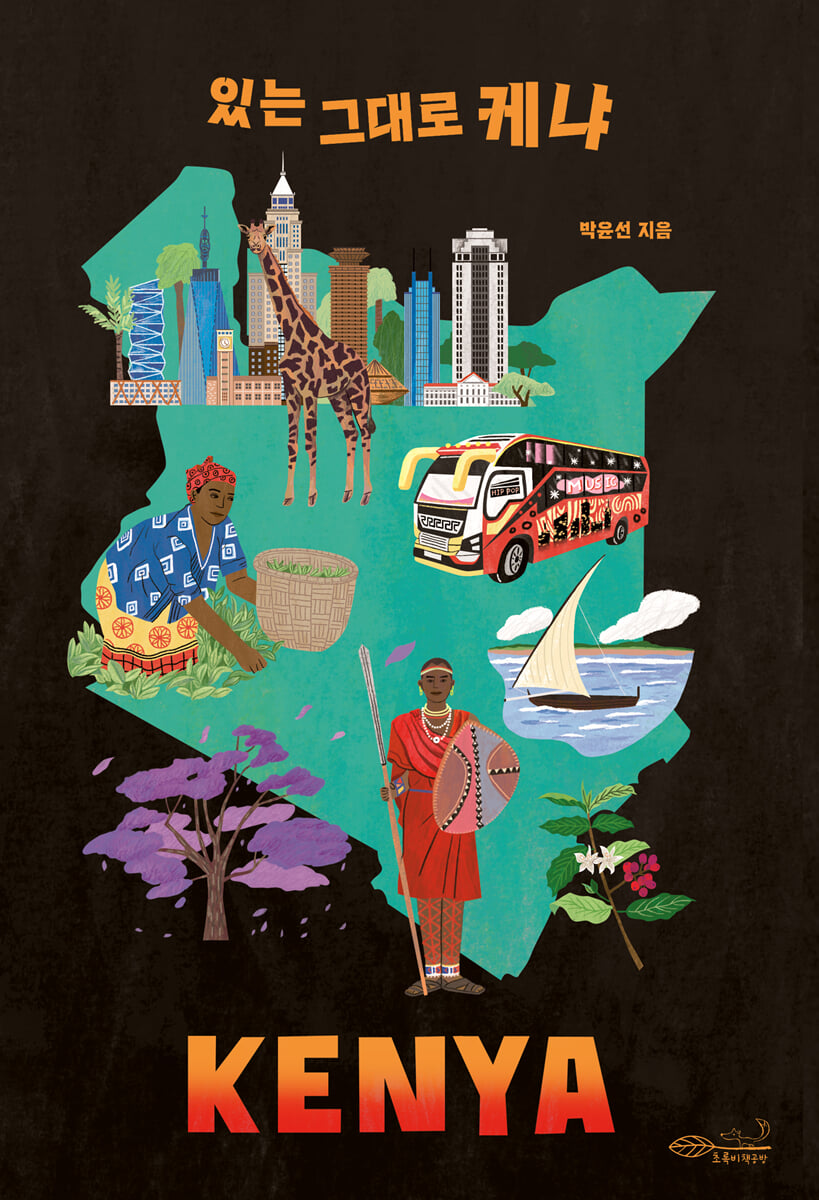
From Nairobi's skyline, which has grown into a cutting-edge financial hub, to its vibrant and diverse street culture, and the unique community life created by dozens of ethnic groups.
Kenya is much wider and deeper than we think.
Historically, Kenya has experienced numerous changes and challenges.
Kenya, which has gone through colonial rule, independence movements, and rapid modernization, is similar to Korea yet different, distant yet surprisingly close.
This book takes a multi-faceted look at the country of Kenya.
It gradually unravels the elements that make up Kenya's present, including geography and climate, history and politics, ethnicity and culture, and the rapidly growing economy and social changes.
In particular, it contains unique stories of Kenya, including Swahili culture, Maasai traditions, flower, tea, and coffee industries, and the world-class mobile financial service 'M-Pesa'.
The author conveys the vivid and colorful image of Kenya based on his own experiences living in Kenya for the past ten years.
For readers unfamiliar with Kenya, this will be a completely new discovery, while for those who feel familiar with it, it will offer a deeper and richer understanding.
A land where people, nature, history and culture come together,
Let's take a deeper look into Kenya.
Kenya, known only as a safari country and a wildlife paradise.
But animals roaming the grasslands and picture-perfect nature aren't all there is to this country.
From Nairobi's skyline, which has grown into a cutting-edge financial hub, to its vibrant and diverse street culture, and the unique community life created by dozens of ethnic groups.
Kenya is much wider and deeper than we think.
Historically, Kenya has experienced numerous changes and challenges.
Kenya, which has gone through colonial rule, independence movements, and rapid modernization, is similar to Korea yet different, distant yet surprisingly close.
This book takes a multi-faceted look at the country of Kenya.
It gradually unravels the elements that make up Kenya's present, including geography and climate, history and politics, ethnicity and culture, and the rapidly growing economy and social changes.
In particular, it contains unique stories of Kenya, including Swahili culture, Maasai traditions, flower, tea, and coffee industries, and the world-class mobile financial service 'M-Pesa'.
The author conveys the vivid and colorful image of Kenya based on his own experiences living in Kenya for the past ten years.
For readers unfamiliar with Kenya, this will be a completely new discovery, while for those who feel familiar with it, it will offer a deeper and richer understanding.
- You can preview some of the book's contents.
Preview
index
Prologue: A Land of Opportunity I Always Wanted to Live in
Kenya through quizzes
Part 1: Habari Yakko! Kenya
East Africa's economic, political, and cultural center
A young and dynamic country
Africa's leading fintech powerhouse
Colorful natural environment and climate
Symbols of Kenya
Kenya's capital and major cities
A diverse country created by 42 ethnic groups
Part 2: The Ins and Outs of Kenyans
Kenyans with leisure and smiles
The best education system in Africa
Youth unemployment and the daily lives of ordinary people
Kenya's Currency and Economy
Every Kenyan has a religion of their choice.
People who love marathons and soccer
Kenya Leads the World in Eco-Friendly Energy
China's Belt and Road Initiative and Kenya's Infrastructure Development
Kibera Slum, Africa's largest slum
Part 3: Kenya through History
Where did the first humans live?
The great migration of ancient tribes in search of fertile lands
East Africa: A History of External Powers and Maritime Trade
British colonial rule and division in Kenya
Will for independence
Political development after Kenya's independence and establishment
Kenya in the World
Part 4: Kenya through Culture
Swahili culture
Kenyan family culture
Experience life through dance and music
A collaboration between traditional and contemporary music
Kenyan food culture
Should I drink coffee or tea?
Art blooming on the road: Kenya's traffic culture
Colorful handicrafts fill the Masai market
Part 5: If you go here, you will see Kenya.
Safari in the Savannah Animal Kingdom
A place where you can see all of Kenya's history
A place that inspires artists
Epilogue? Who knew I'd love Kenya this much?
References and Photo Sources
Kenya through quizzes
Part 1: Habari Yakko! Kenya
East Africa's economic, political, and cultural center
A young and dynamic country
Africa's leading fintech powerhouse
Colorful natural environment and climate
Symbols of Kenya
Kenya's capital and major cities
A diverse country created by 42 ethnic groups
Part 2: The Ins and Outs of Kenyans
Kenyans with leisure and smiles
The best education system in Africa
Youth unemployment and the daily lives of ordinary people
Kenya's Currency and Economy
Every Kenyan has a religion of their choice.
People who love marathons and soccer
Kenya Leads the World in Eco-Friendly Energy
China's Belt and Road Initiative and Kenya's Infrastructure Development
Kibera Slum, Africa's largest slum
Part 3: Kenya through History
Where did the first humans live?
The great migration of ancient tribes in search of fertile lands
East Africa: A History of External Powers and Maritime Trade
British colonial rule and division in Kenya
Will for independence
Political development after Kenya's independence and establishment
Kenya in the World
Part 4: Kenya through Culture
Swahili culture
Kenyan family culture
Experience life through dance and music
A collaboration between traditional and contemporary music
Kenyan food culture
Should I drink coffee or tea?
Art blooming on the road: Kenya's traffic culture
Colorful handicrafts fill the Masai market
Part 5: If you go here, you will see Kenya.
Safari in the Savannah Animal Kingdom
A place where you can see all of Kenya's history
A place that inspires artists
Epilogue? Who knew I'd love Kenya this much?
References and Photo Sources
Into the book
Kenya's high birth rate doesn't just mean population growth.
Economically, an abundant young workforce will drive future industrial growth, and as the population grows, the domestic market expands, increasing demand for goods and services and stimulating corporate activity.
Socially, diverse generations coexist, strengthening community awareness and promoting investment and innovation in social services such as education and health.
Additionally, as the number of young talents increases, the possibility of new changes occurring in the fields of culture, entrepreneurship, and information and communications increases.
Environmentally, efforts to manage resources and adopt eco-friendly technologies to accommodate a growing population are expanding, providing an impetus for sustainable development.
The Kenyan teenagers and young people I met and interacted with in their twenties had a strong will to live and a desire to learn, rather than complaining, even in difficult circumstances.
They overcame difficulties with a smile and the spirit of 'Hakuna Matata', a positive mindset unique to Kenya, and they had warm hearts willing to share and help their struggling neighbors.
They were also people who knew how to enjoy the present by dancing along whenever they heard music.
So I am confident that Kenya's future, led by these young people, will be much brighter and more dynamic than it is now.
This is why we look forward to Kenya in 10 or 20 years.
--- p.29~30
Kenya's robust mobile communications infrastructure plays a vital role in the proliferation of fintech services.
As mobile financial access becomes easier, a variety of fintech startups, in addition to Safaricom, are emerging in Kenya, providing efficient financial services.
Representative startups include Branch, Tala, and Copocopo.
They provide innovative solutions in a variety of areas, including microloans, digital payments, and accounting services for small businesses.
I run a coffee business in Kenya and use the Kopokopo service to accept mobile payments from my customers.
This service is integrated with online, offline, and mobile apps, allowing users to check payment details in real time, provide period-based statistics, and support remittance and payment services to individuals and institutions.
Thanks to its easy and simple usage, anyone can use it without any special training, and its customer service is also well-organized, making it comparable to other payment services in advanced countries.
While utilizing such cutting-edge technology in Africa may seem somewhat unfamiliar to Koreans, Kenya's fintech industry is actually developing beyond imagination.
--- p..34~35
To address youth unemployment, the Kenyan government is promoting technical education over university entrance. TVET centers are institutions that train intermediate-skilled workers needed for industrialization and technological advancement, helping students acquire practical skills and enter the workforce immediately after graduation.
Kenya currently has over 2,400 accredited TVET institutions, offering training in a wide range of fields, including agriculture, baking, food and beverage services, carpentry, welding, fabrication, plumbing, masonry, plant operations, automotive, and electrical engineering.
The government aims to use this technical training to increase employability, address youth unemployment, and foster long-term growth in the industrial and technological sectors.
--- p..80~81
Did you know that Kenya is attracting attention not only in Africa but also globally in the area of eco-friendly energy? Leveraging its geographical advantages and abundant natural resources, Kenya is developing and utilizing various renewable energy sources, including geothermal, wind, and solar energy.
The development of such eco-friendly energy plays an important role not only in economic growth but also in environmental protection and carbon emissions reduction.
Kenya is known as one of the world's largest users of geothermal energy.
In the past, Kenya relied on fossil fuels such as hydropower, oil, and natural gas to generate electricity, but urbanization and rapidly increasing demand for electricity have led to chronic power shortages.
During this process, geothermal power generation began in earnest, and currently, about 40% of Kenya's electricity is generated from geothermal energy.
--- p..98~99
The region of present-day East Africa, namely Kenya, Ethiopia, and Tanzania, is a very important region for understanding the origins and early evolution of mankind.
Many traces of early humans have been found here, and it is often called the 'cradle of humanity'.
(…) In 1984, a complete human fossil, estimated to be about 1.6 million years old, was discovered in the Lake Turkana region of Kenya.
The remains, dubbed the 'Turkana Boy', belonged to Homo erectus, a species that used fire and made complex tools.
Kenya has more human fossils than any other African country, with numerous prehistoric sites scattered throughout the Great Rift Valley and western Kenya.
The National Museum of Kenya currently houses over 350,000 fossils, more than 700 of which are known to be from ancient humans.
These artifacts demonstrate that Kenya is a key region for studying human origins.
--- p..123~125
Whether times are good, difficult, or sad, music and dance are always present in the lives of Kenyans.
In Kenya, a country of 42 ethnic groups, traditional music and dance are symbols of culture and art, passed down through generations in the form of worship, ritual, and entertainment.
Whether celebrating the coming of age of a child, the start of a farm, a successful hunt, or victory in war, dance and music have always been a part of Kenyan life.
Traditional music, which has been passed down orally for a long time, is composed of simple repetitions of notes and rhythms, and is often sung by a leader and everyone else follows suit.
As several people repeat the same phrase to the sound of African drums that resonate with the soul, the excitement gradually builds and the shoulders and hips naturally move.
--- p..183~184
Kenya is home to over 300,000 'moving art installations' every day.
This refers to a bus, a matatu, covered in graffiti.
Matatu are privately owned buses that first operated in Nairobi in the early 1960s. The word 'matatu' means 'set' (tattoo) in the Gikuyu language.
The name comes from the fact that at the time the fare was 30 cents and three 10 cent coins were used.
Influenced by 1980s hip-hop culture, the matatu became a giant canvas for artists to express themselves.
When Germany won the World Cup, a matatu with the team's logo and players on it appeared, and when Barack Obama was elected President of the United States, a matatu covered with his face raced down the road.
It is even common to see matatus engraved with verses from the Bible or the Quran.
(…) “Every Kenyan has his or her own matatu story.”
As the saying goes, matatu is deeply ingrained in the lives of Kenyans.
Matatu, which colors the city with vibrant colors and rhythms, has become more than just a means of transportation; it has become a symbol of Kenyan culture and an important medium connecting people.
--- p..204~206
Remember the savannah landscape from Disney's animated film "The Lion King"? About 30 years ago, the production team explored various regions of Africa for the film's backdrop and arrived at Hell's Gate in Kenya.
The landscape of Hell's Gate, with its massive cliffs, deep canyons, and towering rock formations carved by a prehistoric lake, was soon adopted as the backdrop for the Pride Lands.
The grasslands and Pride Rock where Simba played in the movie were modeled after this place.
Discovered by explorers in 1883, Hell's Gate, despite its name, "Hell's Gate," is a mysterious and beautiful natural treasure.
The majestic landscape is created by the combination of massive cliffs, canyons, and volcanic terrain, while the ever-rising sulfurous smoke adds to the mystical atmosphere.
There are few predators like lions or leopards here, so you can safely explore the park by foot or bicycle.
You can feel a sense of peace and unity with nature as you watch various herbivores such as Thomson's gazelles, zebras, and antelopes peacefully grazing.
Economically, an abundant young workforce will drive future industrial growth, and as the population grows, the domestic market expands, increasing demand for goods and services and stimulating corporate activity.
Socially, diverse generations coexist, strengthening community awareness and promoting investment and innovation in social services such as education and health.
Additionally, as the number of young talents increases, the possibility of new changes occurring in the fields of culture, entrepreneurship, and information and communications increases.
Environmentally, efforts to manage resources and adopt eco-friendly technologies to accommodate a growing population are expanding, providing an impetus for sustainable development.
The Kenyan teenagers and young people I met and interacted with in their twenties had a strong will to live and a desire to learn, rather than complaining, even in difficult circumstances.
They overcame difficulties with a smile and the spirit of 'Hakuna Matata', a positive mindset unique to Kenya, and they had warm hearts willing to share and help their struggling neighbors.
They were also people who knew how to enjoy the present by dancing along whenever they heard music.
So I am confident that Kenya's future, led by these young people, will be much brighter and more dynamic than it is now.
This is why we look forward to Kenya in 10 or 20 years.
--- p.29~30
Kenya's robust mobile communications infrastructure plays a vital role in the proliferation of fintech services.
As mobile financial access becomes easier, a variety of fintech startups, in addition to Safaricom, are emerging in Kenya, providing efficient financial services.
Representative startups include Branch, Tala, and Copocopo.
They provide innovative solutions in a variety of areas, including microloans, digital payments, and accounting services for small businesses.
I run a coffee business in Kenya and use the Kopokopo service to accept mobile payments from my customers.
This service is integrated with online, offline, and mobile apps, allowing users to check payment details in real time, provide period-based statistics, and support remittance and payment services to individuals and institutions.
Thanks to its easy and simple usage, anyone can use it without any special training, and its customer service is also well-organized, making it comparable to other payment services in advanced countries.
While utilizing such cutting-edge technology in Africa may seem somewhat unfamiliar to Koreans, Kenya's fintech industry is actually developing beyond imagination.
--- p..34~35
To address youth unemployment, the Kenyan government is promoting technical education over university entrance. TVET centers are institutions that train intermediate-skilled workers needed for industrialization and technological advancement, helping students acquire practical skills and enter the workforce immediately after graduation.
Kenya currently has over 2,400 accredited TVET institutions, offering training in a wide range of fields, including agriculture, baking, food and beverage services, carpentry, welding, fabrication, plumbing, masonry, plant operations, automotive, and electrical engineering.
The government aims to use this technical training to increase employability, address youth unemployment, and foster long-term growth in the industrial and technological sectors.
--- p..80~81
Did you know that Kenya is attracting attention not only in Africa but also globally in the area of eco-friendly energy? Leveraging its geographical advantages and abundant natural resources, Kenya is developing and utilizing various renewable energy sources, including geothermal, wind, and solar energy.
The development of such eco-friendly energy plays an important role not only in economic growth but also in environmental protection and carbon emissions reduction.
Kenya is known as one of the world's largest users of geothermal energy.
In the past, Kenya relied on fossil fuels such as hydropower, oil, and natural gas to generate electricity, but urbanization and rapidly increasing demand for electricity have led to chronic power shortages.
During this process, geothermal power generation began in earnest, and currently, about 40% of Kenya's electricity is generated from geothermal energy.
--- p..98~99
The region of present-day East Africa, namely Kenya, Ethiopia, and Tanzania, is a very important region for understanding the origins and early evolution of mankind.
Many traces of early humans have been found here, and it is often called the 'cradle of humanity'.
(…) In 1984, a complete human fossil, estimated to be about 1.6 million years old, was discovered in the Lake Turkana region of Kenya.
The remains, dubbed the 'Turkana Boy', belonged to Homo erectus, a species that used fire and made complex tools.
Kenya has more human fossils than any other African country, with numerous prehistoric sites scattered throughout the Great Rift Valley and western Kenya.
The National Museum of Kenya currently houses over 350,000 fossils, more than 700 of which are known to be from ancient humans.
These artifacts demonstrate that Kenya is a key region for studying human origins.
--- p..123~125
Whether times are good, difficult, or sad, music and dance are always present in the lives of Kenyans.
In Kenya, a country of 42 ethnic groups, traditional music and dance are symbols of culture and art, passed down through generations in the form of worship, ritual, and entertainment.
Whether celebrating the coming of age of a child, the start of a farm, a successful hunt, or victory in war, dance and music have always been a part of Kenyan life.
Traditional music, which has been passed down orally for a long time, is composed of simple repetitions of notes and rhythms, and is often sung by a leader and everyone else follows suit.
As several people repeat the same phrase to the sound of African drums that resonate with the soul, the excitement gradually builds and the shoulders and hips naturally move.
--- p..183~184
Kenya is home to over 300,000 'moving art installations' every day.
This refers to a bus, a matatu, covered in graffiti.
Matatu are privately owned buses that first operated in Nairobi in the early 1960s. The word 'matatu' means 'set' (tattoo) in the Gikuyu language.
The name comes from the fact that at the time the fare was 30 cents and three 10 cent coins were used.
Influenced by 1980s hip-hop culture, the matatu became a giant canvas for artists to express themselves.
When Germany won the World Cup, a matatu with the team's logo and players on it appeared, and when Barack Obama was elected President of the United States, a matatu covered with his face raced down the road.
It is even common to see matatus engraved with verses from the Bible or the Quran.
(…) “Every Kenyan has his or her own matatu story.”
As the saying goes, matatu is deeply ingrained in the lives of Kenyans.
Matatu, which colors the city with vibrant colors and rhythms, has become more than just a means of transportation; it has become a symbol of Kenyan culture and an important medium connecting people.
--- p..204~206
Remember the savannah landscape from Disney's animated film "The Lion King"? About 30 years ago, the production team explored various regions of Africa for the film's backdrop and arrived at Hell's Gate in Kenya.
The landscape of Hell's Gate, with its massive cliffs, deep canyons, and towering rock formations carved by a prehistoric lake, was soon adopted as the backdrop for the Pride Lands.
The grasslands and Pride Rock where Simba played in the movie were modeled after this place.
Discovered by explorers in 1883, Hell's Gate, despite its name, "Hell's Gate," is a mysterious and beautiful natural treasure.
The majestic landscape is created by the combination of massive cliffs, canyons, and volcanic terrain, while the ever-rising sulfurous smoke adds to the mystical atmosphere.
There are few predators like lions or leopards here, so you can safely explore the park by foot or bicycle.
You can feel a sense of peace and unity with nature as you watch various herbivores such as Thomson's gazelles, zebras, and antelopes peacefully grazing.
--- p..228~230
Publisher's Review
If all you think of is 'Animal Kingdom', you don't know Kenya yet.
The true face of Kenya, the heart of East Africa where technology, finance, energy, and culture meet.
When we think of Kenya, we often think of it as a 'wildlife paradise', a 'poor African country', or a 'politically unstable country'.
But this is only a small part of the country called Kenya.
The real Kenya is completely different from what we imagine.
Mobile financial services like Kakao Pay, Naver Pay, and Toss Pay have become commonplace, but just over a decade ago, Korea was a wasteland for mobile finance.
At this time, Korean companies visited Kenya to benchmark future financial models.
Kenya is the birthplace of Safaricom, a mobile telecommunications company that provides a mobile money transfer service that is far more advanced than ours, and M-Pesa, the world's most innovative mobile payment system.
Kenya is a business hub with the African headquarters of multinational corporations and international organizations, and a gateway to East African logistics where air and rail connections intersect.
Additionally, as a key country in the African Union (AU) and the East African Community (EAC), it plays an important role in leading regional peace and economic cooperation.
Recently, Africa has emerged as an eco-friendly energy powerhouse, attracting attention not only from Africa but also from around the world in the fields of renewable energy such as geothermal, wind, and solar energy.
A country building a sustainable future based on its abundant natural resources and geographical advantages - this is the true face of Kenya that we didn't know about.
Kenya's identity and national character created by diverse ethnicities and traditions
Become the foundation for future development
Kenya is a multi-ethnic society with over 40 ethnic groups living together.
Although Kenyans have different languages and cultures, the values of community and respect for elders are deeply rooted throughout Kenyan society.
What's interesting is that you can easily find similarities to Korea throughout Kenya.
A family-centered lifestyle, a high level of educational enthusiasm, and a culture that values community are not unfamiliar to Koreans.
Kenya's national spirit, 'Harambee' (togetherness), brings to mind the culture of 'jeong' and 'mutual aid' in Korean society.
The tradition of villagers coming together to help out during events such as weddings and funerals is similar to Korea's durena and gye culture.
Kenya's art, music and oral culture embody the unique traditions of each ethnic group.
Dance, ornaments, ritual culture, and even storytelling traditions passed down from generation to generation play a vital role in preserving the history and wisdom of a community.
Above all, Kenyans are hard-working, positive, and dedicated to their community even in difficult times.
This resembles Korea's industrial growth period and will be a key driving force for Kenya's future economic growth.
A country that cultivates its future based on the potential created by nature.
A book that introduces Kenya as a living textbook, not just a travel destination.
Kenya still has challenges to overcome, but its greatest asset is undoubtedly its nature.
Kenya's unique geography, year-round mild climate, and diverse ecosystems, created by the East African Rift Valley, form a solid foundation for Kenya's present and future.
This natural environment opens up new possibilities not only in tourism but also in various sectors such as agriculture, renewable energy, and ecological conservation, and serves as a driving force for Kenya's dynamic growth.
This book offers a way to understand Kenya not just as a travel destination, but as a complex and vibrant nation with a rich history, culture, society, and economy.
Through rich photography, vivid stories, cultural elements, and thought-provoking questions, readers will gain a deeper understanding of Kenya's allure.
Recommended for anyone planning to travel to Kenya, as well as those planning to live or work there, readers preparing to engage with and do business with Kenya, and youth and educators interested in multicultural education and global citizenship education.
*** This book is designed to be used in cultural studies classes, and includes follow-up activity sheets with topics and questions related to various topics.
What is my first multicultural class series?
Today, as we live with people from all over the world, understanding cultural diversity is more important than ever.
'My First Multicultural Class Series' is a series that tells the stories of countries around the world that young people should know about, not just the countries they have only heard of, in an easy and interesting way that is tailored to the perspective of young people.
This series is designed to foster cultural diversity and an open-minded perspective, and to help develop a broader perspective on the world.
The true face of Kenya, the heart of East Africa where technology, finance, energy, and culture meet.
When we think of Kenya, we often think of it as a 'wildlife paradise', a 'poor African country', or a 'politically unstable country'.
But this is only a small part of the country called Kenya.
The real Kenya is completely different from what we imagine.
Mobile financial services like Kakao Pay, Naver Pay, and Toss Pay have become commonplace, but just over a decade ago, Korea was a wasteland for mobile finance.
At this time, Korean companies visited Kenya to benchmark future financial models.
Kenya is the birthplace of Safaricom, a mobile telecommunications company that provides a mobile money transfer service that is far more advanced than ours, and M-Pesa, the world's most innovative mobile payment system.
Kenya is a business hub with the African headquarters of multinational corporations and international organizations, and a gateway to East African logistics where air and rail connections intersect.
Additionally, as a key country in the African Union (AU) and the East African Community (EAC), it plays an important role in leading regional peace and economic cooperation.
Recently, Africa has emerged as an eco-friendly energy powerhouse, attracting attention not only from Africa but also from around the world in the fields of renewable energy such as geothermal, wind, and solar energy.
A country building a sustainable future based on its abundant natural resources and geographical advantages - this is the true face of Kenya that we didn't know about.
Kenya's identity and national character created by diverse ethnicities and traditions
Become the foundation for future development
Kenya is a multi-ethnic society with over 40 ethnic groups living together.
Although Kenyans have different languages and cultures, the values of community and respect for elders are deeply rooted throughout Kenyan society.
What's interesting is that you can easily find similarities to Korea throughout Kenya.
A family-centered lifestyle, a high level of educational enthusiasm, and a culture that values community are not unfamiliar to Koreans.
Kenya's national spirit, 'Harambee' (togetherness), brings to mind the culture of 'jeong' and 'mutual aid' in Korean society.
The tradition of villagers coming together to help out during events such as weddings and funerals is similar to Korea's durena and gye culture.
Kenya's art, music and oral culture embody the unique traditions of each ethnic group.
Dance, ornaments, ritual culture, and even storytelling traditions passed down from generation to generation play a vital role in preserving the history and wisdom of a community.
Above all, Kenyans are hard-working, positive, and dedicated to their community even in difficult times.
This resembles Korea's industrial growth period and will be a key driving force for Kenya's future economic growth.
A country that cultivates its future based on the potential created by nature.
A book that introduces Kenya as a living textbook, not just a travel destination.
Kenya still has challenges to overcome, but its greatest asset is undoubtedly its nature.
Kenya's unique geography, year-round mild climate, and diverse ecosystems, created by the East African Rift Valley, form a solid foundation for Kenya's present and future.
This natural environment opens up new possibilities not only in tourism but also in various sectors such as agriculture, renewable energy, and ecological conservation, and serves as a driving force for Kenya's dynamic growth.
This book offers a way to understand Kenya not just as a travel destination, but as a complex and vibrant nation with a rich history, culture, society, and economy.
Through rich photography, vivid stories, cultural elements, and thought-provoking questions, readers will gain a deeper understanding of Kenya's allure.
Recommended for anyone planning to travel to Kenya, as well as those planning to live or work there, readers preparing to engage with and do business with Kenya, and youth and educators interested in multicultural education and global citizenship education.
*** This book is designed to be used in cultural studies classes, and includes follow-up activity sheets with topics and questions related to various topics.
What is my first multicultural class series?
Today, as we live with people from all over the world, understanding cultural diversity is more important than ever.
'My First Multicultural Class Series' is a series that tells the stories of countries around the world that young people should know about, not just the countries they have only heard of, in an easy and interesting way that is tailored to the perspective of young people.
This series is designed to foster cultural diversity and an open-minded perspective, and to help develop a broader perspective on the world.
GOODS SPECIFICS
- Date of issue: December 10, 2025
- Page count, weight, size: 238 pages | 140*205*20mm
- ISBN13: 9791124126011
- ISBN10: 1124126015
You may also like
카테고리
korean


korean

![GQ KOREA Mark (Monthly): December [2025]](http://librairie.coreenne.fr/cdn/shop/files/8ef265dbbfbf186523ed75ba7319009d.jpg?v=1765340328&width=3840)


