

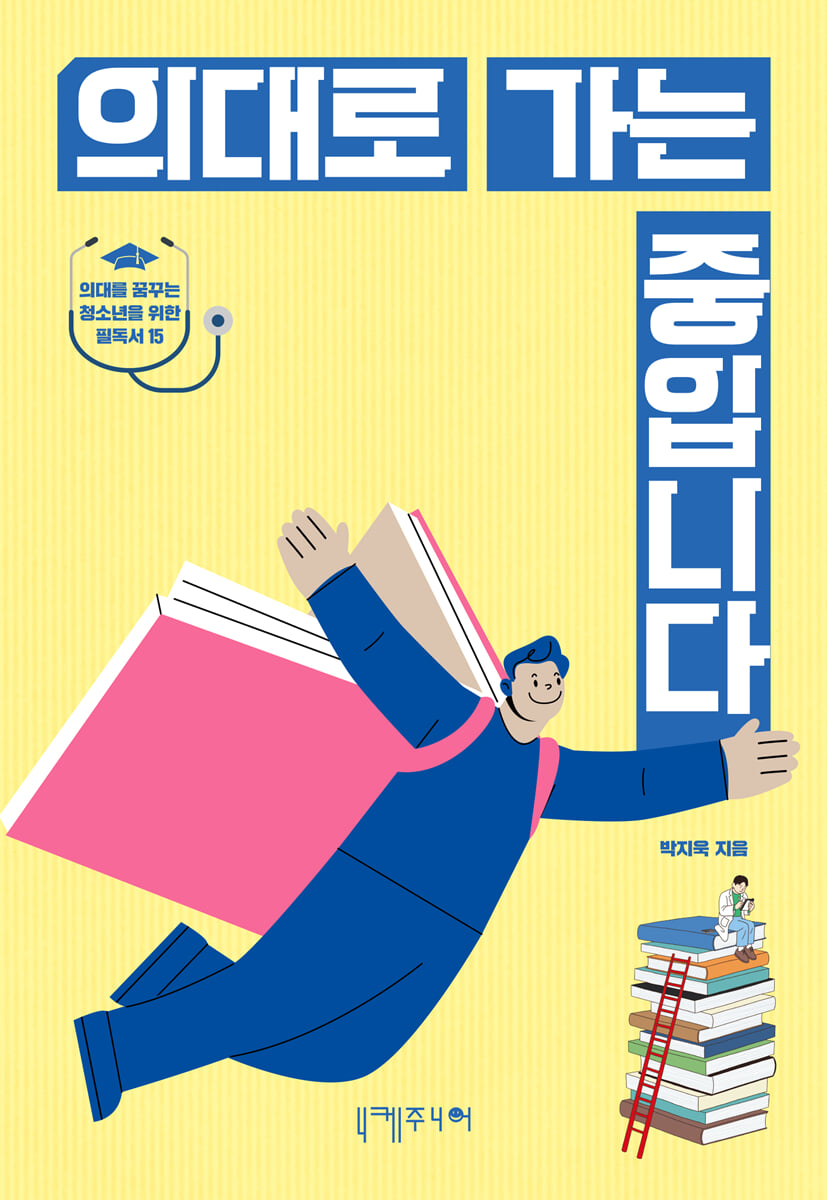
I'm on my way to medical school.
 |
Description
Book Introduction
A neurologist who loves reading books
15 Life Books Recommended for Young People Dreaming of Medical School!
This is a kind of meta-book that introduces 15 books recommended by a neurologist who loves books to young people who dream of going to medical school.
The author, a book addict who dreamed of becoming a historian or geographer, somehow entered medical school, but grew distant from books, reading only boring medical books. However, he returned to the library when he was appointed as a public health doctor in Jeju Island.
So, I read a wide range of books, not only on medicine, but also on humanities, mythology, literature, art, and philosophy related to medicine.
As a result, I was able to acquire a wealth of background knowledge in medicine and became an author who published several books.
The books selected in "On the Way to Medical School" are relatively recently published, easy to read, contain medical and scientific knowledge, make you think about the role and attitude of a doctor, and, above all, are interesting and easy for young people to read.
This book, which introduces 15 books on medicine and includes the author's own experience as a doctor, is intended as a career guide for teenagers, but it is also interesting enough for the general public to read and gain common sense and culture about health.
Of course, for young people dreaming of entering medical school, this book will be a solid intellectual asset that will provide them with great courage and inspiration as they move toward their goals.
15 Life Books Recommended for Young People Dreaming of Medical School!
This is a kind of meta-book that introduces 15 books recommended by a neurologist who loves books to young people who dream of going to medical school.
The author, a book addict who dreamed of becoming a historian or geographer, somehow entered medical school, but grew distant from books, reading only boring medical books. However, he returned to the library when he was appointed as a public health doctor in Jeju Island.
So, I read a wide range of books, not only on medicine, but also on humanities, mythology, literature, art, and philosophy related to medicine.
As a result, I was able to acquire a wealth of background knowledge in medicine and became an author who published several books.
The books selected in "On the Way to Medical School" are relatively recently published, easy to read, contain medical and scientific knowledge, make you think about the role and attitude of a doctor, and, above all, are interesting and easy for young people to read.
This book, which introduces 15 books on medicine and includes the author's own experience as a doctor, is intended as a career guide for teenagers, but it is also interesting enough for the general public to read and gain common sense and culture about health.
Of course, for young people dreaming of entering medical school, this book will be a solid intellectual asset that will provide them with great courage and inspiration as they move toward their goals.
- You can preview some of the book's contents.
Preview
index
Preface | 5
1 The exciting stage of 19th-century medicine: the birth of surgery | 14
2 Very Special Surgery Stories, Grabbing the Scalpel | 28
3 Into the raging hormonal turmoil, Crazy Hormones | 44
4 History Changed by Faulty Brains: 21 Dangerous Brains That Changed World History | 58
5 The Power of Literature to Empathize: The Chronicles of the Han Family | 72
6 Beings that Advise Humanity to Humility, Deadly Companions, Microorganisms | 84
7 Uncle Tungsten: A Special Doctor's Rise | 98
8 The Beginning and End of Life: The Heart | 112
9 Immortal Medical Ethics Guidelines: The Immortal Life of Henrietta Lacks | 126
10 For Youth Dreaming of a Wider World: A Biography of Lee Jong-wook | 138
11 The Cruel Price of Science, The Radium Girls | 154
12 A Life Without Regrets and a Humane Death: In the Face of My Father's Death | 166
13 Drugs That Changed Medical History: Ten Drugs | 178
14 The War on Germs: The People Who Created Antibiotics That Changed the World | 192
15 Vivid Dramas Experienced by a Country Doctor: A Young Doctor's Memoir | 208
1 The exciting stage of 19th-century medicine: the birth of surgery | 14
2 Very Special Surgery Stories, Grabbing the Scalpel | 28
3 Into the raging hormonal turmoil, Crazy Hormones | 44
4 History Changed by Faulty Brains: 21 Dangerous Brains That Changed World History | 58
5 The Power of Literature to Empathize: The Chronicles of the Han Family | 72
6 Beings that Advise Humanity to Humility, Deadly Companions, Microorganisms | 84
7 Uncle Tungsten: A Special Doctor's Rise | 98
8 The Beginning and End of Life: The Heart | 112
9 Immortal Medical Ethics Guidelines: The Immortal Life of Henrietta Lacks | 126
10 For Youth Dreaming of a Wider World: A Biography of Lee Jong-wook | 138
11 The Cruel Price of Science, The Radium Girls | 154
12 A Life Without Regrets and a Humane Death: In the Face of My Father's Death | 166
13 Drugs That Changed Medical History: Ten Drugs | 178
14 The War on Germs: The People Who Created Antibiotics That Changed the World | 192
15 Vivid Dramas Experienced by a Country Doctor: A Young Doctor's Memoir | 208
Detailed image

Into the book
Lister was born the son of a wine merchant.
His father was an amateur scientist who was obsessed with microscopes, and he succeeded in improving lenses, becoming a member of the Royal Society.
He was against his son's decision to become a surgeon.
As a scientist, he saw that surgery was not medicine, and that surgeons were not only incompetent but also socially unsympathetic.
--- p.19
In short, these are stories of surgeries with a story.
Most surgeons are hearing this for the first time.
It could be viewed as a history book that collects very special cases among countless surgeries.
Since this book was written by a surgeon, it is well written from a surgical perspective.
You can read it lightly with the feeling that such things happen in the world without having to look at it from an overly professional perspective.
Surgeons with a keen interest in history might be able to delve a little deeper.
--- p.31
Hormones are important.
The role of hormones is to transmit signals within the body.
There are two systems that transmit information in our body.
The nervous system and the endocrine system.
Signal transmission in the nervous system is like a wire.
The signal transmitter and destination are connected by a continuous nerve cord.
However, in the endocrine system, the organs that secrete hormones and the organs on which the hormones act are not connected.
If the nervous system is a wired telephone, the endocrine system is a wireless communication system.
--- p.46
Hitler suffered from Parkinson's disease.
It should be noted that having Parkinson's disease does not mean that you will immediately experience cognitive problems.
The doctor summoned to the White House after President Biden's speech and actions became increasingly problematic was not an expert on Alzheimer's disease, a disease characterized by cognitive impairment.
He was a doctor who mainly treated Parkinson's disease, which mainly showed behavioral problems.
Although both conditions are degenerative neurological disorders, there are subtle differences in their political nuances.
--- p.60
Even if there is no cure or vaccine right now, we can begin to treat it by changing our behavior and lifestyle.
Therefore, in the long term, countermeasures against new infectious diseases also involve changing our thoughts and actions.
If we don't give up our greed now, there's nothing we can do.
The ecosystem will continue to send us new infectious diseases.
There is no way to stop it.
Of course we will overcome it, but it will come at a tremendous cost.
--- p.96
It has long been known that the heartbeat is closely related to life.
The heart is the most important organ and is treated as the emperor of the human body.
Since we feel our heartbeats more strongly when we are angry, surprised, happy, or in love, it is not surprising that we see the heart as the seat of our courage, spirit, emotions, and soul.
The reason why the phrase "brave heart" and the heart (♡), a symbol of love, mean heart, is because of this.
--- p.116
Johns Hopkins Hospital, where Mrs. Lacks was admitted and treated, was one of the best hospitals in the United States at the time.
The hospital was established as a charity hospital and was the only one in the area that accepted African Americans.
There was also a dedicated ward for poor African Americans.
Just because you received a free diagnosis and treatment doesn't mean the hospital can take anything that comes out of your body.
In fact, it is an unethical act that violates the Nuremberg Code.
--- p.135
What lessons can we learn from the tragedy of the Radium Girls, the history of early radiation research, and the radiation leaks beyond human control? Isn't it a lesson that we were ignorant and paid dearly for it? But is it a past perfect tense, and is everything now resolved? Can anyone confidently answer that question? Nothing is more foolish than learning nothing from a lesson.
--- p.165
In the 1800s, doctors treated patients with about 20 "slightly effective" drugs and hundreds of "useless" ones.
In the 1930s, over 100 years ago, Western physicians treated numerous diseases with only 10 medicines that were known to be effective.
But by the 1960s, 30 years later, there were over 2,000 treatments available.
Now, 60 years later, doctors have hundreds of thousands of medications at their disposal.
--- p.189
We apply antibiotic ointment immediately at the slightest scratch, so how can we expect to live in a world where antibiotics are useless? It's impossible.
So what should we do? The answer lies in the survival principles of the chilling Cold War era, when nations developed nuclear bombs and possessed the power to kill each other hundreds of times over, yet instead of annihilating their enemies, they sought a precarious coexistence.
It is coexistence with the enemy.
Antibiotics must be used appropriately to prevent the emergence of resistant variants.
To prevent the spread of new zoonotic infectious diseases, we must prevent people from inadvertently entering the habitats of microorganisms and becoming infected.
Indiscriminate environmental development must be prohibited.
His father was an amateur scientist who was obsessed with microscopes, and he succeeded in improving lenses, becoming a member of the Royal Society.
He was against his son's decision to become a surgeon.
As a scientist, he saw that surgery was not medicine, and that surgeons were not only incompetent but also socially unsympathetic.
--- p.19
In short, these are stories of surgeries with a story.
Most surgeons are hearing this for the first time.
It could be viewed as a history book that collects very special cases among countless surgeries.
Since this book was written by a surgeon, it is well written from a surgical perspective.
You can read it lightly with the feeling that such things happen in the world without having to look at it from an overly professional perspective.
Surgeons with a keen interest in history might be able to delve a little deeper.
--- p.31
Hormones are important.
The role of hormones is to transmit signals within the body.
There are two systems that transmit information in our body.
The nervous system and the endocrine system.
Signal transmission in the nervous system is like a wire.
The signal transmitter and destination are connected by a continuous nerve cord.
However, in the endocrine system, the organs that secrete hormones and the organs on which the hormones act are not connected.
If the nervous system is a wired telephone, the endocrine system is a wireless communication system.
--- p.46
Hitler suffered from Parkinson's disease.
It should be noted that having Parkinson's disease does not mean that you will immediately experience cognitive problems.
The doctor summoned to the White House after President Biden's speech and actions became increasingly problematic was not an expert on Alzheimer's disease, a disease characterized by cognitive impairment.
He was a doctor who mainly treated Parkinson's disease, which mainly showed behavioral problems.
Although both conditions are degenerative neurological disorders, there are subtle differences in their political nuances.
--- p.60
Even if there is no cure or vaccine right now, we can begin to treat it by changing our behavior and lifestyle.
Therefore, in the long term, countermeasures against new infectious diseases also involve changing our thoughts and actions.
If we don't give up our greed now, there's nothing we can do.
The ecosystem will continue to send us new infectious diseases.
There is no way to stop it.
Of course we will overcome it, but it will come at a tremendous cost.
--- p.96
It has long been known that the heartbeat is closely related to life.
The heart is the most important organ and is treated as the emperor of the human body.
Since we feel our heartbeats more strongly when we are angry, surprised, happy, or in love, it is not surprising that we see the heart as the seat of our courage, spirit, emotions, and soul.
The reason why the phrase "brave heart" and the heart (♡), a symbol of love, mean heart, is because of this.
--- p.116
Johns Hopkins Hospital, where Mrs. Lacks was admitted and treated, was one of the best hospitals in the United States at the time.
The hospital was established as a charity hospital and was the only one in the area that accepted African Americans.
There was also a dedicated ward for poor African Americans.
Just because you received a free diagnosis and treatment doesn't mean the hospital can take anything that comes out of your body.
In fact, it is an unethical act that violates the Nuremberg Code.
--- p.135
What lessons can we learn from the tragedy of the Radium Girls, the history of early radiation research, and the radiation leaks beyond human control? Isn't it a lesson that we were ignorant and paid dearly for it? But is it a past perfect tense, and is everything now resolved? Can anyone confidently answer that question? Nothing is more foolish than learning nothing from a lesson.
--- p.165
In the 1800s, doctors treated patients with about 20 "slightly effective" drugs and hundreds of "useless" ones.
In the 1930s, over 100 years ago, Western physicians treated numerous diseases with only 10 medicines that were known to be effective.
But by the 1960s, 30 years later, there were over 2,000 treatments available.
Now, 60 years later, doctors have hundreds of thousands of medications at their disposal.
--- p.189
We apply antibiotic ointment immediately at the slightest scratch, so how can we expect to live in a world where antibiotics are useless? It's impossible.
So what should we do? The answer lies in the survival principles of the chilling Cold War era, when nations developed nuclear bombs and possessed the power to kill each other hundreds of times over, yet instead of annihilating their enemies, they sought a precarious coexistence.
It is coexistence with the enemy.
Antibiotics must be used appropriately to prevent the emergence of resistant variants.
To prevent the spread of new zoonotic infectious diseases, we must prevent people from inadvertently entering the habitats of microorganisms and becoming infected.
Indiscriminate environmental development must be prohibited.
--- p.207
Publisher's Review
Books recommended to prospective medical students and new doctors during this period included “Between Water and the Primeval Forest,” “Dr. Norman Bethune,” “Cancer Ward,” and “The Plague.”
Of course, these are great books, but times have changed, and so too must the list of recommended books.
So, the books selected in "On the Way to Medical School" are relatively recently published, easy to read, contain medical and scientific knowledge, make you think about the role and attitude of a doctor, and above all, are interesting and easy for young people to read.
《Holding the Scalpel》 covers a very special and diverse range of surgeries, so much so that it can be called the history of surgery.
The stories of surgeries before anesthesia, the doctor who suffered from 'VIP syndrome' while operating on the former Shah of Iran, and the surgeon who became famous for his ultra-fast surgeries are also interesting.
However, the author's idea that even surgeons with outstanding skills need more empathy for patients and authority in medicine is noteworthy.
On the other hand, The Immortal Life of Henrietta Max is a book about professional ethics.
Cells taken inadvertently from Mrs. Lacks, who was diagnosed with cervical cancer at Johns Hopkins Hospital, became the first human immortal cells, and the researcher caused a public uproar when he revealed this fact just before his death.
Just because Mrs. Lacks was diagnosed and treated for free at the hospital doesn't mean the hospital has any right to take anything from her body.
The story of HeLa cells, which became known to the world only after 50 years, shows that medical ethics issues do not necessarily arise only in extreme situations, but can still occur without a problem to the socially vulnerable, depending on the determination of medical professionals and researchers.
《Before My Father's Death》, which can be classified as an essay, is a relatively little-known book.
It deals with the meaning of life that a daughter, a hospice doctor, realized after losing her father, who was a doctor.
The daughter, who was dissatisfied with her father who always put his patients before his daughter, worked as a broadcasting reporter, but after being seriously injured in a terrorist attack, she went on to medical school.
Medical school education begins with learning to detach emotionally from patients, because if you empathize with patients, you cannot make proper judgments.
But doctors often find themselves far removed from the universal emotional spectrum of society, suppressing their human reactions to death and suffering.
And many patients feel uncomfortable with doctors and hospitals because of this.
This is a passage that makes you think about what kind of attitude a doctor should have in front of a patient.
Besides this, this book also contains literature.
These are 《Han Clan Chronicles》 and 《A Young Doctor's Notes》.
The author recalls Dr. Jang Gi-ryeo, who was called the Schweitzer of Busan, in the life of Mr. Han, the protagonist of “The Chronicles of the Han Family.”
"Notes of a Young Doctor" depicts what happens to a novice Russian doctor when he is assigned to a rural area.
As soon as he takes up his post in a seemingly peaceful rural village, a pretty country girl with her leg amputated is brought in, and as he watches the novice doctor, who is at a loss and doesn't know what to do, the author recalls his first patient.
Of course, these are great books, but times have changed, and so too must the list of recommended books.
So, the books selected in "On the Way to Medical School" are relatively recently published, easy to read, contain medical and scientific knowledge, make you think about the role and attitude of a doctor, and above all, are interesting and easy for young people to read.
《Holding the Scalpel》 covers a very special and diverse range of surgeries, so much so that it can be called the history of surgery.
The stories of surgeries before anesthesia, the doctor who suffered from 'VIP syndrome' while operating on the former Shah of Iran, and the surgeon who became famous for his ultra-fast surgeries are also interesting.
However, the author's idea that even surgeons with outstanding skills need more empathy for patients and authority in medicine is noteworthy.
On the other hand, The Immortal Life of Henrietta Max is a book about professional ethics.
Cells taken inadvertently from Mrs. Lacks, who was diagnosed with cervical cancer at Johns Hopkins Hospital, became the first human immortal cells, and the researcher caused a public uproar when he revealed this fact just before his death.
Just because Mrs. Lacks was diagnosed and treated for free at the hospital doesn't mean the hospital has any right to take anything from her body.
The story of HeLa cells, which became known to the world only after 50 years, shows that medical ethics issues do not necessarily arise only in extreme situations, but can still occur without a problem to the socially vulnerable, depending on the determination of medical professionals and researchers.
《Before My Father's Death》, which can be classified as an essay, is a relatively little-known book.
It deals with the meaning of life that a daughter, a hospice doctor, realized after losing her father, who was a doctor.
The daughter, who was dissatisfied with her father who always put his patients before his daughter, worked as a broadcasting reporter, but after being seriously injured in a terrorist attack, she went on to medical school.
Medical school education begins with learning to detach emotionally from patients, because if you empathize with patients, you cannot make proper judgments.
But doctors often find themselves far removed from the universal emotional spectrum of society, suppressing their human reactions to death and suffering.
And many patients feel uncomfortable with doctors and hospitals because of this.
This is a passage that makes you think about what kind of attitude a doctor should have in front of a patient.
Besides this, this book also contains literature.
These are 《Han Clan Chronicles》 and 《A Young Doctor's Notes》.
The author recalls Dr. Jang Gi-ryeo, who was called the Schweitzer of Busan, in the life of Mr. Han, the protagonist of “The Chronicles of the Han Family.”
"Notes of a Young Doctor" depicts what happens to a novice Russian doctor when he is assigned to a rural area.
As soon as he takes up his post in a seemingly peaceful rural village, a pretty country girl with her leg amputated is brought in, and as he watches the novice doctor, who is at a loss and doesn't know what to do, the author recalls his first patient.
GOODS SPECIFICS
- Date of issue: March 28, 2025
- Page count, weight, size: 224 pages | 140*203*20mm
- ISBN13: 9788998062996
- ISBN10: 8998062992
You may also like
카테고리
korean


korean

![GQ KOREA Mark (Monthly): December [2025]](http://librairie.coreenne.fr/cdn/shop/files/8ef265dbbfbf186523ed75ba7319009d.jpg?v=1765340328&width=3840)


