

Escape Room with the Teacher
 |
Description
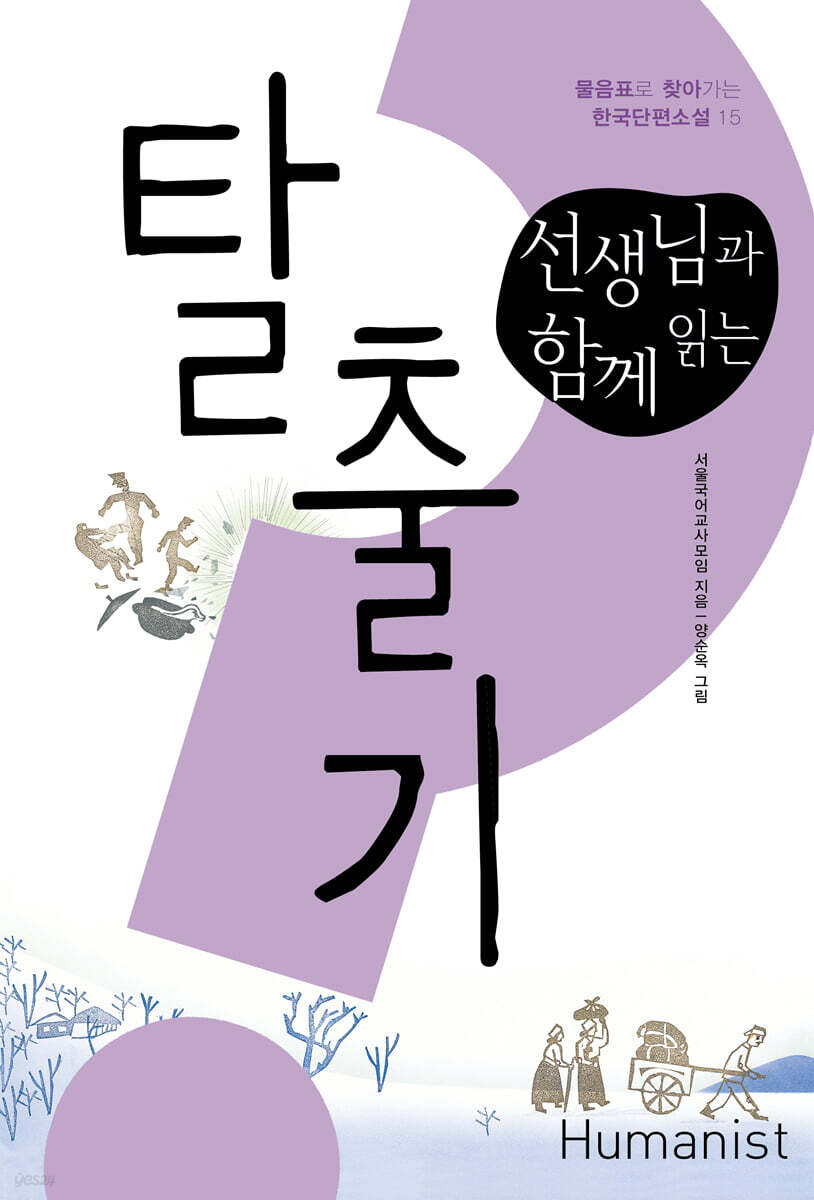
Book Introduction
"Escape," a work that captures Choi Seo-hae's life in Gando
Read deeply and broadly with students' questions and teachers' answers!
"(Reading with a Teacher) Escape" is the fifteenth book in the "Korean Short Stories with Question Marks" series planned by the National Association of Korean Language Teachers.
"Escape" is a novel that reflects the life of the author Choi Seo-hae, and depicts the difficult lives of Koreans who migrated to Gando in the 1920s, the early days of Japanese colonial rule.
The story unfolds in the form of a letter from 'Mr. Park' to 'Mr. Kim', in which Mr. Park desperately tells Mr. Kim 'the reason why he had no choice but to turn his back on his family and leave home.'
This book contains twelve questions from students about the Book of Exodus and the teacher's answers.
Why did Mr. Park leave his hometown and go to Gando? Why did Mr. Park's ideals turn out to be a bubble? Why does Mr. Kim try to stop Mr. Park from running away? Is this the author's true story? What is Mr. Park's goal?
These questions and answers provide an easy-to-understand explanation of the essential information needed to fully understand the work, "Exodus."
After reading the entire work through 'Reading the Work', and then reading the students' questions and the teacher's answers one by one through 'Reading Deeply', the content and meaning of the work that had been vague will become clear.
In addition, 'Reading Broadly' includes various reading materials such as Choi Seo-hae's life and literary world, the circumstances of the time when the work was written, and other works worth reading together, allowing for a deeper and broader understanding of the work.
Read deeply and broadly with students' questions and teachers' answers!
"(Reading with a Teacher) Escape" is the fifteenth book in the "Korean Short Stories with Question Marks" series planned by the National Association of Korean Language Teachers.
"Escape" is a novel that reflects the life of the author Choi Seo-hae, and depicts the difficult lives of Koreans who migrated to Gando in the 1920s, the early days of Japanese colonial rule.
The story unfolds in the form of a letter from 'Mr. Park' to 'Mr. Kim', in which Mr. Park desperately tells Mr. Kim 'the reason why he had no choice but to turn his back on his family and leave home.'
This book contains twelve questions from students about the Book of Exodus and the teacher's answers.
Why did Mr. Park leave his hometown and go to Gando? Why did Mr. Park's ideals turn out to be a bubble? Why does Mr. Kim try to stop Mr. Park from running away? Is this the author's true story? What is Mr. Park's goal?
These questions and answers provide an easy-to-understand explanation of the essential information needed to fully understand the work, "Exodus."
After reading the entire work through 'Reading the Work', and then reading the students' questions and the teacher's answers one by one through 'Reading Deeply', the content and meaning of the work that had been vague will become clear.
In addition, 'Reading Broadly' includes various reading materials such as Choi Seo-hae's life and literary world, the circumstances of the time when the work was written, and other works worth reading together, allowing for a deeper and broader understanding of the work.
- You can preview some of the book's contents.
Preview
index
Reading the work: "Escape" _Choi Seo-hae
Reading Deeply: Reading 『Exodus』 Through Questions and Answers
1_ People who left for Gando
Why did Mr. Park leave his hometown and go to Gando?
Why did Mr. Park's ideals turn out to be nothing?
Why is Mr. Kim trying to stop Mr. Park from leaving?
Where are the barbarian territories and H?
2_ The way out of poverty
What is Ondoljangi?
Were there tangerines in Gando at that time?
Is there no way for the Park family to live well?
What is ××dan?
3_ Between experience and fiction
Is this the author's true story?
Can a letter become a novel?
Why is the title 'Escape'?
What is the purpose that 'I' am trying to achieve?
Reading Broadly: A Look Beyond the Work
Author Story - A Chronology of Choi Seo-hae's Life and Works, Learn More About the Author
A Tale of the Times - 1920s
Reading Together - Other Novels Reflecting Choi Seo-hae's Life
Reader Stories - "Sharing Thoughts" Post-Reading Activity
Reading Deeply: Reading 『Exodus』 Through Questions and Answers
1_ People who left for Gando
Why did Mr. Park leave his hometown and go to Gando?
Why did Mr. Park's ideals turn out to be nothing?
Why is Mr. Kim trying to stop Mr. Park from leaving?
Where are the barbarian territories and H?
2_ The way out of poverty
What is Ondoljangi?
Were there tangerines in Gando at that time?
Is there no way for the Park family to live well?
What is ××dan?
3_ Between experience and fiction
Is this the author's true story?
Can a letter become a novel?
Why is the title 'Escape'?
What is the purpose that 'I' am trying to achieve?
Reading Broadly: A Look Beyond the Work
Author Story - A Chronology of Choi Seo-hae's Life and Works, Learn More About the Author
A Tale of the Times - 1920s
Reading Together - Other Novels Reflecting Choi Seo-hae's Life
Reader Stories - "Sharing Thoughts" Post-Reading Activity
Detailed image

Publisher's Review
A guide to appreciating short stories in textbooks, planned by the National Korean Language Teachers Association.
The 'Question Marks Guide to Korean Short Stories' series
1.
I dream of a literature class overflowing with wild imaginations and lively questions!
The 'Korean Short Stories with Question Marks' series is a book planned and written by the National Korean Language Teachers Association, which dreams of 'exciting and fun literature classes.'
It was created as a reflection on literature classes designed for entrance exams and examinations, that is, literature classes that provide students with uniform and mechanical information about works, and with the intention of informing students about what they actually wonder about after reading the works.
Through this, we aimed to break away from one-sided literature classes that were consistent with fragmentary understanding and forced memorization, and to establish a foundation for a user-centered literature class that allows students to understand and empathize with the work.
The 'Korean Short Stories with Question Marks' series focuses on short stories that have been widely read by many people for a long time among those included in middle and high school Korean language and literature textbooks.
After reading these selected works directly to the students, I collected all the questions they had.
Among them, we selected those that were frequent, meaningful, novel, and original.
Then, the Korean language teachers looked up books and papers and answered the questions based on what they had studied.
It is explained in simple language so that students can read it easily, and includes pictures, photos, and reference materials to help with understanding.
In this way, I tried to approach the more universal meaning of the work.
The 'Question Marks Guide to Korean Short Stories' series is unprecedented content that can elicit diverse and profound thoughts.
This series focuses on 'student-centered novel appreciation' and will serve as a stepping stone for students to become more familiar with literary works.
2.
Read representative Korean short stories from textbooks in a single book, both deeply and broadly!
The 'Question Marks to Find Korean Short Stories' series originated from the regret over the current educational reality where students are increasingly moving away from literature due to memorization-based, problem-solving-based literature classes.
And it is the result of the teachers' will and passion to make literary works come alive and breathe for students.
This book goes far beyond the fragmentary interpretation and understanding of novels found in existing textbooks or reference books.
It is very helpful in fully understanding a work of art because it covers historical, cultural, social, and literary information in an easy and fun way based on questions that students actually ask while reading the work.
This book is structured as 'reading the work - reading deeply - reading broadly'.
'Reading the Work' is literally a section that contains the entire novel.
It is composed with high-quality illustrations that can stimulate fun and imagination.
'Deep Reading' is filled with meaningful questions that students have while reading the work, selected from among them, and teachers' answers to them.
It focuses on the background, characters, events, and themes related to the work itself, and allows readers to internalize the work in various ways while reading.
'Reading broadly' allowed us to examine external factors related to the work by examining the elements surrounding the work, such as the author's life and the circumstances of the time.
Additionally, by publishing the results of students' reading and activities on the work, you can get a glimpse of what your peers think about the work.
And by introducing other works with similar materials or themes through ‘linked reading,’ you can broaden your reading experience and literary appreciation.
3.
"Escape" - Standing on the edge of death, bearing the mission of the times
Choi Seo-hae's "Escape" is a novel based on the author's life, and depicts the difficult lives of Koreans who migrated to Gando in the 1920s and endured all kinds of persecution and discrimination.
This short novel is written in the form of letters, and is an epistolary novel in the form of replies sent by the main character, Mr. Park, to Mr. Kim.
Mr. Park tells Mr. Kim, who had sent him letters several times telling him to "go back home," the reason he had no choice but to "turn his back on his family and leave home."
Mr. Park, a tenant farmer, lost his job due to the Japanese land policy after the Japanese colonial period and was unable to make a living, so he took his family and left for Gando.
He left Gando with the expectation that he would be able to live a comfortable life in proportion to his hard work, but that expectation soon turned into a bubble.
Due to the tyranny of the Chinese landlords, no matter how much they farmed, there was nothing left, and the discrimination and persecution of Koreans was also difficult to endure.
This process of migration to Gando and life in Gando overlap with the life of author Choi Seo-hae.
It also represents the miserable lives endured by countless Koreans who migrated to Gando at the time.
Mr. Park worked hard to make a living, doing all kinds of odd jobs and even selling tofu, but instead of his situation getting better, it only got worse.
In doing so, he personally realizes the absurdity of the reality that nothing changes even if he lives diligently without committing a sin.
I believe that it is not the individual's fault, but the society and the system that are at fault, and that unless these are changed, individual lives will not improve at all.
Park's thoughts are in line with socialism and lead to resistance against an absurd society and persecutors.
In the end, Mr. Park turns his back on his family and joins the '×× Group' to save more families, and he pledges to do what he must do with a sense of mission for the times.
This image of Mr. Park also overlaps with the life of Choi Seo-hae, who is known to have been active in the independence army.
This book contains twelve questions from students about "Exodus" and the teacher's answers to them.
Why did Mr. Park leave his hometown and go to Gando? Why did Mr. Park's ideals turn out to be a bubble? Why does Mr. Kim try to stop Mr. Park from running away? Is this the author's true story? What is Mr. Park's goal?
These questions and answers provide an easy-to-understand explanation of the essential information needed to fully understand the work, "Escape."
In addition, it includes various reading materials such as Choi Seo-hae's life and literary world, the circumstances of the time when the work was written, and other works worth reading together, allowing for a deeper and broader understanding of the work.
The 'Question Marks Guide to Korean Short Stories' series
1.
I dream of a literature class overflowing with wild imaginations and lively questions!
The 'Korean Short Stories with Question Marks' series is a book planned and written by the National Korean Language Teachers Association, which dreams of 'exciting and fun literature classes.'
It was created as a reflection on literature classes designed for entrance exams and examinations, that is, literature classes that provide students with uniform and mechanical information about works, and with the intention of informing students about what they actually wonder about after reading the works.
Through this, we aimed to break away from one-sided literature classes that were consistent with fragmentary understanding and forced memorization, and to establish a foundation for a user-centered literature class that allows students to understand and empathize with the work.
The 'Korean Short Stories with Question Marks' series focuses on short stories that have been widely read by many people for a long time among those included in middle and high school Korean language and literature textbooks.
After reading these selected works directly to the students, I collected all the questions they had.
Among them, we selected those that were frequent, meaningful, novel, and original.
Then, the Korean language teachers looked up books and papers and answered the questions based on what they had studied.
It is explained in simple language so that students can read it easily, and includes pictures, photos, and reference materials to help with understanding.
In this way, I tried to approach the more universal meaning of the work.
The 'Question Marks Guide to Korean Short Stories' series is unprecedented content that can elicit diverse and profound thoughts.
This series focuses on 'student-centered novel appreciation' and will serve as a stepping stone for students to become more familiar with literary works.
2.
Read representative Korean short stories from textbooks in a single book, both deeply and broadly!
The 'Question Marks to Find Korean Short Stories' series originated from the regret over the current educational reality where students are increasingly moving away from literature due to memorization-based, problem-solving-based literature classes.
And it is the result of the teachers' will and passion to make literary works come alive and breathe for students.
This book goes far beyond the fragmentary interpretation and understanding of novels found in existing textbooks or reference books.
It is very helpful in fully understanding a work of art because it covers historical, cultural, social, and literary information in an easy and fun way based on questions that students actually ask while reading the work.
This book is structured as 'reading the work - reading deeply - reading broadly'.
'Reading the Work' is literally a section that contains the entire novel.
It is composed with high-quality illustrations that can stimulate fun and imagination.
'Deep Reading' is filled with meaningful questions that students have while reading the work, selected from among them, and teachers' answers to them.
It focuses on the background, characters, events, and themes related to the work itself, and allows readers to internalize the work in various ways while reading.
'Reading broadly' allowed us to examine external factors related to the work by examining the elements surrounding the work, such as the author's life and the circumstances of the time.
Additionally, by publishing the results of students' reading and activities on the work, you can get a glimpse of what your peers think about the work.
And by introducing other works with similar materials or themes through ‘linked reading,’ you can broaden your reading experience and literary appreciation.
3.
"Escape" - Standing on the edge of death, bearing the mission of the times
Choi Seo-hae's "Escape" is a novel based on the author's life, and depicts the difficult lives of Koreans who migrated to Gando in the 1920s and endured all kinds of persecution and discrimination.
This short novel is written in the form of letters, and is an epistolary novel in the form of replies sent by the main character, Mr. Park, to Mr. Kim.
Mr. Park tells Mr. Kim, who had sent him letters several times telling him to "go back home," the reason he had no choice but to "turn his back on his family and leave home."
Mr. Park, a tenant farmer, lost his job due to the Japanese land policy after the Japanese colonial period and was unable to make a living, so he took his family and left for Gando.
He left Gando with the expectation that he would be able to live a comfortable life in proportion to his hard work, but that expectation soon turned into a bubble.
Due to the tyranny of the Chinese landlords, no matter how much they farmed, there was nothing left, and the discrimination and persecution of Koreans was also difficult to endure.
This process of migration to Gando and life in Gando overlap with the life of author Choi Seo-hae.
It also represents the miserable lives endured by countless Koreans who migrated to Gando at the time.
Mr. Park worked hard to make a living, doing all kinds of odd jobs and even selling tofu, but instead of his situation getting better, it only got worse.
In doing so, he personally realizes the absurdity of the reality that nothing changes even if he lives diligently without committing a sin.
I believe that it is not the individual's fault, but the society and the system that are at fault, and that unless these are changed, individual lives will not improve at all.
Park's thoughts are in line with socialism and lead to resistance against an absurd society and persecutors.
In the end, Mr. Park turns his back on his family and joins the '×× Group' to save more families, and he pledges to do what he must do with a sense of mission for the times.
This image of Mr. Park also overlaps with the life of Choi Seo-hae, who is known to have been active in the independence army.
This book contains twelve questions from students about "Exodus" and the teacher's answers to them.
Why did Mr. Park leave his hometown and go to Gando? Why did Mr. Park's ideals turn out to be a bubble? Why does Mr. Kim try to stop Mr. Park from running away? Is this the author's true story? What is Mr. Park's goal?
These questions and answers provide an easy-to-understand explanation of the essential information needed to fully understand the work, "Escape."
In addition, it includes various reading materials such as Choi Seo-hae's life and literary world, the circumstances of the time when the work was written, and other works worth reading together, allowing for a deeper and broader understanding of the work.
GOODS SPECIFICS
- Date of issue: March 24, 2025
- Page count, weight, size: 104 pages | 152*225*20mm
- ISBN13: 9791170873099
- ISBN10: 117087309X
- KC Certification: Certification Type: Conformity Confirmation
You may also like
카테고리
korean


korean

![GQ KOREA Mark (Monthly): December [2025]](http://librairie.coreenne.fr/cdn/shop/files/8ef265dbbfbf186523ed75ba7319009d.jpg?v=1765340328&width=3840)


